
UNICEF Social Protection Strategic Framework and Applications in
- Slides: 20
UNICEF Social Protection Strategic Framework and Applications in East Asia Qimti Paienjton UNICEF EAPRO October 15, 2012 Bangkok
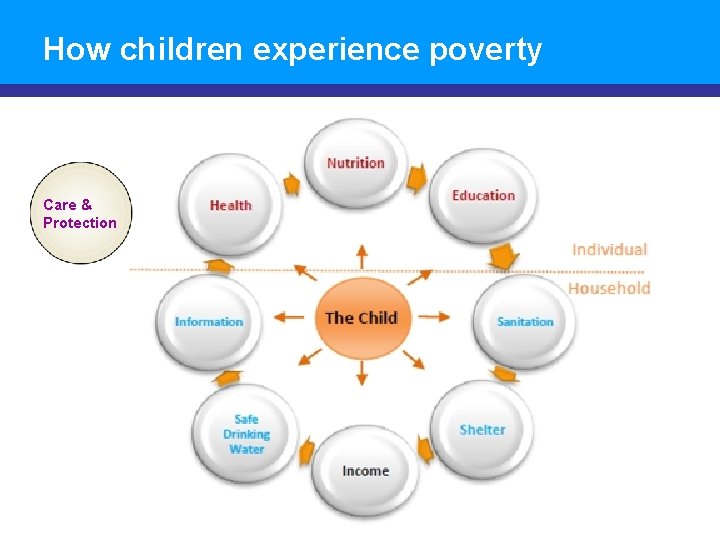
How children experience poverty Care & Protection
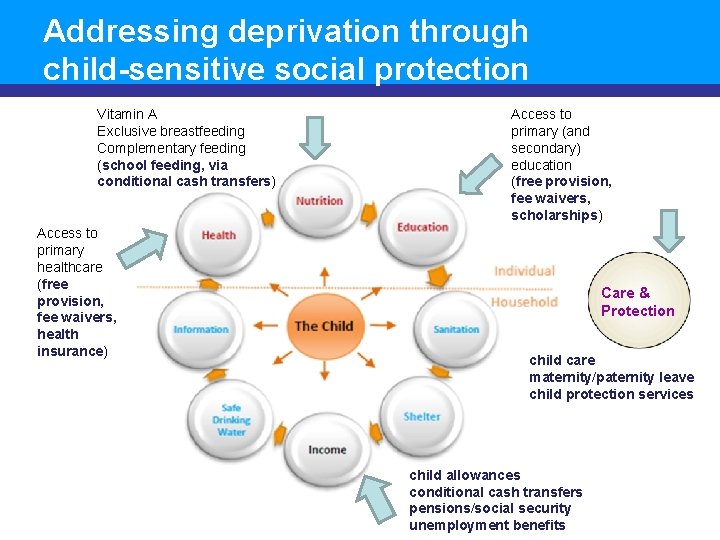
Addressing deprivation through child-sensitive social protection Vitamin A Exclusive breastfeeding Complementary feeding (school feeding, via conditional cash transfers) Access to primary healthcare (free provision, fee waivers, health insurance) Access to primary (and secondary) education (free provision, fee waivers, scholarships) Care & Protection child care maternity/paternity leave child protection services child allowances conditional cash transfers pensions/social security unemployment benefits
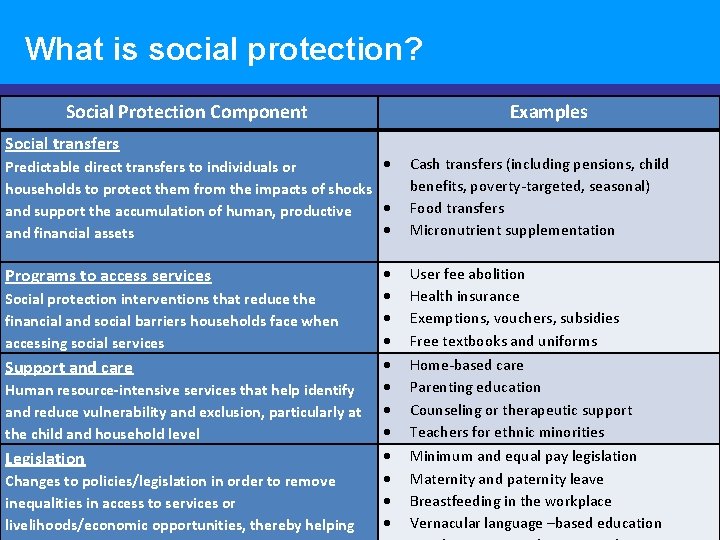
What is social protection? Social Protection Component Examples Social transfers Predictable direct transfers to individuals or households to protect them from the impacts of shocks and support the accumulation of human, productive and financial assets Programs to access services Social protection interventions that reduce the financial and social barriers households face when accessing social services Support and care Human resource-intensive services that help identify and reduce vulnerability and exclusion, particularly at the child and household level Legislation Changes to policies/legislation in order to remove inequalities in access to services or livelihoods/economic opportunities, thereby helping Cash transfers (including pensions, child benefits, poverty-targeted, seasonal) Food transfers Micronutrient supplementation User fee abolition Health insurance Exemptions, vouchers, subsidies Free textbooks and uniforms Home-based care Parenting education Counseling or therapeutic support Teachers for ethnic minorities Minimum and equal pay legislation Maternity and paternity leave Breastfeeding in the workplace Vernacular language –based education
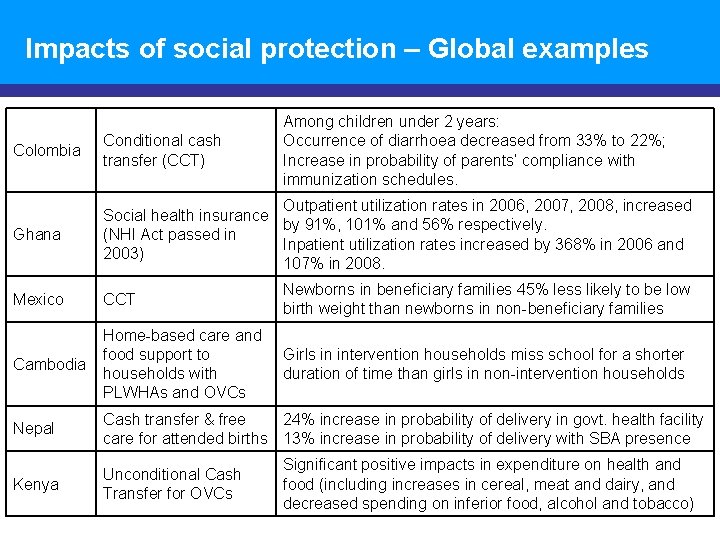
Impacts of social protection – Global examples Among children under 2 years: Occurrence of diarrhoea decreased from 33% to 22%; Increase in probability of parents’ compliance with immunization schedules. Colombia Conditional cash transfer (CCT) Ghana Outpatient utilization rates in 2006, 2007, 2008, increased Social health insurance by 91%, 101% and 56% respectively. (NHI Act passed in Inpatient utilization rates increased by 368% in 2006 and 2003) 107% in 2008. Mexico CCT Newborns in beneficiary families 45% less likely to be low birth weight than newborns in non-beneficiary families Cambodia Home-based care and food support to households with PLWHAs and OVCs Girls in intervention households miss school for a shorter duration of time than girls in non-intervention households Nepal Cash transfer & free 24% increase in probability of delivery in govt. health facility care for attended births 13% increase in probability of delivery with SBA presence Kenya Unconditional Cash Transfer for OVCs Significant positive impacts in expenditure on health and food (including increases in cereal, meat and dairy, and decreased spending on inferior food, alcohol and tobacco)
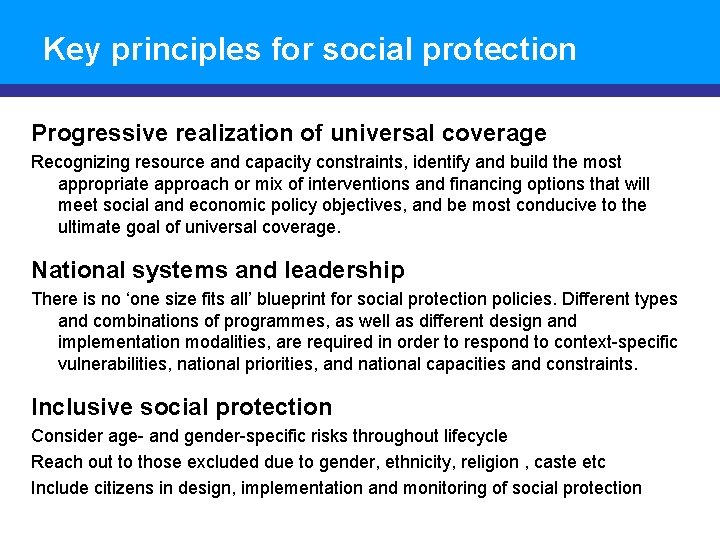
Key principles for social protection Progressive realization of universal coverage Recognizing resource and capacity constraints, identify and build the most appropriate approach or mix of interventions and financing options that will meet social and economic policy objectives, and be most conducive to the ultimate goal of universal coverage. National systems and leadership There is no ‘one size fits all’ blueprint for social protection policies. Different types and combinations of programmes, as well as different design and implementation modalities, are required in order to respond to context-specific vulnerabilities, national priorities, and national capacities and constraints. Inclusive social protection Consider age- and gender-specific risks throughout lifecycle Reach out to those excluded due to gender, ethnicity, religion , caste etc Include citizens in design, implementation and monitoring of social protection
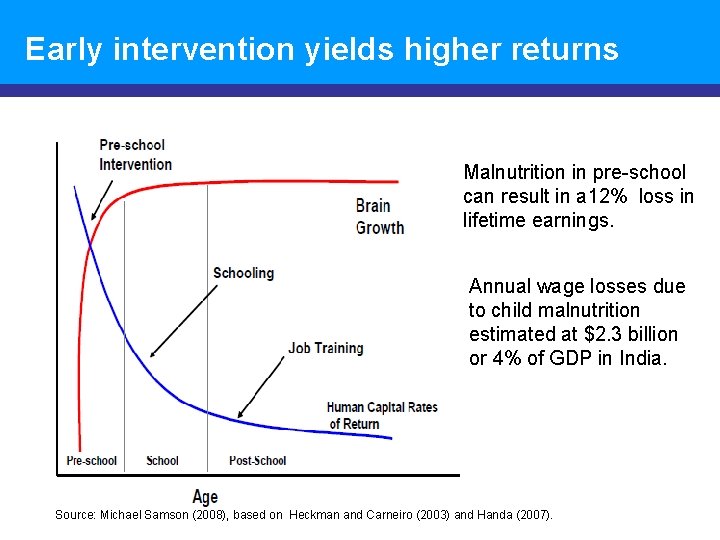
Early intervention yields higher returns Malnutrition in pre-school can result in a 12% loss in lifetime earnings. Annual wage losses due to child malnutrition estimated at $2. 3 billion or 4% of GDP in India. Source: Michael Samson (2008), based on Heckman and Carneiro (2003) and Handa (2007).
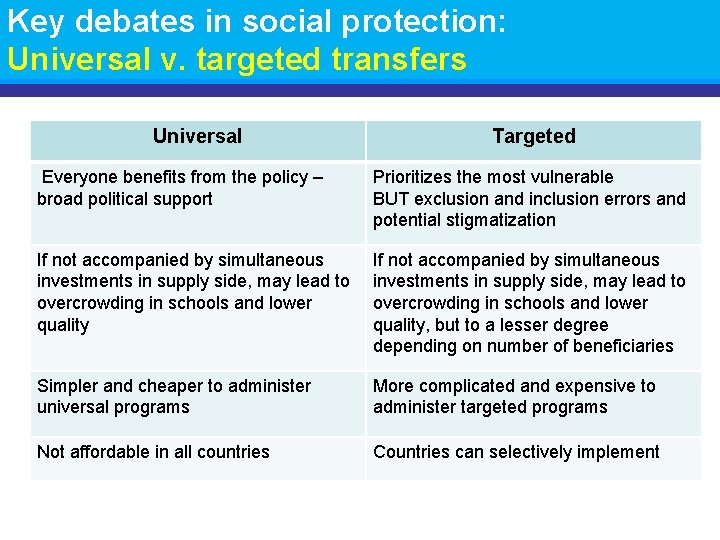
Key debates in social protection: Universal v. targeted transfers Universal Targeted Everyone benefits from the policy – broad political support Prioritizes the most vulnerable BUT exclusion and inclusion errors and potential stigmatization If not accompanied by simultaneous investments in supply side, may lead to overcrowding in schools and lower quality, but to a lesser degree depending on number of beneficiaries Simpler and cheaper to administer universal programs More complicated and expensive to administer targeted programs Not affordable in all countries Countries can selectively implement
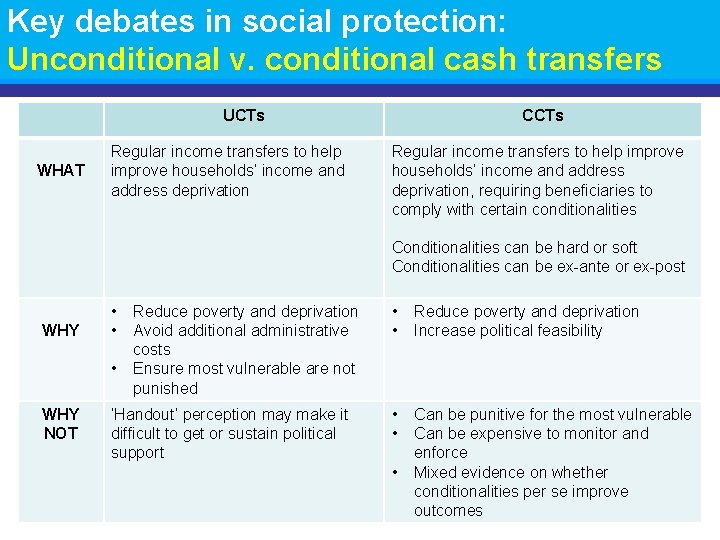
Key debates in social protection: Unconditional v. conditional cash transfers UCTs WHAT Regular income transfers to help improve households’ income and address deprivation CCTs Regular income transfers to help improve households’ income and address deprivation, requiring beneficiaries to comply with certain conditionalities Conditionalities can be hard or soft Conditionalities can be ex-ante or ex-post WHY • • • WHY NOT Reduce poverty and deprivation Avoid additional administrative costs Ensure most vulnerable are not punished ‘Handout’ perception may make it difficult to get or sustain political support • • Reduce poverty and deprivation Increase political feasibility • • Can be punitive for the most vulnerable Can be expensive to monitor and enforce Mixed evidence on whether conditionalities per se improve outcomes •
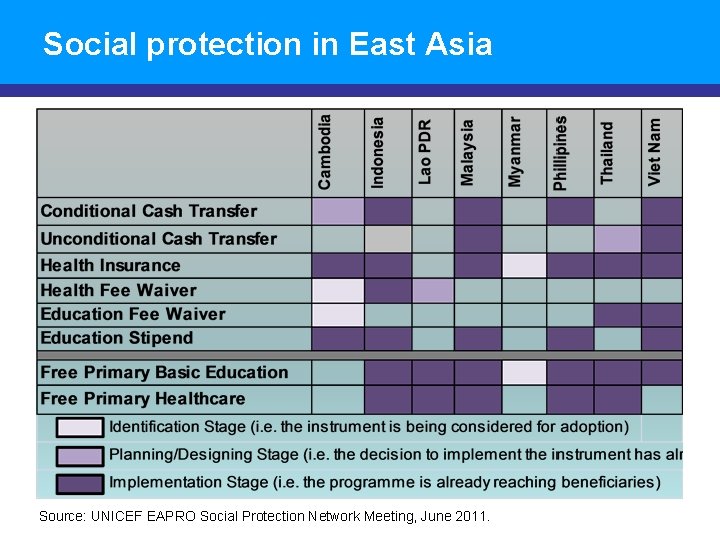
Social protection in East Asia Source: UNICEF EAPRO Social Protection Network Meeting, June 2011.
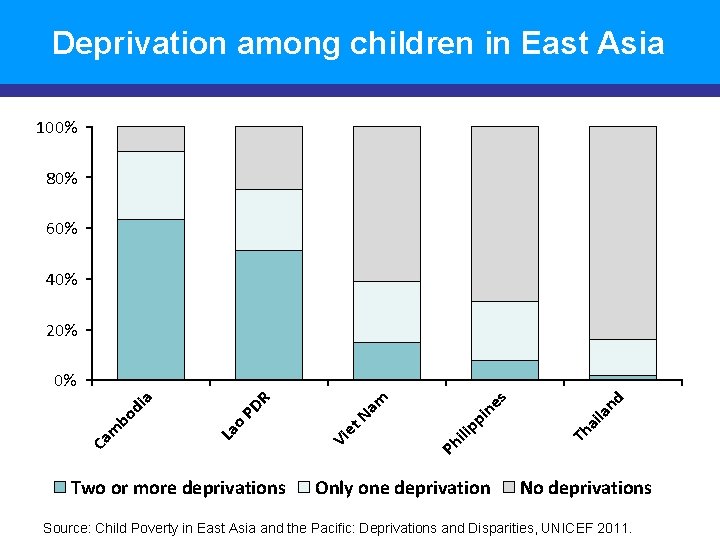
Deprivation among children in East Asia 100% 80% 60% 40% 20% Two or more deprivations Only one deprivation nd la ai Th Ph ili pp in es m Na Vi et PD R o La Ca m bo di a 0% No deprivations Source: Child Poverty in East Asia and the Pacific: Deprivations and Disparities, UNICEF 2011.
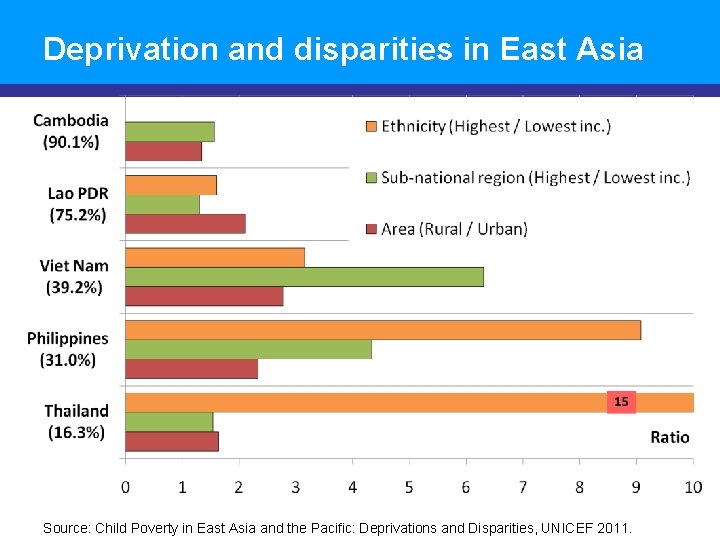
Deprivation and disparities in East Asia Source: Child Poverty in East Asia and the Pacific: Deprivations and Disparities, UNICEF 2011.
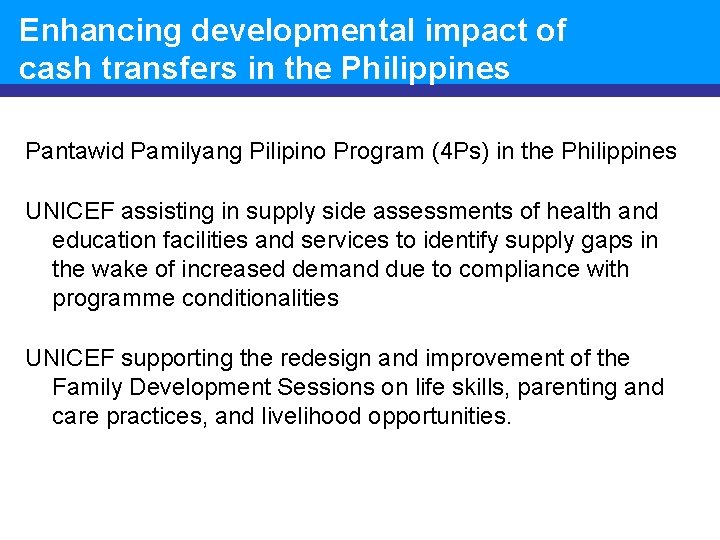
Enhancing developmental impact of cash transfers in the Philippines Pantawid Pamilyang Pilipino Program (4 Ps) in the Philippines UNICEF assisting in supply side assessments of health and education facilities and services to identify supply gaps in the wake of increased demand due to compliance with programme conditionalities UNICEF supporting the redesign and improvement of the Family Development Sessions on life skills, parenting and care practices, and livelihood opportunities.
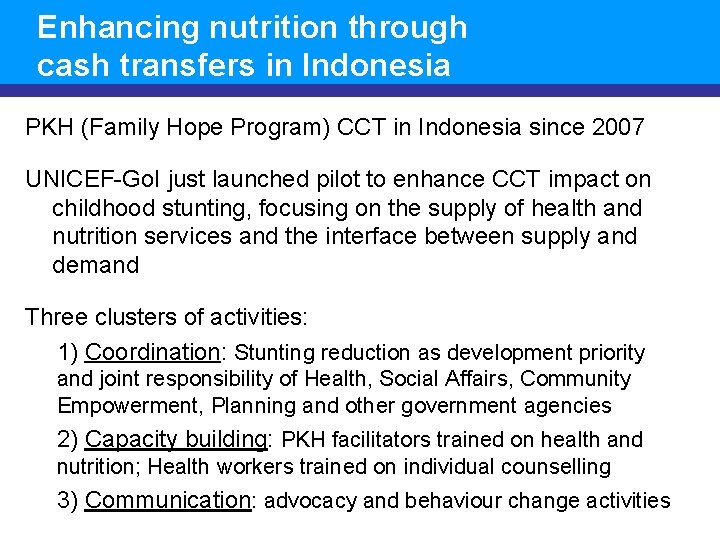
Enhancing nutrition through cash transfers in Indonesia PKH (Family Hope Program) CCT in Indonesia since 2007 UNICEF-Go. I just launched pilot to enhance CCT impact on childhood stunting, focusing on the supply of health and nutrition services and the interface between supply and demand Three clusters of activities: 1) Coordination: Stunting reduction as development priority and joint responsibility of Health, Social Affairs, Community Empowerment, Planning and other government agencies 2) Capacity building: PKH facilitators trained on health and nutrition; Health workers trained on individual counselling 3) Communication: advocacy and behaviour change activities
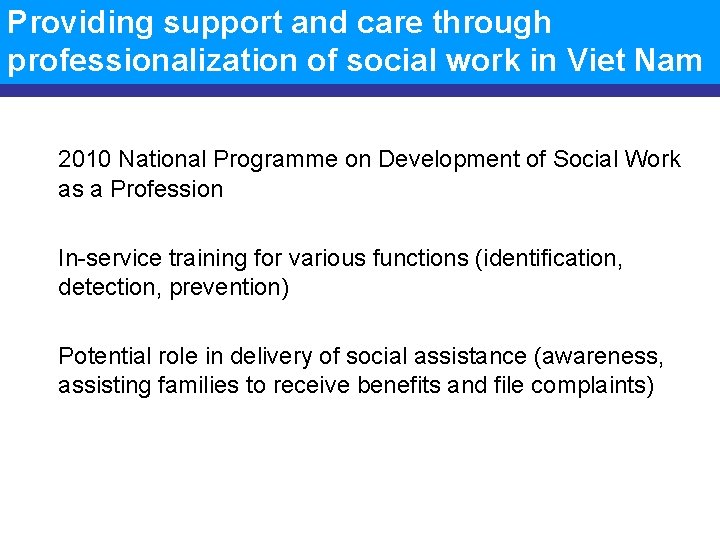
Providing support and care through professionalization of social work in Viet Nam 2010 National Programme on Development of Social Work as a Profession In-service training for various functions (identification, detection, prevention) Potential role in delivery of social assistance (awareness, assisting families to receive benefits and file complaints)
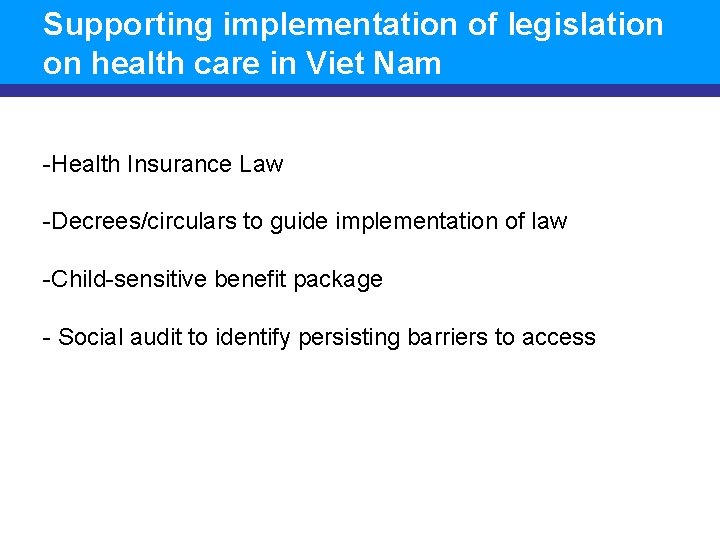
Supporting implementation of legislation on health care in Viet Nam -Health Insurance Law -Decrees/circulars to guide implementation of law -Child-sensitive benefit package - Social audit to identify persisting barriers to access
Thank You!
Resources http: //www. unicef. org/socialprotection /framework/files/Full_Social_Protectio n_Strategic_Framework_low_res. pdf http: //www. unicef. org/eapro/Child_Poverty_ in_EAP_Regional_Report. pdf
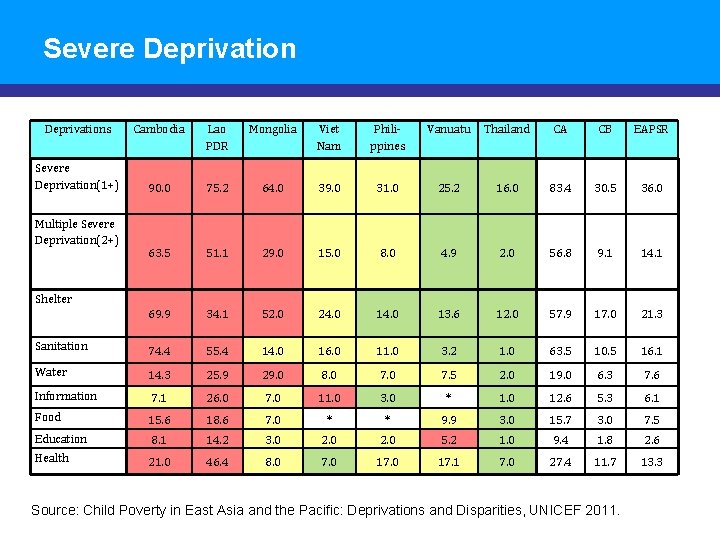
Severe Deprivations Cambodia Lao PDR Mongolia Viet Nam Philippines Vanuatu Thailand CA CB EAPSR Severe Deprivation(1+) 90. 0 75. 2 64. 0 39. 0 31. 0 25. 2 16. 0 83. 4 30. 5 36. 0 63. 5 51. 1 29. 0 15. 0 8. 0 4. 9 2. 0 56. 8 9. 1 14. 1 69. 9 34. 1 52. 0 24. 0 13. 6 12. 0 57. 9 17. 0 21. 3 Sanitation 74. 4 55. 4 14. 0 16. 0 11. 0 3. 2 1. 0 63. 5 10. 5 16. 1 Water 14. 3 25. 9 29. 0 8. 0 7. 5 2. 0 19. 0 6. 3 7. 6 Information 7. 1 26. 0 7. 0 11. 0 3. 0 * 1. 0 12. 6 5. 3 6. 1 Food 15. 6 18. 6 7. 0 * * 9. 9 3. 0 15. 7 3. 0 7. 5 Education 8. 1 14. 2 3. 0 2. 0 5. 2 1. 0 9. 4 1. 8 2. 6 Health 21. 0 46. 4 8. 0 7. 0 17. 1 7. 0 27. 4 11. 7 13. 3 Multiple Severe Deprivation(2+) Shelter Source: Child Poverty in East Asia and the Pacific: Deprivations and Disparities, UNICEF 2011.
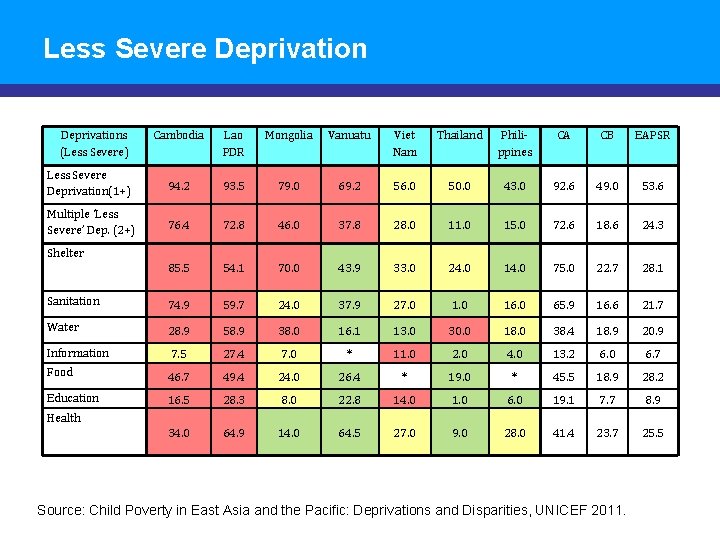
Less Severe Deprivations (Less Severe) Cambodia Lao PDR Mongolia Vanuatu Viet Nam Thailand Philippines CA CB EAPSR Less Severe Deprivation(1+) 94. 2 93. 5 79. 0 69. 2 56. 0 50. 0 43. 0 92. 6 49. 0 53. 6 Multiple ‘Less Severe’ Dep. (2+) 76. 4 72. 8 46. 0 37. 8 28. 0 11. 0 15. 0 72. 6 18. 6 24. 3 85. 5 54. 1 70. 0 43. 9 33. 0 24. 0 14. 0 75. 0 22. 7 28. 1 Sanitation 74. 9 59. 7 24. 0 37. 9 27. 0 16. 0 65. 9 16. 6 21. 7 Water 28. 9 58. 9 38. 0 16. 1 13. 0 30. 0 18. 0 38. 4 18. 9 20. 9 Information 7. 5 27. 4 7. 0 * 11. 0 2. 0 4. 0 13. 2 6. 0 6. 7 Food 46. 7 49. 4 24. 0 26. 4 * 19. 0 * 45. 5 18. 9 28. 2 Education 16. 5 28. 3 8. 0 22. 8 14. 0 1. 0 6. 0 19. 1 7. 7 8. 9 34. 0 64. 9 14. 0 64. 5 27. 0 9. 0 28. 0 41. 4 23. 7 25. 5 Shelter Health Source: Child Poverty in East Asia and the Pacific: Deprivations and Disparities, UNICEF 2011.