
UnHealthy Hearts AN EXPLANATION OF COMMON DISEASES AND

- Slides: 55
(Un)Healthy Hearts AN EXPLANATION OF COMMON DISEASES AND EVENTS OF THE CARDIAC SYSTEM
Disclosures v. I am a medical student v. This session is not intended to give you a diagnosis or replace going to see your health care professional
What we will discuss v Basic cardiac physiology: The pump and the pipes v Rate and Rhythm v Blood pressure v Atrial fibrillation v Hypertension v Stroke v Heart Attack
Pop quiz 1) Which chambers of the heart receive blood? Which chambers pump it away? 2) What does it mean to have a sinus rhythm? 3) What is the difference between an EKG, an ECG, and an Echocardiogram? 4) What is hypertension? 5) True or false hypertension is the number one modifiable risk factor for stroke.
Cardiology Basics HO MEOST AS IS PLU MBING RATE AN D RHYTHM
Homeostasis v Maintaining the constancy of our internal environment v. Temperature v. Oxygen concentration v. Carbon Dioxide concentration vp. H v. Ionic composition v. Osmolarity
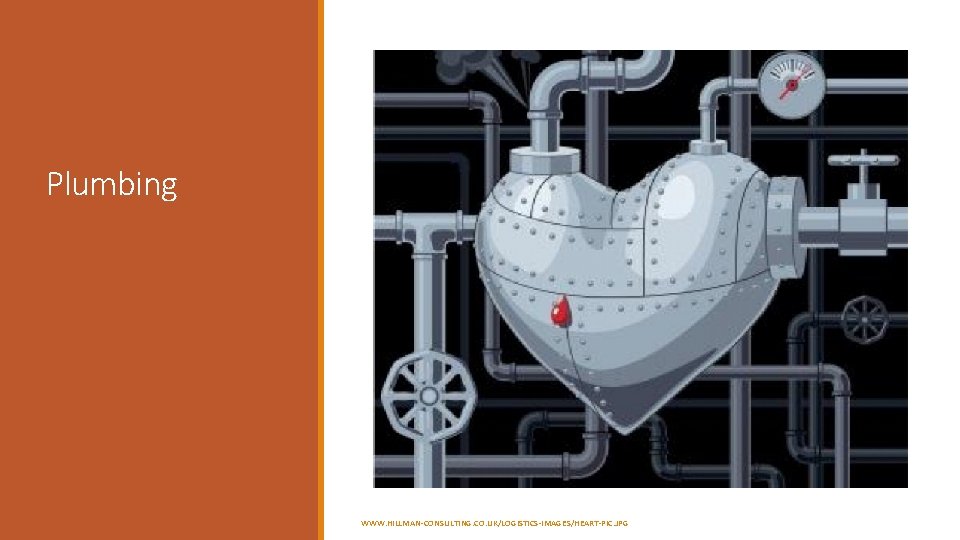
Plumbing HTTP: //WWW. HILLMAN-CONSULTING. CO. UK/LOGISTICS-IMAGES/HEART-PIC. JPG
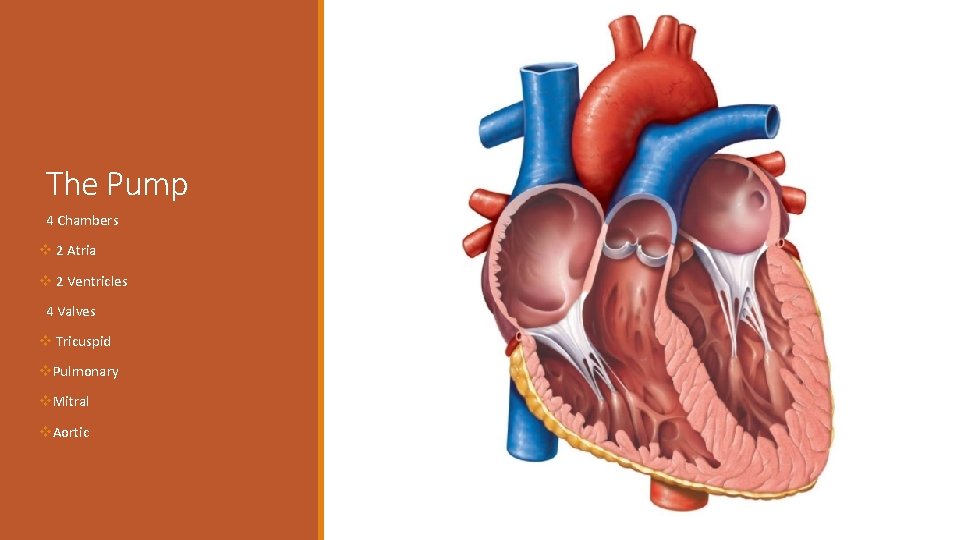
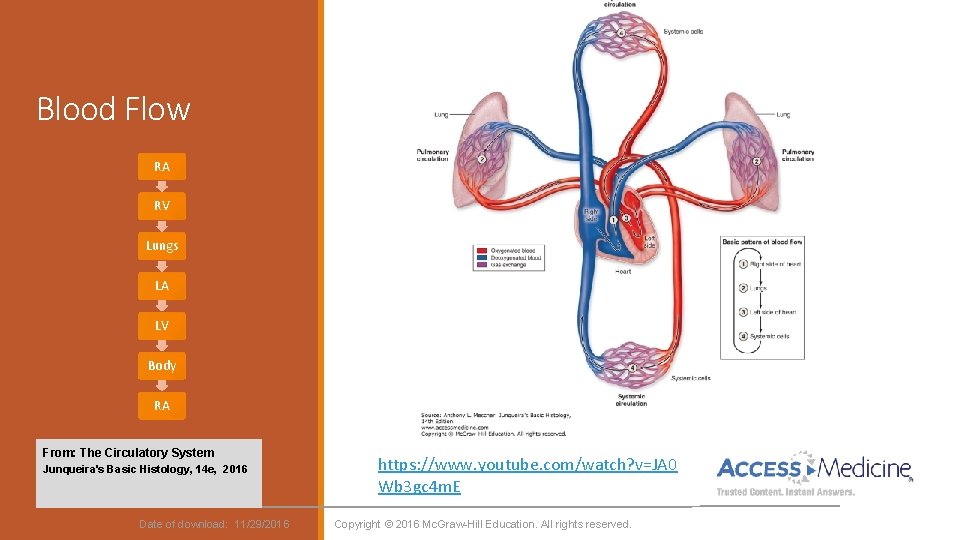
The Pump 4 Chambers v 2 Atria v 2 Ventricles 4 Valves v Tricuspid v. Pulmonary v. Mitral v. Aortic
Blood Flow RA RV Lungs LA LV Body RA From: The Circulatory System Junqueira's Basic Histology, 14 e, 2016 Date of download: 11/29/2016 https: //www. youtube. com/watch? v=JA 0 Wb 3 gc 4 m. E Copyright © 2016 Mc. Graw-Hill Education. All rights reserved.
Blood circulation clip
Clinical side note The lub dub of your heart is the sound of your valves closing v Lub=closure of atrio ventricular valves=S 1 v Dub=closure of aortic and pulmonary valve=S 2 https: //www. youtube. com/watch? v=g. Jp. T_w. HZe. F 8 v. A heart murmur is an extra or unusual sound heard during a heartbeat https: //www. youtube. com/watch? v=i 2 dt. Qu 5 Ow 1 U
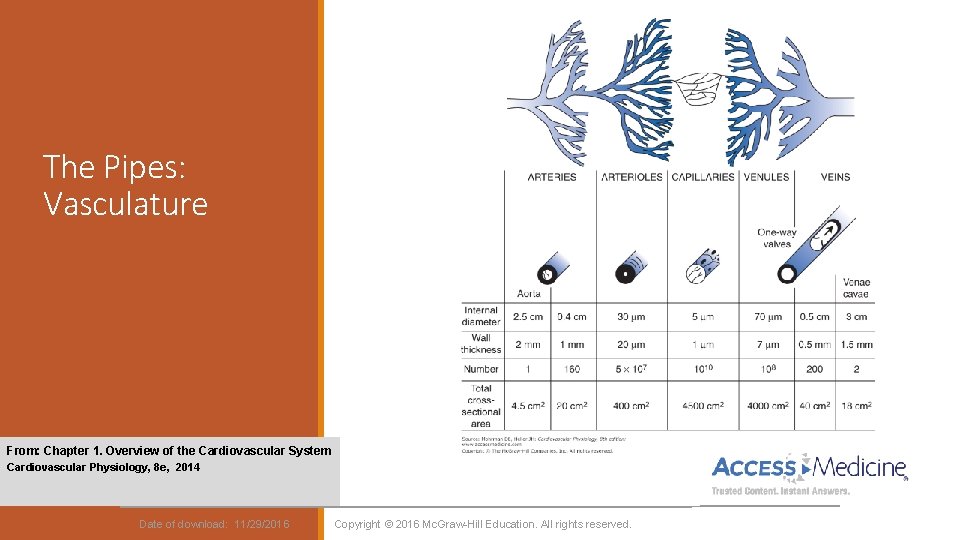
The Pipes: Vasculature From: Chapter 1. Overview of the Cardiovascular System Cardiovascular Physiology, 8 e, 2014 Date of download: 11/29/2016 Copyright © 2016 Mc. Graw-Hill Education. All rights reserved.
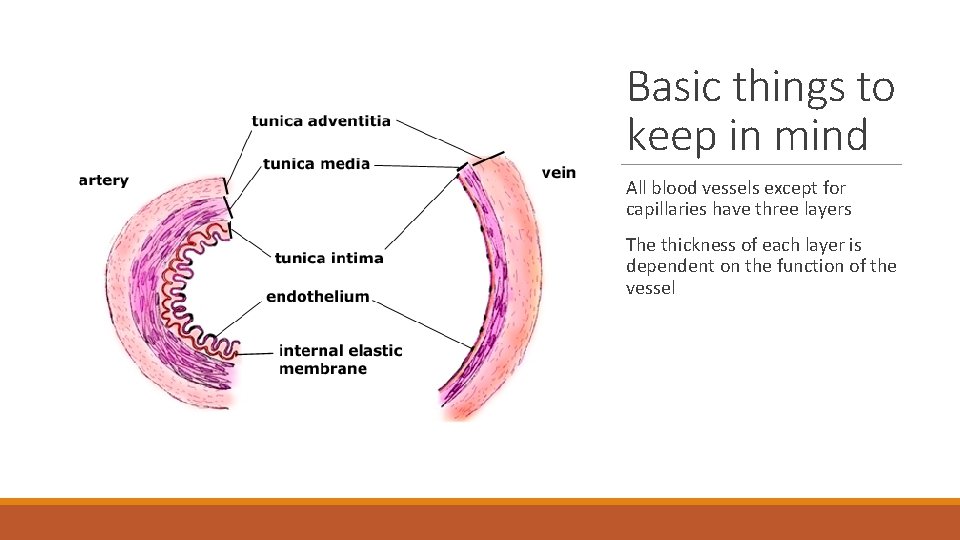
Basic things to keep in mind All blood vessels except for capillaries have three layers The thickness of each layer is dependent on the function of the vessel
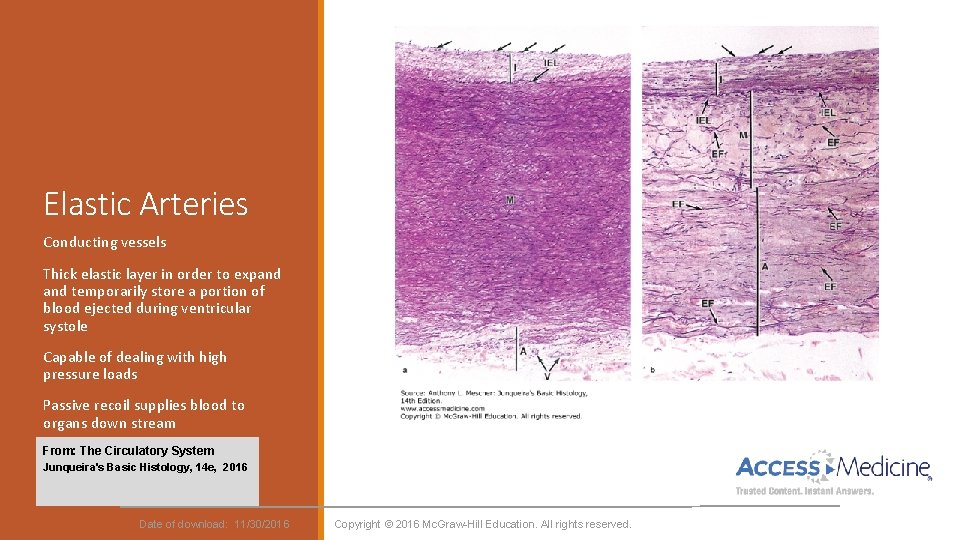
Elastic Arteries Conducting vessels Thick elastic layer in order to expand temporarily store a portion of blood ejected during ventricular systole Capable of dealing with high pressure loads Passive recoil supplies blood to organs down stream From: The Circulatory System Junqueira's Basic Histology, 14 e, 2016 Date of download: 11/30/2016 Copyright © 2016 Mc. Graw-Hill Education. All rights reserved.
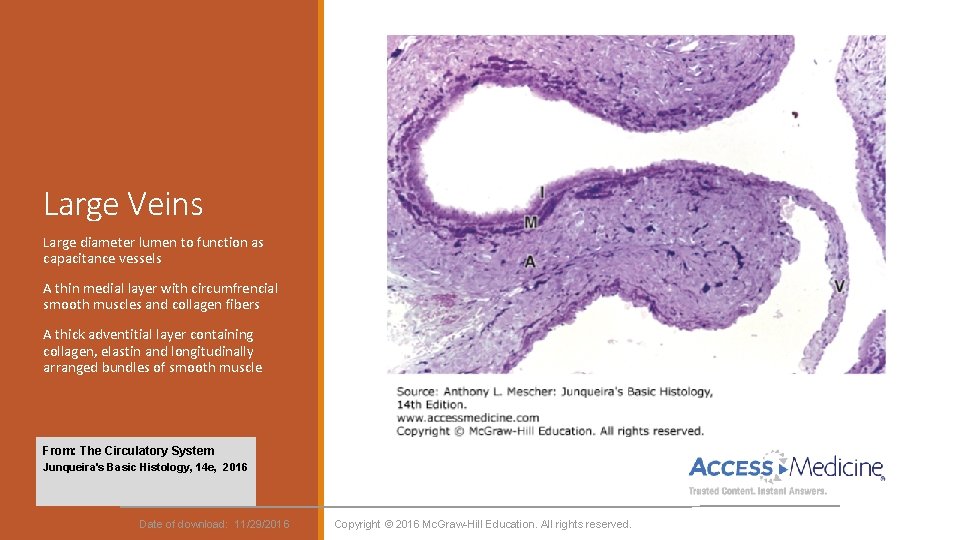
Large Veins Large diameter lumen to function as capacitance vessels A thin medial layer with circumfrencial smooth muscles and collagen fibers A thick adventitial layer containing collagen, elastin and longitudinally arranged bundles of smooth muscle From: The Circulatory System Junqueira's Basic Histology, 14 e, 2016 Date of download: 11/29/2016 Copyright © 2016 Mc. Graw-Hill Education. All rights reserved.
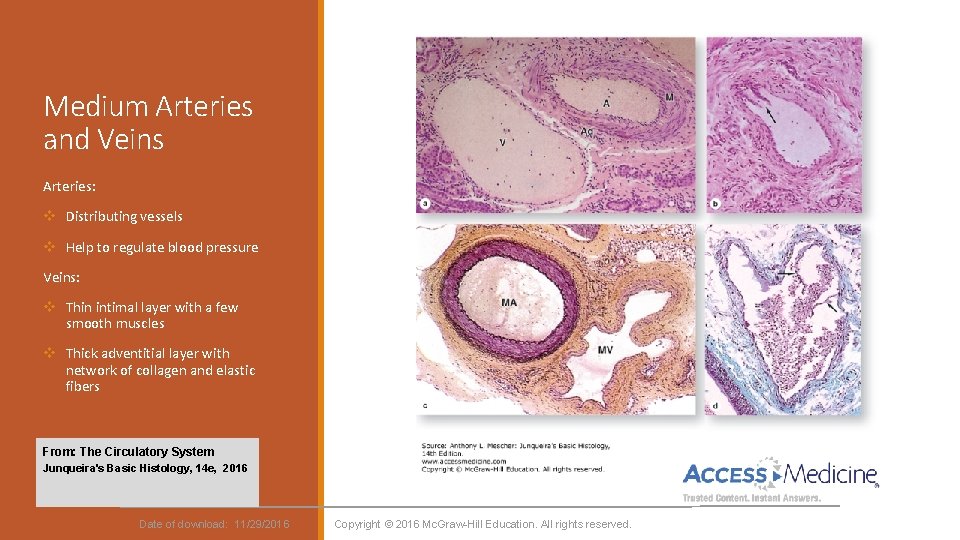
Medium Arteries and Veins Arteries: v Distributing vessels v Help to regulate blood pressure Veins: v Thin intimal layer with a few smooth muscles v Thick adventitial layer with network of collagen and elastic fibers From: The Circulatory System Junqueira's Basic Histology, 14 e, 2016 Date of download: 11/29/2016 Copyright © 2016 Mc. Graw-Hill Education. All rights reserved.
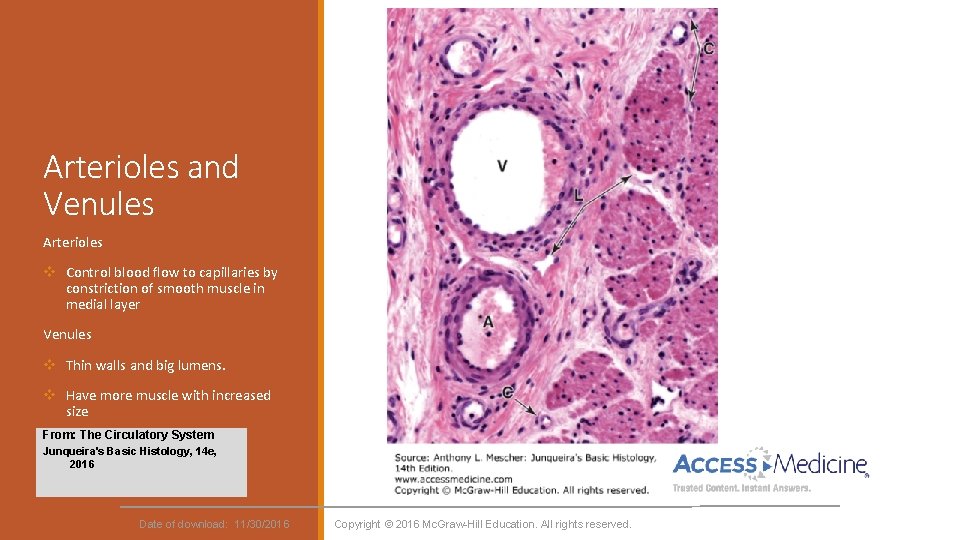
Arterioles and Venules Arterioles v Control blood flow to capillaries by constriction of smooth muscle in medial layer Venules v Thin walls and big lumens. v Have more muscle with increased size From: The Circulatory System Junqueira's Basic Histology, 14 e, 2016 Date of download: 11/30/2016 Copyright © 2016 Mc. Graw-Hill Education. All rights reserved.
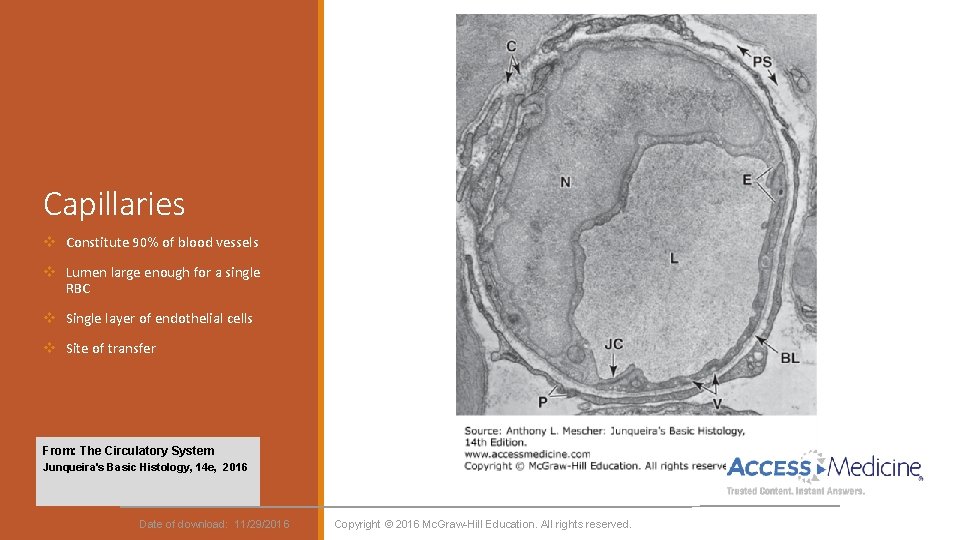
Capillaries v Constitute 90% of blood vessels v Lumen large enough for a single RBC v Single layer of endothelial cells v Site of transfer From: The Circulatory System Junqueira's Basic Histology, 14 e, 2016 Date of download: 11/29/2016 Copyright © 2016 Mc. Graw-Hill Education. All rights reserved.
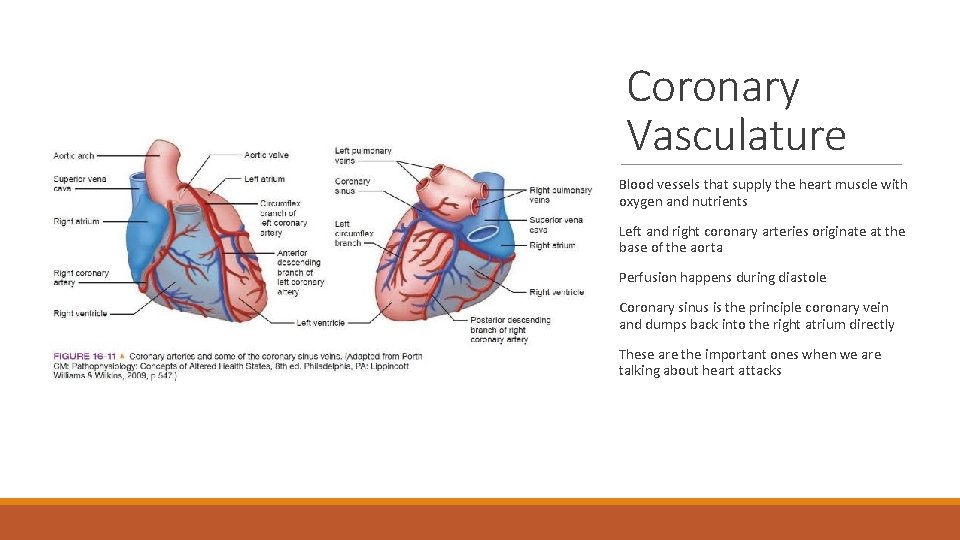
Coronary Vasculature Blood vessels that supply the heart muscle with oxygen and nutrients Left and right coronary arteries originate at the base of the aorta Perfusion happens during diastole Coronary sinus is the principle coronary vein and dumps back into the right atrium directly These are the important ones when we are talking about heart attacks
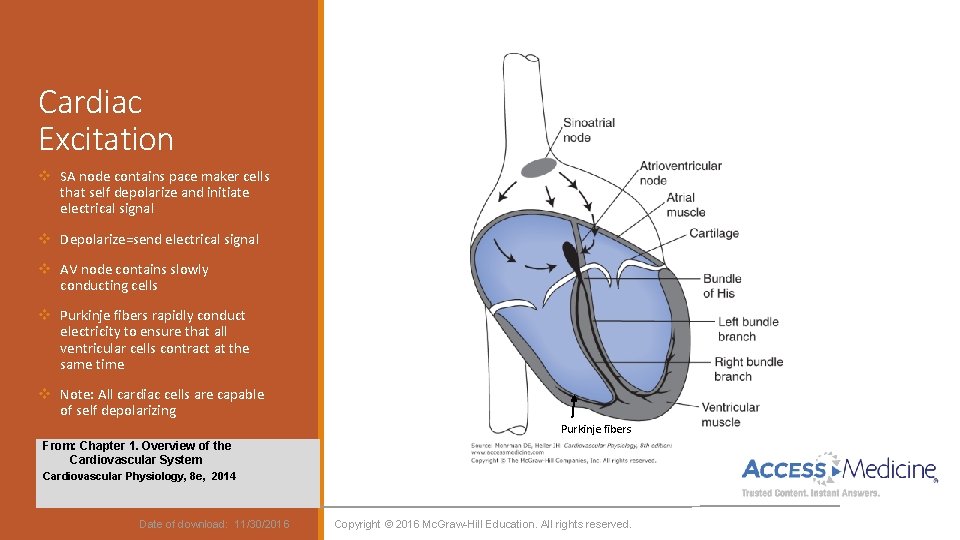
Cardiac Excitation v SA node contains pace maker cells that self depolarize and initiate electrical signal v Depolarize=send electrical signal v AV node contains slowly conducting cells v Purkinje fibers rapidly conduct electricity to ensure that all ventricular cells contract at the same time v Note: All cardiac cells are capable of self depolarizing Purkinje fibers From: Chapter 1. Overview of the Cardiovascular System Cardiovascular Physiology, 8 e, 2014 Date of download: 11/30/2016 Copyright © 2016 Mc. Graw-Hill Education. All rights reserved.
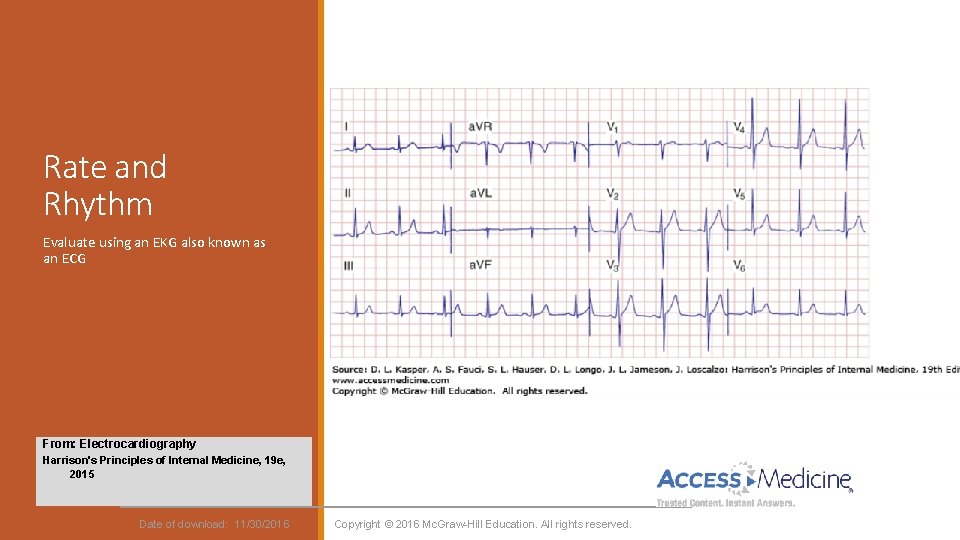
Rate and Rhythm Evaluate using an EKG also known as an ECG From: Electrocardiography Harrison's Principles of Internal Medicine, 19 e, 2015 Date of download: 11/30/2016 Copyright © 2016 Mc. Graw-Hill Education. All rights reserved.
Blood Pressure
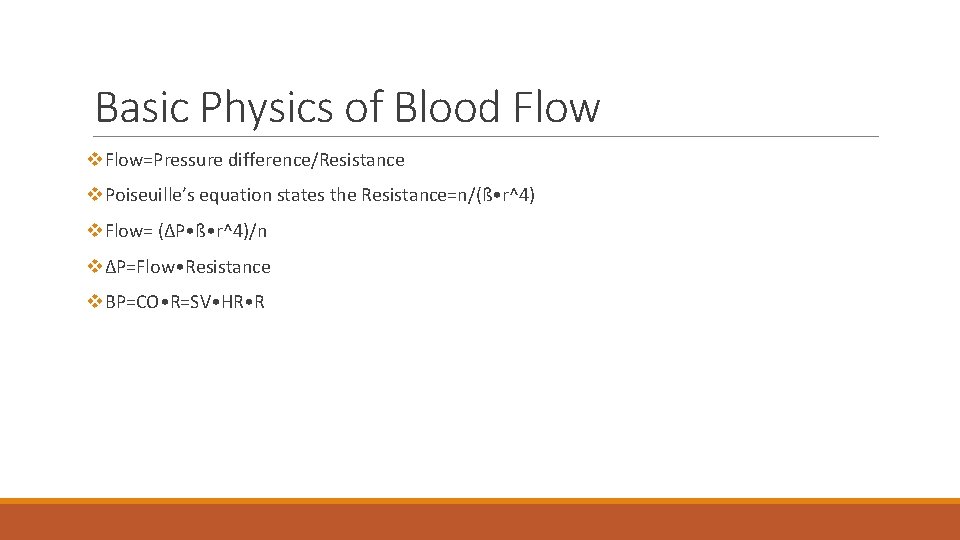
Basic Physics of Blood Flow v. Flow=Pressure difference/Resistance v. Poiseuille’s equation states the Resistance=n/(ß • r^4) v. Flow= (∆P • ß • r^4)/n v∆P=Flow • Resistance v. BP=CO • R=SV • HR • R
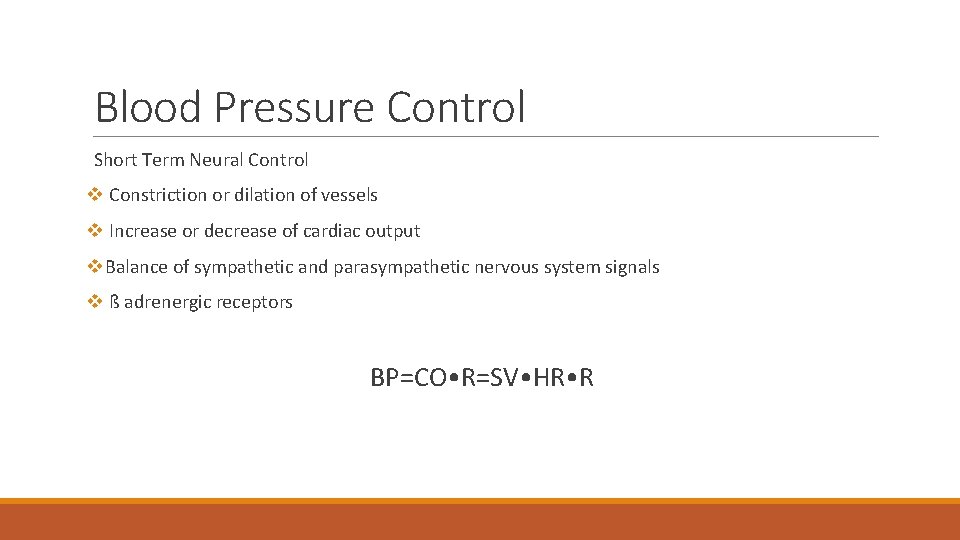
Blood Pressure Control Short Term Neural Control v Constriction or dilation of vessels v Increase or decrease of cardiac output v. Balance of sympathetic and parasympathetic nervous system signals v ß adrenergic receptors BP=CO • R=SV • HR • R
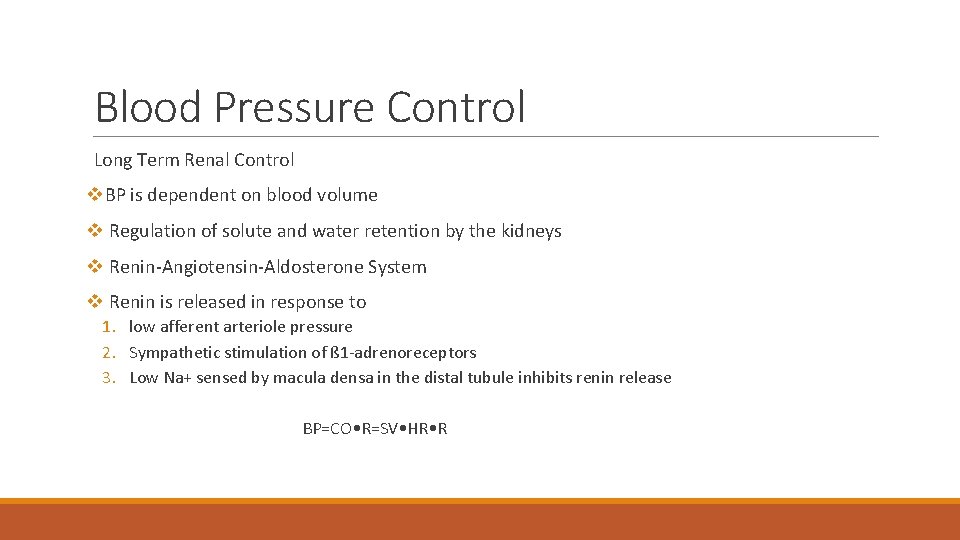
Blood Pressure Control Long Term Renal Control v. BP is dependent on blood volume v Regulation of solute and water retention by the kidneys v Renin-Angiotensin-Aldosterone System v Renin is released in response to 1. low afferent arteriole pressure 2. Sympathetic stimulation of ß 1 -adrenoreceptors 3. Low Na+ sensed by macula densa in the distal tubule inhibits renin release BP=CO • R=SV • HR • R
Pharmacological side note Anti hypertensive medications target vß andrenergic receptors v. Renin-Angiotensin-aldosterone system v. Solute and water retention
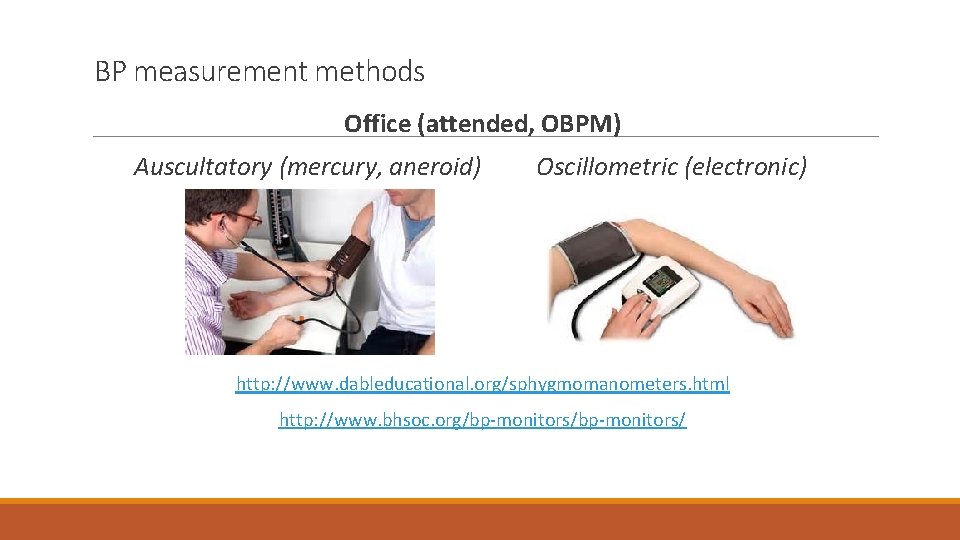
BP measurement methods Office (attended, OBPM) Auscultatory (mercury, aneroid) Oscillometric (electronic) http: //www. dableducational. org/sphygmomanometers. html http: //www. bhsoc. org/bp-monitors/
Hypertension
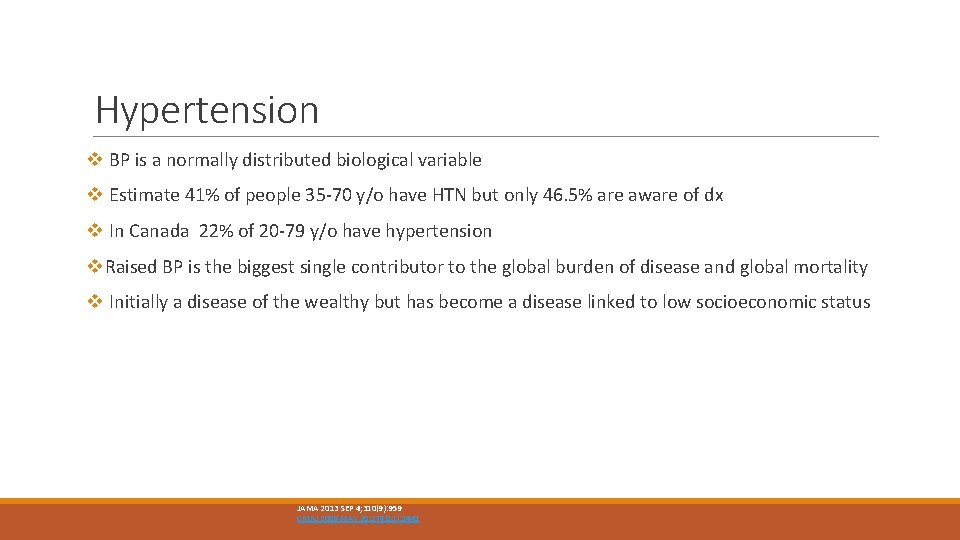
Hypertension v BP is a normally distributed biological variable v Estimate 41% of people 35 -70 y/o have HTN but only 46. 5% are aware of dx v In Canada 22% of 20 -79 y/o have hypertension v. Raised BP is the biggest single contributor to the global burden of disease and global mortality v Initially a disease of the wealthy but has become a disease linked to low socioeconomic status JAMA 2013 SEP 4; 310(9): 959 CMAJ 2008 MAY 20; 178(11): 1441
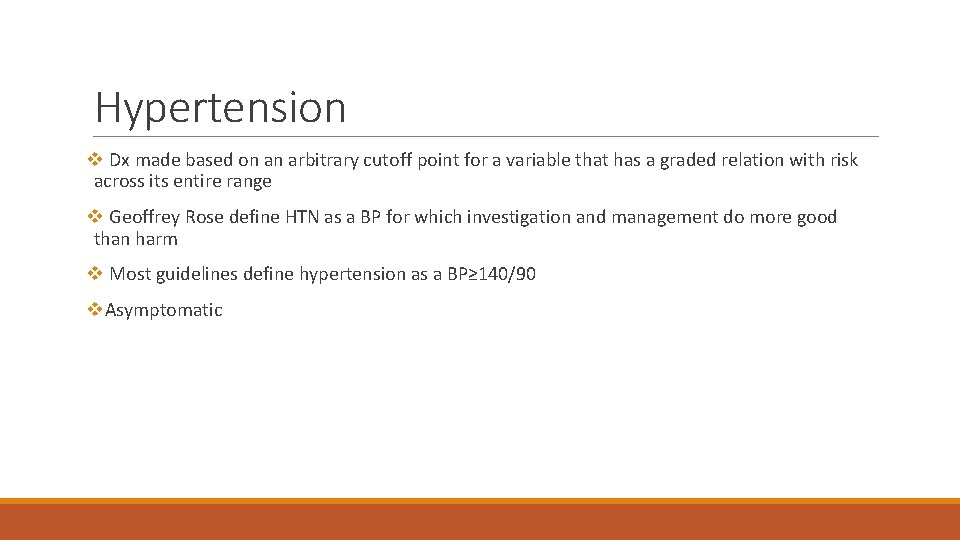
Hypertension v Dx made based on an arbitrary cutoff point for a variable that has a graded relation with risk across its entire range v Geoffrey Rose define HTN as a BP for which investigation and management do more good than harm v Most guidelines define hypertension as a BP≥ 140/90 v. Asymptomatic
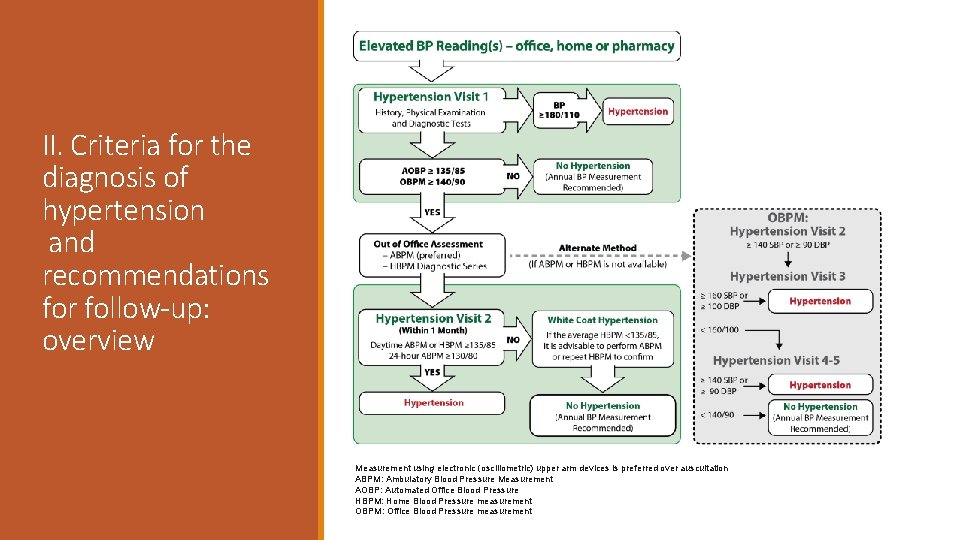
II. Criteria for the diagnosis of hypertension and recommendations for follow-up: overview Measurement using electronic (oscillometric) upper arm devices is preferred over auscultation ABPM: Ambulatory Blood Pressure Measurement AOBP: Automated Office Blood Pressure HBPM: Home Blood Pressure measurement OBPM: Office Blood Pressure measurement
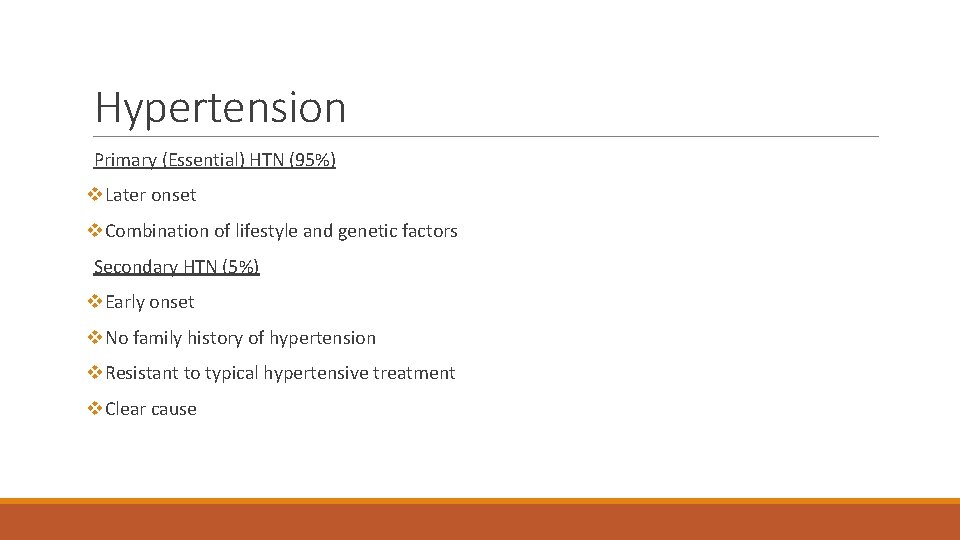
Hypertension Primary (Essential) HTN (95%) v. Later onset v. Combination of lifestyle and genetic factors Secondary HTN (5%) v. Early onset v. No family history of hypertension v. Resistant to typical hypertensive treatment v. Clear cause
Hypertension is a risk factor for… v. Coronary artery disease v. Heart Failure v. Chronic kidney disease v. Stroke v. Intracerebral hemorrhage v. Transient ischemic attack v. Peripheral arterial disease v. Aortic Regurgitation v. Atrial Flutter v. Mild cognitive impairment
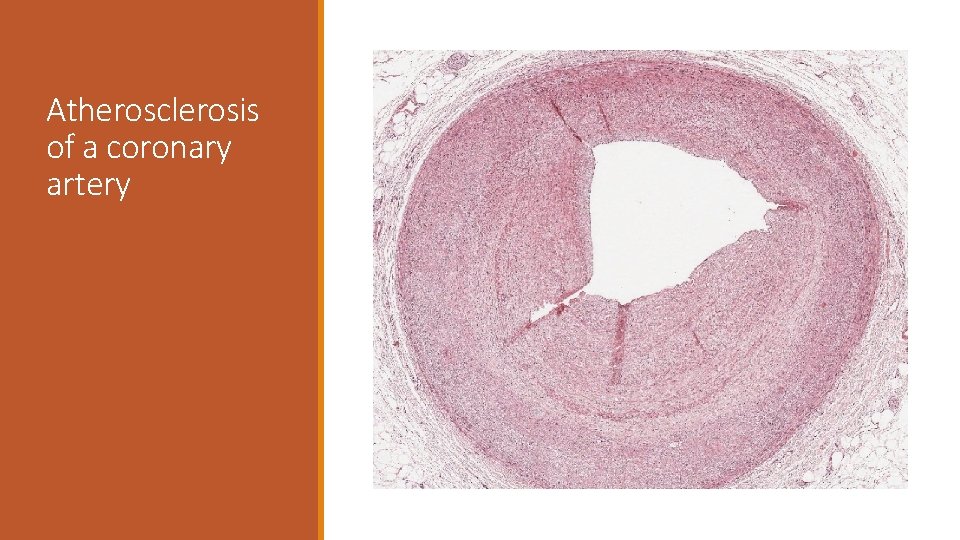
Pathological Consequences Peripheral arteries v. HTN causes damage to blood vessels v. Arteriosclerosis: hardening of arteries v. Atherosclerosis: fat deposition in arterial walls v. Hyperplastic arteriosclerosis: Thickening of the tunica media of muscular arteries v. Aortic dissection v. Peripheral arterial disease
Atherosclerosis of a coronary artery
Pathological Consequences Kidneys v. Renal injury and End Stage Renal Disease v. Ischemic changes in glomeruli and post-glomerular structures v. Loss of autoregulation of renal blood flow ➡ hyperfiltration, hypertrophy and glomerular sclerosis= vicious cycle
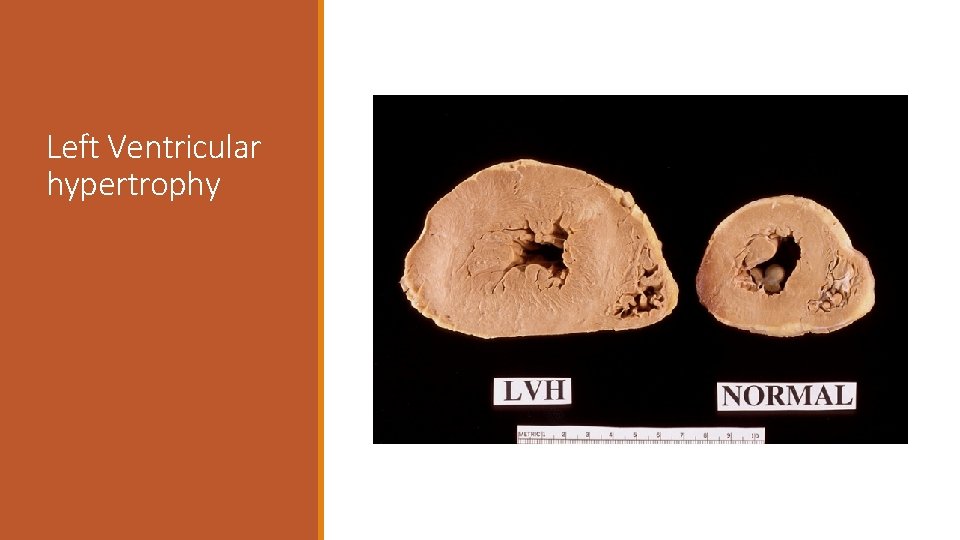
Pathological Consequences Heart v. LV hypertrophy increases risk of CHD, stroke, CHF, sudden death v. Heart disease is the most common cause of death in hypertensive patients v. Accelerated atherosclerosis of coronary arteries ➡ Ischemic heart disease v. Hypertensive heart disease ➡left ventricular hypertrophy ➡ right ventricular hypertrophy ➡ CHF v. Cardiac arrhythmias
Left Ventricular hypertrophy
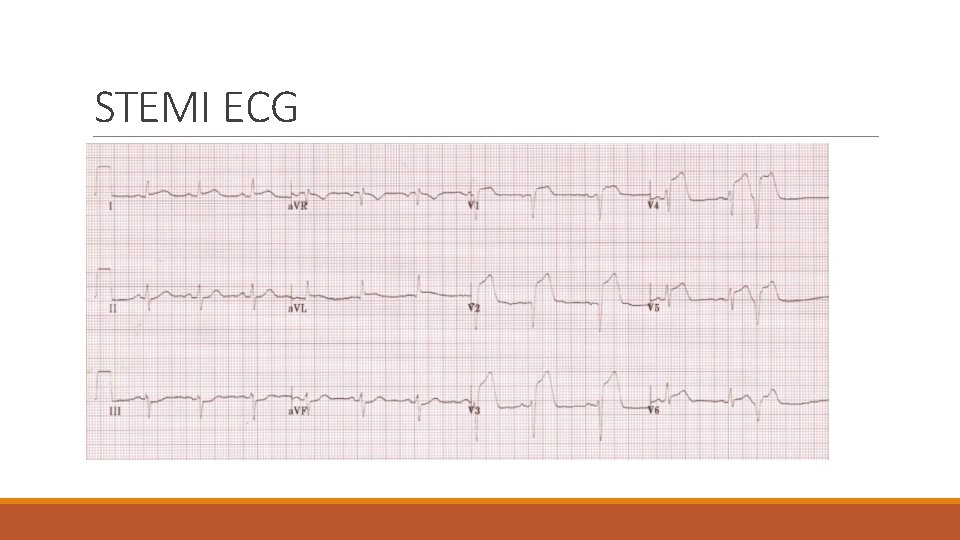
Chest pain v. Many reasons but a common reason is a lack of oxygen getting to the heart muscle v. How does oxygen get to the heart muscle? Coronary arteries v. Blockage of coronary arteries means the heart does not get the oxygen it needs v. Ischemia: inadequate blood supply to a region v. Infarction: obstruction of blood supply to a region causing death of tissue v. Heart attack=MI v. Angina: characteristic chest pain brought on by exertion and relieved with rest v. Acute coronary syndrome: NSTEMI or STEMI (Heart Attack) v 9/10 of heart attacks are due to atherosclerosis
STEMI ECG
Atrial Fibrillation
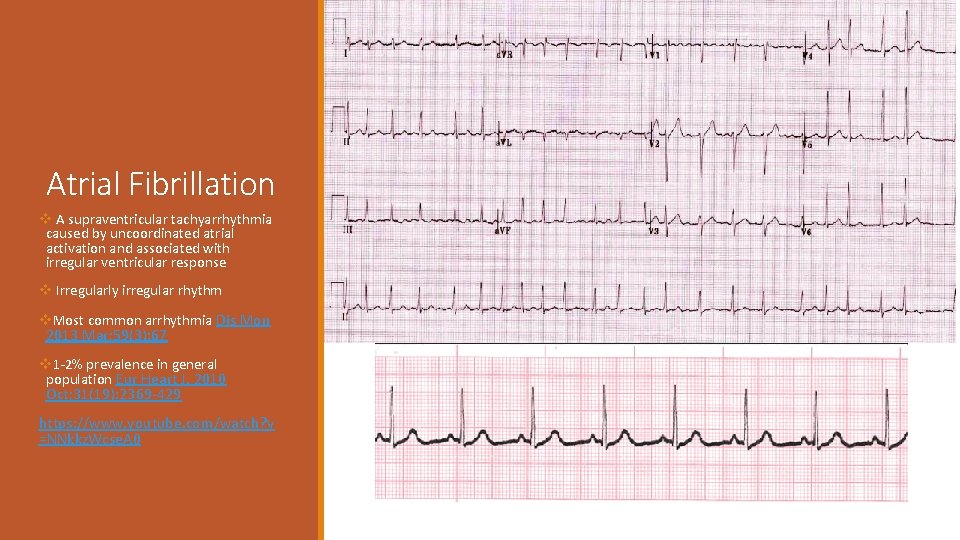
Atrial Fibrillation v A supraventricular tachyarrhythmia caused by uncoordinated atrial activation and associated with irregular ventricular response v Irregularly irregular rhythm v. Most common arrhythmia Dis Mon 2013 Mar; 59(3): 67 v 1 -2% prevalence in general population Eur Heart J. 2010 Oct; 31(19): 2369 -429 https: //www. youtube. com/watch? v =NNkkz. Wcse. A 0
Atrial Fibrillation Risk Factors v. Increased atrial strain: Valvular heart disease, hypertension, CHF v. Increased atrial irritability: Thyrotoxicosis, alcohol, stimulants, pericarditis, pneumonia/sepsis, cardiac surgery v. Age v. Sleep apnea, renal failure, diabetes, COPD
Atrial Fibrillation Symptoms v. Palpitations v. Dizziness, Pre-syncope/syncope v. SOB, Chest pain v. Fatigue, Decreased exercise tolerance
Arial Fibrillation Diagnosis v 12 lead ECG v 24 hour holter monitor v 2 week event monitor v. Implantable loop recorder
Atrial Fibrillation Complications v. Atrial thrombus ➡ Stroke, Systemic embolization v. Fall risk
Stroke
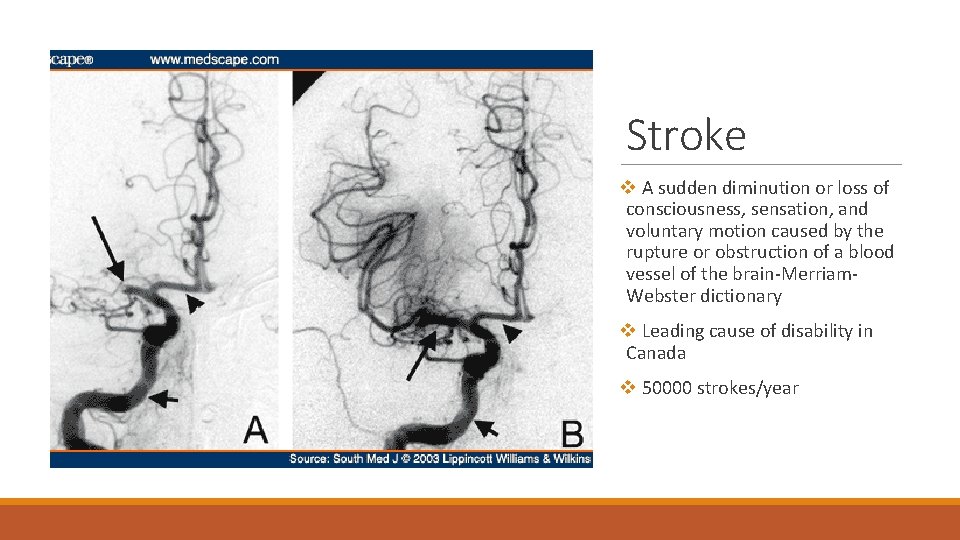
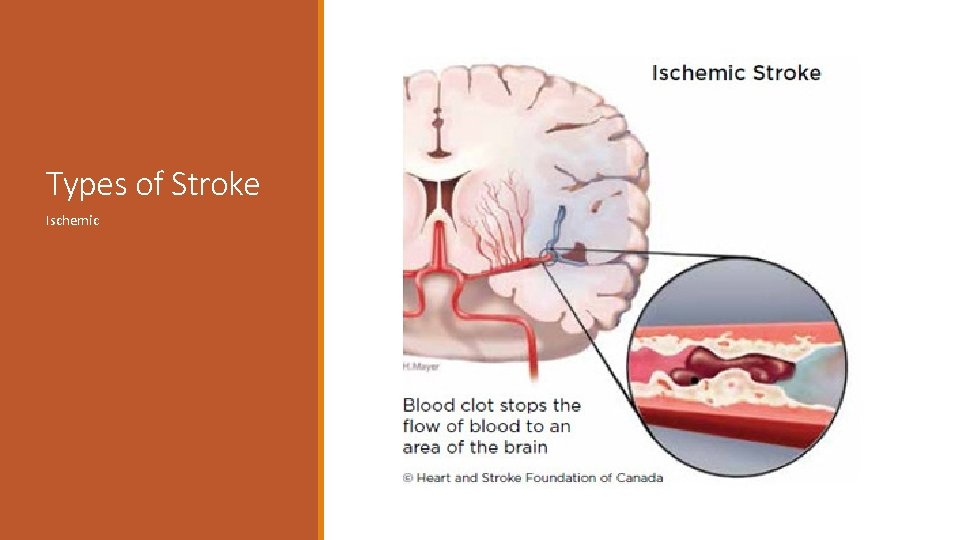
Stroke v A sudden diminution or loss of consciousness, sensation, and voluntary motion caused by the rupture or obstruction of a blood vessel of the brain-Merriam. Webster dictionary v Leading cause of disability in Canada v 50000 strokes/year
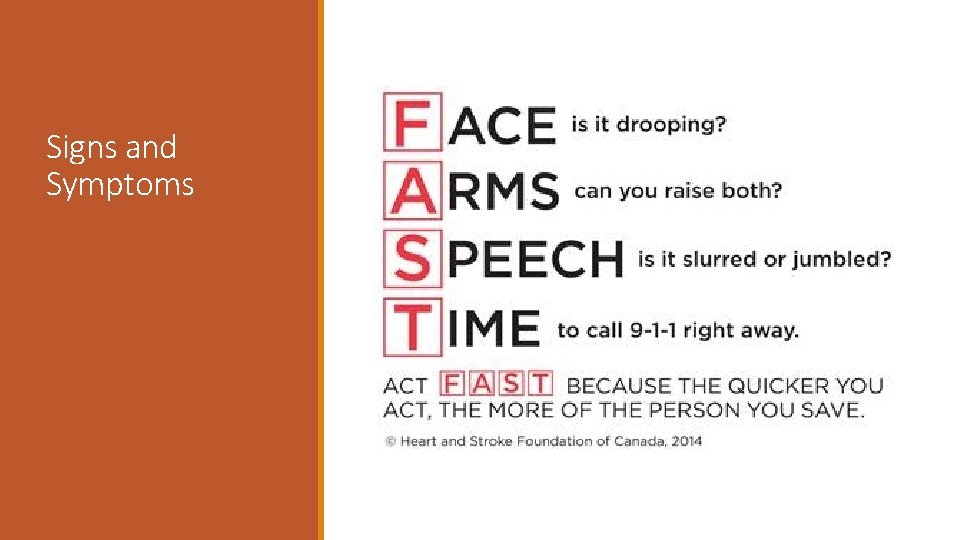
Signs and Symptoms
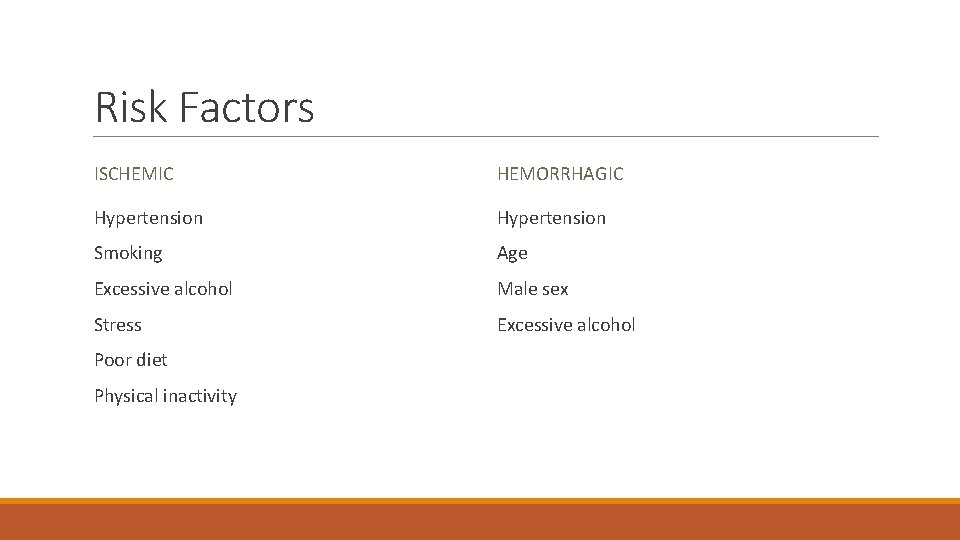
Risk Factors ISCHEMIC HEMORRHAGIC Hypertension Smoking Age Excessive alcohol Male sex Stress Excessive alcohol Poor diet Physical inactivity
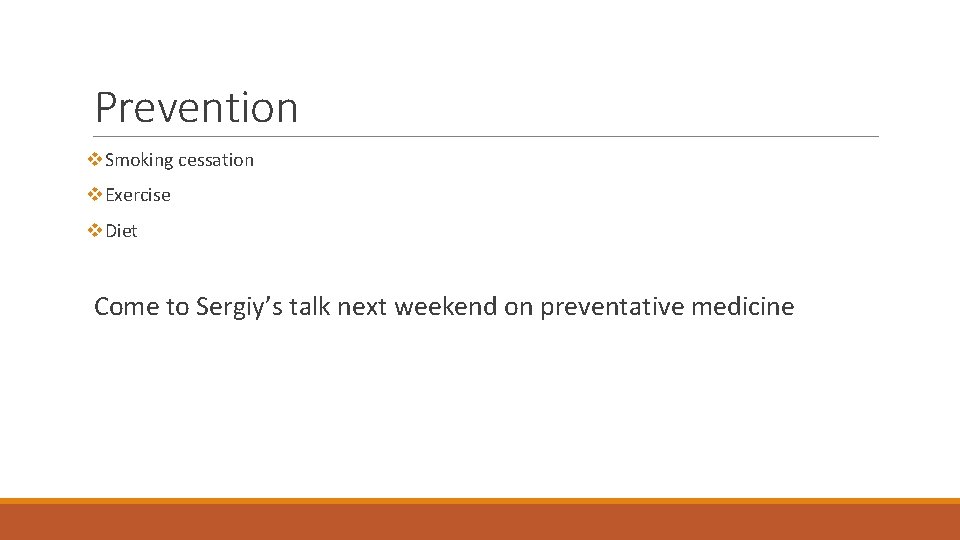
Prevention v. Smoking cessation v. Exercise v. Diet Come to Sergiy’s talk next weekend on preventative medicine
Pop quiz 1) Which chambers of the heart receive blood? Which chambers pump it away? 2) What does it mean to have a sinus rhythm? 3) What is the difference between an EKG, an ECG, and an Echocardiogram? 4) What is hypertension? 5) True or false hypertension is the number one modifiable risk factor for stroke.
Questions
Types of Stroke Ischemic
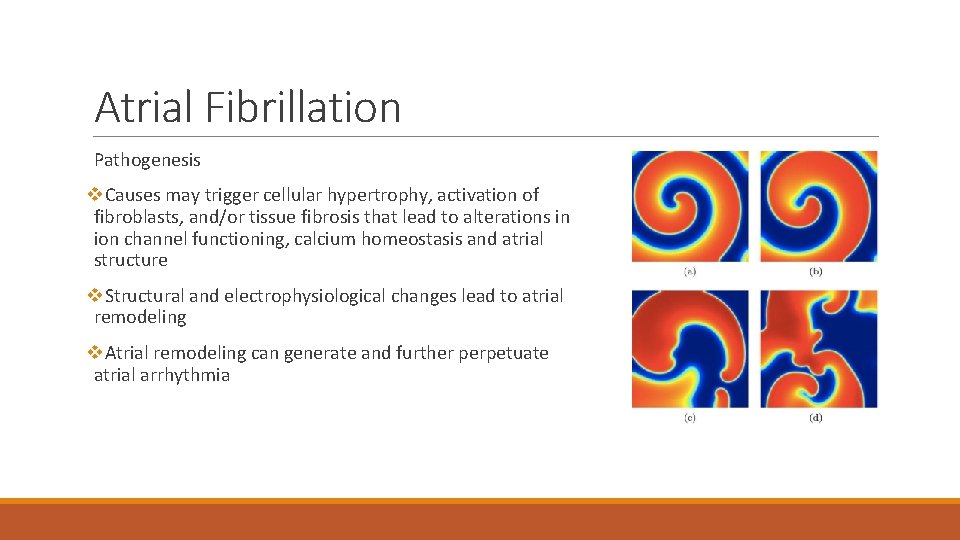
Atrial Fibrillation Pathogenesis v. Causes may trigger cellular hypertrophy, activation of fibroblasts, and/or tissue fibrosis that lead to alterations in ion channel functioning, calcium homeostasis and atrial structure v. Structural and electrophysiological changes lead to atrial remodeling v. Atrial remodeling can generate and further perpetuate atrial arrhythmia