
UNEPSETAC LifeCycle Initiative Life Cycle Management Capability Maturity
UNEP/SETAC Life-Cycle Initiative Life Cycle Management Capability Maturity Model (LCM-CMM) Building Capacity for Sustainable Value Chains International Life Cycle Partnership To bring science-based life cycle approaches into practice worldwide
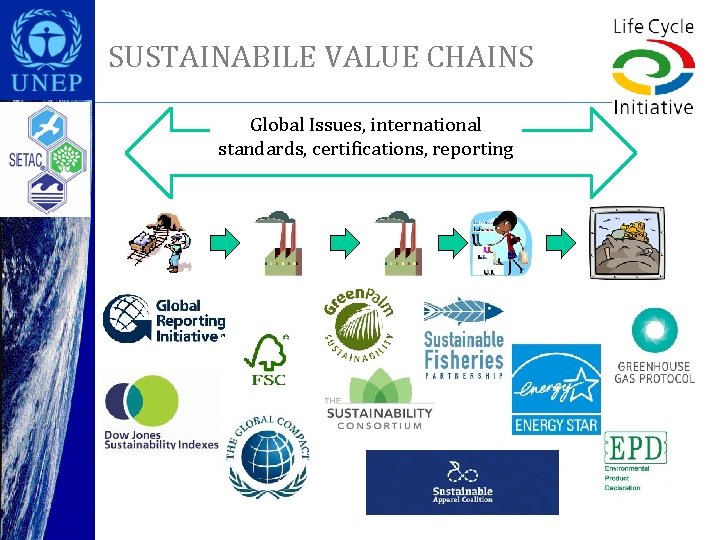
SUSTAINABILE VALUE CHAINS Global Issues, international standards, certifications, reporting
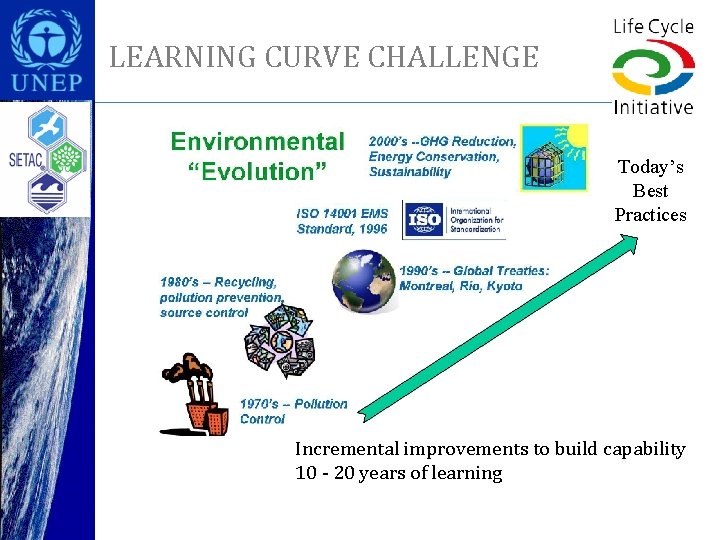
LEARNING CURVE CHALLENGE Today’s Best Practices Incremental improvements to build capability 10 - 20 years of learning
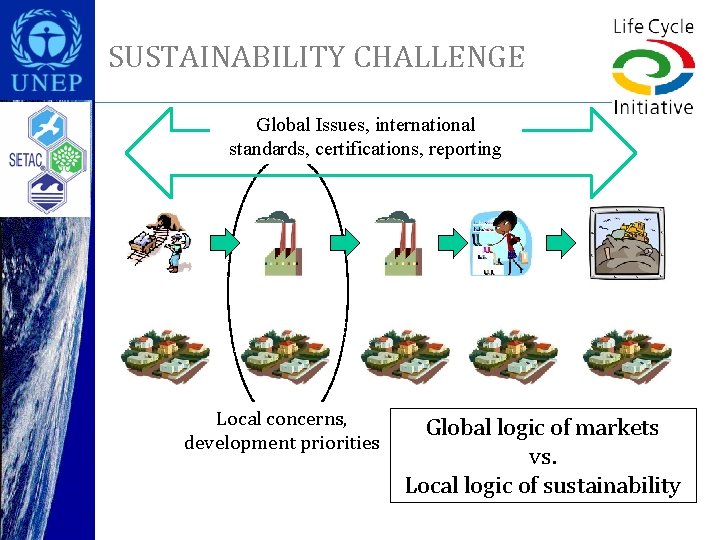
SUSTAINABILITY CHALLENGE Global Issues, international standards, certifications, reporting Local concerns, development priorities Global logic of markets vs. Local logic of sustainability
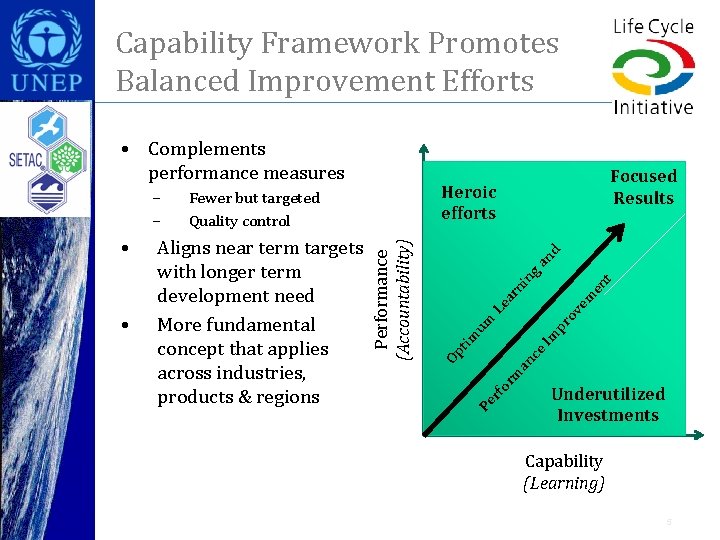
Capability Framework Promotes Balanced Improvement Efforts • Complements performance measures ga nd en t in em ar n ov Le m pr um ce I tim an rfo rm Pe • Aligns near term targets with longer term development need More fundamental concept that applies across industries, products & regions Op • Heroic efforts Fewer but targeted Quality control Performance (Accountability) – – Focused Results Underutilized Investments Capability (Learning) 5
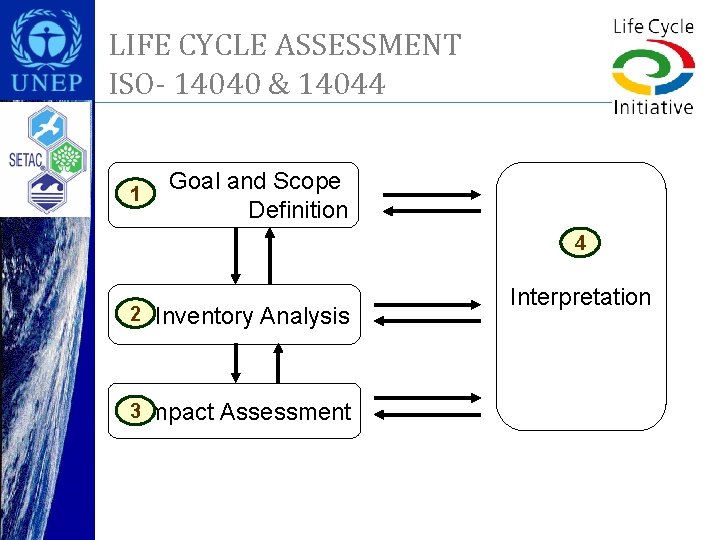
LIFE CYCLE ASSESSMENT ISO- 14040 & 14044 1 Goal and Scope Definition 4 2 Inventory Analysis 3 Impact Assessment Interpretation
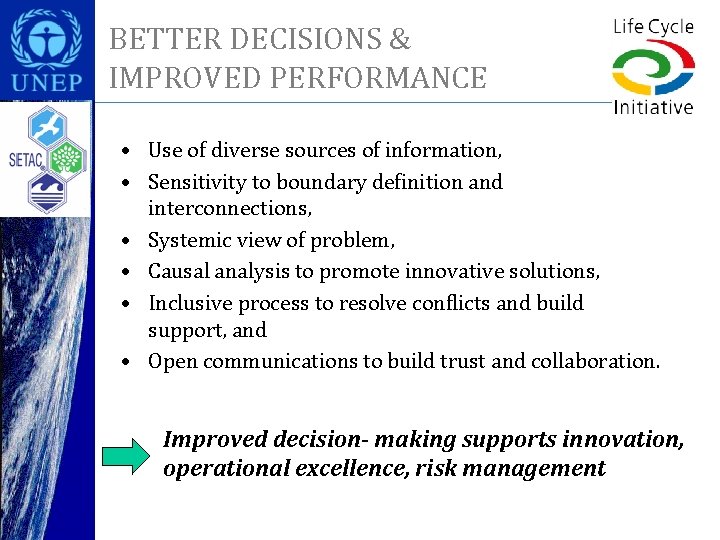
BETTER DECISIONS & IMPROVED PERFORMANCE • Use of diverse sources of information, • Sensitivity to boundary definition and interconnections, • Systemic view of problem, • Causal analysis to promote innovative solutions, • Inclusive process to resolve conflicts and build support, and • Open communications to build trust and collaboration. Improved decision- making supports innovation, operational excellence, risk management
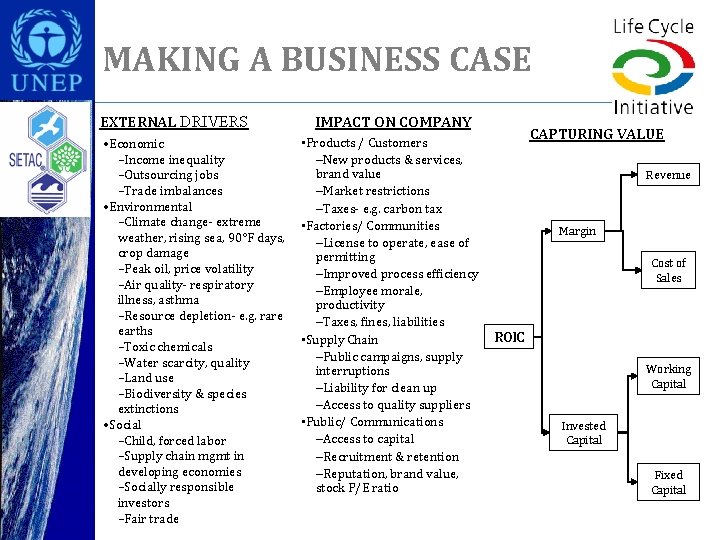
MAKING A BUSINESS CASE EXTERNAL DRIVERS • Economic –Income inequality –Outsourcing jobs –Trade imbalances • Environmental –Climate change- extreme weather, rising sea, 90°F days, crop damage –Peak oil, price volatility –Air quality- respiratory illness, asthma –Resource depletion- e. g. rare earths –Toxic chemicals –Water scarcity, quality –Land use –Biodiversity & species extinctions • Social –Child, forced labor –Supply chain mgmt in developing economies –Socially responsible investors –Fair trade IMPACT ON COMPANY • Products / Customers –New products & services, brand value –Market restrictions –Taxes- e. g. carbon tax • Factories/ Communities –License to operate, ease of permitting –Improved process efficiency –Employee morale, productivity –Taxes, fines, liabilities • Supply Chain –Public campaigns, supply interruptions –Liability for clean up –Access to quality suppliers • Public/ Communications –Access to capital –Recruitment & retention –Reputation, brand value, stock P/E ratio CAPTURING VALUE Revenue Margin Cost of Sales ROIC Working Capital Invested Capital Fixed Capital
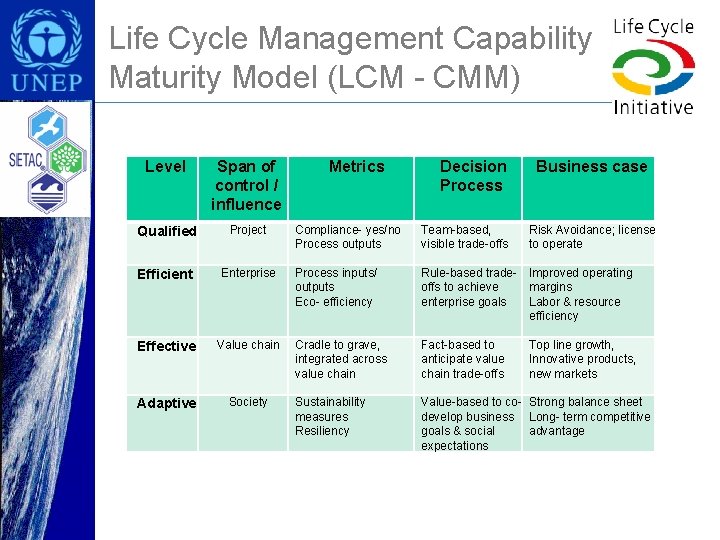
Life Cycle Management Capability Maturity Model (LCM - CMM) Level Span of control / influence Qualified Project Efficient Enterprise Effective Value chain Adaptive Society Metrics Decision Process Business case Compliance- yes/no Process outputs Team-based, visible trade-offs Risk Avoidance; license to operate Process inputs/ outputs Eco- efficiency Rule-based trade- Improved operating offs to achieve margins enterprise goals Labor & resource efficiency Cradle to grave, integrated across value chain Fact-based to anticipate value chain trade-offs Sustainability measures Resiliency Value-based to co- Strong balance sheet develop business Long- term competitive goals & social advantage expectations Top line growth, Innovative products, new markets

Continual Improvement Multiple P-D-L-A Cycles Act Plan Learn Capability Society Capital preservation; sustainable prosperity Effective Value chain Top line growth Innovative products, new markets Efficient Company Process efficiency; improved margins Qualified Facility/ Process Risk avoidance; license to operate Plan Learn Do Act Plan Learn Do Business case Adaptive Do Act Scope Logical sequence of improvements based on experiences of global leaders to speed learning
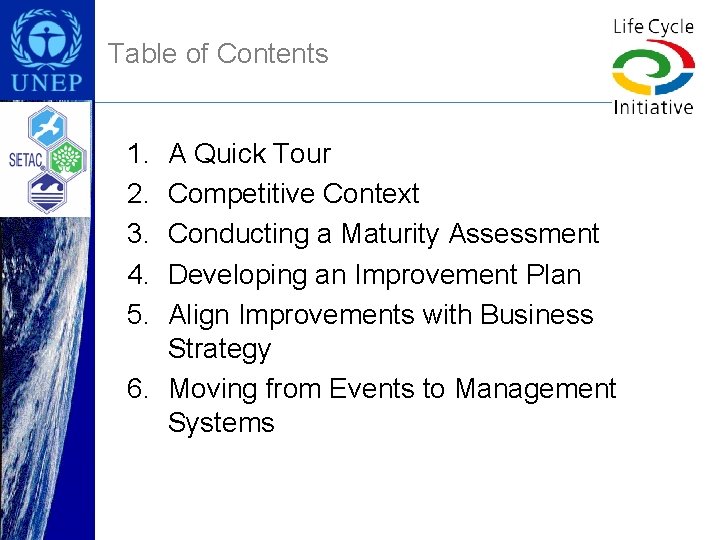
Table of Contents 1. 2. 3. 4. 5. A Quick Tour Competitive Context Conducting a Maturity Assessment Developing an Improvement Plan Align Improvements with Business Strategy 6. Moving from Events to Management Systems
- Slides: 11