
Undertaking effective selfassessment 1 What is selfassessment Selfassessment

- Slides: 22
Undertaking effective self-assessment 1
What is self-assessment? • Self-assessment is an evaluation of the quality of the learners’ experience, the standards achieved and the effectiveness of the management and quality assurance arrangements. 2
What is the scope of selfassessment? • Self-assessment should embrace all areas of learning and the key services that impact on the experiences of the learners. 3
What is its purpose? • The purpose of self-assessment is to critically review the provision in order to improve the quality of the learners’ experiences. • It is important to realise that self-assessment is designed to secure improvements in provision not just to review and report it. 4
Who uses the self-assessment report (SAR)? • Providers should use relevant sections of the report to raise standards • The Adult Leaning Inspectorate (ALI) will use the SAR during inspection as part of their evidence base • The LSC will use the SAR as a key source of evidence when making decisions about contracts and funding 5
How often is a report produced? • Self-assessment should be an annual process, integrated with strategic planning and the quality assurance cycles 6
Who is responsible for producing the SAR? • With many providers, teams produce selfassessments for their area, which are then brought together in the provider SAR. • The process is best led and co-ordinated by a Senior Manager 7
What is the basis for making judgements? • Providers undertaking self-assessment need detailed criteria for evaluating the quality of provision. • The quality statements in the common inspection framework (CIF) should be used in the process of self-assessment 8
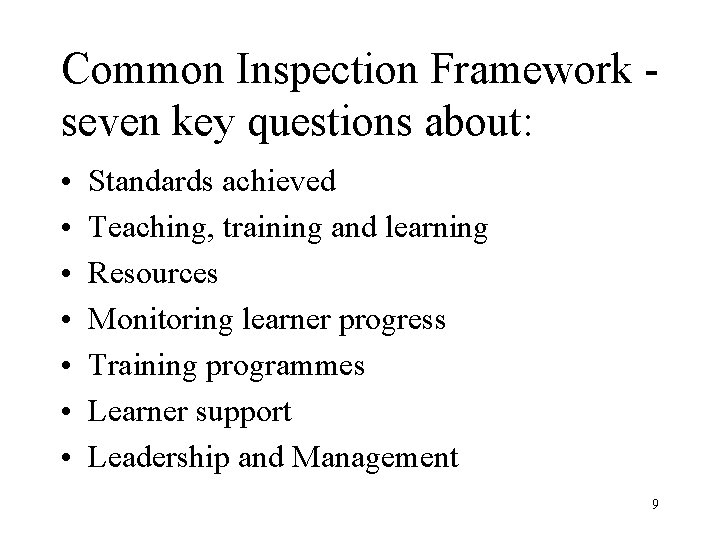
Common Inspection Framework seven key questions about: • • Standards achieved Teaching, training and learning Resources Monitoring learner progress Training programmes Learner support Leadership and Management 9
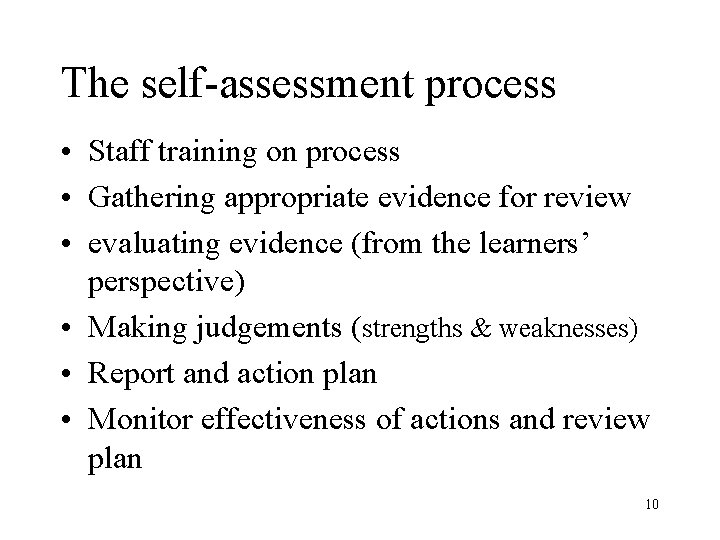
The self-assessment process • Staff training on process • Gathering appropriate evidence for review • evaluating evidence (from the learners’ perspective) • Making judgements (strengths & weaknesses) • Report and action plan • Monitor effectiveness of actions and review plan 10
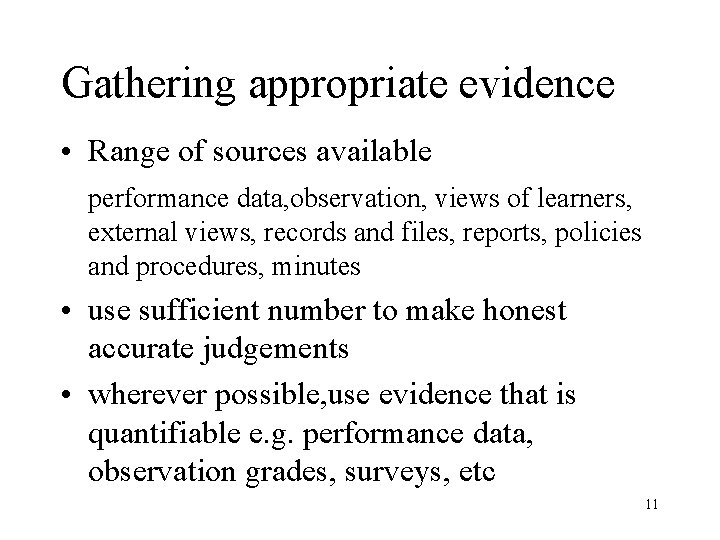
Gathering appropriate evidence • Range of sources available performance data, observation, views of learners, external views, records and files, reports, policies and procedures, minutes • use sufficient number to make honest accurate judgements • wherever possible, use evidence that is quantifiable e. g. performance data, observation grades, surveys, etc 11
12
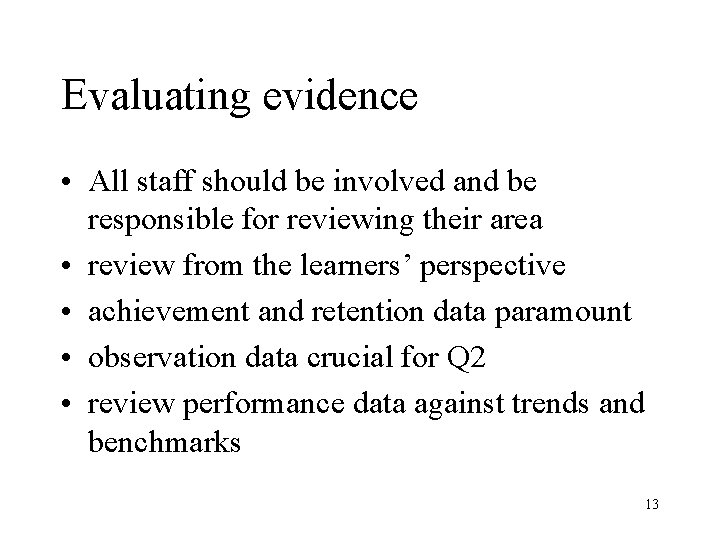
Evaluating evidence • All staff should be involved and be responsible for reviewing their area • review from the learners’ perspective • achievement and retention data paramount • observation data crucial for Q 2 • review performance data against trends and benchmarks 13
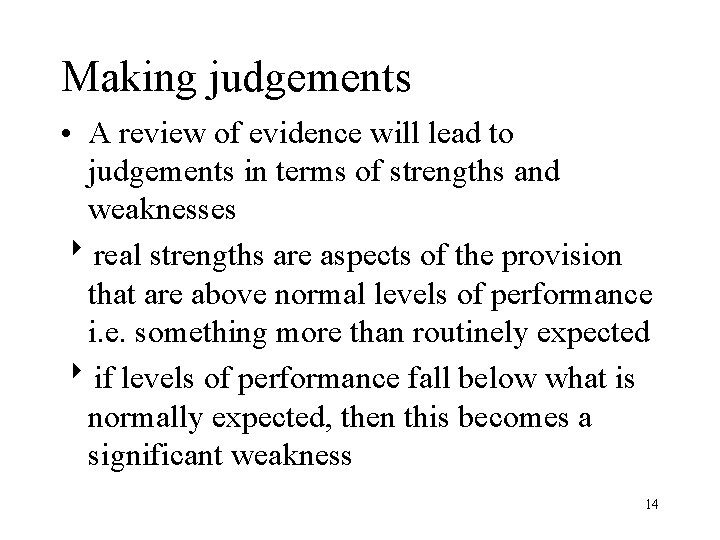
Making judgements • A review of evidence will lead to judgements in terms of strengths and weaknesses 8 real strengths are aspects of the provision that are above normal levels of performance i. e. something more than routinely expected 8 if levels of performance fall below what is normally expected, then this becomes a significant weakness 14
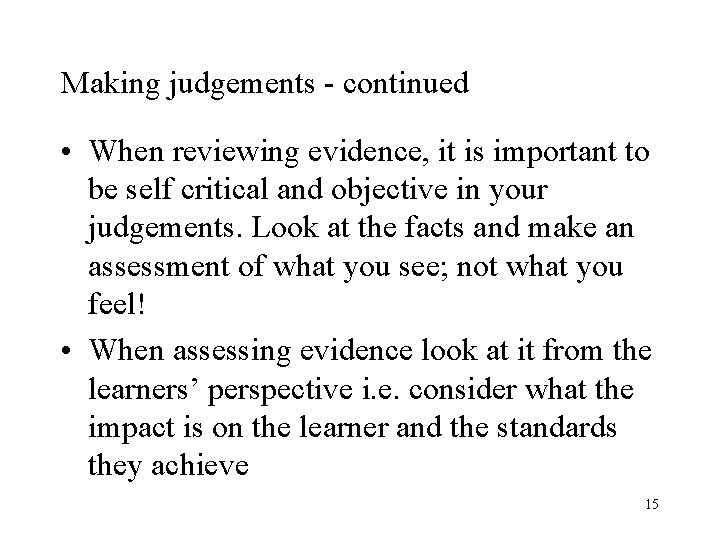
Making judgements - continued • When reviewing evidence, it is important to be self critical and objective in your judgements. Look at the facts and make an assessment of what you see; not what you feel! • When assessing evidence look at it from the learners’ perspective i. e. consider what the impact is on the learner and the standards they achieve 15
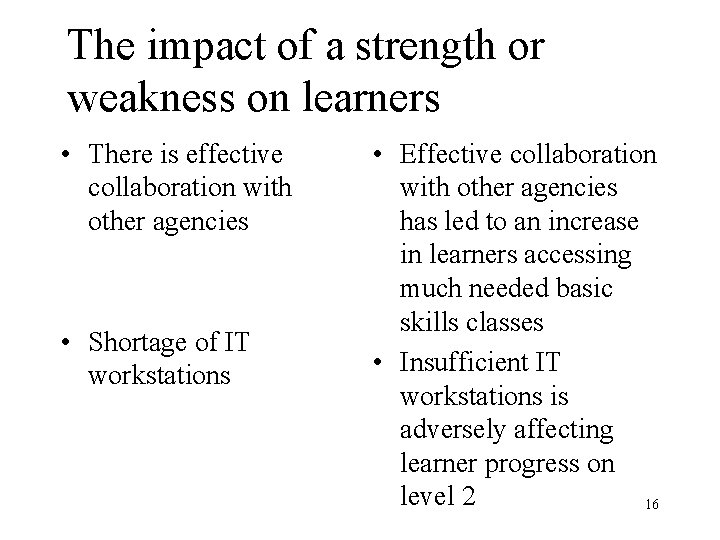
The impact of a strength or weakness on learners • There is effective collaboration with other agencies • Shortage of IT workstations • Effective collaboration with other agencies has led to an increase in learners accessing much needed basic skills classes • Insufficient IT workstations is adversely affecting learner progress on level 2 16
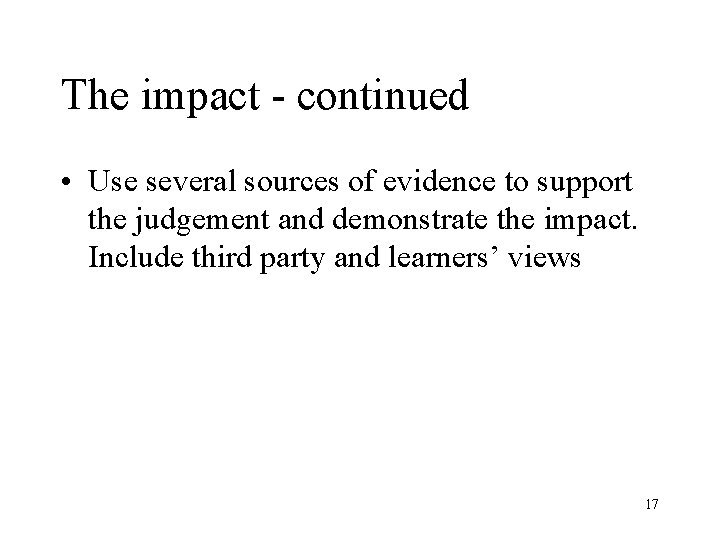
The impact - continued • Use several sources of evidence to support the judgement and demonstrate the impact. Include third party and learners’ views 17
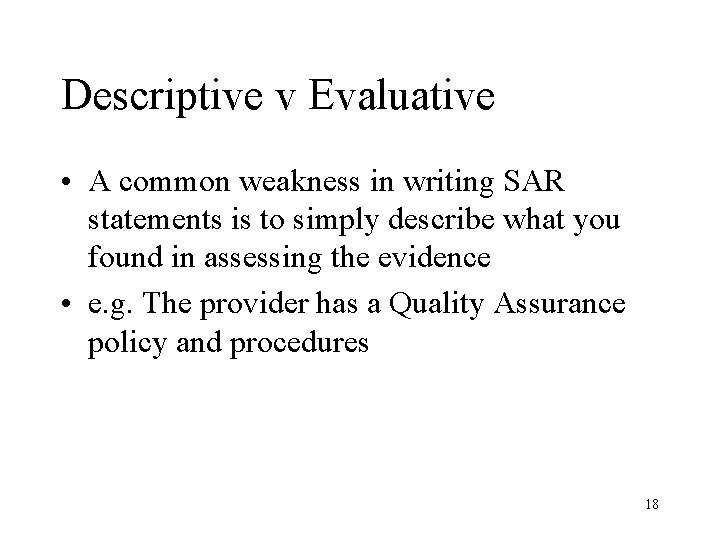
Descriptive v Evaluative • A common weakness in writing SAR statements is to simply describe what you found in assessing the evidence • e. g. The provider has a Quality Assurance policy and procedures 18
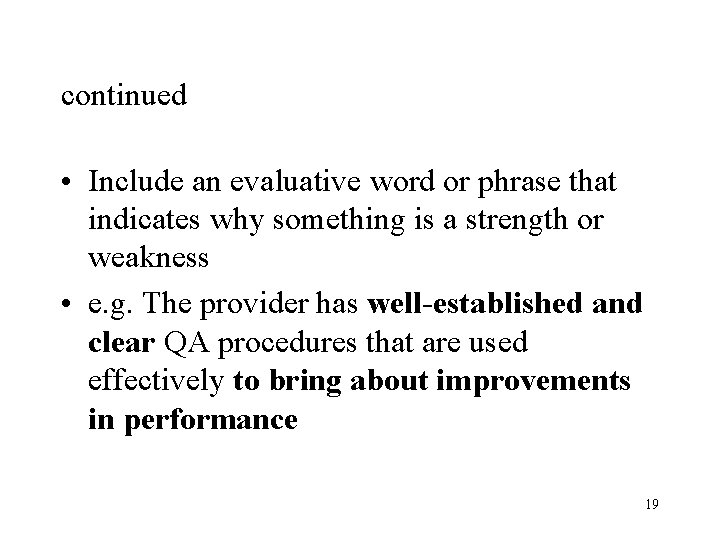
continued • Include an evaluative word or phrase that indicates why something is a strength or weakness • e. g. The provider has well-established and clear QA procedures that are used effectively to bring about improvements in performance 19
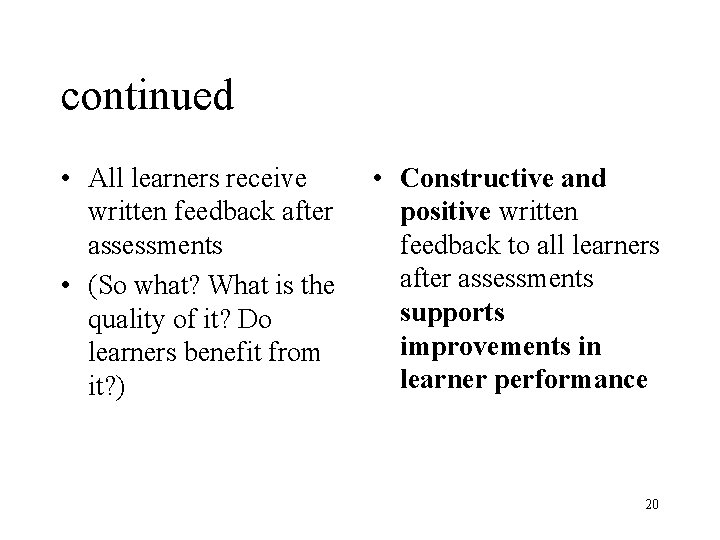
continued • All learners receive written feedback after assessments • (So what? What is the quality of it? Do learners benefit from it? ) • Constructive and positive written feedback to all learners after assessments supports improvements in learner performance 20
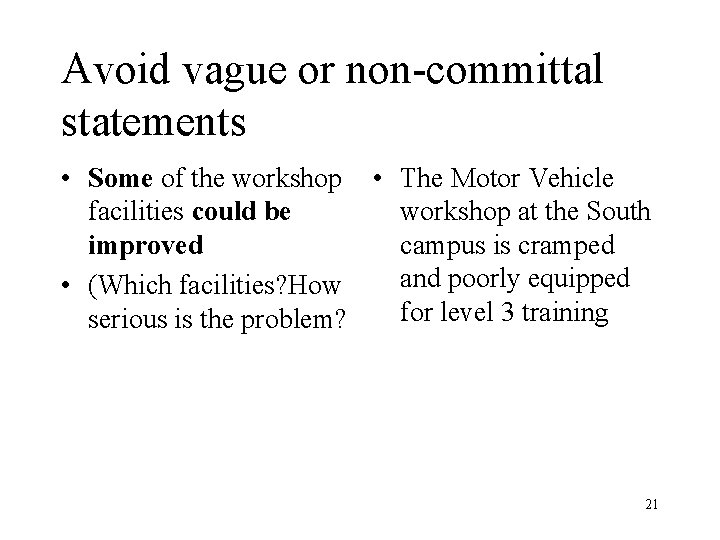
Avoid vague or non-committal statements • Some of the workshop • The Motor Vehicle facilities could be workshop at the South improved campus is cramped and poorly equipped • (Which facilities? How for level 3 training serious is the problem? 21
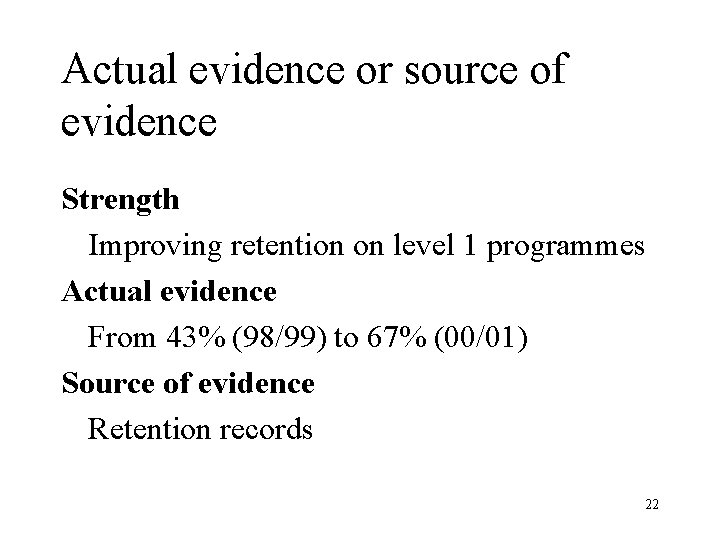
Actual evidence or source of evidence Strength Improving retention on level 1 programmes Actual evidence From 43% (98/99) to 67% (00/01) Source of evidence Retention records 22