
Understanding Your Information Culture Gillian Oliver Victoria University
- Slides: 19
Understanding Your Information Culture Gillian Oliver Victoria University of Wellington
Outline • Explaining information culture • A framework to assess information culture • Promoting a recordkeeping culture
Part One WHAT IS INFORMATION CULTURE?
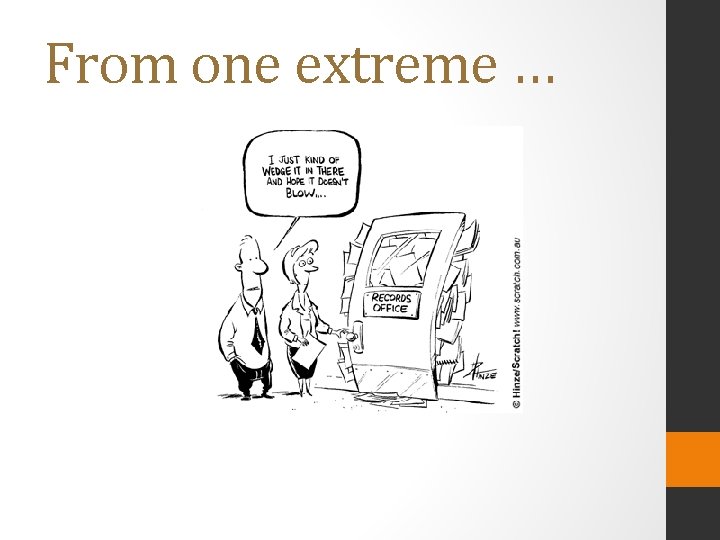
From one extreme …
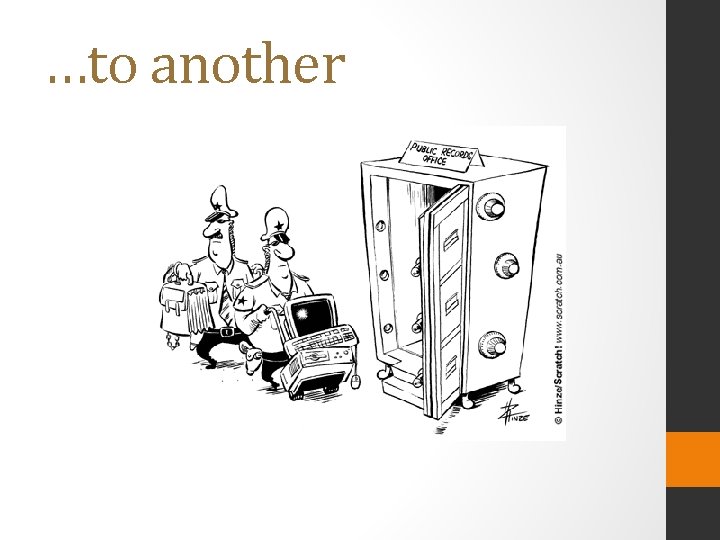
…to another
Definition • The values accorded to information, and attitudes towards it, specifically within organisational contexts
Why does this matter? Major UK investigation into electronic records management found that: • “people issues are predominant, fundamental and challenging as they concern culture, philosophical attitudes, awareness of RM and ERM issues, preferences, knowledge and skills” • “records professionals may be part of the problem as well as part of the solution, e. g. they take the holistic view and have the principles and tools to manage records but their demands may be unrealistic or too constraining”
Part Two THE ASSESSMENT FRAMEWORK
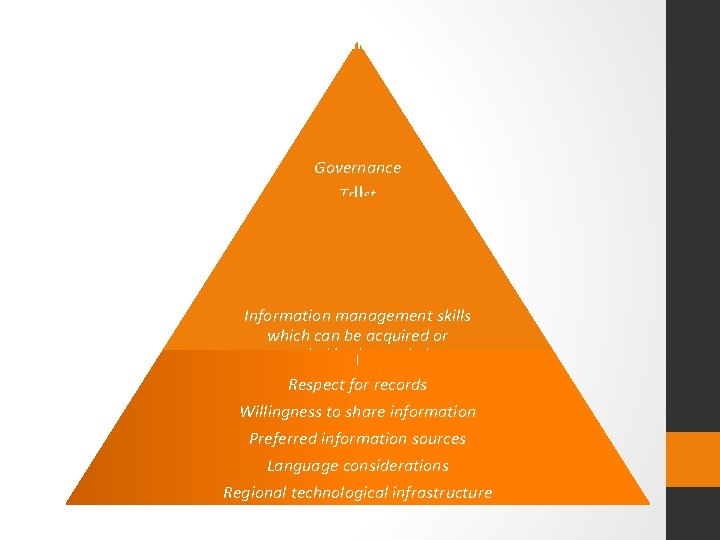
III Governance II Trust Information management skills which can be acquired or extended in the I workplace Respect for records Willingness to share information Preferred information sources Language considerations Regional technological infrastructure
Level One • Value accorded to records (and other information types) • Information preferences • Language • National/regional technological infrastructure
Level Two • Information-related competencies • Legislative/regulatory awareness
Level Three • Corporate information technology governance • User trust in recordkeeping systems
PART THREE PROMOTING A RECORDKEEPING CULTURE
Actions • Diagnose the existing information culture • Identify areas where changes can be made • Tailor implementation strategies appropriately
Diagnosis – an example • Develop an online survey to find out what your users really think about records management services, what their information-related competencies are • E. g. to find out how people view their roles & responsiblities ask for responses to the following statements: “RM is everyone’s responsibility” “RM requirements are a barrier to working effciently” “RM is an essential part of my work” • E. g. to find out if people trust recordkeeping systems, ask if they agree with the following statement: “I’m confident I’ll be able to retrieve a record I contributed to the organisational filing system in 5 years time” • E. g. to find out what training needs are ask for responses to the following statements: “Constant email causes me stress” “I find it difficult to find documents I created more than a year ago”
Interpreting the findings • If there is a consistently low value accorded to records across the organisation – this is an area that has to be recognised, but cannot be changed overnight, if at all • If users don’t trust their organisational recordkeeping systems – this is a feature that can be changed
Developing contextappropriate strategies • Use your insight into training needs to tailor and deliver records management training. For example – if information overload is a significant source of stress, develop very specific training focussing on email management (records management objectives implicit rather than explicit). • If a low value accorded to records, focus on relationship building and making sure records management is an integral part of the organisation – resist the temptation to hide in the backroom! • “Sell” policies and systems by emphasising motivators that work in your particular context. Avoid those that will act as disincentives
Conclusions • In order to achieve recordkeeping objectives we have to understand our information culture • Necessary to involve users in design and implementation of systems • Need to be prepared to adapt our tools to the organisational environment
Gillian Oliver and Fiorella Foscarini (2014). Records management and information culture: tackling the people problem. London: Facet Gillian. oliver@vuw. ac. nz THANK YOU!