
UNDERSTANDING YOUR BRAIN NERVOUS SYSTEM Ocean Park Natural
UNDERSTANDING YOUR BRAIN & NERVOUS SYSTEM Ocean Park Natural Therapies Dr. T. W. Brown, ND
Your Nervous System n Your Nervous System is Composed of 3 Distinct Components • Central Nervous System • Peripheral Nervous System • Autonomic Nervous System
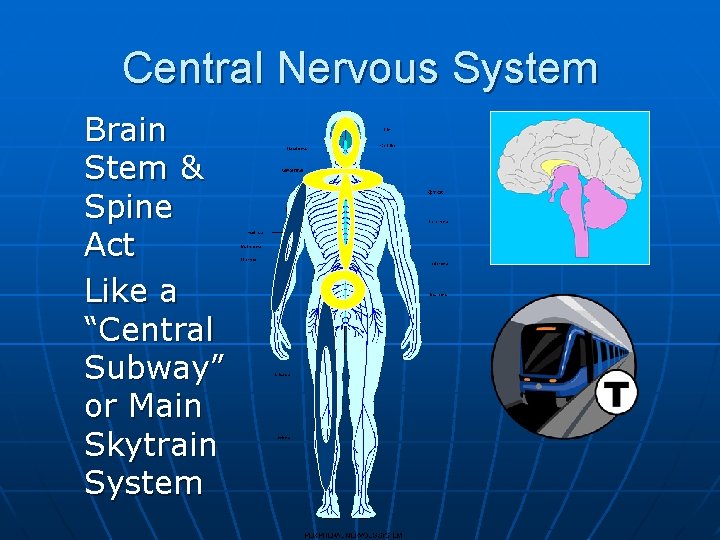
Central Nervous System Brain Stem & Spine Act Like a “Central Subway” or Main Skytrain System
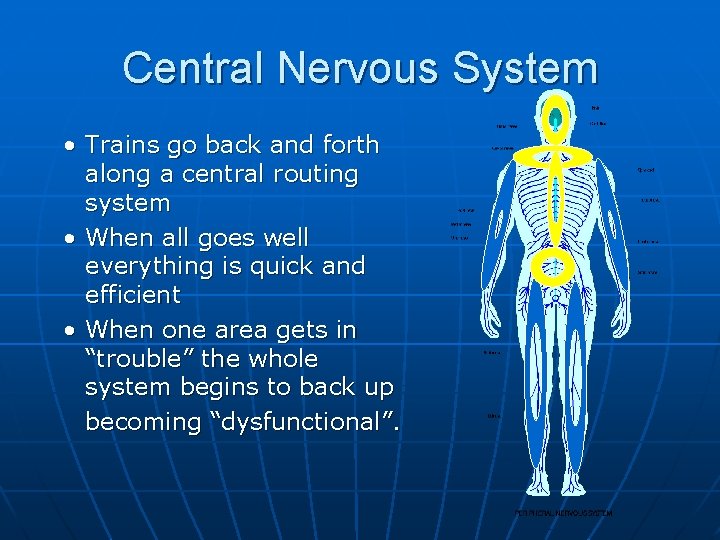
Central Nervous System • Trains go back and forth along a central routing system • When all goes well everything is quick and efficient • When one area gets in “trouble” the whole system begins to back up becoming “dysfunctional”.
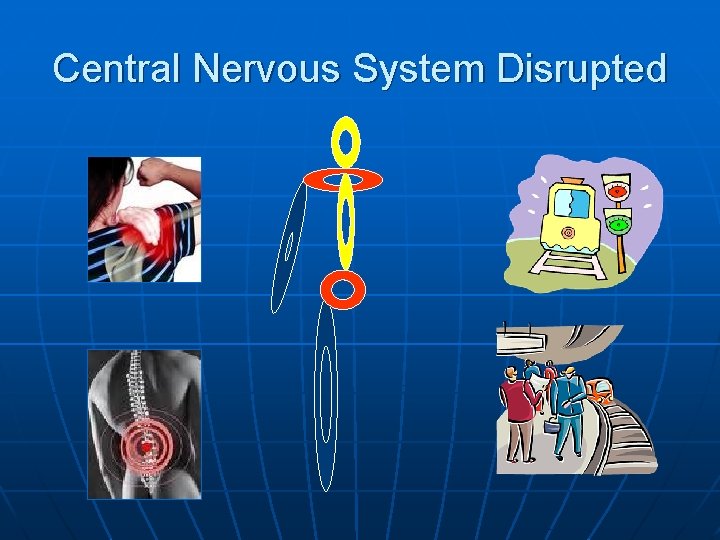
Central Nervous System Disrupted

Peripheral Nervous System n n Routes connecting to outlying areas “the suburbs” =extremities Connects to spinal (central) system at connecting terminals or hubs called – • Nerve plexi or • Nerve ganglia
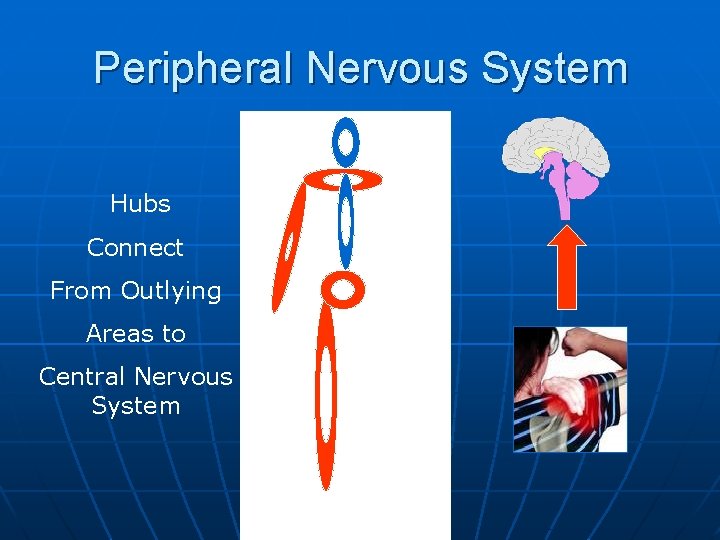
Peripheral Nervous System Hubs Connect From Outlying Areas to Central Nervous System
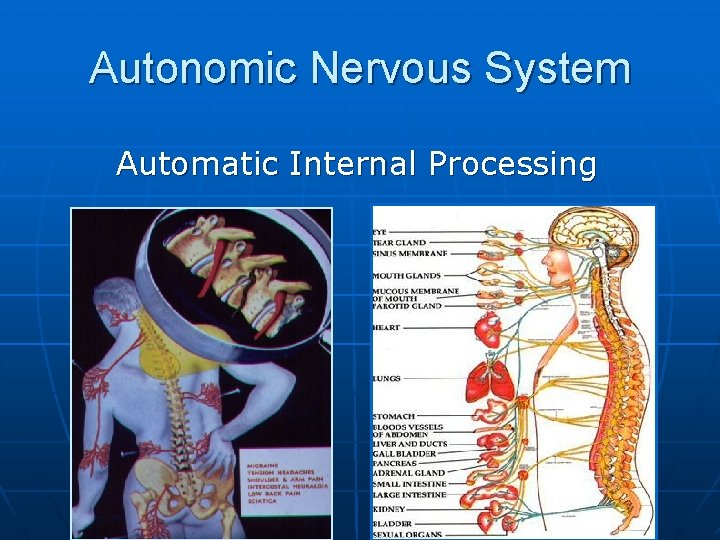
Autonomic Nervous System Automatic Internal Processing
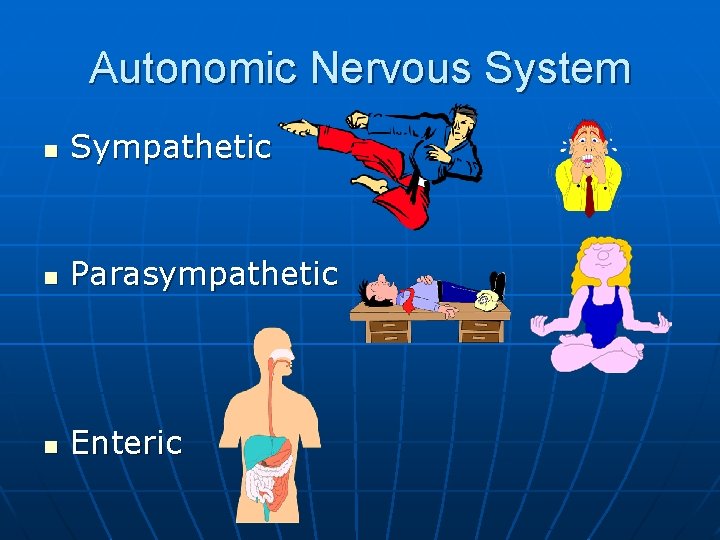
Autonomic Nervous System n Sympathetic n Parasympathetic n Enteric
Autonomic Nervous System Sympathetic – fight, flight, fright and the ‘away from system’ n n Parasympathetic – rest, repair, relaxation, reproduction – our ‘towards system’ Enteric nervous system – our gut or ‘belly brain’ -
Autonomic Nervous System n n Innervates everything – including all joints, viscera (guts), and extracellular tissue (outside the cell) Operates entirely at the subconscious levels of the nervous system (Limbic and Reptilian Levels)
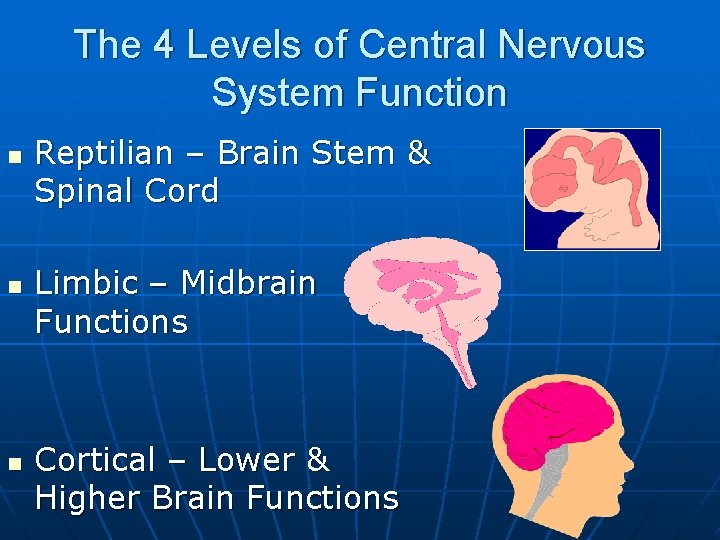
The 4 Levels of Central Nervous System Function n Reptilian – Brain Stem & Spinal Cord Limbic – Midbrain Functions Cortical – Lower & Higher Brain Functions

Human Triune Brain

Reptilian System n n Primitive High Speed Basic & Reflexive Poor Differentiation Basic Survival Functions • Withdrawal or Startle Reflexes • Food – Suckling, Swallowing Reflexes • Shelter – Bonding, Fetal Positioning • Reproduction – Mating Reflexes • Territorial – Proprioception Reflexes

Reptilian System n Reflexive • Reflexes are designed to activate quickly – ie without thought • Activate only when stimulated • Are not supposed to be on – all-the-time or at-the-wrong-time. • Should be active when needed. n Inappropriate activation/deactivation equals problems in normal processing

Limbic – Mammalian Brain n n Midbrain Emotions Bonding Pain – Abandonment-Survival Affects Decision Making – Towards/Away From
“Survival System Memories” n Memory Can Store in the Reptilian and Parts of the Limbic System • As opposed to everyday memories…. . • These are remembered and put into long term survival memory – very hard to extinguish…(IMPRINTED). . . • Their purpose is to “protect” you…. • They form the basis of phobias, neurosis, and post traumatic stress syndromes
Survival System Memories (Imprints) n n n Because they reside below the conscious level of brain functioning… They have to be treated from the level of the subconscious/ unconscious functioning – (much like hidden files/programs in a computer) … Not from conscious over-ride “programming”
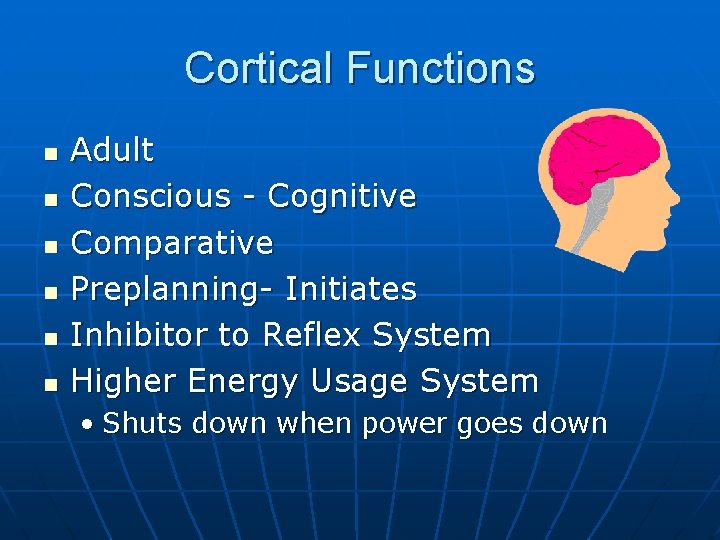
Cortical Functions n n n Adult Conscious - Cognitive Comparative Preplanning- Initiates Inhibitor to Reflex System Higher Energy Usage System • Shuts down when power goes down
Higher Brain Functioning n Preplanning & Initiation • The person operating the computer • Decides direction and desired outcomes • Cortex is the keyboard – to input and initiate functioning.
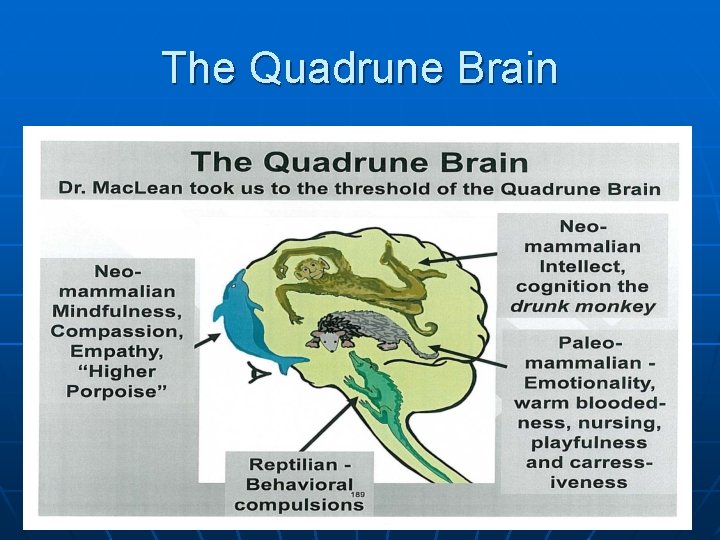
The Quadrune Brain
Higher Brain Functioning n Inhibitory – • Braking System on Lower Functions • Loss of higher functioning = exaggerated reflex actions – as with deep tendon reflexes
Higher Brain Functioning n Integration • Two of almost everything • Sharing and comparing of information • When working properly appears to be one coordinated , whole brain • When not working properly seems fragmented, fractured, or broken
Higher Brain Functioning n High Energy Utilization • Requires blood flow for oxygen, nutrients, and waste removal n Loss of Energy results in: • • • Hibernation or Safe Mode Shuts down to basic survival functions Loss of inhibition – basic behaviors surface or unleash • Coma or/at least sleep if severe (think of alcohol overload)

Cortical Function – Front/Back
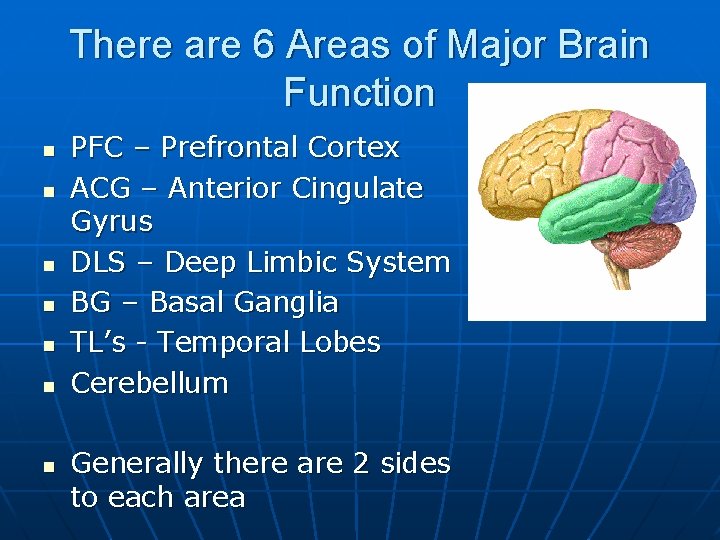
There are 6 Areas of Major Brain Function n n n PFC – Prefrontal Cortex ACG – Anterior Cingulate Gyrus DLS – Deep Limbic System BG – Basal Ganglia TL’s - Temporal Lobes Cerebellum Generally there are 2 sides to each area
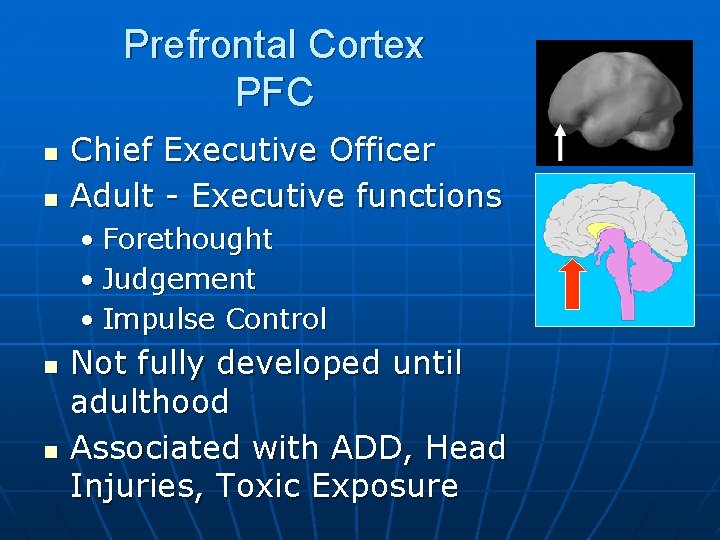
Prefrontal Cortex PFC n n Chief Executive Officer Adult - Executive functions • Forethought • Judgement • Impulse Control n n Not fully developed until adulthood Associated with ADD, Head Injuries, Toxic Exposure
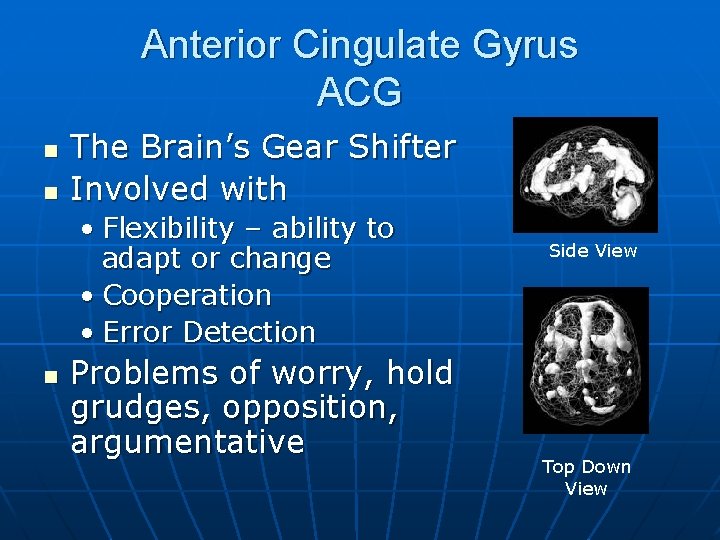
Anterior Cingulate Gyrus ACG n n The Brain’s Gear Shifter Involved with • Flexibility – ability to adapt or change • Cooperation • Error Detection n Problems of worry, hold grudges, opposition, argumentative Side View Top Down View
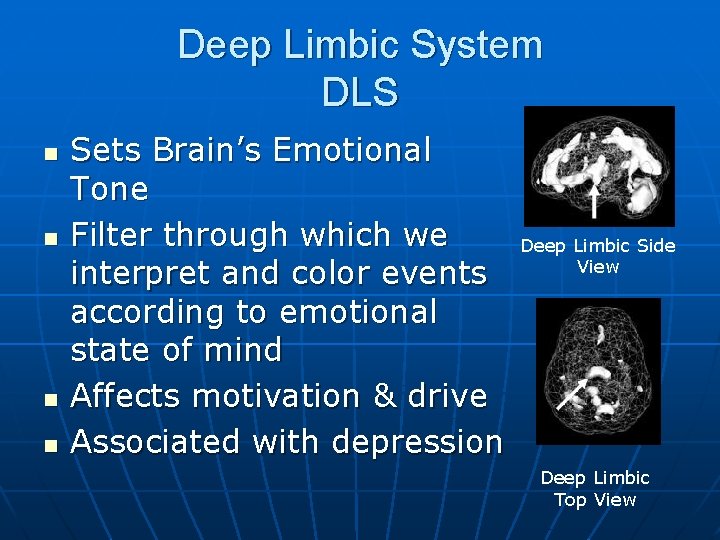
Deep Limbic System DLS n n Sets Brain’s Emotional Tone Filter through which we interpret and color events according to emotional state of mind Affects motivation & drive Associated with depression Deep Limbic Side View Deep Limbic Top View
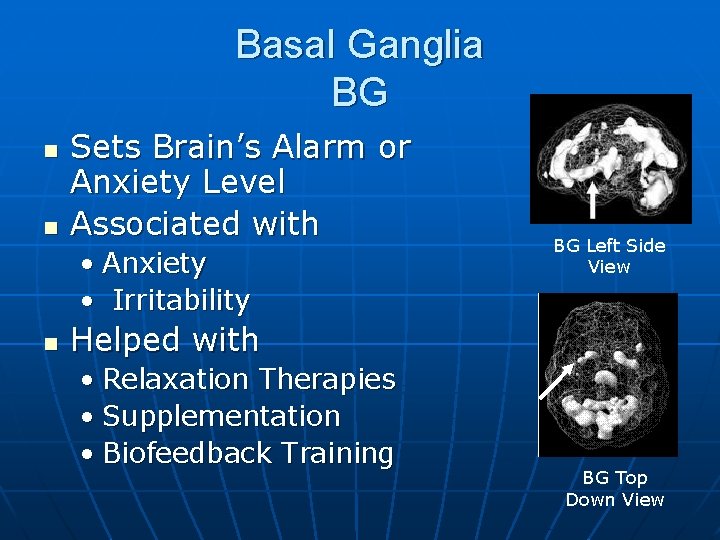
Basal Ganglia BG n n Sets Brain’s Alarm or Anxiety Level Associated with • Anxiety • Irritability n BG Left Side View Helped with • Relaxation Therapies • Supplementation • Biofeedback Training BG Top Down View
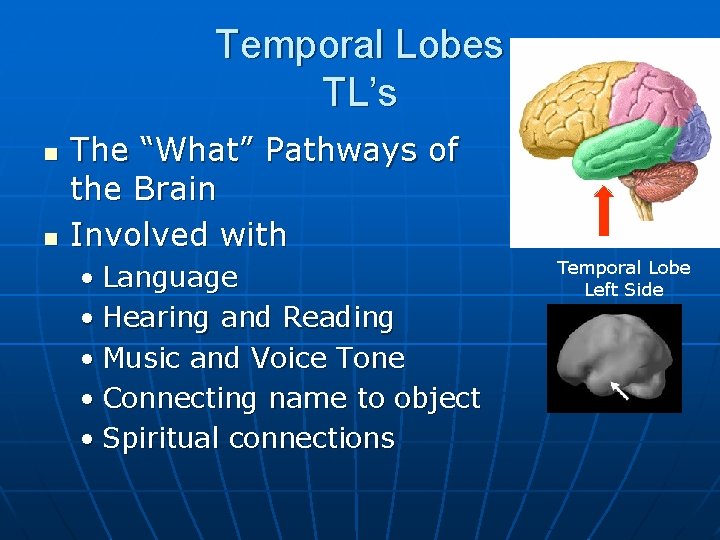
Temporal Lobes TL’s n n The “What” Pathways of the Brain Involved with • Language • Hearing and Reading • Music and Voice Tone • Connecting name to object • Spiritual connections Temporal Lobe Left Side
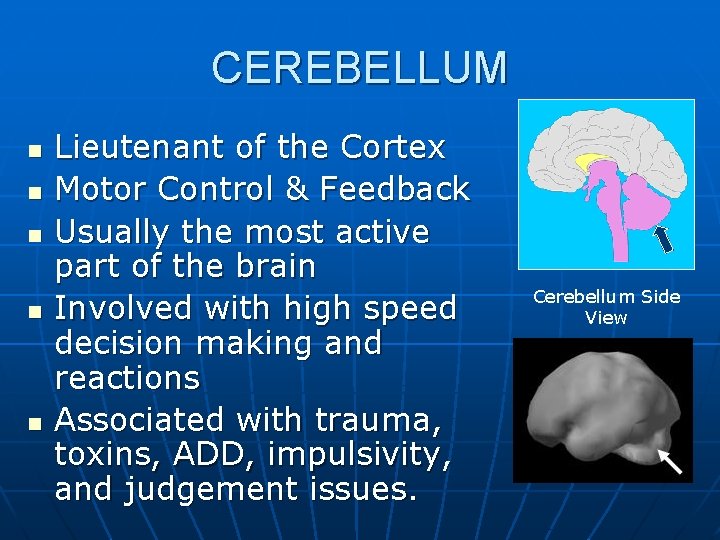
CEREBELLUM n n n Lieutenant of the Cortex Motor Control & Feedback Usually the most active part of the brain Involved with high speed decision making and reactions Associated with trauma, toxins, ADD, impulsivity, and judgement issues. Cerebellum Side View
ASSESSMENTS n n n Assessments involve Functional Evaluation of the different areas of the brain Functional Questionnaires Functional Brain Scans Functional Neurological Testing EEG Mapping
SCANS n n n f. MRI or SPECT Scans – to demonstrate blood flow of the brain under different activities Lack of blood flow = poor brain function Deposits of iron indicate areas of previous damage/trauma
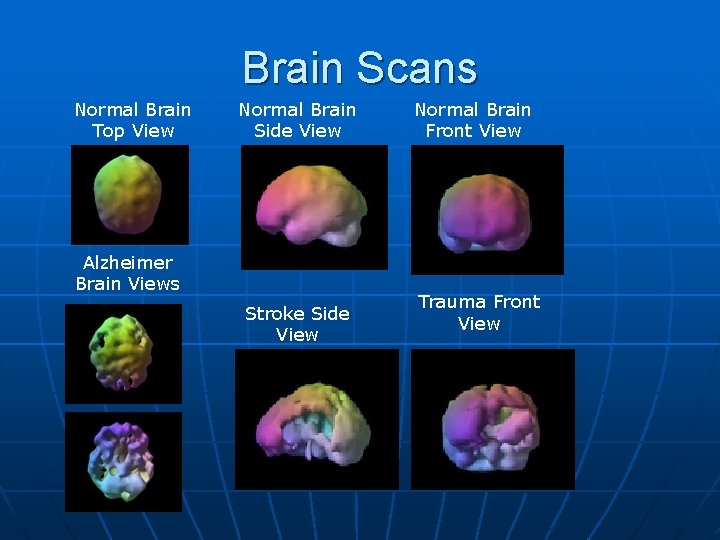
Brain Scans Normal Brain Top View Normal Brain Side View Alzheimer Brain Views Stroke Side View Normal Brain Front View Trauma Front View
QUESTIONNAIRES n n n Questionnaires have been correlated with brain scans – reliable predictors of function Correlate 6 areas of brain function for differential diagnosis 3 major questionnaires – • Brain Master Questionnaire • ADD/ADHD • Anxiety/Depression
Questionnaires n Need to be filled out by two people • Indicate objective (other person) • Plus subjective (your self) evaluation These two perspectives gain a more accurate assessment than just one view. Scoring indicates – minor, probable, highly probable involvement
Neurological Assessments n n Standard neurological evaluations for pathology or dysfunction Non-standard assessments using autonomic reflex testing and manual muscle testing for strength and reflexes. • Both help to pinpoint problem areas
Neurological Assessments Designed to Differentiate Injured or Impaired Functions from Healthy Functional Neurons
Interference Factors n The following are common causes of interference to normal healthy brain functioning: • Injury – Central, Spinal, Peripheral • Toxicity – Infections, Petrochemical toxins, drugs, • Deficiencies – Lack of essential nutrients, sleep, etc.
INTEGRATION FACTORS n n n NUTRIENTS EXERCISE TOXINS STRUCTURAL INTEGRATION COMMUNICATION SYSTEMS • OPERATING SYSTEMS • PROGRAMS • LINKAGE
Integration Factors n The brain is dependent on the body for its functioning • Needs oxygen …. • Needs blood supply for food and waste removal…. • Has little room for toxin storage…. • Has little capacity for structural rearrangements….
Integration Factors n Therefore the brain can malfunction – “Feel like it is broken…” when it is affected by Structural disruption…. CNS, Peripheral, or Locally Nutritional deficiencies…. Vitamin, Minerals, Enzymes Toxicity …. Infections, Drugs, Chemicals or Disrupted communication systems
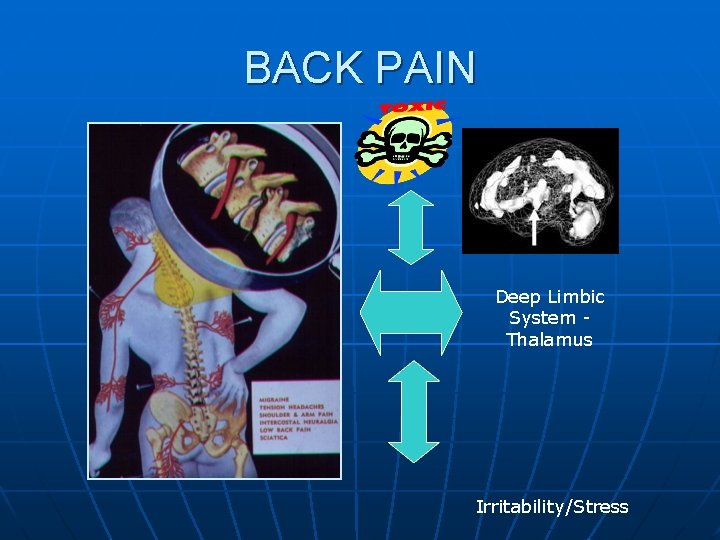
BACK PAIN Deep Limbic System Thalamus Irritability/Stress
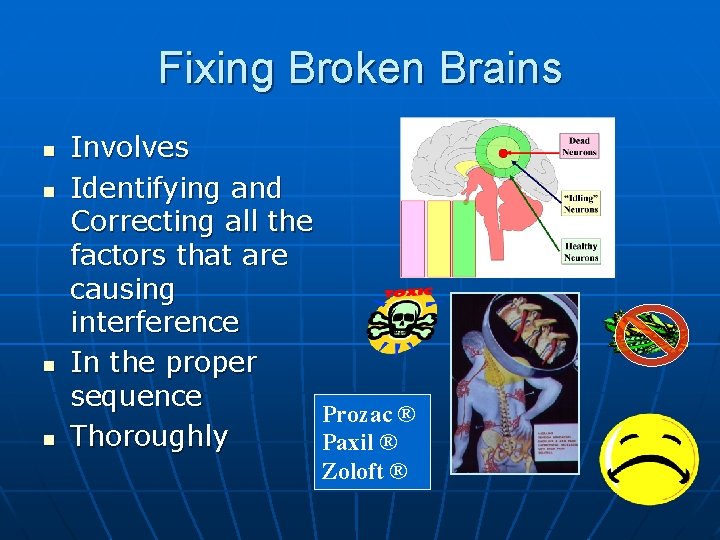
Fixing Broken Brains n n Involves Identifying and Correcting all the factors that are causing interference In the proper sequence Prozac ® Thoroughly Paxil ® Zoloft ®
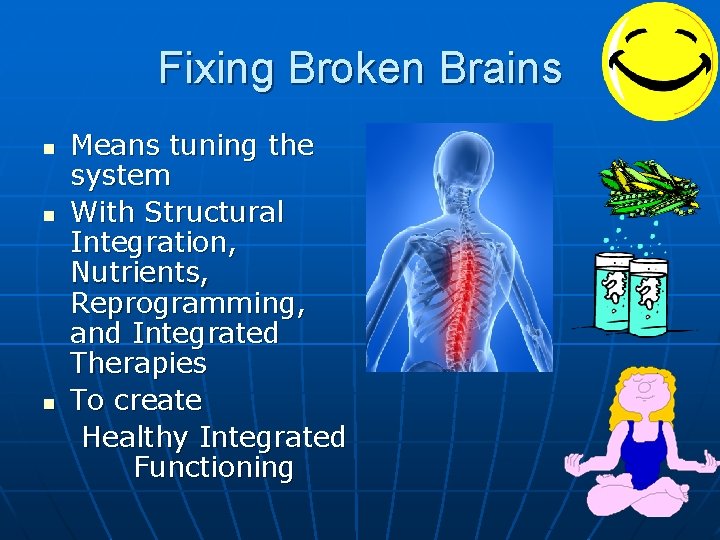
Fixing Broken Brains n n n Means tuning the system With Structural Integration, Nutrients, Reprogramming, and Integrated Therapies To create Healthy Integrated Functioning
Healthy Brain Solutions Ocean Park Natural Therapies #200 12761 -16 th Avenue Surrey, B. C. 604 -538 -3017
- Slides: 47