
Understanding Water STRUCTURE OF WATER MOLECULE Hydrogen atom

- Slides: 11
Understanding Water
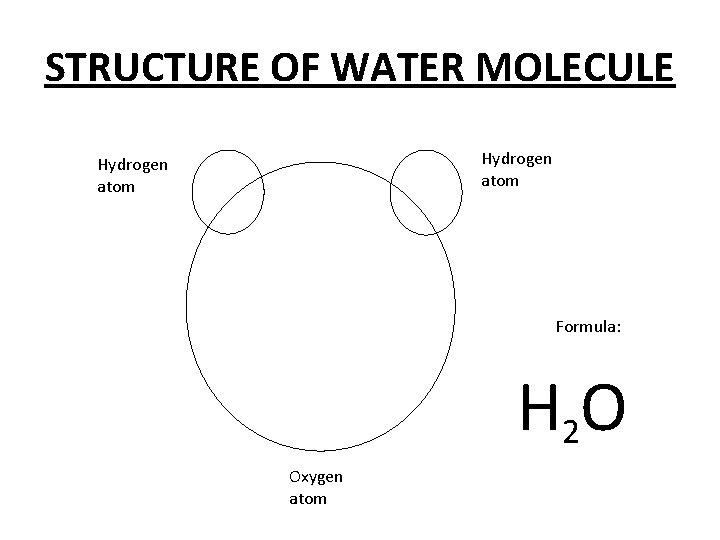
STRUCTURE OF WATER MOLECULE Hydrogen atom Formula: H 2 O Oxygen atom
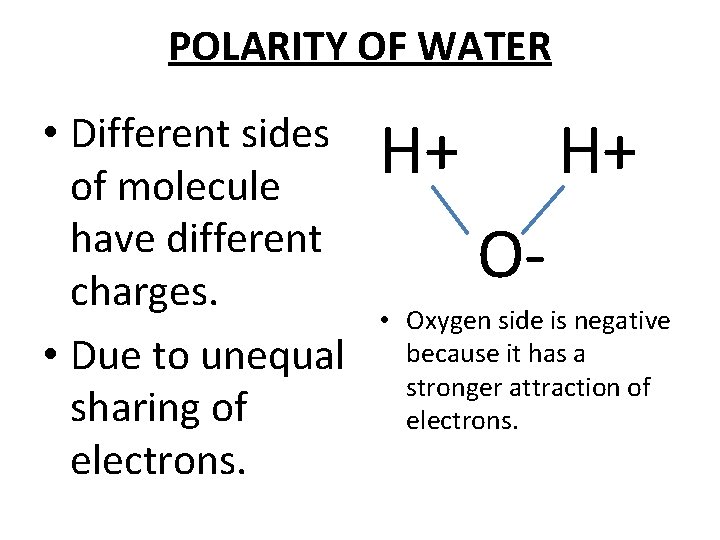
POLARITY OF WATER • Different sides of molecule have different charges. • Due to unequal sharing of electrons. H+ H+ O- • Oxygen side is negative because it has a stronger attraction of electrons.
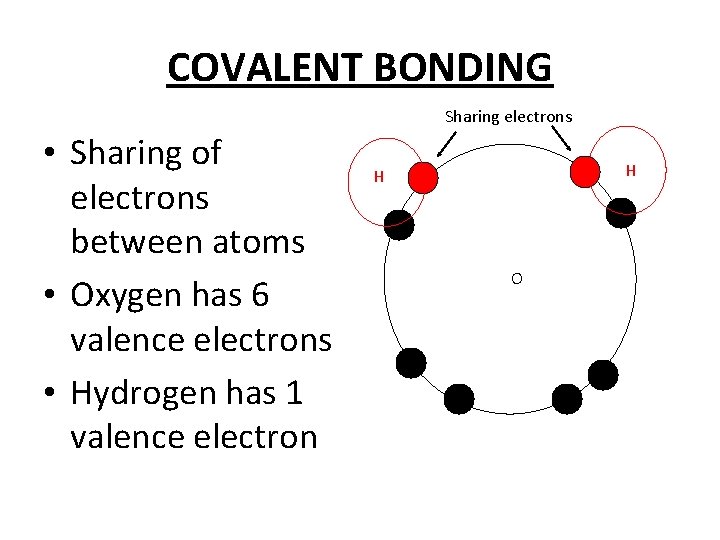
COVALENT BONDING Sharing electrons • Sharing of electrons between atoms • Oxygen has 6 valence electrons • Hydrogen has 1 valence electron H H O
Cohesion • Water molecules stick to each other. – Positive side attracted to negative side • Creates surface tension • Water is pulled easily through small vessels (capillary action)
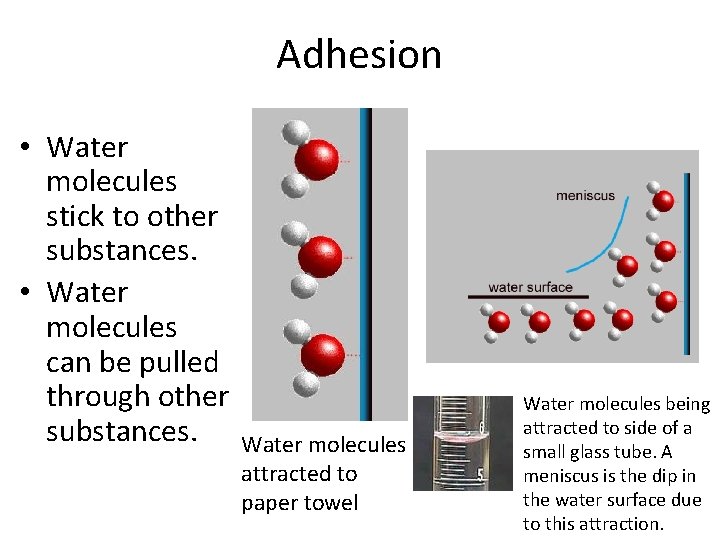
Adhesion • Water molecules stick to other substances. • Water molecules can be pulled through other substances. Water molecules attracted to paper towel Water molecules being attracted to side of a small glass tube. A meniscus is the dip in the water surface due to this attraction.
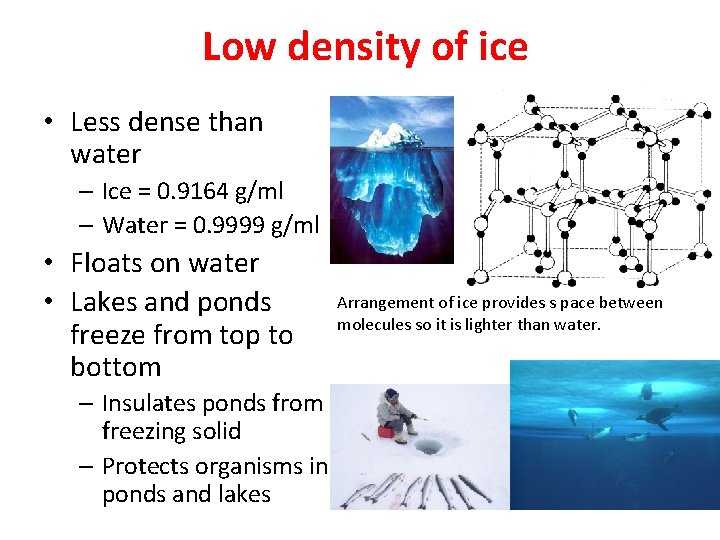
Low density of ice • Less dense than water – Ice = 0. 9164 g/ml – Water = 0. 9999 g/ml • Floats on water • Lakes and ponds freeze from top to bottom – Insulates ponds from freezing solid – Protects organisms in ponds and lakes Arrangement of ice provides s pace between molecules so it is lighter than water.
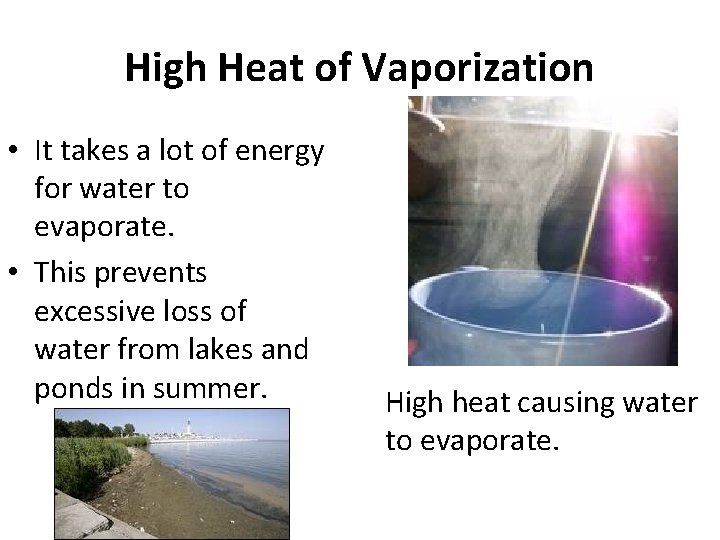
High Heat of Vaporization • It takes a lot of energy for water to evaporate. • This prevents excessive loss of water from lakes and ponds in summer. High heat causing water to evaporate.
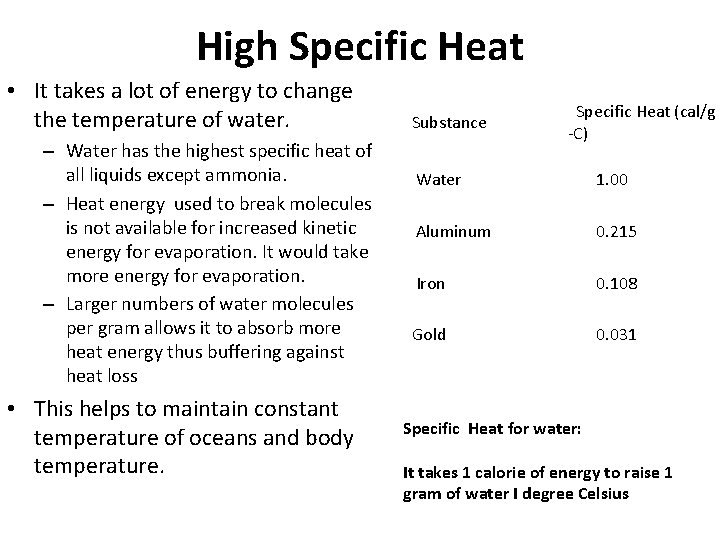
High Specific Heat • It takes a lot of energy to change the temperature of water. – Water has the highest specific heat of all liquids except ammonia. – Heat energy used to break molecules is not available for increased kinetic energy for evaporation. It would take more energy for evaporation. – Larger numbers of water molecules per gram allows it to absorb more heat energy thus buffering against heat loss • This helps to maintain constant temperature of oceans and body temperature. Substance Specific Heat (cal/g -C) Water 1. 00 Aluminum 0. 215 Iron 0. 108 Gold 0. 031 Specific Heat for water: It takes 1 calorie of energy to raise 1 gram of water I degree Celsius
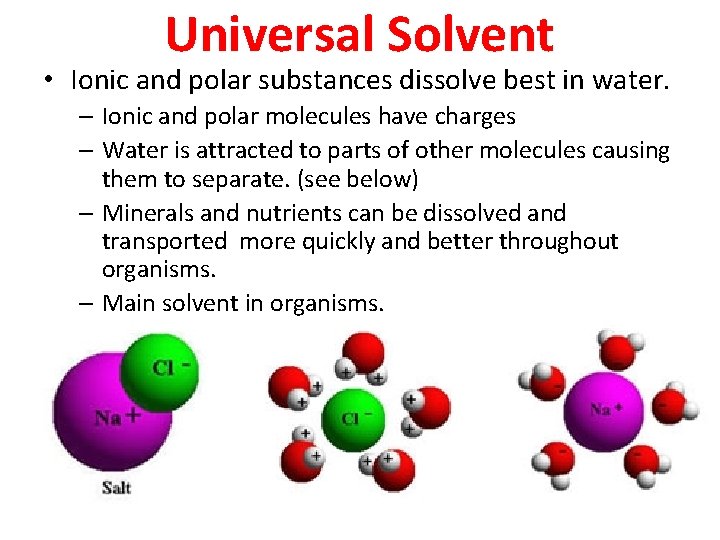
Universal Solvent • Ionic and polar substances dissolve best in water. – Ionic and polar molecules have charges – Water is attracted to parts of other molecules causing them to separate. (see below) – Minerals and nutrients can be dissolved and transported more quickly and better throughout organisms. – Main solvent in organisms.
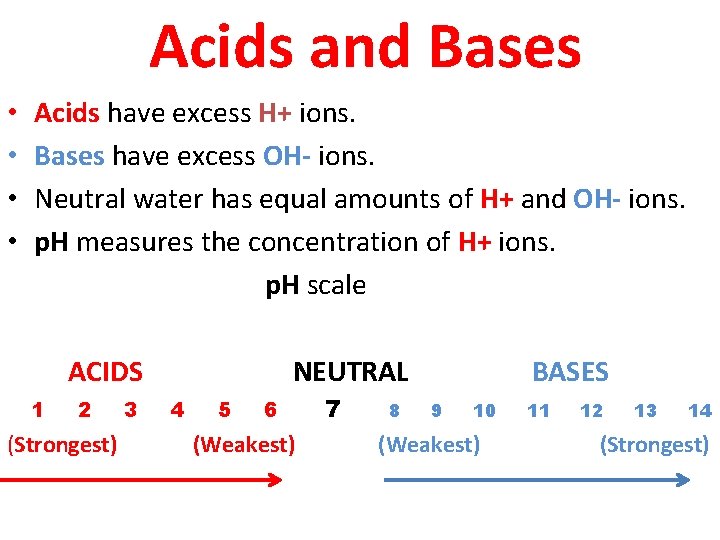
Acids and Bases • • Acids have excess H+ ions. Bases have excess OH- ions. Neutral water has equal amounts of H+ and OH- ions. p. H measures the concentration of H+ ions. p. H scale ACIDS 1 2 (Strongest) 3 NEUTRAL 4 5 6 (Weakest) 7 8 BASES 9 10 (Weakest) 11 12 13 14 (Strongest)