
Understanding Universal Coverage An Overview of Universal Health

- Slides: 6
Understanding Universal Coverage: An Overview of Universal Health Care & Studies of Real-World Implementations Amanda Dombroski 1 May 2020
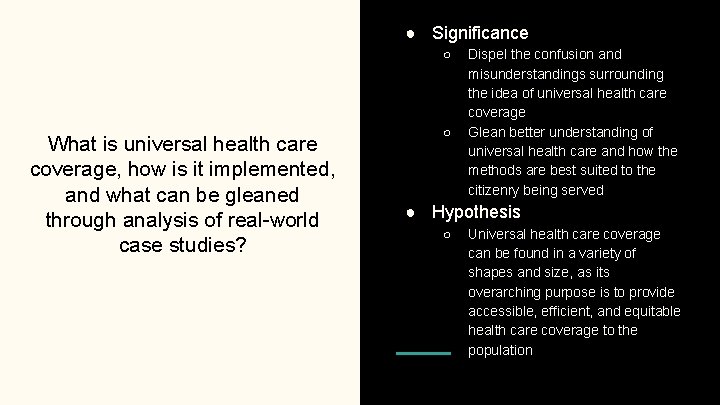
● Significance ○ What is universal health care coverage, how is it implemented, and what can be gleaned through analysis of real-world case studies? ○ Dispel the confusion and misunderstandings surrounding the idea of universal health care coverage Glean better understanding of universal health care and how the methods are best suited to the citizenry being served ● Hypothesis ○ Universal health care coverage can be found in a variety of shapes and size, as its overarching purpose is to provide accessible, efficient, and equitable health care coverage to the population
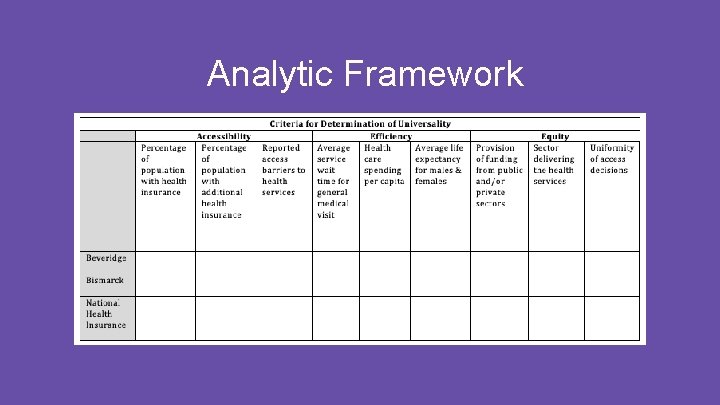
Analytic Framework
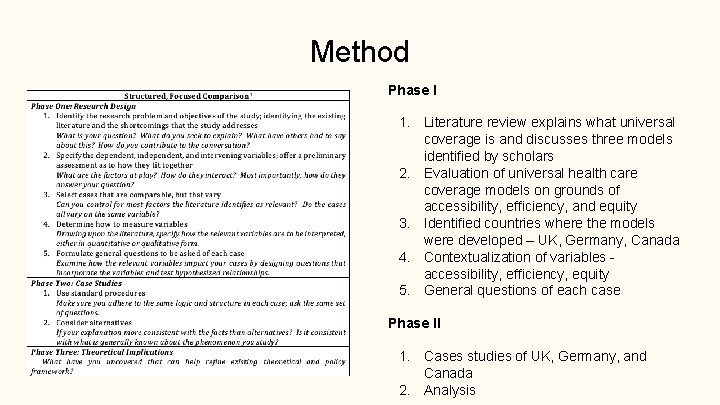
Method Phase I 1. Literature review explains what universal coverage is and discusses three models identified by scholars 2. Evaluation of universal health care coverage models on grounds of accessibility, efficiency, and equity 3. Identified countries where the models were developed – UK, Germany, Canada 4. Contextualization of variables accessibility, efficiency, equity 5. General questions of each case Phase II 1. Cases studies of UK, Germany, and Canada 2. Analysis
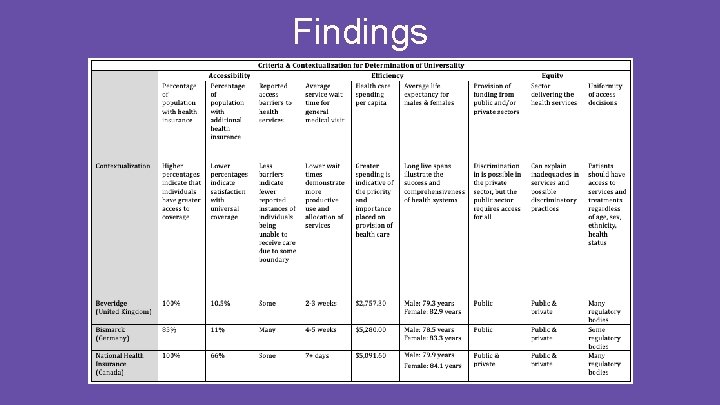
Findings
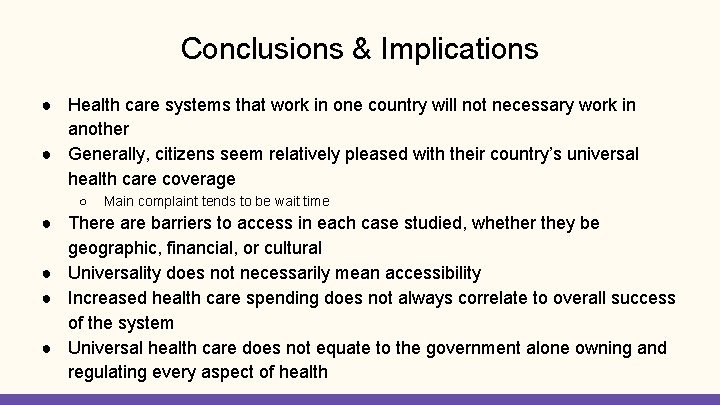
Conclusions & Implications ● Health care systems that work in one country will not necessary work in another ● Generally, citizens seem relatively pleased with their country’s universal health care coverage ○ Main complaint tends to be wait time ● There are barriers to access in each case studied, whether they be geographic, financial, or cultural ● Universality does not necessarily mean accessibility ● Increased health care spending does not always correlate to overall success of the system ● Universal health care does not equate to the government alone owning and regulating every aspect of health