
Understanding the Viking invasion of Britain Key Vocabulary
Understanding the Viking invasion of Britain
Key Vocabulary Longship – a long, wooden, narrow boat used by the Vikings. Pillage – to steal goods using violent tactics. Raid – to suddenly attack a place. Lucrative – expensive, something that will bring them a lot of money when they sell it. Lindisfarne – an island off the northeast coast of England. It is a very holy place for Christians. Settle – to stay and live somewhere.
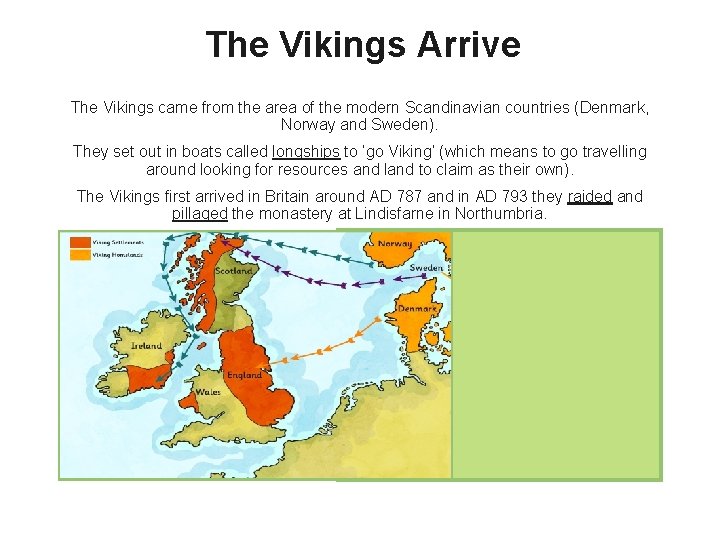
The Vikings Arrive The Vikings came from the area of the modern Scandinavian countries (Denmark, Norway and Sweden). They set out in boats called longships to ‘go Viking’ (which means to go travelling around looking for resources and land to claim as their own). The Vikings first arrived in Britain around AD 787 and in AD 793 they raided and pillaged the monastery at Lindisfarne in Northumbria.
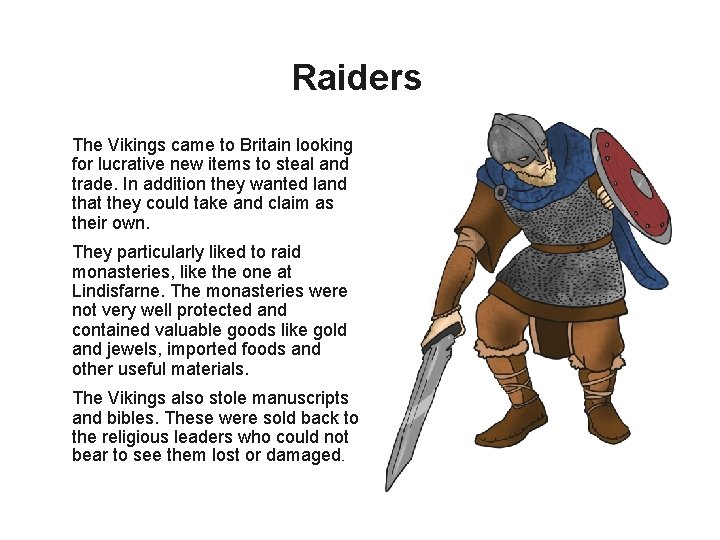
Raiders The Vikings came to Britain looking for lucrative new items to steal and trade. In addition they wanted land that they could take and claim as their own. They particularly liked to raid monasteries, like the one at Lindisfarne. The monasteries were not very well protected and contained valuable goods like gold and jewels, imported foods and other useful materials. The Vikings also stole manuscripts and bibles. These were sold back to the religious leaders who could not bear to see them lost or damaged.

Invaders and Settlers The Vikings went on to invade Scotland in time they began to settle and stay there. They were able to build up an army and in AD 866 they captured the city of York. The Anglo-Saxon King Alfred the Great, who became King of Wessex in AD 871, managed to force the Vikings out of the South of England but this was short-lived. By AD 878 the Vikings had settled permanently in England, overran Wessex and forced King Alfred into hiding. The Vikings were here to stay!

AD 787 First Viking raid in England occurred.
- Slides: 6