
Understanding the Role of Phosphorus Nitrogen Fertilizer Manure

- Slides: 19
Understanding the Role of Phosphorus, Nitrogen, Fertilizer, Manure and CAFOs In HABs Dr. Jeffrey M. Reutter Retired Director Ohio Sea Grant & Stone Lab, The Ohio State University
The N: P: K Ratio and the Limiting Nutrient • N = Nitrogen • P = Phosphorus • K = Potassium • N: P: K ratio on fertilizer bags (Scotts lawncare example: 33 -0 -9) • Fertilizer makes plants (grass, crops, and algae) grow • Nutrients can come from bags of fertilizer or animal manure. • As plants grow they use nutrients. The essential nutrient that runs out first, or is used up first, is called the limiting nutrient. • In freshwater it is usually P. In saltwater it is usually N. • Therefore, the amount of P usually determines size of a bloom.
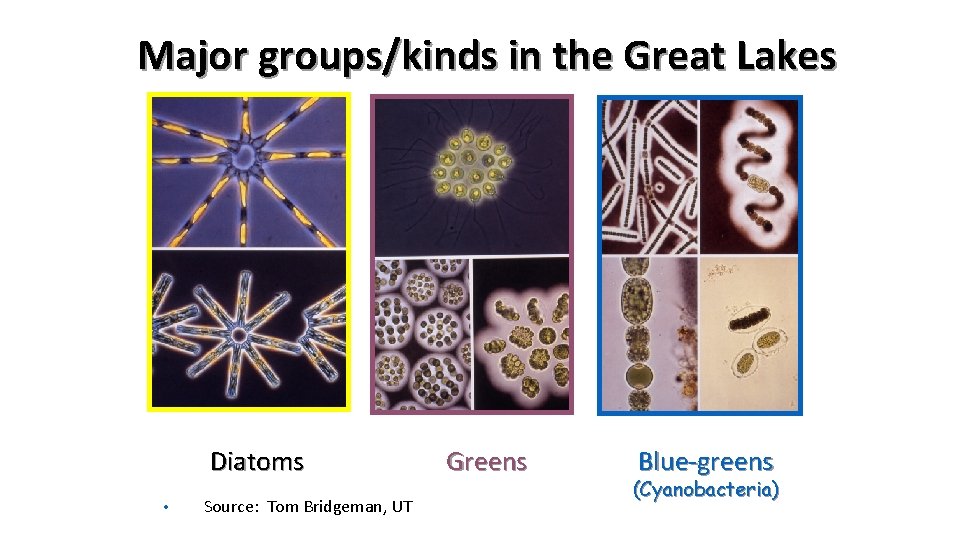
Major groups/kinds in the Great Lakes Diatoms • Source: Tom Bridgeman, UT Greens Blue-greens (Cyanobacteria)
Too Much Phosphorus Causes: • Harmful Algal Blooms or HABs • Very large masses of algae • Primarily Blue-green Algae or cyanobacteria • Warm water and high nutrient concentrations • Capable of producing toxins • Toxins are ~14% N by weight • Dead Zones • Areas in a lake or stream (often at the bottom of stratified lakes) where dissolved oxygen has fallen to 2. 0 mg/l or less (hypoxia and anoxia).
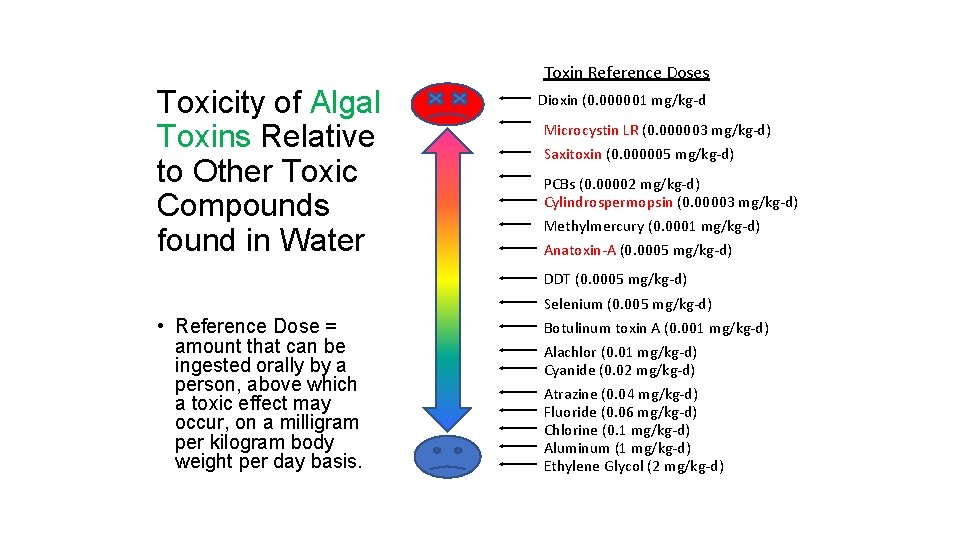
Toxin Reference Doses Toxicity of Algal Toxins Relative to Other Toxic Compounds found in Water Dioxin (0. 000001 mg/kg-d) Microcystin LR (0. 000003 mg/kg-d) Saxitoxin (0. 000005 mg/kg-d) PCBs (0. 00002 mg/kg-d) Cylindrospermopsin (0. 00003 mg/kg-d) Methylmercury (0. 0001 mg/kg-d) Anatoxin-A (0. 0005 mg/kg-d) DDT (0. 0005 mg/kg-d) • Reference Dose = amount that can be ingested orally by a person, above which a toxic effect may occur, on a milligram per kilogram body weight per day basis. Selenium (0. 005 mg/kg-d) Botulinum toxin A (0. 001 mg/kg-d) Alachlor (0. 01 mg/kg-d) Cyanide (0. 02 mg/kg-d) Atrazine (0. 04 mg/kg-d) Fluoride (0. 06 mg/kg-d) Chlorine (0. 1 mg/kg-d) Aluminum (1 mg/kg-d) Ethylene Glycol (2 mg/kg-d)
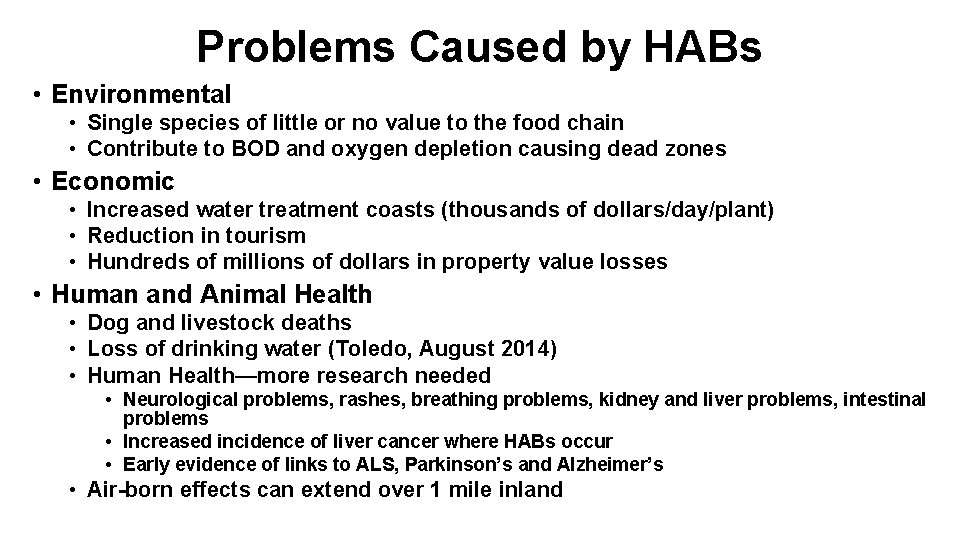
Problems Caused by HABs • Environmental • Single species of little or no value to the food chain • Contribute to BOD and oxygen depletion causing dead zones • Economic • Increased water treatment coasts (thousands of dollars/day/plant) • Reduction in tourism • Hundreds of millions of dollars in property value losses • Human and Animal Health • Dog and livestock deaths • Loss of drinking water (Toledo, August 2014) • Human Health—more research needed • Neurological problems, rashes, breathing problems, kidney and liver problems, intestinal problems • Increased incidence of liver cancer where HABs occur • Early evidence of links to ALS, Parkinson’s and Alzheimer’s • Air-born effects can extend over 1 mile inland
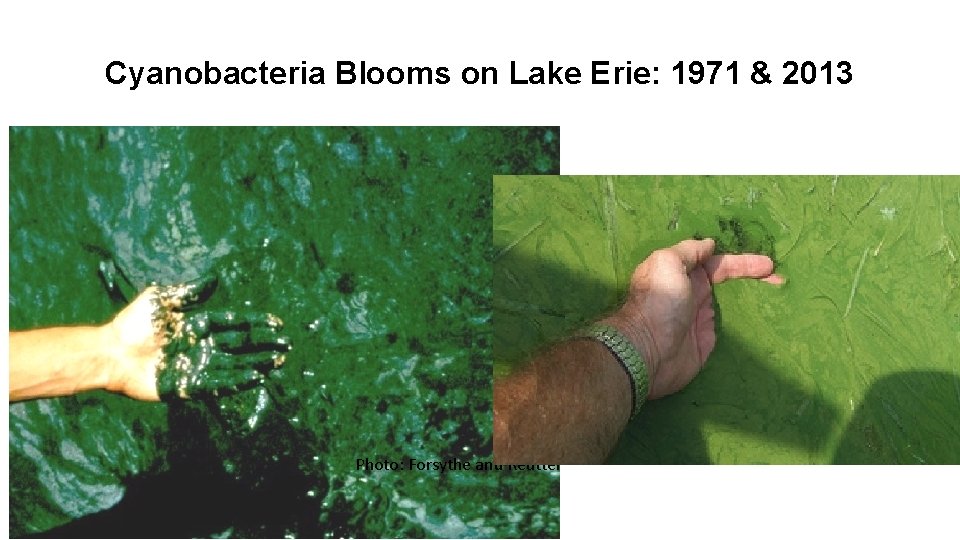
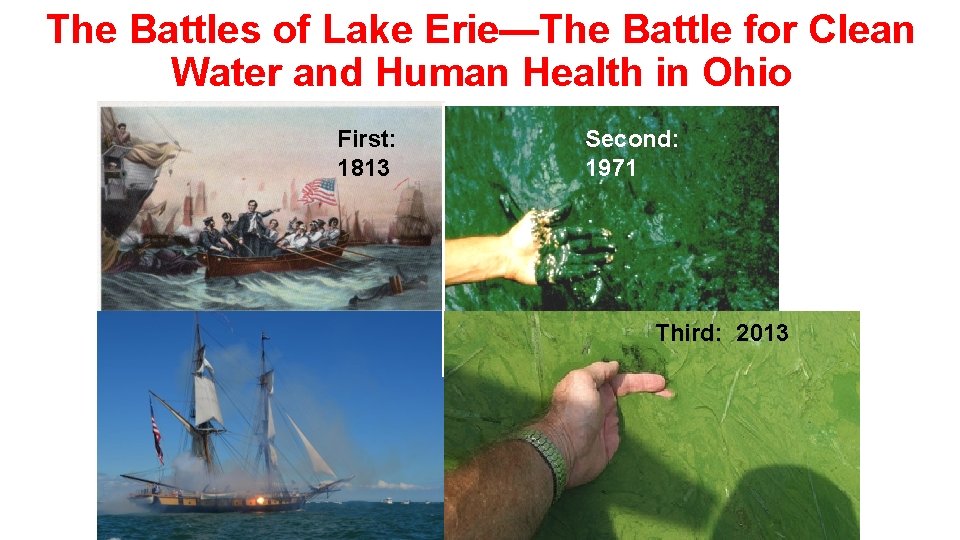
Cyanobacteria Blooms on Lake Erie: 1971 & 2013 Photo: Forsythe and Reutter
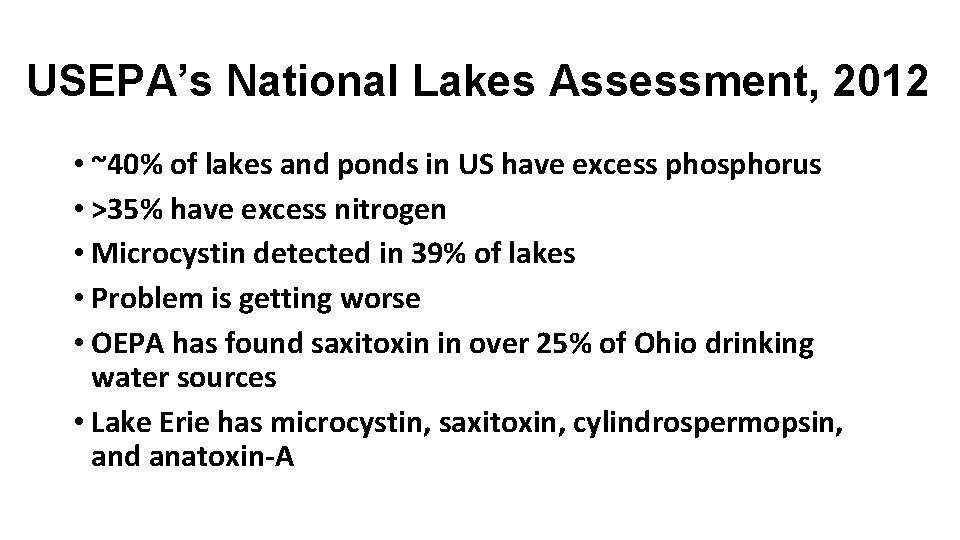
USEPA’s National Lakes Assessment, 2012 • ~40% of lakes and ponds in US have excess phosphorus • >35% have excess nitrogen • Microcystin detected in 39% of lakes • Problem is getting worse • OEPA has found saxitoxin in over 25% of Ohio drinking water sources • Lake Erie has microcystin, saxitoxin, cylindrospermopsin, and anatoxin-A
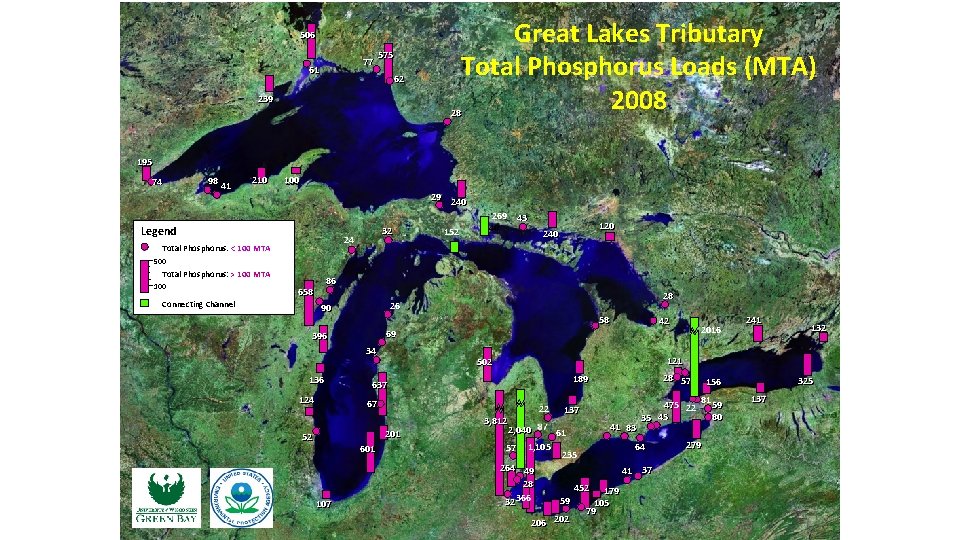
Great Lakes Tributary Total Phosphorus Loads (MTA) 2008 506 77 77 61 61 575 62 62 239 28 28 195 74 98 41 210 100 29 240 Legend 32 32 24 Total Phosphorus: < 100 MTA 152 269 43 43 40 120 240 500 Total Phosphorus: > 100 MTA 100 Connecting Channel 86 658 58 34 34 124 601 107 28 28 57 57 189 637 201 2016 241 132 121 502 67 67 52 52 42 69 396 136 28 28 26 90 90 3, 812 22 2, 040 57 1, 105 264 49 28 28 366 32 32 137 41 41 83 61 81 475 59 475 22 59 45 80 35 45 80 64 235 37 41 41 37 59 202 206 202 452 179 105 79 79 279 325 156 137
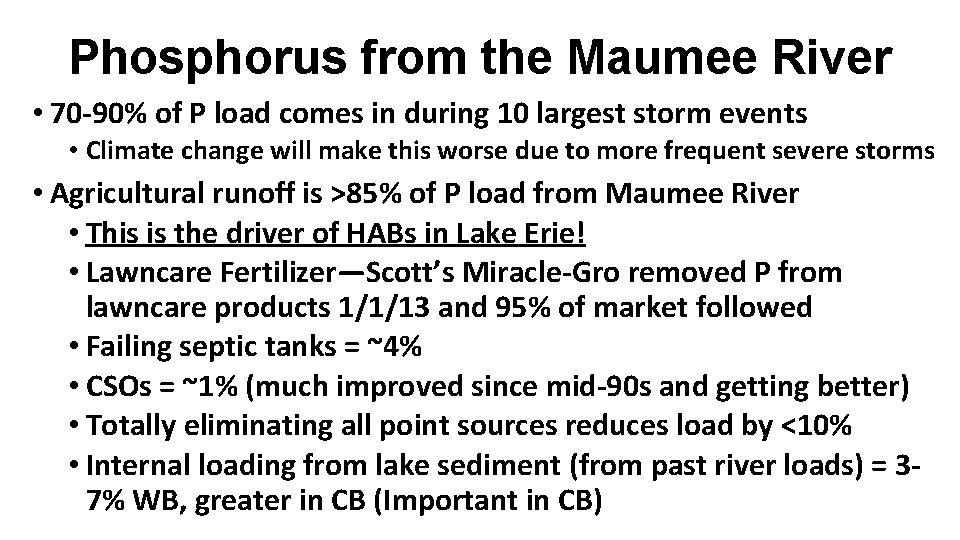
Phosphorus from the Maumee River • 70 -90% of P load comes in during 10 largest storm events • Climate change will make this worse due to more frequent severe storms • Agricultural runoff is >85% of P load from Maumee River • This is the driver of HABs in Lake Erie! • Lawncare Fertilizer—Scott’s Miracle-Gro removed P from lawncare products 1/1/13 and 95% of market followed • Failing septic tanks = ~4% • CSOs = ~1% (much improved since mid-90 s and getting better) • Totally eliminating all point sources reduces load by <10% • Internal loading from lake sediment (from past river loads) = 37% WB, greater in CB (Important in CB)
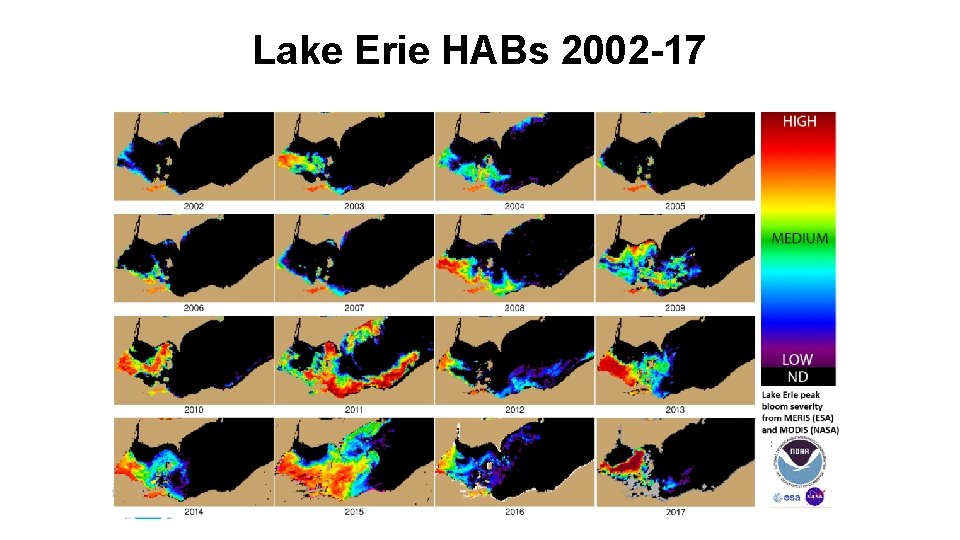
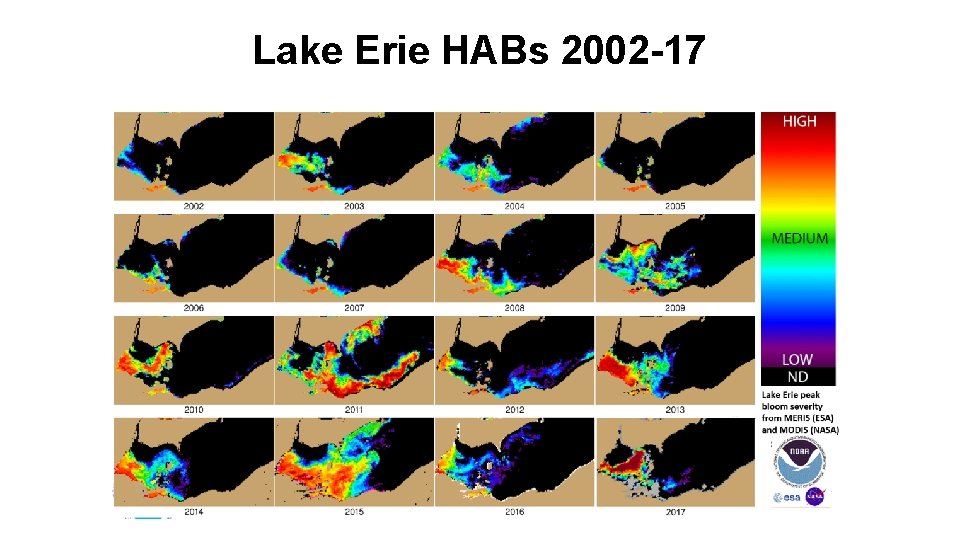
Lake Erie HABs 2002 -17
40% Reduction in Phosphorus Loading (Lake Erie Target – Will be Different for Other Lakes) • Ohio Phosphorus Task Force (March 2013) • International Joint Commission (October 2013) • Annex 4 Objectives and Targets Task Team (May 2015) • HABs: 40% Spring (1 March-31 July) reduction in TP and DRP loading to Western Basin (target loads for Maumee River = 860 tons TP and 186 tons DRP, or less with FWMC of 0. 23 mg/l TP and 0. 05 mg/l DRP) • Dead Zone (Hypoxia): 40% annual reduction in TP loading to Western and Central Basins • US and Canada Agree to Annex 4 Targets (Feb. 2016) 12
Lake Erie HABs 2002 -17
The Battles of Lake Erie—The Battle for Clean Water and Human Health in Ohio First: 1813 Second: 1971 Third: 2013
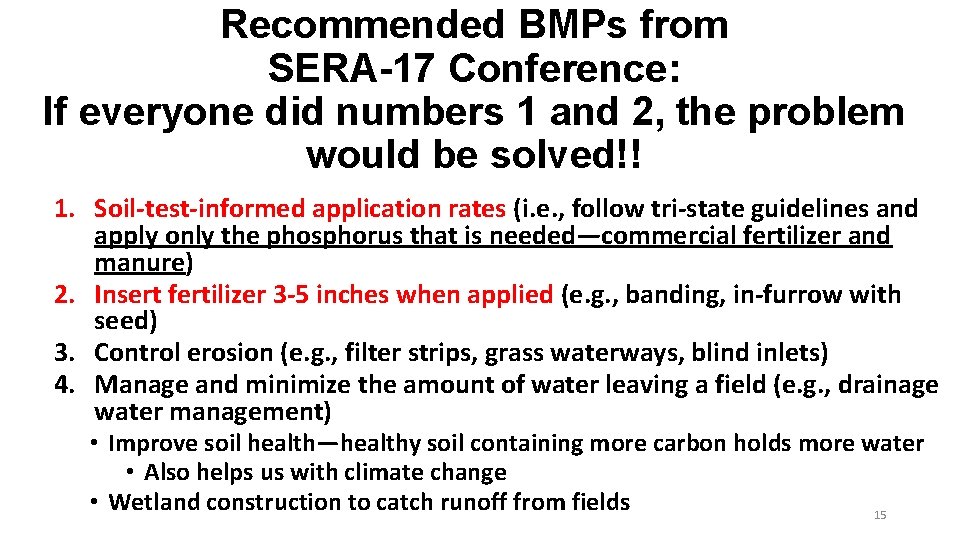
Recommended BMPs from SERA-17 Conference: If everyone did numbers 1 and 2, the problem would be solved!! 1. Soil-test-informed application rates (i. e. , follow tri-state guidelines and apply only the phosphorus that is needed—commercial fertilizer and manure) 2. Insert fertilizer 3 -5 inches when applied (e. g. , banding, in-furrow with seed) 3. Control erosion (e. g. , filter strips, grass waterways, blind inlets) 4. Manage and minimize the amount of water leaving a field (e. g. , drainage water management) • Improve soil health—healthy soil containing more carbon holds more water • Also helps us with climate change • Wetland construction to catch runoff from fields 15
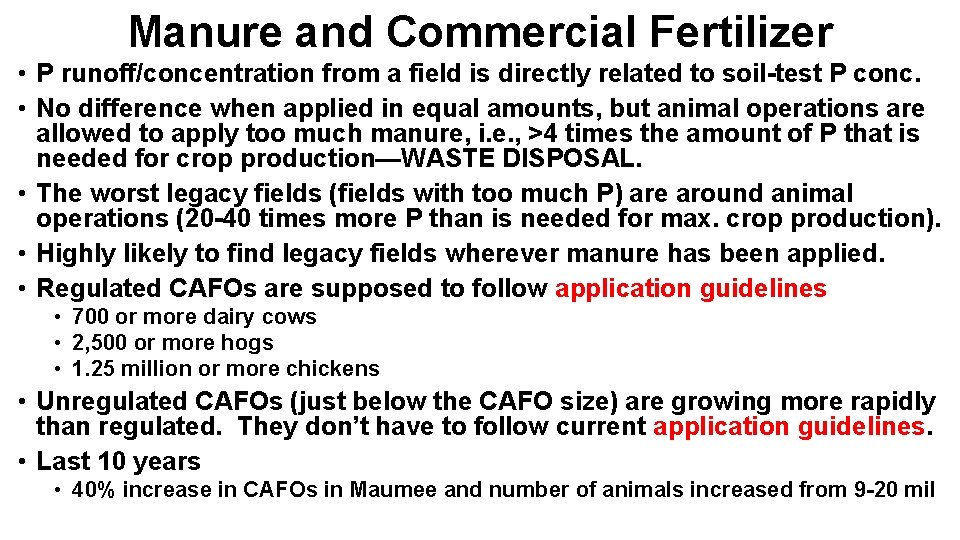
Manure and Commercial Fertilizer • P runoff/concentration from a field is directly related to soil-test P conc. • No difference when applied in equal amounts, but animal operations are allowed to apply too much manure, i. e. , >4 times the amount of P that is needed for crop production—WASTE DISPOSAL. • The worst legacy fields (fields with too much P) are around animal operations (20 -40 times more P than is needed for max. crop production). • Highly likely to find legacy fields wherever manure has been applied. • Regulated CAFOs are supposed to follow application guidelines • 700 or more dairy cows • 2, 500 or more hogs • 1. 25 million or more chickens • Unregulated CAFOs (just below the CAFO size) are growing more rapidly than regulated. They don’t have to follow current application guidelines. • Last 10 years • 40% increase in CAFOs in Maumee and number of animals increased from 9 -20 mil
Policy Opportunities and Challenges • Over half the farmed land is rented. • ~40% of corn goes into ethanol production and ~40% to animal feed. • Solutions must be independent of commodity prices. • 55% of farms are 50 acres or less, but they represent only 3% of farmed land. • Need incentive/disincentive programs with more than carrots. • Voluntary approaches have not worked. • Sustainable agriculture should begin with not applying too much P and N! • Current regulations allow manure to be applied at >4 times amount needed for crops. This creates legacy fields and makes the problem worse. • Until we have solutions, consider a moratorium on new CAFOs. • Reduce the designated size of regulated farms (CAFOs)? • ELPC’s remote sensing to estimate # of animals & animal operations is great.
Suggested Reading • Glibert, P. M. From hogs to HABs: impacts of industrial farming in the US on nitrogen and phosphorus and greenhouse gas pollution. Biogeochemistry 150, 139– 180 (2020). https: //doi. org/10. 1007/s 10533 -020 -00691 -6 • “Commentary: Achieving phosphorus reduction targets for Lake Erie” https: //doi. org/10. 1016/j. jglr. 2018. 11. 004 • “Erie: Past, Present, and Future” https: //onlinelibrary. wiley. com/doi/full/10. 1002/9781119300762. wsts 0085 • “Understanding Climate Change and How it Contributes to Nutrient/HAB/Dead Zone Problems in Lake Erie and Other Waters” https: //www. nature. org/content/dam/tnc/nature/en/photos/Climate_Chan ge_Nutrient_Loading_SAND 1_022020. pdf
Questions