
Understanding the New Senior Secondary Curriculum Dr S
- Slides: 43
Understanding the New Senior Secondary Curriculum Dr S K Kwan Curriculum Development Institute Education Bureau 3 February 2012 1
Key Messages What are the goals and features of the New Academic Structure and the new senior secondary (NSS) curricula? How is it different from the old one (AL/sixth form)? What are the students’ subject choices & learning experiences? What are the pathways of students? How is HKDSE recognised locally and internationally? 2
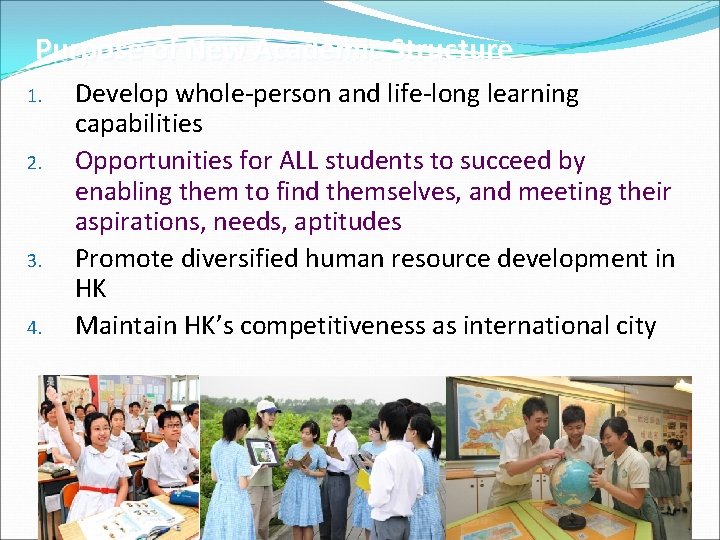
Purpose of New Academic Structure 1. 2. 3. 4. Develop whole-person and life-long learning capabilities Opportunities for ALL students to succeed by enabling them to find themselves, and meeting their aspirations, needs, aptitudes Promote diversified human resource development in HK Maintain HK’s competitiveness as international city 3
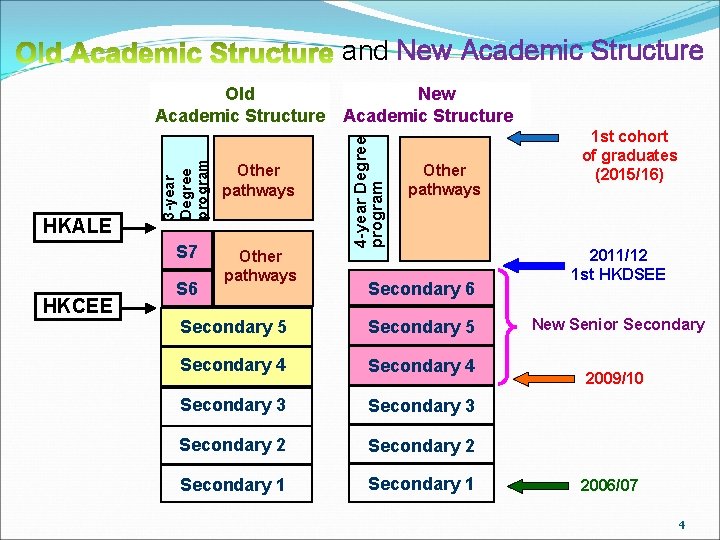
and New Academic Structure HKCEE Other pathways S 7 Other pathways S 6 New Academic Structure 4 -year Degree program HKALE 3 -year Degree program Old Academic Structure Other pathways Senior Secondary 6 3 Secondary 5 Senior Secondary 5 2 Secondary 4 Senior Secondary 4 1 Secondary 3 Secondary 2 Secondary 1 1 st cohort of graduates (2015/16) 2011/12 1 st HKDSEE New Senior Secondary 2009/10 2006/07 4
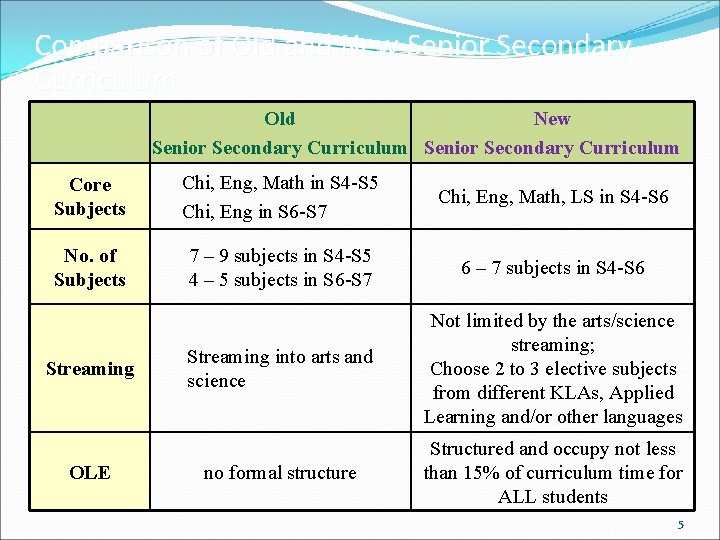
Comparison of Old and New Senior Secondary Curriculum Old New Senior Secondary Curriculum Core Subjects Chi, Eng, Math in S 4 -S 5 Chi, Eng in S 6 -S 7 Chi, Eng, Math, LS in S 4 -S 6 No. of Subjects 7 – 9 subjects in S 4 -S 5 4 – 5 subjects in S 6 -S 7 6 – 7 subjects in S 4 -S 6 Streaming into arts and science Not limited by the arts/science streaming; Choose 2 to 3 elective subjects from different KLAs, Applied Learning and/or other languages no formal structure Structured and occupy not less than 15% of curriculum time for ALL students Streaming OLE 5
The New Senior Secondary Curriculum 6
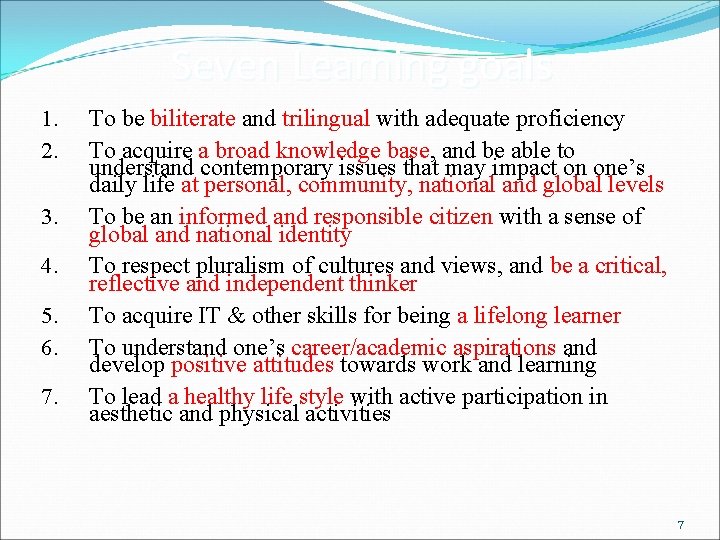
Seven Learning goals 1. 2. 3. 4. 5. 6. 7. To be biliterate and trilingual with adequate proficiency To acquire a broad knowledge base, and be able to understand contemporary issues that may impact on one’s daily life at personal, community, national and global levels To be an informed and responsible citizen with a sense of global and national identity To respect pluralism of cultures and views, and be a critical, reflective and independent thinker To acquire IT & other skills for being a lifelong learner To understand one’s career/academic aspirations and develop positive attitudes towards work and learning To lead a healthy life style with active participation in aesthetic and physical activities 7
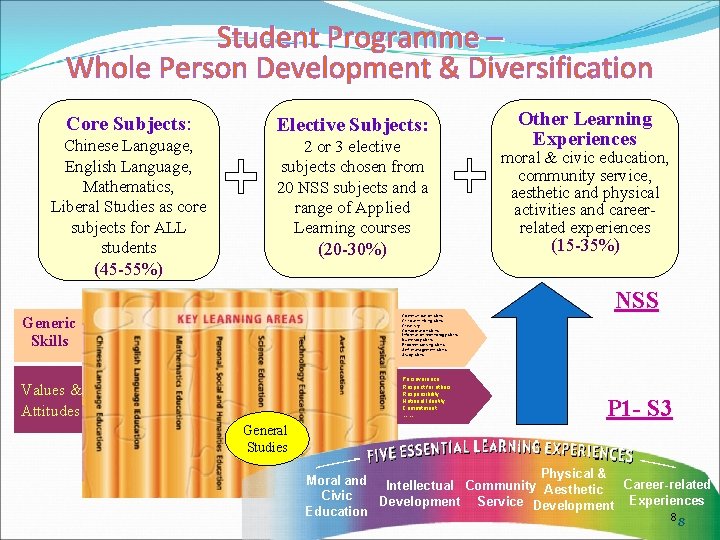
Student Programme – Whole Person Development & Diversification Core Subjects: Elective Subjects: Chinese Language, English Language, Mathematics, Liberal Studies as core subjects for ALL students 2 or 3 elective subjects chosen from 20 NSS subjects and a range of Applied Learning courses (20 -30%) (45 -55%) Communication skills Critical thinking skills Creativity Collaboration skills Information technology skills Numeracy skills Problem-solving skills Self-management skills Study skills Generic Skills Perseverance Respect for others Responsibility National Identity Commitment …… Values & Attitudes Other Learning Experiences moral & civic education, community service, aesthetic and physical activities and careerrelated experiences (15 -35%) NSS P 1 - S 3 General Studies Moral and Intellectual Community Physical & Career-related Aesthetic Civic Development Service Development Experiences Education 8 8
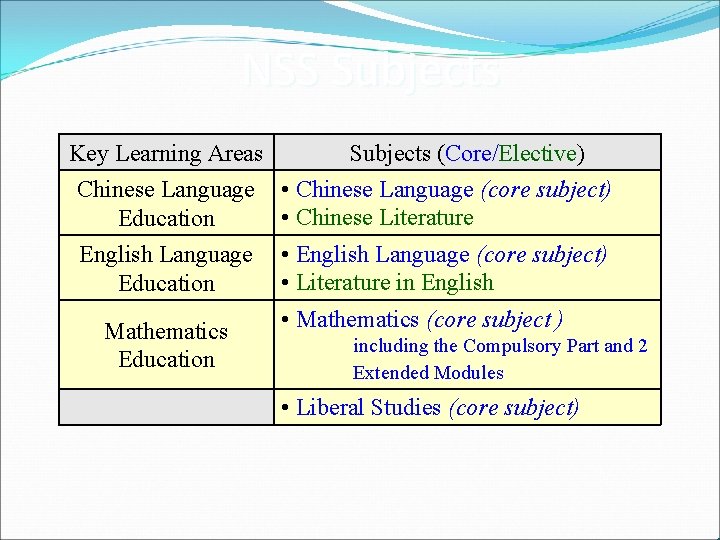
NSS Subjects Key Learning Areas Chinese Language Education English Language Education Mathematics Education Subjects (Core/Elective) • Chinese Language (core subject) • Chinese Literature • English Language (core subject) • Literature in English • Mathematics (core subject ) including the Compulsory Part and 2 Extended Modules • Liberal Studies (core subject)
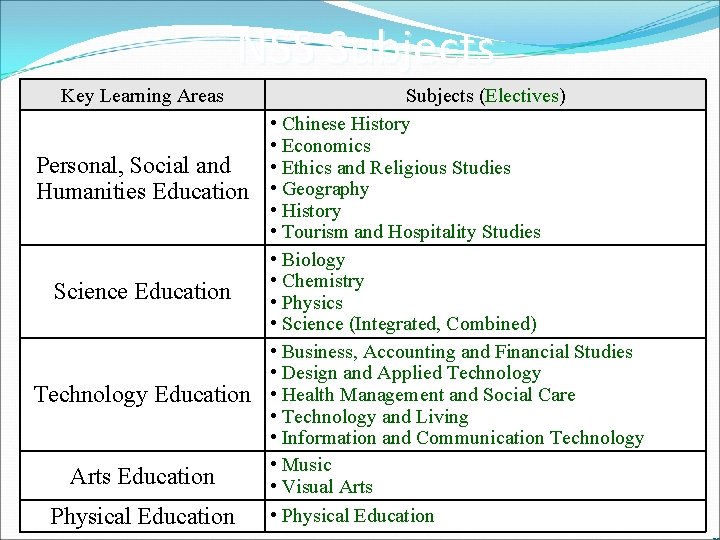
NSS Subjects Key Learning Areas Personal, Social and Humanities Education Science Education Technology Education Arts Education Physical Education Subjects (Electives) • Chinese History • Economics • Ethics and Religious Studies • Geography • History • Tourism and Hospitality Studies • Biology • Chemistry • Physics • Science (Integrated, Combined) • Business, Accounting and Financial Studies • Design and Applied Technology • Health Management and Social Care • Technology and Living • Information and Communication Technology • Music • Visual Arts • Physical Education
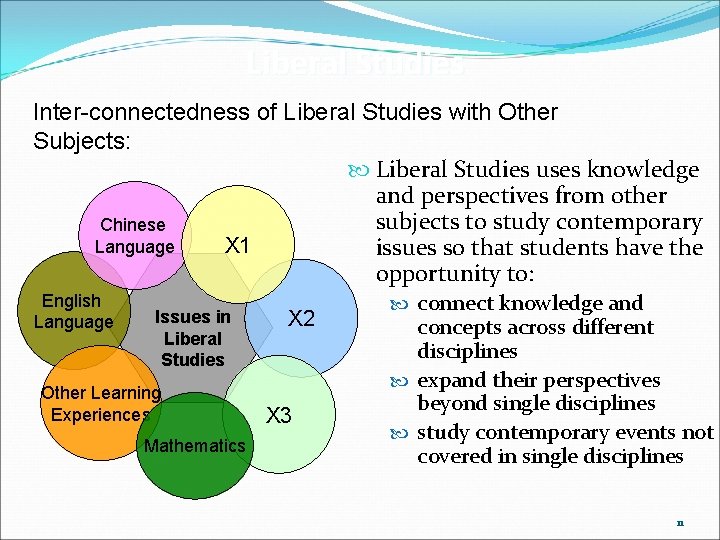
Liberal Studies Inter-connectedness of Liberal Studies with Other Subjects: Liberal Studies uses knowledge and perspectives from other subjects to study contemporary Chinese X 1 Language issues so that students have the opportunity to: English Language Issues in Liberal Studies Other Learning Experiences Mathematics X 2 X 3 connect knowledge and concepts across different disciplines expand their perspectives beyond single disciplines study contemporary events not covered in single disciplines 11
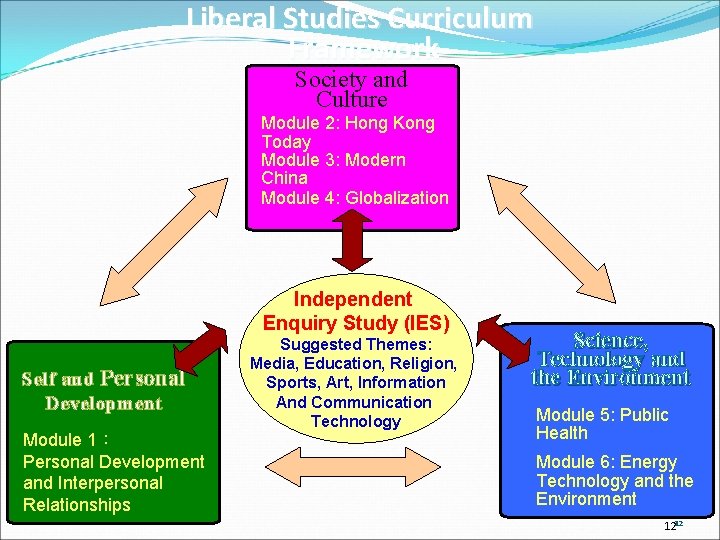
Liberal Studies Curriculum Framework Society and Culture Module 2: Hong Kong Today Module 3: Modern China Module 4: Globalization Independent Enquiry Study (IES) Self and Personal Development Module 1: Personal Development and Interpersonal Relationships Suggested Themes: Media, Education, Religion, Sports, Art, Information And Communication Technology Science, Technology and the Environment Module 5: Public Health Module 6: Energy Technology and the Environment 1212
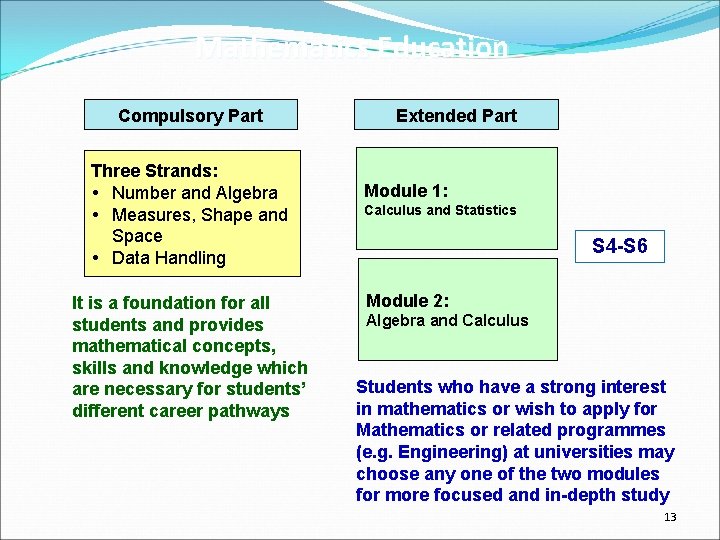
Mathematics Education Compulsory Part Three Strands: Number and Algebra Measures, Shape and Space Data Handling It is a foundation for all students and provides mathematical concepts, skills and knowledge which are necessary for students’ different career pathways Extended Part Module 1: Calculus and Statistics S 4 -S 6 Module 2: Algebra and Calculus Students who have a strong interest in mathematics or wish to apply for Mathematics or related programmes (e. g. Engineering) at universities may choose any one of the two modules for more focused and in-depth study 13
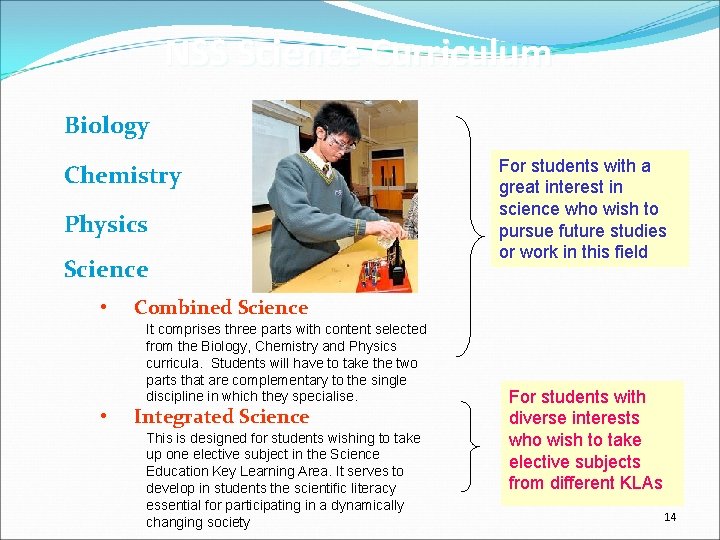
NSS Science Curriculum Biology Chemistry Physics Science • • For students with a great interest in science who wish to pursue future studies or work in this field Combined Science It comprises three parts with content selected from the Biology, Chemistry and Physics curricula. Students will have to take the two parts that are complementary to the single discipline in which they specialise. Integrated Science This is designed for students wishing to take up one elective subject in the Science Education Key Learning Area. It serves to develop in students the scientific literacy essential for participating in a dynamically changing society For students with diverse interests who wish to take elective subjects from different KLAs 14
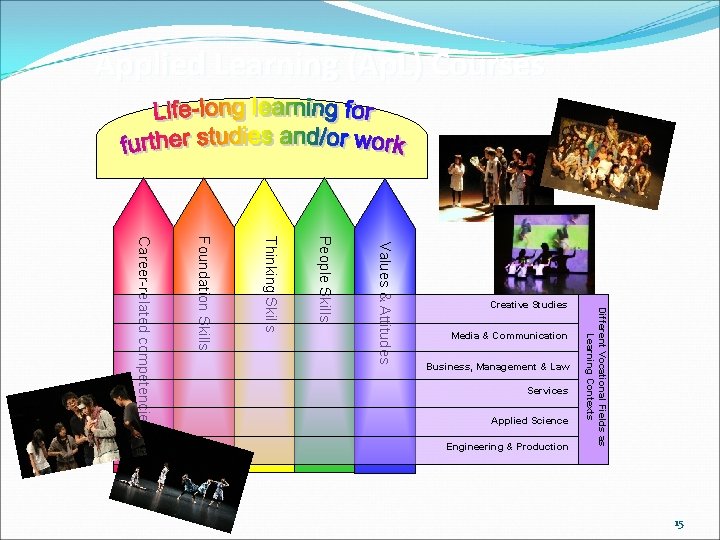
Applied Learning (Ap. L) Courses Media & Communication Business, Management & Law Services Applied Science Engineering & Production Different Vocational Fields as Learning Contexts Values & Attitudes People Skills Thinking Skills Foundation Skills Career-related competencies Creative Studies 15
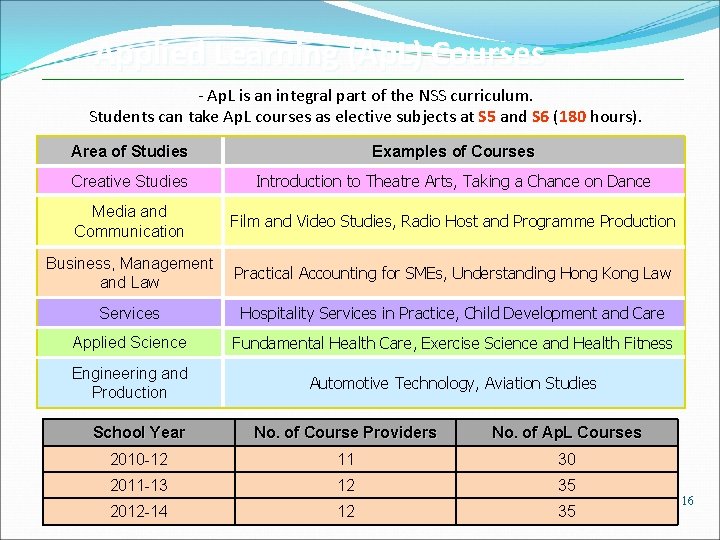
Applied Learning (Ap. L) Courses - Ap. L is an integral part of the NSS curriculum. Students can take Ap. L courses as elective subjects at S 5 and S 6 (180 hours). Area of Studies Examples of Courses Creative Studies Introduction to Theatre Arts, Taking a Chance on Dance Media and Communication Film and Video Studies, Radio Host and Programme Production Business, Management and Law Practical Accounting for SMEs, Understanding Hong Kong Law Services Hospitality Services in Practice, Child Development and Care Applied Science Fundamental Health Care, Exercise Science and Health Fitness Engineering and Production Automotive Technology, Aviation Studies School Year No. of Course Providers No. of Ap. L Courses 2010 -12 11 30 2011 -13 12 35 2012 -14 12 35 16
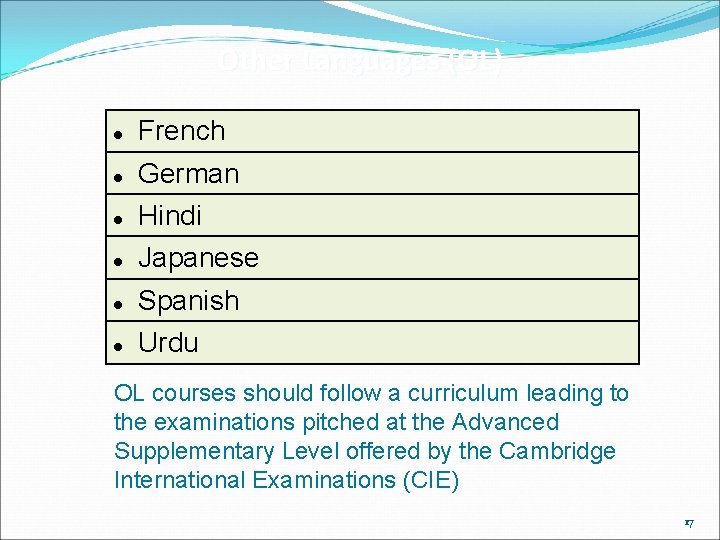
Other Languages (OL) l French l German l Hindi l Japanese l Spanish l Urdu OL courses should follow a curriculum leading to the examinations pitched at the Advanced Supplementary Level offered by the Cambridge International Examinations (CIE) 17
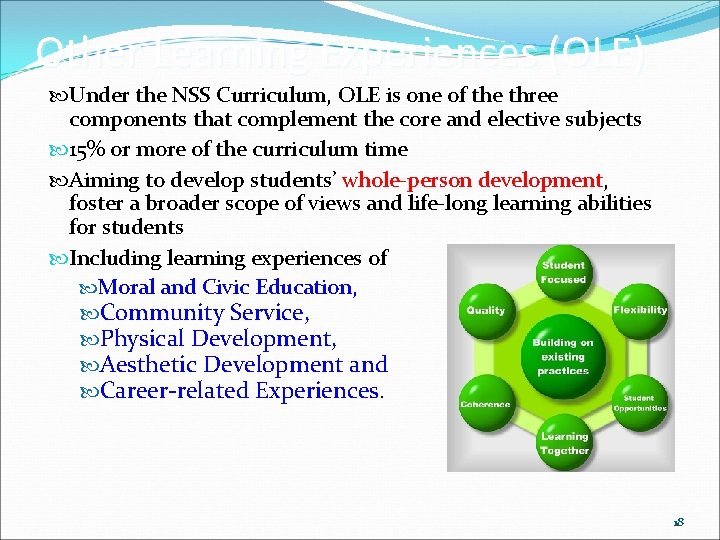
Other Learning Experiences (OLE) Under the NSS Curriculum, OLE is one of the three components that complement the core and elective subjects 15% or more of the curriculum time Aiming to develop students’ whole-person development, foster a broader scope of views and life-long learning abilities for students Including learning experiences of Moral and Civic Education, Community Service, Physical Development, Aesthetic Development and Career-related Experiences. 18
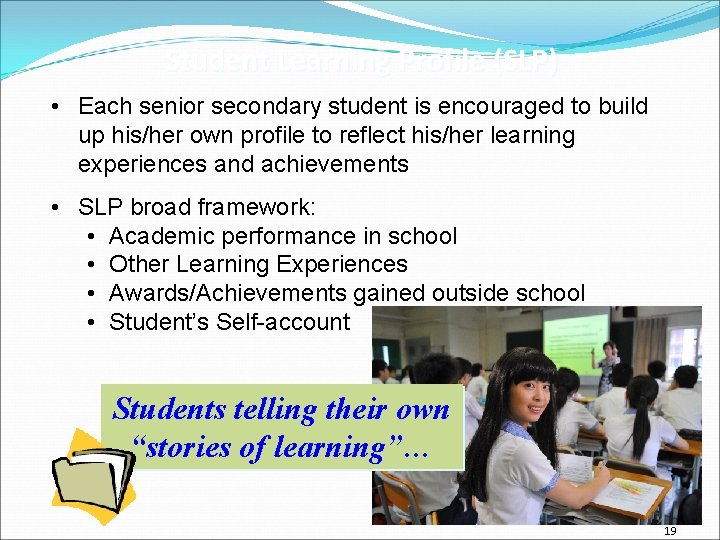
Student Learning Profile (SLP) • Each senior secondary student is encouraged to build up his/her own profile to reflect his/her learning experiences and achievements • SLP broad framework: • Academic performance in school • Other Learning Experiences • Awards/Achievements gained outside school • Student’s Self-account Students telling their own “stories of learning”… 19
Implementation of the NSS Curriculum November 2010:New Senior Secondary Subject Information Survey Number of schools = 453 20
Diversified Choice of Elective Subjects ü ü ü Reducing early specialisation Over 1, 450 subject combinations each in S 4 and S 5 are offered Choices of elective subjects more diversified and not limited to a particular Key Learning Area (KLA): 68% of S 4 students and 70% of S 5 students take elective subjects from two or three KLAs All secondary schools offer an average of 11 to 12 elective subjects in S 4 and S 5 About 50% of students studying 2 Xs and 50% studying 3 Xs in both S 4 & S 5 2121
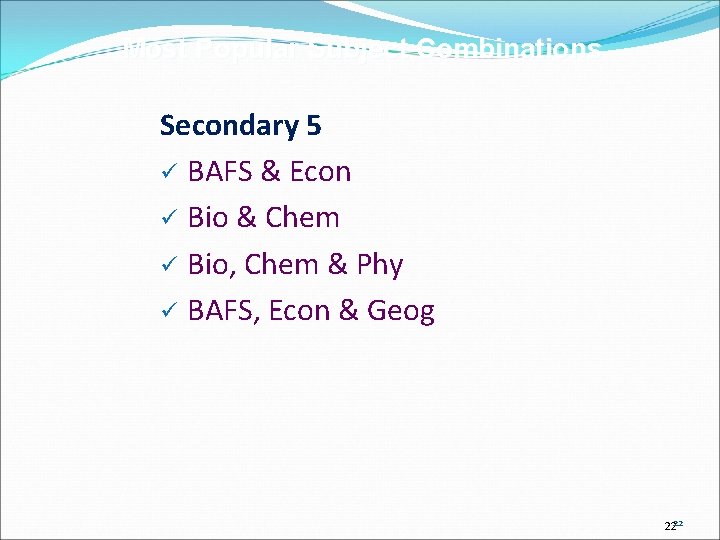
Most Popular Subject Combinations Secondary 5 ü BAFS & Econ ü Bio & Chem ü Bio, Chem & Phy ü BAFS, Econ & Geog 2222
The New Public Exam: Hong Kong Diploma of Secondary Education (HKDSE) Examination • 2012 HKDSE examination will be held in late March to late May • Date of release of results is scheduled on 20 July 2012 23
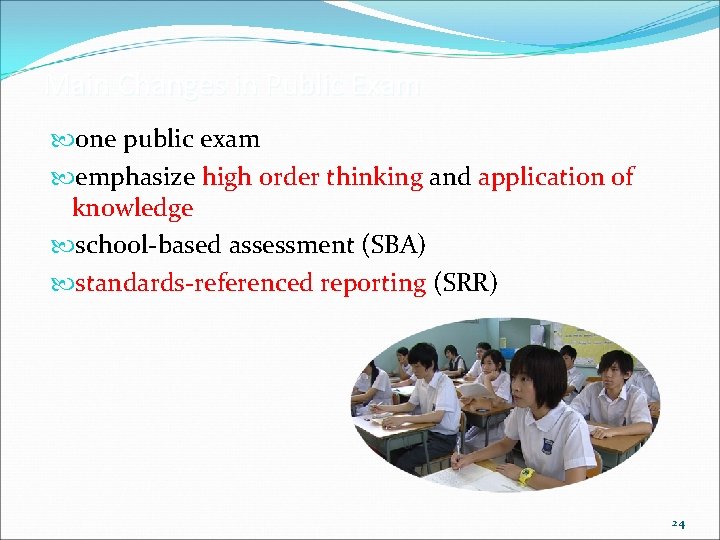
Main Changes in Public Exam one public exam emphasize high order thinking and application of knowledge school-based assessment (SBA) standards-referenced reporting (SRR) 24
Reporting: Standards-referenced reporting based on level descriptors candidates’ results indicate the standards achieved in terms of knowledge and skills independent of the performance of other candidates enable stakeholders know exactly what the candidates know and can do 25
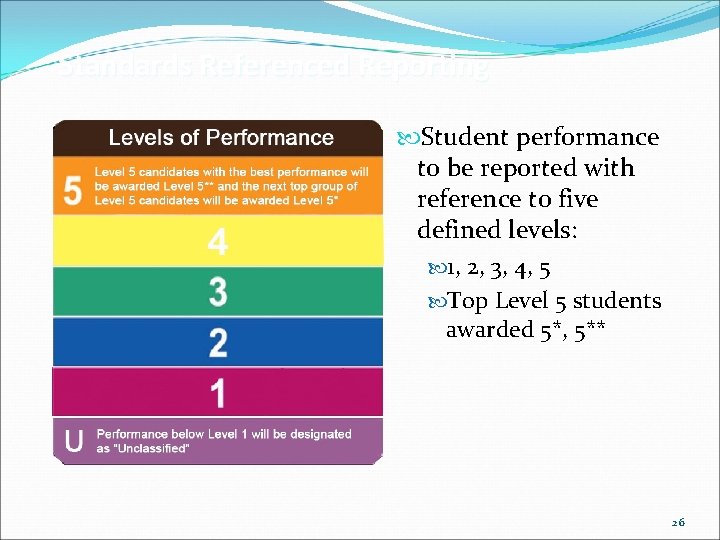
Standards Referenced Reporting Student performance to be reported with reference to five defined levels: 1, 2, 3, 4, 5 Top Level 5 students awarded 5*, 5** 26
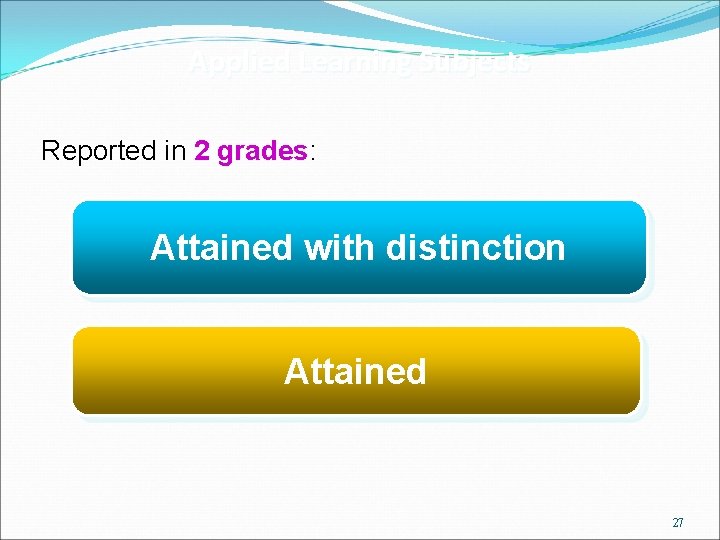
Applied Learning Subjects Reported in 2 grades: Attained with distinction Attained 27
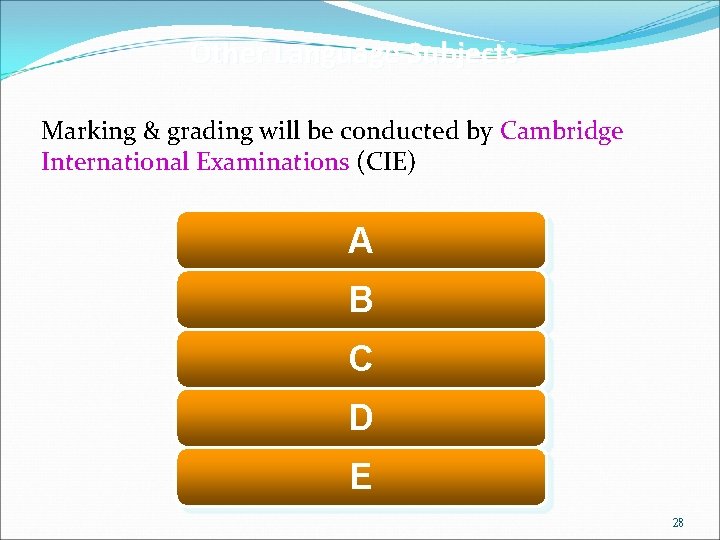
Other Language Subjects Marking & grading will be conducted by Cambridge International Examinations (CIE) A B C D E 28
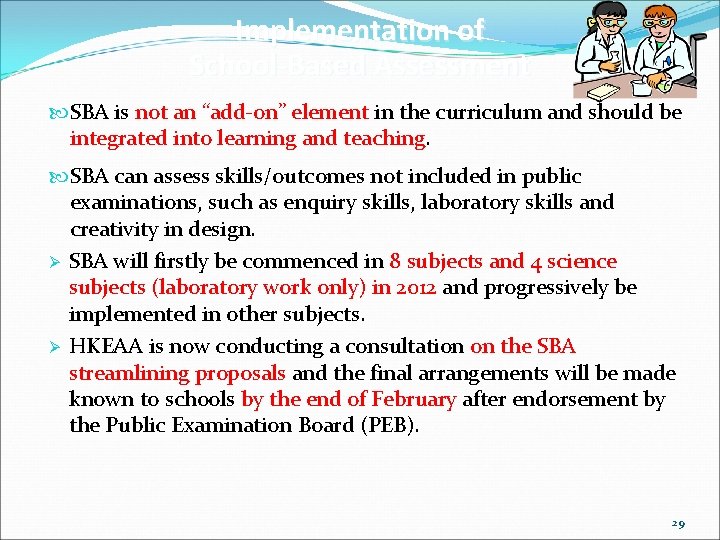
Implementation of School-Based Assessment SBA is not an “add-on” element in the curriculum and should be integrated into learning and teaching. SBA can assess skills/outcomes not included in public examinations, such as enquiry skills, laboratory skills and creativity in design. SBA will firstly be commenced in 8 subjects and 4 science subjects (laboratory work only) in 2012 and progressively be implemented in other subjects. HKEAA is now conducting a consultation on the SBA streamlining proposals and the final arrangements will be made known to schools by the end of February after endorsement by the Public Examination Board (PEB). 29
Moderation of SBA Schools are required to submit marks in S 5 and S 6 and HKEAA will moderate SBA marks, after schools submit S 6 marks in early 2012. Moderation is to ensure the consistency of assessment standards across subjects. Two methods will be adopted: - Statistical moderation with an element of expert judgment - Expert judgment with an element of statistical adjustment Moderation is conducted on school basis but not classbased/teacher-based and therefore, within-school standardization of teachers’ marking standard is also necessary 30
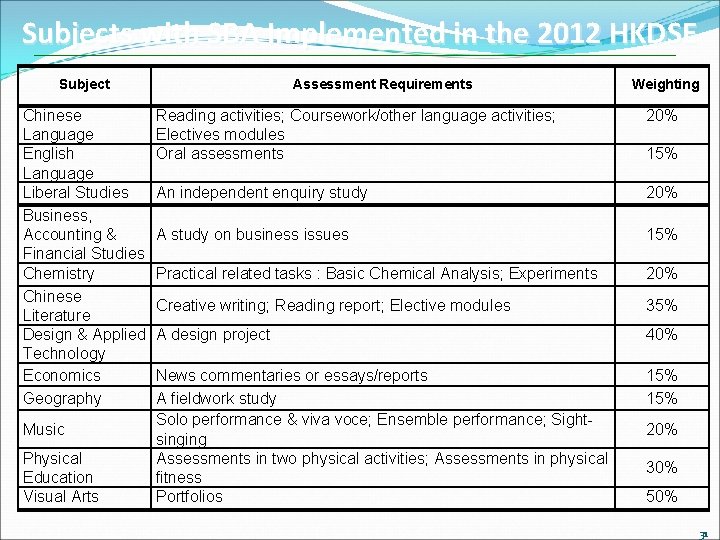
Subjects with SBA Implemented in the 2012 HKDSE Subject Chinese Language English Language Liberal Studies Business, Accounting & Financial Studies Chemistry Chinese Literature Design & Applied Technology Economics Geography Music Physical Education Visual Arts Assessment Requirements Weighting Reading activities; Coursework/other language activities; Electives modules Oral assessments 20% An independent enquiry study 20% A study on business issues 15% Practical related tasks : Basic Chemical Analysis; Experiments 20% Creative writing; Reading report; Elective modules 35% A design project 40% News commentaries or essays/reports A fieldwork study Solo performance & viva voce; Ensemble performance; Sightsinging Assessments in two physical activities; Assessments in physical fitness Portfolios 15% 15% 20% 30% 50% 31
Multiple & Diversified Pathways for Students 32
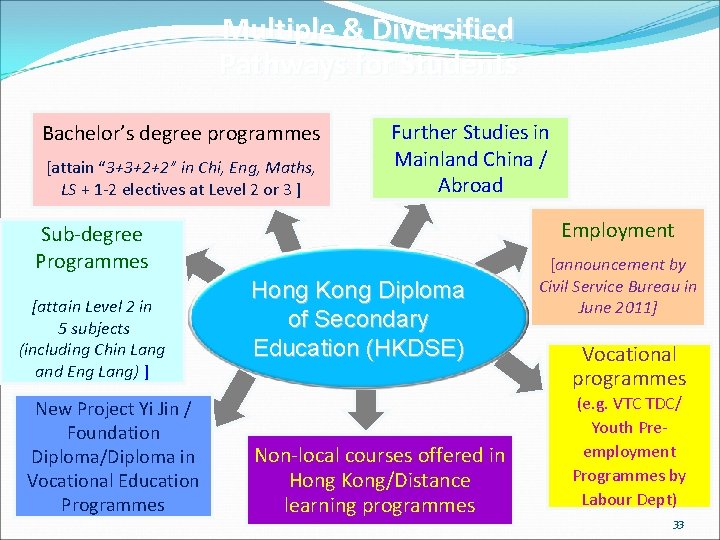
Multiple & Diversified Pathways for Students Bachelor’s degree programmes [attain “ 3+3+2+2” in Chi, Eng, Maths, LS + 1 -2 electives at Level 2 or 3 ] Further Studies in Mainland China / Abroad Employment Sub-degree Programmes [attain Level 2 in 5 subjects (including Chin Lang and Eng Lang) ] New Project Yi Jin / Foundation Diploma/Diploma in Vocational Education Programmes Hong Kong Diploma of Secondary Education (HKDSE) Non-local courses offered in Hong Kong/Distance learning programmes [announcement by Civil Service Bureau in June 2011] Vocational programmes (e. g. VTC TDC/ Youth Preemployment Programmes by Labour Dept) 33
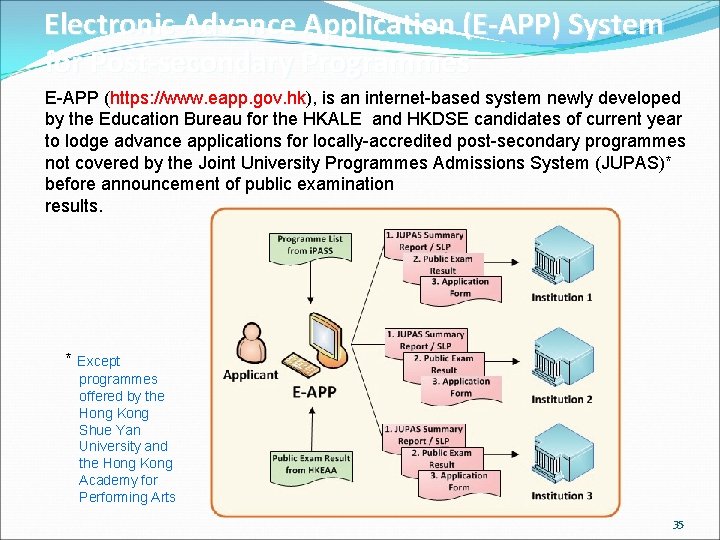
Electronic Advance Application (E-APP) System for Post-secondary Programmes E-APP (https: //www. eapp. gov. hk), is an internet-based system newly developed by the Education Bureau for the HKALE and HKDSE candidates of current year to lodge advance applications for locally-accredited post-secondary programmes not covered by the Joint University Programmes Admissions System (JUPAS)* before announcement of public examination results. * Except programmes offered by the Hong Kong Shue Yan University and the Hong Kong Academy for Performing Arts 35
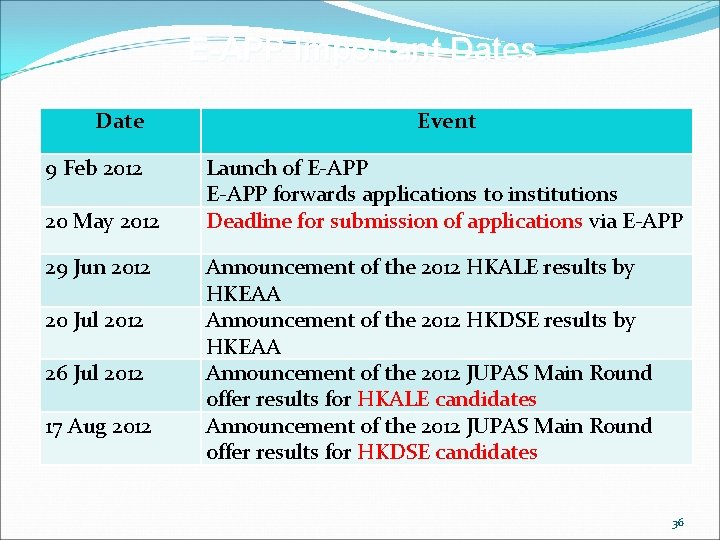
E-APP Important Dates Date 9 Feb 2012 20 May 2012 29 Jun 2012 20 Jul 2012 26 Jul 2012 17 Aug 2012 Event Launch of E-APP forwards applications to institutions Deadline for submission of applications via E-APP Announcement of the 2012 HKALE results by HKEAA Announcement of the 2012 HKDSE results by HKEAA Announcement of the 2012 JUPAS Main Round offer results for HKALE candidates Announcement of the 2012 JUPAS Main Round offer results for HKDSE candidates 36
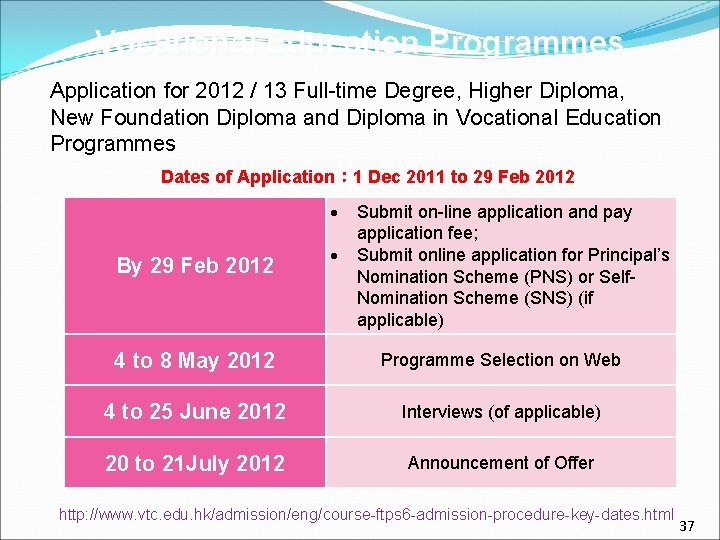
Vocational Education Programmes Application for 2012 / 13 Full-time Degree, Higher Diploma, New Foundation Diploma and Diploma in Vocational Education Programmes Dates of Application: 1 Dec 2011 to 29 Feb 2012 By 29 Feb 2012 Submit on-line application and pay application fee; Submit online application for Principal’s Nomination Scheme (PNS) or Self. Nomination Scheme (SNS) (if applicable) 4 to 8 May 2012 Programme Selection on Web 4 to 25 June 2012 Interviews (of applicable) 20 to 21 July 2012 Announcement of Offer http: //www. vtc. edu. hk/admission/eng/course-ftps 6 -admission-procedure-key-dates. html 37
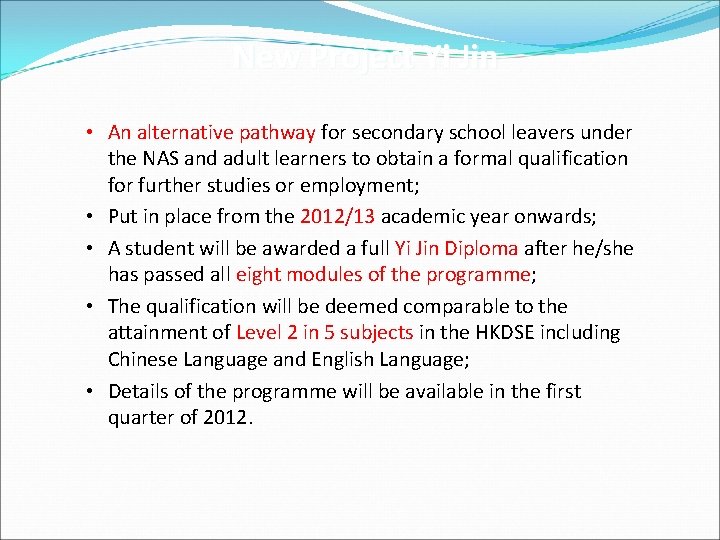
New Project Yi Jin • An alternative pathway for secondary school leavers under the NAS and adult learners to obtain a formal qualification for further studies or employment; • Put in place from the 2012/13 academic year onwards; • A student will be awarded a full Yi Jin Diploma after he/she has passed all eight modules of the programme; • The qualification will be deemed comparable to the attainment of Level 2 in 5 subjects in the HKDSE including Chinese Language and English Language; • Details of the programme will be available in the first quarter of 2012.
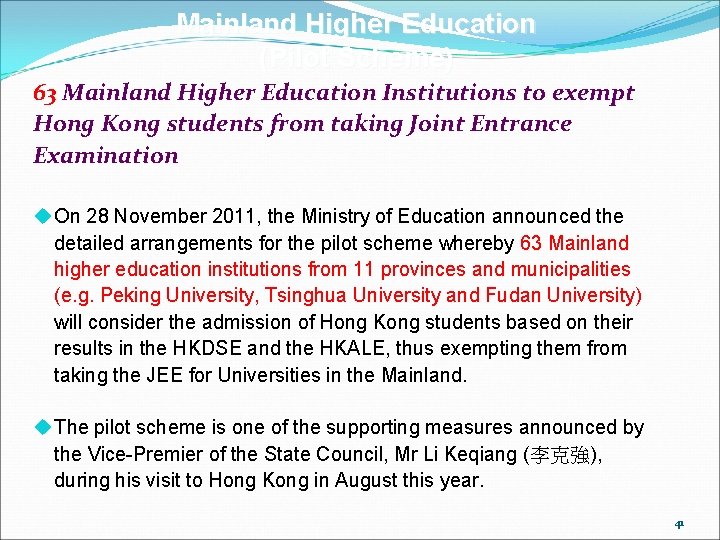
Mainland Higher Education (Pilot Scheme) 63 Mainland Higher Education Institutions to exempt Hong Kong students from taking Joint Entrance Examination u On 28 November 2011, the Ministry of Education announced the detailed arrangements for the pilot scheme whereby 63 Mainland higher education institutions from 11 provinces and municipalities (e. g. Peking University, Tsinghua University and Fudan University) will consider the admission of Hong Kong students based on their results in the HKDSE and the HKALE, thus exempting them from taking the JEE for Universities in the Mainland. u The pilot scheme is one of the supporting measures announced by the Vice-Premier of the State Council, Mr Li Keqiang (李克強), during his visit to Hong Kong in August this year. 41
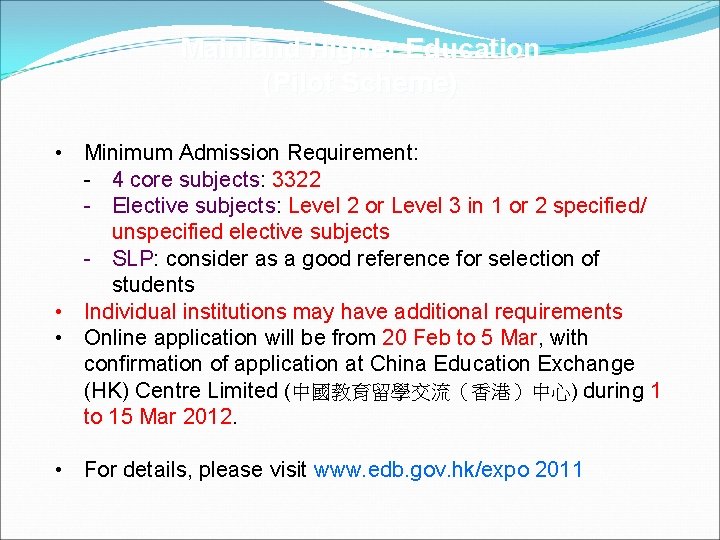
Mainland Higher Education (Pilot Scheme) • Minimum Admission Requirement: - 4 core subjects: 3322 - Elective subjects: Level 2 or Level 3 in 1 or 2 specified/ unspecified elective subjects - SLP: consider as a good reference for selection of students • Individual institutions may have additional requirements • Online application will be from 20 Feb to 5 Mar, with confirmation of application at China Education Exchange (HK) Centre Limited (中國教育留學交流(香港)中心) during 1 to 15 Mar 2012. • For details, please visit www. edb. gov. hk/expo 2011
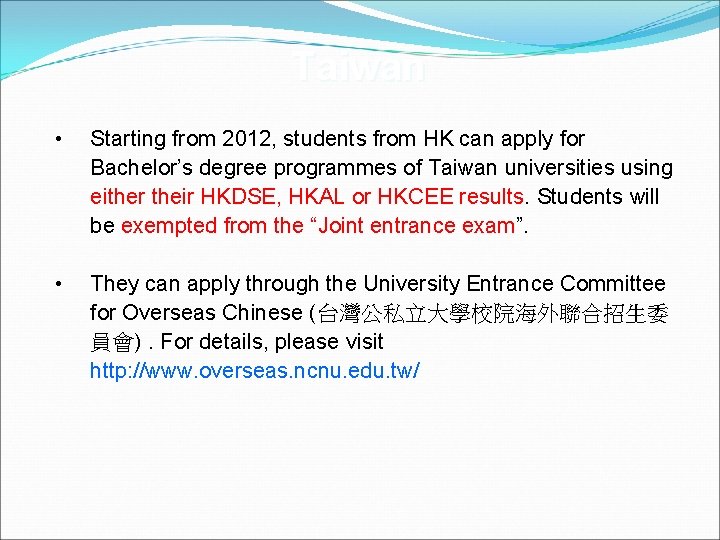
Taiwan • Starting from 2012, students from HK can apply for Bachelor’s degree programmes of Taiwan universities using either their HKDSE, HKAL or HKCEE results. Students will be exempted from the “Joint entrance exam”. • They can apply through the University Entrance Committee for Overseas Chinese (台灣公私立大學校院海外聯合招生委 員會). For details, please visit http: //www. overseas. ncnu. edu. tw/
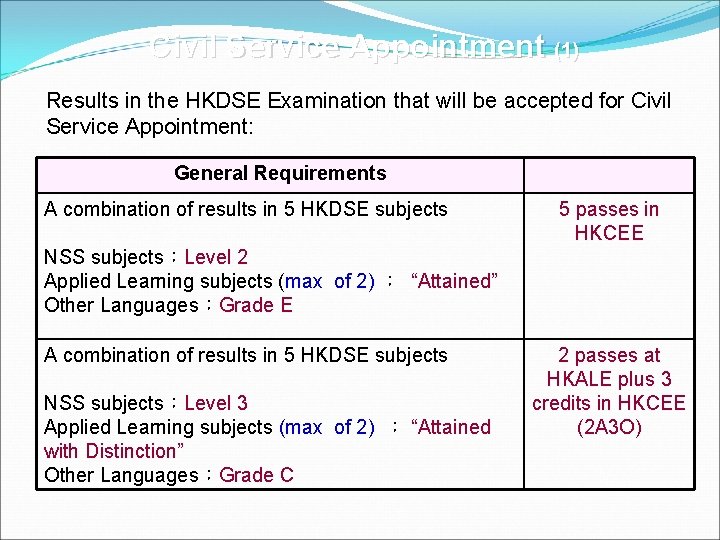
Civil Service Appointment (1) Results in the HKDSE Examination that will be accepted for Civil Service Appointment: General Requirements A combination of results in 5 HKDSE subjects 5 passes in HKCEE NSS subjects:Level 2 Applied Learning subjects (max of 2) : “Attained” Other Languages:Grade E A combination of results in 5 HKDSE subjects NSS subjects:Level 3 Applied Learning subjects (max of 2) : “Attained with Distinction” Other Languages:Grade C 2 passes at HKALE plus 3 credits in HKCEE (2 A 3 O)
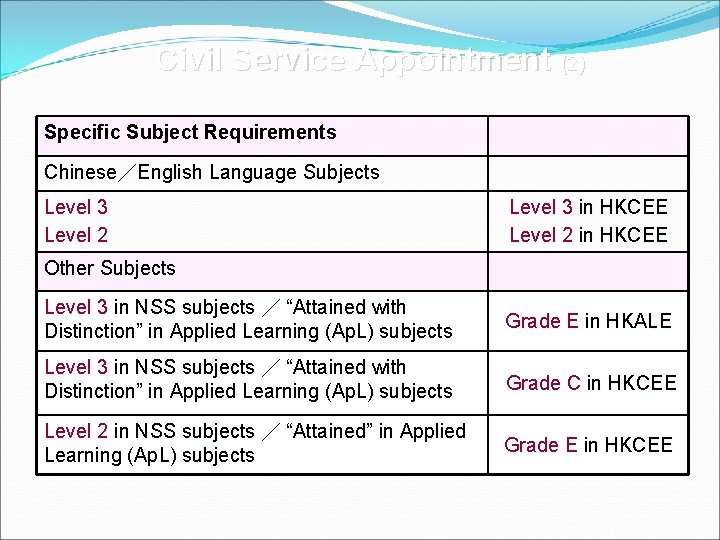
Civil Service Appointment (2) Specific Subject Requirements Chinese/English Language Subjects Level 3 Level 2 Level 3 in HKCEE Level 2 in HKCEE Other Subjects Level 3 in NSS subjects / “Attained with Distinction” in Applied Learning (Ap. L) subjects Grade E in HKALE Level 3 in NSS subjects / “Attained with Distinction” in Applied Learning (Ap. L) subjects Grade C in HKCEE Level 2 in NSS subjects / “Attained” in Applied Learning (Ap. L) subjects Grade E in HKCEE
www. edb. gov. hk/nas/en 47