
Understanding the Modal Shift in Response to Bikesharing

Understanding the Modal Shift in Response to Bike-sharing Systems in the City of Delft -Survey data and insights Xinwei Ma Yufei Yuan Niels van Oort Serge Hoogendoorn 1
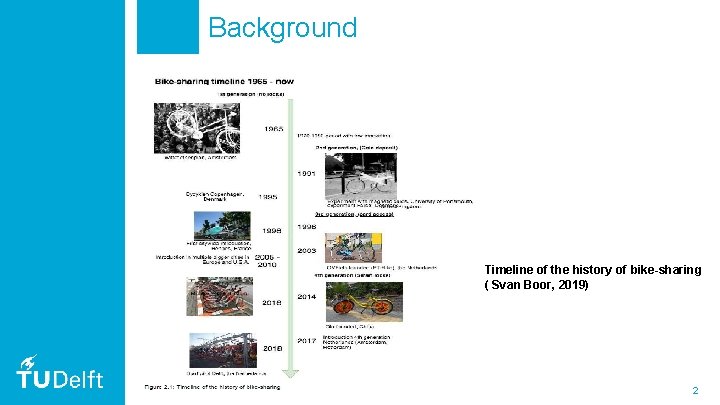
Background Timeline of the history of bike-sharing ( Svan Boor, 2019) 2

01 Background Bike-sharing Systems in Delft, Netherlands Bikesharing Type OV-fiets Mobike Swapfiets Year Launched 2003 2017 2014 Feature of systems Docked bike-sharing system Dockless bike-sharing system Bicycle-lease system on a subscription basis Image illustration Way to use User pricing 1. Subscription online or on 1. Subscription on a Mobike a NS App a Swapfiets App and get a App 2. Using the Personal Swapfiets bike within 1 2. Using the Mobike App to public transport chip card day at a location of your open the bike. (NS card) to rent a bike. choice € 3. 85/day € 12/month, 49. 90/year or € 1. 5/20 min € 15/month 3

Methodology – modal shift dynamics Who Non-bike-sharing users? Bike-sharing users? Why Reasons? Barriers & Motivations What Modal shift caused by bike-sharing systems? How Relationship between Modal shift and factors (personal attributes, trip characteristics, motivations, …) 4

Part 1. Data
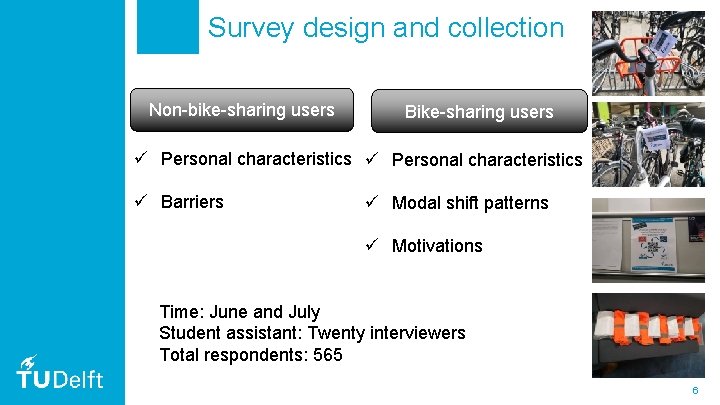
Survey design and collection Non-bike-sharing users Bike-sharing users ü Personal characteristics ü Barriers ü Modal shift patterns ü Motivations Time: June and July Student assistant: Twenty interviewers Total respondents: 565 6
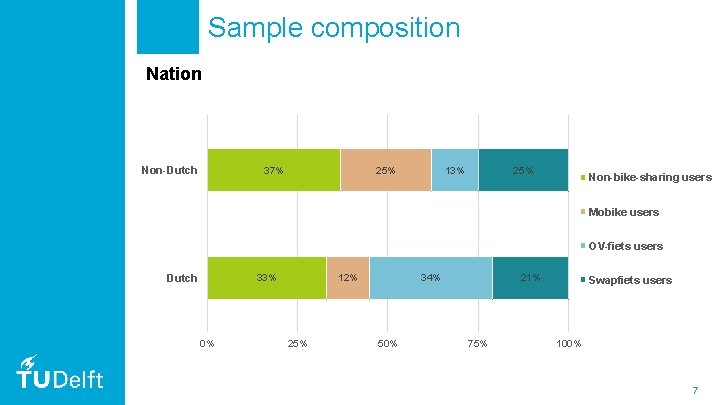
Sample composition Nation Non-Dutch 37% 25% 13% 25% Non-bike-sharing users Mobike users OV-fiets users Dutch 33% 0% 12% 25% 34% 50% 21% 75% Swapfiets users 100% 7
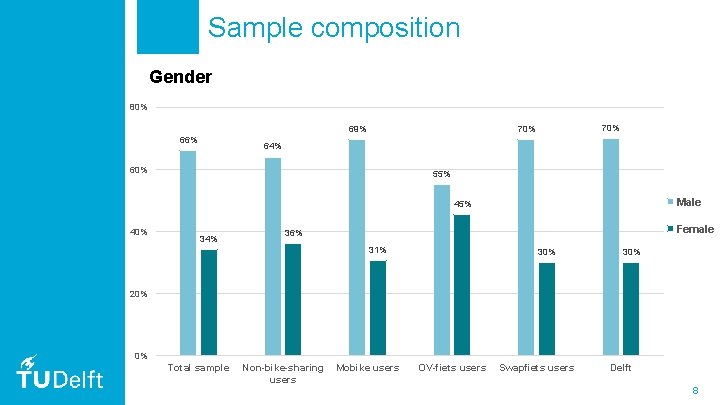
Sample composition Gender 80% 70% 69% 66% 64% 60% 55% Male 45% 40% 34% Female 36% 31% 30% 20% 0% Total sample Non-bike-sharing users Mobike users OV-fiets users Swapfiets users Delft 8
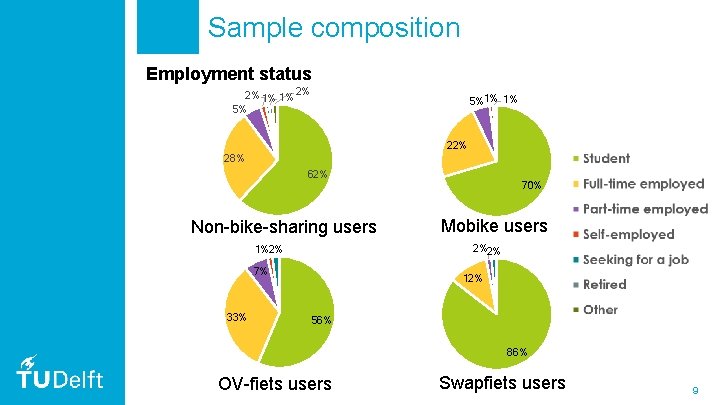
Sample composition Employment status 2% 1% 1% 2% 5% 5%1% 1% 22% 28% 62% Non-bike-sharing users Mobike users 2%2% 1%2% 7% 33% 70% 12% 56% 86% OV-fiets users Swapfiets users 9

Part 2. Insights
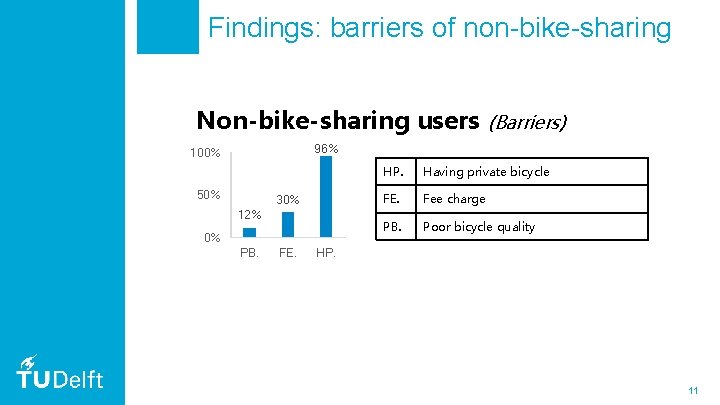
Findings: barriers of non-bike-sharing Non-bike-sharing users (Barriers) 96% 100% 50% 30% 12% 0% PB. FE. HP. Having private bicycle FE. Fee charge PB. Poor bicycle quality HP. 11
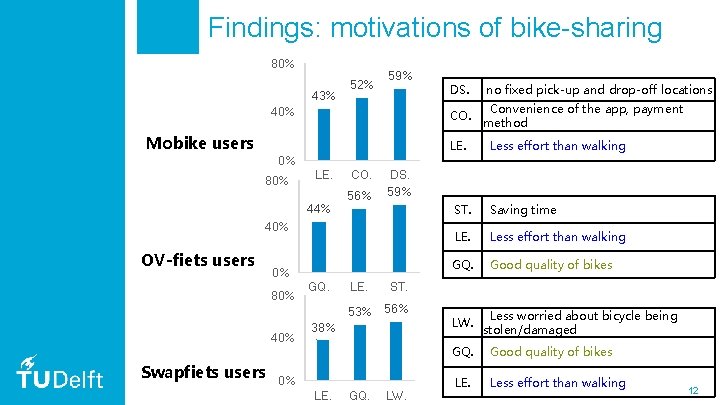
Findings: motivations of bike-sharing 80% 43% 52% 59% 40% Mobike users DS. no fixed pick-up and drop-off locations CO. Convenience of the app, payment method LE. Less effort than walking 0% 80% LE. 44% CO. 56% DS. 59% 40% OV-fiets users 0% 80% 40% Swapfiets users GQ. LE. ST. 53% 56% 38% 0% LE. GQ. LW. ST. Saving time LE. Less effort than walking GQ. Good quality of bikes LW. Less worried about bicycle being stolen/damaged GQ. Good quality of bikes LE. Less effort than walking 12
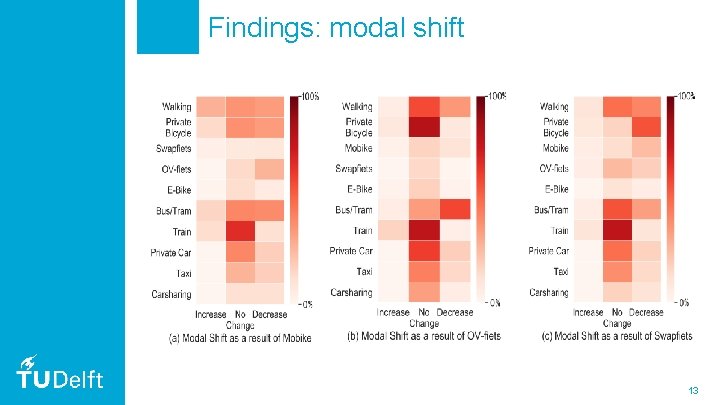
Findings: modal shift 13
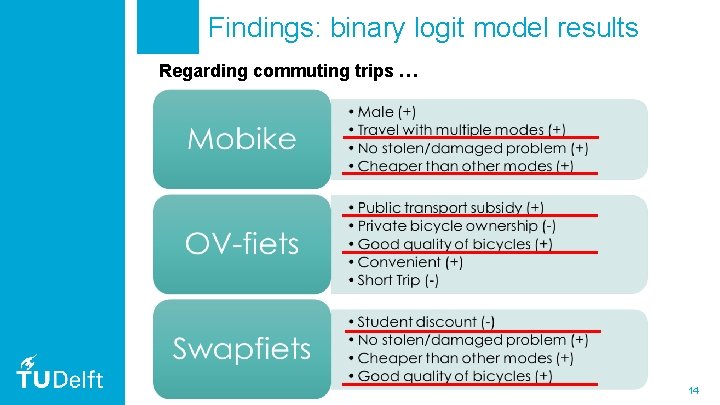
Findings: binary logit model results Regarding commuting trips … 14
Wrap up ü Personal characteristics vary between non-bike-sharing users and bike-sharing users. ü Motivations are closely related to the characteristics of different bike-sharing systems. ü Bike-sharing users reduce the use of walking, private bicycle, bus/tram and car. In contrast, the train use increased after the introduction of bike-sharing systems. ü Effects of personal, commuting trip and motivation factors on modal shift vary among different bike-sharing systems. ü Based on the observations, practical implications proposed 15
Thank you for your attention! Xinwei Ma, Yufei Yuan, Niels van Oort and Serge Hoogendoorn X. Ma-4@tudelft. nl, Y. Yuan@tudelft. nl OR refer to: nielsvanoort. weblog. tudelft. nl/ Department of Transport & Planning Faculty of Civil Engineering and Geosciences Delft University of Technology 16
- Slides: 16