
Understanding the mechanism of resistance to Cassava Brown
Understanding the mechanism of resistance to Cassava Brown Streak Disease in cassava Maruthi M N Gowda
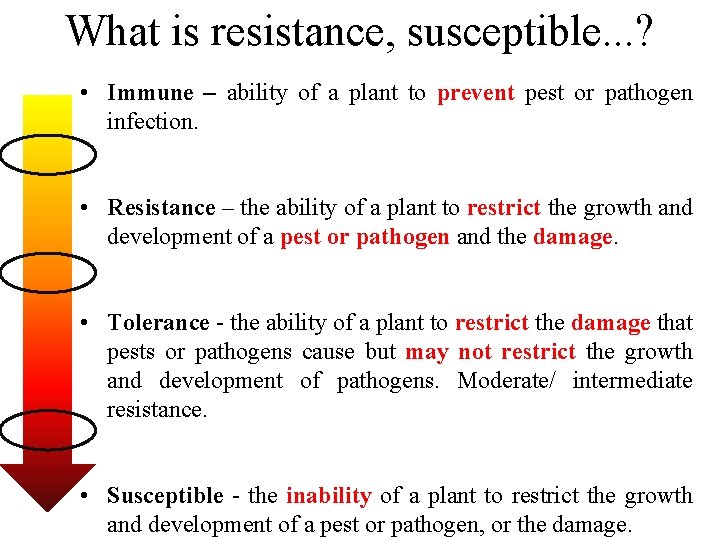
What is resistance, susceptible. . . ? • Immune – ability of a plant to prevent pest or pathogen infection. • Resistance – the ability of a plant to restrict the growth and development of a pest or pathogen and the damage. • Tolerance - the ability of a plant to restrict the damage that pests or pathogens cause but may not restrict the growth and development of pathogens. Moderate/ intermediate resistance. • Susceptible - the inability of a plant to restrict the growth and development of a pest or pathogen, or the damage.
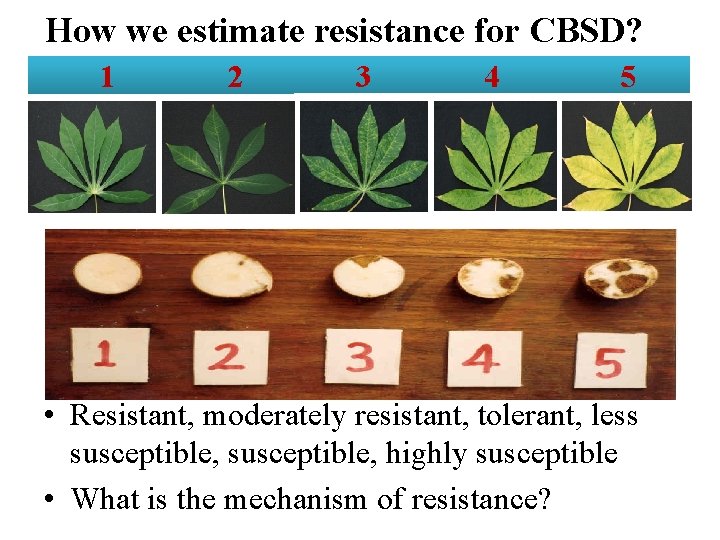
How we estimate resistance for CBSD? 1 2 3 4 5 • Resistant, moderately resistant, tolerant, less susceptible, highly susceptible • What is the mechanism of resistance?
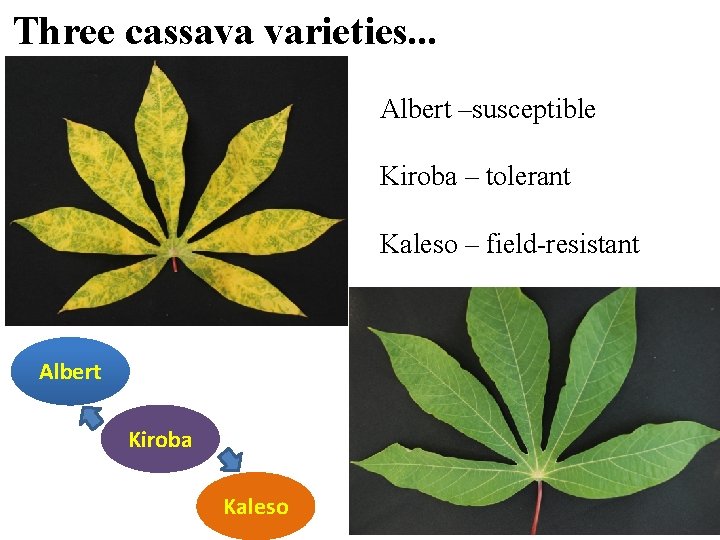
Three cassava varieties. . . Albert –susceptible Kiroba – tolerant Kaleso – field-resistant Albert Kiroba Kaleso
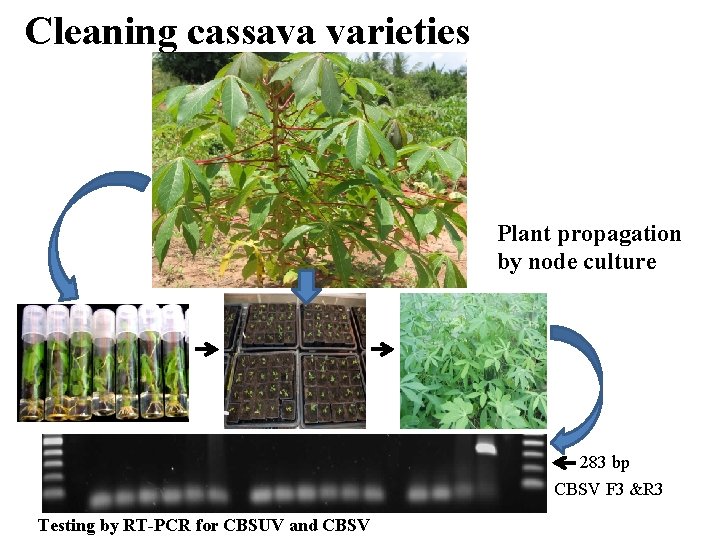
Cleaning cassava varieties Plant propagation by node culture 283 bp CBSV F 3 &R 3 Testing by RT-PCR for CBSUV and CBSV
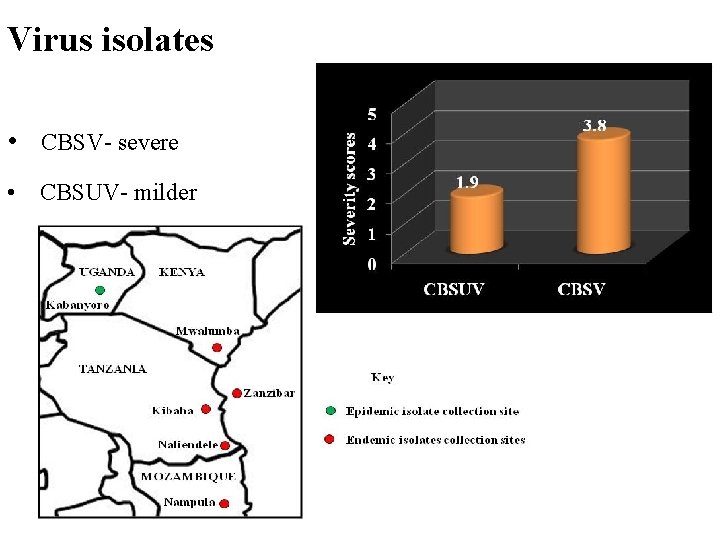
Virus isolates • CBSV- severe • CBSUV- milder
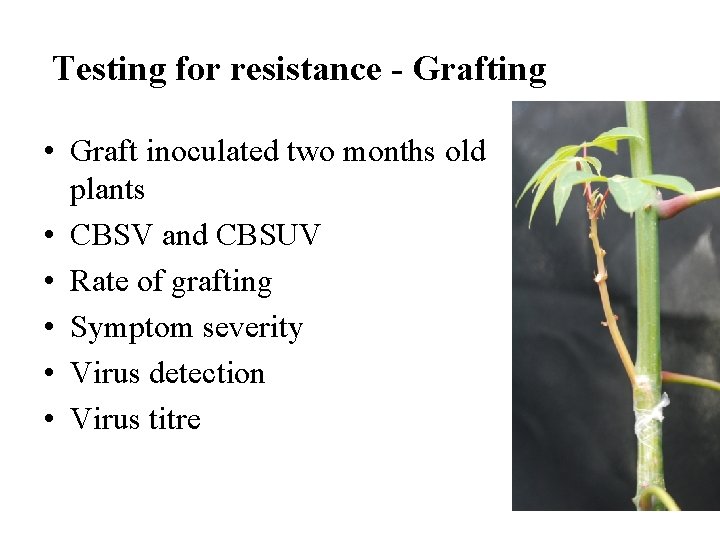
Testing for resistance - Grafting • Graft inoculated two months old plants • CBSV and CBSUV • Rate of grafting • Symptom severity • Virus detection • Virus titre
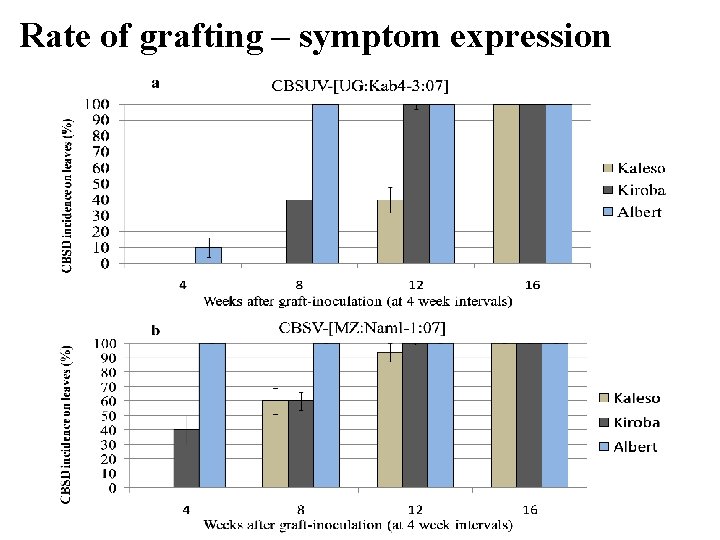
Rate of grafting – symptom expression
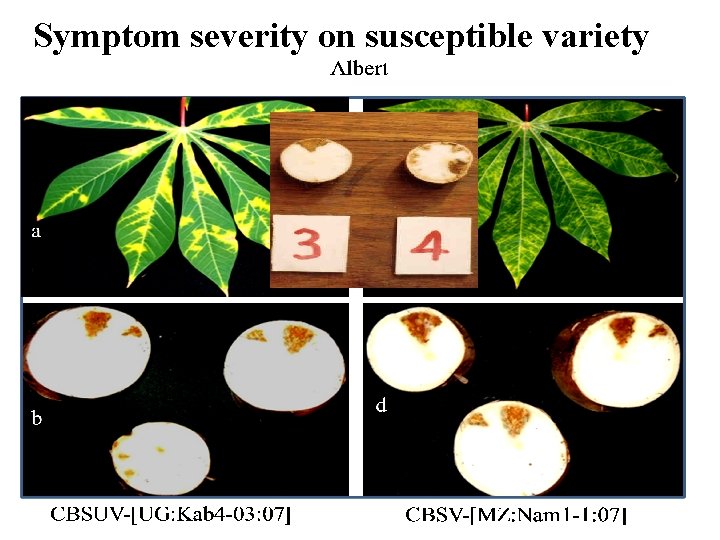
Symptom severity on susceptible variety
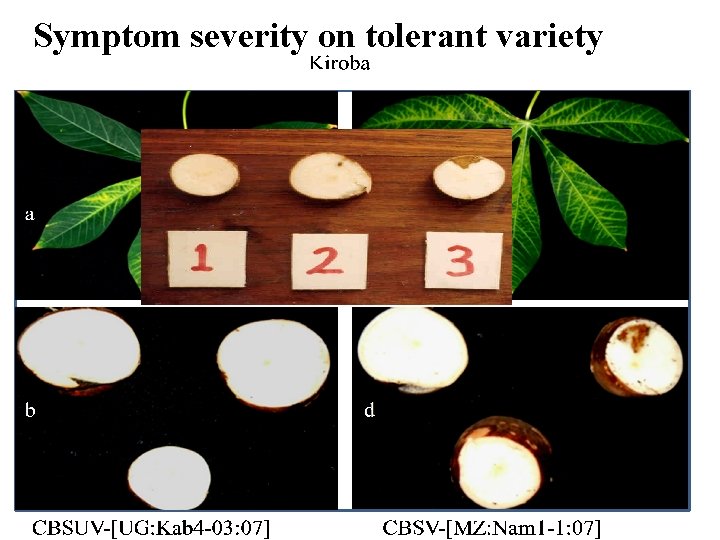
Symptom severity on tolerant variety
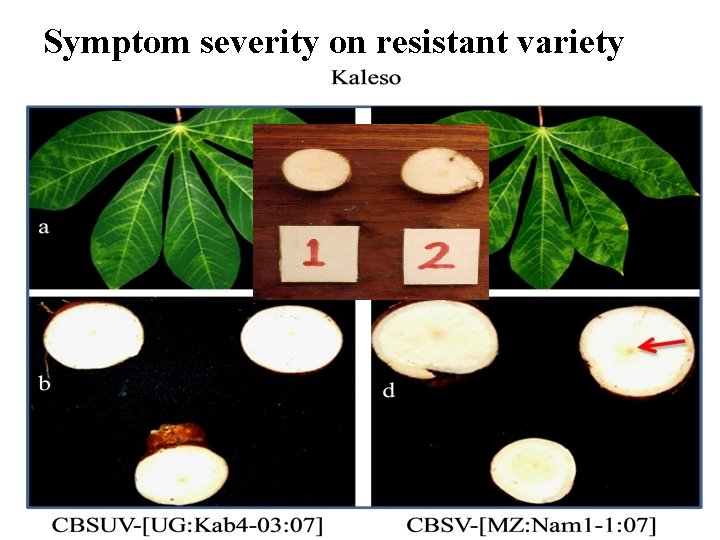
Symptom severity on resistant variety
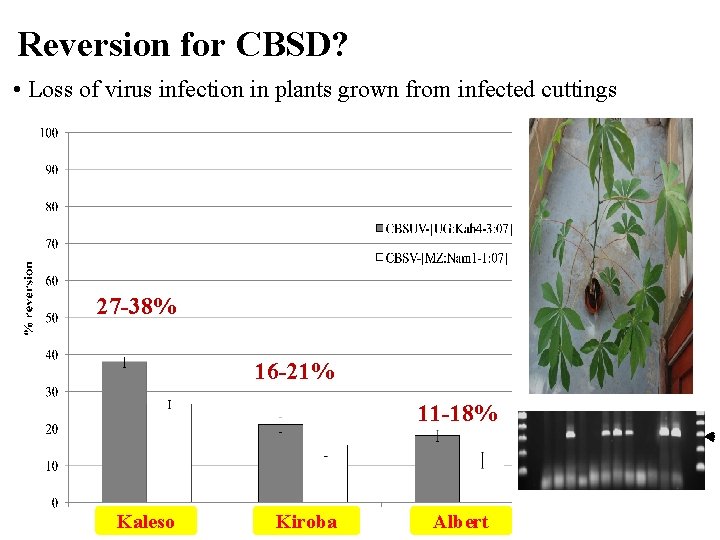
Reversion for CBSD? • Loss of virus infection in plants grown from infected cuttings 27 -38% 16 -21% 11 -18% Kaleso Kiroba Albert
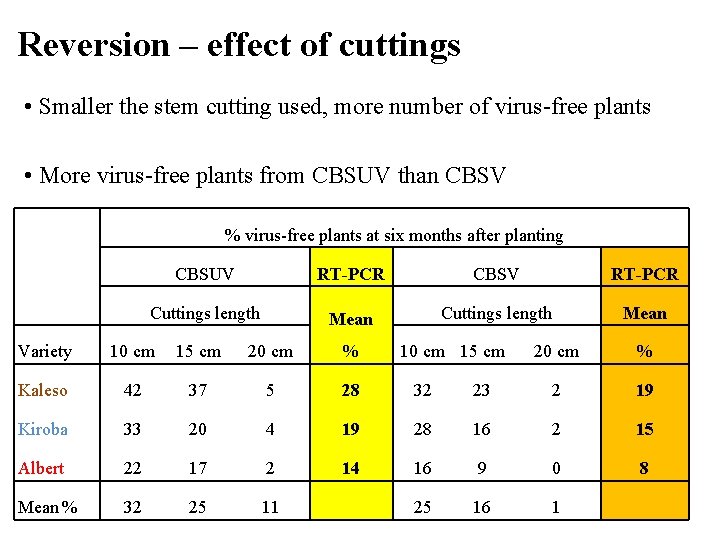
Reversion – effect of cuttings • Smaller the stem cutting used, more number of virus-free plants • More virus-free plants from CBSUV than CBSV % virus-free plants at six months after planting CBSUV RT-PCR CBSV RT-PCR Cuttings length Mean Variety 10 cm 15 cm 20 cm % Kaleso 42 37 5 28 32 23 2 19 Kiroba 33 20 4 19 28 16 2 15 Albert 22 17 2 14 16 9 0 8 Mean % 32 25 11 25 16 1
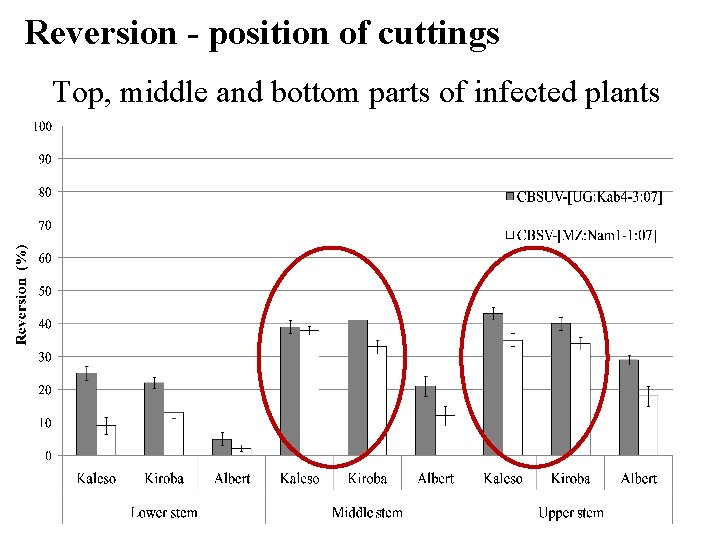
Reversion - position of cuttings Top, middle and bottom parts of infected plants
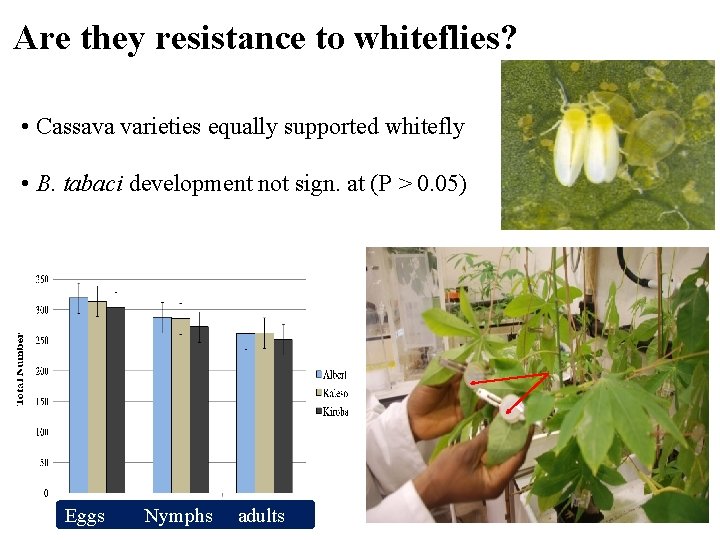
Are they resistance to whiteflies? • Cassava varieties equally supported whitefly • B. tabaci development not sign. at (P > 0. 05) Eggs Nymphs adults
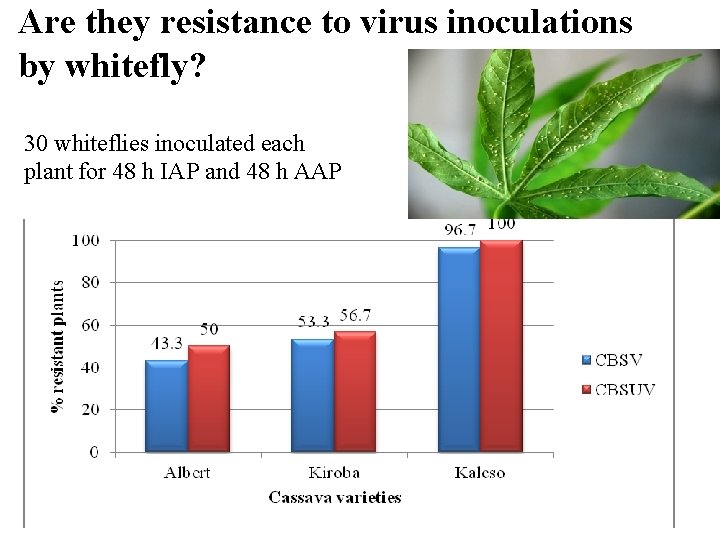
Are they resistance to virus inoculations by whitefly? 30 whiteflies inoculated each plant for 48 h IAP and 48 h AAP
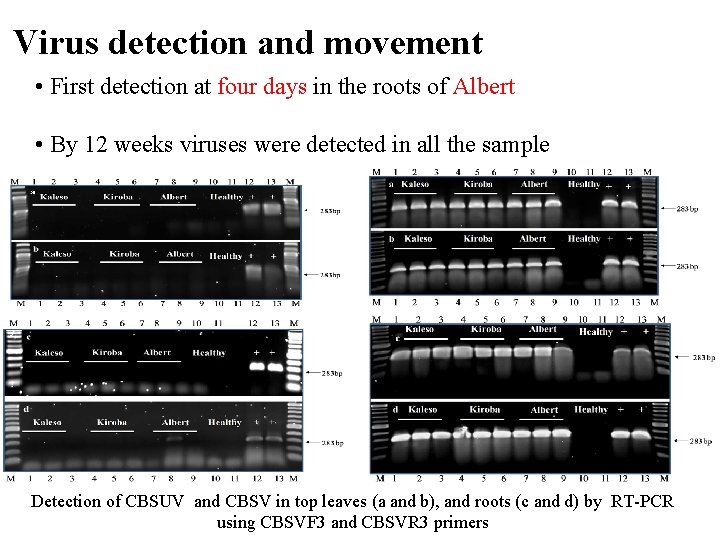
Virus detection and movement • First detection at four days in the roots of Albert • By 12 weeks viruses were detected in all the sample Detection of CBSUV and CBSV in top leaves (a and b), and roots (c and d) by RT-PCR using CBSVF 3 and CBSVR 3 primers
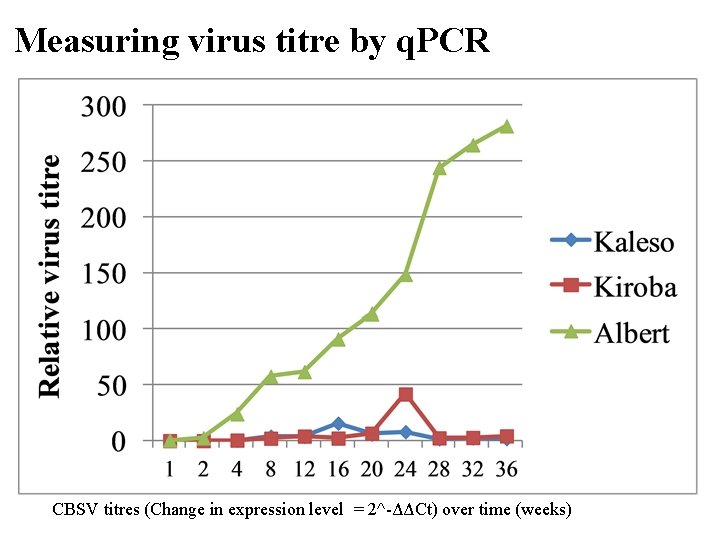
Measuring virus titre by q. PCR CBSV titres (Change in expression level = 2^-ΔΔCt) over time (weeks)
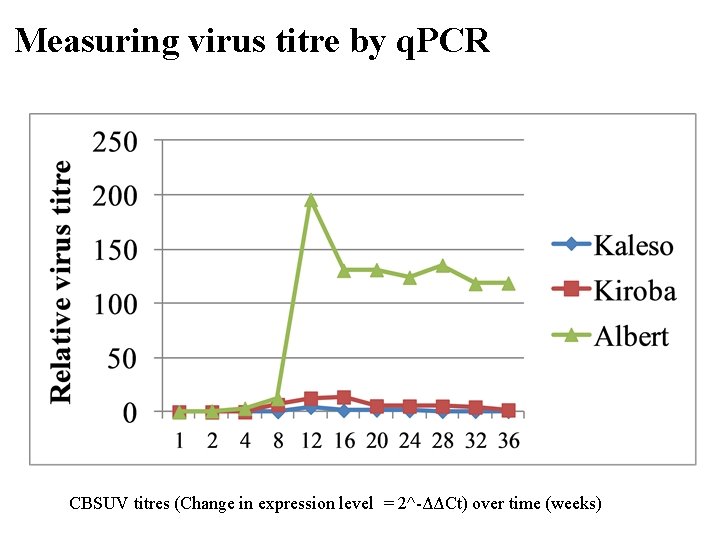
Measuring virus titre by q. PCR CBSUV titres (Change in expression level = 2^-ΔΔCt) over time (weeks)
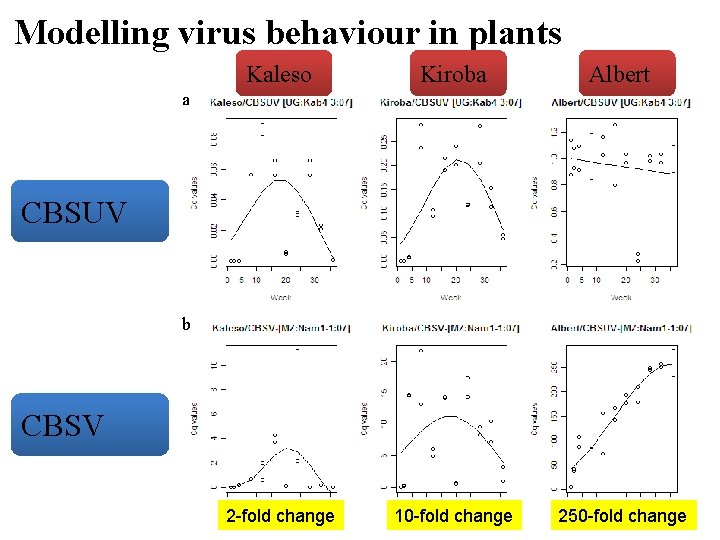
Modelling virus behaviour in plants Kaleso Kiroba Albert 2 -fold change 10 -fold change 250 -fold change a CBSUV b CBSV
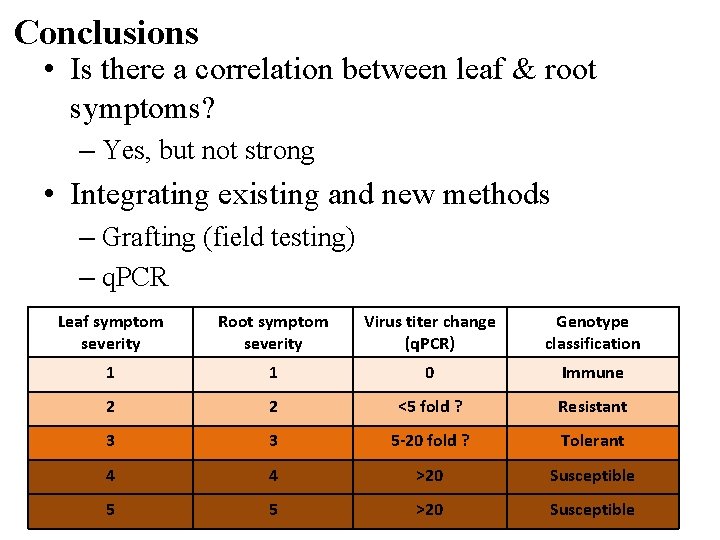
Conclusions • Is there a correlation between leaf & root symptoms? – Yes, but not strong • Integrating existing and new methods – Grafting (field testing) – q. PCR Leaf symptom severity Root symptom severity Virus titer change (q. PCR) Genotype classification 1 1 0 Immune 2 2 <5 fold ? Resistant 3 3 5 -20 fold ? Tolerant 4 4 >20 Susceptible 5 5 >20 Susceptible
- Slides: 21