
Understanding the LowRisks Trials and How They Affect
![All-Cause Mortality (%) 20 Surgery TAVR HR [95% CI] = 0. 41 [0. 14,](https://slidetodoc.com/presentation_image_h2/9afa0765930d0fcb8a9abdff8bd81446/image-17.jpg "All-Cause Mortality (%) 20 Surgery TAVR HR [95% CI] = 0. 41 [0. 14,")
![All Stroke (%) 20 Surgery TAVR HR [95% CI] = 0. 38 [0. 15,](https://slidetodoc.com/presentation_image_h2/9afa0765930d0fcb8a9abdff8bd81446/image-18.jpg "All Stroke (%) 20 Surgery TAVR HR [95% CI] = 0. 38 [0. 15,")
![Rehospitalization (%) 20 Surgery TAVR HR [95% CI] = 0. 65 [0. 42, 1.](https://slidetodoc.com/presentation_image_h2/9afa0765930d0fcb8a9abdff8bd81446/image-20.jpg "Rehospitalization (%) 20 Surgery TAVR HR [95% CI] = 0. 65 [0. 42, 1.")
![Primary Endpoint - Subgroup Analysis Subgroup TAVR Surgery Diff [95% CI] 8. 5 15.](https://slidetodoc.com/presentation_image_h2/9afa0765930d0fcb8a9abdff8bd81446/image-22.jpg "Primary Endpoint - Subgroup Analysis Subgroup TAVR Surgery Diff [95% CI] 8. 5 15.")

- Slides: 49
Understanding the Low-Risks Trials and How They Affect Your Valve Program Philippe Généreux, MD Medical Director, Structural Heart Program, Morristown Medical Center, NJ Interventional Cardiologist, Hôpital du Sacré-Coeur de Montréal, Canada Cardiovascular Research Foundation, New York, NY
Disclosure Statement of Financial Interest Within the past 12 months, I or my spouse/partner have had a financial interest/arrangement or affiliation with the organization(s) listed below • Abbott Vascular ¡ • • Consultant, Speaker Fees Equity, Consultant SARANAS ¡ • Equity, Consultant SIG. NUM ¡ • Equity, Consultant Soundbite Medical Inc. ¡ • Equity, Consultant Puzzle Medical ¡ Consultant, Speaker Fees, Proctor, Research Grant Medtronic ¡ • Research Grant Pi-Cardia ¡ Consultant, Speaker Fees, Research Grant Edwards Life. Sciences ¡ • Consultant Penumbra ¡ Consultant, Speaker Fees Cardiovascular System Inc. ¡ • Consultant Cardinal Health/Cordis Opsens ¡ Consultant/advisor, speaker fees Boston Scientific ¡ • Consultant, Speaker Fees Abiomed ¡ • Consultant TRYTON Medical Inc. ¡ Consultant, Speaker Fees, Research Grant
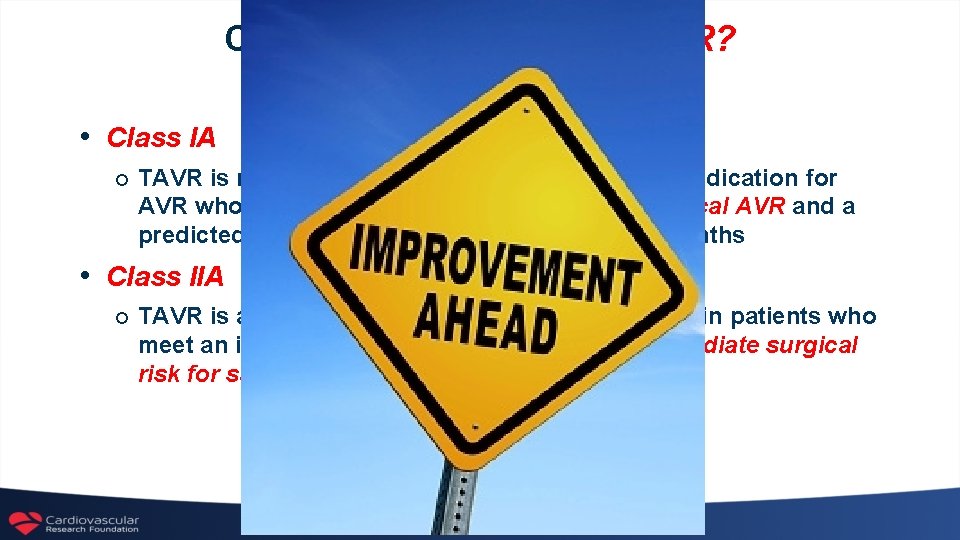
Current Guidelines for TAVR? Severe Aortic Stenosis • Class IA ¡ TAVR is recommended in patients who meet an indication for AVR who have a prohibitive or high risk for surgical AVR and a predicted post-TAVR survival greater than 12 months • Class IIA ¡ TAVR is a reasonable alternative to surgical AVR in patients who meet an indication for AVR and who have intermediate surgical risk for surgical AVR Nishimura et al. J Am Coll Cardiol. 2017
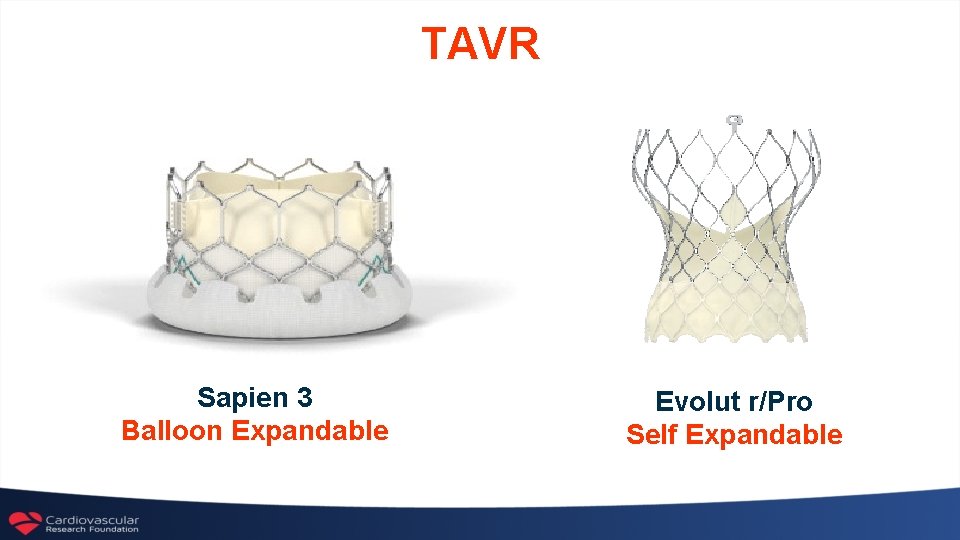
TAVR Sapien 3 Balloon Expandable Evolut r/Pro Self Expandable
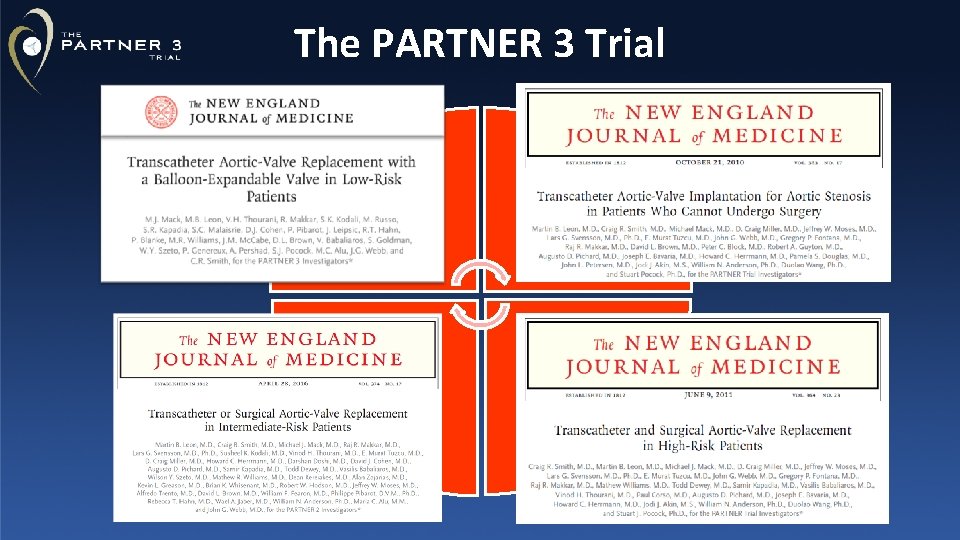
PARTNER 3 Transcatheter or Surgical Aortic Valve Replacement in Low Risk Patients with Aortic Stenosis Martin B. Leon, MD & Michael J. Mack, MD on behalf of the PARTNER 3 Trial Investigators
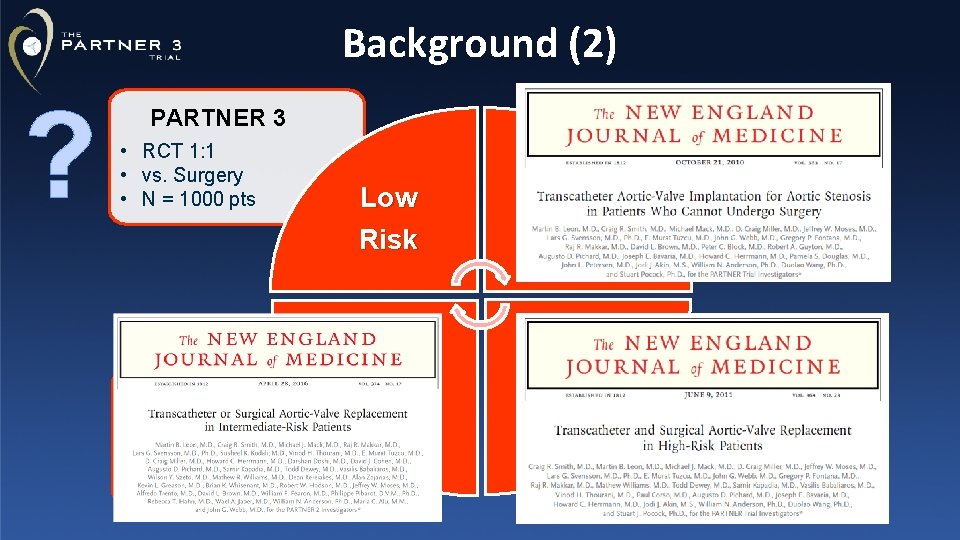
Background (2) ? PARTNER 1 B PARTNER 3 • RCT 1: 1 • vs. Surgery • N = 1000 pts • RCT 1: 1 • vs. SAVR • N = 2032 pts PARTNER 2 A Low Risk Interm Risk Extreme Risk High Risk • RCT 1: 1 • vs. Standard Rx • N = 358 pts • RCT 1: 1 • vs. SAVR • N = 699 pts PARTNER 1 A
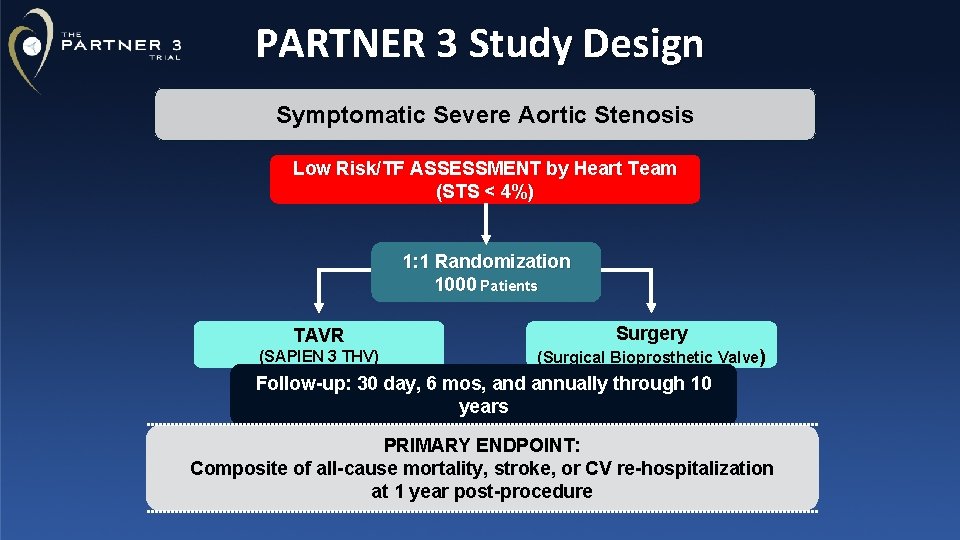
PARTNER 3 Study Design Symptomatic Severe Aortic Stenosis Low Risk/TF ASSESSMENT by Heart Team (STS < 4%) 1: 1 Randomization 1000 Patients TAVR (SAPIEN 3 THV) Surgery (Surgical Bioprosthetic Valve) Follow-up: 30 day, 6 mos, and annually through 10 years PRIMARY ENDPOINT: Composite of all-cause mortality, stroke, or CV re-hospitalization at 1 year post-procedure
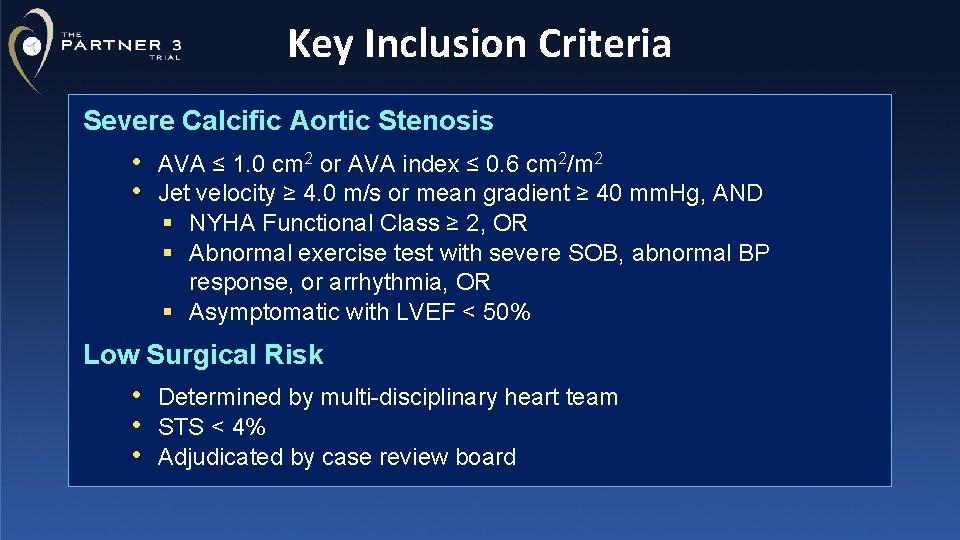
Key Inclusion Criteria Severe Calcific Aortic Stenosis • AVA ≤ 1. 0 cm 2 or AVA index ≤ 0. 6 cm 2/m 2 • Jet velocity ≥ 4. 0 m/s or mean gradient ≥ 40 mm. Hg, AND § NYHA Functional Class ≥ 2, OR § Abnormal exercise test with severe SOB, abnormal BP response, or arrhythmia, OR § Asymptomatic with LVEF < 50% Low Surgical Risk • Determined by multi-disciplinary heart team • STS < 4% • Adjudicated by case review board
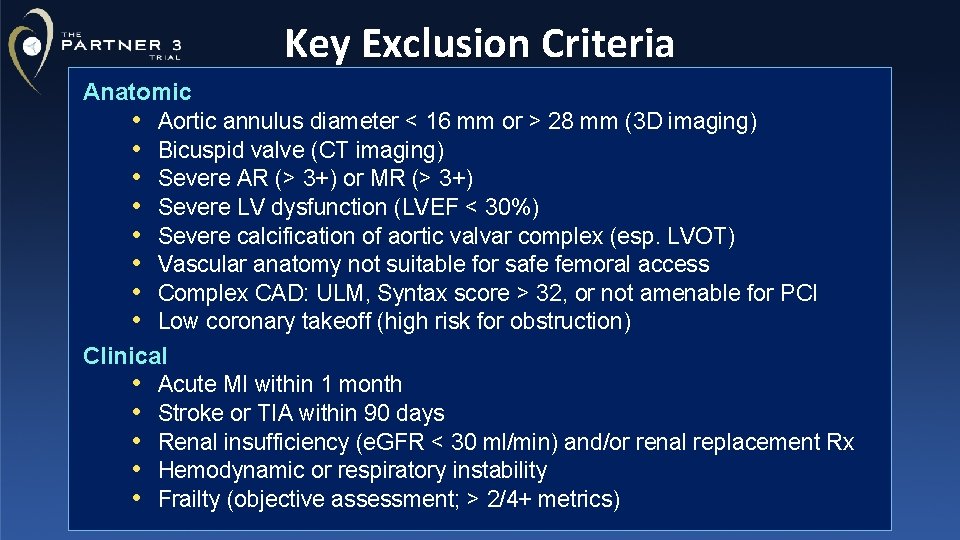
Key Exclusion Criteria Anatomic • Aortic annulus diameter < 16 mm or > 28 mm (3 D imaging) • Bicuspid valve (CT imaging) • Severe AR (> 3+) or MR (> 3+) • Severe LV dysfunction (LVEF < 30%) • Severe calcification of aortic valvar complex (esp. LVOT) • Vascular anatomy not suitable for safe femoral access • Complex CAD: ULM, Syntax score > 32, or not amenable for PCI • Low coronary takeoff (high risk for obstruction) Clinical • Acute MI within 1 month • Stroke or TIA within 90 days • Renal insufficiency (e. GFR < 30 ml/min) and/or renal replacement Rx • Hemodynamic or respiratory instability • Frailty (objective assessment; > 2/4+ metrics)
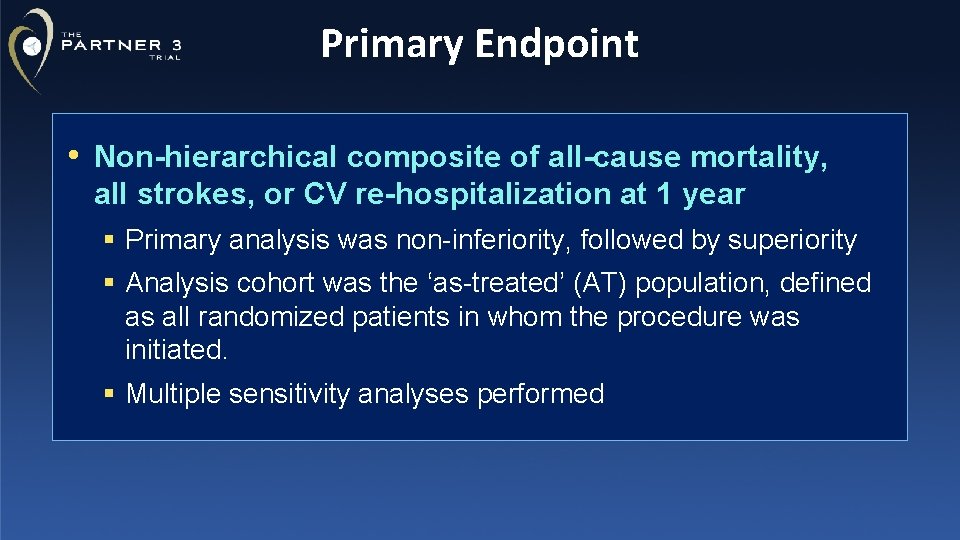
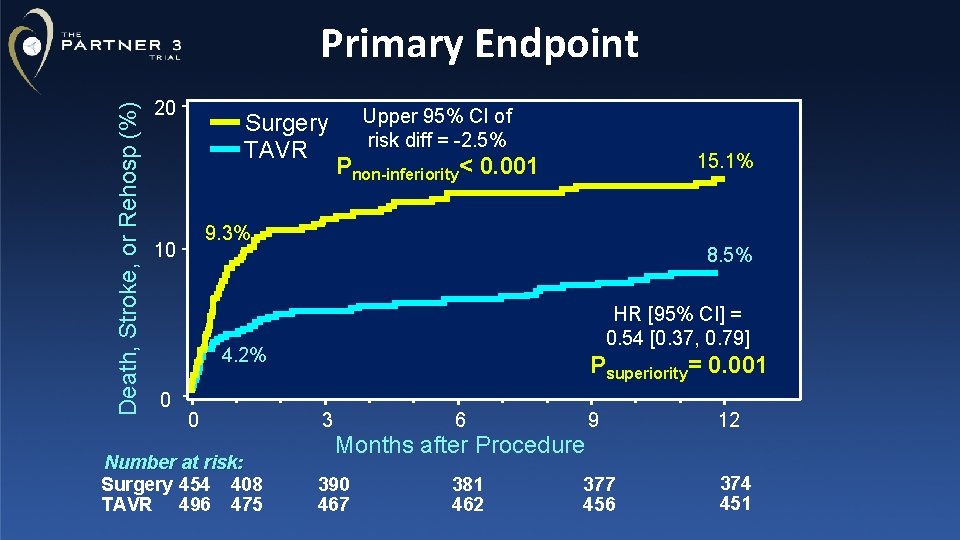
Primary Endpoint • Non-hierarchical composite of all-cause mortality, all strokes, or CV re-hospitalization at 1 year § Primary analysis was non-inferiority, followed by superiority § Analysis cohort was the ‘as-treated’ (AT) population, defined as all randomized patients in whom the procedure was initiated. § Multiple sensitivity analyses performed
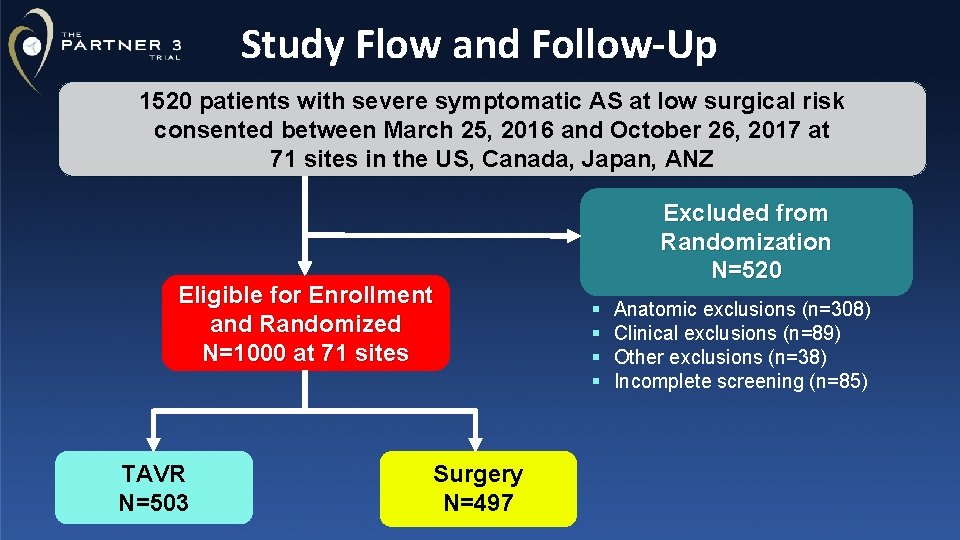
Study Flow and Follow-Up 1520 patients with severe symptomatic AS at low surgical risk consented between March 25, 2016 and October 26, 2017 at 71 sites in the US, Canada, Japan, ANZ Eligible for Enrollment and Randomized N=1000 at 71 sites TAVR N=503 Surgery N=497 Excluded from Randomization N=520 § § Anatomic exclusions (n=308) Clinical exclusions (n=89) Other exclusions (n=38) Incomplete screening (n=85)
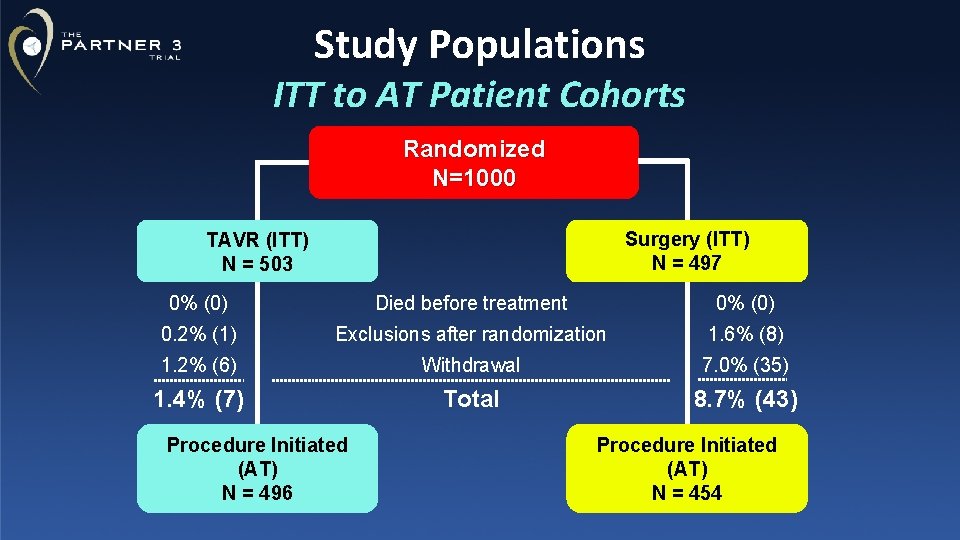
Study Populations ITT to AT Patient Cohorts Randomized N=1000 Surgery (ITT) N = 497 TAVR (ITT) N = 503 0% (0) Died before treatment 0% (0) 0. 2% (1) Exclusions after randomization 1. 6% (8) 1. 2% (6) Withdrawal 7. 0% (35) 1. 4% (7) Total 8. 7% (43) Procedure Initiated (AT) N = 496 Procedure Initiated (AT) N = 454
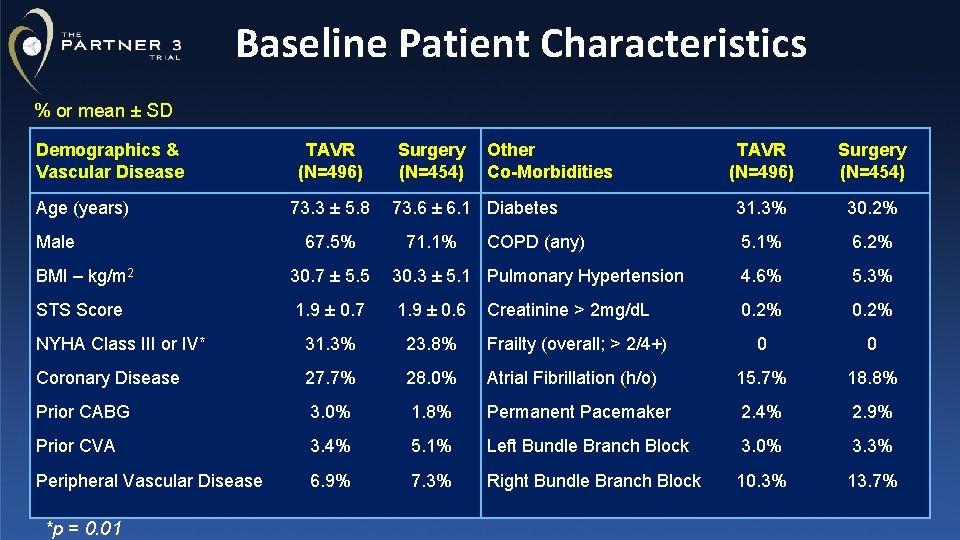
Baseline Patient Characteristics % or mean ± SD Demographics & Vascular Disease Age (years) Male TAVR (N=496) 73. 3 ± 5. 8 67. 5% Surgery (N=454) Other Co-Morbidities TAVR (N=496) Surgery (N=454) 31. 3% 30. 2% COPD (any) 5. 1% 6. 2% 73. 6 ± 6. 1 Diabetes 71. 1% BMI – kg/m 2 30. 7 ± 5. 5 30. 3 ± 5. 1 Pulmonary Hypertension 4. 6% 5. 3% STS Score 1. 9 ± 0. 7 1. 9 ± 0. 6 0. 2% NYHA Class III or IV* 31. 3% 23. 8% Frailty (overall; > 2/4+) 0 0 Coronary Disease 27. 7% 28. 0% Atrial Fibrillation (h/o) 15. 7% 18. 8% Prior CABG 3. 0% 1. 8% Permanent Pacemaker 2. 4% 2. 9% Prior CVA 3. 4% 5. 1% Left Bundle Branch Block 3. 0% 3. 3% Peripheral Vascular Disease 6. 9% 7. 3% Right Bundle Branch Block 10. 3% 13. 7% *p = 0. 01 Creatinine > 2 mg/d. L
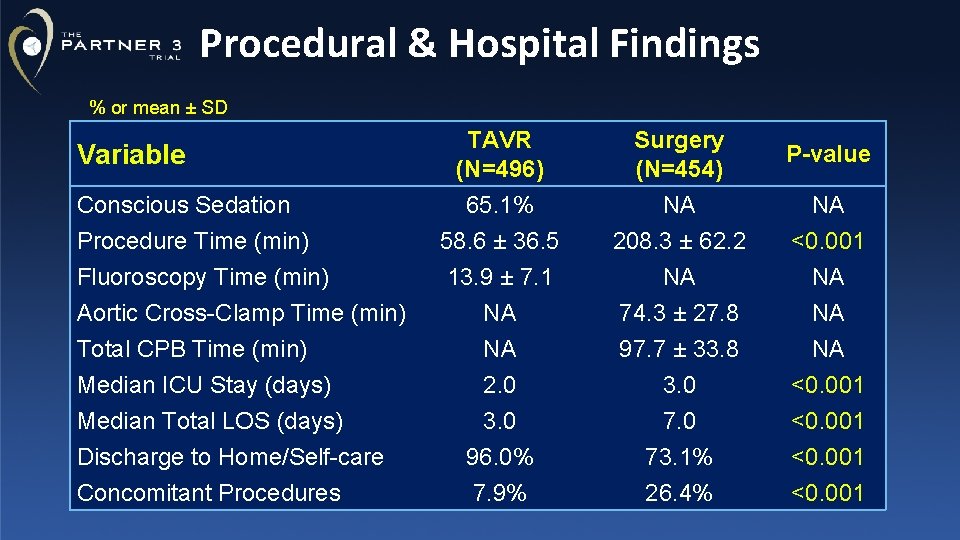
Procedural & Hospital Findings % or mean ± SD Variable Conscious Sedation Procedure Time (min) Fluoroscopy Time (min) Aortic Cross-Clamp Time (min) Total CPB Time (min) Median ICU Stay (days) Median Total LOS (days) Discharge to Home/Self-care Concomitant Procedures TAVR (N=496) 65. 1% 58. 6 ± 36. 5 13. 9 ± 7. 1 NA NA 2. 0 3. 0 96. 0% 7. 9% Surgery (N=454) NA 208. 3 ± 62. 2 NA 74. 3 ± 27. 8 97. 7 ± 33. 8 3. 0 73. 1% 26. 4% P-value NA <0. 001 NA NA NA <0. 001
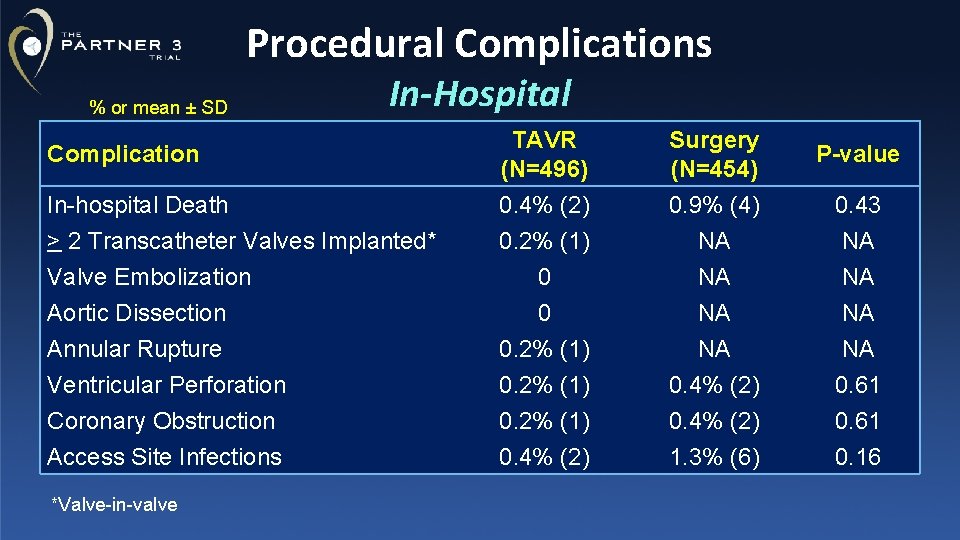
Procedural Complications % or mean ± SD In-Hospital In-hospital Death > 2 Transcatheter Valves Implanted* TAVR (N=496) 0. 4% (2) 0. 2% (1) Surgery (N=454) 0. 9% (4) NA Valve Embolization Aortic Dissection Annular Rupture Ventricular Perforation Coronary Obstruction Access Site Infections 0 0 0. 2% (1) 0. 4% (2) NA NA NA 0. 4% (2) 1. 3% (6) Complication *Valve-in-valve P-value 0. 43 NA NA 0. 61 0. 16
Death, Stroke, or Rehosp (%) Primary Endpoint 20 Surgery TAVR Upper 95% CI of risk diff = -2. 5% 15. 1% Pnon-inferiority< 0. 001 9. 3% 10 8. 5% HR [95% CI] = 0. 54 [0. 37, 0. 79] 4. 2% 0 0 Number at risk: Surgery 454 408 TAVR 496 475 Psuperiority= 0. 001 3 6 9 12 381 462 377 456 374 451 Months after Procedure 390 467
All-Cause Mortality (%) 20 Surgery TAVR HR [95% CI] = 0. 41 [0. 14, 1. 17] P = 0. 09 10 2. 5% 1. 0% 1. 1% 0 0 0. 4% Number at risk: Surgery 454 445 TAVR 496 494 3 6 9 12 Months from Procedure 438 494 433 493 431 492 427 488
All Stroke (%) 20 Surgery TAVR HR [95% CI] = 0. 38 [0. 15, 1. 00] P = 0. 04 10 2. 4% 0 3. 1% 1. 2% 0 0. 6% Number at risk: Surgery 454 435 TAVR 496 491 3 6 9 12 Months from Procedure 427 491 423 489 421 487 417 484
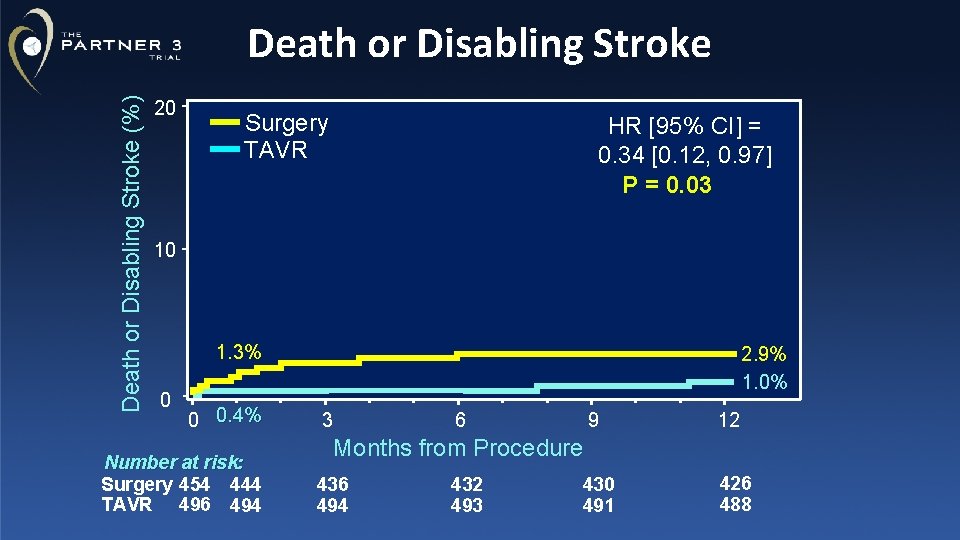
Death or Disabling Stroke (%) Death or Disabling Stroke 20 Surgery TAVR HR [95% CI] = 0. 34 [0. 12, 0. 97] P = 0. 03 10 1. 3% 0 0 0. 4% Number at risk: Surgery 454 444 TAVR 496 494 2. 9% 1. 0% 3 6 9 12 430 491 426 488 Months from Procedure 436 494 432 493
Rehospitalization (%) 20 Surgery TAVR HR [95% CI] = 0. 65 [0. 42, 1. 00] P = 0. 046 11. 0% 10 6. 5% 7. 3% 3. 4% 0 0 Number at risk: Surgery 454 416 TAVR 496 477 3 6 9 12 Months from Procedure 399 469 389 465 385 459 382 453
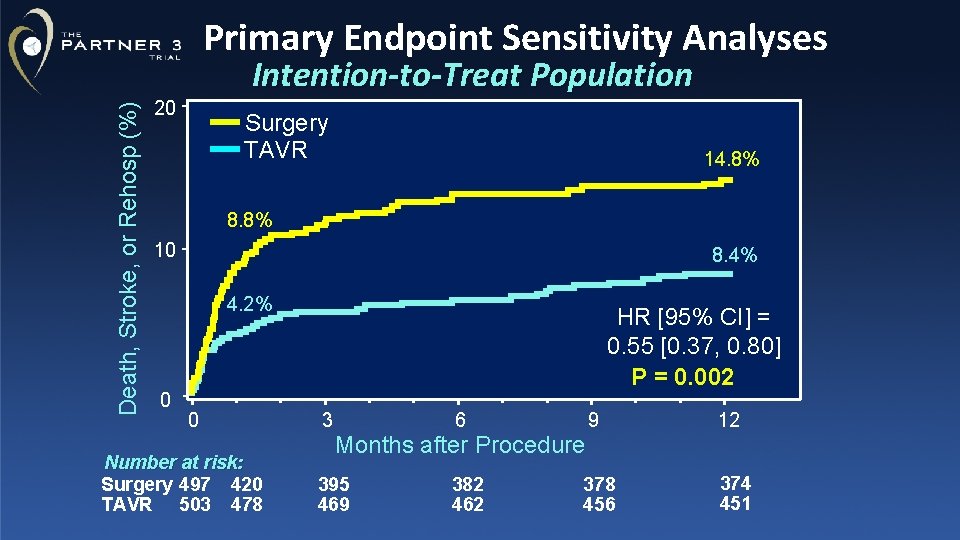
Death, Stroke, or Rehosp (%) Primary Endpoint Sensitivity Analyses Intention-to-Treat Population 20 Surgery TAVR 14. 8% 8. 8% 10 8. 4% 4. 2% 0 0 Number at risk: Surgery 497 420 TAVR 503 478 HR [95% CI] = 0. 55 [0. 37, 0. 80] P = 0. 002 3 6 9 12 382 462 378 456 374 451 Months after Procedure 395 469
Primary Endpoint - Subgroup Analysis Subgroup TAVR Surgery Diff [95% CI] 8. 5 15. 1 -6. 6 [-10. 8, -2. 5] ≤ 74 (n=516) > 74 (n=434) 10. 6 5. 8 14. 9 15. 3 -4. 3 [-10. 1, 1. 5] -9. 5 [-15. 3, -3. 7] 0. 21 Female (n=292) Male (n=658) 8. 1 8. 7 18. 5 13. 8 -10. 4 [-18. 3, -2. 5] -5. 1 [-9. 9, -0. 3] 0. 27 STS Score ≤ 1. 8 (n=464) > 1. 8 (n=486) 9. 1 8. 0 15. 7 14. 5 -6. 7 [-12. 6, -0. 7] -6. 5 [-12. 2, -0. 8] 0. 98 LV Ejection Fraction ≤ 65 (n=384) > 65 (n=524) 9. 6 8. 0 17. 2 12. 4 -7. 6 [-14. 5, -0. 7] -4. 4 [-9. 6, 0. 7] 0. 48 NYHA Class I/II (n=687) III/IV (n=263) 6. 8 12. 3 14. 5 16. 9 -7. 8 [-12. 4, -3. 2] -4. 7 [-13. 5, 4. 1] 0. 54 Atrial Fibrillation No (n=786) Yes (n=163) 7. 9 11. 6 14. 0 20. 3 -6. 1 [-10. 5, -1. 7] -8. 7 [-19. 9, 2. 5] 0. 67 KCCQ Overall Summary Score ≤ 70 (n=407) > 70 (n=536) 10. 5 6. 5 19. 9 11. 2 -9. 4 [-16. 5, -2. 4] -4. 6 [-9. 4, 0. 2] 0. 27 Overall P-value* Age Sex Event rates are KM estimates (%) * P-value is for interaction -20%-10% 0 TAVR Better 10% 20% Surgery Better
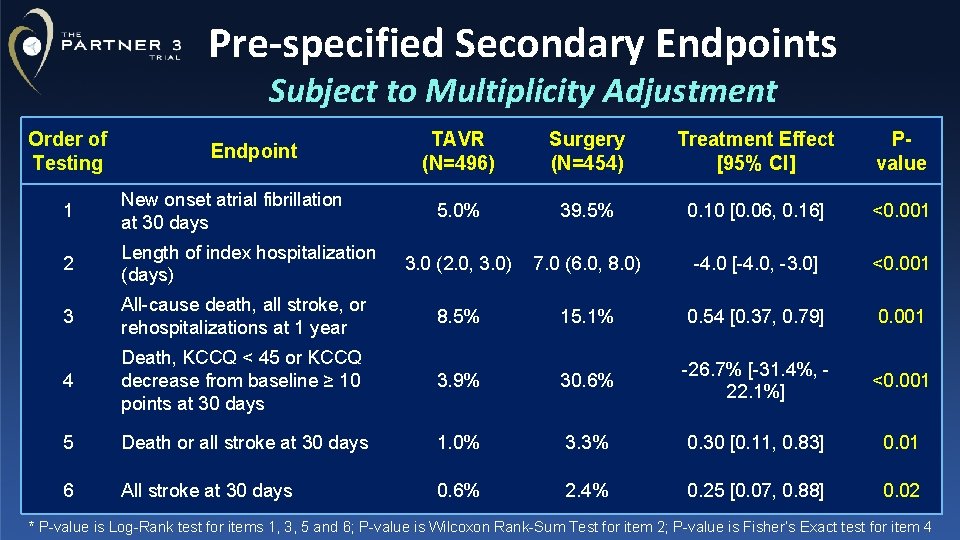
Pre-specified Secondary Endpoints Subject to Multiplicity Adjustment Order of Testing Endpoint TAVR (N=496) Surgery (N=454) Treatment Effect [95% CI] Pvalue 5. 0% 39. 5% 0. 10 [0. 06, 0. 16] <0. 001 1 New onset atrial fibrillation at 30 days 2 Length of index hospitalization (days) 3. 0 (2. 0, 3. 0) 7. 0 (6. 0, 8. 0) -4. 0 [-4. 0, -3. 0] <0. 001 3 All-cause death, all stroke, or rehospitalizations at 1 year 8. 5% 15. 1% 0. 54 [0. 37, 0. 79] 0. 001 4 Death, KCCQ < 45 or KCCQ decrease from baseline ≥ 10 points at 30 days 3. 9% 30. 6% -26. 7% [-31. 4%, 22. 1%] <0. 001 5 Death or all stroke at 30 days 1. 0% 3. 3% 0. 30 [0. 11, 0. 83] 0. 01 6 All stroke at 30 days 0. 6% 2. 4% 0. 25 [0. 07, 0. 88] 0. 02 * P-value is Log-Rank test for items 1, 3, 5 and 6; P-value is Wilcoxon Rank-Sum Test for item 2; P-value is Fisher’s Exact test for item 4
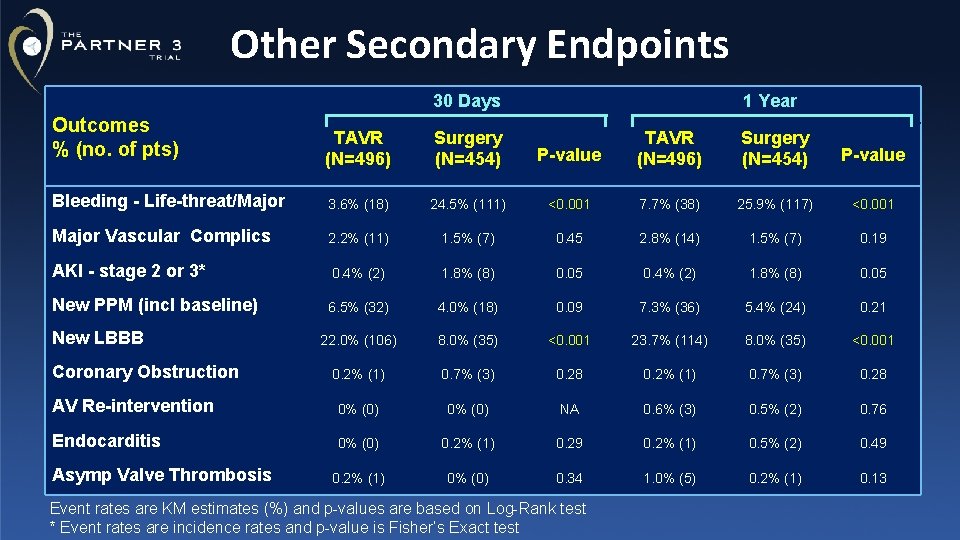
Other Secondary Endpoints 30 Days Outcomes % (no. of pts) TAVR (N=496) Surgery (N=454) Bleeding - Life-threat/Major 3. 6% (18) Major Vascular Complics 1 Year P-value TAVR (N=496) Surgery (N=454) P-value 24. 5% (111) <0. 001 7. 7% (38) 25. 9% (117) <0. 001 2. 2% (11) 1. 5% (7) 0. 45 2. 8% (14) 1. 5% (7) 0. 19 AKI - stage 2 or 3* 0. 4% (2) 1. 8% (8) 0. 05 New PPM (incl baseline) 6. 5% (32) 4. 0% (18) 0. 09 7. 3% (36) 5. 4% (24) 0. 21 22. 0% (106) 8. 0% (35) <0. 001 23. 7% (114) 8. 0% (35) <0. 001 0. 2% (1) 0. 7% (3) 0. 28 AV Re-intervention 0% (0) NA 0. 6% (3) 0. 5% (2) 0. 76 Endocarditis 0% (0) 0. 2% (1) 0. 29 0. 2% (1) 0. 5% (2) 0. 49 0. 2% (1) 0% (0) 0. 34 1. 0% (5) 0. 2% (1) 0. 13 New LBBB Coronary Obstruction Asymp Valve Thrombosis Event rates are KM estimates (%) and p-values are based on Log-Rank test * Event rates are incidence rates and p-value is Fisher’s Exact test
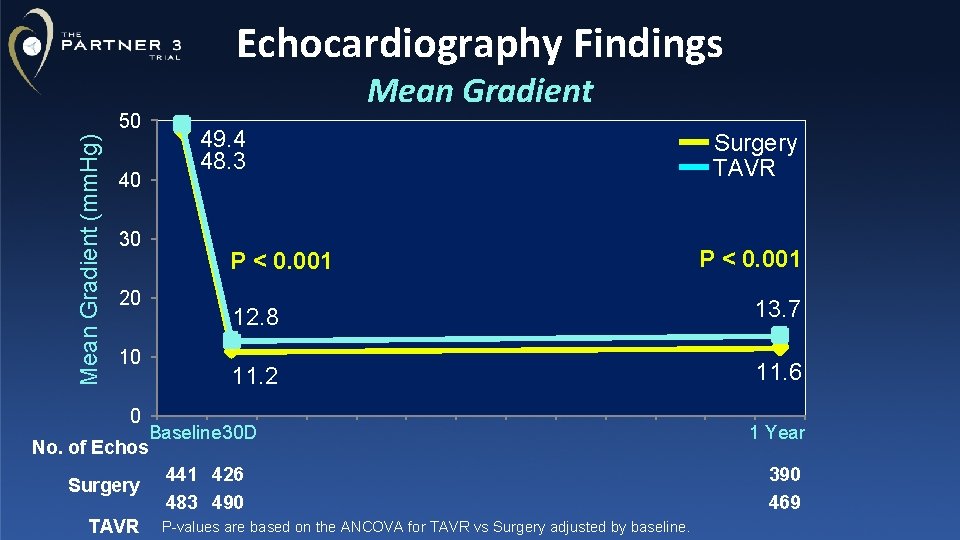
Echocardiography Findings Mean Gradient (mm. Hg) 50 40 30 20 10 0 No. of Echos Surgery TAVR Mean Gradient 49. 4 48. 3 P < 0. 001 Surgery TAVR P < 0. 001 12. 8 13. 7 11. 2 11. 6 Baseline 30 D 441 426 483 490 P-values are based on the ANCOVA for TAVR vs Surgery adjusted by baseline. 1 Year 390 469
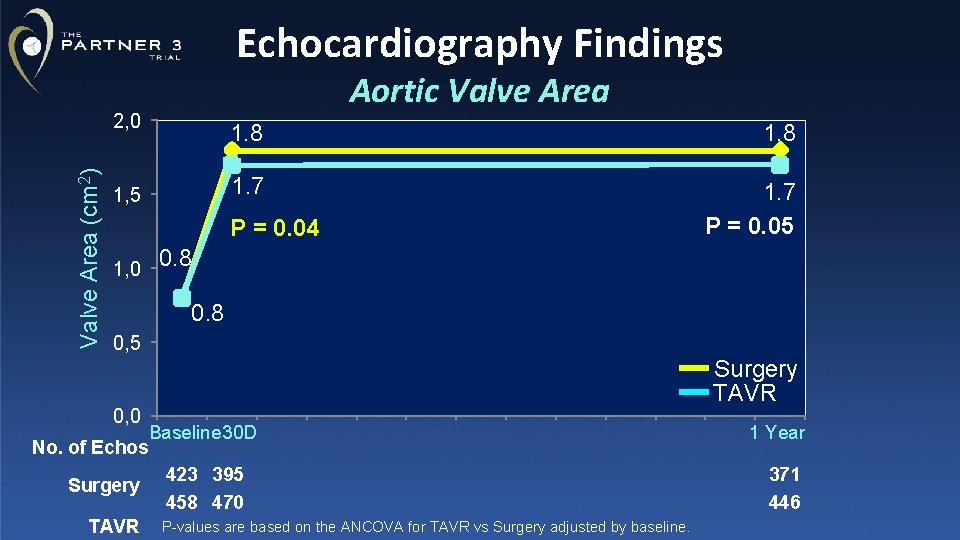
Echocardiography Findings Aortic Valve Area (cm 2) 2, 0 1, 5 1. 8 1. 7 P = 0. 05 P = 0. 04 1, 0 0. 8 0, 5 0, 0 No. of Echos Surgery TAVR Baseline 30 D 423 395 458 470 P-values are based on the ANCOVA for TAVR vs Surgery adjusted by baseline. 1 Year 371 446
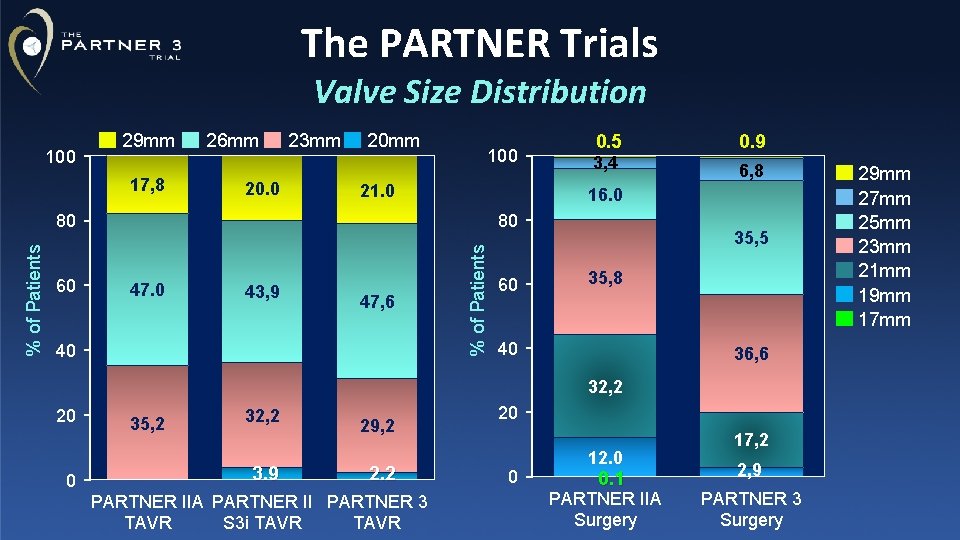
The PARTNER Trials Valve Size Distribution 100 29 mm 17, 8 26 mm 20. 0 23 mm 20 mm 100 21. 0 3, 4 6, 8 80 47. 0 43, 9 47, 6 40 % of Patients 0. 9 16. 0 80 60 0. 5 60 35, 5 35, 8 40 36, 6 32, 2 20 0 35, 2 32, 2 3. 9 29, 2 2. 2 PARTNER IIA PARTNER II PARTNER 3 TAVR S 3 i TAVR 20 0 12. 0 0. 1 PARTNER IIA Surgery 17, 2 2, 9 PARTNER 3 Surgery 29 mm 27 mm 25 mm 23 mm 21 mm 19 mm 17 mm
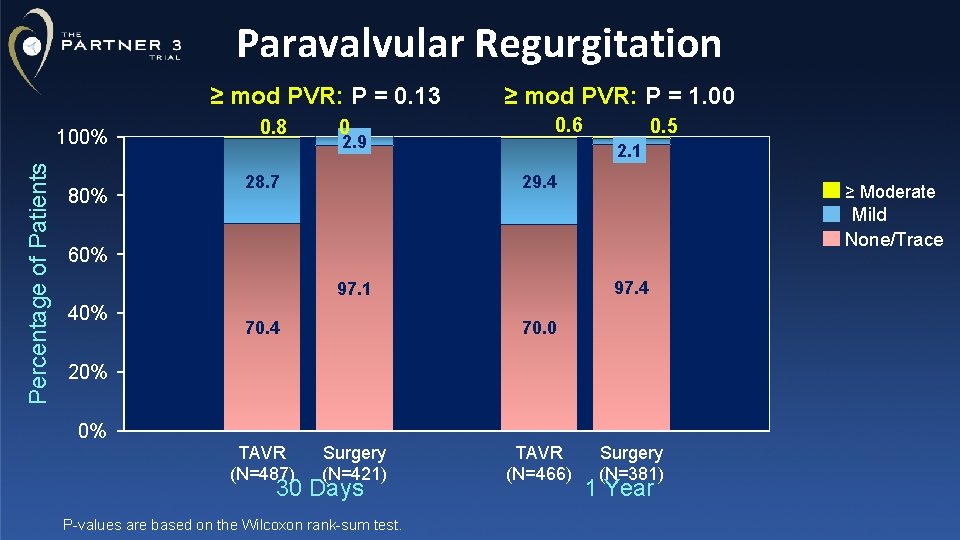
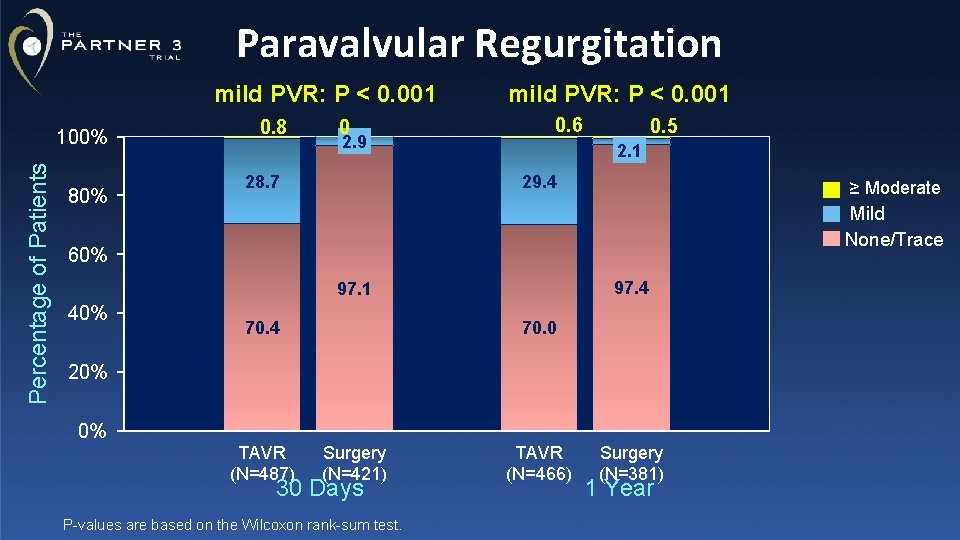
Paravalvular Regurgitation ≥ mod PVR: P = 0. 13 Percentage of Patients 100% 80% 0. 8 0 2. 9 28. 7 ≥ mod PVR: P = 1. 00 0. 6 0. 5 2. 1 29. 4 ≥ Moderate Mild None/Trace 60% 97. 4 97. 1 40% 70. 4 70. 0 20% 0% TAVR (N=487) Surgery (N=421) 30 Days P-values are based on the Wilcoxon rank-sum test. TAVR (N=466) Surgery (N=381) 1 Year
Paravalvular Regurgitation mild PVR: P < 0. 001 Percentage of Patients 100% 80% 0. 8 0 2. 9 28. 7 mild PVR: P < 0. 001 0. 6 0. 5 2. 1 29. 4 ≥ Moderate Mild None/Trace 60% 97. 4 97. 1 40% 70. 4 70. 0 20% 0% TAVR (N=487) Surgery (N=421) 30 Days P-values are based on the Wilcoxon rank-sum test. TAVR (N=466) Surgery (N=381) 1 Year
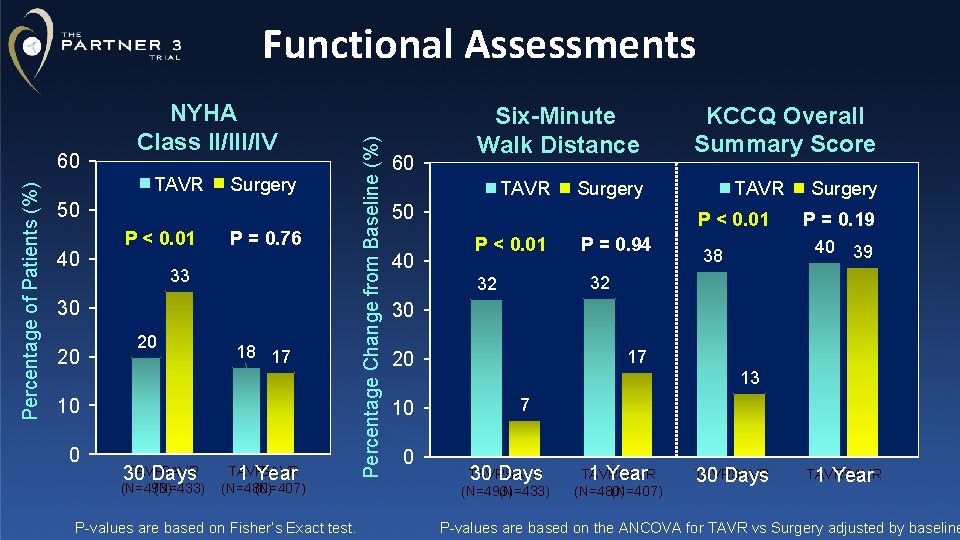
Percentage of Patients (%) 60 NYHA Class II/IV TAVR Surgery 50 40 P < 0. 01 P = 0. 76 33 30 20 20 18 17 10 0 TAVR SAVR 30 Days (N=493) (N=433) TAVR SAVR 1 Year (N=480) (N=407) P-values are based on Fisher’s Exact test. Percentage Change from Baseline (%) Functional Assessments 60 Six-Minute Walk Distance TAVR Surgery 50 40 KCCQ Overall Summary Score TAVR P < 0. 01 P = 0. 94 Surgery P = 0. 19 40 39 38 32 32 30 17 20 10 0 13 7 TAVR SAVR 30 Days (N=493) (N=433) TAVR SAVR 1 Year (N=480) (N=407) TAVRSAVR 30 Days TAVRSAVR 1 Year P-values are based on the ANCOVA for TAVR vs Surgery adjusted by baseline
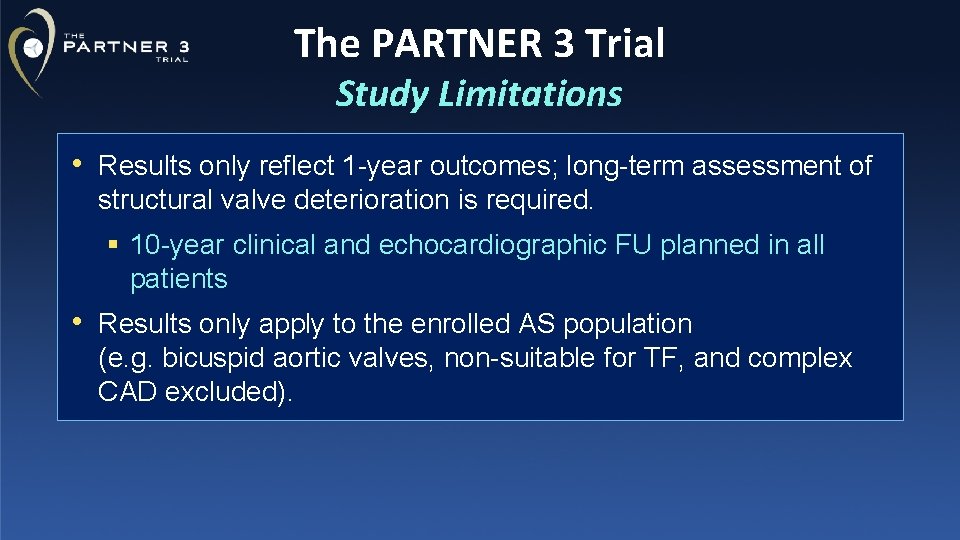
The PARTNER 3 Trial Study Limitations • Results only reflect 1 -year outcomes; long-term assessment of structural valve deterioration is required. § 10 -year clinical and echocardiographic FU planned in all patients • Results only apply to the enrolled AS population (e. g. bicuspid aortic valves, non-suitable for TF, and complex CAD excluded).
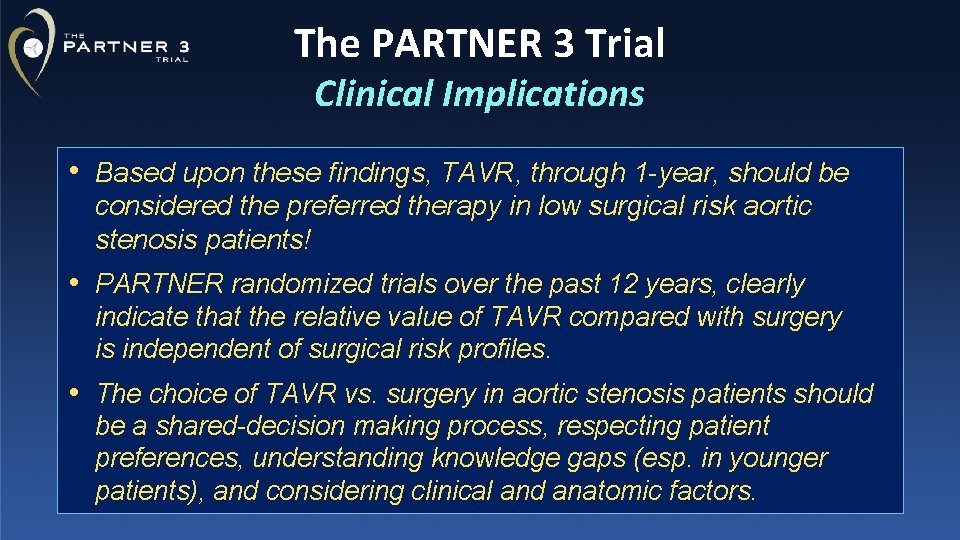
The PARTNER 3 Trial Clinical Implications • Based upon these findings, TAVR, through 1 -year, should be considered the preferred therapy in low surgical risk aortic stenosis patients! • PARTNER randomized trials over the past 12 years, clearly indicate that the relative value of TAVR compared with surgery is independent of surgical risk profiles. • The choice of TAVR vs. surgery in aortic stenosis patients should be a shared-decision making process, respecting patient preferences, understanding knowledge gaps (esp. in younger patients), and considering clinical and anatomic factors.
The PARTNER 3 Trial PARTNER 1 B PARTNER 3 • RCT 1: 1 • vs. Surgery • N = 1000 pts • RCT 1: 1 • vs. SAVR • N = 2032 pts PARTNER 2 A Low Risk Interm Risk Extreme Risk High Risk • RCT 1: 1 • vs. Standard Rx • N = 358 pts • RCT 1: 1 • vs. SAVR • N = 699 pts PARTNER 1 A
Primary Results From the Evolut Low Risk Trial Michael J. Reardon, MD, FACC Houston Methodist De. Bakey Heart & Vascular Institute, Houston, TX For the Evolut Low Risk Trial Investigators
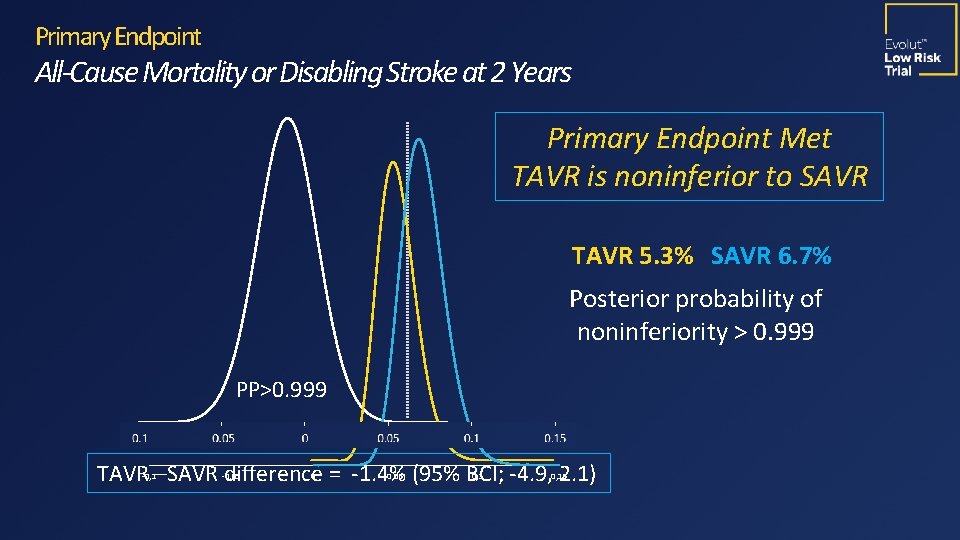
Primary Endpoint All-Cause Mortality or Disabling Stroke at 2 Years Primary Endpoint Met TAVR is noninferior to SAVR TAVR 5. 3% SAVR 6. 7% Posterior probability of noninferiority > 0. 999 PP>0. 999 TAVR –SAVR difference = -1. 4% (95% BCI; -4. 9, 2. 1) -0, 1 -0, 05 0, 15
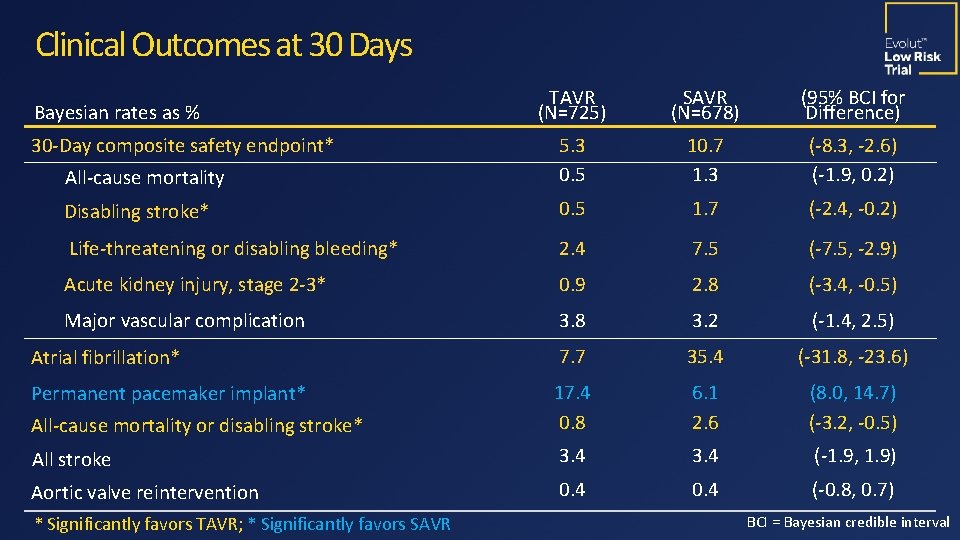
Clinical Outcomes at 30 Days TAVR (N=725) SAVR (N=678) (95% BCI for Difference) All-cause mortality 5. 3 0. 5 10. 7 1. 3 (-8. 3, -2. 6) (-1. 9, 0. 2) Disabling stroke* 0. 5 1. 7 (-2. 4, -0. 2) Life-threatening or disabling bleeding* 2. 4 7. 5 (-7. 5, -2. 9) Acute kidney injury, stage 2 -3* 0. 9 2. 8 (-3. 4, -0. 5) Major vascular complication 3. 8 3. 2 (-1. 4, 2. 5) Atrial fibrillation* 7. 7 35. 4 (-31. 8, -23. 6) Permanent pacemaker implant* All-cause mortality or disabling stroke* 17. 4 0. 8 6. 1 2. 6 (8. 0, 14. 7) (-3. 2, -0. 5) All stroke 3. 4 (-1. 9, 1. 9) Aortic valve reintervention 0. 4 (-0. 8, 0. 7) Bayesian rates as % 30 -Day composite safety endpoint* * Significantly favors TAVR; * Significantly favors SAVR BCI = Bayesian credible interval
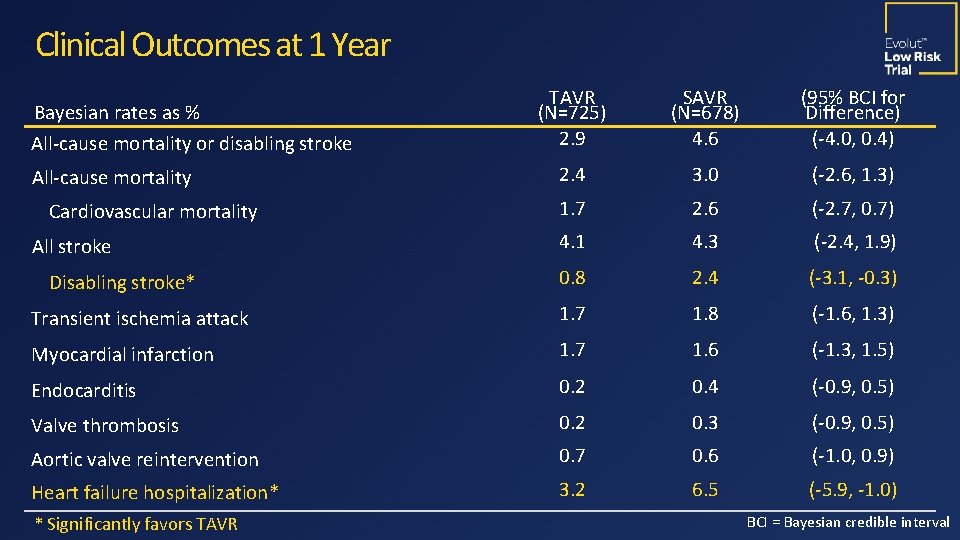
Clinical Outcomes at 1 Year TAVR (N=725) 2. 9 SAVR (N=678) 4. 6 (95% BCI for Difference) (-4. 0, 0. 4) 2. 4 3. 0 (-2. 6, 1. 3) 1. 7 2. 6 (-2. 7, 0. 7) 4. 1 4. 3 (-2. 4, 1. 9) 0. 8 2. 4 (-3. 1, -0. 3) Transient ischemia attack 1. 7 1. 8 (-1. 6, 1. 3) Myocardial infarction 1. 7 1. 6 (-1. 3, 1. 5) Endocarditis 0. 2 0. 4 (-0. 9, 0. 5) Valve thrombosis 0. 2 0. 3 (-0. 9, 0. 5) Aortic valve reintervention 0. 7 0. 6 (-1. 0, 0. 9) Heart failure hospitalization* 3. 2 6. 5 (-5. 9, -1. 0) Bayesian rates as % All-cause mortality or disabling stroke All-cause mortality Cardiovascular mortality All stroke Disabling stroke* * Significantly favors TAVR BCI = Bayesian credible interval
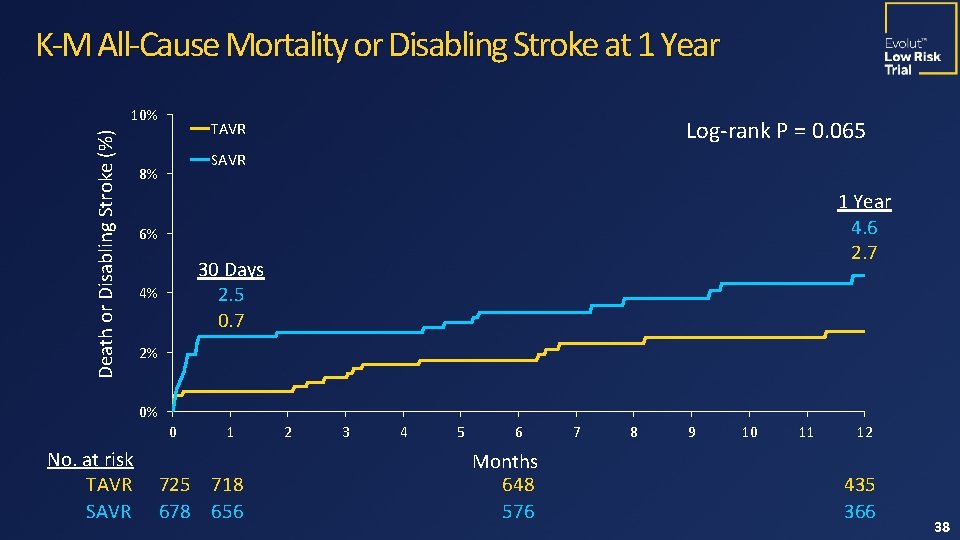
K-M All-Cause Mortality or Disabling Stroke at 1 Year Death or Disabling Stroke (%) 10% Log-rank P = 0. 065 TAVR SAVR 8% 1 Year 4. 6 2. 7 6% 30 Days 2. 5 0. 7 4% 2% 0% 0 No. at risk TAVR SAVR 1 725 718 678 656 2 3 4 5 6 Months 648 576 7 8 9 10 11 12 435 366 38
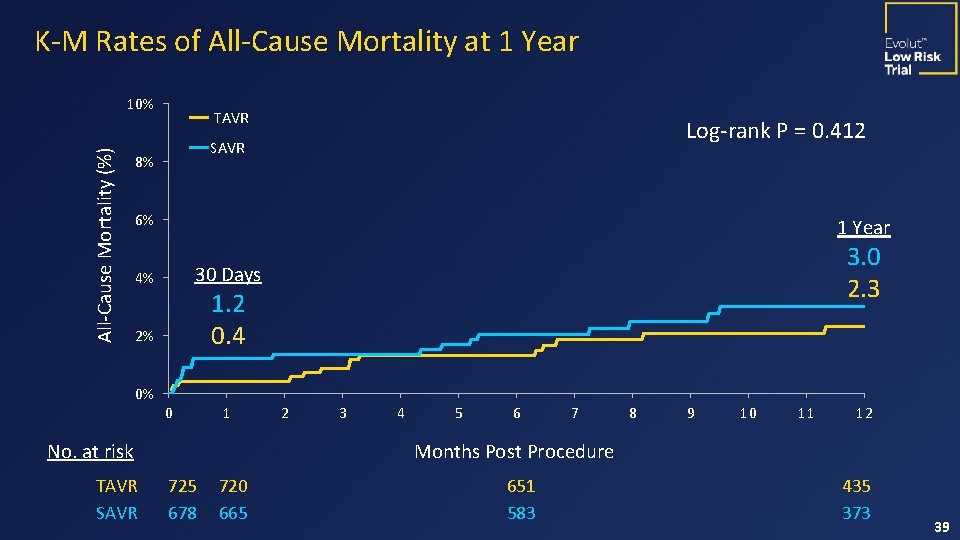
K-M Rates of All-Cause Mortality at 1 Year All-Cause Mortality (%) 10% TAVR Log-rank P = 0. 412 SAVR 8% 6% 1 Year 3. 0 2. 3 30 Days 4% 1. 2 0. 4 2% 0% 0 1 No. at risk TAVR SAVR 2 3 4 5 6 7 8 9 10 11 12 Months Post Procedure 725 678 720 665 651 583 435 373 39
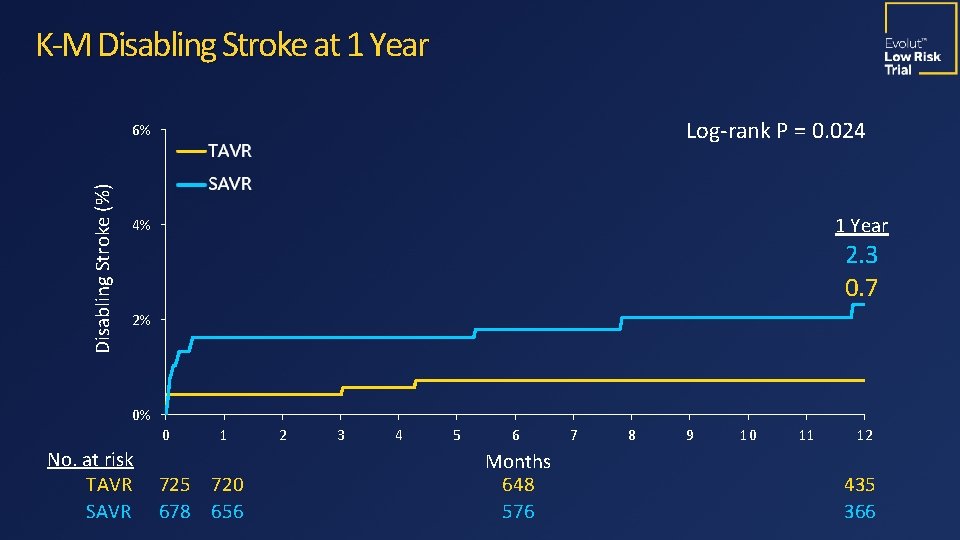
K-M Disabling Stroke at 1 Year Log-rank P = 0. 024 Disabling Stroke (%) 6% 1 Year 4% 2. 3 0. 7 2% 0% 0 No. at risk TAVR SAVR 1 725 720 678 656 2 3 4 5 6 Months 648 576 7 8 9 10 11 12 435 366
Conclusion TAVR may be a preferred strategy to surgery in patients with severe aortic stenosis at low risk of surgical mortality.
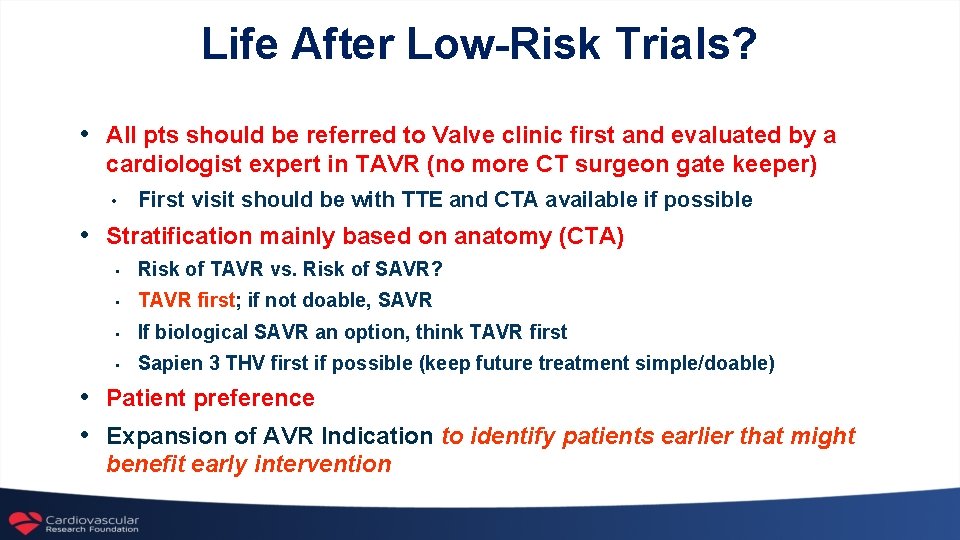
Life After Low-Risk Trials? • All pts should be referred to Valve clinic first and evaluated by a cardiologist expert in TAVR (no more CT surgeon gate keeper) • First visit should be with TTE and CTA available if possible • Stratification mainly based on anatomy (CTA) • Risk of TAVR vs. Risk of SAVR? • TAVR first; if not doable, SAVR • If biological SAVR an option, think TAVR first • Sapien 3 THV first if possible (keep future treatment simple/doable) • Patient preference • Expansion of AVR Indication to identify patients earlier that might benefit early intervention
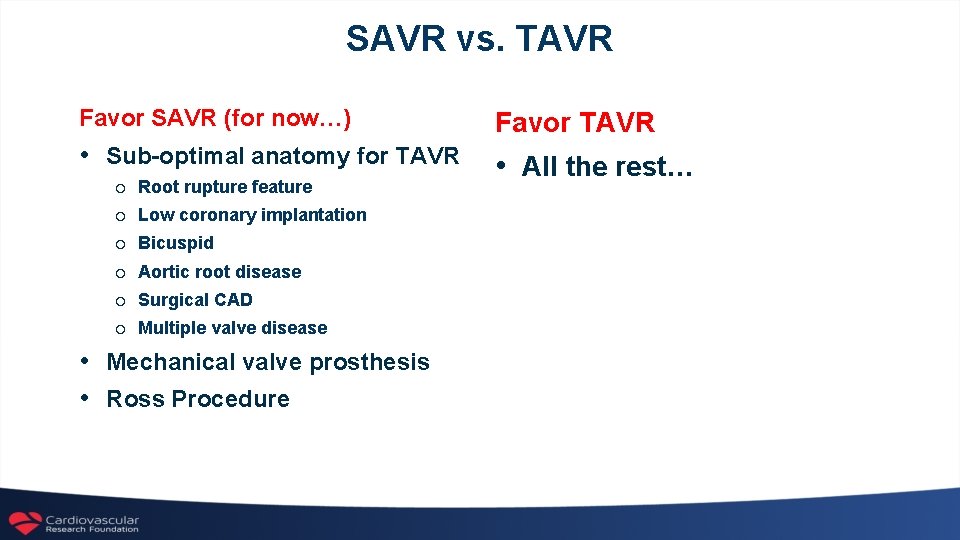
SAVR vs. TAVR Favor SAVR (for now…) Favor TAVR • Sub-optimal anatomy for TAVR • All the rest… ¡ Root rupture feature ¡ Low coronary implantation ¡ Bicuspid ¡ Aortic root disease ¡ Surgical CAD ¡ Multiple valve disease • Mechanical valve prosthesis • Ross Procedure
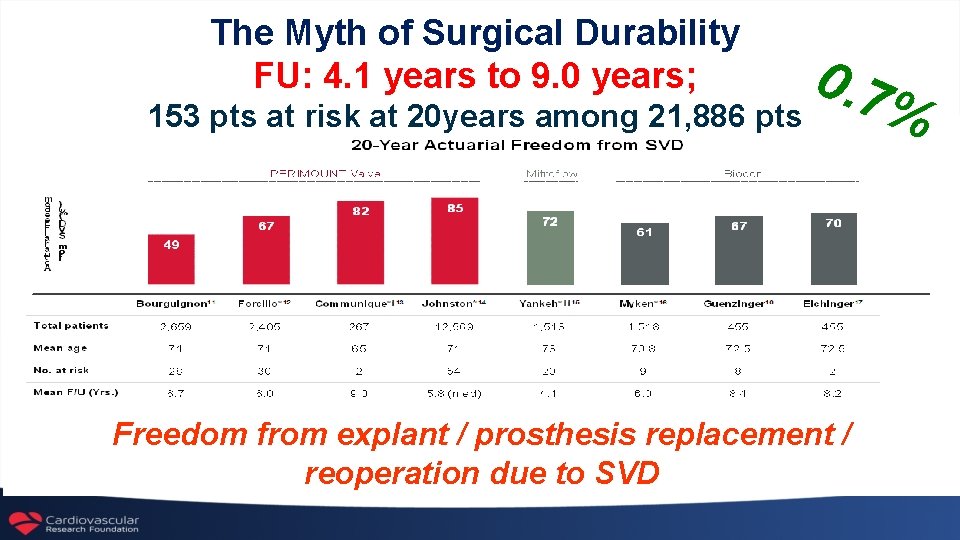
The Myth of Surgical Durability FU: 4. 1 years to 9. 0 years; 153 pts at risk at 20 years among 21, 886 pts 0. 7 Freedom from explant / prosthesis replacement / reoperation due to SVD %
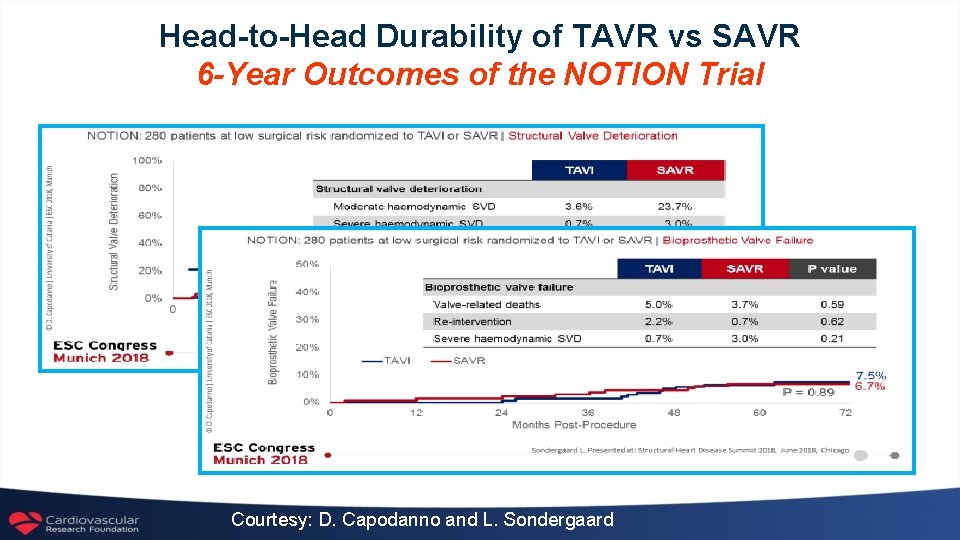
Head-to-Head Durability of TAVR vs SAVR 6 -Year Outcomes of the NOTION Trial Courtesy: D. Capodanno and L. Sondergaard
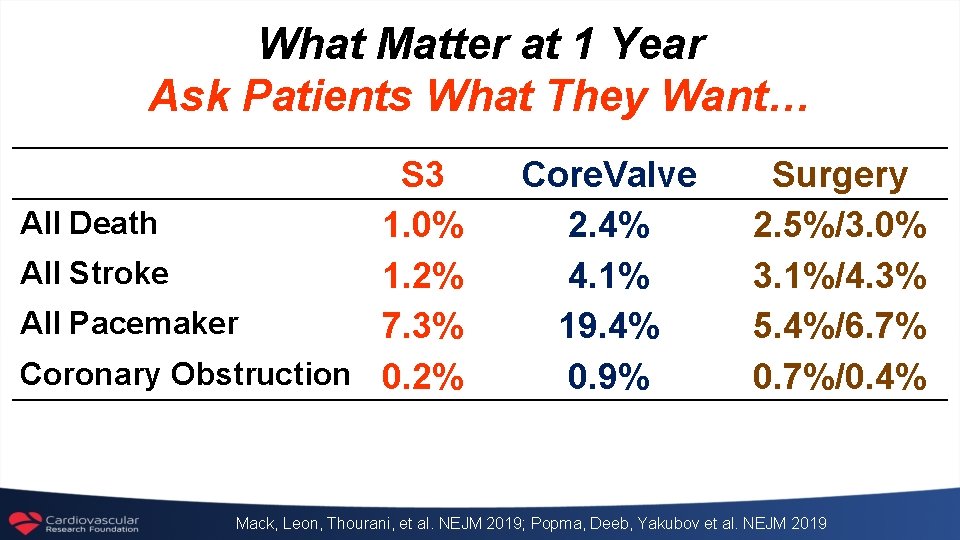
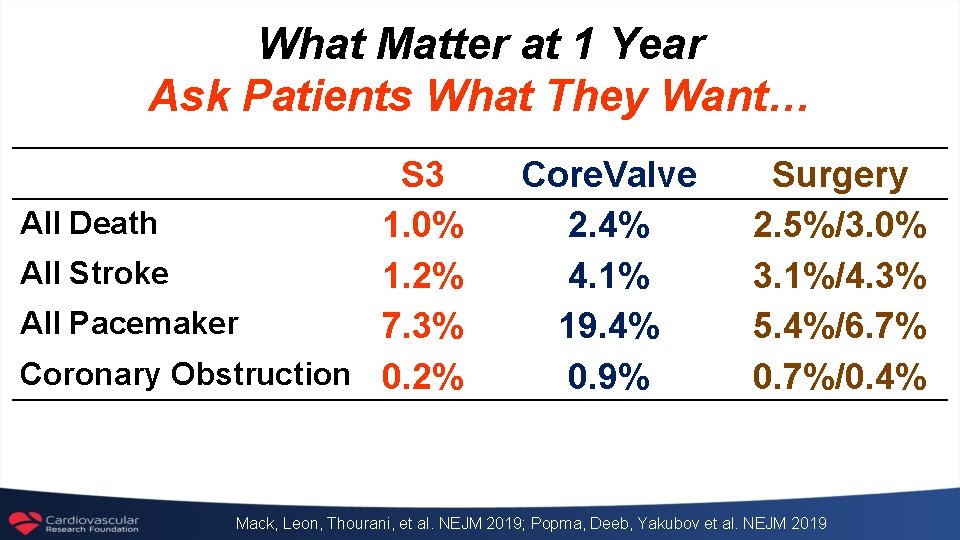
What Matter at 1 Year Ask Patients What They Want… S 3 All Death 1. 0% All Stroke 1. 2% All Pacemaker 7. 3% Coronary Obstruction 0. 2% Core. Valve 2. 4% 4. 1% 19. 4% 0. 9% Surgery 2. 5%/3. 0% 3. 1%/4. 3% 5. 4%/6. 7% 0. 7%/0. 4% Mack, Leon, Thourani, et al. NEJM 2019; Popma, Deeb, Yakubov et al. NEJM 2019
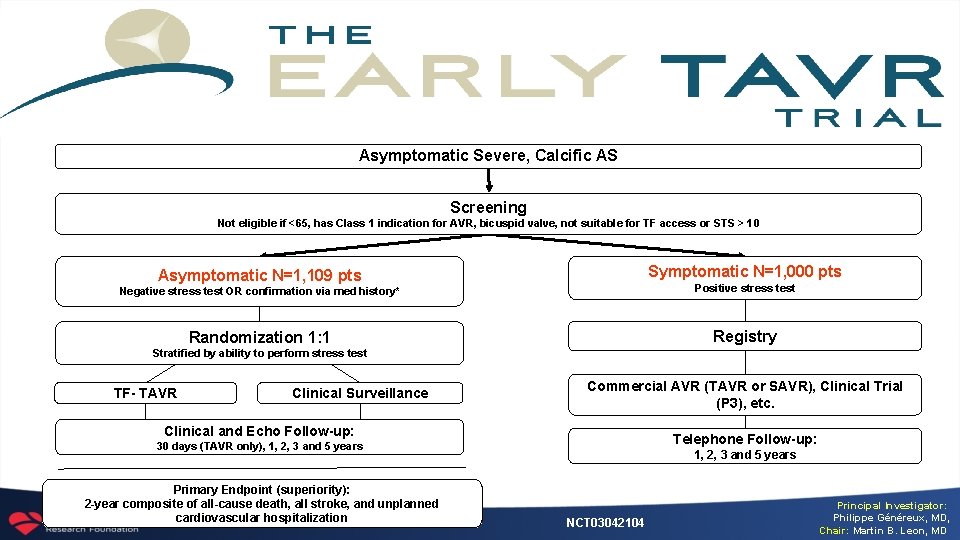
Asymptomatic Severe, Calcific AS Screening Not eligible if <65, has Class 1 indication for AVR, bicuspid valve, not suitable for TF access or STS > 10 Symptomatic N=1, 000 pts Asymptomatic N=1, 109 pts Negative stress test OR confirmation via med history* Positive stress test Randomization 1: 1 Registry Stratified by ability to perform stress test TF- TAVR Clinical Surveillance Commercial AVR (TAVR or SAVR), Clinical Trial (P 3), etc. Clinical and Echo Follow-up: Telephone Follow-up: 30 days (TAVR only), 1, 2, 3 and 5 years Primary Endpoint (superiority): 2 -year composite of all-cause death, all stroke, and unplanned cardiovascular hospitalization 1, 2, 3 and 5 years NCT 03042104 Principal Investigator: Philippe Généreux, MD, Chair: Martin B. Leon, MD
Thank You! philippe. genereux@atlantichealth. org @philgenereux
What Matter at 1 Year Ask Patients What They Want… S 3 All Death 1. 0% All Stroke 1. 2% All Pacemaker 7. 3% Coronary Obstruction 0. 2% Core. Valve 2. 4% 4. 1% 19. 4% 0. 9% Surgery 2. 5%/3. 0% 3. 1%/4. 3% 5. 4%/6. 7% 0. 7%/0. 4% Mack, Leon, Thourani, et al. NEJM 2019; Popma, Deeb, Yakubov et al. NEJM 2019