
Understanding the International Plant Protection Convention IPPC The
- Slides: 24
Understanding the International Plant Protection Convention (IPPC) The IPPC Secretariat With the financial support of the STDF project 401 Phytosanitary Capacity Evaluation (PCE) facilitators training
Outline § Definition and Purpose § Core Activities § NPPO - IPPC Relationship
What is the IPPC? § A multilateral treaty for international cooperation in plant protection - 182 contracting parties as of 2016. • The global instrument for harmonization of phytosanitary measures in commerce and the environment • The phytosanitary standard-setting organization named in the WTO-SPS Agreement
IPPC revisions § The Convention was deposited with the Director. General of the Food and Agriculture Organization of the United Nations (FAO) since its adoption in 1951. § The Convention was revised in 1997 to align with the Agreement on the Application of Sanitary and Phytosanitary Measures. § The New Revised Text of the IPPC came into force in 2005.
Revised text of the IPPC Article 1: Purpose and Responsibility To secure common and effective action to prevent the spread and introduction of pests of plants and plant products and to promote appropriate measures for their control, the contracting parties undertake to adopt the legislative, technical and administrative measures specified in this Convention and in supplementary agreements.
What are the strengths of the text of the Convention? § Clear obligations, rights and responsibilities. § 111 shall/ 1 must/ 7 should/ 34 may. § Clear identification of an organization as the NPPO and of its roles. § Recognition of regional plant protection organizations. § A single model of certificate established as an Annex to the Convention. § Promotes cooperation among contracting parties.
IPPC – Protecting plant resources Four strategic objectives: § Protect sustainable agriculture and enhance global food security through the prevention of pest spread. § Protect the environment, forests and biodiversity from plant pests. § Facilitate economic and trade development through the promotion of harmonized scientifically based phytosanitary measures. § Develop phytosanitary capacity for members to accomplish first three objectives.
IPPC – Protecting plant resources Four core activities: 1. Standard setting 2. Reporting obligations 3. Dispute settlement 4. Capacity development
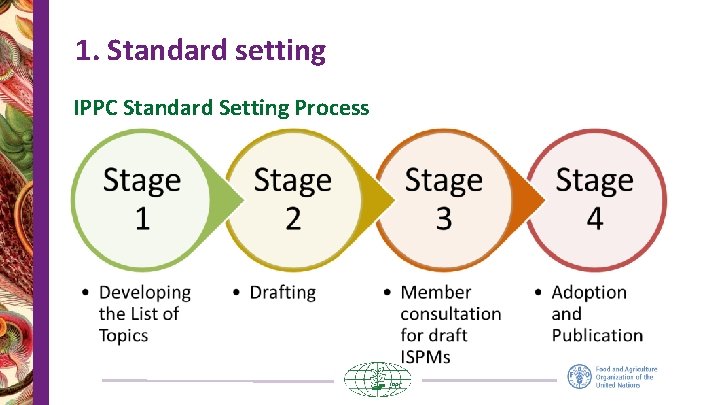
1. Standard setting IPPC Standard Setting Process
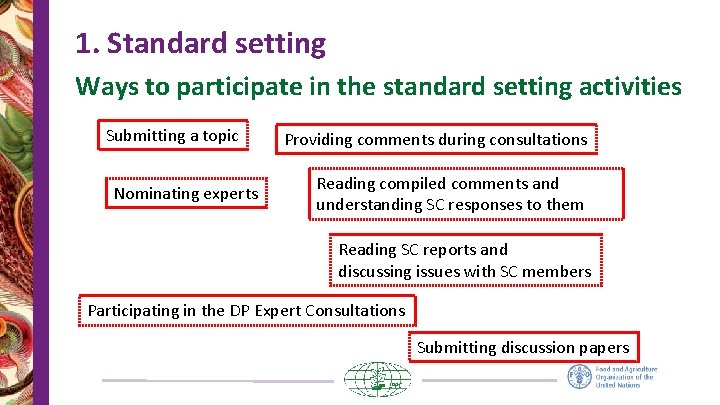
1. Standard setting Ways to participate in the standard setting activities Submitting a topic Nominating experts Providing comments during consultations Reading compiled comments and understanding SC responses to them Reading SC reports and discussing issues with SC members Participating in the DP Expert Consultations Submitting discussion papers
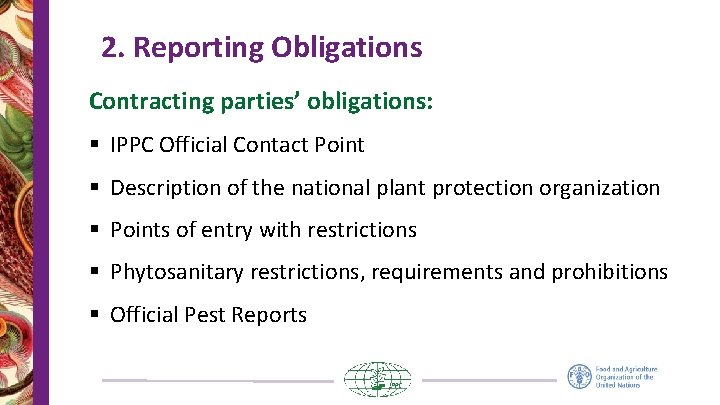
2. Reporting Obligations Contracting parties’ obligations: § IPPC Official Contact Point § Description of the national plant protection organization § Points of entry with restrictions § Phytosanitary restrictions, requirements and prohibitions § Official Pest Reports
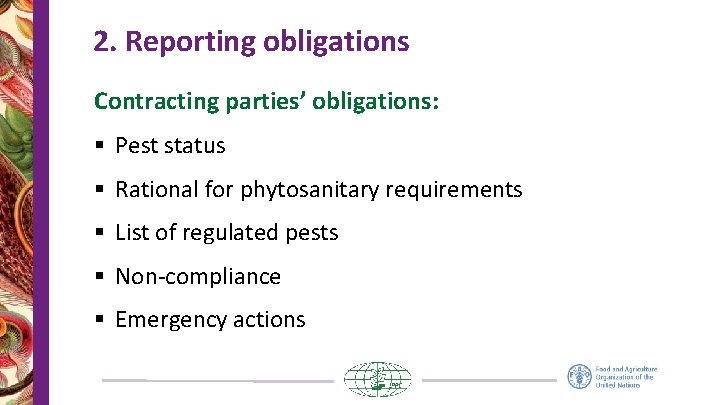
2. Reporting obligations Contracting parties’ obligations: § Pest status § Rational for phytosanitary requirements § List of regulated pests § Non-compliance § Emergency actions
3. Dispute settlement Governments have the sovereign right to dispute the phytosanitary measures that they believe are unjustified.
3. Dispute settlement IPPC dispute avoidance and dispute settlement system (DASS): § Provides a flexible informal forum for dispute avoidance. § Formal Dispute Settlement to be used as a “last resort” if dispute avoidance has failed and is designed to solve technical phytosanitary problems.
4. Capacity development Activities: § Technical assistance § Legislation and policy advice § Project development and management § Workshops and trainings § Development of IPPC technical resources § Phytosanitary Resources page
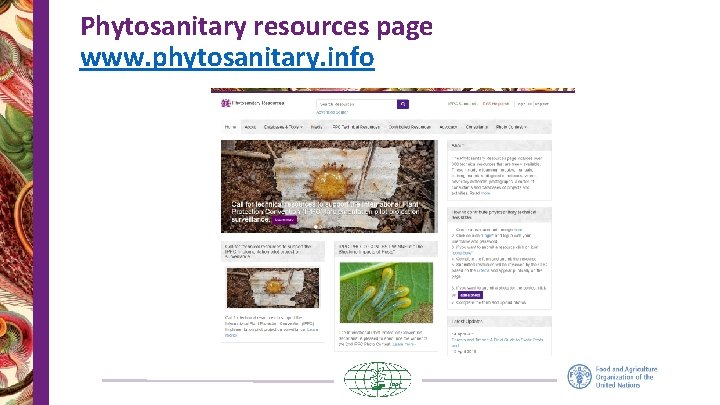
Phytosanitary resources page www. phytosanitary. info
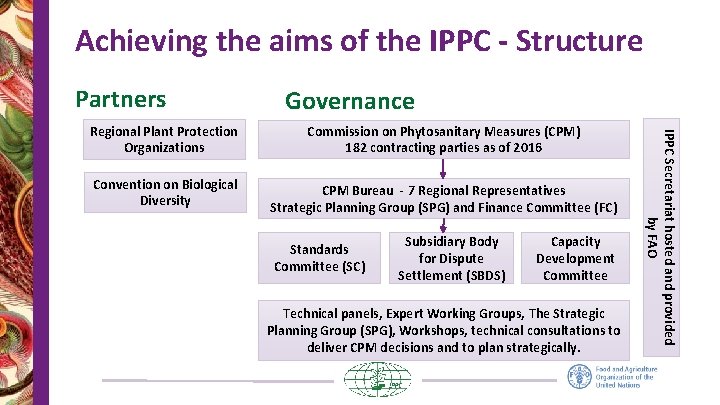
Achieving the aims of the IPPC - Structure Partners Governance Commission on Phytosanitary Measures (CPM) 182 contracting parties as of 2016 Convention on Biological Diversity CPM Bureau - 7 Regional Representatives Strategic Planning Group (SPG) and Finance Committee (FC) Standards Committee (SC) Subsidiary Body for Dispute Settlement (SBDS) Capacity Development Committee Technical panels, Expert Working Groups, The Strategic Planning Group (SPG), Workshops, technical consultations to deliver CPM decisions and to plan strategically. IPPC Secretariat hosted and provided by FAO Regional Plant Protection Organizations
Achieving the aims of the IPPC § Contracting parties establish National Plant Protection Organizations (NPPOs) as the sole national authority for plant health. § Regional Plant Protection Organizations (RPPOs) assist their regions to implement the IPPC and its International Standards for Phytosanitary Measures (ISPMs).
Benefits to contracting parties § Increased efficacy in preventing the introduction and spread of pests § Consistency with the WTO SPS Agreement § Most major trading partners and WTO members are contracting parties to the IPPC § Increased credibility of national phytosanitary systems for trading partners
Benefits to contracting parties § Direct and active input into processes of global harmonization, particularly in the development of ISPMs § Opportunities to interact with other international agreements related to trade and environment (e. g. WTO SPS Agreement, CBD, CITES)
IPPC Secretariat Viale delle Terme di Caracalla 1 00153 Rome, Italy Tel: (+39) 06 5705 4812 E-mail: ippc@fao. org Website: www. ippc. int, www. phytosanitary. info
Looking at the Convention Text In groups of 3, review the Convention text and discuss the following questions:
Exercise 1: Responsibilities of the NPPO Review Article IV: identify and discuss difficulties that you face in the implementation of any of these responsibilities
Exercise 2: Contracting Parties Imagine your country is not a contracting party to the IPPC: What would be the consequences?