
Understanding the Interconnected Systems Framework ISF for Integrating
- Slides: 73
Understanding the Interconnected Systems Framework (ISF) for Integrating Mental Health Within a Multi-tiered System of Behavioral Supports in Schools June 13, 2013 Susan Barrett sbarrett@pbismaryland. org
Goal today: • Describe the Interconnected Systems Framework (ISF) • Clarify the features of School-Wide Positive Behavior Interventions and Supports (SWPBIS) School Mental Health (SMH) in the context of the ISF • Describe emerging examples of ISF • Share Implementation Tools
What is Mental Health • http: //vimeo. com/groups/pbisvideos • Excellent way to show equal priority
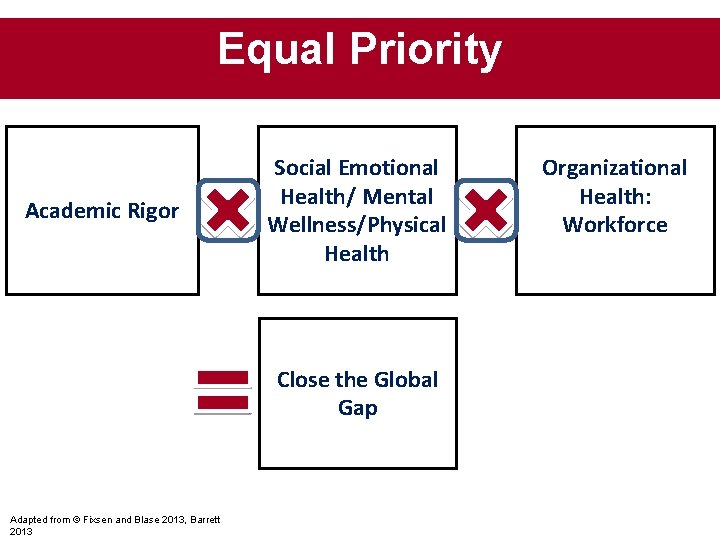
Equal Priority Academic Rigor Social Emotional Health/ Mental Wellness/Physical Health Close the Global Gap Adapted from © Fixsen and Blase 2013, Barrett 2013 Organizational Health: Workforce
Relationships and Youth Connectedness ESSENTIAL to children’s well being. • A sample of 2, 022 students (999 boys and 1, 023 girls) ages 12 -14 years was measured at two time points twelve months apart on school connectedness and mental health symptoms (general functioning, depression, and anxiety symptoms). After adjusting for any prior conditions that could have led to mental health problems, the authors of the study reported stronger than previous evidence of the association with school connectedness and adolescent depressive symptoms and a predictive link between school connectedness to future mental health problems. • 22 Early studies suggest that there are substantial percentages of violent youth who do not perceive themselves to be liked by classmates and who report loneliness. (Clin, 2006 Adol Psychology)
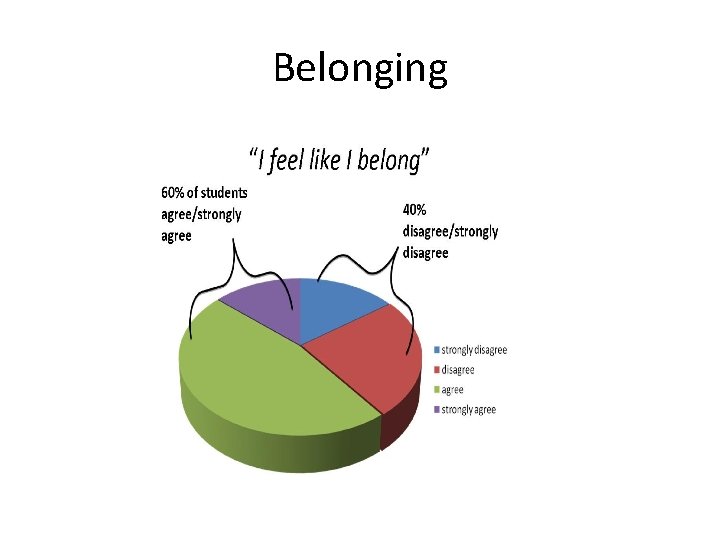
Belonging
Shifting the Thinking We have not been successful requiring kids to adapt to school. PBIS Framework allows us to adapt school to fit the needs of our kids From “What’s wrong with you to…. ” “What happened to you? ” PBIS process allows us to …Examine current condition. Structures/Systems/Policy that fosters current status. FBT Probable future…. Preferred Future… Rally around the data. Describe in measureable way- establish common ground anchor to everyday teacher behaviors What kind of school do you want your school to be?
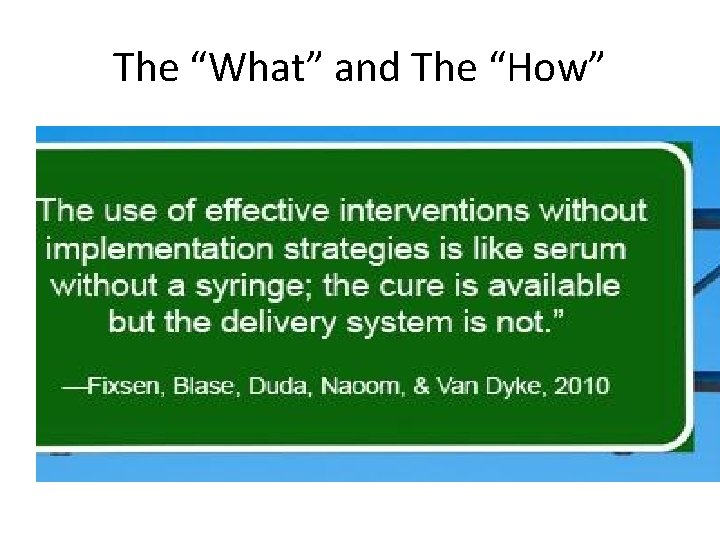
The “What” and The “How”
ISF in development Current Resources – ISF White Paper (Barrett, Eber and Weist, 2012) – ISF Monograph (Sept 2013) – ISF Blueprint ( Jan 2014 ) – ISF webinar recordings
ISF Monograph Development August 2013 • Define the common goals of SMH and PBIS • Discuss the advantages of interconnection • Identify successful local efforts to implement collaborative strategies and cross-initiative efforts • Define the research, policy, and implementation agendas to take us to the next action level
Current Tools • Dialogue Guides (IDEA partnership) • 4 Simple Questions (IDEA partnership) • Implementation Guides (Funding, Team, Evaluation) • Knowledge Development Surveys • Readiness Checklist • Resource Mapping • Consumer Guide for Selecting MH practices
History-Rationale • Sparse availability of MH providers in schools • Labels and ‘places’ confused with interventions • Separate delivery systems (Sp. Ed. , Mental health, etc) • Minimal accountability for outcomes for most vulnerable populations
Why Partnership Are Needed • • • One in 5 youth have a MH “condition” About 70% of those get no treatment School is “defacto” MH provider JJ system is next level of system default Suicide is 4 th leading cause of death among young adults
SMH and PBIS Common Purpose • Schools supporting/promoting MH of ALL students • Prevention, early access, interventions commensurate with level of need (vs label) • School personnel feel confident and competent in identifying and intervening with accuracy and effectiveness
Logic – Youth with MH needs require multifaceted education/behavior and mental health supports – The usual systems have not routinely provided a comprehensive, blended system of support. – Supports need to be provided in a clustered and integrated structure, – Academic/behavior and mental health supports need to be efficiently blended
Promotion and Prevention Simple and complex supports require integrated systems with foundation of a school-wide system • Schools and community serve as protective factor • problem-solving teams with school/family/youth/community voice • use of data for decision-making (screening/ selection and monitoring/outcomes) • layers supports from the foundational/universal to the more complex
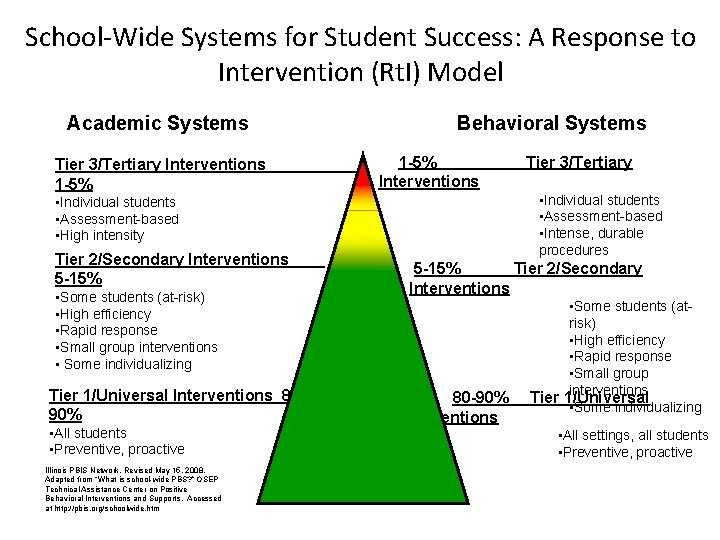
School-Wide Systems for Student Success: A Response to Intervention (Rt. I) Model Academic Systems Tier 3/Tertiary Interventions 1 -5% Behavioral Systems 1 -5% Interventions • Individual students • Assessment-based • Intense, durable procedures • Individual students • Assessment-based • High intensity Tier 2/Secondary Interventions 5 -15% • Some students (at-risk) • High efficiency • Rapid response • Small group interventions • Some individualizing Tier 1/Universal Interventions 8090% • All students • Preventive, proactive Illinois PBIS Network, Revised May 15, 2008. Adapted from “What is school-wide PBS? ” OSEP Technical Assistance Center on Positive Behavioral Interventions and Supports. Accessed at http: //pbis. org/schoolwide. htm Tier 3/Tertiary 5 -15% Tier 2/Secondary Interventions 80 -90% Interventions • Some students (atrisk) • High efficiency • Rapid response • Small group interventions Tier 1/Universal • Some individualizing • All settings, all students • Preventive, proactive
Positive Behavior Intervention and Support (www. pbis. org) • Decision making framework to guide selection and implementation of best practices for improving academic /behavioral functioning • Data-based, measurable outcomes, evidencebased practices, systems to support effective implementation
Implementation Framework • We organize our resources – Multi-Tier Mapping, Gap Analysis • So kids get help early – Actions based on outcomes (data!), not procedures • We do stuff that’s likely to work – Evidence-Based interventions • We provide supports to staff to do it right – Fidelity: Benchmarks of Quality • And make sure they’re successful – – Coaching and Support Progress monitoring and performance feedback Problem-Solving process Increasing levels of intensity
Core Features of a Response to Intervention (MTSS) Approach • Investment in prevention, screening and early intervention for students not at “benchmark” • Multi-tiered intervention approach • Use of progress monitoring and problemsolving process at all 3 -tiers
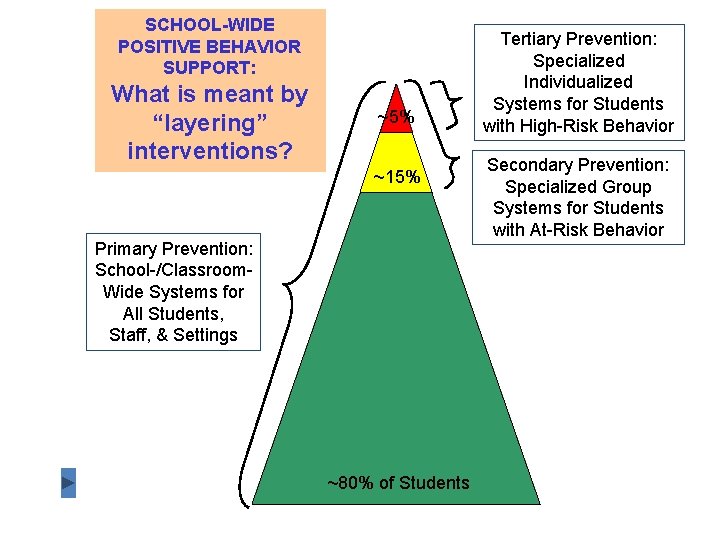
SCHOOL-WIDE POSITIVE BEHAVIOR SUPPORT: What is meant by “layering” interventions? ~5% ~15% Primary Prevention: School-/Classroom. Wide Systems for All Students, Staff, & Settings ~80% of Students Tertiary Prevention: Specialized Individualized Systems for Students with High-Risk Behavior Secondary Prevention: Specialized Group Systems for Students with At-Risk Behavior
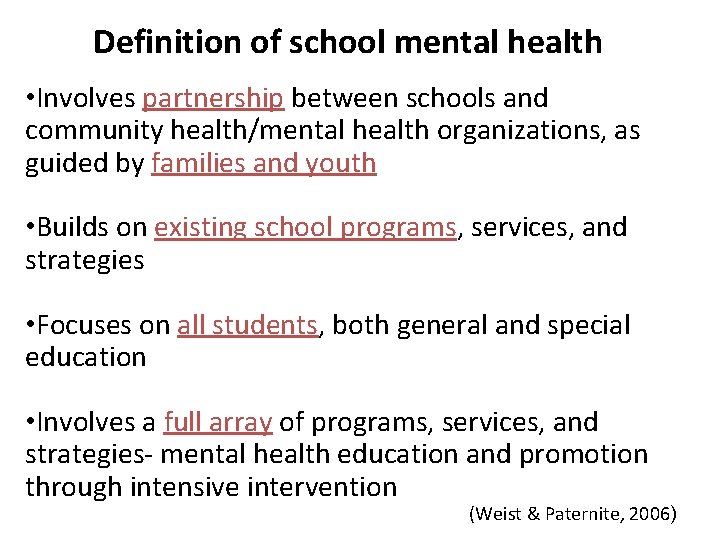
Definition of school mental health • Involves partnership between schools and community health/mental health organizations, as guided by families and youth • Builds on existing school programs, services, and strategies • Focuses on all students, both general and special education • Involves a full array of programs, services, and strategies- mental health education and promotion through intensive intervention (Weist & Paternite, 2006)
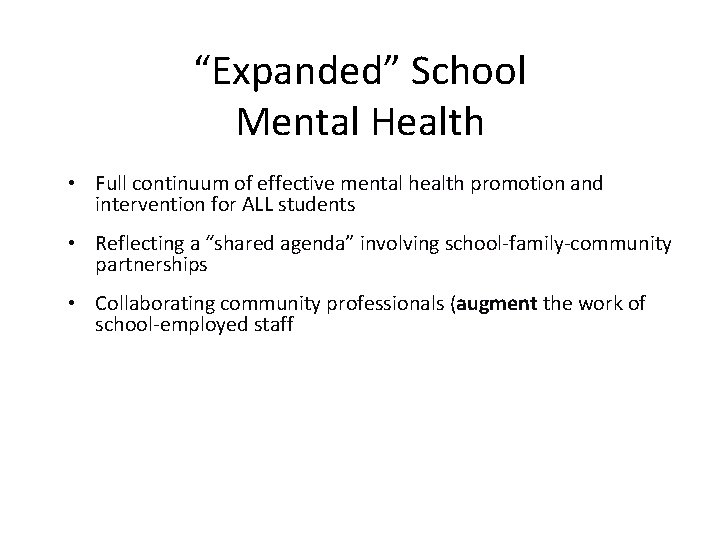
“Expanded” School Mental Health • Full continuum of effective mental health promotion and intervention for ALL students • Reflecting a “shared agenda” involving school-family-community partnerships • Collaborating community professionals (augment the work of school-employed staff
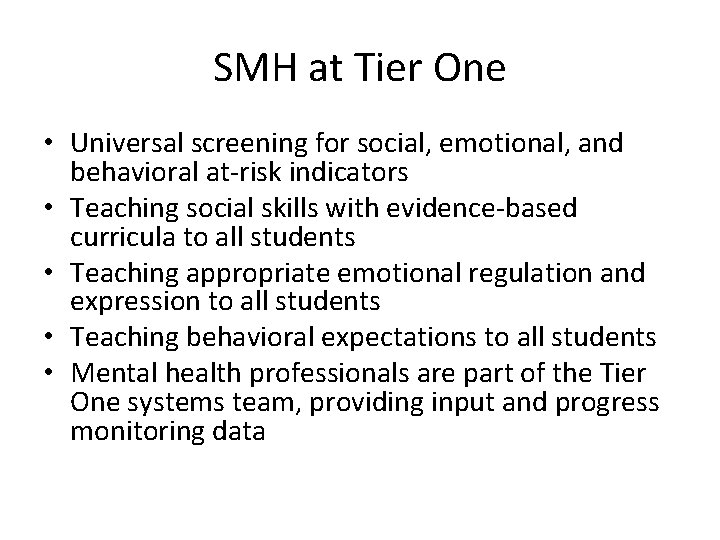
SMH at Tier One • Universal screening for social, emotional, and behavioral at-risk indicators • Teaching social skills with evidence-based curricula to all students • Teaching appropriate emotional regulation and expression to all students • Teaching behavioral expectations to all students • Mental health professionals are part of the Tier One systems team, providing input and progress monitoring data
SMH at Tier Two • Mental health professionals part of secondary systems and problem solving teams • Working smarter matrix completed to ensure key resources are both efficient and effective (i. e. , initiatives are aligned and combined such as “bully prevention”, “discipline”, “character education”, “Rt. I/MTSS behavior”, etc. ) • Groups co-facilitated by school staff and community partner (example – guidance counselor and community provider clinician)
SMH at Tier Three • Mental health professional part of tertiary systems team • FBA/BIP completed together with school staff and mental health provider for one concise data based plan – results driven, rather than each completing paperwork to be filed
The Context • Over 20, 000 schools engaged in implementation of SWPBIS (MTSS ) prevention based system • Current focus on capacity to scale-up • MTSS as platform to install effective interventions for youth w/or at-risk of EBD
The Context (cont. ) • Emphasis now on scaling with expansion and connection to other systems – i. e. academic, juvenile justice, mental health, child welfare, systems of care • Emphasis on deliberate actions that foster connections w/families & community
BIG Ideas… • How Multi-tiered Systems of Support (MTSS) can enhance mental health in schools • Installing SMH through MTSS in Schools • The Interconnected Systems Framework (ISF) SMH +MTSS=ISF
Development of ISF • 2002 -2007: Site Development with PBIS Expansion (informal and independent) • 2005 Co. P focus on integration of PBIS and SMH • 2008: ISF White Paper: formal partnership between PBIS and SMH • 2009 - 2013 Monthly calls with implementation sites, national presentations (from sessions to strands) • 2009 -2011 Grant Submissions • June 2012 - September 2013 ISF Monograph • Monograph Advisory group
ISF Defined – ISF provides structure and process for education and mental health systems to interact in most effective and efficient way. – ISF is guided by key stakeholders in education and mental health system who have the authority to reallocate resources, change role and function of staff, and change policy. – ISF applies strong interdisciplinary, cross-system collaboration.
ISF Defined – ISF uses the tiered prevention logic as the overall organizer to develop an action plan. – ISF involves cross system problem solving teams that use data to decide which evidence based practices to implement.
ISF Defined (cont) – ISF involves ongoing progress monitoring for both fidelity and impact. – ISF emphasizes active involvement by youth, families, and other school and community stakeholders.
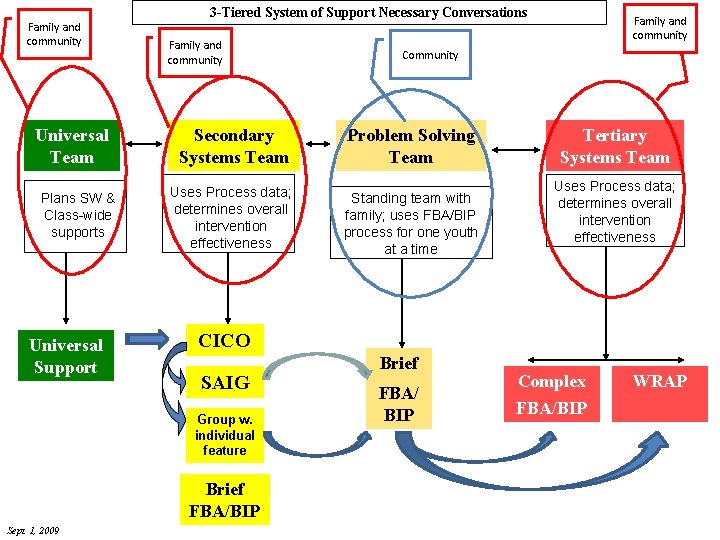
Structure for Developing an ISF: Community Partners Roles in Teams • A District/Community leadership that includes families, develops, supports and monitors a plan that includes: • Community partners participate in all three levels of systems teaming: Universal, Secondary, and Tertiary • Team of SFC partners review data and design interventions that are evidence-based and can be progress monitored • MH providers form both school and community develop, facilitate, coordinate and monitor all interventions through one structure
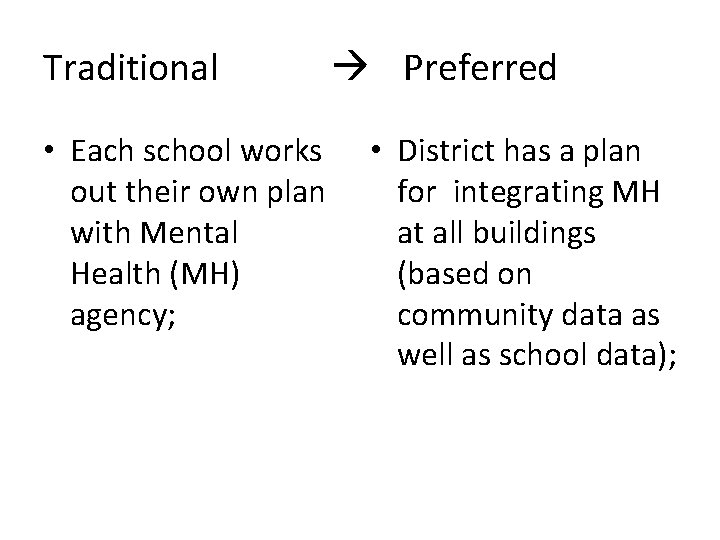
Traditional • Each school works out their own plan with Mental Health (MH) agency; Preferred • District has a plan for integrating MH at all buildings (based on community data as well as school data);
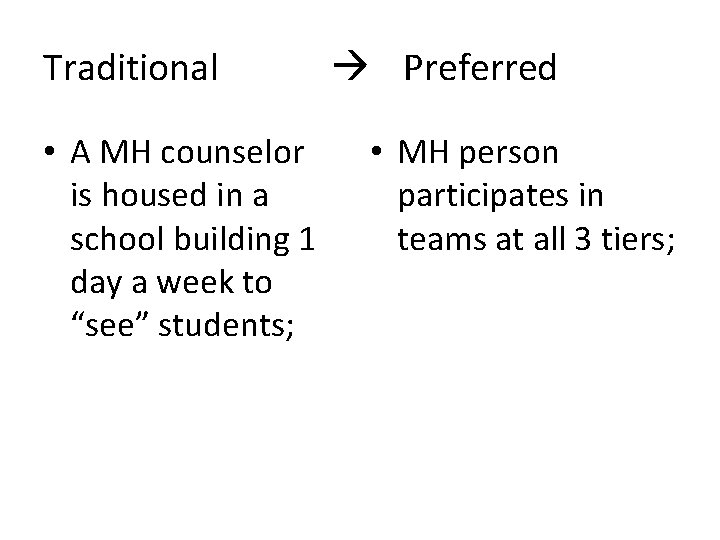
Traditional • A MH counselor is housed in a school building 1 day a week to “see” students; Preferred • MH person participates in teams at all 3 tiers;
Traditional Preferred • No data to decide • MH person leads group or individual on or monitor interventions based interventions; on data;
What have we learned? • 10 Knowledge Development Sites • Survey
Common Purpose Setting Event • • Funding Source: Grant, Foundation Crisis, Event New leadership Rallying around a data point – Global Information System (protective/risk factor ratio- churches to liquor outlets) – 360 view of our children and youth Trauma, poverty, homelessness, crime rate, disability, other community factors
Exploration Phase Systems Features that Created the Pathway Common Implementation Framework: PBIS framework is in place and expansion effort is embraced by educators and community mental health providers Authority: Key Opinion Leaders with decision making authority have political will to examine current condition and make change organizational structures that promote efficiency and effectiveness (job descriptions, use of staff, teaming structure, data systems) Equal Priority: Key Opinion Leaders promote social emotional behavioral health alongside academic achievement to achieve socially important outcomes Flexible Funding: Fee for service includes opportunity for service providers to be paid for direct care and to serve on cross systems planning teams. Structured Processes: Innovative tools such as Self Assessment, Resource Mapping, Dialogue Guides used to broaden knowledge and create common vision and generate solutions across range of stakeholders, educators and service providers. Local Demonstration Sites Knowledge development sites established to learn about innovation and professional learning communities established to support staff. Overwhelming Sense of Common Purpose: All members rally around a common purpose and common data point with a commitment for improving the lives of children and youth.
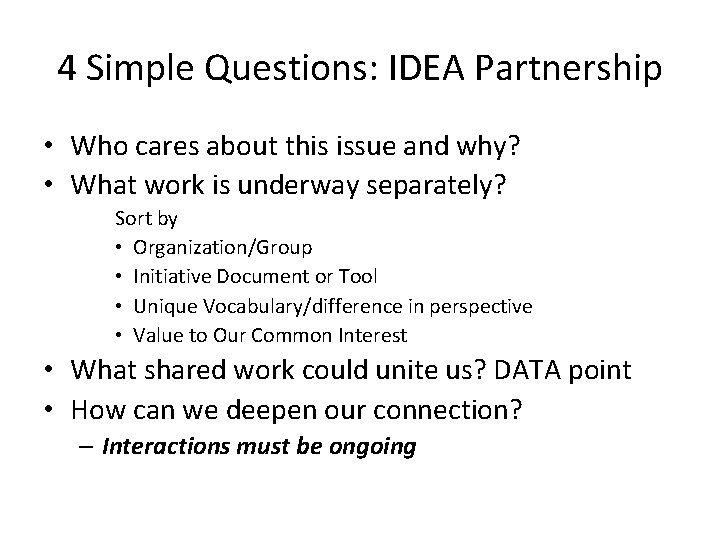
4 Simple Questions: IDEA Partnership • Who cares about this issue and why? • What work is underway separately? Sort by • Organization/Group • Initiative Document or Tool • Unique Vocabulary/difference in perspective • Value to Our Common Interest • What shared work could unite us? DATA point • How can we deepen our connection? – Interactions must be ongoing
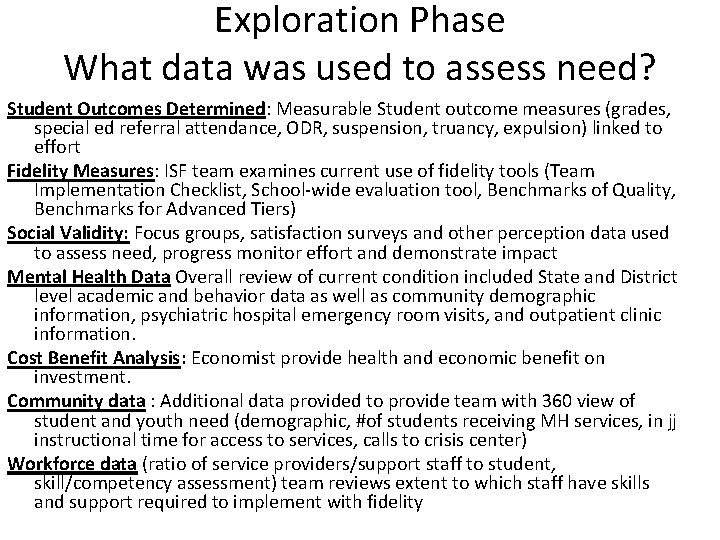
Exploration Phase What data was used to assess need? Student Outcomes Determined: Measurable Student outcome measures (grades, special ed referral attendance, ODR, suspension, truancy, expulsion) linked to effort Fidelity Measures: ISF team examines current use of fidelity tools (Team Implementation Checklist, School-wide evaluation tool, Benchmarks of Quality, Benchmarks for Advanced Tiers) Social Validity: Focus groups, satisfaction surveys and other perception data used to assess need, progress monitor effort and demonstrate impact Mental Health Data Overall review of current condition included State and District level academic and behavior data as well as community demographic information, psychiatric hospital emergency room visits, and outpatient clinic information. Cost Benefit Analysis: Economist provide health and economic benefit on investment. Community data : Additional data provided to provide team with 360 view of student and youth need (demographic, #of students receiving MH services, in jj instructional time for access to services, calls to crisis center) Workforce data (ratio of service providers/support staff to student, skill/competency assessment) team reviews extent to which staff have skills and support required to implement with fidelity
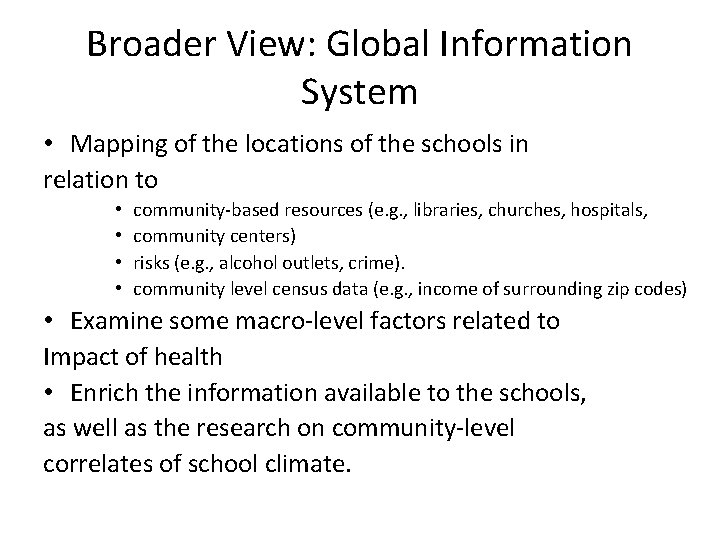
Broader View: Global Information System • Mapping of the locations of the schools in relation to • • community-based resources (e. g. , libraries, churches, hospitals, community centers) risks (e. g. , alcohol outlets, crime). community level census data (e. g. , income of surrounding zip codes) • Examine some macro-level factors related to Impact of health • Enrich the information available to the schools, as well as the research on community-level correlates of school climate.
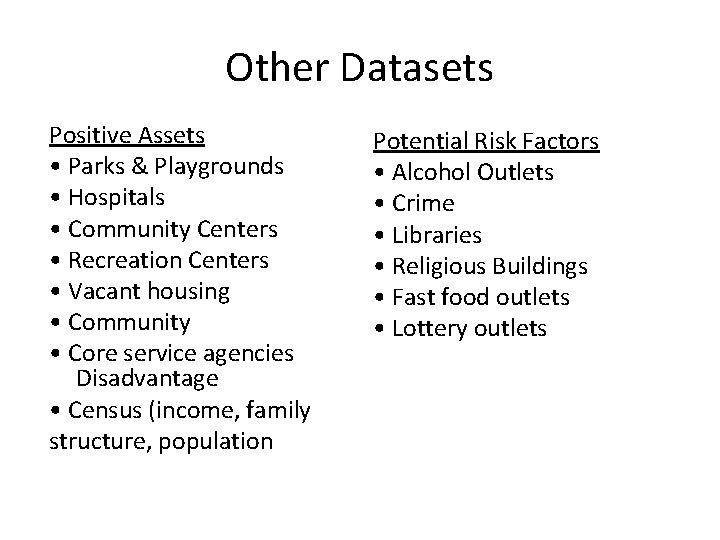
Other Datasets Positive Assets • Parks & Playgrounds • Hospitals • Community Centers • Recreation Centers • Vacant housing • Community • Core service agencies Disadvantage • Census (income, family structure, population Potential Risk Factors • Alcohol Outlets • Crime • Libraries • Religious Buildings • Fast food outlets • Lottery outlets
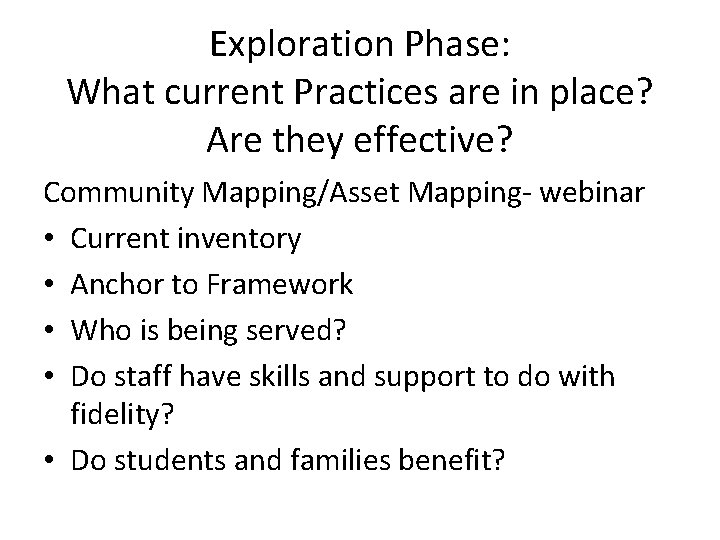
Exploration Phase: What current Practices are in place? Are they effective? Community Mapping/Asset Mapping- webinar • Current inventory • Anchor to Framework • Who is being served? • Do staff have skills and support to do with fidelity? • Do students and families benefit?
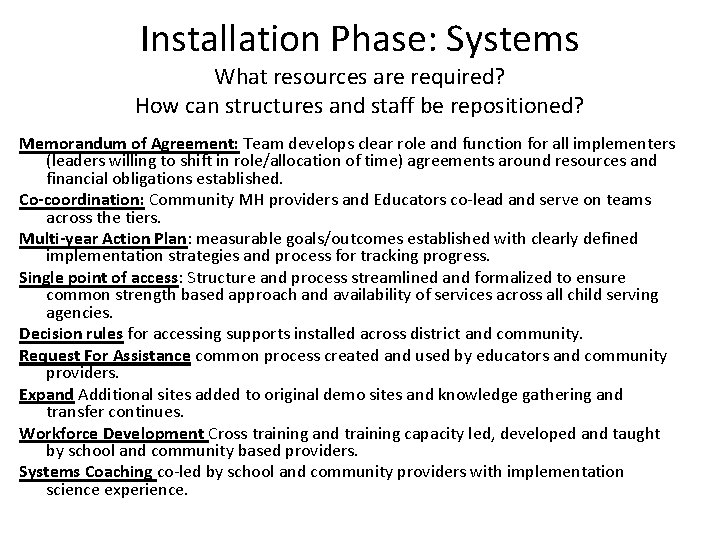
Installation Phase: Systems What resources are required? How can structures and staff be repositioned? Memorandum of Agreement: Team develops clear role and function for all implementers (leaders willing to shift in role/allocation of time) agreements around resources and financial obligations established. Co-coordination: Community MH providers and Educators co-lead and serve on teams across the tiers. Multi-year Action Plan: measurable goals/outcomes established with clearly defined implementation strategies and process for tracking progress. Single point of access: Structure and process streamlined and formalized to ensure common strength based approach and availability of services across all child serving agencies. Decision rules for accessing supports installed across district and community. Request For Assistance common process created and used by educators and community providers. Expand Additional sites added to original demo sites and knowledge gathering and transfer continues. Workforce Development Cross training and training capacity led, developed and taught by school and community based providers. Systems Coaching co-led by school and community providers with implementation science experience.
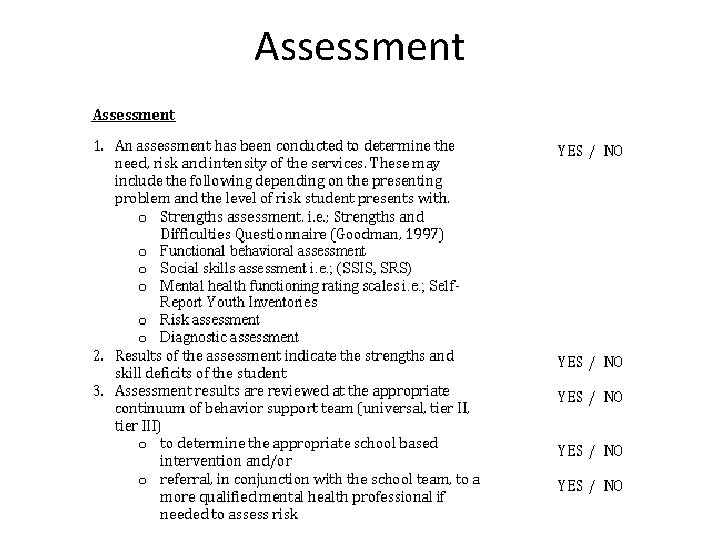
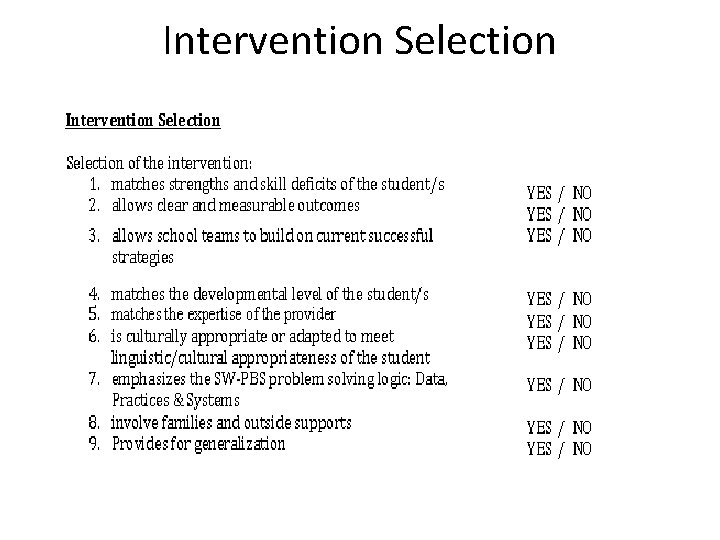
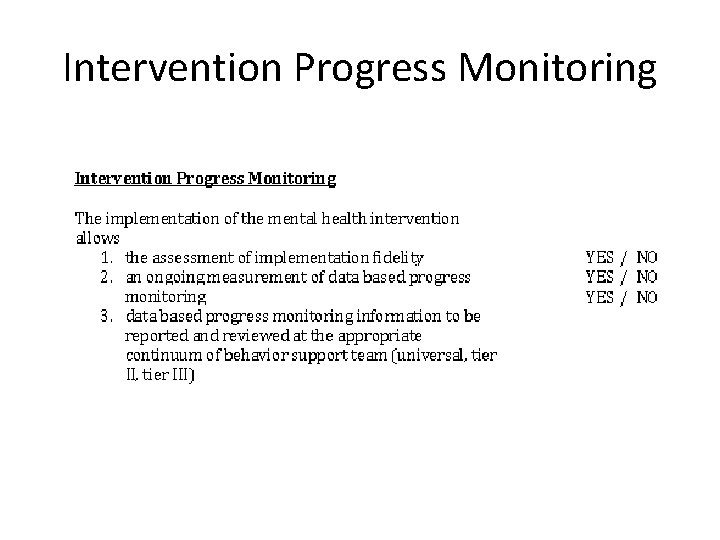
Consumer Guide to Selecting Evidenced Based Mental Health Services (Putnam et al, 2012 in draft) Main Components • Assessment • Interventions Selection • Intervention Progress Monitoring
Assessment
Intervention Selection
Intervention Progress Monitoring
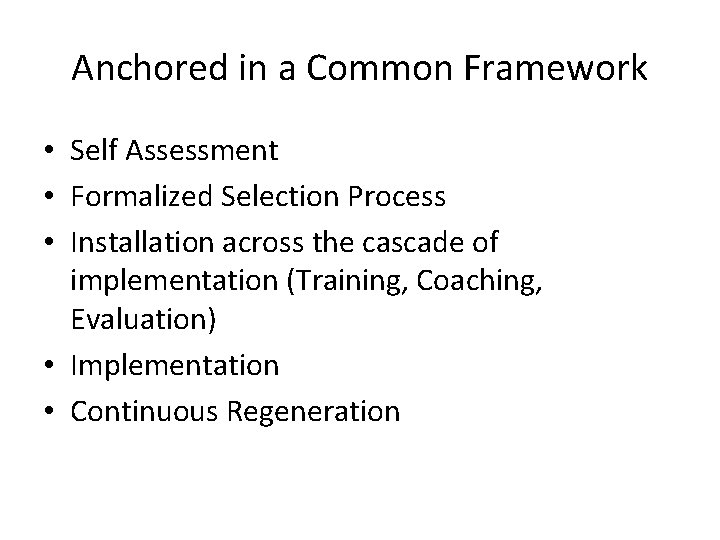
Anchored in a Common Framework • Self Assessment • Formalized Selection Process • Installation across the cascade of implementation (Training, Coaching, Evaluation) • Implementation • Continuous Regeneration
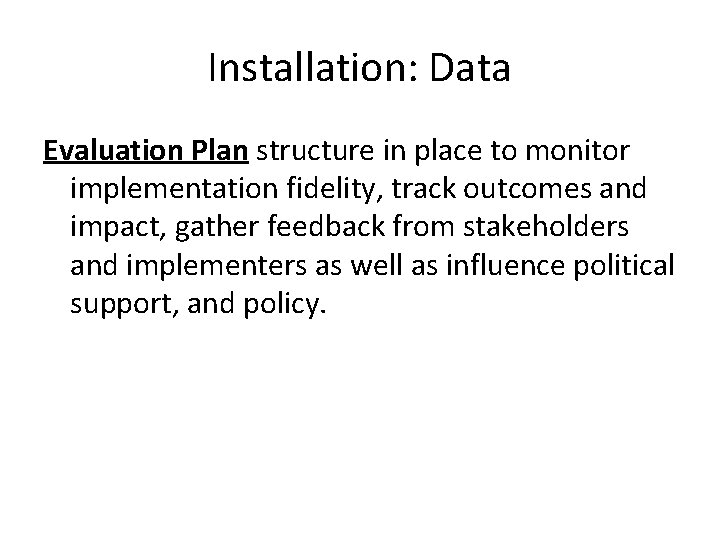
Installation: Data Evaluation Plan structure in place to monitor implementation fidelity, track outcomes and impact, gather feedback from stakeholders and implementers as well as influence political support, and policy.
Installation: Practices Consumer Guide: Formal selection process for adding effective practices in place and anchored to implementation framework. Schools select based on need and district ensures staff are trained supported to implement with fidelity
Structure for Developing an ISF: Community Partners Roles in Teams • A District/Community leadership that includes families, develops, supports and monitors a plan that includes: • Community partners participate in all three levels of systems teaming in the building: Universal, Secondary, and Tertiary
Structure for Developing an ISF: Community Partners Roles in Teams (cont. ) • Team of SFC partners review data and design interventions that are evidence-based and can be progress monitored • MH providers from both school & community develop, facilitate, coordinate and monitor all interventions through one structure
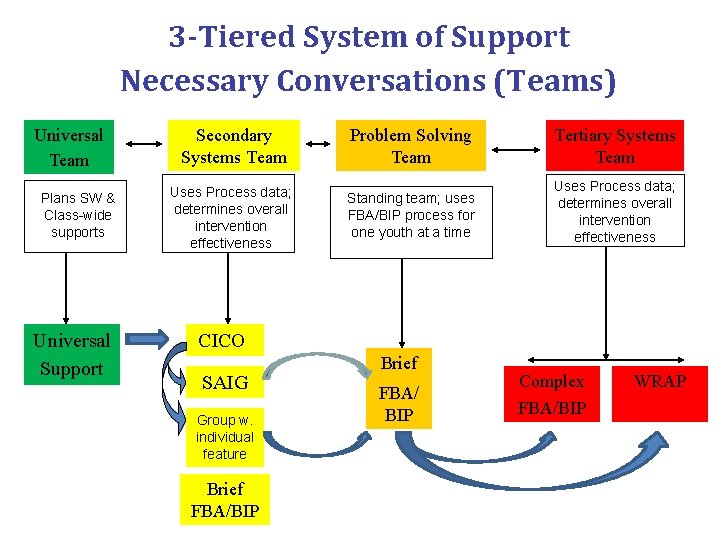
3 -Tiered System of Support Necessary Conversations (Teams) Universal Team Plans SW & Class-wide supports Universal Support Secondary Systems Team Problem Solving Team Tertiary Systems Team Uses Process data; determines overall intervention effectiveness Standing team; uses FBA/BIP process for one youth at a time Uses Process data; determines overall intervention effectiveness CICO SAIG Group w. individual feature Brief FBA/BIP Brief FBA/ BIP Complex FBA/BIP WRAP
Family and community Universal Team Plans SW & Class-wide supports Universal Support 3 -Tiered System of Support Necessary Conversations Family and community Community Secondary Systems Team Problem Solving Team Uses Process data; determines overall intervention effectiveness Standing team with family; uses FBA/BIP process for one youth at a time Tertiary Systems Team Uses Process data; determines overall intervention effectiveness CICO SAIG Group w. individual feature Brief FBA/BIP Sept. 1, 2009 Family and community Brief FBA/ BIP Complex FBA/BIP WRAP
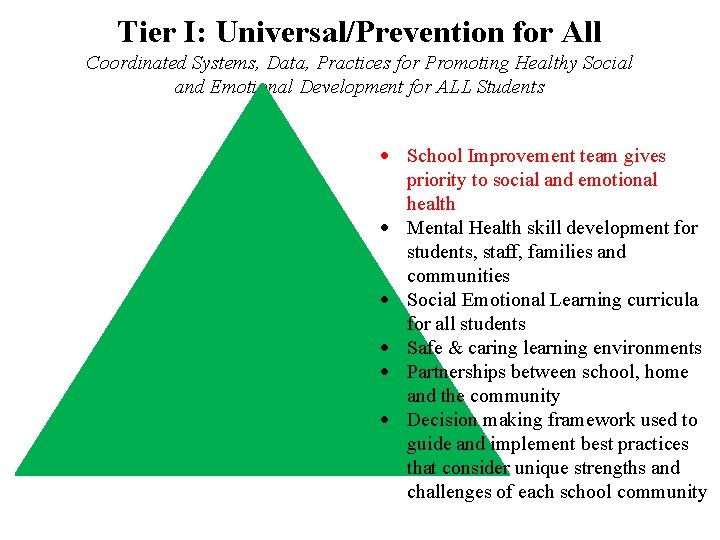
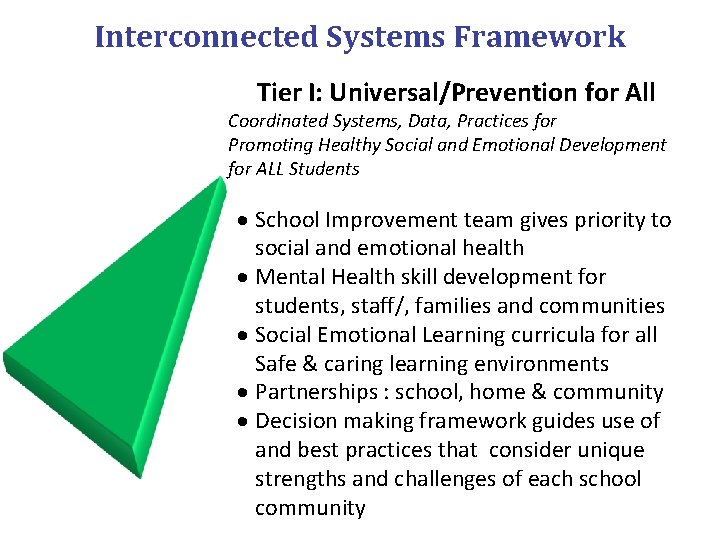
Tier I: Universal/Prevention for All Coordinated Systems, Data, Practices for Promoting Healthy Social and Emotional Development for ALL Students School Improvement team gives priority to social and emotional health Mental Health skill development for students, staff, families and communities Social Emotional Learning curricula for all students Safe & caring learning environments Partnerships between school, home and the community Decision making framework used to guide and implement best practices that consider unique strengths and challenges of each school community
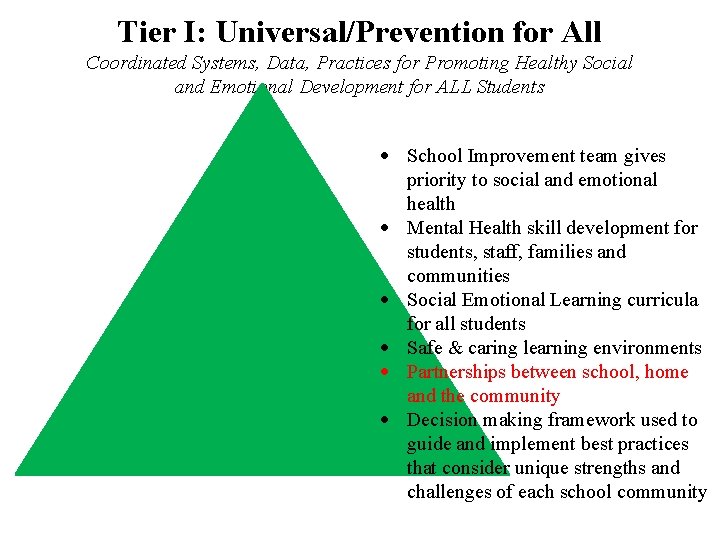
Tier I: Universal/Prevention for All Coordinated Systems, Data, Practices for Promoting Healthy Social and Emotional Development for ALL Students School Improvement team gives priority to social and emotional health Mental Health skill development for students, staff, families and communities Social Emotional Learning curricula for all students Safe & caring learning environments Partnerships between school, home and the community Decision making framework used to guide and implement best practices that consider unique strengths and challenges of each school community
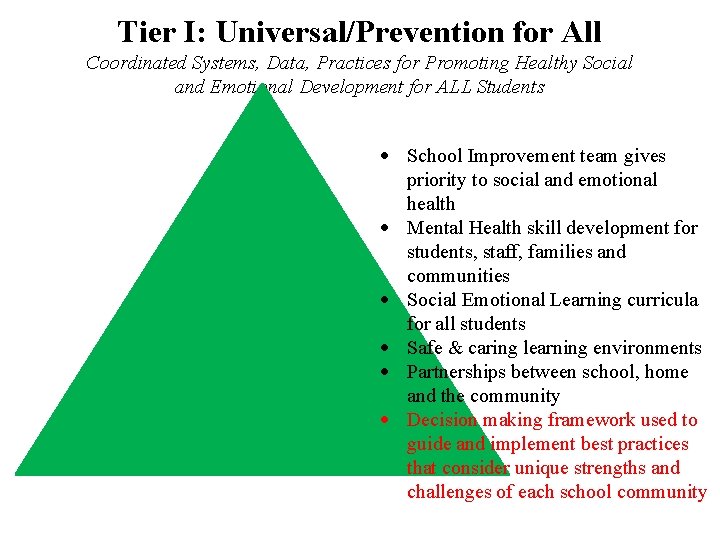
Tier I: Universal/Prevention for All Coordinated Systems, Data, Practices for Promoting Healthy Social and Emotional Development for ALL Students School Improvement team gives priority to social and emotional health Mental Health skill development for students, staff, families and communities Social Emotional Learning curricula for all students Safe & caring learning environments Partnerships between school, home and the community Decision making framework used to guide and implement best practices that consider unique strengths and challenges of each school community
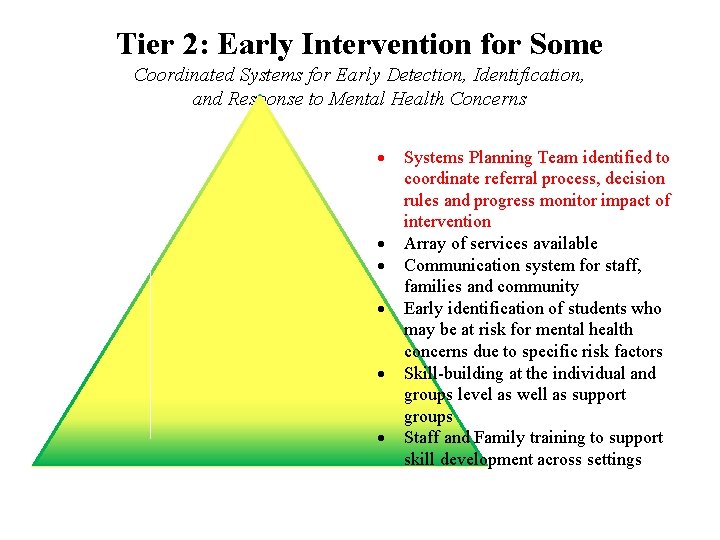
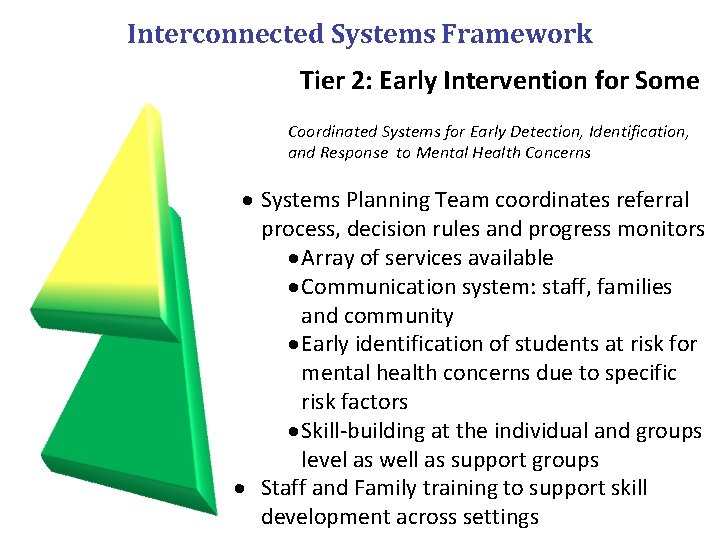
Tier 2: Early Intervention for Some Coordinated Systems for Early Detection, Identification, and Response to Mental Health Concerns Systems Planning Team identified to coordinate referral process, decision rules and progress monitor impact of intervention Array of services available Communication system for staff, families and community Early identification of students who may be at risk for mental health concerns due to specific risk factors Skill-building at the individual and groups level as well as support groups Staff and Family training to support skill development across settings
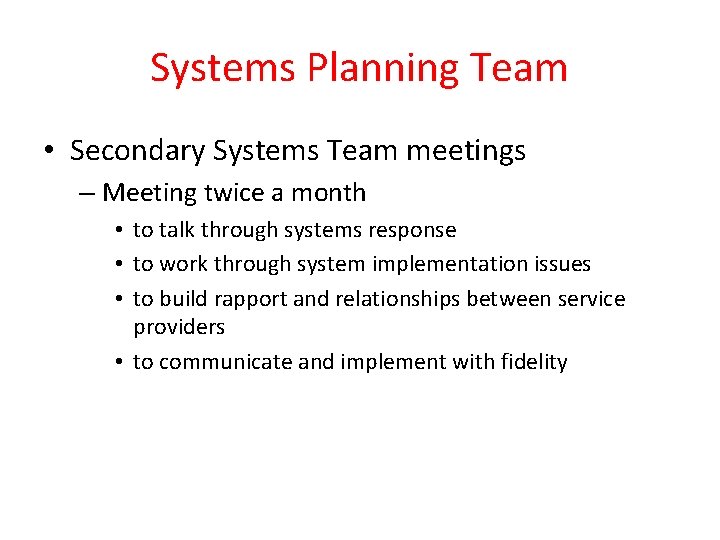
Systems Planning Team • Secondary Systems Team meetings – Meeting twice a month • to talk through systems response • to work through system implementation issues • to build rapport and relationships between service providers • to communicate and implement with fidelity
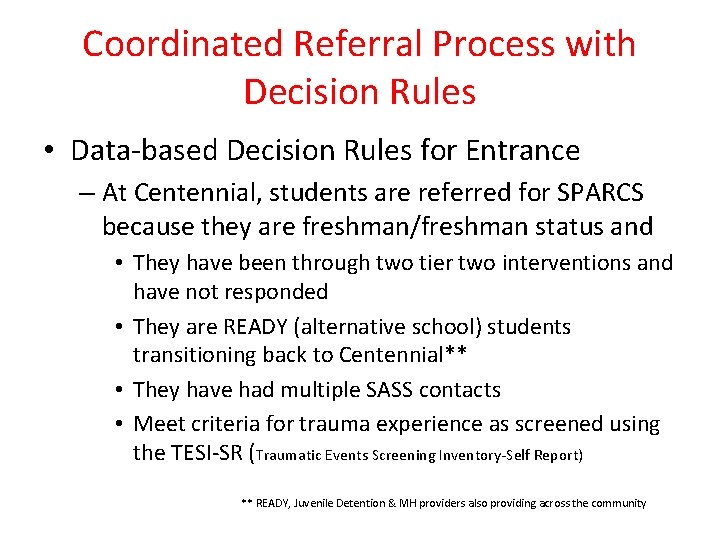
Coordinated Referral Process with Decision Rules • Data-based Decision Rules for Entrance – At Centennial, students are referred for SPARCS because they are freshman/freshman status and • They have been through two tier two interventions and have not responded • They are READY (alternative school) students transitioning back to Centennial** • They have had multiple SASS contacts • Meet criteria for trauma experience as screened using the TESI-SR (Traumatic Events Screening Inventory-Self Report) ** READY, Juvenile Detention & MH providers also providing across the community
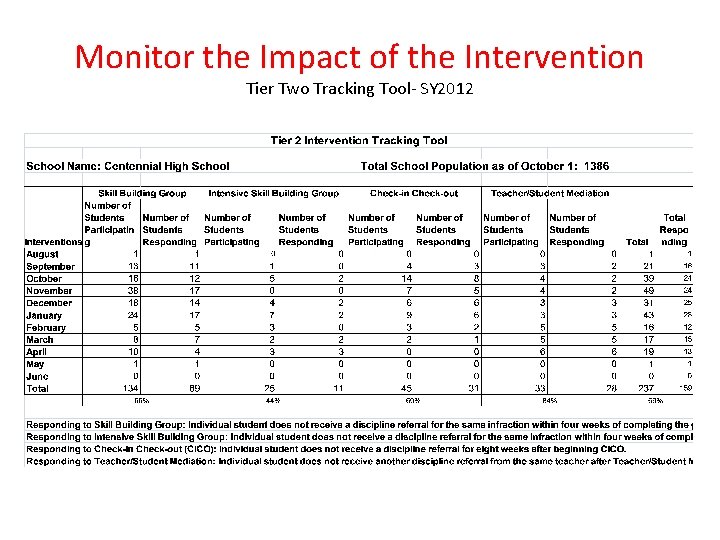
Monitor the Impact of the Intervention Tier Two Tracking Tool- SY 2012
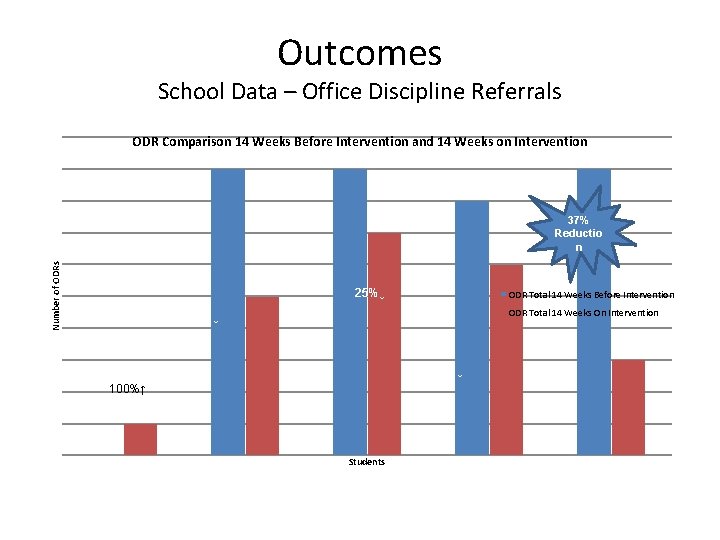
Outcomes School Data – Office Discipline Referrals ODR Comparison 14 Weeks Before Intervention and 14 Weeks on Intervention Number of ODRs 37% Reductio n 23%↓ 25%↓ ODR Total 14 Weeks Before Intervention ODR Total 14 Weeks On Intervention 45%↓ 66%↓ 100%↑ Students
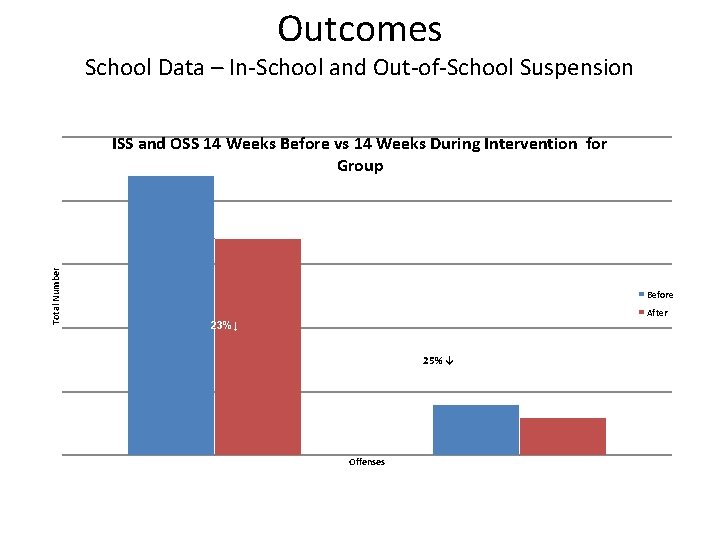
Outcomes School Data – In-School and Out-of-School Suspension Total Number ISS and OSS 14 Weeks Before vs 14 Weeks During Intervention for Group Before After 23%↓ 25% ↓ Offenses
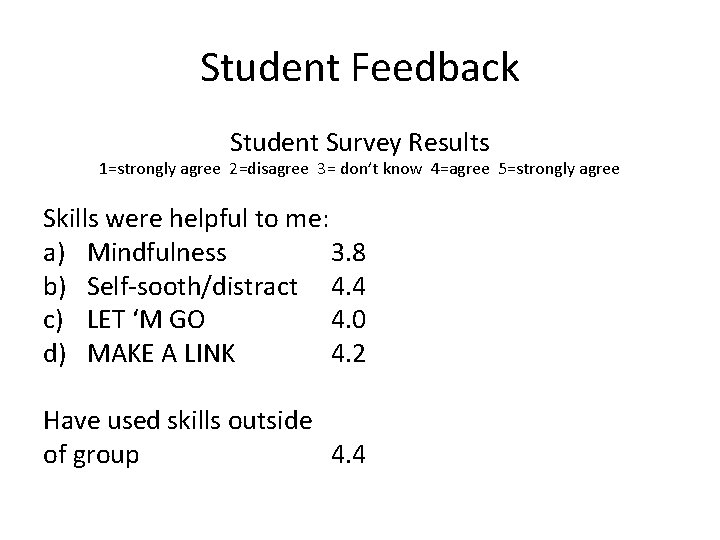
Student Feedback Student Survey Results 1=strongly agree 2=disagree 3= don’t know 4=agree 5=strongly agree Skills were helpful to me: a) Mindfulness 3. 8 b) Self-sooth/distract 4. 4 c) LET ‘M GO 4. 0 d) MAKE A LINK 4. 2 Have used skills outside of group 4. 4
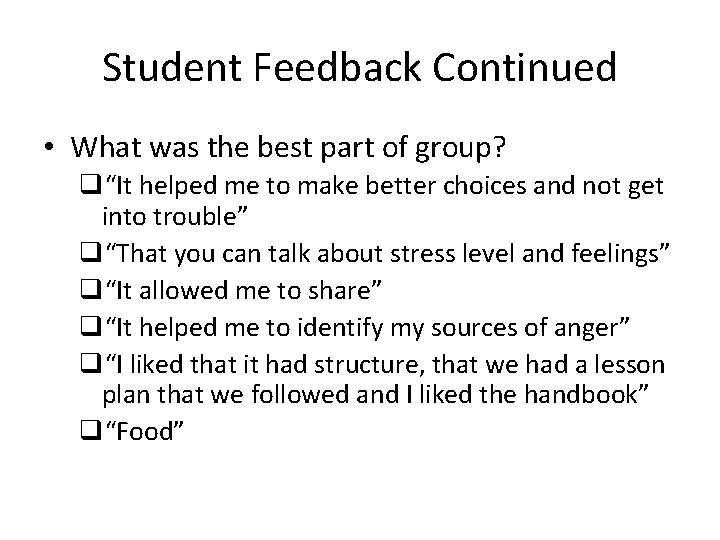
Student Feedback Continued • What was the best part of group? q“It helped me to make better choices and not get into trouble” q“That you can talk about stress level and feelings” q“It allowed me to share” q“It helped me to identify my sources of anger” q“I liked that it had structure, that we had a lesson plan that we followed and I liked the handbook” q“Food”
Lessons Learned • • Return on investment Funding efficiency Scaling and sustaining Teams – size Community “politics”
Interconnected Systems Framework Tier I: Universal/Prevention for All Coordinated Systems, Data, Practices for Promoting Healthy Social and Emotional Development for ALL Students School Improvement team gives priority to social and emotional health Mental Health skill development for students, staff/, families and communities Social Emotional Learning curricula for all Safe & caring learning environments Partnerships : school, home & community Decision making framework guides use of and best practices that consider unique strengths and challenges of each school community
Interconnected Systems Framework Tier 2: Early Intervention for Some Coordinated Systems for Early Detection, Identification, and Response to Mental Health Concerns Systems Planning Team coordinates referral process, decision rules and progress monitors Array of services available Communication system: staff, families and community Early identification of students at risk for mental health concerns due to specific risk factors Skill-building at the individual and groups level as well as support groups Staff and Family training to support skill development across settings
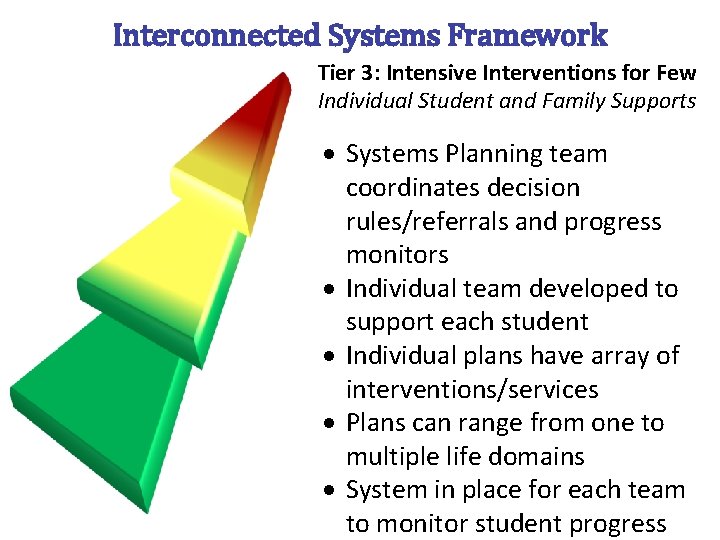
Interconnected Systems Framework Tier 3: Intensive Interventions for Few Individual Student and Family Supports Systems Planning team coordinates decision rules/referrals and progress monitors Individual team developed to support each student Individual plans have array of interventions/services Plans can range from one to multiple life domains System in place for each team to monitor student progress
A National Community of Practice (COP); www. sharedwork. org • IDEA Partnership (www. ideapartnership. org) providing support • 22 professional organizations and 16 states • 12 practice groups • Opportunities for dialogue and collaboration • Advancing multi-scale learning 73