
Understanding the Impact of Traumatic Stress in Adolescence


- Slides: 41
Understanding the Impact of Traumatic Stress in Adolescence Jasmine Mickle, MSPH Benchmarks Partnering for Excellence Program Coordinator Photo by stuartpilbrow at Flickr / CC BY-SA 2. 0 This Photo by Unknown Author is licensed under CC BY-SA
Today’s Presentation Overview • • Defining Childhood Traumatic Stress The Impact of CTS on Brain Development What CTS Looks Like in Adolescence How to Assist Teens Impacted by CTS
Childhood Traumatic Stress This Photo by Unknown Author is licensed under CC BY-NC-ND
Defining Child Traumatic Stress—The body’s response to any environmental, physical, or physiological pressure. Trauma—A deeply distressing experience that poses a real or perceived threat to an individuals safety and security. Child Traumatic Stress—The body’s physical or emotional response to an experiences that overwhelms a child’s daily life or disrupts their ability to function and interact with others.
What are some examples of potentially traumatic experiences?
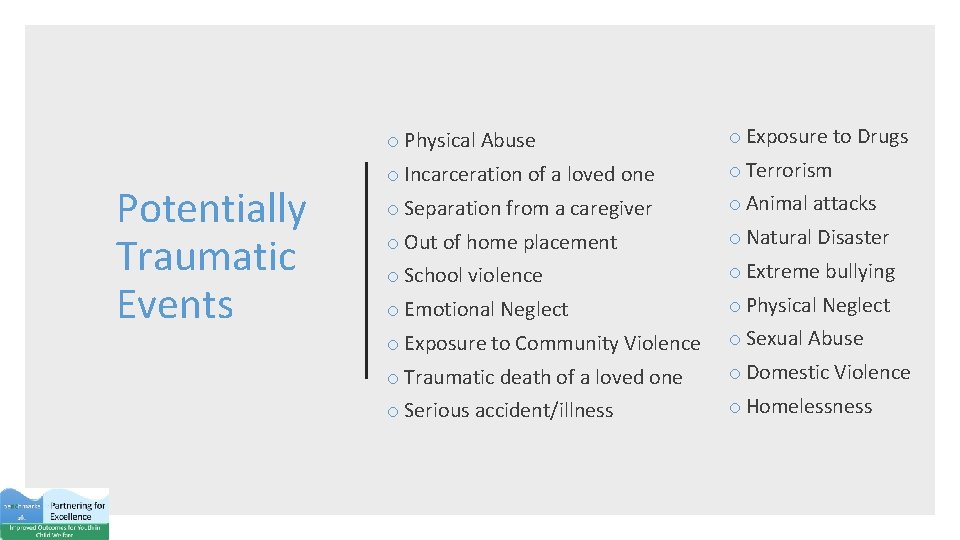
Potentially Traumatic Events o Physical Abuse o Exposure to Drugs o Incarceration of a loved one o Terrorism o Separation from a caregiver o Animal attacks o Out of home placement o Natural Disaster o School violence o Extreme bullying o Emotional Neglect o Physical Neglect o Exposure to Community Violence o Sexual Abuse o Traumatic death of a loved one o Domestic Violence o Serious accident/illness o Homelessness
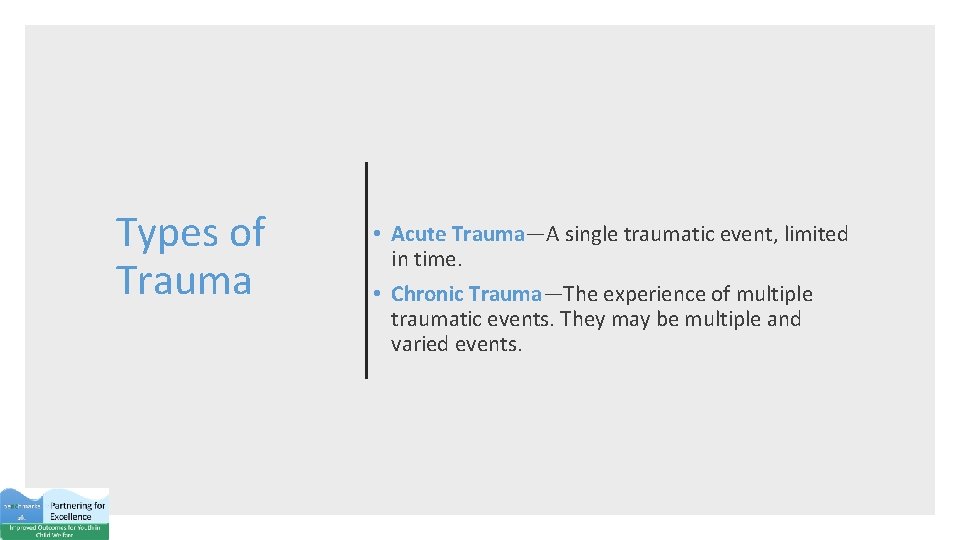
Types of Trauma • Acute Trauma—A single traumatic event, limited in time. • Chronic Trauma—The experience of multiple traumatic events. They may be multiple and varied events.
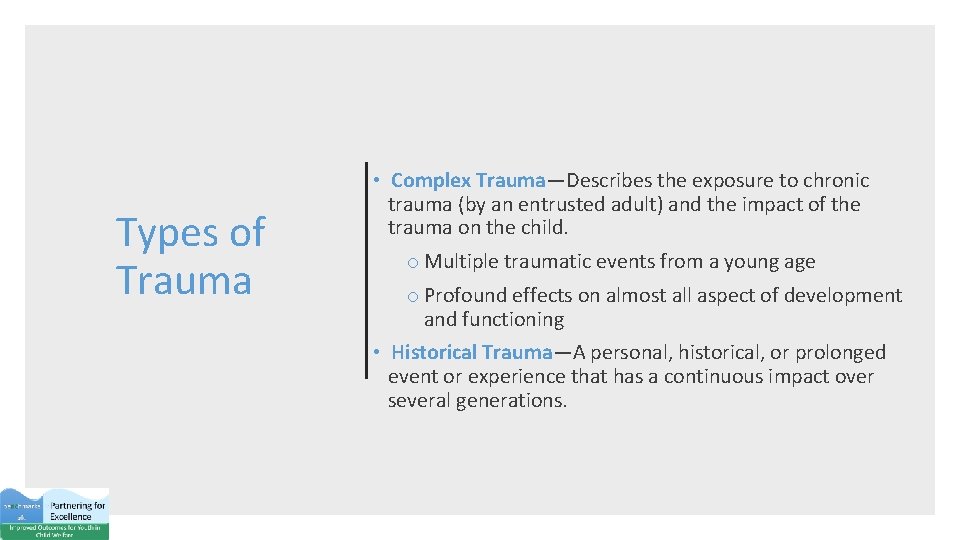
Types of Trauma • Complex Trauma—Describes the exposure to chronic trauma (by an entrusted adult) and the impact of the trauma on the child. o Multiple traumatic events from a young age o Profound effects on almost all aspect of development and functioning • Historical Trauma—A personal, historical, or prolonged event or experience that has a continuous impact over several generations.
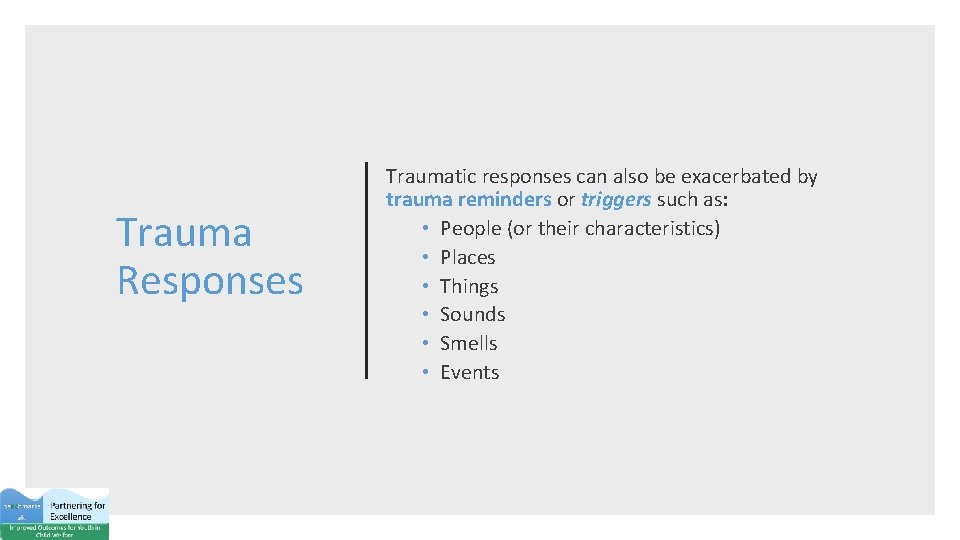
Trauma Responses Traumatic responses can also be exacerbated by trauma reminders or triggers such as: • People (or their characteristics) • Places • Things • Sounds • Smells • Events
Trauma Responses Traumatic responses or reactions are variable and may differ from one child to another. A child’s traumatic response can be impacted by: • Type of trauma • Protective factors • Resiliency • A secure attachment to a caregiver
The Impact of Trauma on Brain Development This Photo by Unknown Author is licensed under CC BY-NC
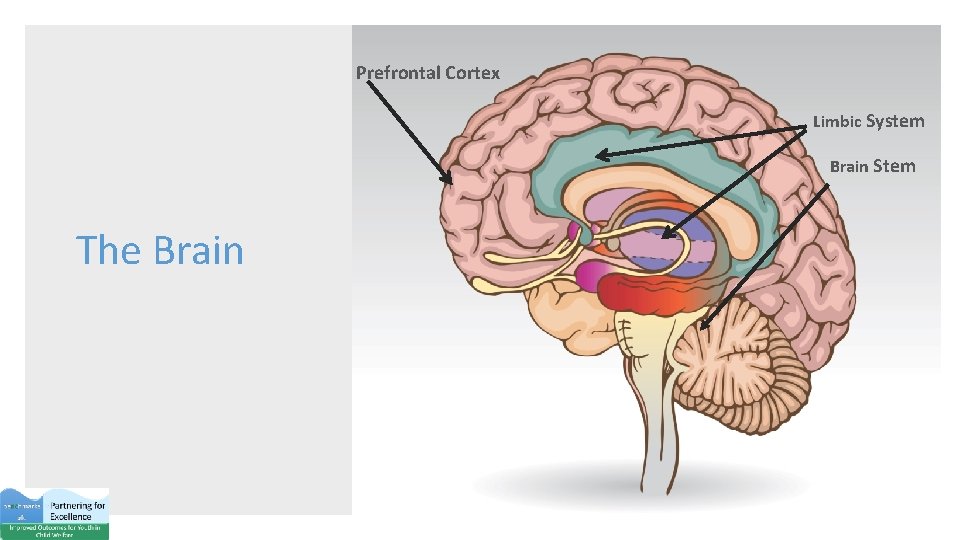
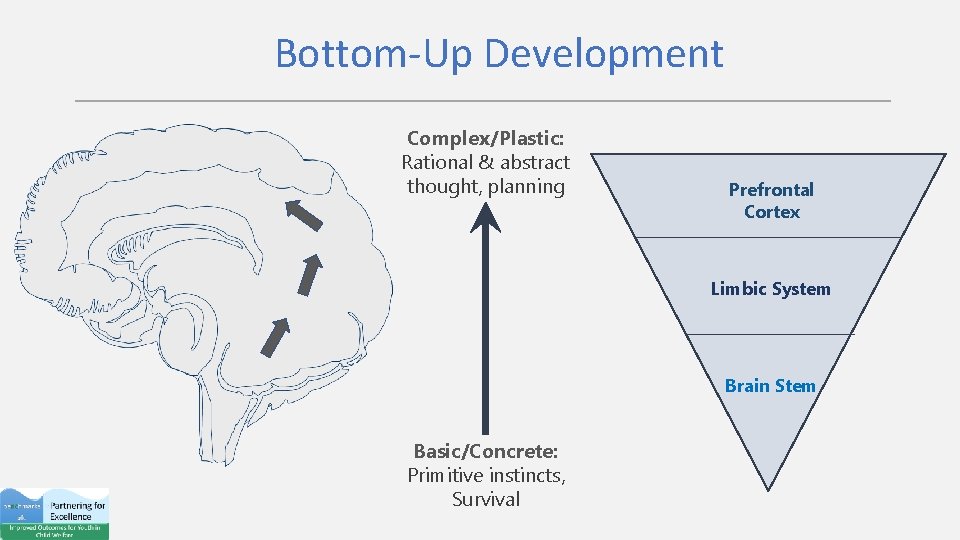
Prefrontal Cortex Limbic System Brain Stem The Brain Stem
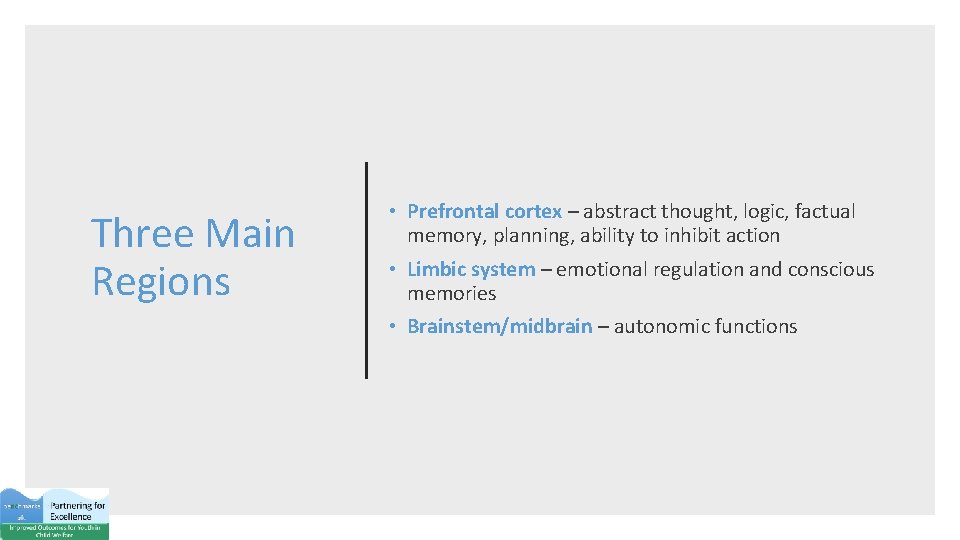
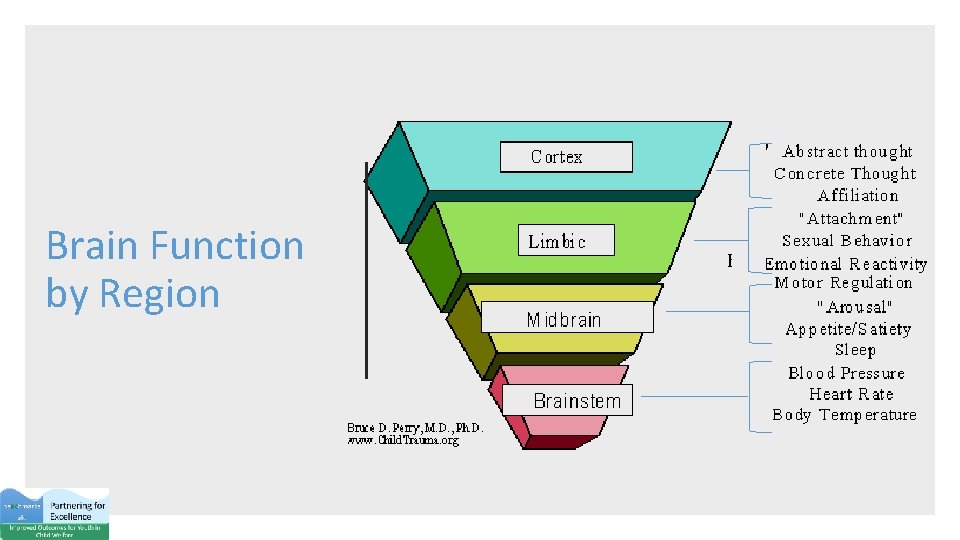
Three Main Regions • Prefrontal cortex – abstract thought, logic, factual memory, planning, ability to inhibit action • Limbic system – emotional regulation and conscious memories • Brainstem/midbrain – autonomic functions
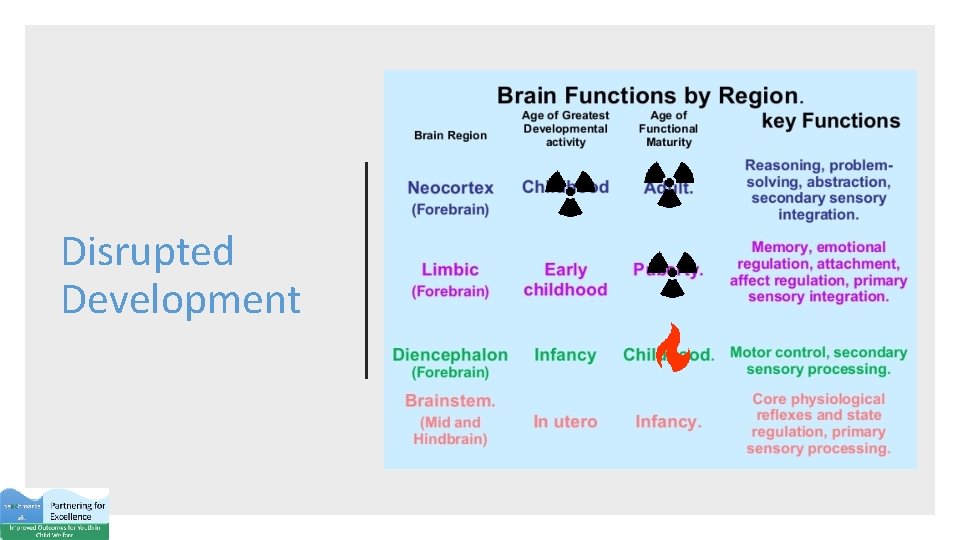
Brain Function by Region
Bottom-Up Development Complex/Plastic: Rational & abstract thought, planning Prefrontal Cortex Limbic System Brain Stem Basic/Concrete: Primitive instincts, Survival
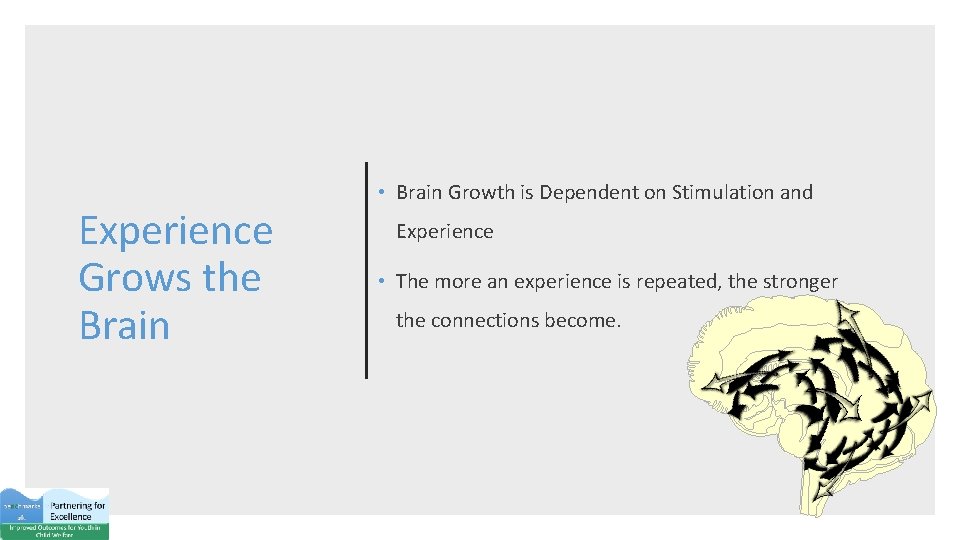
• The maximum number of nerve cells is present at birth. Experience Grows the Brain • The brain develops by forming synaptic connections. • synaptic connections: how nerve cells communicate with other cells
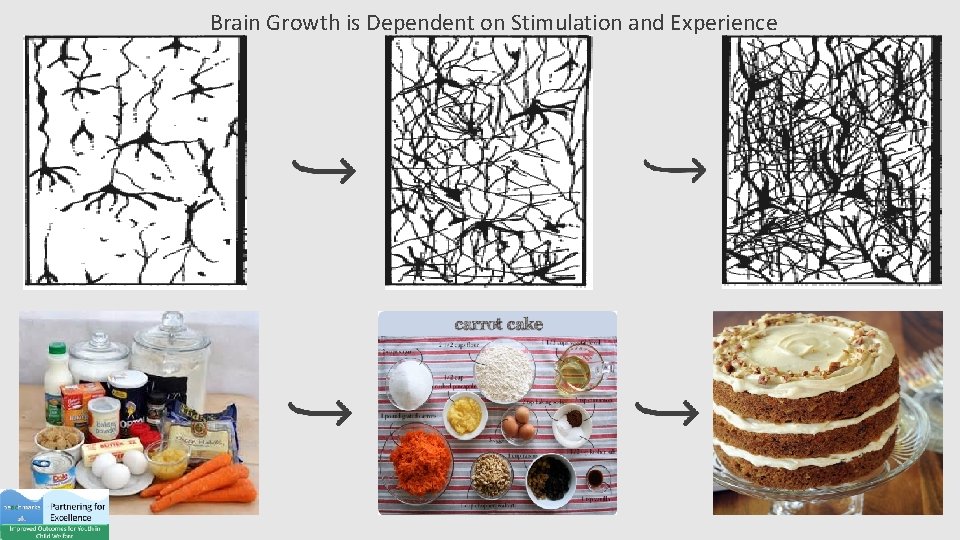
Brain Growth is Dependent on Stimulation and Experience
Experience Grows the Brain • Brain Growth is Dependent on Stimulation and Experience • The more an experience is repeated, the stronger the connections become.
Experience Grows the Brain Growth is Dependent on Stimulation and Experience
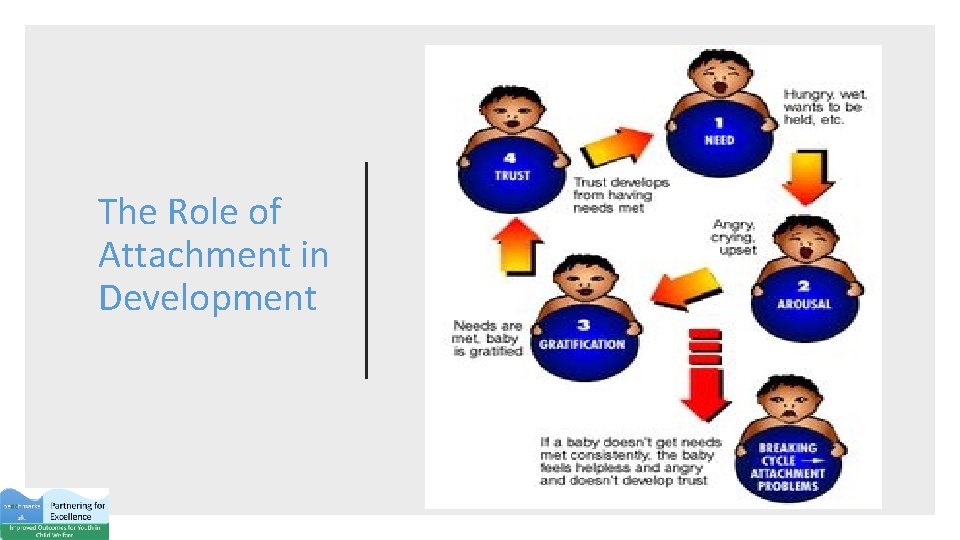
The Role of Attachment in Development
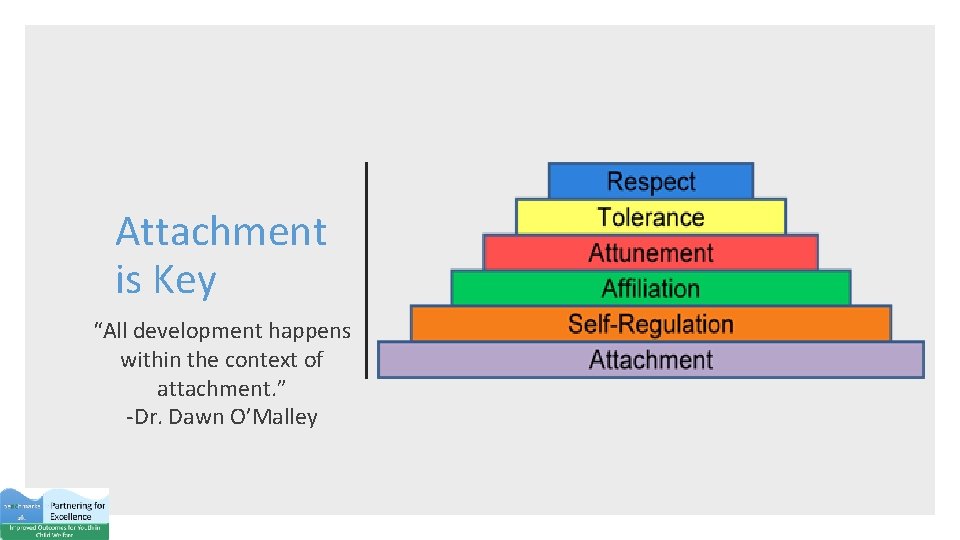
Attachment is Key “All development happens within the context of attachment. ” -Dr. Dawn O’Malley
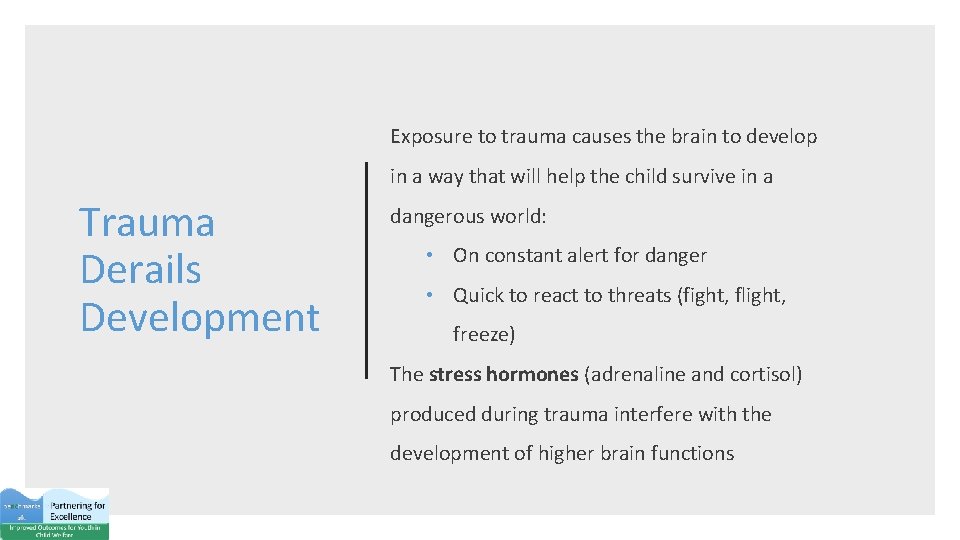
Exposure to trauma causes the brain to develop in a way that will help the child survive in a Trauma Derails Development dangerous world: • On constant alert for danger • Quick to react to threats (fight, flight, freeze) The stress hormones (adrenaline and cortisol) produced during trauma interfere with the development of higher brain functions
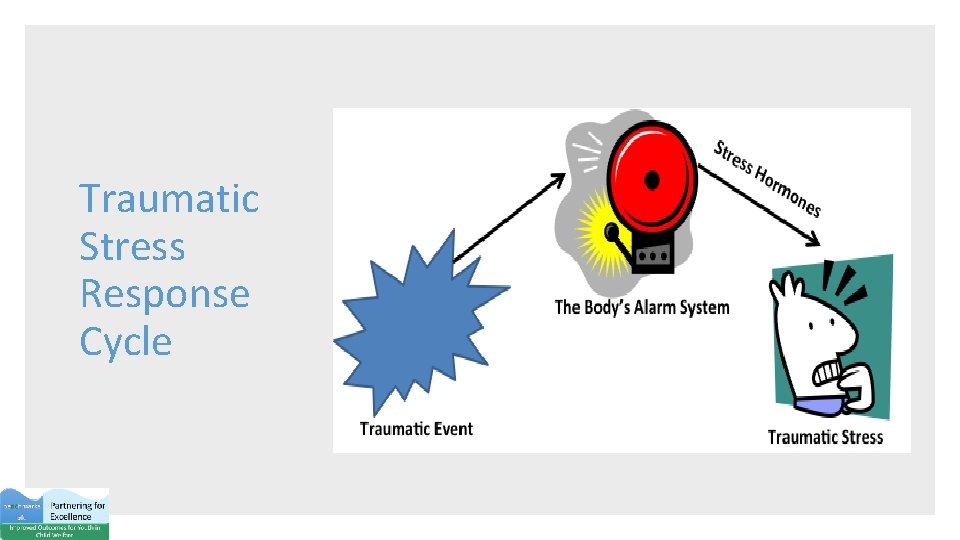
Traumatic Stress Response Cycle
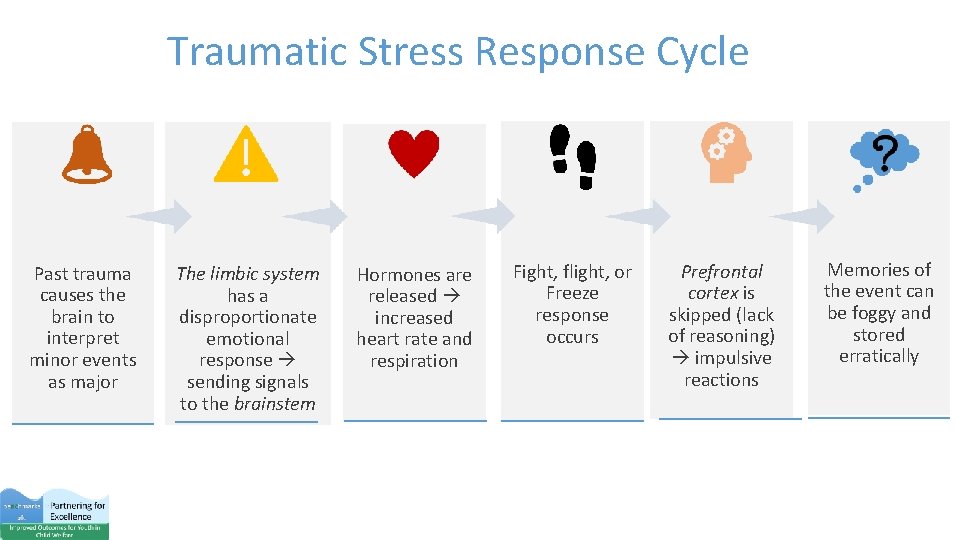
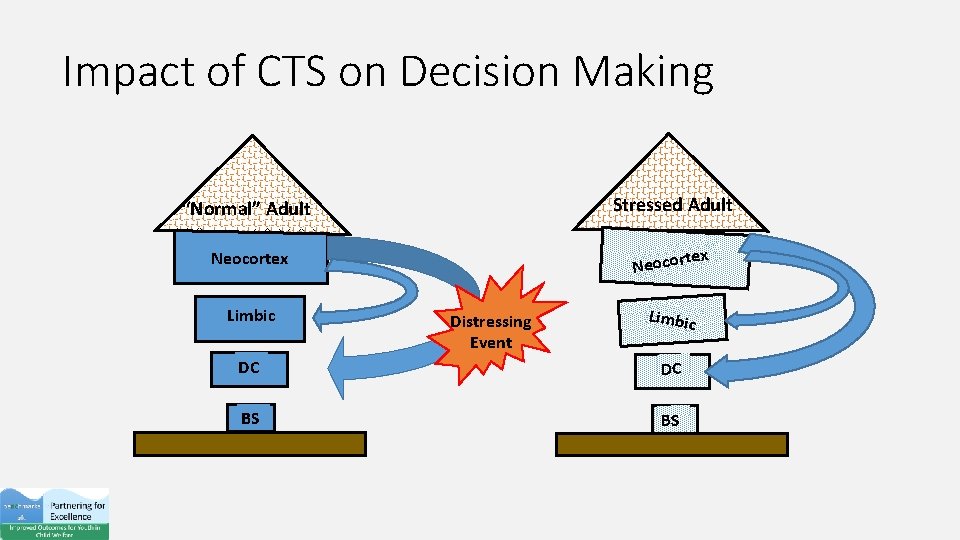
Traumatic Stress Response Cycle Past trauma causes the brain to interpret minor events as major The limbic system has a disproportionate emotional response sending signals to the brainstem Hormones are released increased heart rate and respiration Fight, flight, or Freeze response occurs Prefrontal cortex is skipped (lack of reasoning) impulsive reactions Memories of the event can be foggy and stored erratically
What CTS Looks Like in Adolescence This Photo by Unknown Author is licensed under CC BY-NC-SA
Defining Adolescence • Adolescence typically describes the years between ages 13 and 19. o Physical and psychological changes associated with adolescence can begin between the ages of 9 and 12, know as our preteen or "tween" years.
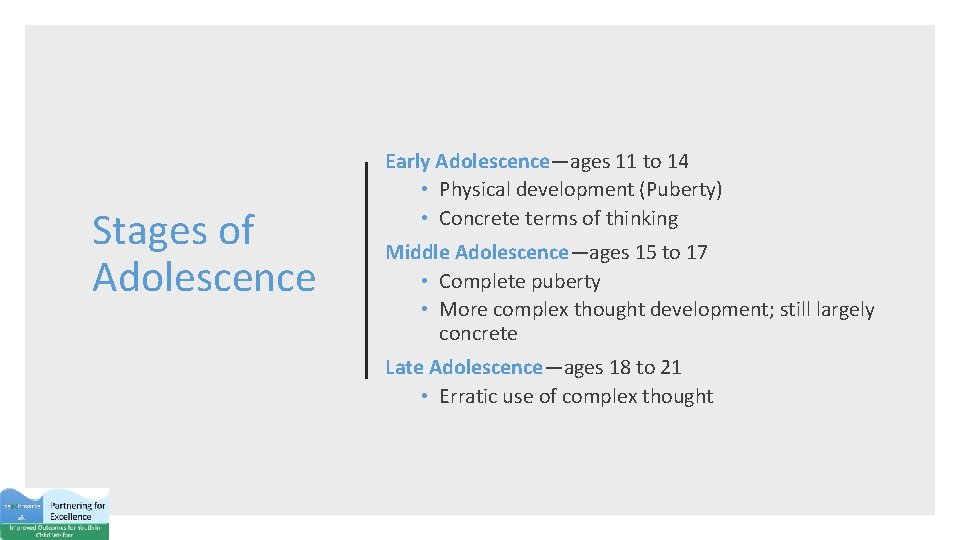
Stages of Adolescence Early Adolescence—ages 11 to 14 • Physical development (Puberty) • Concrete terms of thinking Middle Adolescence—ages 15 to 17 • Complete puberty • More complex thought development; still largely concrete Late Adolescence—ages 18 to 21 • Erratic use of complex thought
Disrupted Development
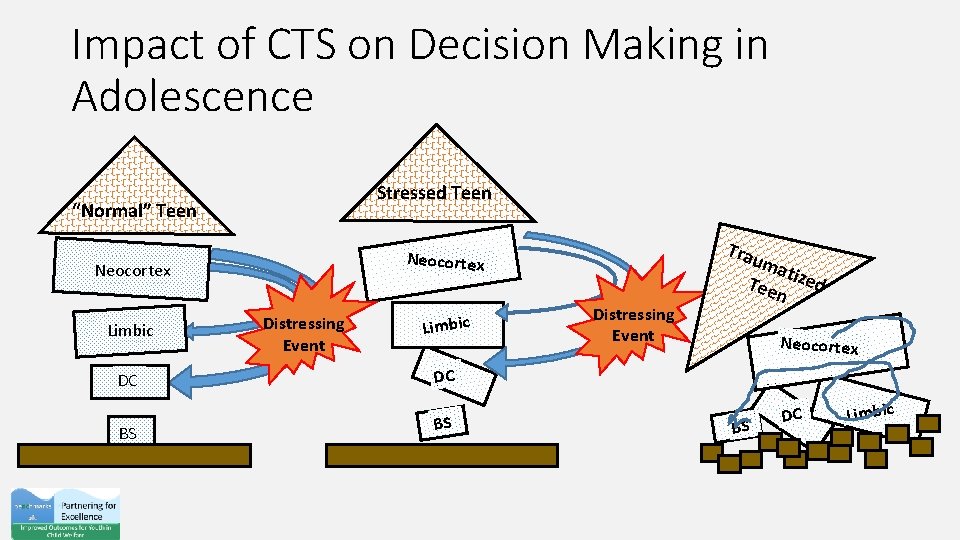
The Results of Disrupted Development In adolescence, trauma can interrupt development of the prefrontal cortex and alter: • Consideration of consequences • Appropriate appraisal of danger and safety • Ability to manage behavior and meet longer-term goals
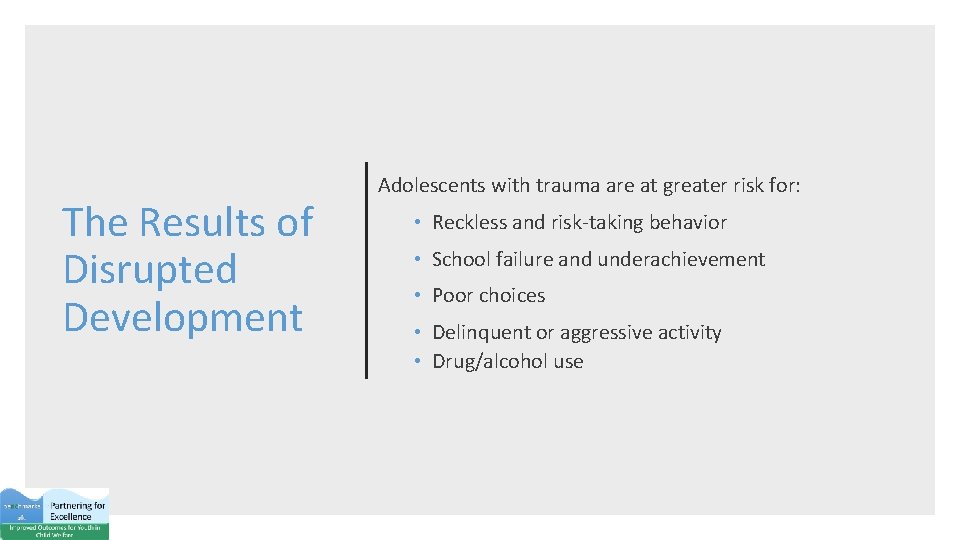
The Results of Disrupted Development Adolescents with trauma are at greater risk for: • Reckless and risk-taking behavior • School failure and underachievement • Poor choices • Delinquent or aggressive activity • Drug/alcohol use
What might disrupted development in adolescence look like?
Impact of CTS on Decision Making Stressed Adult “Normal” Adult tex Neocortex Limbic Neocor Distressing Event Limbic DC DC BS BS
Impact of CTS on Decision Making in Adolescence Stressed Teen “Normal” Teen Neocortex Limbic DC BS Trau Neocortex Distressing Event Limbic Distressing Event mat Tee ized n Neocortex DC BS BS DC Limbic
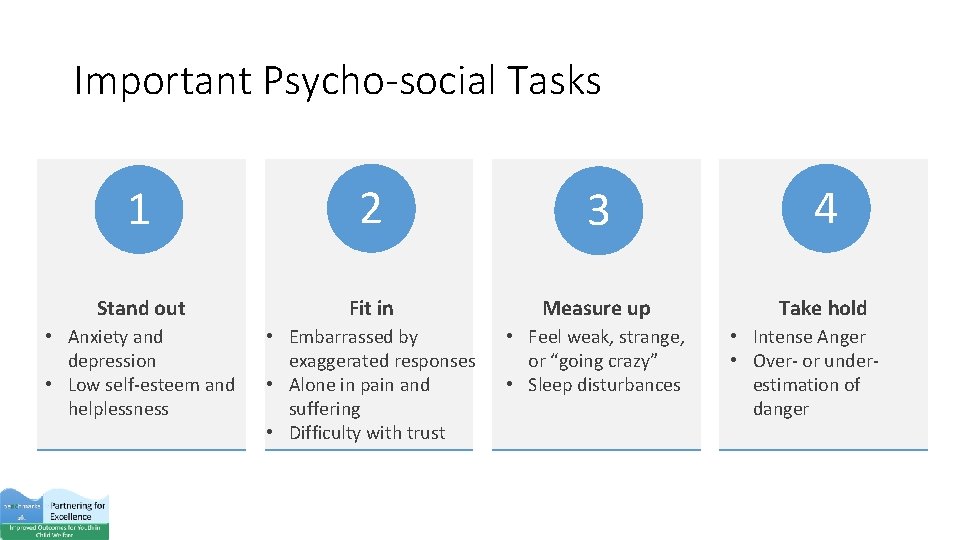
Important Psycho-social Tasks 1 2 3 4 Stand out Fit in Measure up Take hold • Anxiety and depression • Low self-esteem and helplessness • Embarrassed by exaggerated responses • Alone in pain and suffering • Difficulty with trust • Feel weak, strange, or “going crazy” • Sleep disturbances • Intense Anger • Over- or underestimation of danger
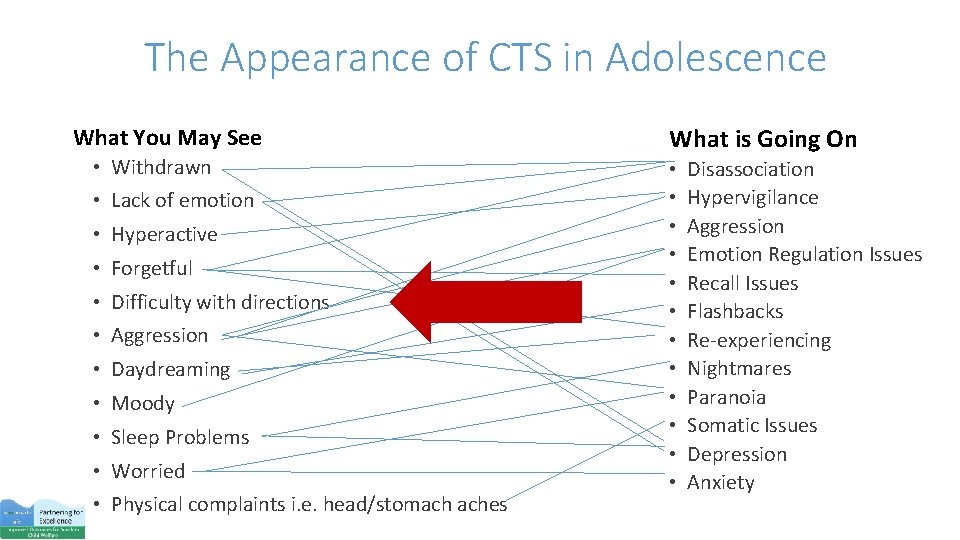
The Appearance of CTS in Adolescence What You May See • Withdrawn • Lack of emotion • Hyperactive • Forgetful • Difficulty with directions • Aggression • Daydreaming • Moody • Sleep Problems • Worried • Physical complaints i. e. head/stomach aches What is Going On • • • Disassociation Hypervigilance Aggression Emotion Regulation Issues Recall Issues Flashbacks Re-experiencing Nightmares Paranoia Somatic Issues Depression Anxiety
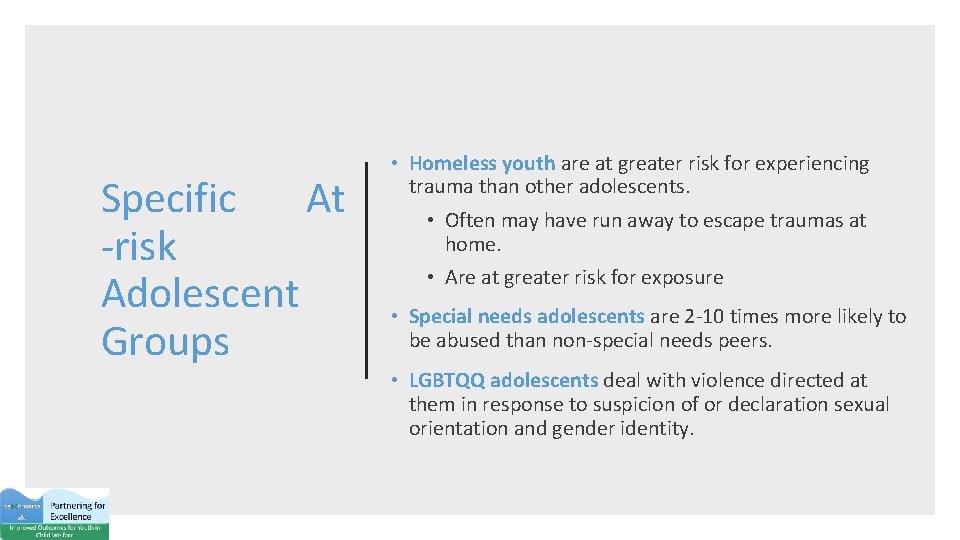
Specific At -risk Adolescent Groups • Homeless youth are at greater risk for experiencing trauma than other adolescents. • Often may have run away to escape traumas at home. • Are at greater risk for exposure • Special needs adolescents are 2 -10 times more likely to be abused than non-special needs peers. • LGBTQQ adolescents deal with violence directed at them in response to suspicion of or declaration sexual orientation and gender identity.
How to Assist Teens Experiencing Traumatic Stress This Photo by Unknown Author is licensed under CC BY
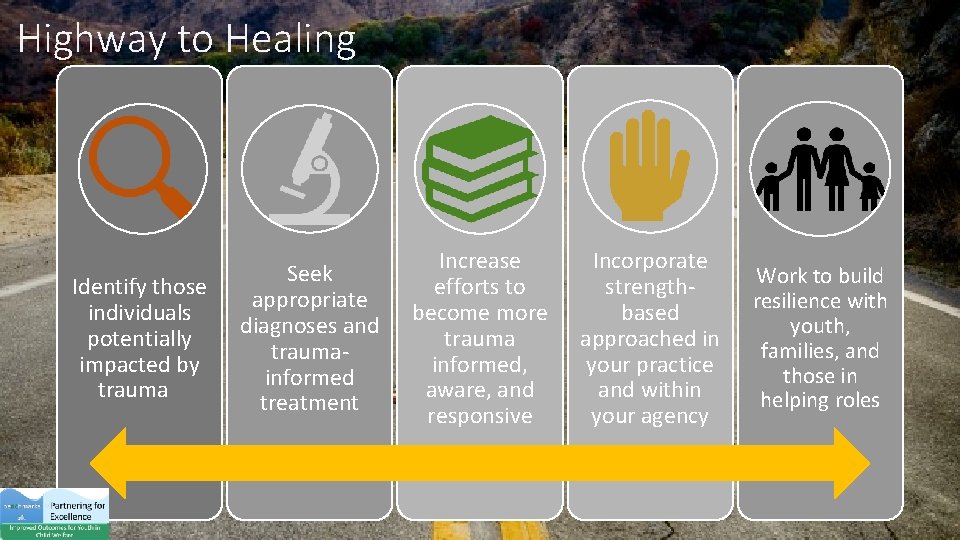
Highway to Healing Identify those individuals potentially impacted by trauma Seek appropriate diagnoses and traumainformed treatment Increase efforts to become more trauma informed, aware, and responsive Incorporate strengthbased approached in your practice and within your agency Work to build resilience with youth, families, and those in helping roles
Kisiel, C. , Fehrenbach, T. , Small, L. , & Lyons, J. S. (2009). Assessment of complex trauma exposure, responses, and service needs among children and adolescents in child welfare. Journal of Child & Adolescent Trauma, 2(3), 143 -160. doi: 10. 1080/19361520903120467 National Child Traumatic Stress Network Complex Trauma Taskforce. (2003). Complex trauma in children and adolescents. Los Angeles, CA & Durham, NC: National Center for Child Traumatic Stress Works Cited Felitti, V. J. , Anda, R. F. , Nordenberg, D. , Williamson, D. F. , Spitz, A. M. , Edwards, V. , &. . . Marks, J. S. (1998). Relationship of childhood abuse and household dysfunction to many of the leading causes of death in adults: The Adverse Childhood Experiences (ACE) Study. American Journal Of Preventive Medicine, 14(4), 245 -258. doi: 10. 1016/S 0749 -3797(98)00017 -8 Arain, M. , Haque, M. , Johal, L. , Mathur, P. , Nel, W. , Rais, A. , … Sharma, S. (2013). Maturation of the adolescent brain. Neuropsychiatric Disease and Treatment, 9, 449– 461. http: //doi. org/10. 2147/NDT. S 39776 Institute of Medicine and National Research Council. 2011. The Science of Adolescent Risk-Taking: Workshop Report. Washington, DC: The National Academies Press. https: //doi. org/10. 17226/12961.
Contact Information • • • Jasmine Mickle Partnering for Excellence Project Coordinator Benchmarks (770) 778 -2631 jmickle@benchmarksnc. org