
Understanding the Hydrologic Cycle Dr Nicolas Zegre Global
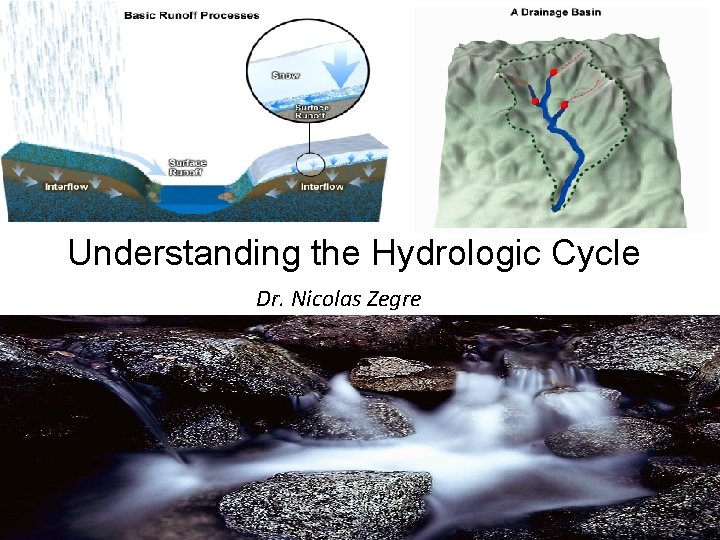
Understanding the Hydrologic Cycle Dr. Nicolas Zegre
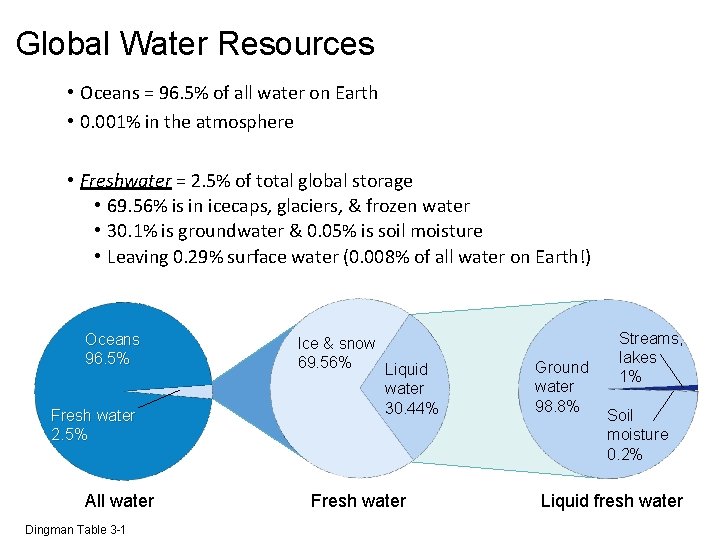
Global Water Resources • Oceans = 96. 5% of all water on Earth • 0. 001% in the atmosphere • Freshwater = 2. 5% of total global storage • 69. 56% is in icecaps, glaciers, & frozen water • 30. 1% is groundwater & 0. 05% is soil moisture • Leaving 0. 29% surface water (0. 008% of all water on Earth!) Oceans 96. 5% Fresh water 2. 5% All water Dingman Table 3 -1 Ice & snow 69. 56% Liquid water 30. 44% Fresh water Ground water 98. 8% Streams, lakes 1% Soil moisture 0. 2% Liquid fresh water
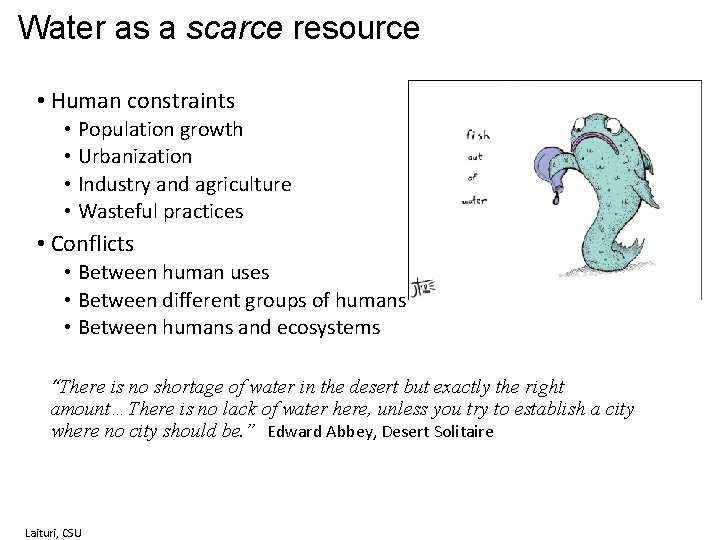
Water as a scarce resource • Human constraints • Population growth • Urbanization • Industry and agriculture • Wasteful practices • Conflicts • Between human uses • Between different groups of humans • Between humans and ecosystems “There is no shortage of water in the desert but exactly the right amount…There is no lack of water here, unless you try to establish a city where no city should be. ” Edward Abbey, Desert Solitaire Laituri, CSU
Where we are headed… • qualitative and quantitative understanding of concepts and physical principles that govern occurrence, distribution, and circulation of water • emphasis on physical understanding and parameterization of hydrologic processes - how does rainfall become streamflow? - how long does water stay in a watershed?
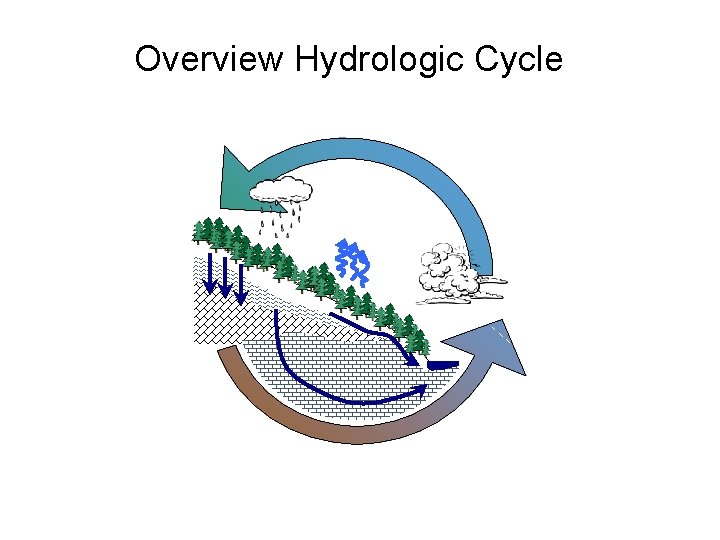
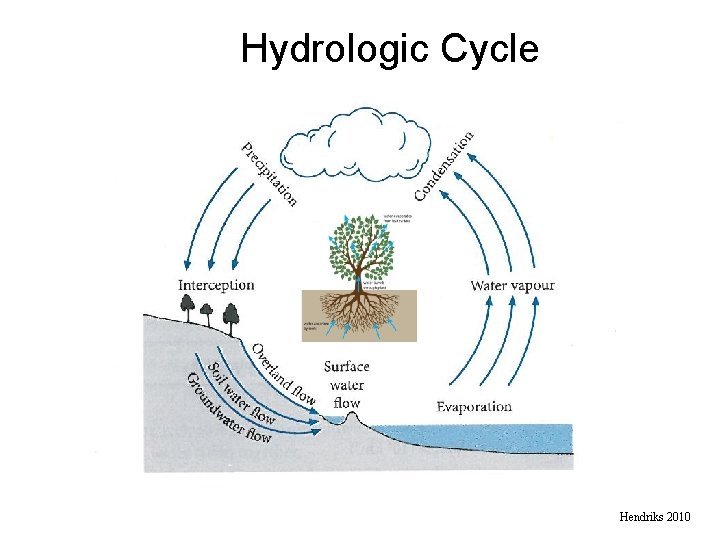
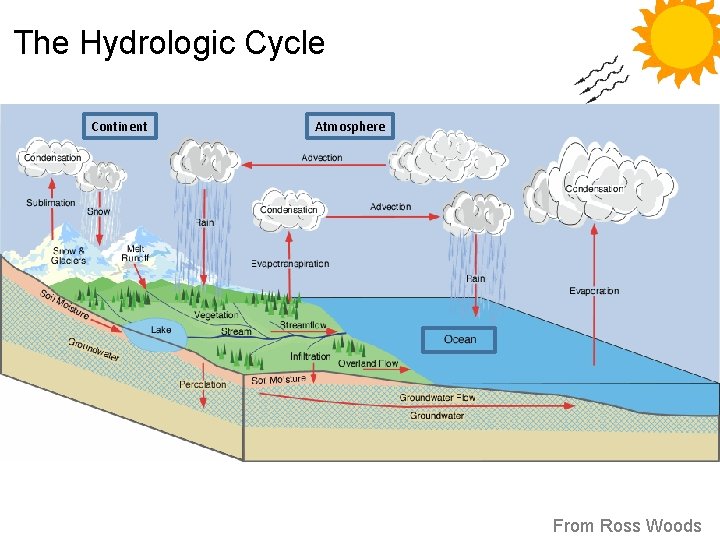
Overview Hydrologic Cycle
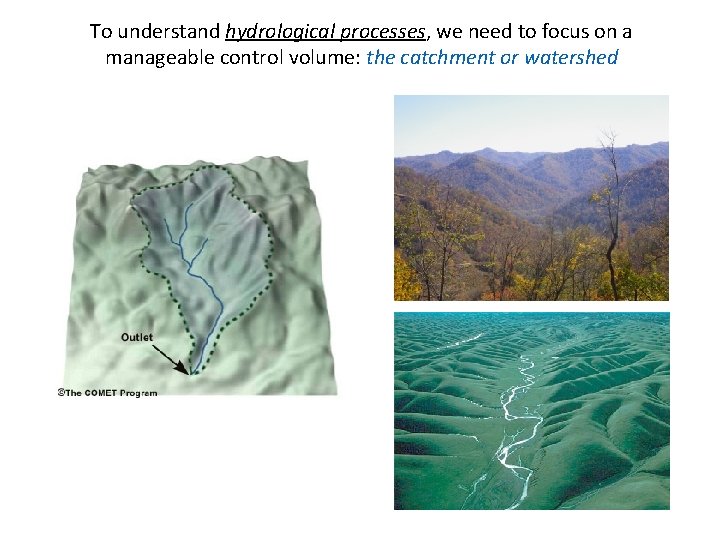
To understand hydrological processes, we need to focus on a manageable control volume: the catchment or watershed
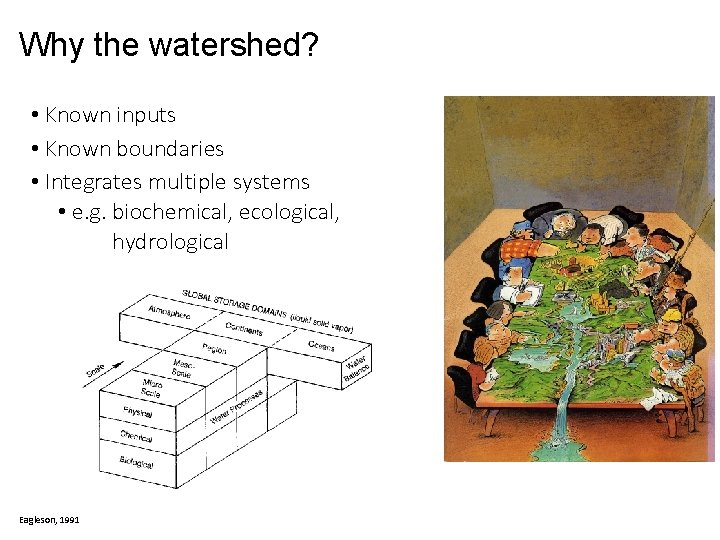
Why the watershed? • Known inputs • Known boundaries • Integrates multiple systems • e. g. biochemical, ecological, hydrological Eagleson, 1991
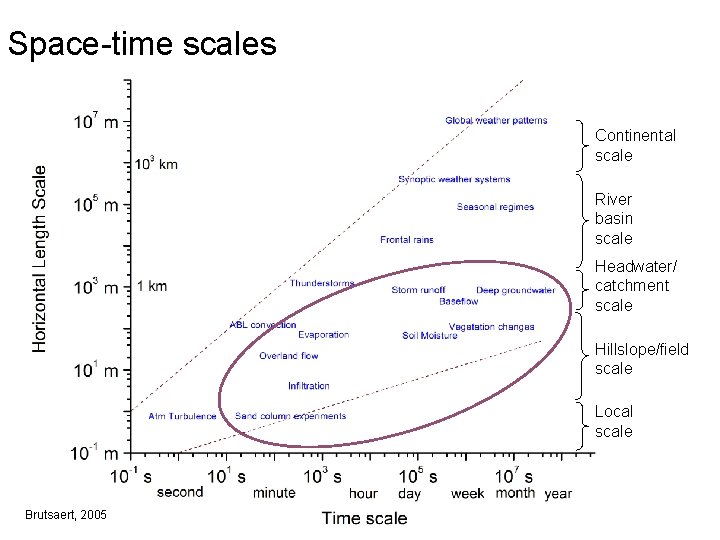
Space-time scales Continental scale River basin scale Headwater/ catchment scale Hillslope/field scale Local scale Brutsaert, 2005
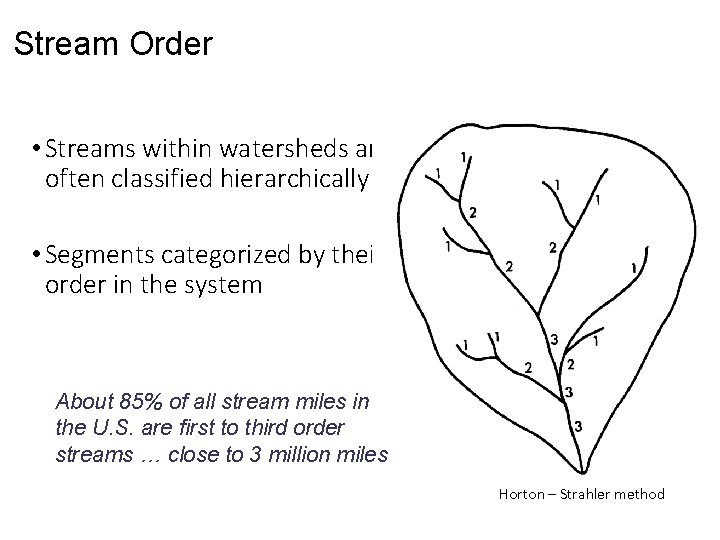
Stream Order • Streams within watersheds are often classified hierarchically • Segments categorized by their order in the system About 85% of all stream miles in the U. S. are first to third order streams … close to 3 million miles Horton – Strahler method

Hydrologic Cycle Hendriks 2010
The Hydrologic Cycle Continent Atmosphere From Ross Woods

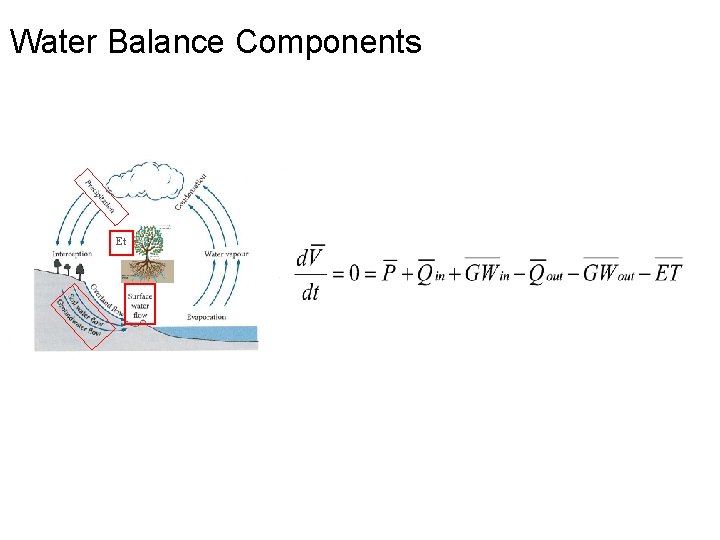
Hydrologic Continuity Equation • General terms: Rate of accumulation of mass or volume in system = Input rate - output rate • Hydrologists (density ~ constant w/ T, thus use V): • Assumptions: • We can measure or estimate all of the components • Storage

Water Balance Components Et
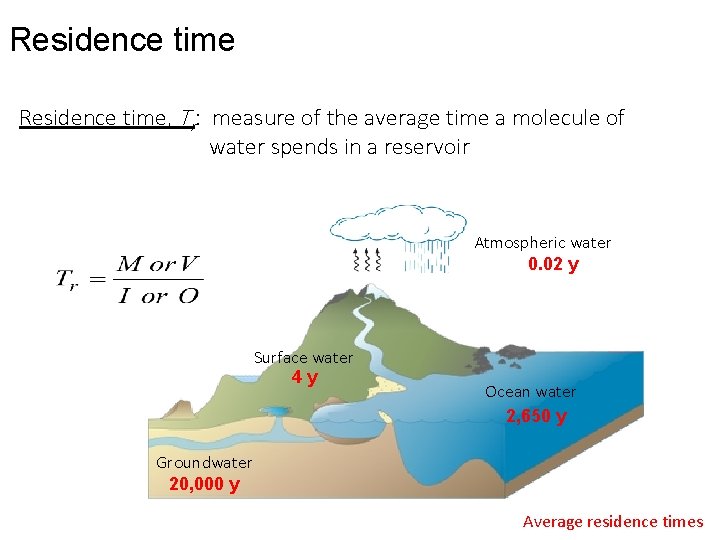
Residence time, Tr: measure of the average time a molecule of water spends in a reservoir Atmospheric water 0. 02 y Surface water 4 y Ocean water 2, 650 y Groundwater 20, 000 y Average residence times
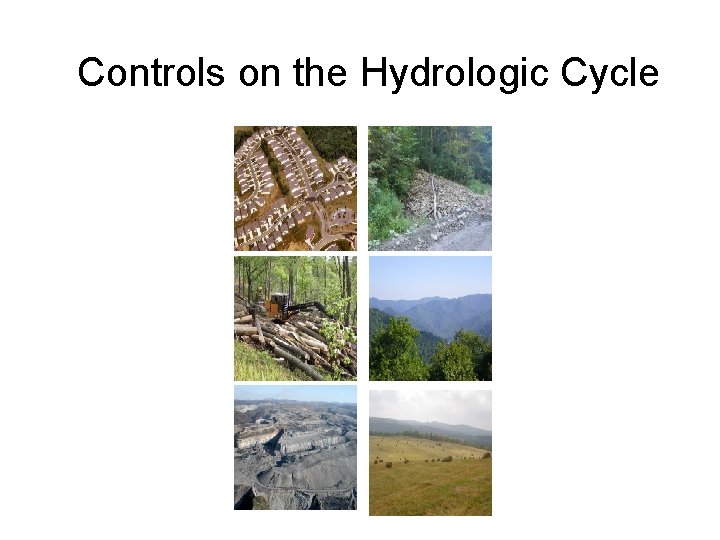
Controls on the Hydrologic Cycle
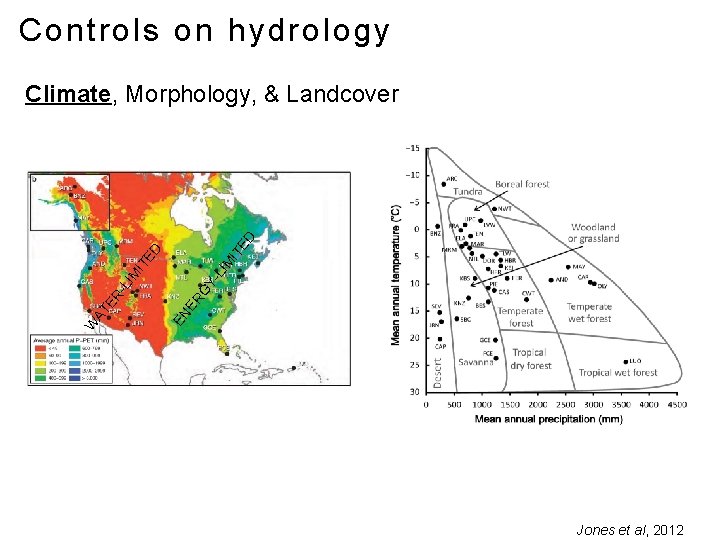
Controls on hydrology YG EN ER W AT ER -L IM IT LI M IT ED ED Climate, Morphology, & Landcover Jones et al, 2012
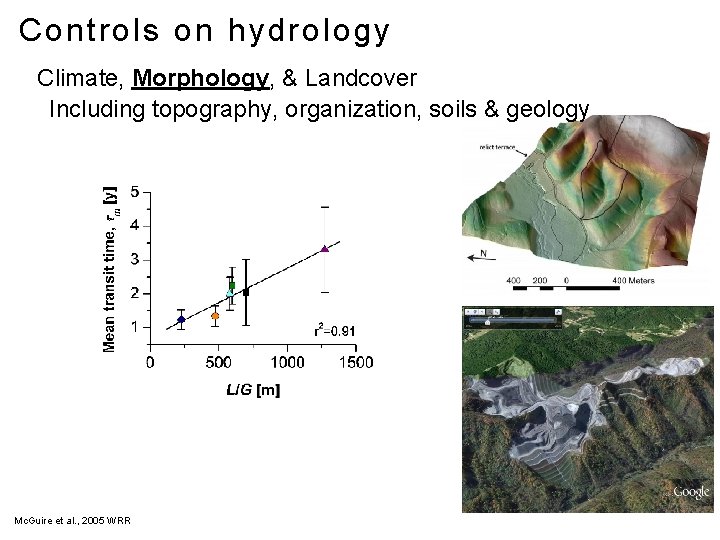
Controls on hydrology Climate, Morphology, & Landcover Including topography, organization, soils & geology Mc. Guire et al. , 2005 WRR
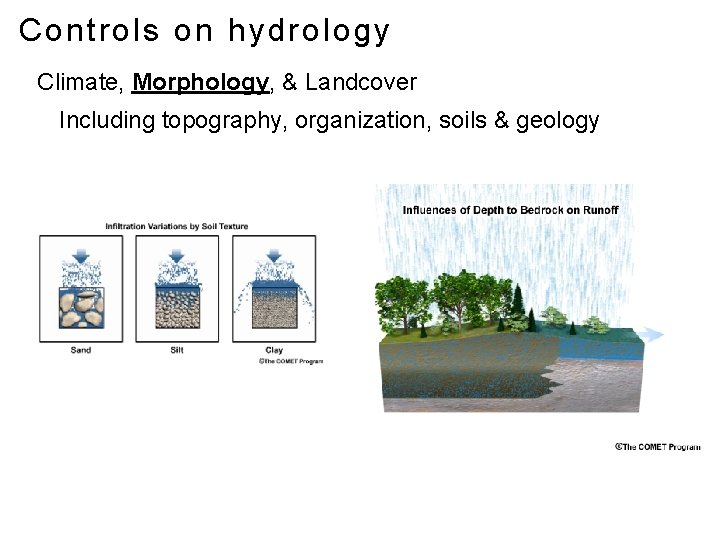
Controls on hydrology Climate, Morphology, & Landcover Including topography, organization, soils & geology
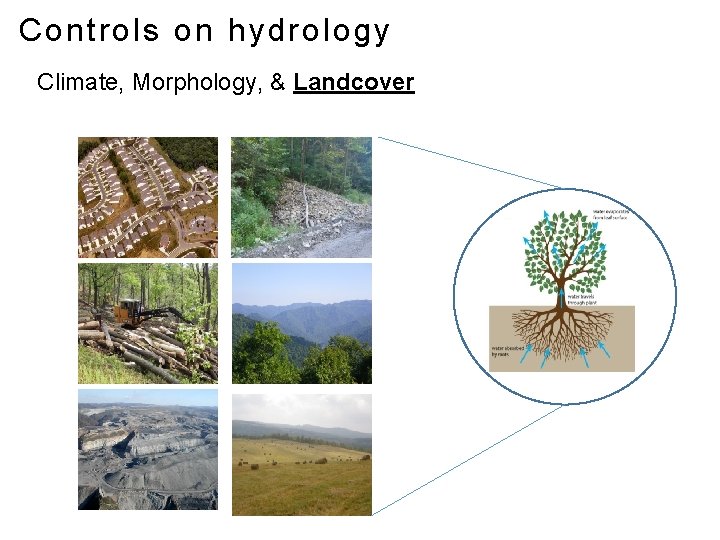
Controls on hydrology Climate, Morphology, & Landcover
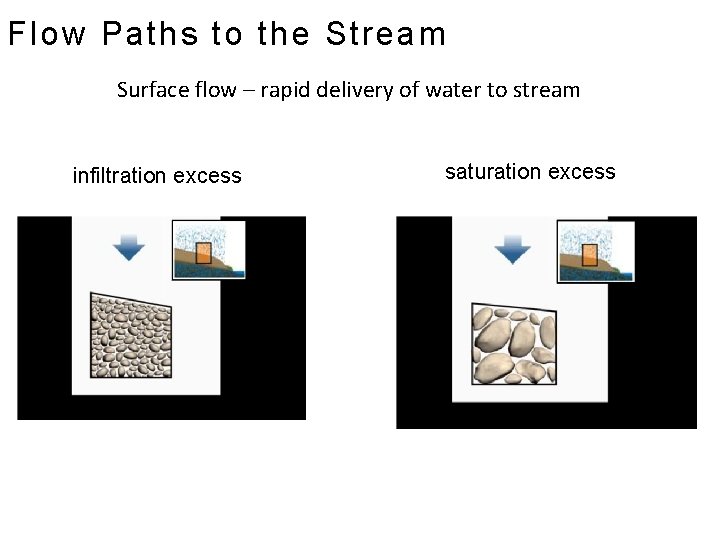
Flow Paths to the Stream Surface flow – rapid delivery of water to stream infiltration excess saturation excess
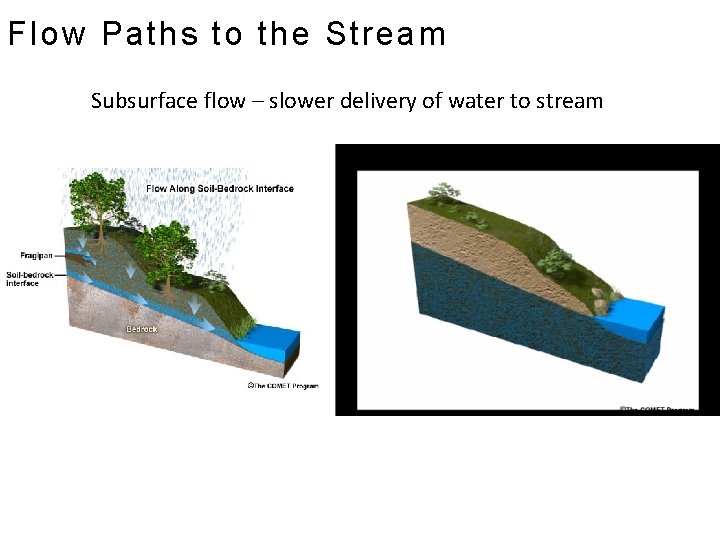
Flow Paths to the Stream Subsurface flow – slower delivery of water to stream
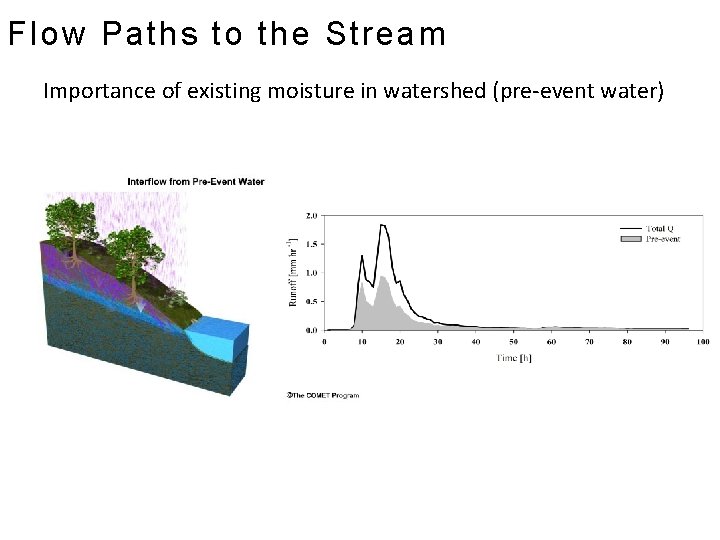
Flow Paths to the Stream Importance of existing moisture in watershed (pre-event water)
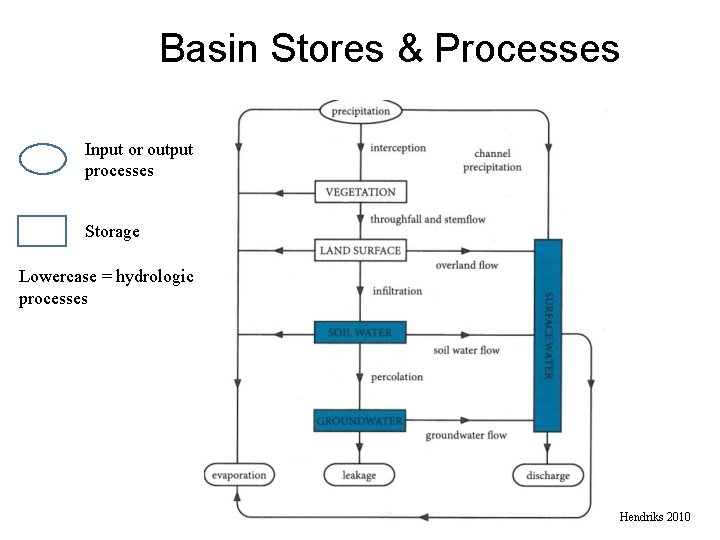
Basin Stores & Processes Input or output processes Storage Lowercase = hydrologic processes Hendriks 2010
- Slides: 25