
Understanding the Foundational Skills Standards for K5 Objectives

Understanding the Foundational Skills Standards for K-5

Objectives What Why How • Identify Foundational Skills applicable to K‐ 5 • Determine the intended instructional outcomes for Foundational Skills Standards • Gain insights from research that supports mastery of Foundational Skills Standards • Acquire ideas for instructional techniques to support teaching Foundational Skills
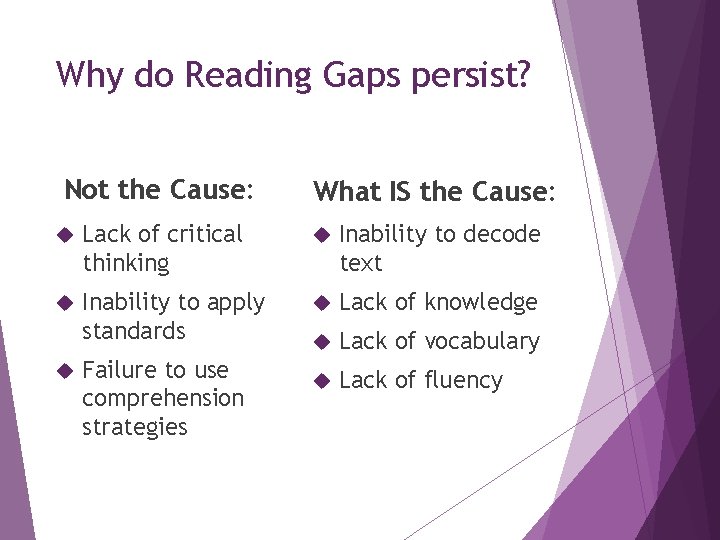
Why do Reading Gaps persist? Not the Cause: What IS the Cause: Lack of critical thinking Inability to decode text Inability to apply standards Lack of knowledge Lack of vocabulary Lack of fluency Failure to use comprehension strategies
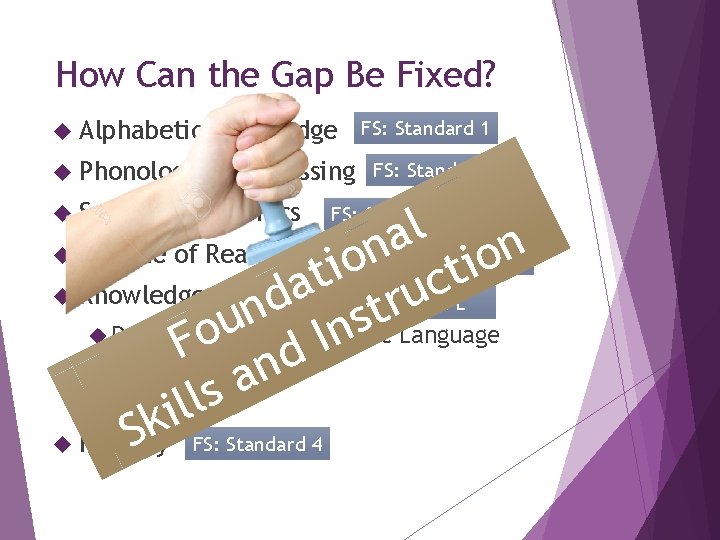
How Can the Gap Be Fixed? Alphabetic Knowledge Phonological Systematic Processing Phonics FS: Standard 1 FS: Standard 2 l a n Volume of Reading RI andn RL: Standard 10 o o cti i t a Knowledge of Words: RI, RL and L u d r n t s u Development of Academic Language n o I F Vocabulary nd a s Syntax l l i k S FS: Standard 4 Fluency FS: Standard 3
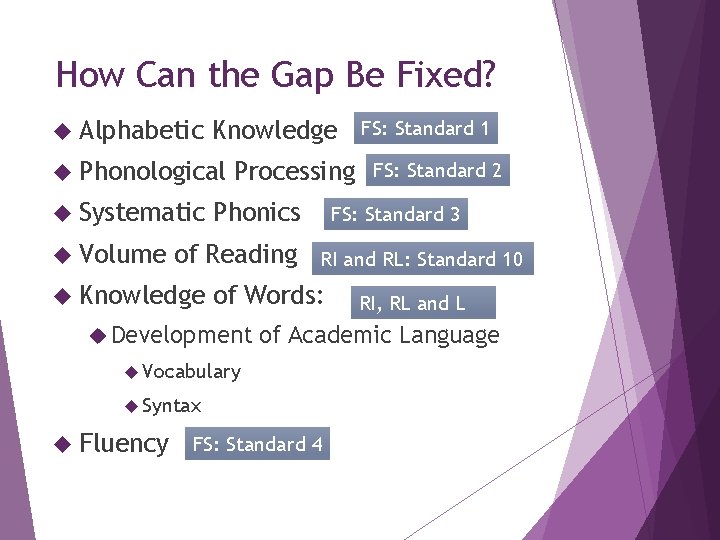
How Can the Gap Be Fixed? Alphabetic Knowledge Phonological Systematic Volume Processing Phonics of Reading Knowledge RI and RL: Standard 10 RI, RL and L of Academic Language Vocabulary Syntax Fluency FS: Standard 2 FS: Standard 3 of Words: Development FS: Standard 1 FS: Standard 4
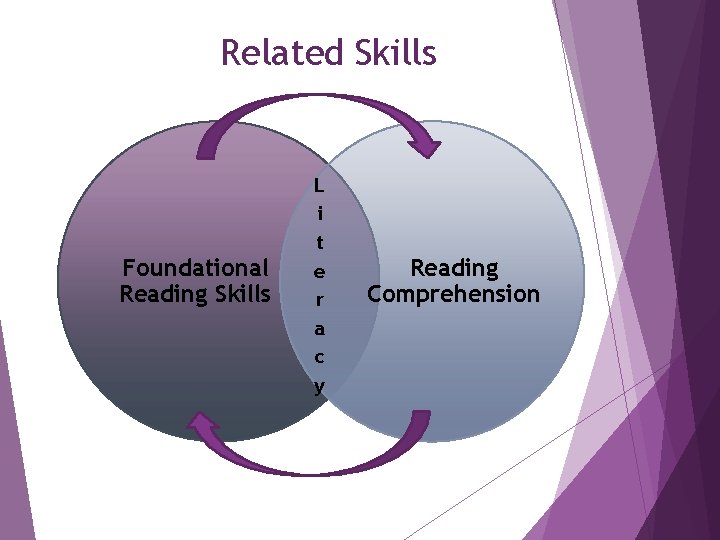
Related Skills Foundational Reading Skills L i t e r a c y L i t e Reading r Comprehension a c y
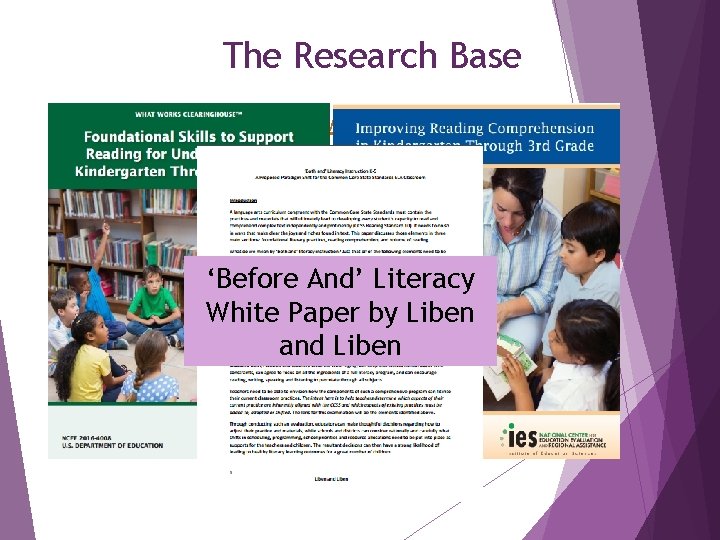
The Research Base • http: //ies. ed. gov/ncee/wwc/Docs/practiceguide /wwc_foundationalreading_070516. pdf • http: //ies. ed. gov/ncee/wwc/Docs/Practice. Guide /readingcomp_pg_092810. pdf ‘Before And’ Literacy Companions • http: //achievethecore. org/content/upload/Both White Paper by Liben %20 And%20 Literacy%20 Instruction%20 K‐ and Liben 5%20%20 A%20 Proposed%20 Paradigm%20 Shift%20 fo r%20 CCSS%20 ELA%20 and%20 Literacy. pdf
The Research Base • http: //ies. ed. gov/ncee/wwc/Docs/practiceguide /wwc_foundationalreading_070516. pdf • http: //ies. ed. gov/ncee/wwc/Docs/Practice. Guide /readingcomp_pg_092810. pdf • http: //achievethecore. org/content/upload/Both %20 And%20 Literacy%20 Instruction%20 K‐ 5%20%20 A%20 Proposed%20 Paradigm%20 Shift%20 fo r%20 CCSS%20 ELA%20 and%20 Literacy. pdf
Four Foundational Skills Standards Print Concepts (RF. 1) K and 1 Phonological Awareness (RF. 2) K and 1 Phonics and Word Recognition (RF. 3) K, 1, 2, 3, 4, and 5 Fluency (RF. 4) K, 1, 2, 3, 4 and 5
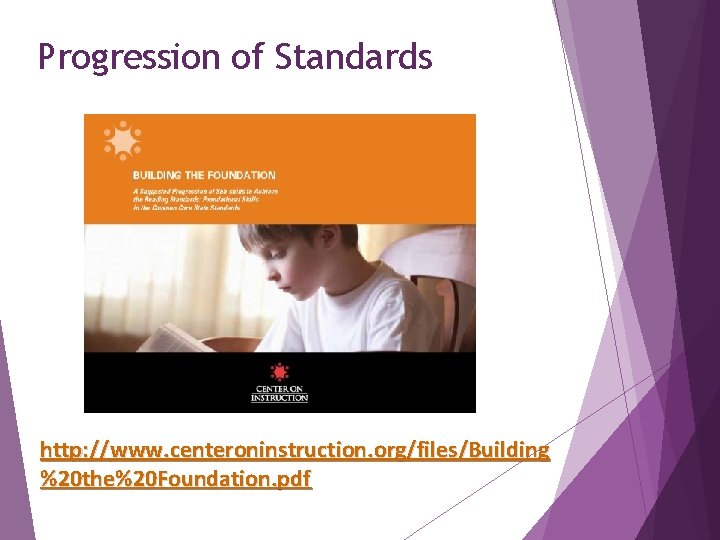
Progression of Standards http: //www. centeroninstruction. org/files/Building %20 the%20 Foundation. pdf
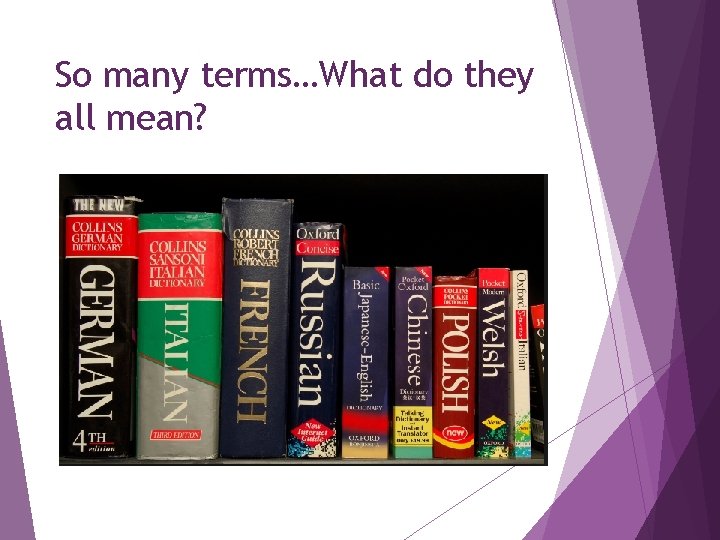
So many terms…What do they all mean?
Standard 1: Print Concepts (K-1) Demonstrate understanding of the organization and basic features of print. Develop awareness that print has meaning and that language is made up of sentences, words, and letters of which the sounds can be manipulated
Traits of Print Concepts Instruction • Print is used for different purposes • There is a relationship between print and speech • There is a difference between letters and words • Words are separated by spaces • There is a difference between words and sentences • Punctuation marks signal the end of a sentence • Books have parts such as a front and back cover, title page, and spine • Stories have a beginning, middle, and end • Text is read from left to right and from top to bottom
Demonstrate understanding of the organization and basic features of print Distinguish among sentences, words, letters and spaces Determine the direction of print (left, right, top, bottom) Book awareness: title, illustrations, print, cover, etc. Demonstrate that words are made of letters Distinguish between illustrations and print Recognize that spoken words are represented in written language by sequences of letters
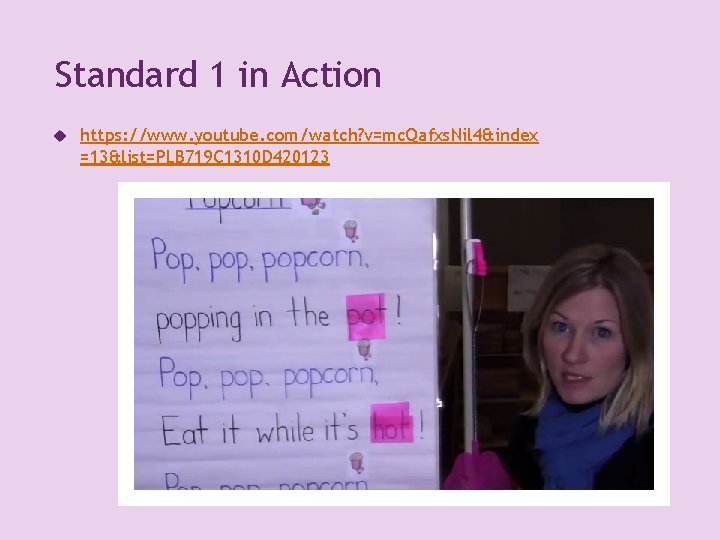
Standard 1 in Action https: //www. youtube. com/watch? v=mc. Qafxs. Nil 4&index =13&list=PLB 719 C 1310 D 420123
Resources for Standard 1: Print Concepts Illinois State Board of Education: By Standard Guidance www. ilwritingmatters. org/foundationalskills/ SEDL: Free Reading: http: //www. sedl. org/cgi‐ bin/mysql/framework 1. cgi? element=Concepts+About+Print&ando r=and&source=&sortby=element http: //www. freereading. net/wiki/Print_Concept_Activities. html
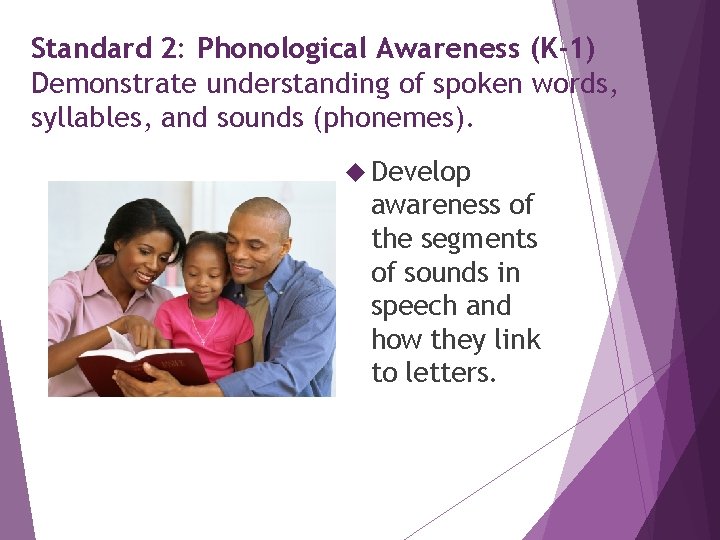
Standard 2: Phonological Awareness (K-1) Demonstrate understanding of spoken words, syllables, and sounds (phonemes). Develop awareness of the segments of sounds in speech and how they link to letters.
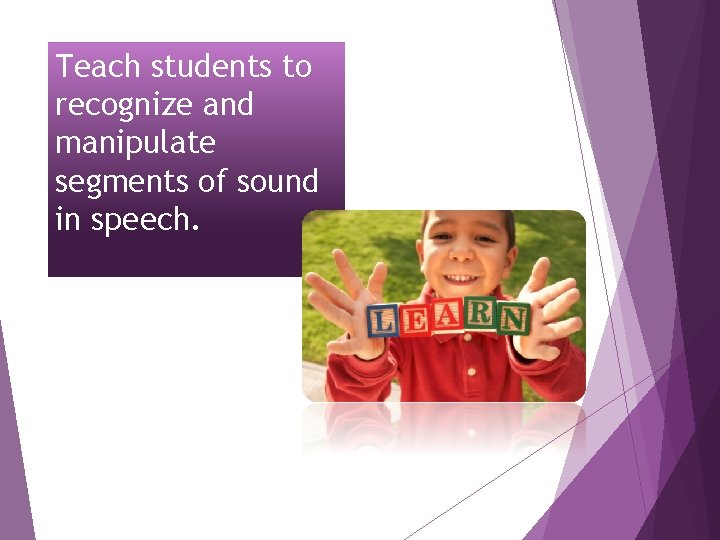
Teach students to recognize and manipulate segments of sound in speech.
Why Phonemic Awareness Instruction is Vital • Used to hear and manipulate sounds • Used to read in an alphabetic writing system • Fundamental to mapping speech to print • Essential to learning to read in an alphabetic writing system • Strong predictor of children who experience early reading success
Students recognize that words are made up of individual sound units Demonstrate that sentences can be broken into words and then that some words can be broken into smaller words. Demonstrate how words can be broken into syllables. Focus students’ attention on recognizing and manipulating the onsets and rimes. Teach students to isolate and manipulate individual phonemes, the smallest units of sound in a word.
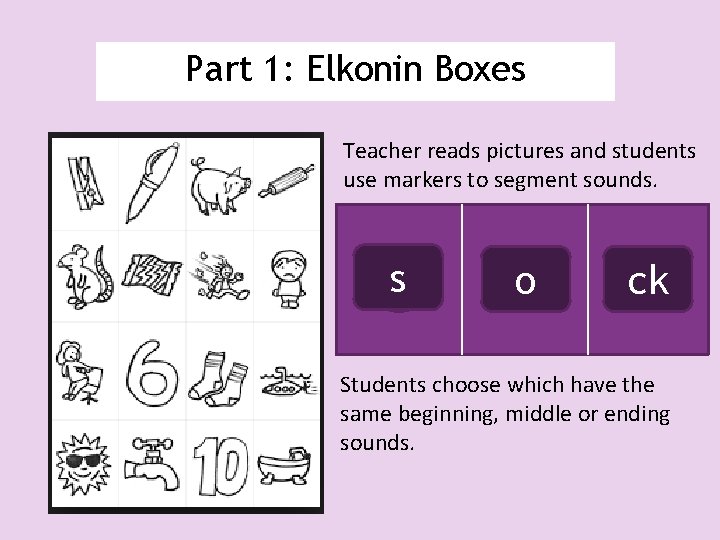
Part 1: Elkonin Boxes Teacher reads pictures and students use markers to segment sounds. s o ck Students choose which have the same beginning, middle or ending sounds.
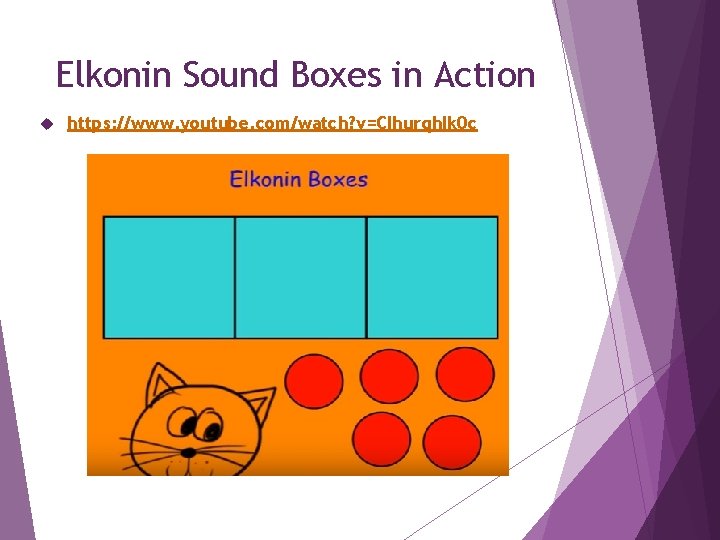
Elkonin Sound Boxes in Action https: //www. youtube. com/watch? v=CIhurqh. Ik 0 c
Teach students letter–sound relations.
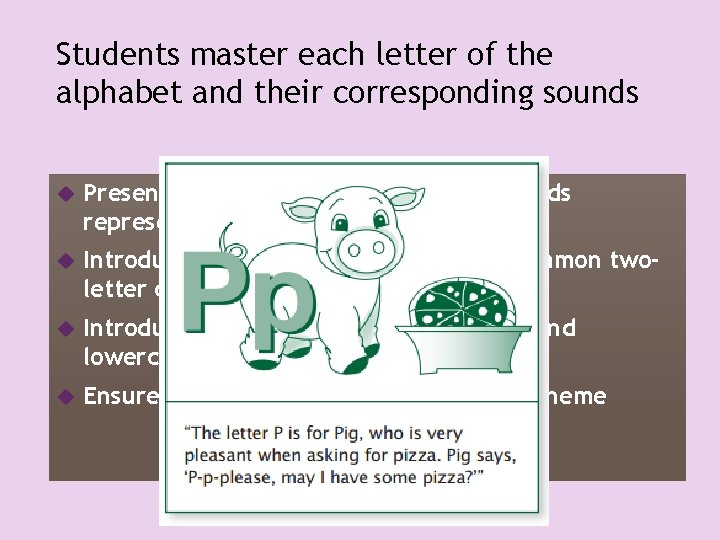
Students master each letter of the alphabet and their corresponding sounds Present consonants and short vowel sounds represented by single letters first Introduce consonant blends next and common twoletter consonant digraphs Introduce the letters in both uppercase and lowercase with memorable pictures Ensure continued practice with each phoneme
Students master each letter of the alphabet and their corresponding sounds Present consonants and short vowel sounds represented by single letters first Introduce consonant blends next and common twoletter consonant digraphs Introduce the letters in both uppercase and lowercase with memorable pictures Ensure continued practice with each phoneme
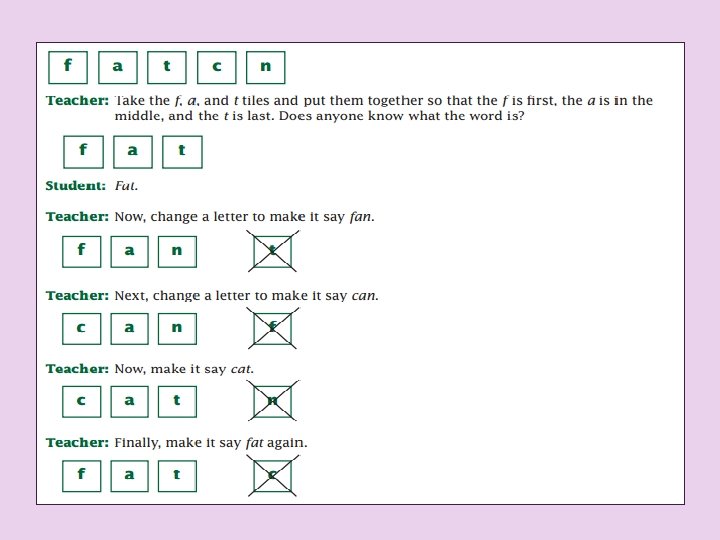
Use word‐building and other activities to link students’ knowledge of letter–sound relationships with phonemic awareness.
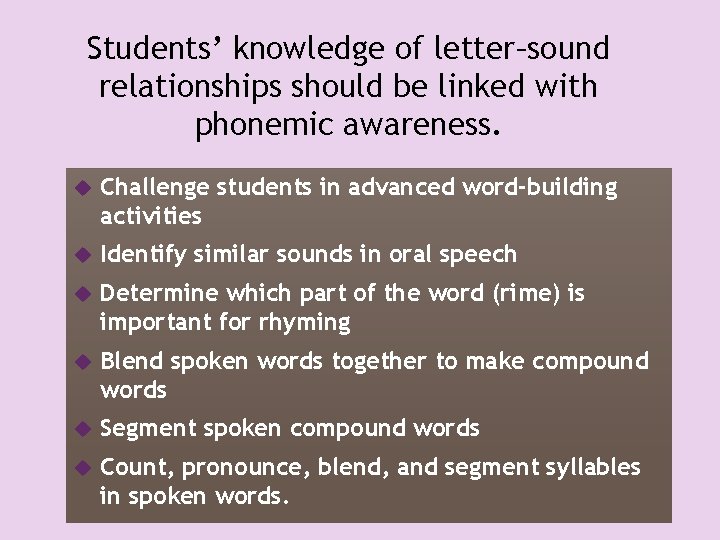
Students’ knowledge of letter–sound relationships should be linked with phonemic awareness. Challenge students in advanced word-building activities Identify similar sounds in oral speech Determine which part of the word (rime) is important for rhyming Blend spoken words together to make compound words Segment spoken compound words Count, pronounce, blend, and segment syllables in spoken words.
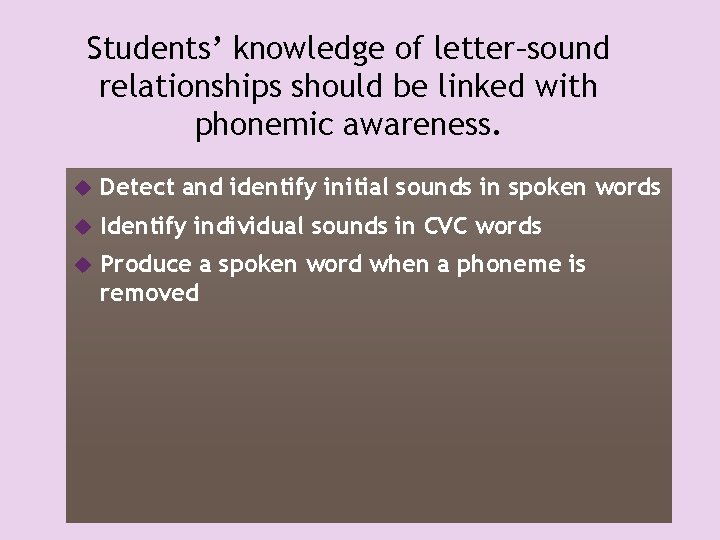
Students’ knowledge of letter–sound relationships should be linked with phonemic awareness. Detect and identify initial sounds in spoken words Identify individual sounds in CVC words Produce a spoken word when a phoneme is removed
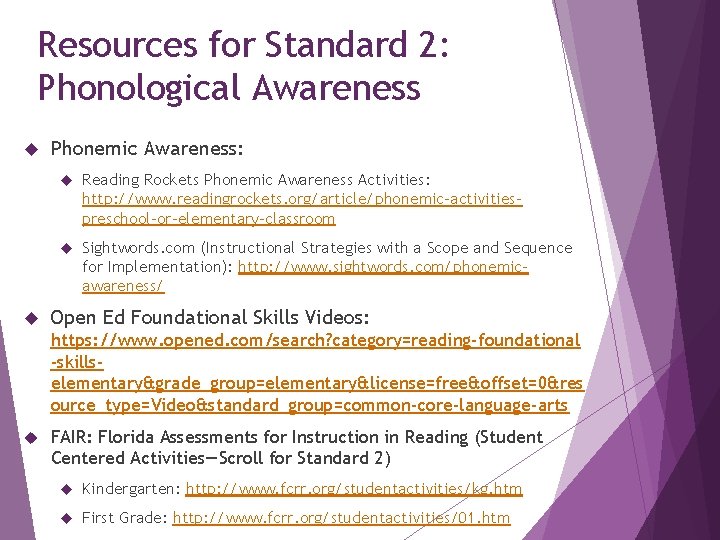
Resources for Standard 2: Phonological Awareness Phonemic Awareness: Reading Rockets Phonemic Awareness Activities: http: //www. readingrockets. org/article/phonemic‐activities‐ preschool‐or‐elementary‐classroom Sightwords. com (Instructional Strategies with a Scope and Sequence for Implementation): http: //www. sightwords. com/phonemic‐ awareness/ Open Ed Foundational Skills Videos: https: //www. opened. com/search? category=reading‐foundational ‐skills‐ elementary&grade_group=elementary&license=free&offset=0&res ource_type=Video&standard_group=common‐core‐language‐arts FAIR: Florida Assessments for Instruction in Reading (Student Centered Activities—Scroll for Standard 2) Kindergarten: http: //www. fcrr. org/studentactivities/kg. htm First Grade: http: //www. fcrr. org/studentactivities/01. htm
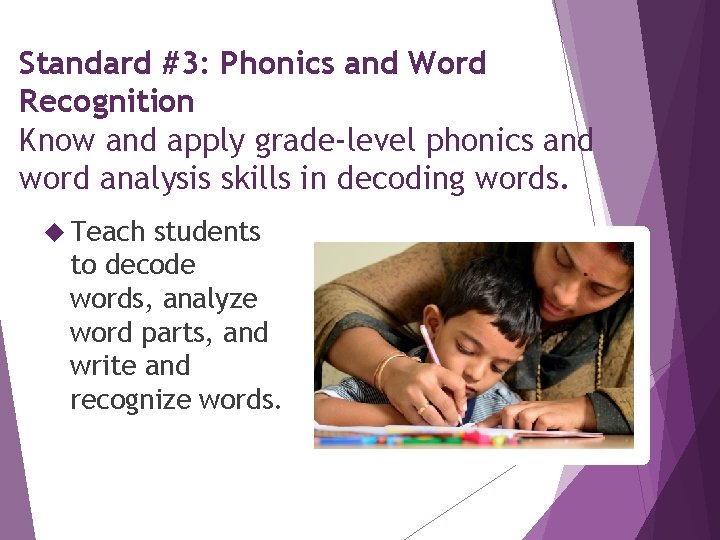
Standard #3: Phonics and Word Recognition Know and apply grade‐level phonics and word analysis skills in decoding words. Teach students to decode words, analyze word parts, and write and recognize words.
Teach students to blend letter sounds and sound–spelling patterns from left to right within a word to produce a recognizable pronunciation.
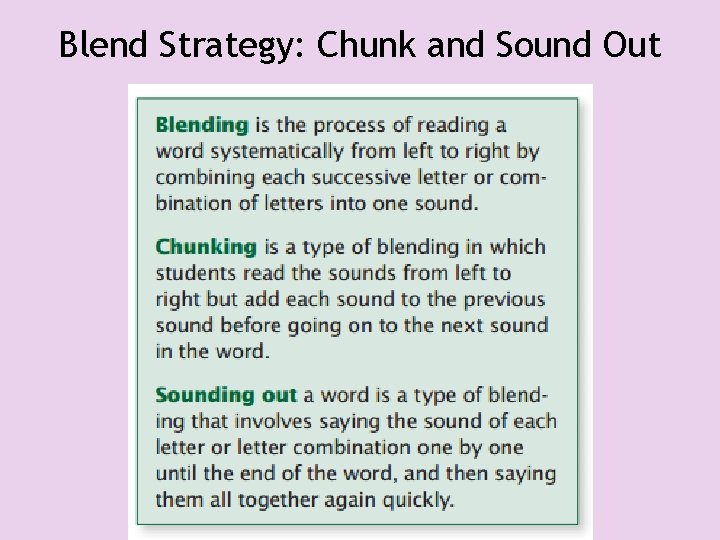
Blend Strategy: Chunk and Sound Out
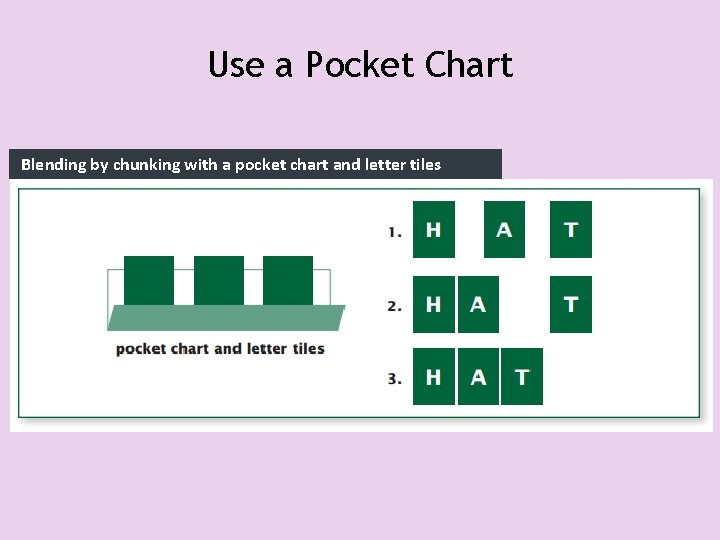
Use a Pocket Chart Blending by chunking with a pocket chart and letter tiles
Instruct students in common sound–spelling patterns.
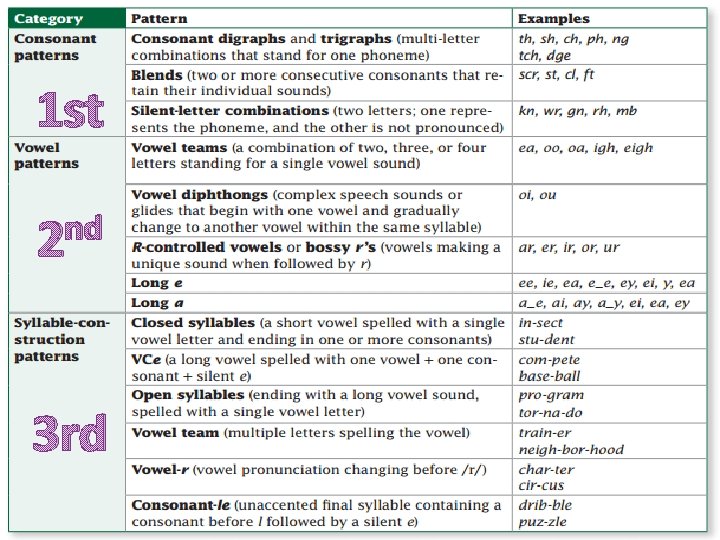
1 st nd 2 3 rd
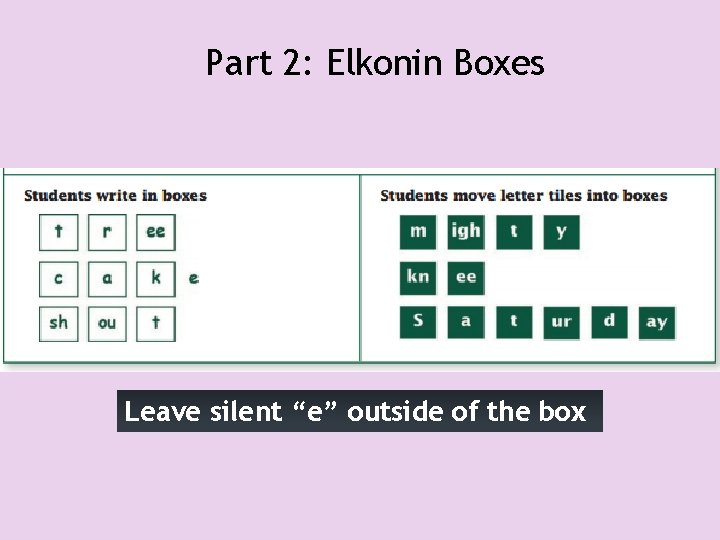
Part 2: Elkonin Boxes Leave silent “e” outside of the box
Teach students to recognize common word parts.
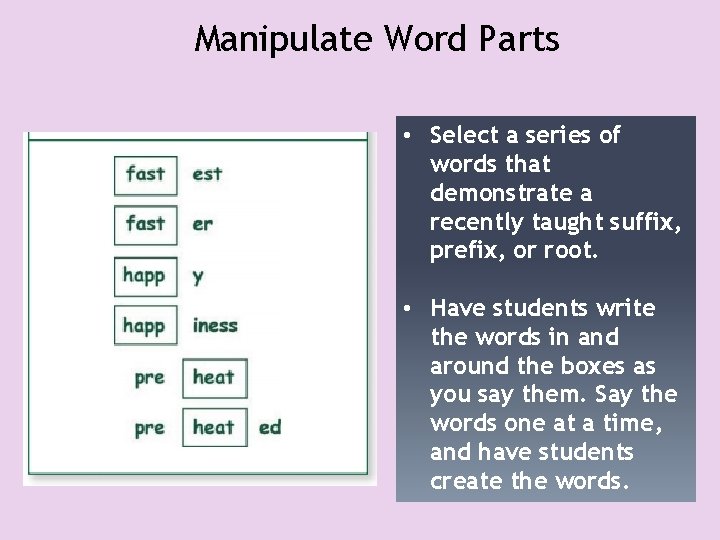
Manipulate Word Parts • Select a series of words that demonstrate a recently taught suffix, prefix, or root. • Have students write the words in and around the boxes as you say them. Say the words one at a time, and have students create the words.
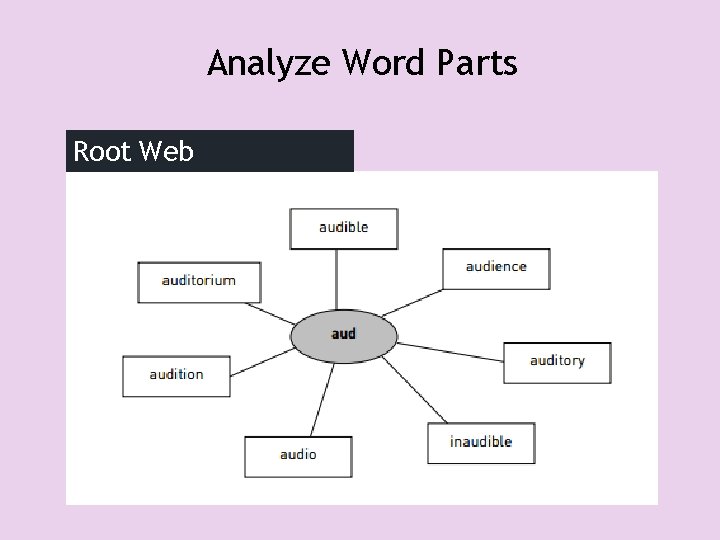
Analyze Word Parts Root Web
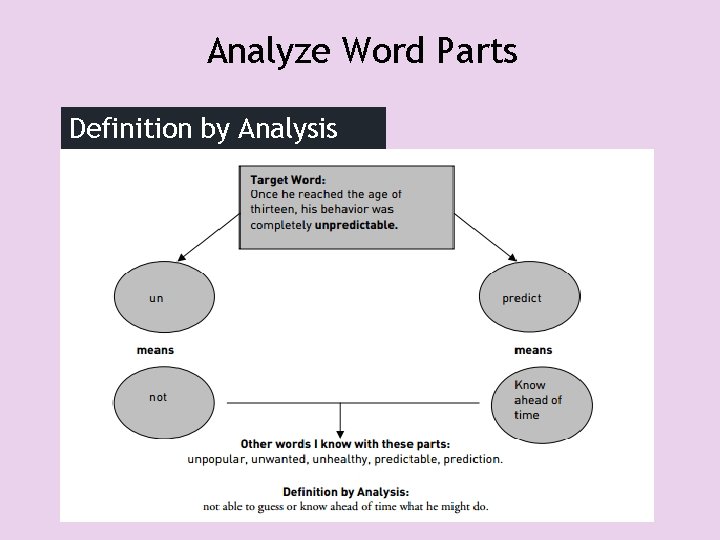
Analyze Word Parts Definition by Analysis
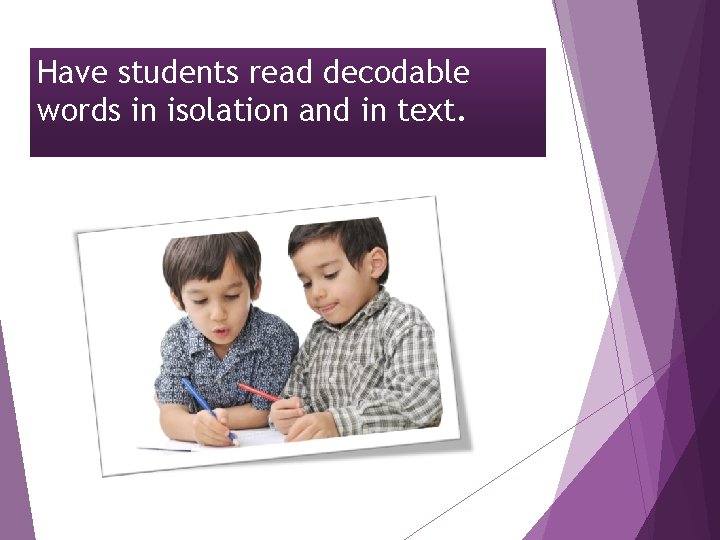
Have students read decodable words in isolation and in text.
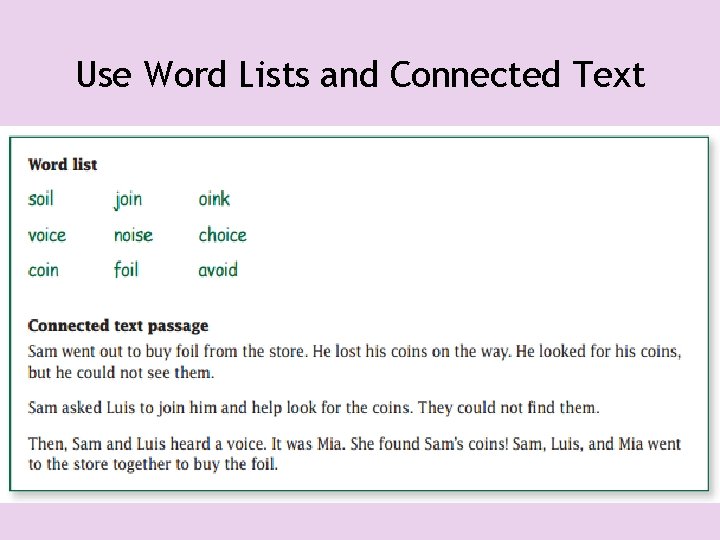
Use Word Lists and Connected Text
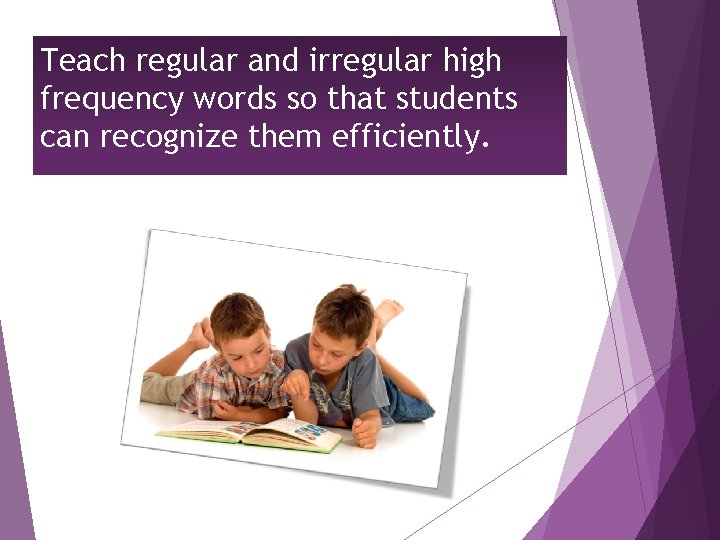
Teach regular and irregular high frequency words so that students can recognize them efficiently.
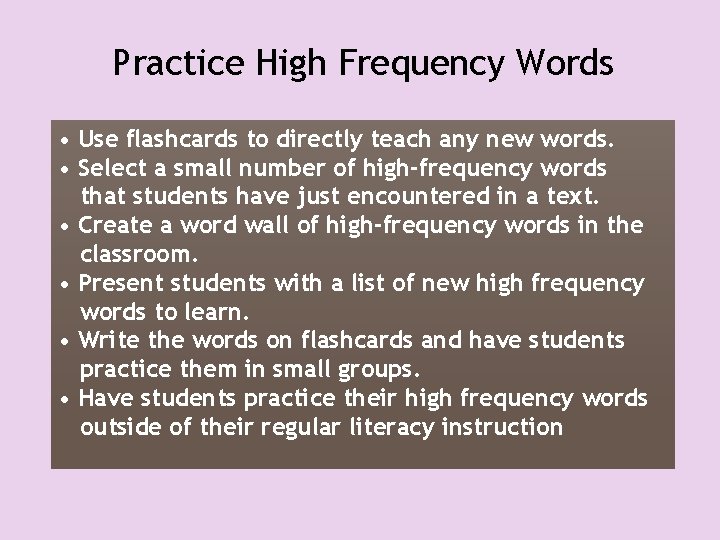
Practice High Frequency Words • Use flashcards to directly teach any new words. • Select a small number of high-frequency words that students have just encountered in a text. • Create a word wall of high-frequency words in the classroom. • Present students with a list of new high frequency words to learn. • Write the words on flashcards and have students practice them in small groups. • Have students practice their high frequency words outside of their regular literacy instruction
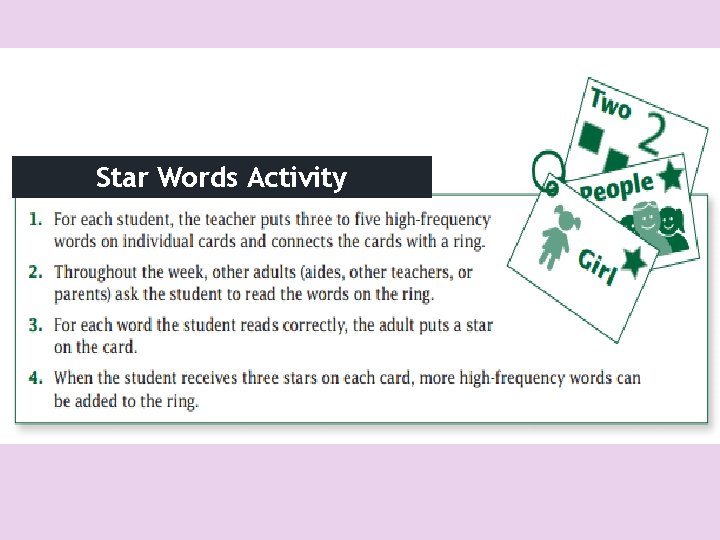
Star Words Activity

Introduce non‐decodable words that are essential to the meaning of the text as whole words.
Introduce Non‐decodable Words Essential to Meaning • Select limited number of words from the text • Words should be repeated • Essential to meaning of text • Expose students to the vocabulary prior to reading text • Use visuals when possible • Practice words prior to exposure to text
Resources for Standard 3: Phonics and Word Recognition FAIR: Florida Assessments for Instruction in Reading (Student Centered Activities—Scroll to Standard 3) Kindergarten: http: //www. fcrr. org/studentactivities/kg. htm First: http: //www. fcrr. org/studentactivities/01. htm Second: http: //www. fcrr. org/studentactivities/02. htm Third – Fifth: http: //www. fcrr. org/studentactivities/3_5. htm PBS Kids: Games offering phonics and word recognition activities http: //pbskids. org/island/preview/games‐phonics. html Reading Rockets: Phonics http: //www. readingrockets. org/article/phonics‐ instruction
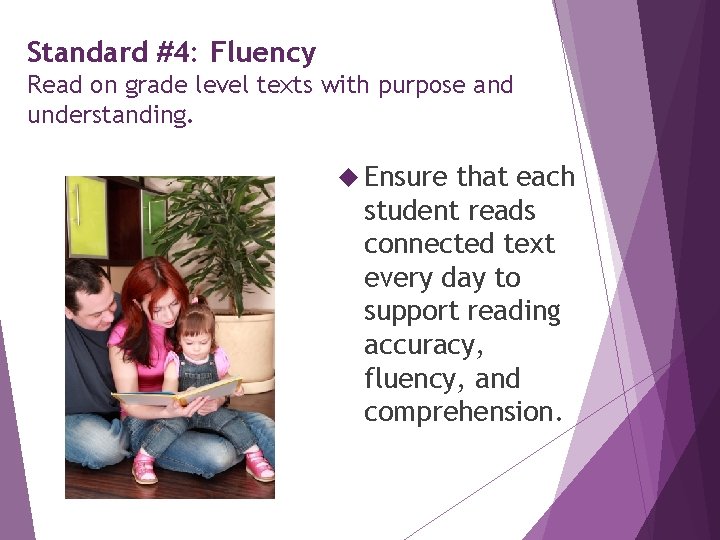
Standard #4: Fluency Read on grade level texts with purpose and understanding. Ensure that each student reads connected text every day to support reading accuracy, fluency, and comprehension.
Students read grade level text with purpose, accuracy, at appropriate rate, and expression Demonstrate an understanding of the different purposes for reading text. Participate in guided/shared reading of different genres of text. Demonstrate an understanding of grade‐ ‐appropriate vocabulary. Make and confirm predictions in texts read aloud by the teacher. Determine genre of text before reading. Determine purpose for reading on level text.
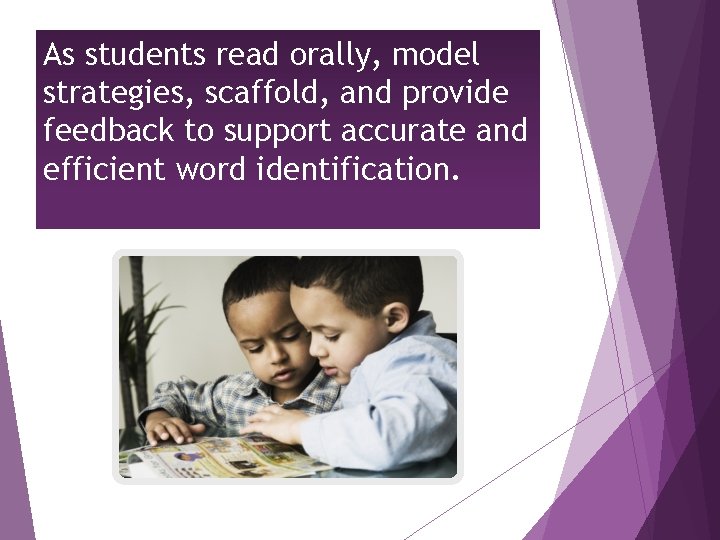
As students read orally, model strategies, scaffold, and provide feedback to support accurate and efficient word identification.
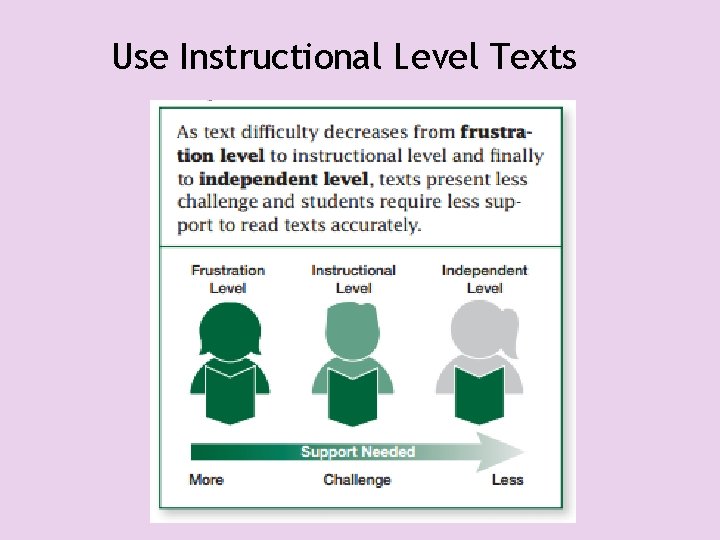
Use Instructional Level Texts
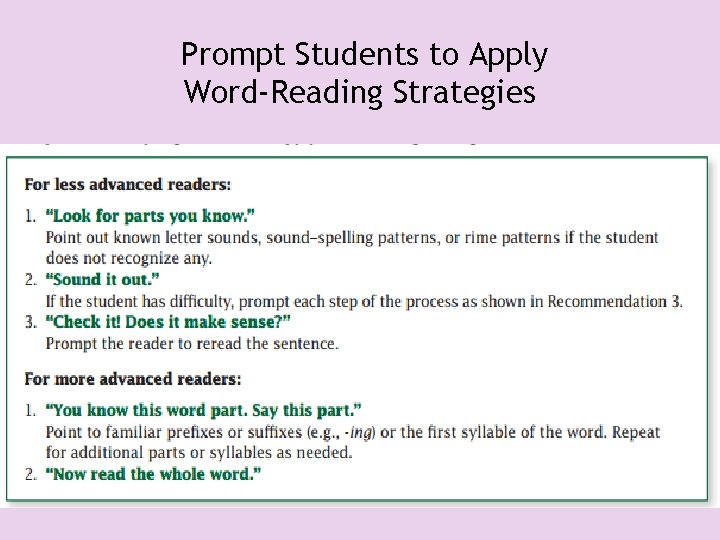
Prompt Students to Apply Word‐Reading Strategies
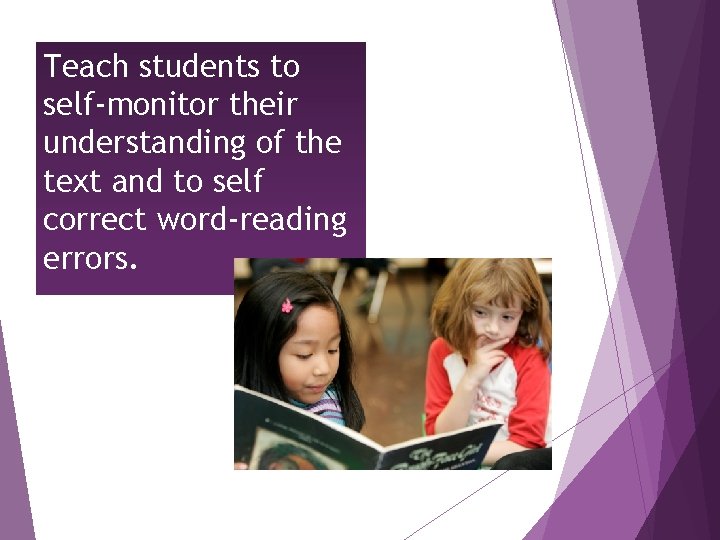
Teach students to self‐monitor their understanding of the text and to self correct word‐reading errors.
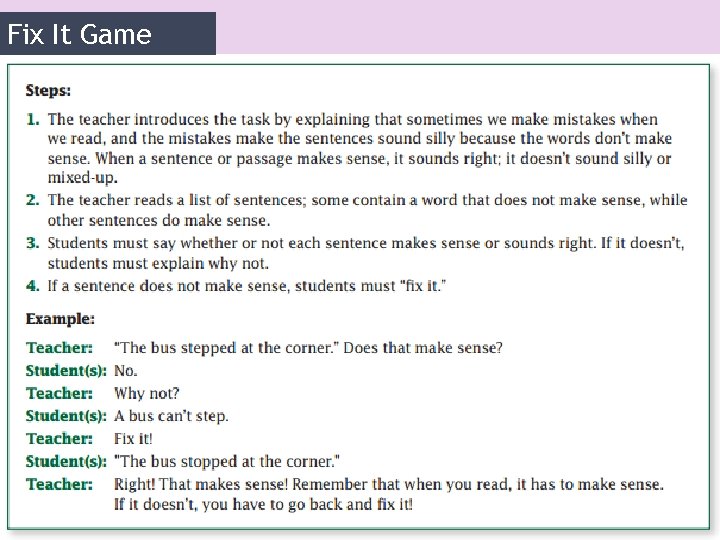
Fix It Game
Provide opportunities for oral reading practice with feedback to develop fluent and accurate reading with expression (prosody).
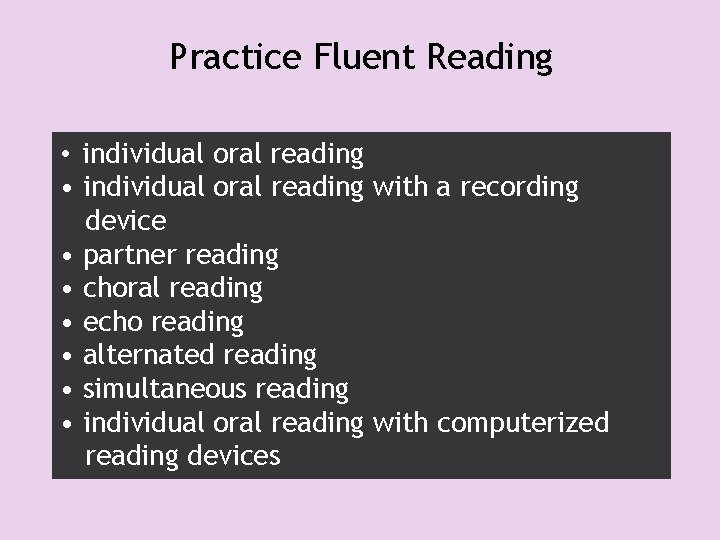
Practice Fluent Reading • individual oral reading with a recording device • partner reading • choral reading • echo reading • alternated reading • simultaneous reading • individual oral reading with computerized reading devices
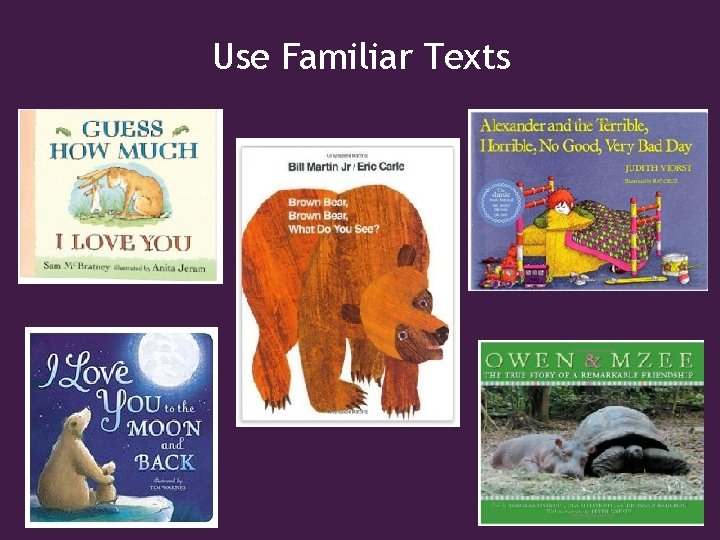
Use Familiar Texts
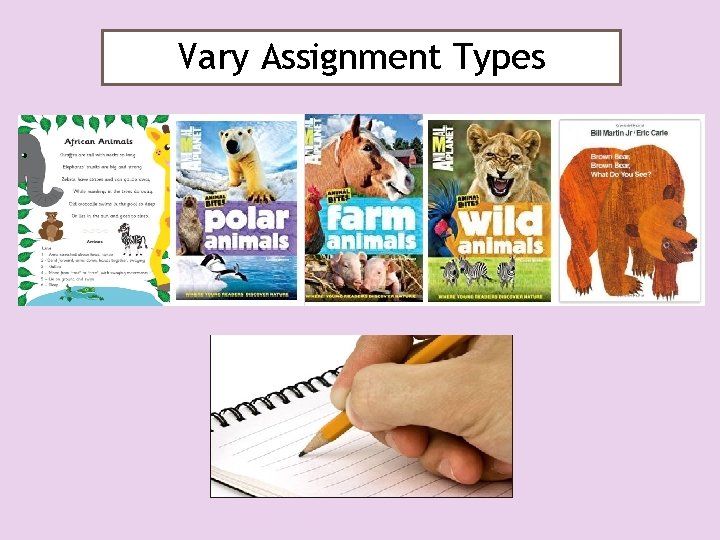
Vary Assignment Types
Resources for Standard 4: Fluency Teachers College of Reading and Writing: https: //vimeo. com/55954406 Reading Rockets: http: //www. readingrockets. org/article/building‐fluency‐ fundamental‐foundational‐skill Student Achievement Partners Grade Level Fluency Resource Packets (2 nd ‐ 12 th): http: //achievethecore. org/index. php/category/411/ela‐ literacy‐lessons? filter_cat=1153
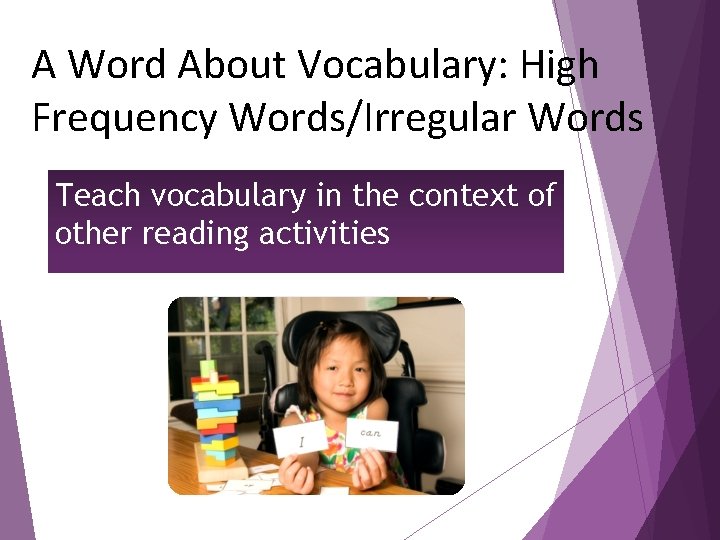
A Word About Vocabulary: High Frequency Words/Irregular Words Teach vocabulary in the context of other reading activities
Provide Extended Opportunities for Deep Understanding • make connections between a new vocabulary word and other known words • relate the word to their own experiences • differentiate between correct and incorrect uses of the word • generate and answer questions that include the word
Resources for Vocabulary Standards Massachusetts Reading Association Research-based Practices in Vocabulary Instruction: An Analysis of What Works in Grades Pre. K-12 http: //massreading. org/wp‐ content/uploads/2015/08/vocabulary‐paper‐ newletterhead. pdf Keys to Literacy: https: //keystoliteracy. com/wp‐ content/uploads/2012/08/effective‐vocabulary‐ instruction. pdf www. Vocabulary. com: sign up for free account and put in words for students to practice http: //www. teachhub. com/teaching‐strategies‐ 5‐ideas ‐instructing‐vocabulary
Elements of High Quality Foundational Skills Program Print Awareness Alphabetic Knowledge Phonological/Phonemic Awareness Alphabetic Principle Decoding Irregular/High Frequency Words Spelling and Writing Reading Practice with Decodable Texts
Foundational Skills Kit www. ilwritingmatters. org/foundationalskills/ Grade Level Strategy Guides
Florida Center on Reading Research A Suggested Progression of Sub Skills for Building Foundational Skills (Center on Instruction) Student Centered Activities • Kindergarten • First • Second • Third-Fifth

Thanks for Attending! Contact Information: Jill Brown jbrown@illinoiscsi. org Kathi Rhodus krhodus@illinoiscsi. org Questions or comments: plslevel 3@gmail. com
- Slides: 68