
Understanding the Elements of Art Principles of Design
- Slides: 13
Understanding the Elements of Art & Principles of Design
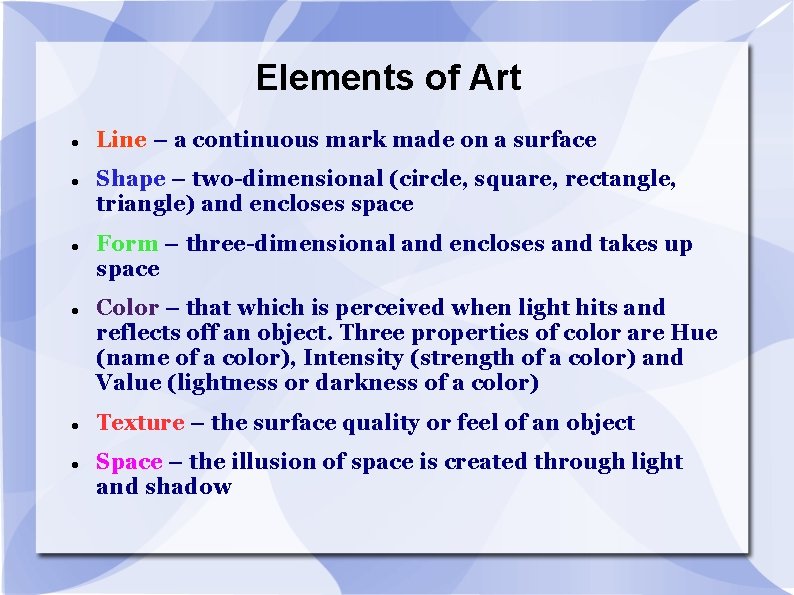
Elements of Art Line – a continuous mark made on a surface Shape – two-dimensional (circle, square, rectangle, triangle) and encloses space Form – three-dimensional and encloses and takes up space Color – that which is perceived when light hits and reflects off an object. Three properties of color are Hue (name of a color), Intensity (strength of a color) and Value (lightness or darkness of a color) Texture – the surface quality or feel of an object Space – the illusion of space is created through light and shadow
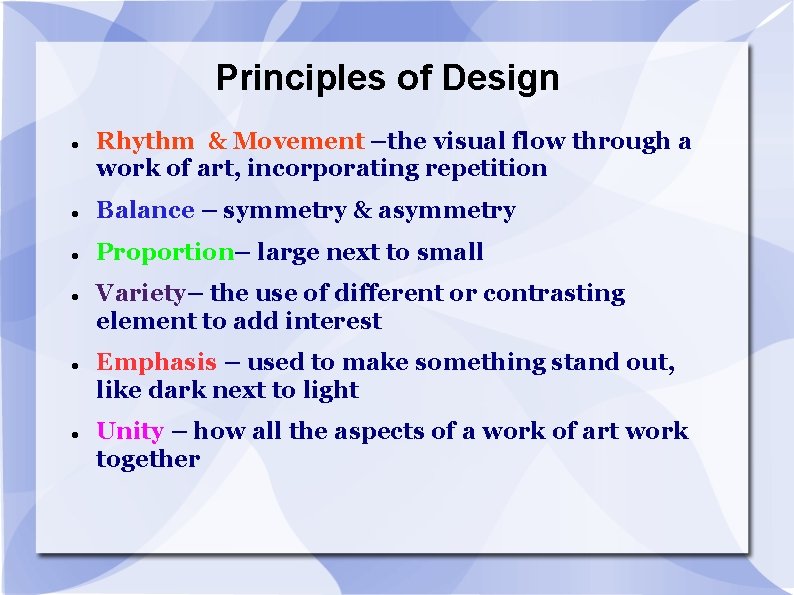
Principles of Design Rhythm & Movement –the visual flow through a work of art, incorporating repetition Balance – symmetry & asymmetry Proportion– large next to small Variety– the use of different or contrasting element to add interest Emphasis – used to make something stand out, like dark next to light Unity – how all the aspects of a work of art work together
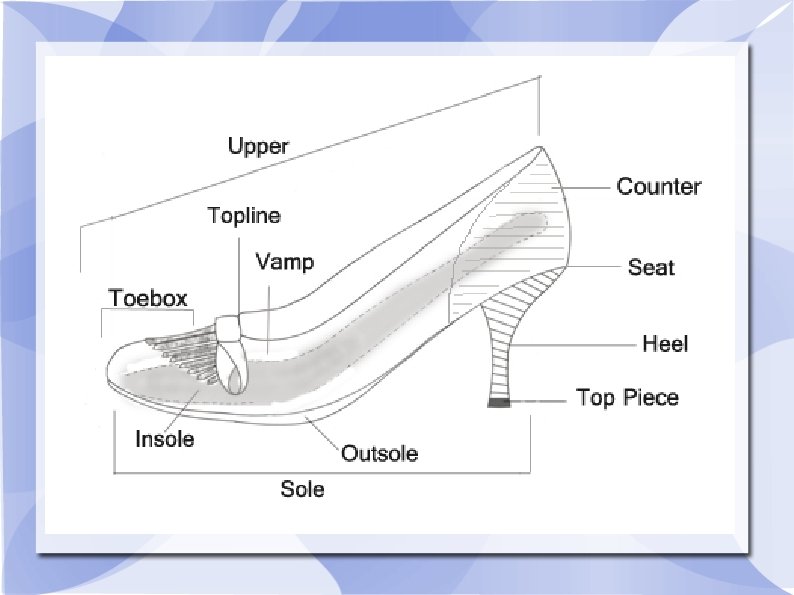
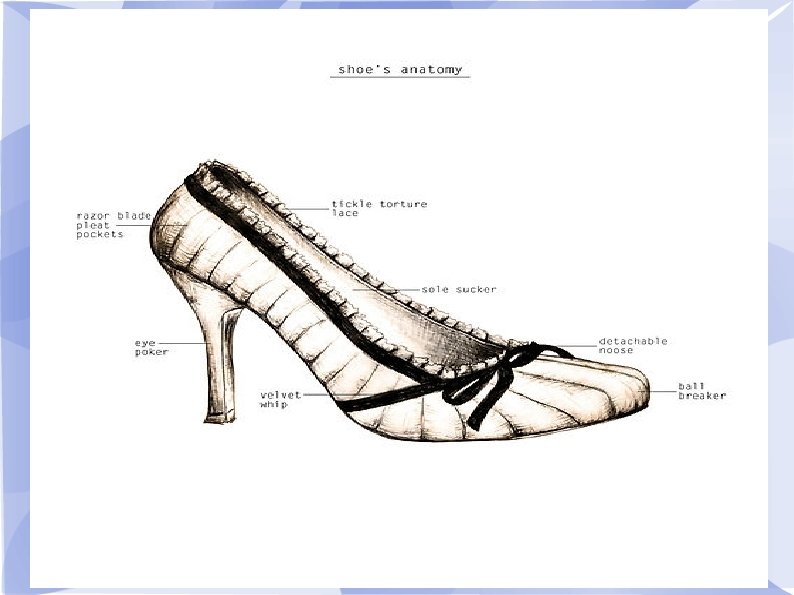
So what? Designers, artists, and consumers all think about the elements of art and principles of design. Good Design = Great Product What do you look at when you buy shoes?
Artists and designers use their sense of good taste. . . they consider the principles of design and the elements of art when creating a product. In many cases, they are inspired by something in their culture, life, or even in NATURE!
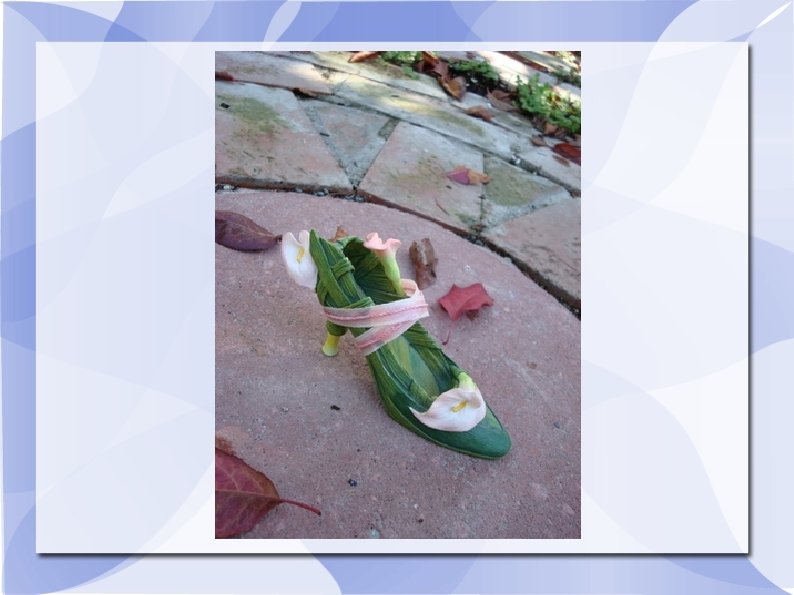
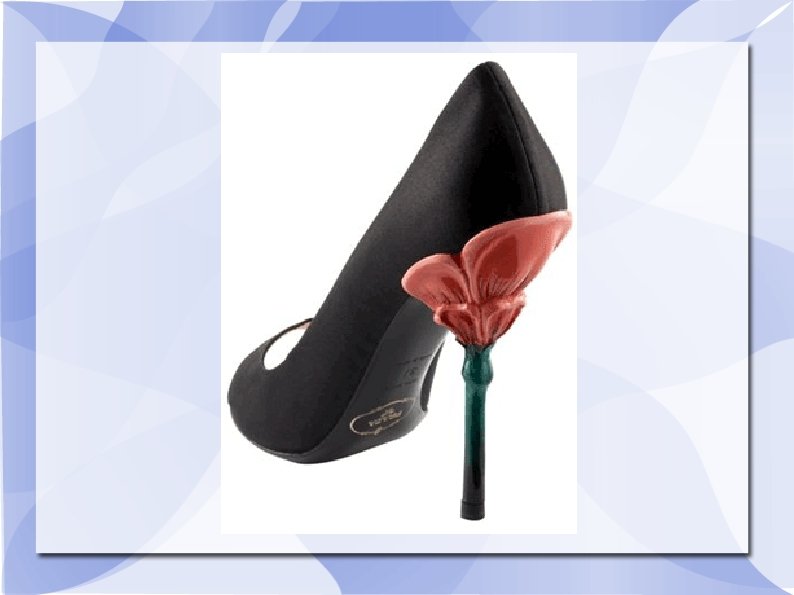
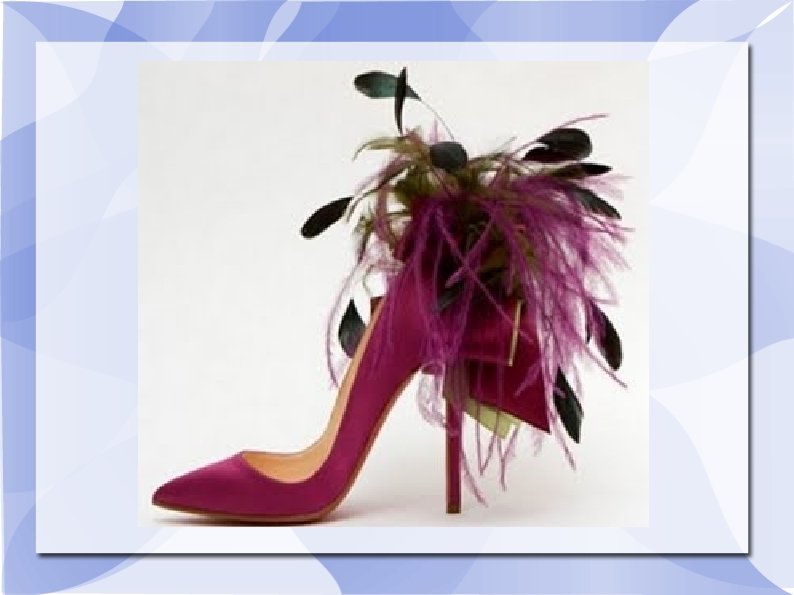
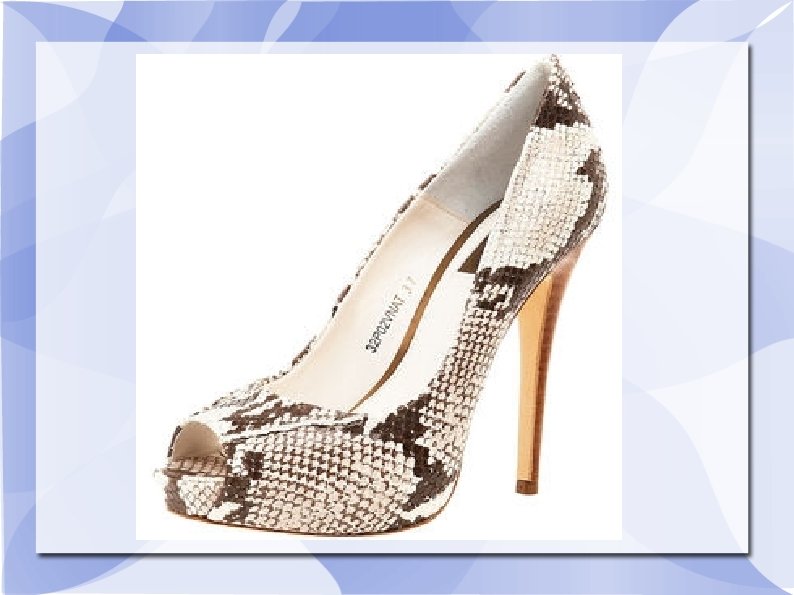
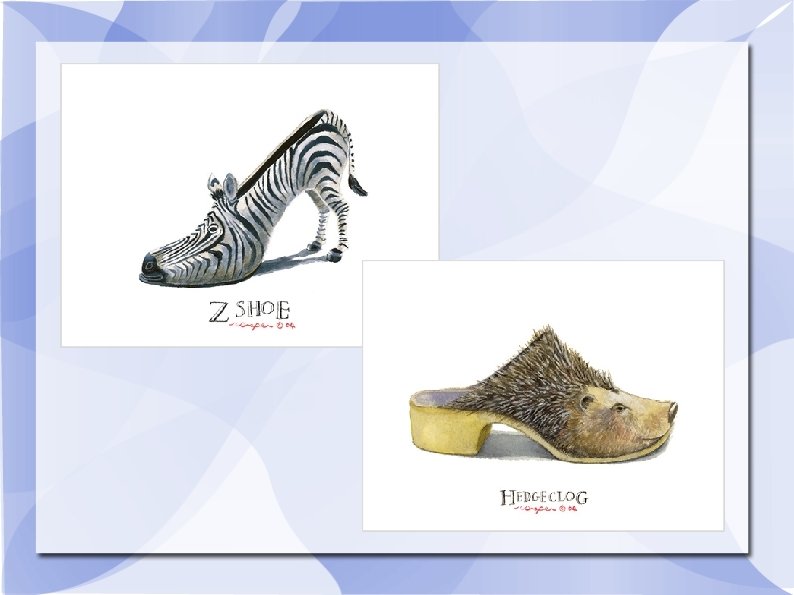
Here's your challenge: As a designer, find inspiration from nature and create a shoe based on it. Example: A maple leaf in fall may inspire someone to make a shoe with a leaf shaped buckle or use red, orange and brown as their colors. A peacock feather might be used as an embellishment on a black stiletto heel. . . Here are some visual examples to get you thinking. . .