
Understanding the ELALiteracy Evidence Tables EvidenceCentered Design ECD
Understanding the ELA/Literacy Evidence Tables
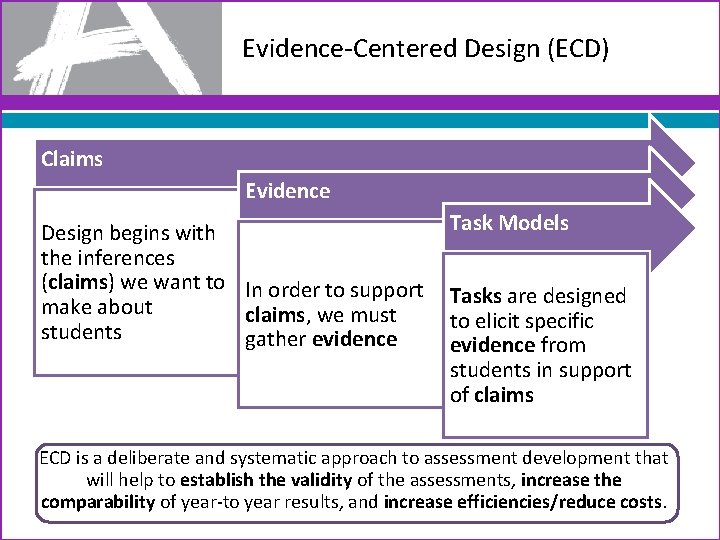
Evidence-Centered Design (ECD) Claims Evidence Design begins with the inferences (claims) we want to In order to support make about claims, we must students gather evidence Task Models Tasks are designed to elicit specific evidence from students in support of claims ECD is a deliberate and systematic approach to assessment development that will help to establish the validity of the assessments, increase the comparability of year-to year results, and increase efficiencies/reduce costs.
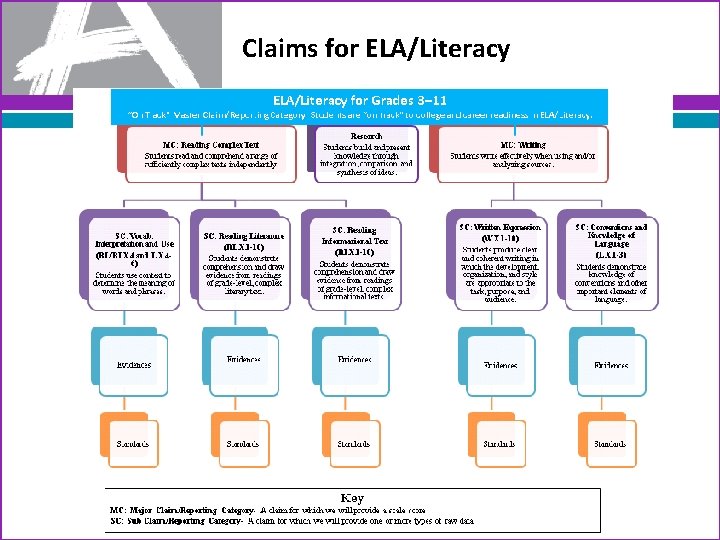
Claims for ELA/Literacy
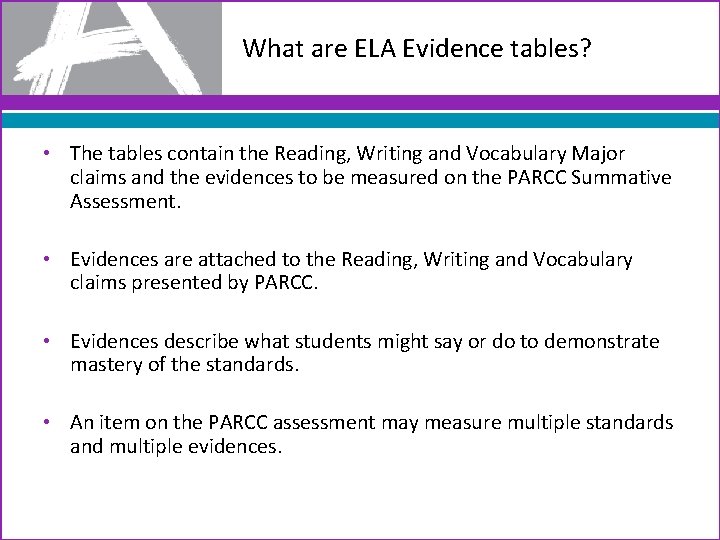
What are ELA Evidence tables? • The tables contain the Reading, Writing and Vocabulary Major claims and the evidences to be measured on the PARCC Summative Assessment. • Evidences are attached to the Reading, Writing and Vocabulary claims presented by PARCC. • Evidences describe what students might say or do to demonstrate mastery of the standards. • An item on the PARCC assessment may measure multiple standards and multiple evidences.
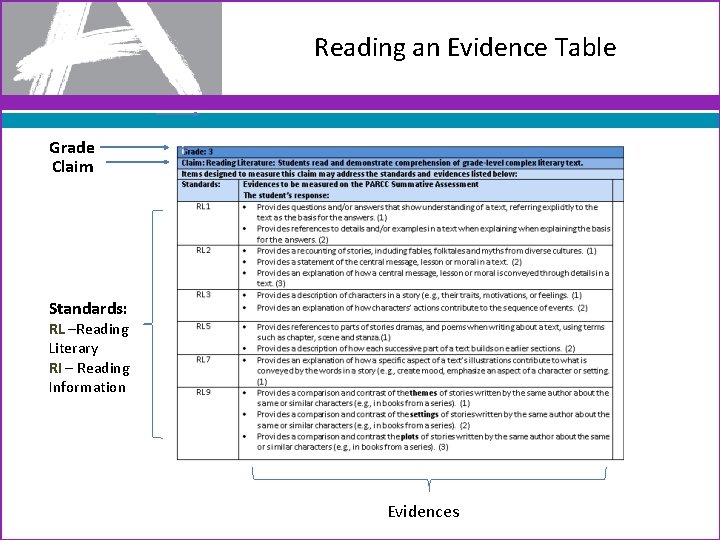
Reading an Evidence Table Grade Claim Standards: RL –Reading Literary RI – Reading Information Evidences
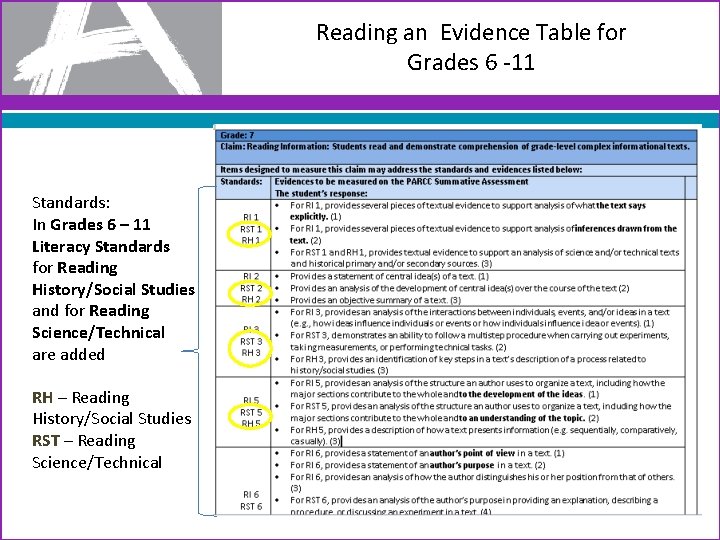
Reading an Evidence Table for Grades 6 -11 Standards: In Grades 6 – 11 Literacy Standards for Reading History/Social Studies and for Reading Science/Technical are added RH – Reading History/Social Studies RST – Reading Science/Technical
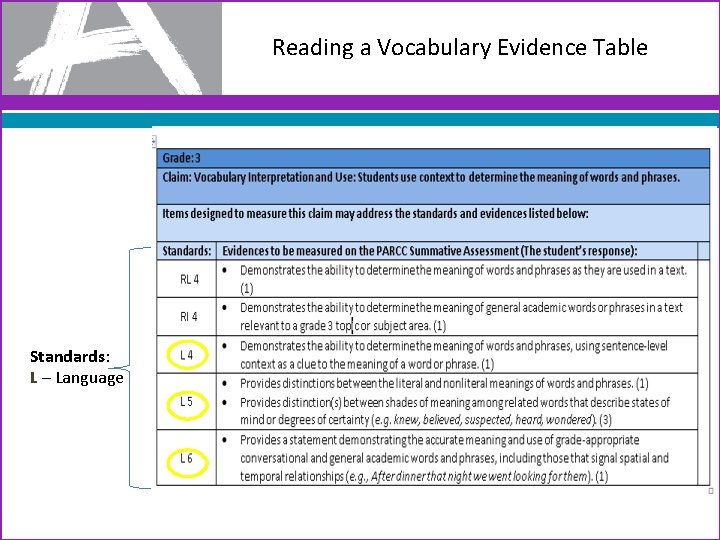
Reading a Vocabulary Evidence Table Standards: L – Language
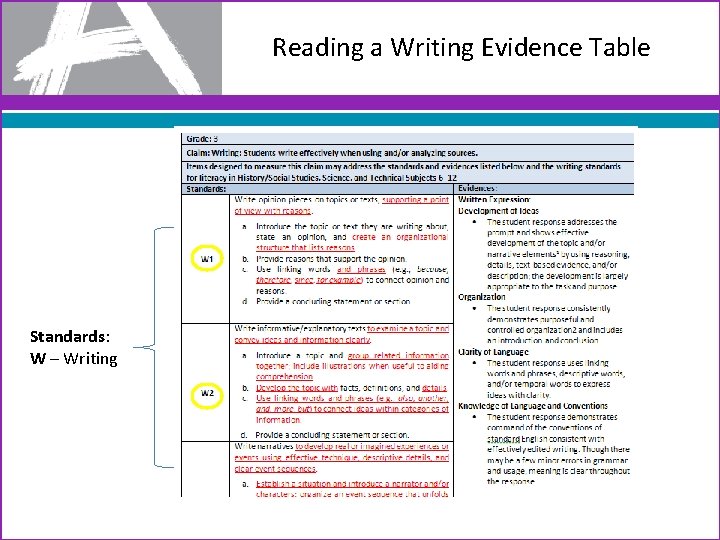
Reading a Writing Evidence Table Standards: W – Writing
- Slides: 8