
UNDERSTANDING THE EARTHS ATMOSPHERE Study this column of

- Slides: 12
UNDERSTANDING THE EARTH’S ATMOSPHERE
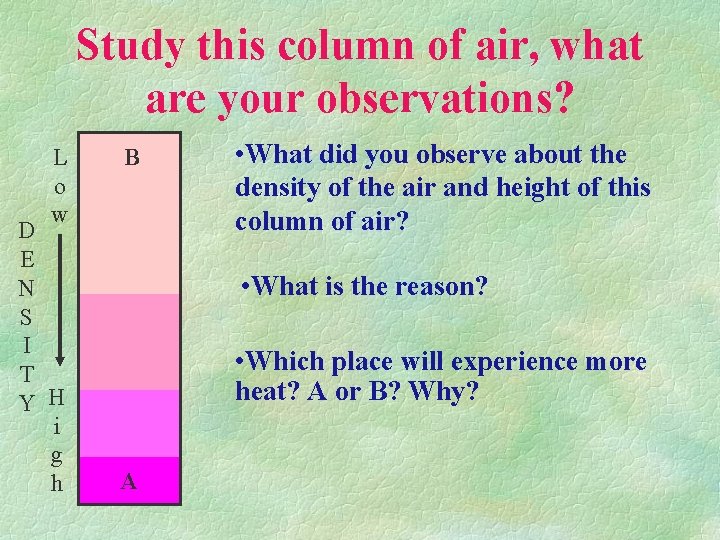
Study this column of air, what are your observations? L o w D E N S I T Y H i g h B • What did you observe about the density of the air and height of this column of air? • What is the reason? • Which place will experience more heat? A or B? Why? A
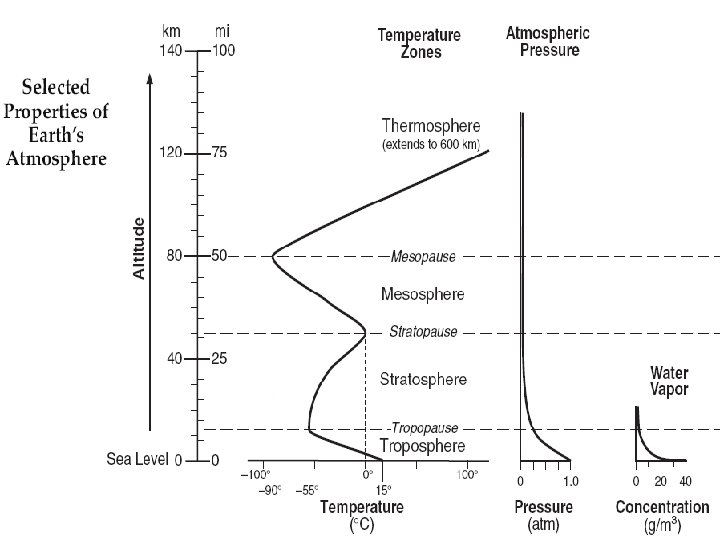
Pressure within the atmospheric layer § The lowest layer has the highest pressure. Why? § Think about the air molecules and gravity. § Air molecules have weight. Gravity squeezes air molecules close together at the earth’s surface, making them more compressed nearer the earth than at higher elevation.
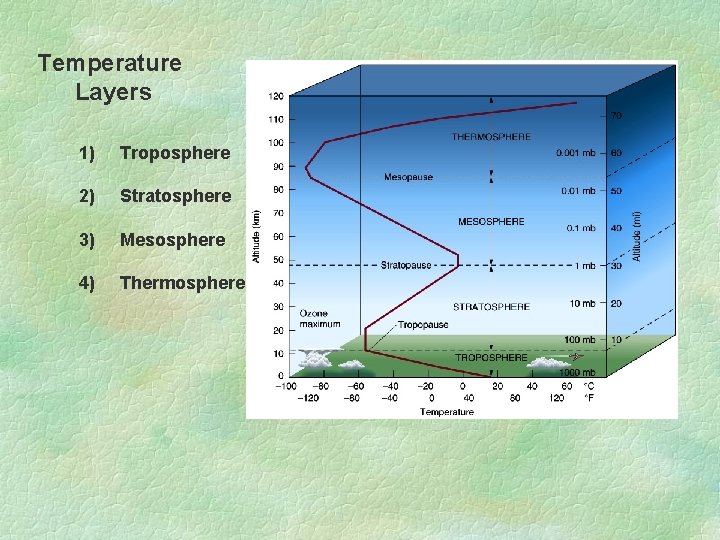
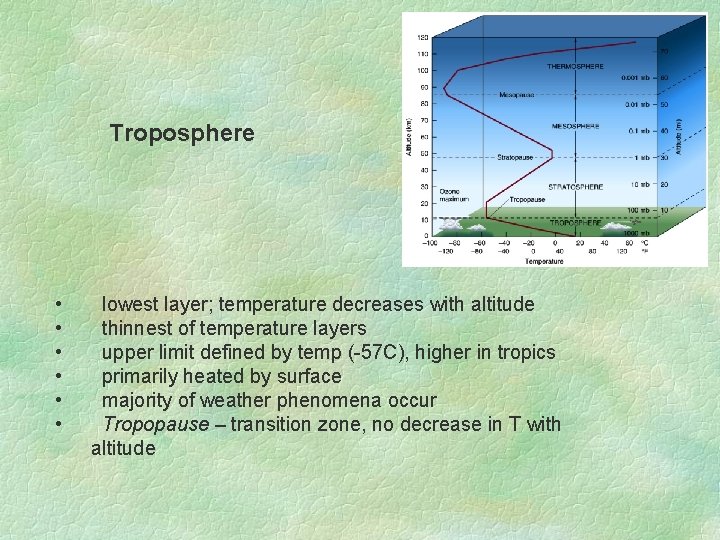
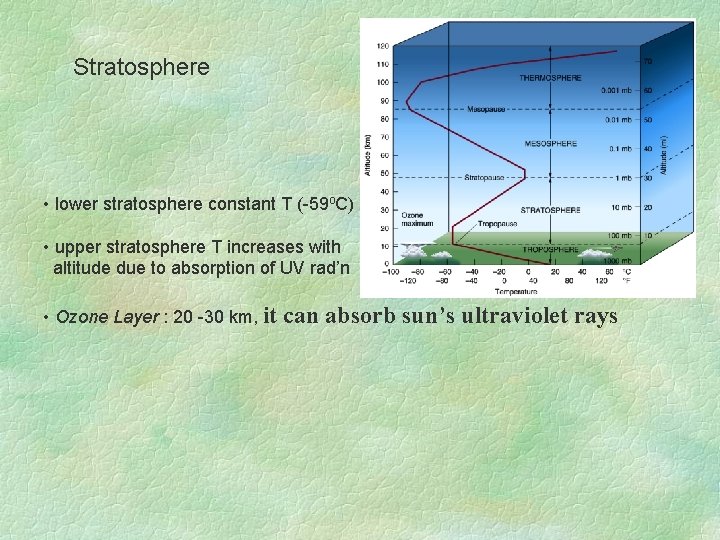
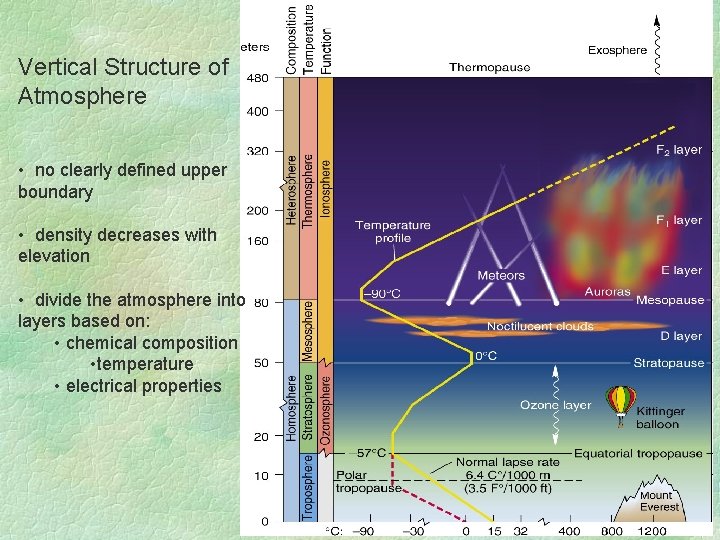
Temperature Layers 1) Troposphere 2) Stratosphere 3) Mesosphere 4) Thermosphere
Troposphere • • • lowest layer; temperature decreases with altitude thinnest of temperature layers upper limit defined by temp (-57 C), higher in tropics primarily heated by surface majority of weather phenomena occur Tropopause – transition zone, no decrease in T with altitude
Stratosphere • lower stratosphere constant T (-59 o. C) • upper stratosphere T increases with altitude due to absorption of UV rad’n • Ozone Layer : 20 -30 km, it can absorb sun’s ultraviolet rays
Mesosphere § Temperatures decrease. § Protects the earth from meteoroids. SHOOTING STARS § Winds are strong (3000 km/h)
THE THERMOSPHERE: (Ionosphere and Exosphere) § No defined upper limit § High temperatures: § Lower part of thermosphere is ionosphere. Consists of oxygen, nitrogen oxide and other gases. Able to absorb UV and x-rays given off by the sun.
EXOSPHERE § Air is thin here § Extremely HOT: § Due to the presence of atomic oxygen
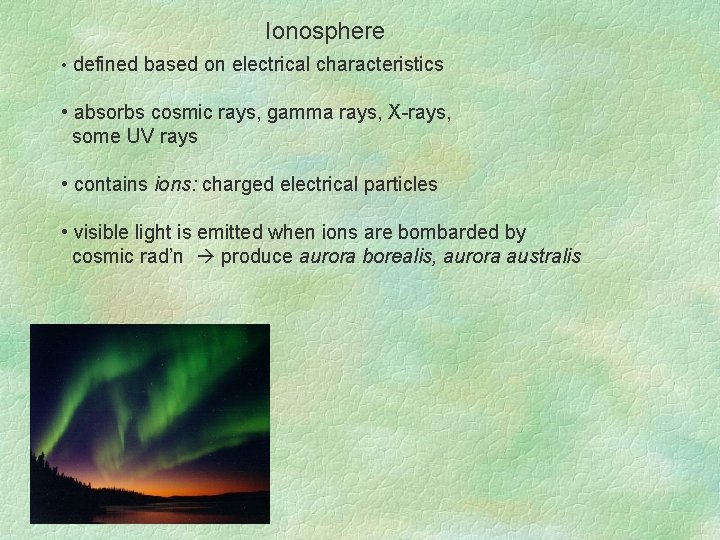
Ionosphere • defined based on electrical characteristics • absorbs cosmic rays, gamma rays, X-rays, some UV rays • contains ions: charged electrical particles • visible light is emitted when ions are bombarded by cosmic rad’n produce aurora borealis, aurora australis
Vertical Structure of Atmosphere • no clearly defined upper boundary • density decreases with elevation • divide the atmosphere into layers based on: • chemical composition • temperature • electrical properties