
Understanding The Cell Wall Structure How it can




- Slides: 27
Understanding The Cell Wall Structure – How it can Help the Pulp and Paper Industry Gopal Goyal Chief Scientist, International Paper October 9 th, 2013
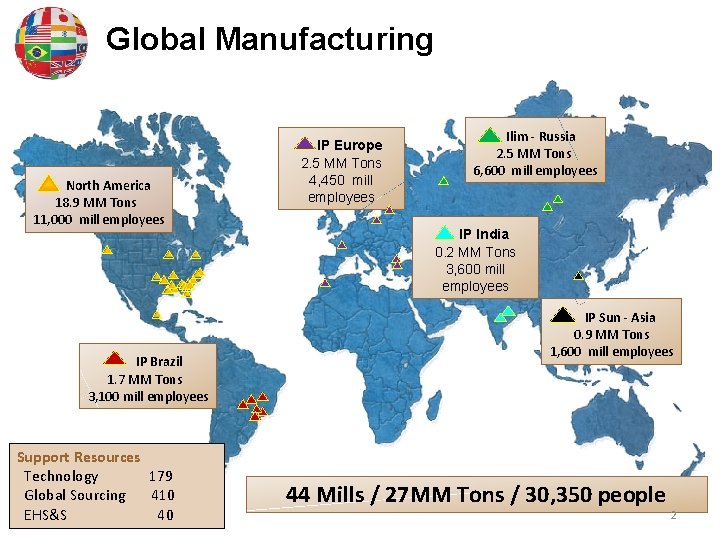
Global Manufacturing North America 18. 9 MM Tons 11, 000 mill employees IP Brazil 1. 7 MM Tons 3, 100 mill employees Support Resources Technology 179 Global Sourcing 410 EHS&S 40 IP Europe 2. 5 MM Tons 4, 450 mill employees Ilim - Russia 2. 5 MM Tons 6, 600 mill employees IP India 0. 2 MM Tons 3, 600 mill employees IP Sun - Asia 0. 9 MM Tons 1, 600 mill employees 44 Mills / 27 MM Tons / 30, 350 people 2
International Paper Company PAPERS and FLUFF PULP INDUSTRIAL PACKAGING CONSUMER PACKAGING 3
A Pulp Mill Case Study • Can a single wood sps. produce two very different pulps from two different lines at same location? • What could cause this phenomenon? • Can the difference in the cell wall structure explain these differences since starting wood material has the same cell wall structure?
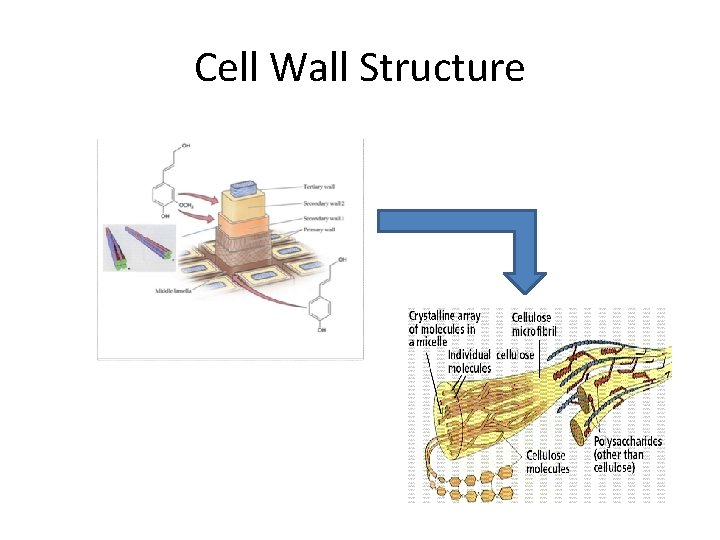
Cell Wall Structure
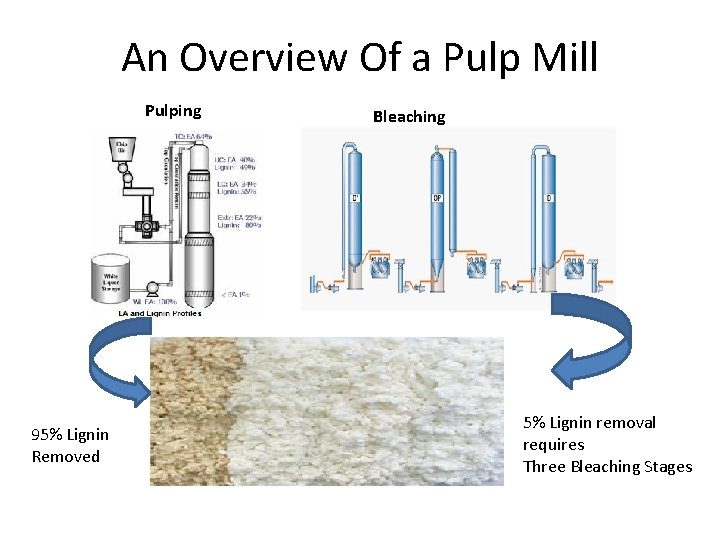
An Overview Of a Pulp Mill Pulping 95% Lignin Removed Bleaching 5% Lignin removal requires Three Bleaching Stages
Background • During recent D 0 washer failure on the K 2 hardwood line, the K 1 line was utilized for hardwood. • Samples were profiled through the K 1 bleach plant. • Comparison was made to the samples profiled through the K 2 bleach plant in February
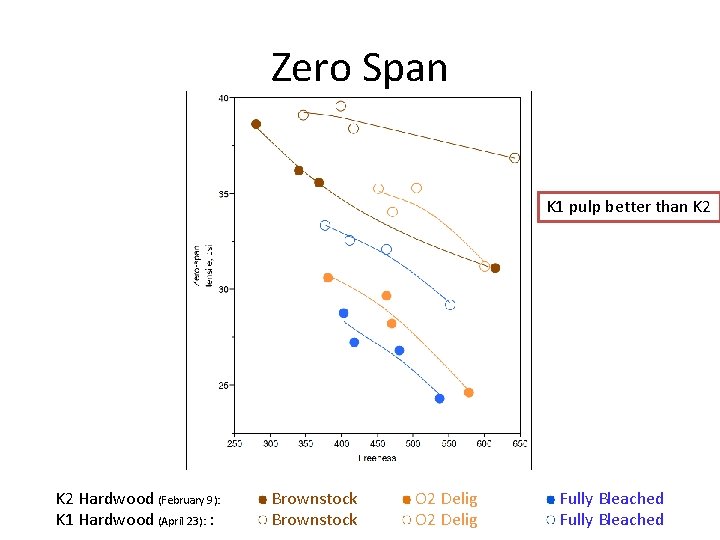
Zero Span K 1 pulp better than K 2 Hardwood (February 9): K 1 Hardwood (April 23): : Brownstock O 2 Delig Fully Bleached
Curl and Kinks K 2 Hardwood (February 9): K 1 Hardwood (April 23): : Brownstock O 2 Delig Fully Bleached
Observations: • Brown stock from K 1 digester is stronger than K 2 from same wood source • Both K 1 and K 2 brown stocks loose strength in oxygen deliginification stage. • Further strength loss occurs in ECF bleachig sequence of these which is very unusual
Comparison of Oxygen Delignification stages at two Different Mills Brownstock O 2 Delignification Fully Bleached
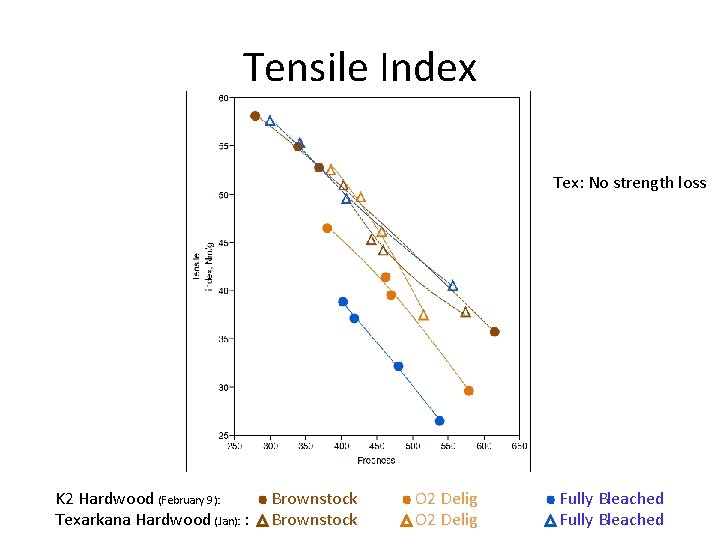
Tensile Index Tex: No strength loss K 2 Hardwood (February 9): Texarkana Hardwood (Jan): : Brownstock O 2 Delig Fully Bleached
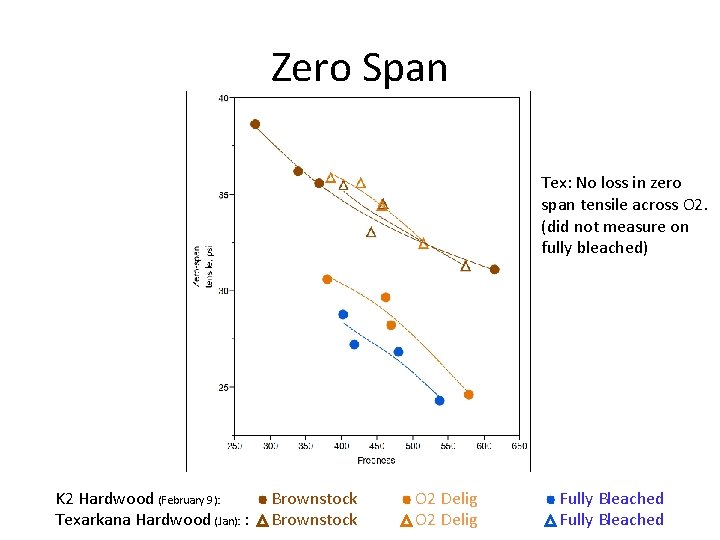
Zero Span Tex: No loss in zero span tensile across O 2. (did not measure on fully bleached) K 2 Hardwood (February 9): Texarkana Hardwood (Jan): : Brownstock O 2 Delig Fully Bleached
LAB VERSUS MILL PULP
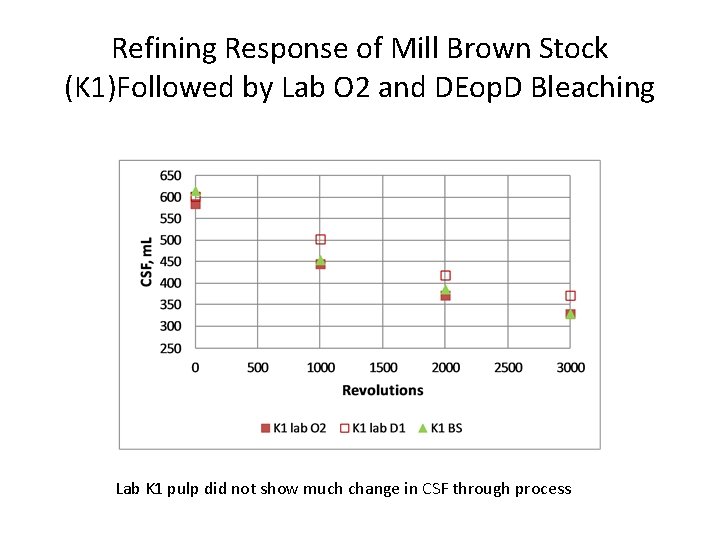
Refining Response of Mill Brown Stock (K 1)Followed by Lab O 2 and DEop. D Bleaching Lab K 1 pulp did not show much change in CSF through process
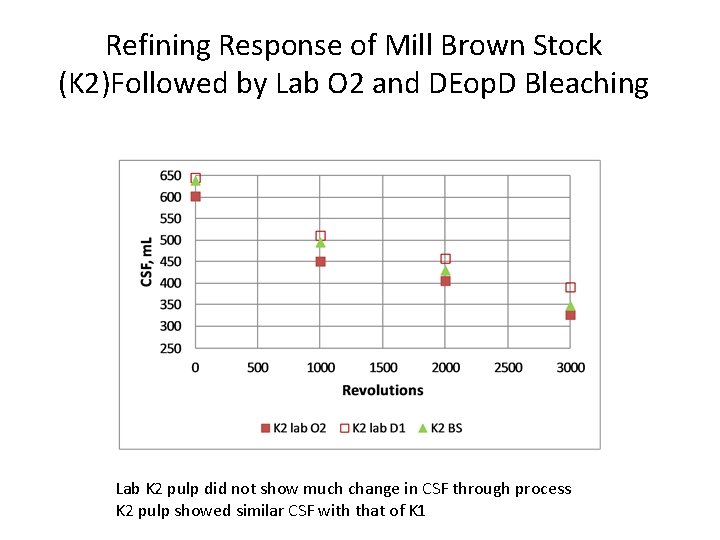
Refining Response of Mill Brown Stock (K 2)Followed by Lab O 2 and DEop. D Bleaching Lab K 2 pulp did not show much change in CSF through process K 2 pulp showed similar CSF with that of K 1
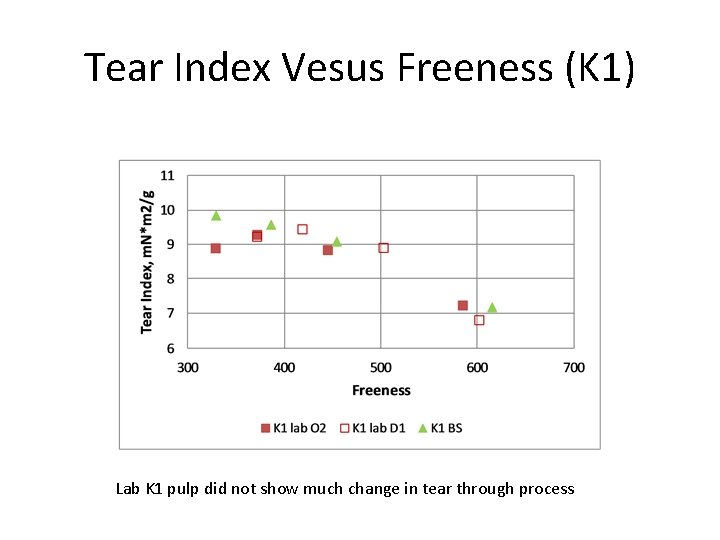
Tear Index Vesus Freeness (K 1) Lab K 1 pulp did not show much change in tear through process
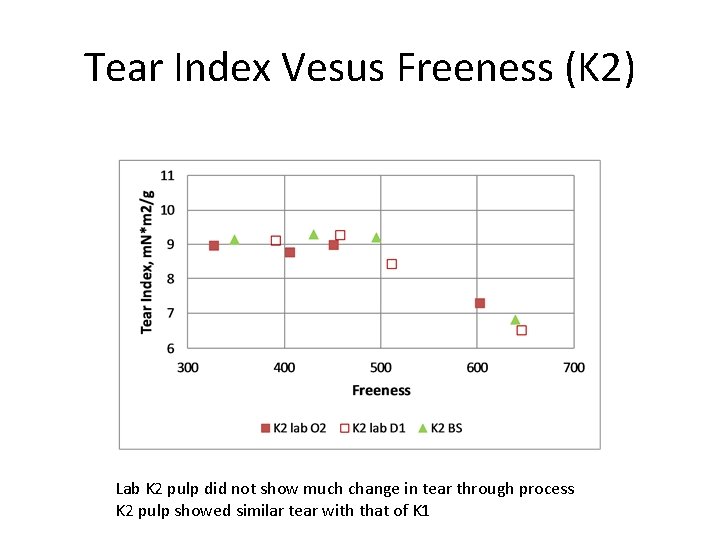
Tear Index Vesus Freeness (K 2) Lab K 2 pulp did not show much change in tear through process K 2 pulp showed similar tear with that of K 1
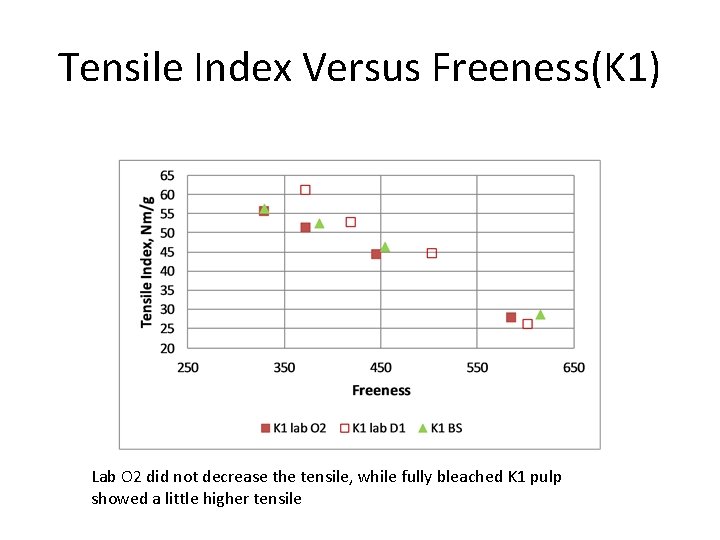
Tensile Index Versus Freeness(K 1) Lab O 2 did not decrease the tensile, while fully bleached K 1 pulp showed a little higher tensile
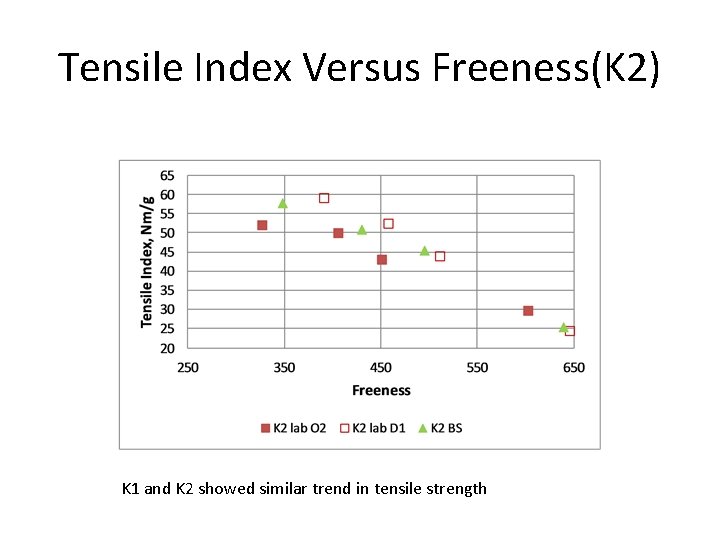
Tensile Index Versus Freeness(K 2) K 1 and K 2 showed similar trend in tensile strength
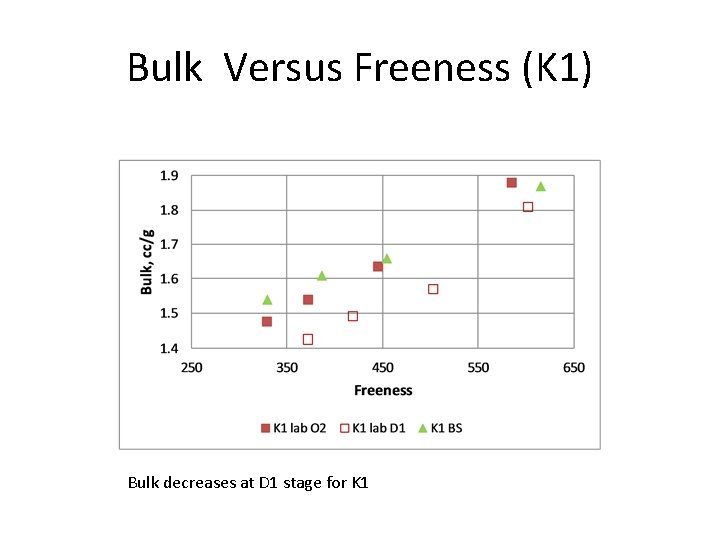
Bulk Versus Freeness (K 1) Bulk decreases at D 1 stage for K 1
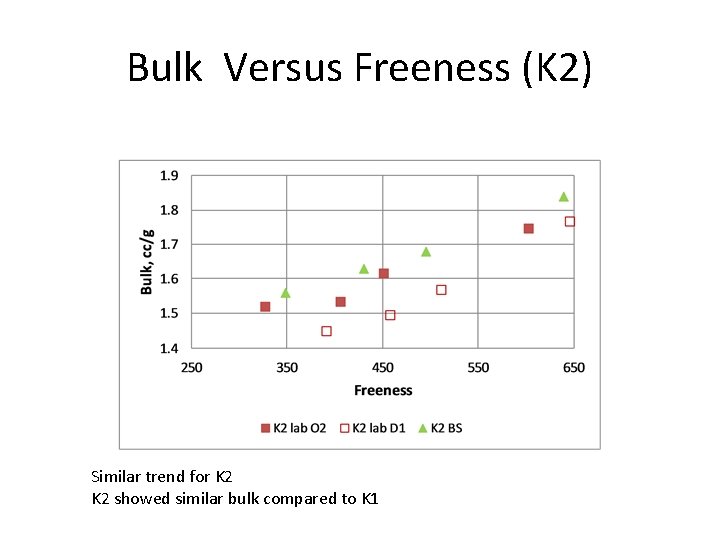
Bulk Versus Freeness (K 2) Similar trend for K 2 showed similar bulk compared to K 1
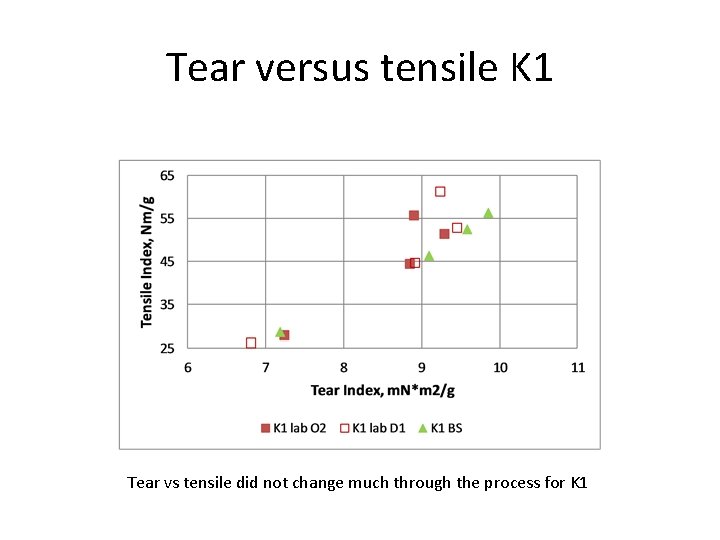
Tear versus tensile K 1 Tear vs tensile did not change much through the process for K 1
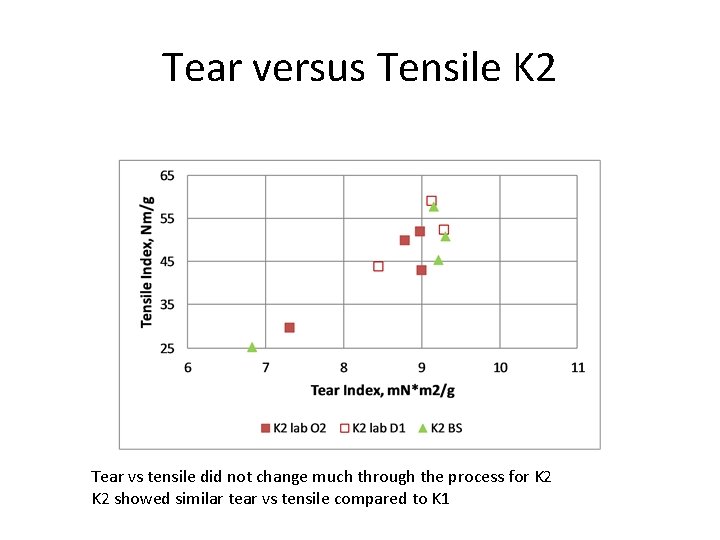
Tear versus Tensile K 2 Tear vs tensile did not change much through the process for K 2 showed similar tear vs tensile compared to K 1
Observation from the Lab Studies • Brown stock from either K 1 or K 2 does not lose strength after lab oxygen delignification • Lab oxygen delignified pulp do not lose strength in subsequent ECF bleaching
Colclusions • All these pulps started out with the same wood and the same cell wall structure • However upon further processing the same cell wall results in two very different end products
Role of Cell Wall Structure? • Can these differences be explained based on the cell wall structres of theses pulps? § Chemical differences? § Morphological differences?