
Understanding the ArabIsraeli Conflict The Challenge of Peace
Understanding the Arab-Israeli Conflict: The Challenge of Peace
The Objectives of Our Gathering I. Provide education II. Share ideas regarding: How a better future can be achieved for all people in the region III. Realize that both sides suffer, that the situation is complex and compassion allows for fault and imperfection on both sides. IV. Understanding why peace has been so challenging to achieve and why extreme voices hurt.
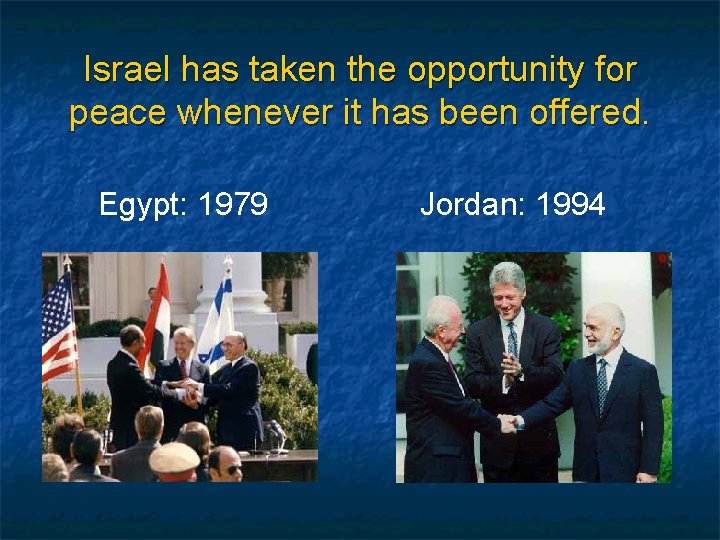
Israel has taken the opportunity for peace whenever it has been offered. Egypt: 1979 Jordan: 1994
l
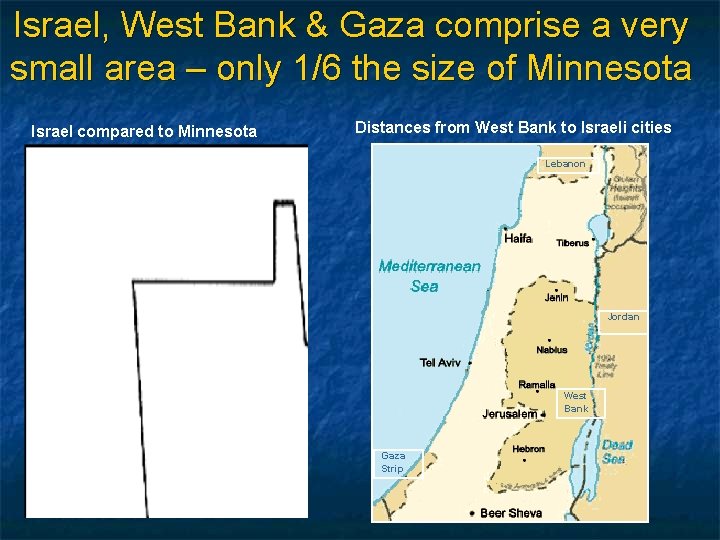
Israel, West Bank & Gaza comprise a very small area – only 1/6 the size of Minnesota Israel compared to Minnesota Distances from West Bank to Israeli cities Lebanon Jordan West Bank Gaza Strip
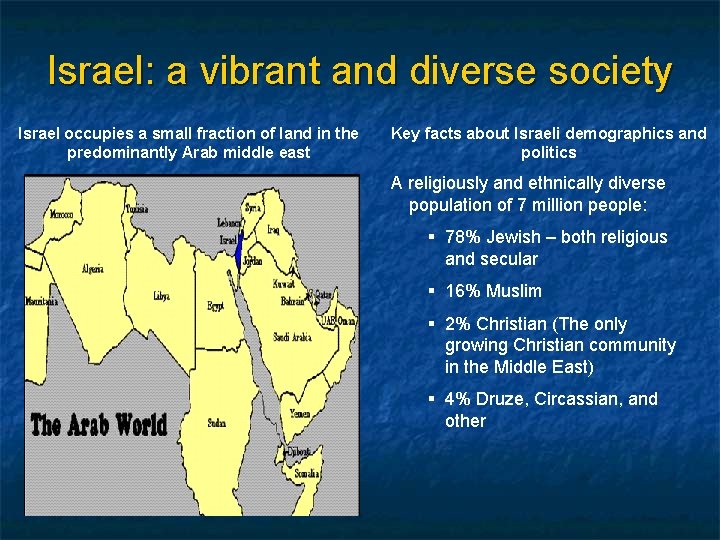
Israel: a vibrant and diverse society Israel occupies a small fraction of land in the predominantly Arab middle east Key facts about Israeli demographics and politics A religiously and ethnically diverse population of 7 million people: § 78% Jewish – both religious and secular § 16% Muslim § 2% Christian (The only growing Christian community in the Middle East) § 4% Druze, Circassian, and other
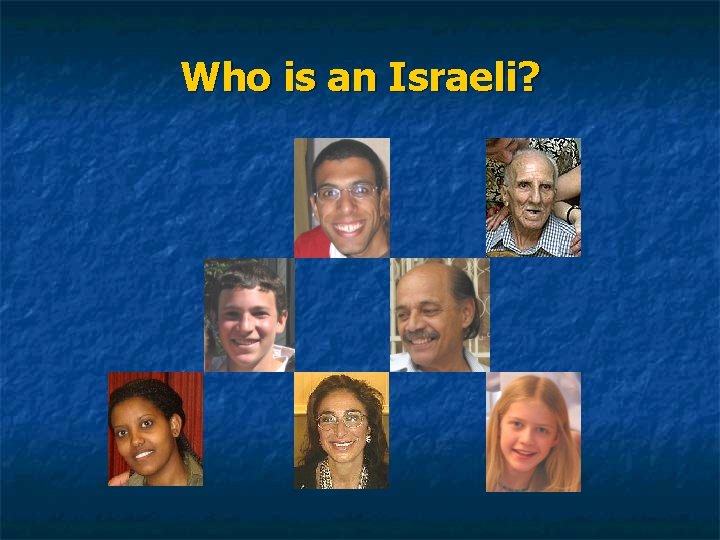
Who is an Israeli?
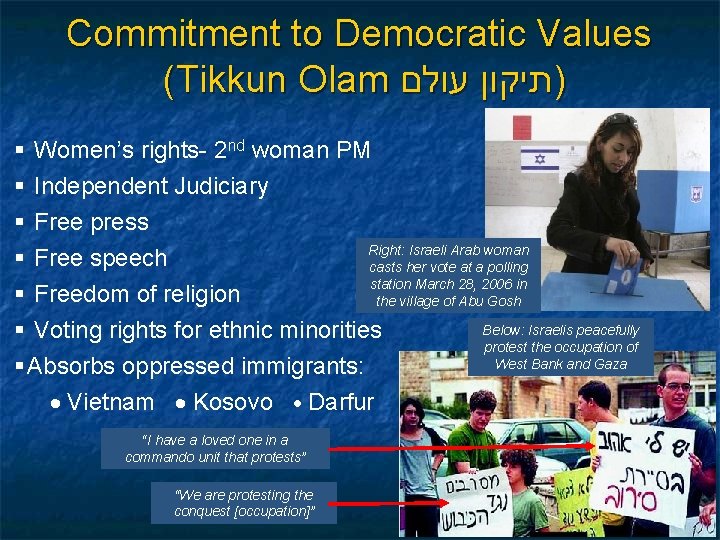
Commitment to Democratic Values (Tikkun Olam )תיקון עולם § Women’s rights- 2 nd woman PM § Independent Judiciary § Free press Right: Israeli Arab woman § Free speech casts her vote at a polling station March 28, 2006 in § Freedom of religion the village of Abu Gosh Below: Israelis peacefully § Voting rights for ethnic minorities protest the occupation of West Bank and Gaza § Absorbs oppressed immigrants: Vietnam Kosovo Darfur “I have a loved one in a commando unit that protests” “We are protesting the conquest [occupation]”
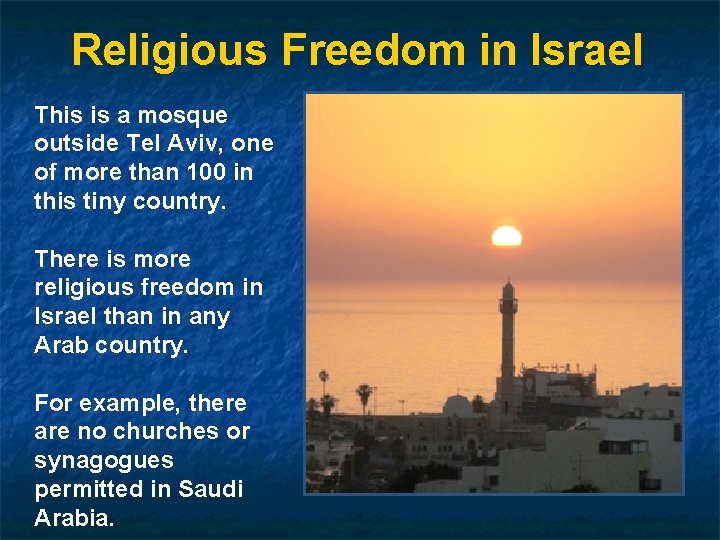
Religious Freedom in Israel This is a mosque outside Tel Aviv, one of more than 100 in this tiny country. There is more religious freedom in Israel than in any Arab country. For example, there are no churches or synagogues permitted in Saudi Arabia.
Minority Rights in Israel Arab citizens are members of: Ø the Israeli Supreme Court Ø the Israeli Parliament (Knesset) Ø the Israeli Diplomatic Corps serving as Ambassadors and Consuls throughout the world Ø Arabs and Jews play on Israel’s national soccer team Ø Druze and Arab Bedouin are greatly represented in the Israeli Defense Force Arabs are citizens, own property, and engage in commerce © Michael Perloff
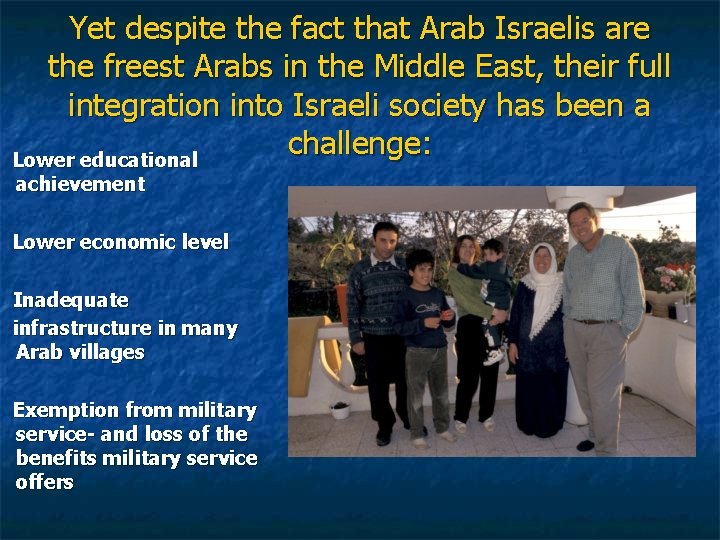
Yet despite the fact that Arab Israelis are the freest Arabs in the Middle East, their full integration into Israeli society has been a challenge: Lower educational achievement Lower economic level Inadequate infrastructure in many Arab villages Exemption from military service- and loss of the benefits military service offers
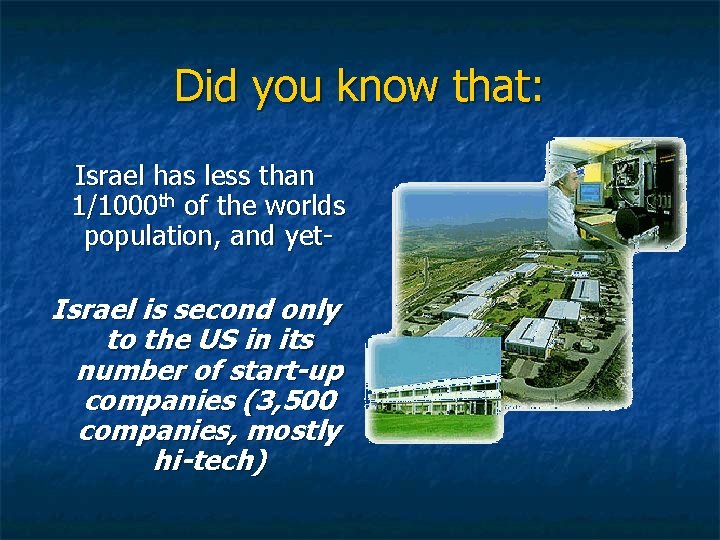
Did you know that: Israel has less than 1/1000 th of the worlds population, and yet- Israel is second only to the US in its number of start-up companies (3, 500 companies, mostly hi-tech)
Israeli Technological Contributions n Centrino Processor n n n n n Centrino Processor SMS (texting) Most effective current anti. Parkinson’s medication Computer file formats (e. g. . gif and. zip) ‘Smart cards’ for credit cards Digital camera computer chips First instant messaging software First internet firewall Automobile seatbelt Intracardiac stents
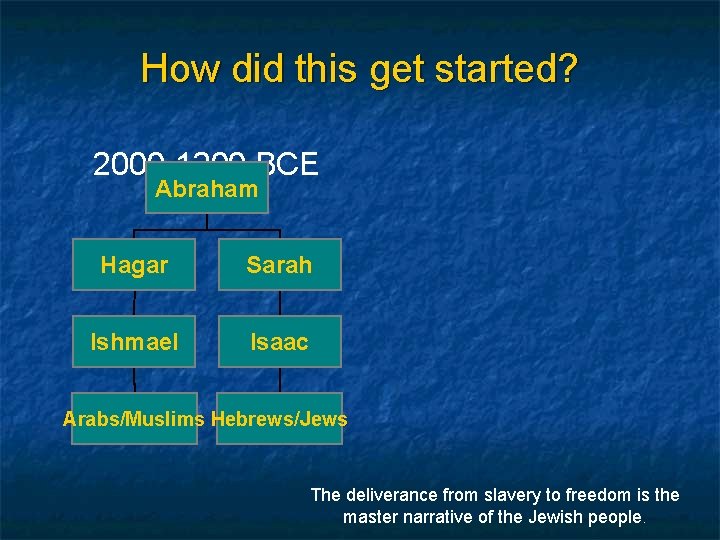
How did this get started? 2000 -1200 BCE Abraham Hagar Sarah Ishmael Isaac Arabs/Muslims Hebrews/Jews The deliverance from slavery to freedom is the master narrative of the Jewish people.
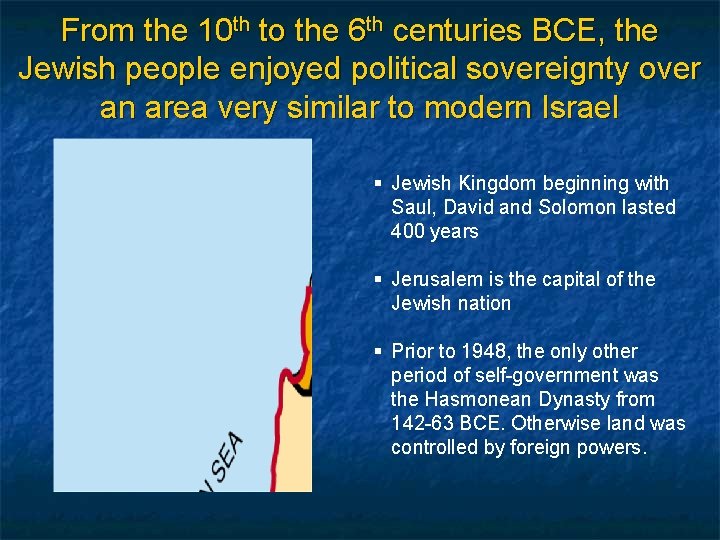
From the 10 th to the 6 th centuries BCE, the Jewish people enjoyed political sovereignty over an area very similar to modern Israel § Jewish Kingdom beginning with Saul, David and Solomon lasted 400 years § Jerusalem is the capital of the Jewish nation § Prior to 1948, the only other period of self-government was the Hasmonean Dynasty from 142 -63 BCE. Otherwise land was controlled by foreign powers.

“If I forget thee, O Jerusalem, let my right hand wither…” Psalm 137 For 2000 years, Jews worldwide have prayed facing toward Jerusalem.
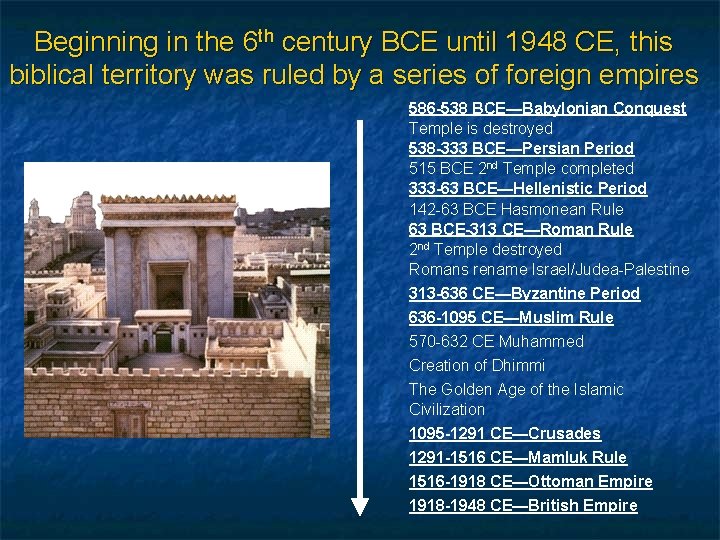
Beginning in the 6 th century BCE until 1948 CE, this biblical territory was ruled by a series of foreign empires 586 -538 BCE—Babylonian Conquest Temple is destroyed 538 -333 BCE—Persian Period 515 BCE 2 nd Temple completed 333 -63 BCE—Hellenistic Period 142 -63 BCE Hasmonean Rule 63 BCE-313 CE—Roman Rule 2 nd Temple destroyed Romans rename Israel/Judea-Palestine 313 -636 CE—Byzantine Period 636 -1095 CE—Muslim Rule 570 -632 CE Muhammed Creation of Dhimmi The Golden Age of the Islamic Civilization 1095 -1291 CE—Crusades 1291 -1516 CE—Mamluk Rule 1516 -1918 CE—Ottoman Empire 1918 -1948 CE—British Empire
Despite the loss of Jewish autonomy, Jews have lived continuously in this land for three thousand years. Diaspora Jews have always prayed for their return to their homeland n This yearning for home is called Zionism
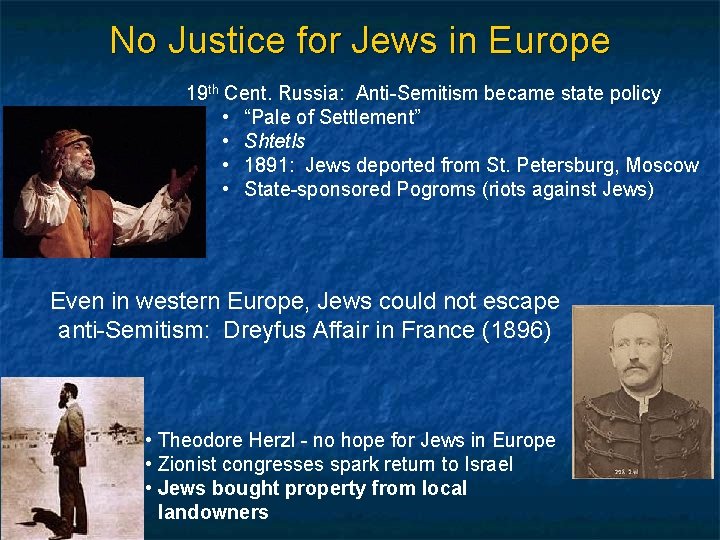
No Justice for Jews in Europe 19 th Cent. Russia: Anti-Semitism became state policy • “Pale of Settlement” • Shtetls • 1891: Jews deported from St. Petersburg, Moscow • State-sponsored Pogroms (riots against Jews) Even in western Europe, Jews could not escape anti-Semitism: Dreyfus Affair in France (1896) • Theodore Herzl - no hope for Jews in Europe • Zionist congresses spark return to Israel • Jews bought property from local landowners
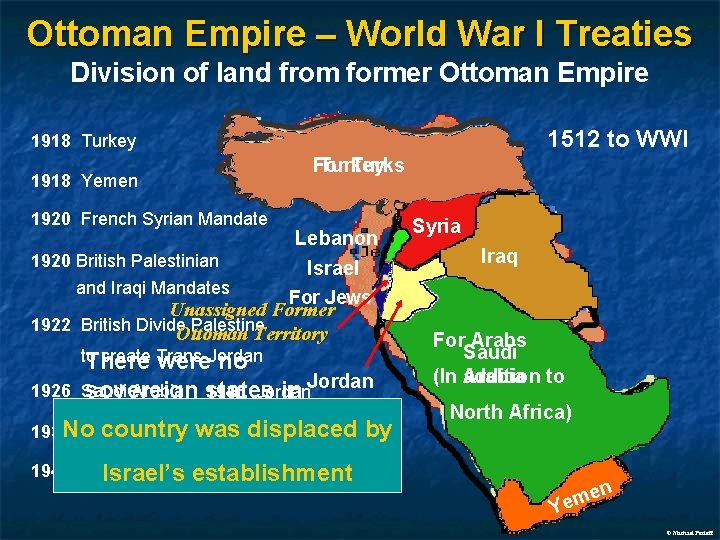
Ottoman Empire – World War I Treaties Division of land from former Ottoman Empire 1918 Turkey 1918 Yemen 1920 French Syrian Mandate 1920 British Palestinian and Iraqi Mandates Former Ottoman For Turkey Turks Territory Lebanon Israel For Jews Unassigned Former 1922 British Divide Palestine Ottoman Territory to create Trans-Jordan There were no Jordan 1926 Saudi Arabia states sovereign in 1946 Jordan the Middle East by until after WWI Lebanon 1948 Israel’s establishment country was 1932 No Iraq 1946 displaced Syria 1943 1512 to WWI Former Ottoman Territory Former Syria Ottoman Territory Former Iraq Ottoman Territory Former Ottoman For Arabs Saudi Territory (In. Former addition Arabia Former to Ottoman Territory North Territory Africa) Former Ottoman Territory n e m e Y © Michael Perloff
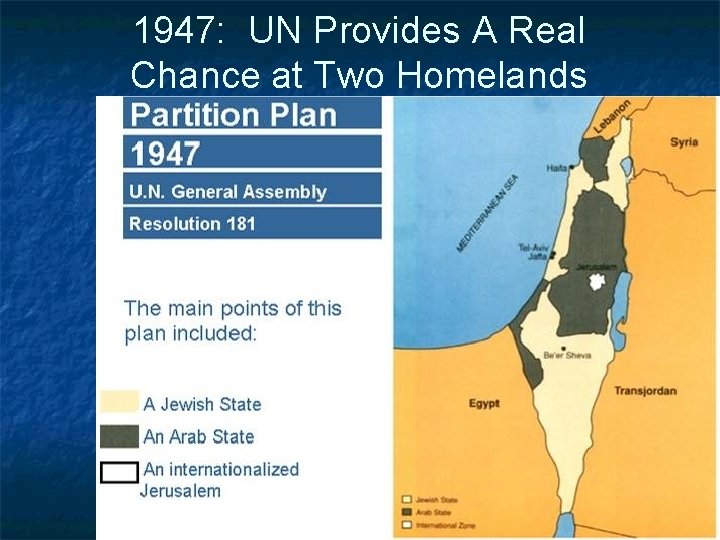
1947: UN Provides A Real Chance at Two Homelands
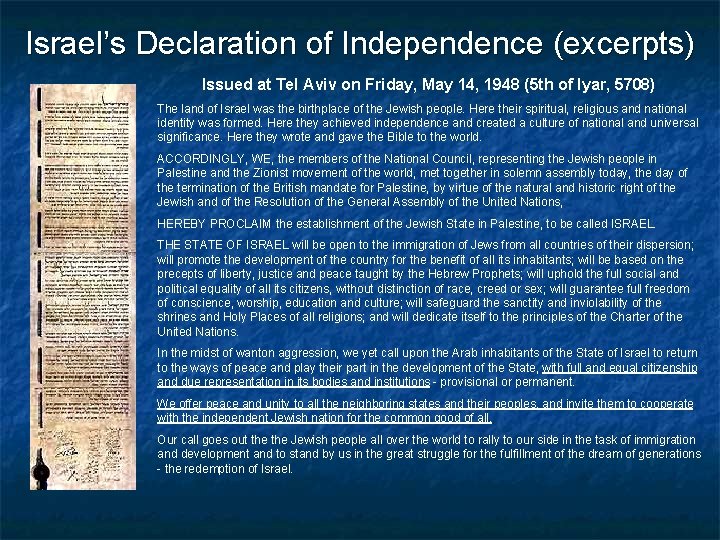
Israel’s Declaration of Independence (excerpts) Issued at Tel Aviv on Friday, May 14, 1948 (5 th of Iyar, 5708) The land of Israel was the birthplace of the Jewish people. Here their spiritual, religious and national identity was formed. Here they achieved independence and created a culture of national and universal significance. Here they wrote and gave the Bible to the world. ACCORDINGLY, WE, the members of the National Council, representing the Jewish people in Palestine and the Zionist movement of the world, met together in solemn assembly today, the day of the termination of the British mandate for Palestine, by virtue of the natural and historic right of the Jewish and of the Resolution of the General Assembly of the United Nations, HEREBY PROCLAIM the establishment of the Jewish State in Palestine, to be called ISRAEL. THE STATE OF ISRAEL will be open to the immigration of Jews from all countries of their dispersion; will promote the development of the country for the benefit of all its inhabitants; will be based on the precepts of liberty, justice and peace taught by the Hebrew Prophets; will uphold the full social and political equality of all its citizens, without distinction of race, creed or sex; will guarantee full freedom of conscience, worship, education and culture; will safeguard the sanctity and inviolability of the shrines and Holy Places of all religions; and will dedicate itself to the principles of the Charter of the United Nations. In the midst of wanton aggression, we yet call upon the Arab inhabitants of the State of Israel to return to the ways of peace and play their part in the development of the State, with full and equal citizenship and due representation in its bodies and institutions - provisional or permanent. We offer peace and unity to all the neighboring states and their peoples, and invite them to cooperate with the independent Jewish nation for the common good of all. Our call goes out the Jewish people all over the world to rally to our side in the task of immigration and development and to stand by us in the great struggle for the fulfillment of the dream of generations - the redemption of Israel.
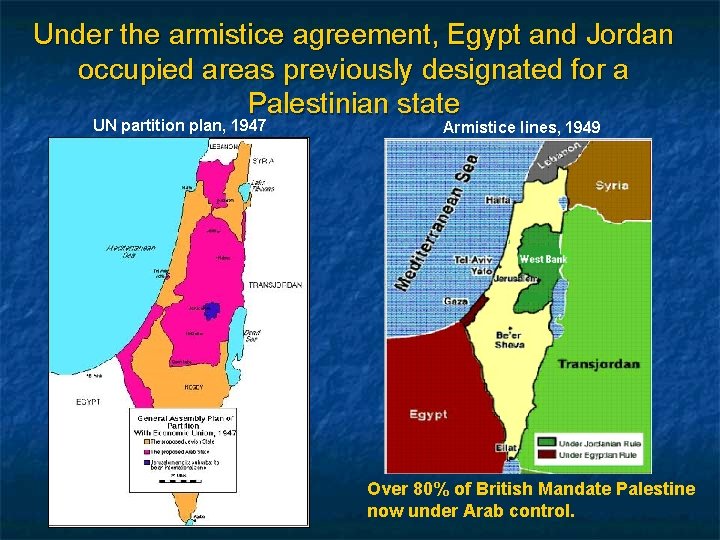
Under the armistice agreement, Egypt and Jordan occupied areas previously designated for a Palestinian state UN partition plan, 1947 Armistice lines, 1949 Over 80% of British Mandate Palestine now under Arab control.
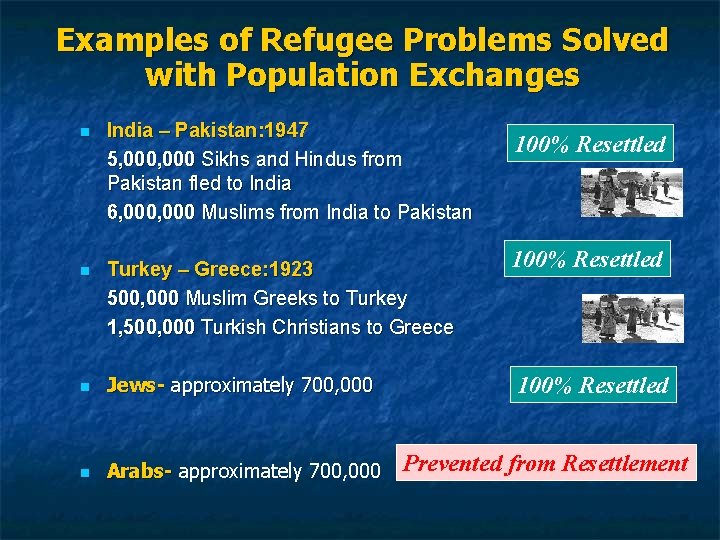
Examples of Refugee Problems Solved with Population Exchanges n India – Pakistan: 1947 5, 000 Sikhs and Hindus from Pakistan fled to India 6, 000 Muslims from India to Pakistan n Turkey – Greece: 1923 500, 000 Muslim Greeks to Turkey 1, 500, 000 Turkish Christians to Greece n Jews- approximately 700, 000 n Arabs- approximately 700, 000 100% Resettled Prevented from Resettlement
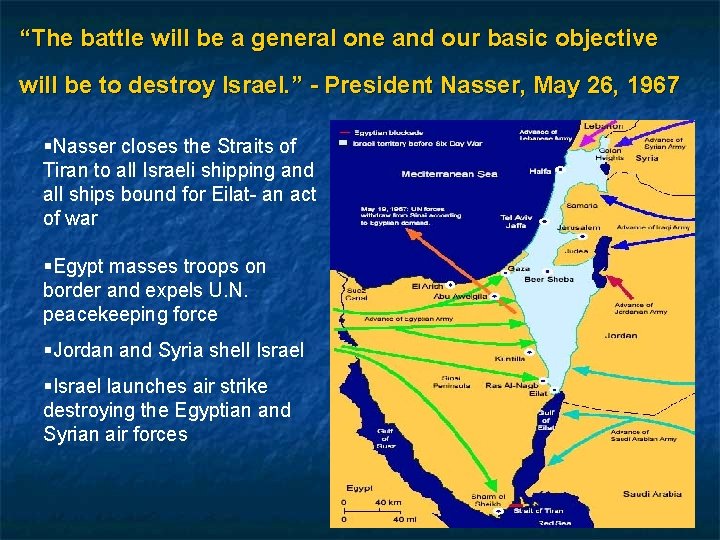
“The battle will be a general one and our basic objective will be to destroy Israel. ” - President Nasser, May 26, 1967 §Nasser closes the Straits of Tiran to all Israeli shipping and all ships bound for Eilat- an act of war §Egypt masses troops on border and expels U. N. peacekeeping force §Jordan and Syria shell Israel §Israel launches air strike destroying the Egyptian and Syrian air forces
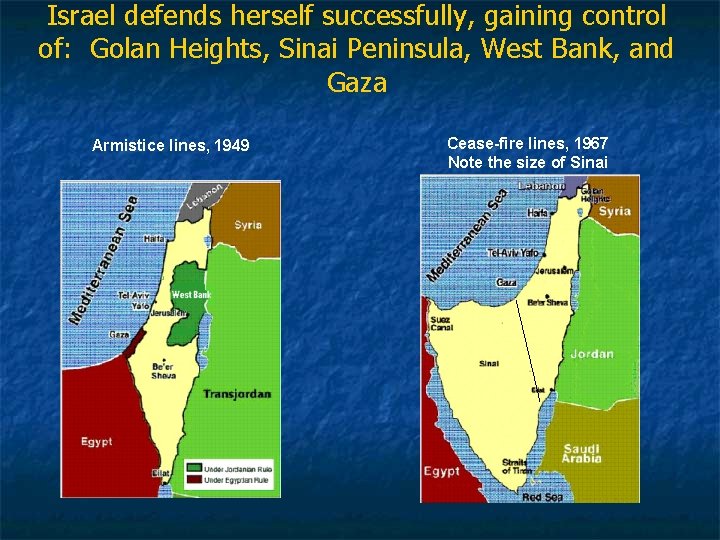
Israel defends herself successfully, gaining control of: Golan Heights, Sinai Peninsula, West Bank, and Gaza Armistice lines, 1949 Cease-fire lines, 1967 Note the size of Sinai
The Arab League Khartoum Resolutions September 1, 1967 No Recognition of Israel No Negotiations with Israel No Peace with Israel
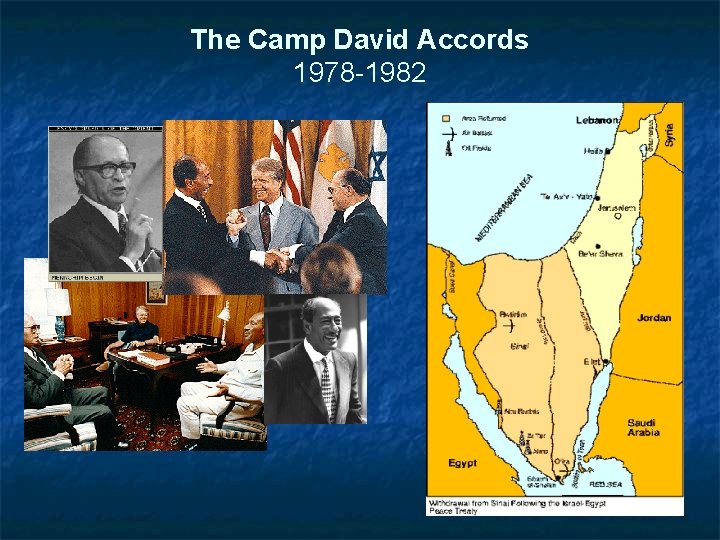
The Camp David Accords 1978 -1982
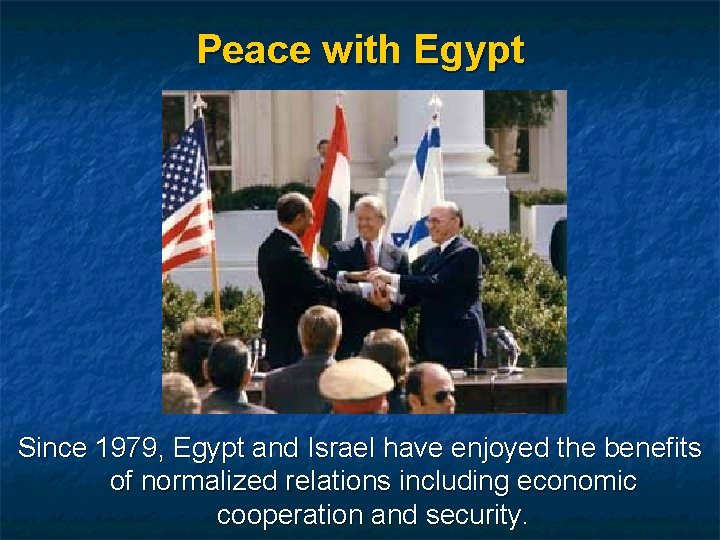
Peace with Egypt Since 1979, Egypt and Israel have enjoyed the benefits of normalized relations including economic cooperation and security.
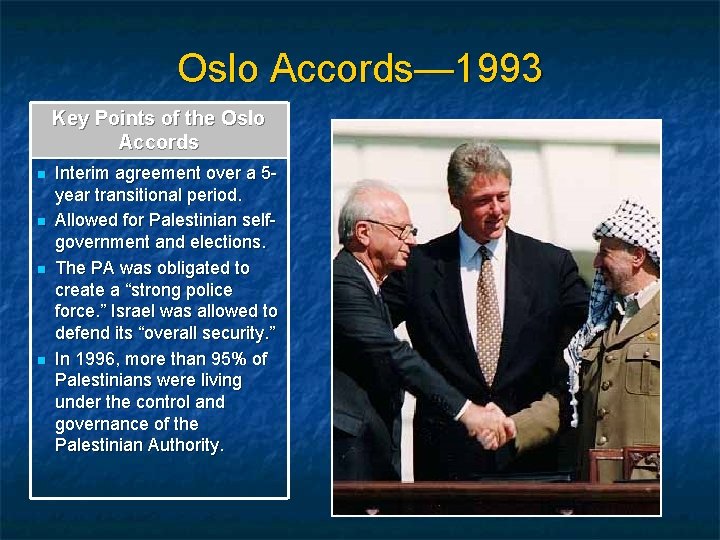
Oslo Accords— 1993 Key Points of the Oslo Accords n n Interim agreement over a 5 year transitional period. Allowed for Palestinian selfgovernment and elections. The PA was obligated to create a “strong police force. ” Israel was allowed to defend its “overall security. ” In 1996, more than 95% of Palestinians were living under the control and governance of the Palestinian Authority.
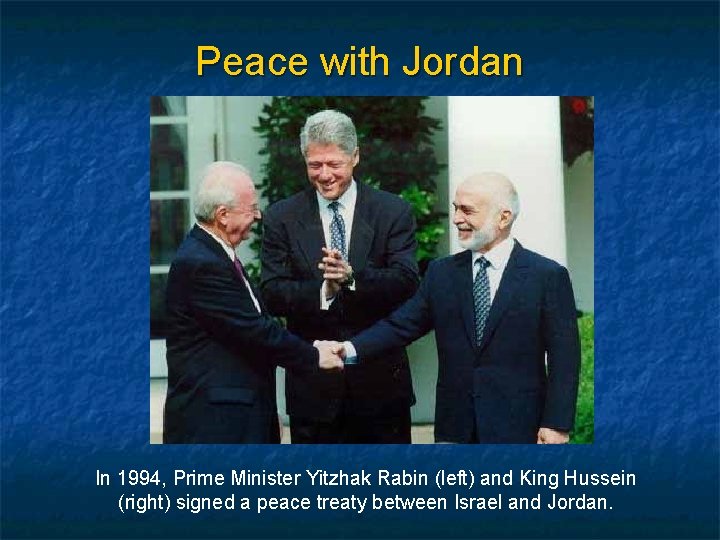
Peace with Jordan In 1994, Prime Minister Yitzhak Rabin (left) and King Hussein (right) signed a peace treaty between Israel and Jordan.
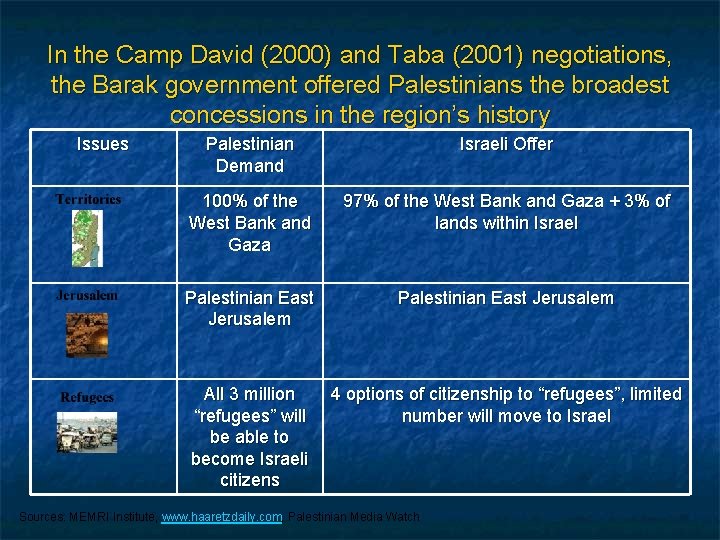
In the Camp David (2000) and Taba (2001) negotiations, the Barak government offered Palestinians the broadest concessions in the region’s history Issues Palestinian Demand Israeli Offer 100% of the West Bank and Gaza 97% of the West Bank and Gaza + 3% of lands within Israel Palestinian East Jerusalem All 3 million “refugees” will be able to become Israeli citizens 4 options of citizenship to “refugees”, limited number will move to Israel Sources: MEMRI Institute, www. haaretzdaily. com, Palestinian Media Watch
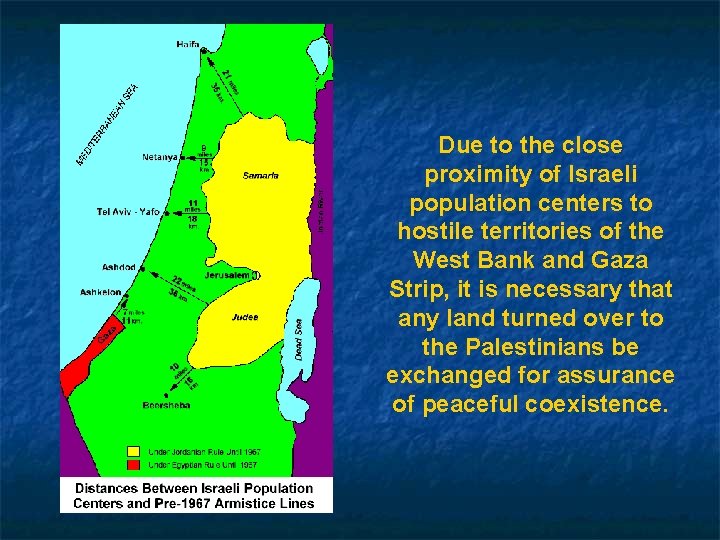
Due to the close proximity of Israeli population centers to hostile territories of the West Bank and Gaza Strip, it is necessary that any land turned over to the Palestinians be exchanged for assurance of peaceful coexistence.
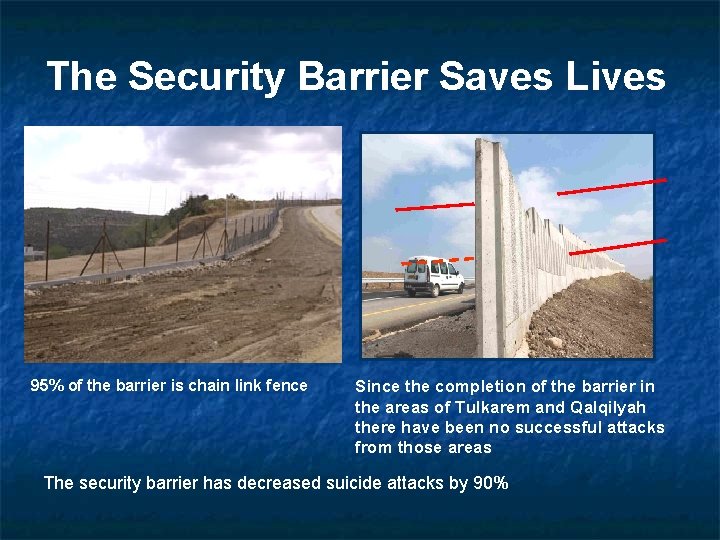
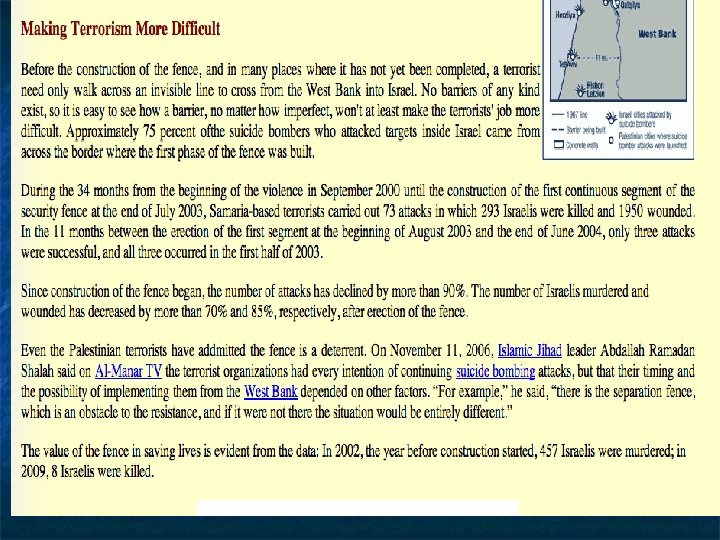
The Security Barrier Saves Lives 95% of the barrier is chain link fence Since the completion of the barrier in the areas of Tulkarem and Qalqilyah there have been no successful attacks from those areas The security barrier has decreased suicide attacks by 90%
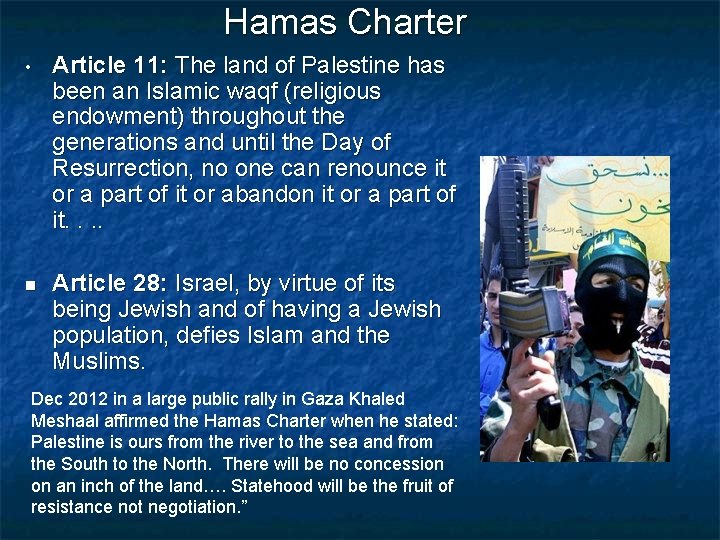
Hamas Charter • Article 11: The land of Palestine has been an Islamic waqf (religious endowment) throughout the generations and until the Day of Resurrection, no one can renounce it or a part of it or abandon it or a part of it. . n Article 28: Israel, by virtue of its being Jewish and of having a Jewish population, defies Islam and the Muslims. Dec 2012 in a large public rally in Gaza Khaled Meshaal affirmed the Hamas Charter when he stated: Palestine is ours from the river to the sea and from the South to the North. There will be no concession on an inch of the land…. Statehood will be the fruit of resistance not negotiation. ”
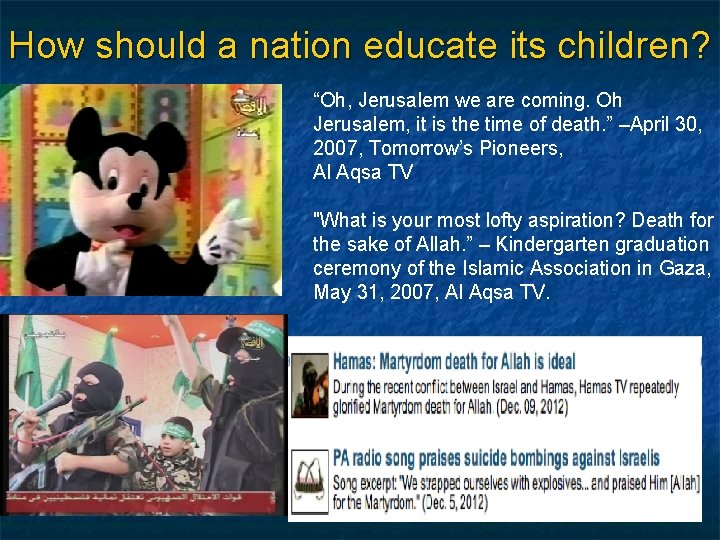
How should a nation educate its children? “Oh, Jerusalem we are coming. Oh Jerusalem, it is the time of death. ” –April 30, 2007, Tomorrow’s Pioneers, Al Aqsa TV "What is your most lofty aspiration? Death for the sake of Allah. ” – Kindergarten graduation ceremony of the Islamic Association in Gaza, May 31, 2007, Al Aqsa TV.
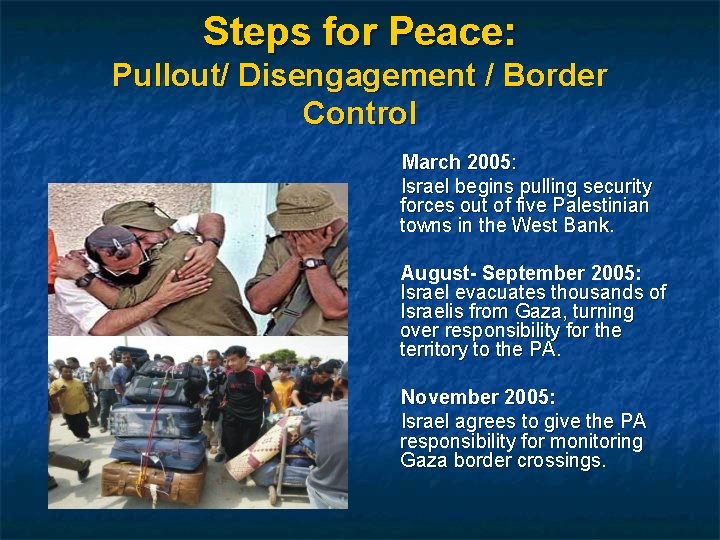
Steps for Peace: Pullout/ Disengagement / Border Control March 2005: Israel begins pulling security forces out of five Palestinian towns in the West Bank. August- September 2005: Israel evacuates thousands of Israelis from Gaza, turning over responsibility for the territory to the PA. November 2005: Israel agrees to give the PA responsibility for monitoring Gaza border crossings.
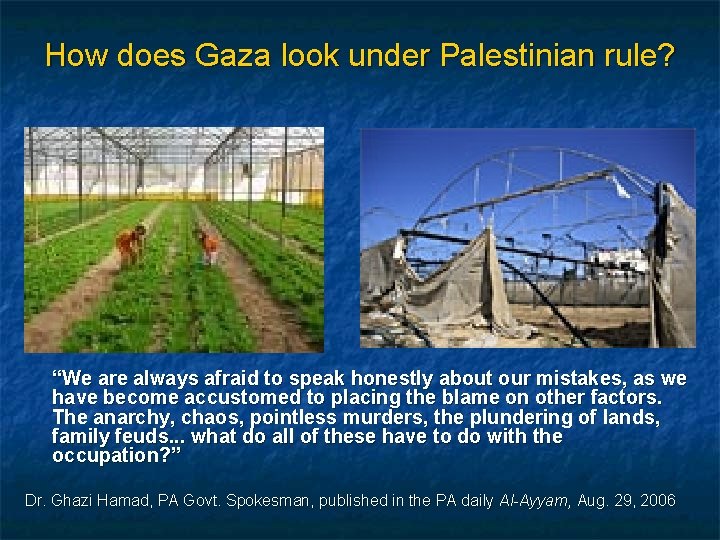
How does Gaza look under Palestinian rule? “We are always afraid to speak honestly about our mistakes, as we have become accustomed to placing the blame on other factors. The anarchy, chaos, pointless murders, the plundering of lands, family feuds. . . what do all of these have to do with the occupation? ” Dr. Ghazi Hamad, PA Govt. Spokesman, published in the PA daily Al-Ayyam, Aug. 29, 2006
What challenges does each side face? Israeli: n Lack of trust of Palestinian side n Weak Leadership/Political Instability n Integrating its own Arab population n Loss of “utopian dreams”: “Greater Israel”, a partner for peace n Obsessive int’l media focus Palestinian: n Lack of trust of Israeli side n Rivalry for leadership, enmity between factions n Lack of freedom n Rise of Islamic fundamentalism n Creating a new vision for the people n Obsessive int’l media focus
One of the Muslim voices for coexistence n “I also don’t give up hope, for cultures can and do evolve; they are, after all, the handiwork of human beings, not of G-d. To question a particular aspect of Palestinian culture, then, is nothing more than an expression of faith that more humane choices can be made. ” • “We liberals need to be asking as many tough questions of Palestinian officials as of Israeli ones. Until we do, we’ll always reduce Palestinians to the status of mere victims. And that does nothing to recognize their dignity. Or their capacity for making ethically—and ideologically —sounder choices. ” -Irashad Manji, author The Trouble with Islam Today
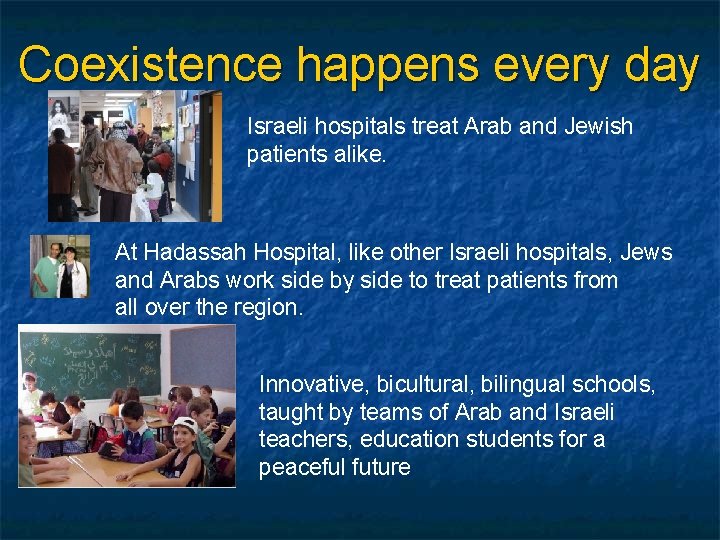
Coexistence happens every day Israeli hospitals treat Arab and Jewish patients alike. At Hadassah Hospital, like other Israeli hospitals, Jews and Arabs work side by side to treat patients from all over the region. Innovative, bicultural, bilingual schools, taught by teams of Arab and Israeli teachers, education students for a peaceful future
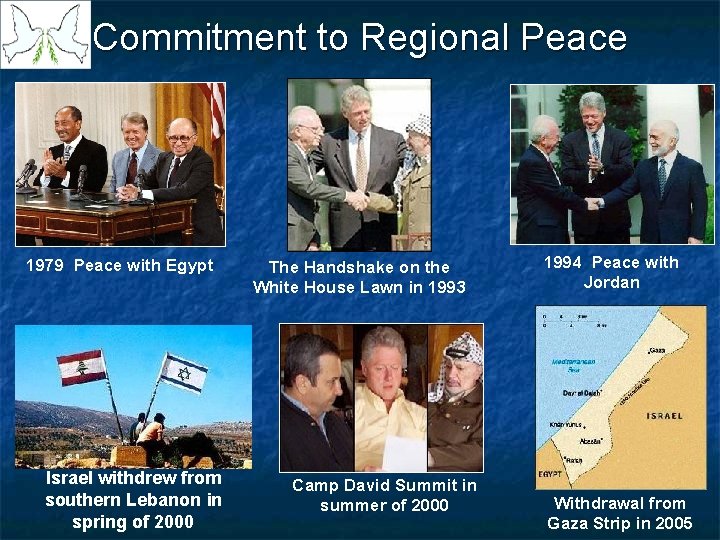
Commitment to Regional Peace 1979 Peace with Egypt Israel withdrew from southern Lebanon in spring of 2000 The Handshake on the White House Lawn in 1993 Camp David Summit in summer of 2000 1994 Peace with Jordan Withdrawal from Gaza Strip in 2005
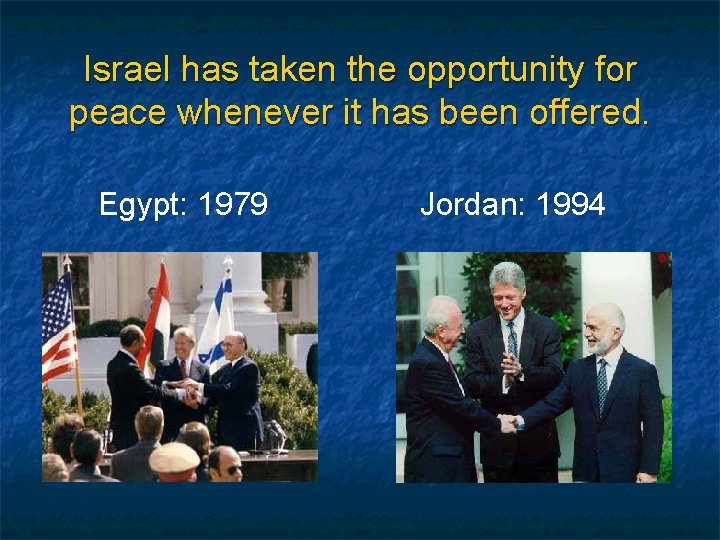
Israel has taken the opportunity for peace whenever it has been offered. Egypt: 1979 Jordan: 1994
- Slides: 44