
Understanding the antibiotics prescribing pattern among dental practitioners
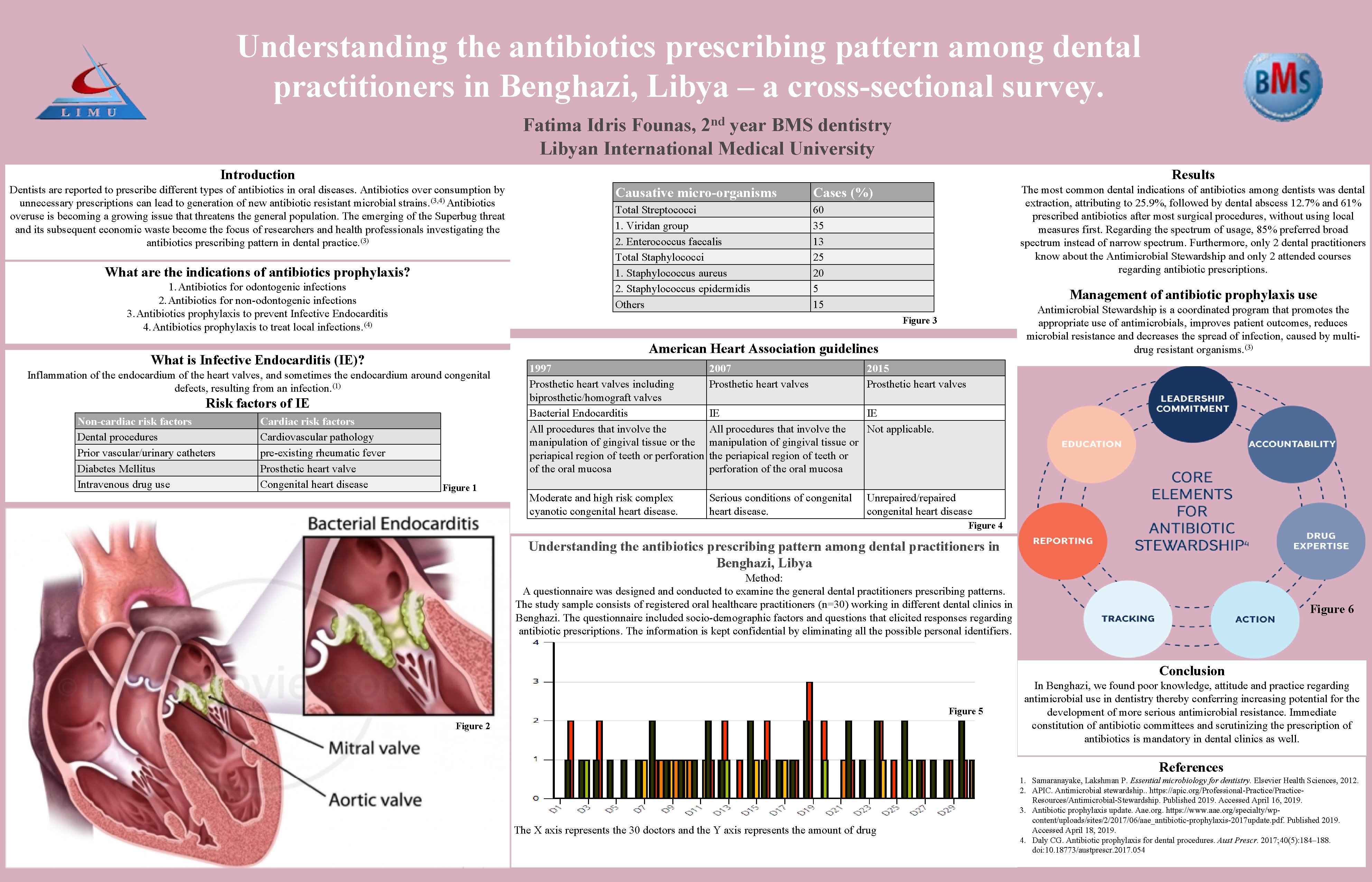
Understanding the antibiotics prescribing pattern among dental practitioners in Benghazi, Libya – a cross-sectional survey. nd 2 Fatima Idris Founas, year BMS dentistry Libyan International Medical University Introduction Results Dentists are reported to prescribe different types of antibiotics in oral diseases. Antibiotics over consumption by unnecessary prescriptions can lead to generation of new antibiotic resistant microbial strains. (3, 4) Antibiotics overuse is becoming a growing issue that threatens the general population. The emerging of the Superbug threat and its subsequent economic waste become the focus of researchers and health professionals investigating the antibiotics prescribing pattern in dental practice. (3) What are the indications of antibiotics prophylaxis? 1. Antibiotics for odontogenic infections 2. Antibiotics for non-odontogenic infections 3. Antibiotics prophylaxis to prevent Infective Endocarditis 4. Antibiotics prophylaxis to treat local infections. (4) Total Streptococci 1. Viridan group 2. Enterococcus faecalis Total Staphylococci 1. Staphylococcus aureus 2. Staphylococcus epidermidis Others 60 35 13 25 20 5 15 The most common dental indications of antibiotics among dentists was dental extraction, attributing to 25. 9%, followed by dental abscess 12. 7% and 61% prescribed antibiotics after most surgical procedures, without using local measures first. Regarding the spectrum of usage, 85% preferred broad spectrum instead of narrow spectrum. Furthermore, only 2 dental practitioners know about the Antimicrobial Stewardship and only 2 attended courses regarding antibiotic prescriptions. Management of antibiotic prophylaxis use Antimicrobial Stewardship is a coordinated program that promotes the appropriate use of antimicrobials, improves patient outcomes, reduces microbial resistance and decreases the spread of infection, caused by multidrug resistant organisms. (3) American Heart Association guidelines Inflammation of the endocardium of the heart valves, and sometimes the endocardium around congenital defects, resulting from an infection. (1) Risk factors of IE Cardiac risk factors Cardiovascular pathology pre-existing rheumatic fever Prosthetic heart valve Congenital heart disease Cases (%) Figure 3 What is Infective Endocarditis (IE)? Non-cardiac risk factors Dental procedures Prior vascular/urinary catheters Diabetes Mellitus Intravenous drug use Causative micro-organisms Figure 1 1997 Prosthetic heart valves including biprosthetic/homograft valves Bacterial Endocarditis All procedures that involve the manipulation of gingival tissue or the periapical region of teeth or perforation of the oral mucosa 2007 Prosthetic heart valves Moderate and high risk complex cyanotic congenital heart disease. Serious conditions of congenital heart disease. 2015 Prosthetic heart valves IE IE All procedures that involve the Not applicable. manipulation of gingival tissue or the periapical region of teeth or perforation of the oral mucosa Unrepaired/repaired congenital heart disease Figure 4 Understanding the antibiotics prescribing pattern among dental practitioners in Benghazi, Libya Method: A questionnaire was designed and conducted to examine the general dental practitioners prescribing patterns. The study sample consists of registered oral healthcare practitioners (n=30) working in different dental clinics in Benghazi. The questionnaire included socio-demographic factors and questions that elicited responses regarding antibiotic prescriptions. The information is kept confidential by eliminating all the possible personal identifiers. Figure 6 Conclusion Figure 5 Figure 2 In Benghazi, we found poor knowledge, attitude and practice regarding antimicrobial use in dentistry thereby conferring increasing potential for the development of more serious antimicrobial resistance. Immediate constitution of antibiotic committees and scrutinizing the prescription of antibiotics is mandatory in dental clinics as well. References The X axis represents the 30 doctors and the Y axis represents the amount of drug 1. Samaranayake, Lakshman P. Essential microbiology for dentistry. Elsevier Health Sciences, 2012. 2. APIC. Antimicrobial stewardship. . https: //apic. org/Professional-Practice/Practice. Resources/Antimicrobial-Stewardship. Published 2019. Accessed April 16, 2019. 3. Antibiotic prophylaxis update. Aae. org. https: //www. aae. org/specialty/wpcontent/uploads/sites/2/2017/06/aae_antibiotic-prophylaxis-2017 update. pdf. Published 2019. Accessed April 18, 2019. 4. Daly CG. Antibiotic prophylaxis for dental procedures. Aust Prescr. 2017; 40(5): 184– 188. doi: 10. 18773/austprescr. 2017. 054
- Slides: 1