
Understanding The Aging Brain Rene Colorado MD Ph
Understanding The Aging Brain Rene Colorado, MD, Ph. D Medical Director, Stroke Center
[OUTLINE] - Dementia and mild cognitive impairment - Detection of dementia - Common causes of dementia - Risk factors for cognitive decline & dementia - How to prevent dementia - QUESTIONS
[Main conclusions: ] - 47 mill with dementia, projected to triple 2050 - No disease-modifying treatments - Emphasis on reducing risk - Enough evidence to conclude: (1) regular exercise and (2) reduction of vascular risk factors reduce risk of cognitive decline and may reduce risk of dementia - Healthy diet and lifelong learning may also reduce risk of cognitive decline
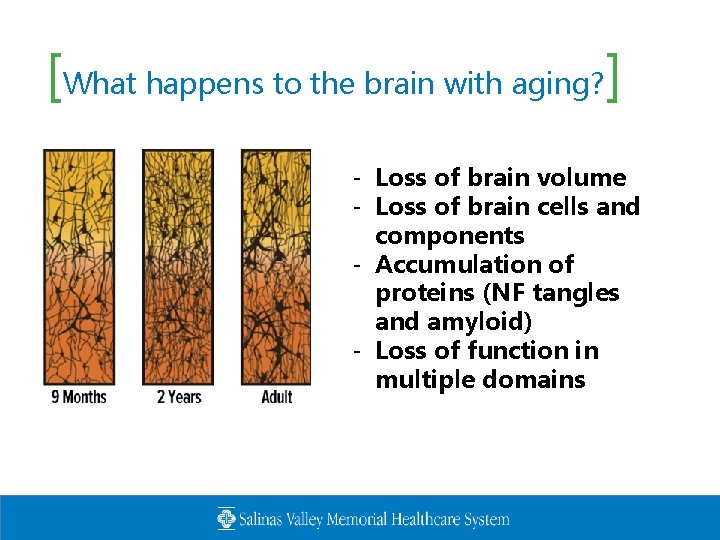
[What happens to the brain with aging? ] - Loss of brain volume - Loss of brain cells and components - Accumulation of proteins (NF tangles and amyloid) - Loss of function in multiple domains

[Healthy brain aging ] - Maintenance/improvement of cognitive performance - Ability to make decisions and remain independent - Avoidance of disease and disability by maintenance of physical, cognitive and social engagement
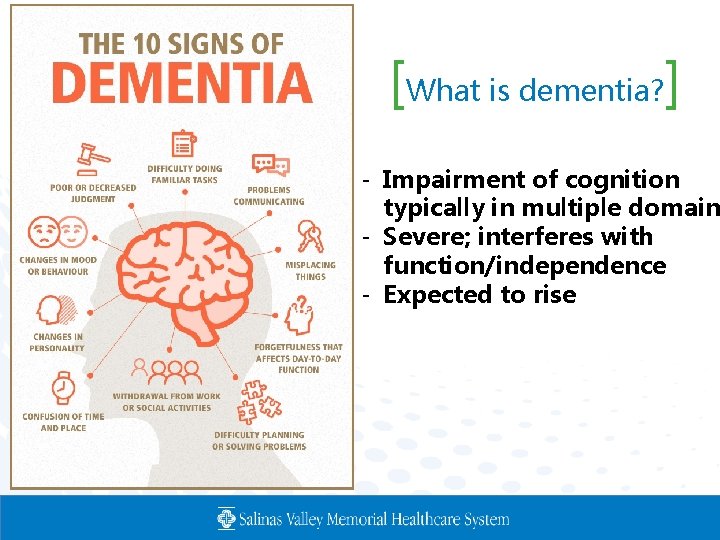
[What is dementia? ] - Impairment of cognition typically in multiple domain - Severe; interferes with function/independence - Expected to rise
[What is mild cognitive impairment? ] - Mild cognitive deficits not severe enough - Precursor to dementia - Important to recognize early - Important to recognize treatable conditions
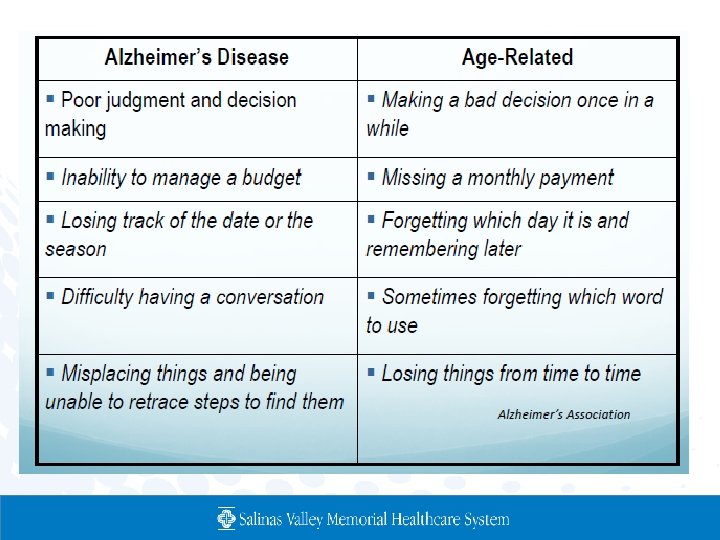
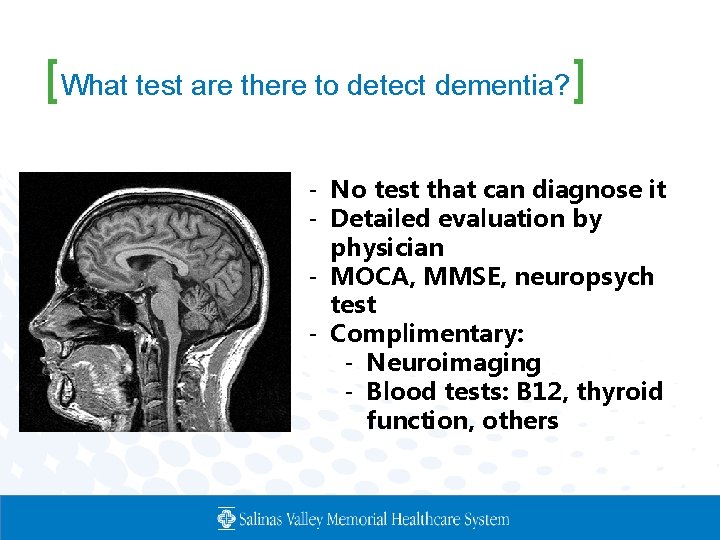
[What test are there to detect dementia? ] - No test that can diagnose it - Detailed evaluation by physician - MOCA, MMSE, neuropsych test - Complimentary: - Neuroimaging - Blood tests: B 12, thyroid function, others
[What causes dementia? ] MAJOR CAUSES: - Alzheimer disease - Cerebrovascular disease - Others: substance use, brain tumors, thyroid disease, other neurodegenerative diseases
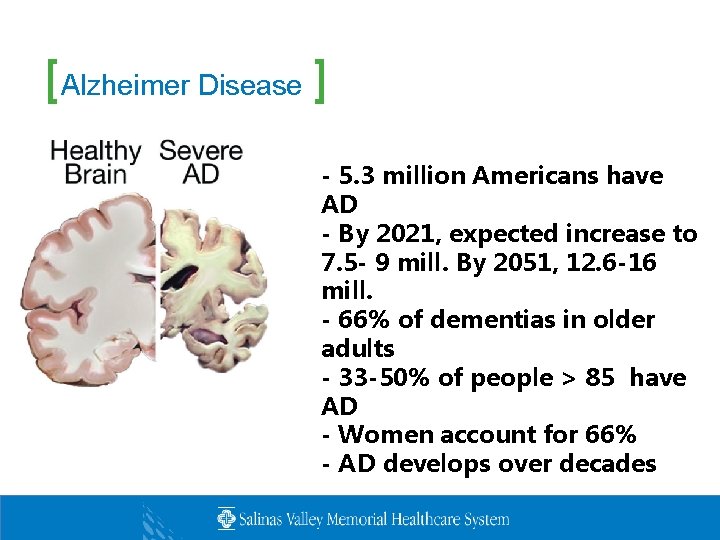
[Alzheimer Disease ] - 5. 3 million Americans have AD - By 2021, expected increase to 7. 5 - 9 mill. By 2051, 12. 6 -16 mill. - 66% of dementias in older adults - 33 -50% of people > 85 have AD - Women account for 66% - AD develops over decades
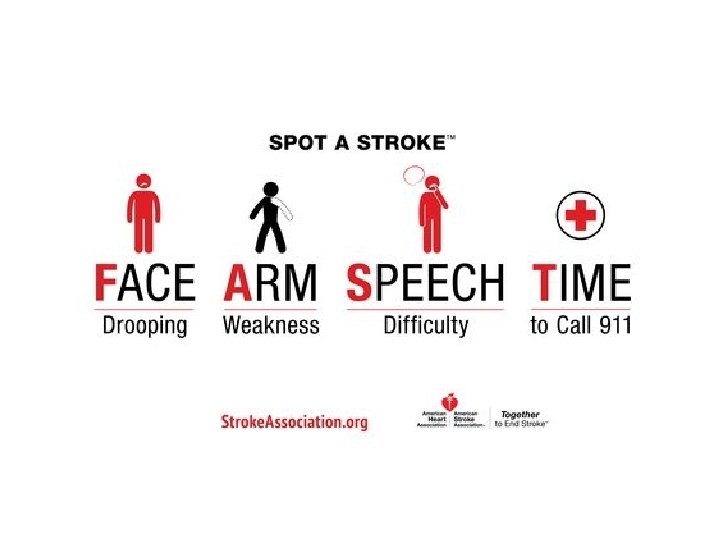
[Vascular dementia and strokes ] - Dementia after multiple strokes - Few large strokes, multiple small stroke, strokes in strategic places - Strong relationship to cardiovascular risk factors
F. A. S. T.
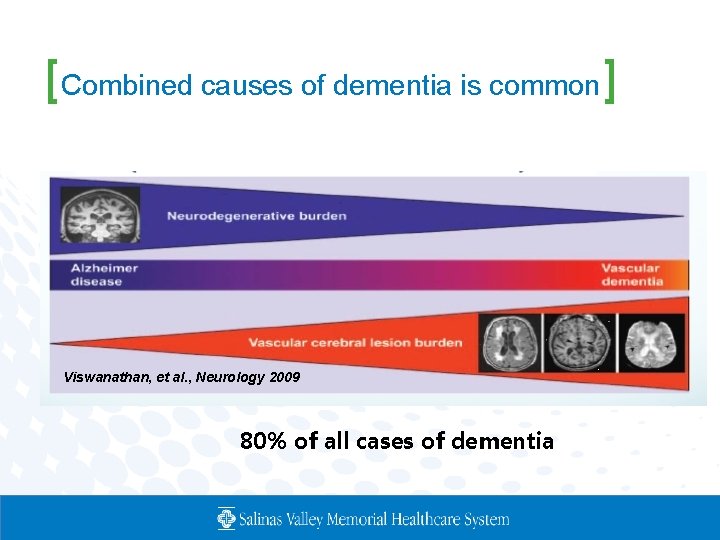
[Combined causes of dementia is common] Viswanathan, et al. , Neurology 2009 80% of all cases of dementia
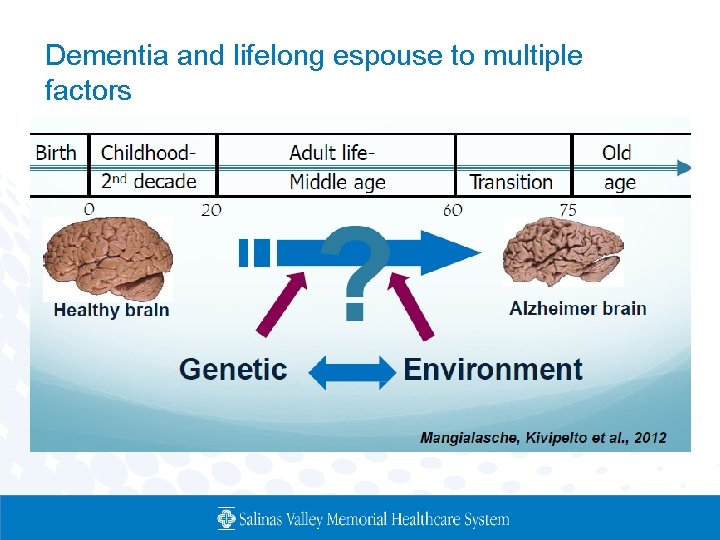
Dementia and lifelong espouse to multiple factors
[non-modifiable risks factors] - Strongest risk factors - Age - strongest risk factor (exponential increase) - Genetics - Apo. E e 4 allele for later onset, earlyonset genes - Family history - Nonmodifiable by medical interventions or individual behavior
[modifiable risks factors] - Cardiometabolic - Diabetes, hypertension, smoking - Strongest association in mid-life not late life - ADDITIVE - Lifestyle: - Physical activity, alcohol, sleep, obesity, diet, TBI
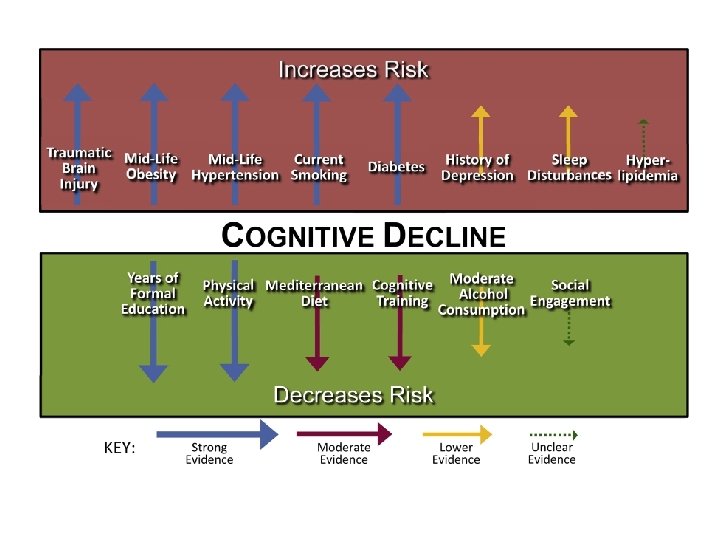
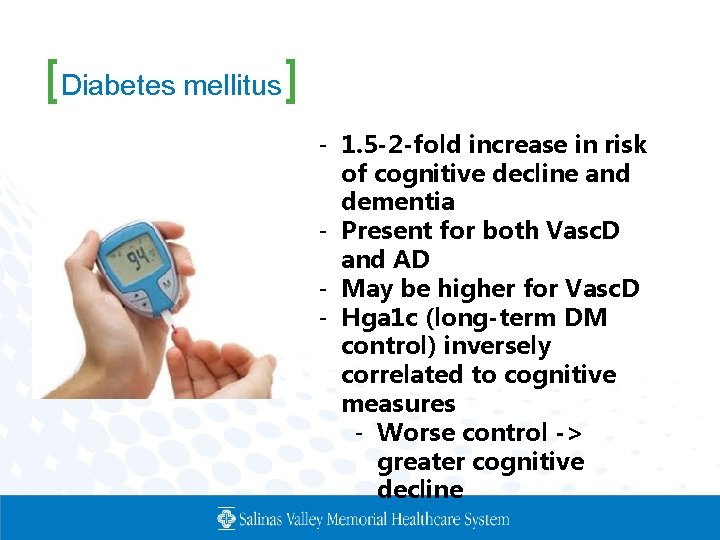
[Diabetes mellitus] - 1. 5 -2 -fold increase in risk of cognitive decline and dementia - Present for both Vasc. D and AD - May be higher for Vasc. D - Hga 1 c (long-term DM control) inversely correlated to cognitive measures - Worse control -> greater cognitive decline
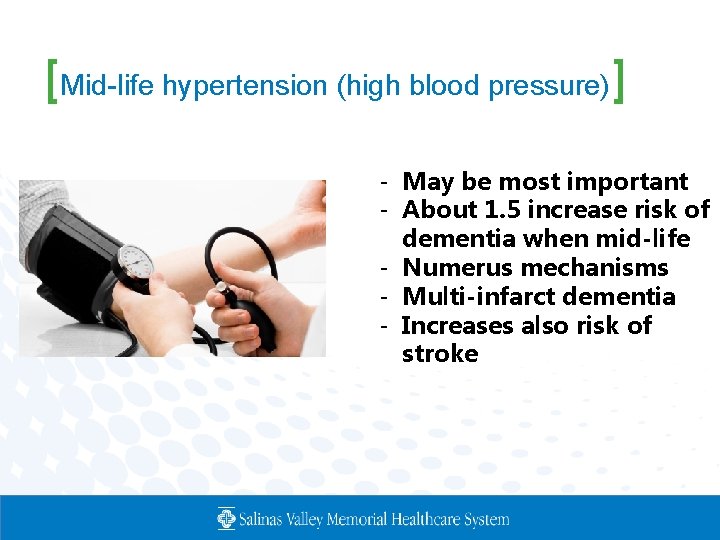
[Mid-life hypertension (high blood pressure)] - May be most important - About 1. 5 increase risk of dementia when mid-life - Numerus mechanisms - Multi-infarct dementia - Increases also risk of stroke
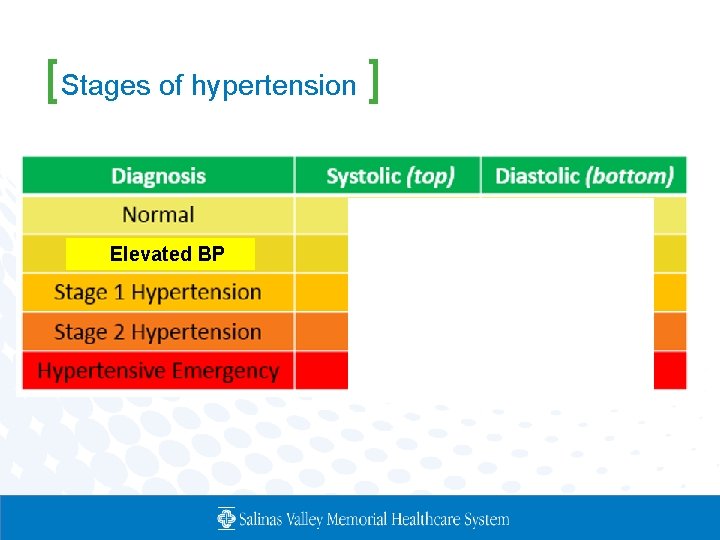
[Stages of hypertension ] Elevated BP
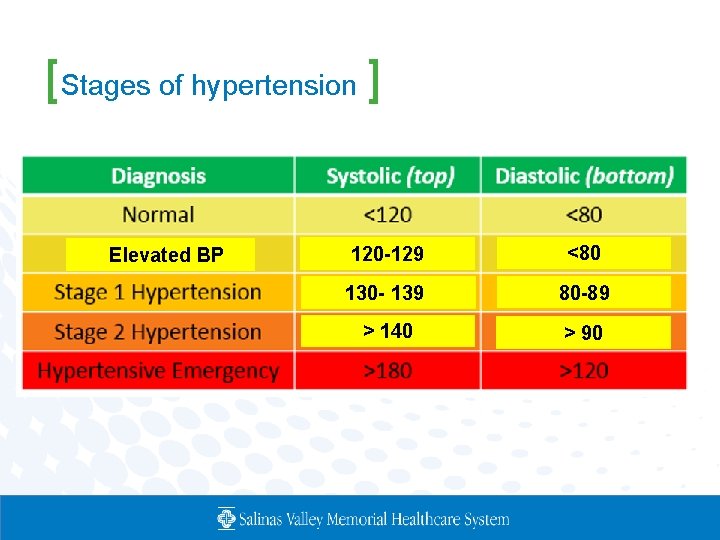
[Stages of hypertension ] Elevated BP 120 -129 <80 130 - 139 80 -89 > 140 > 90
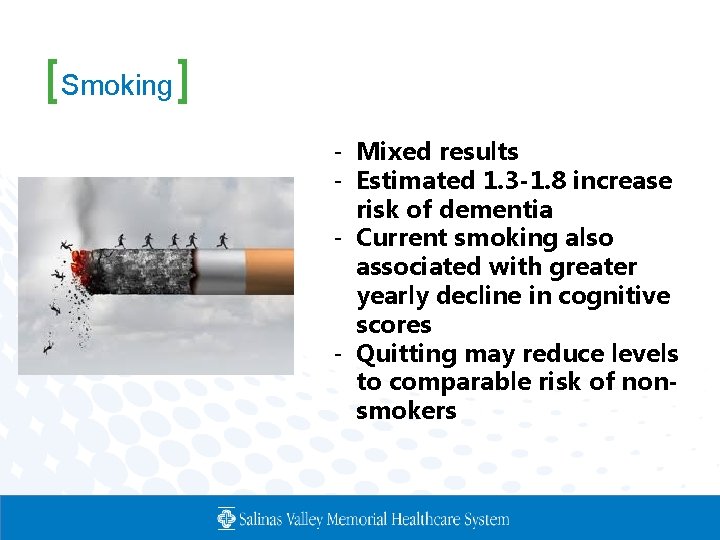
[Smoking] - Mixed results - Estimated 1. 3 -1. 8 increase risk of dementia - Current smoking also associated with greater yearly decline in cognitive scores - Quitting may reduce levels to comparable risk of nonsmokers
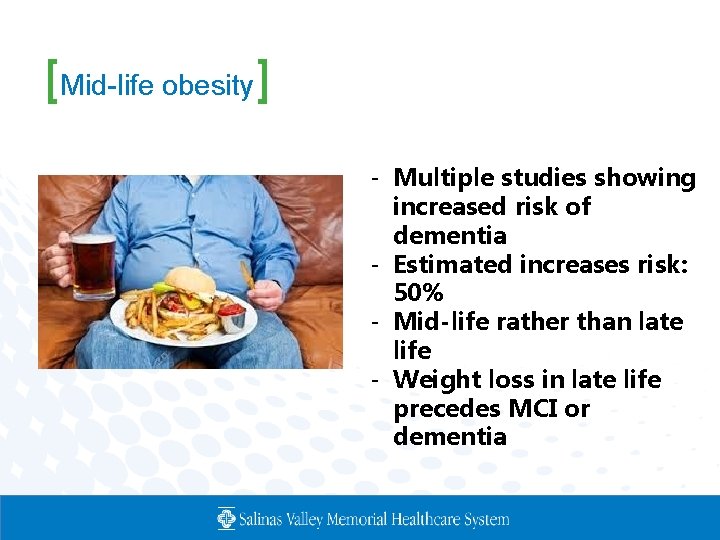
[Mid-life obesity] - Multiple studies showing increased risk of dementia - Estimated increases risk: 50% - Mid-life rather than late life - Weight loss in late life precedes MCI or dementia
[Physical activity] - > 20 studies showing physical activity (even mild) associated with decreased risk of cognitive impairment - Must be regular and vigorous - Details of duration, type, intensity and what period in life less clear - Seniors enrolled in exercise program experience improved cognitive function
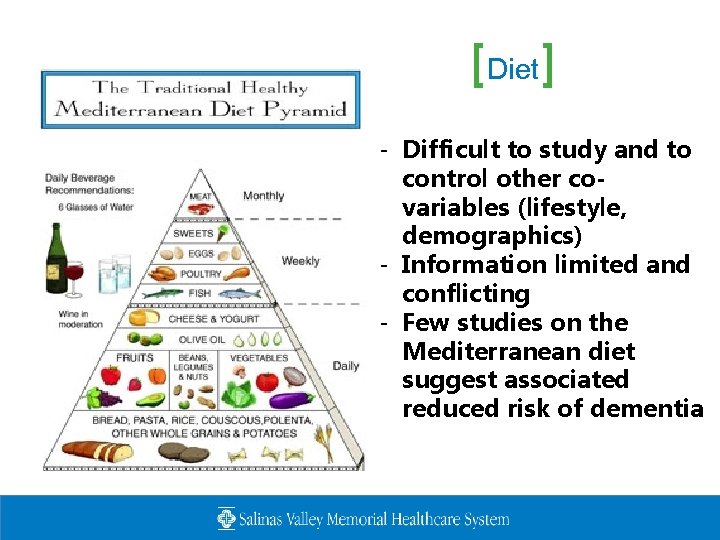
[Diet] - Difficult to study and to control other covariables (lifestyle, demographics) - Information limited and conflicting - Few studies on the Mediterranean diet suggest associated reduced risk of dementia
[Cognitive training and social engagement ] - Small studies - Inconclusive data - Some studies report improve cognitive function in seniors - Other studies show potentially protective
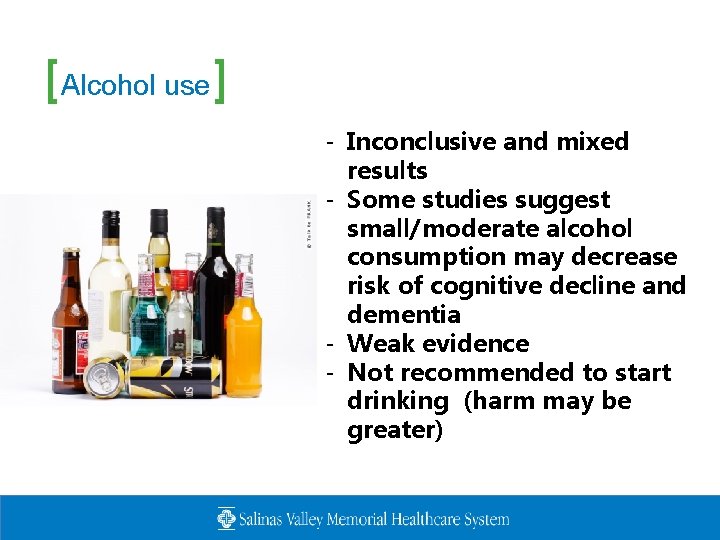
[Alcohol use] - Inconclusive and mixed results - Some studies suggest small/moderate alcohol consumption may decrease risk of cognitive decline and dementia - Weak evidence - Not recommended to start drinking (harm may be greater)
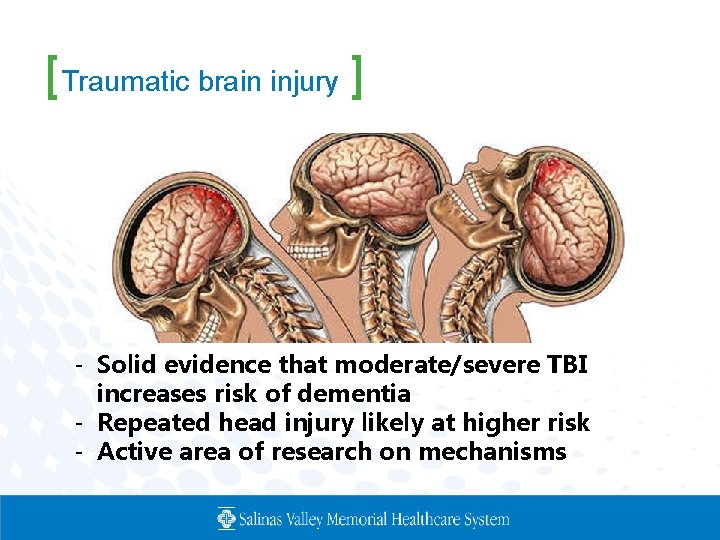
[Traumatic brain injury ] - Solid evidence that moderate/severe TBI increases risk of dementia - Repeated head injury likely at higher risk - Active area of research on mechanisms
[Depression] - Multiple studies showing history of depression increases risk of dementia - Possibly just an early marker - Effect of treatment and subsequent risk unknown - Pseudo-dementia from depression
[Sleep] - Multiple studies liking sleep disturbances (insomnia, sleep apnea) to increased risk of cognitive decline - Recent study showing treatment of OSA with CPAP reduces risk of cognitive decline - Unknow mechanisms of relationship - Unknown if it may just be a precursor to dementia
[Years of formal education] - People with more years of formal education or greater literacy have lower risk for dementia - Strong and consistent evidence - Cognitive reserve
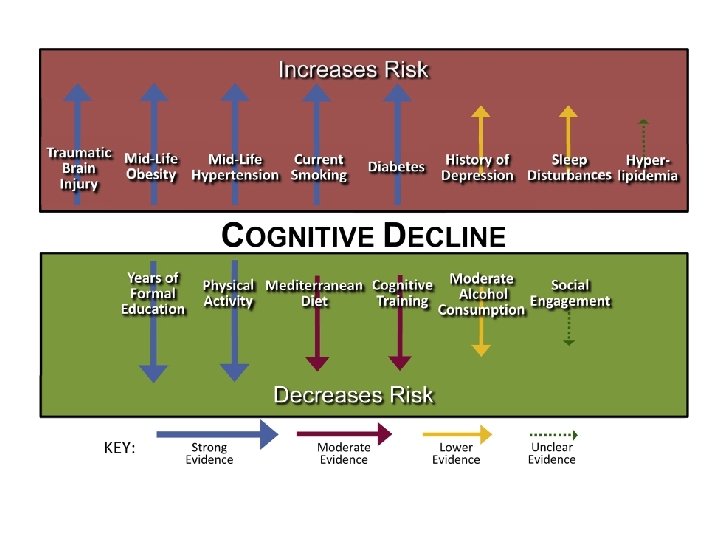
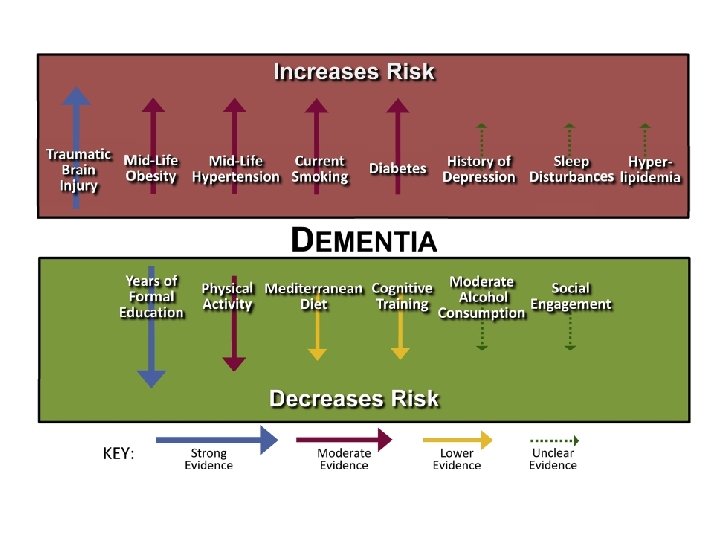
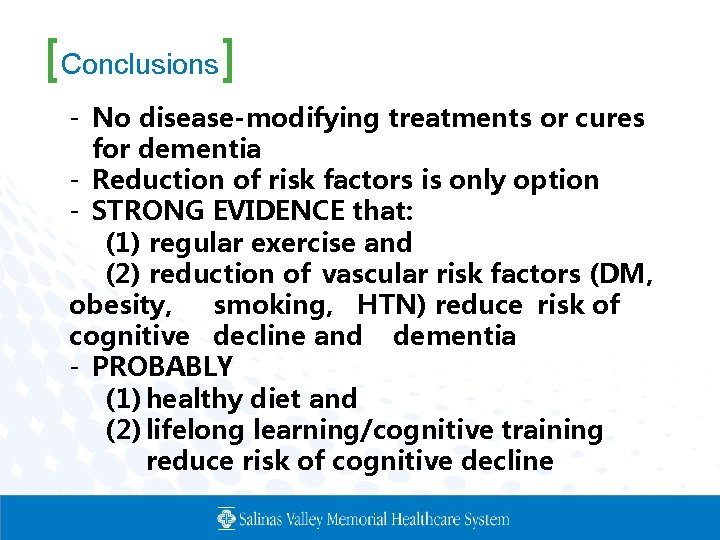
[Conclusions] - No disease-modifying treatments or cures for dementia - Reduction of risk factors is only option - STRONG EVIDENCE that: (1) regular exercise and (2) reduction of vascular risk factors (DM, obesity, smoking, HTN) reduce risk of cognitive decline and dementia - PROBABLY (1) healthy diet and (2) lifelong learning/cognitive training reduce risk of cognitive decline
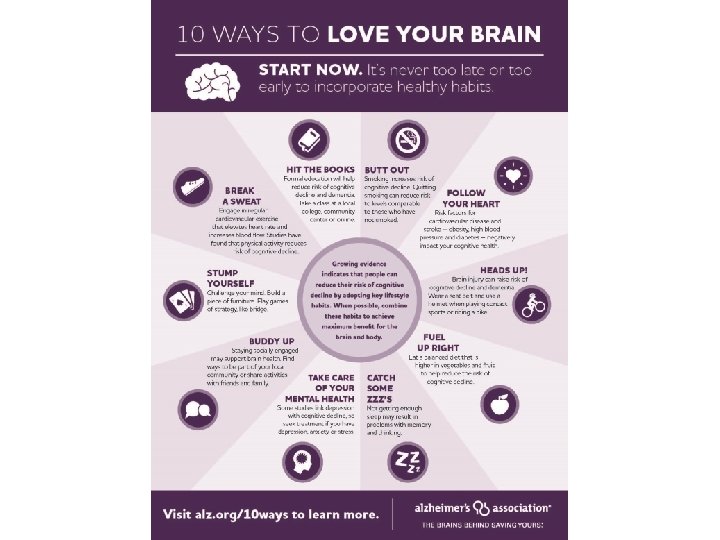
[How can I prevent developing dementia? ] - Exercise regularly and maintain healthy weight - Treat high blood pressure, diabetes and high cholesterol - Eat a healthy diet - Regular medical check-ups - Do not smoke or drink excessive alcohol - Remain socially engage and cognitively active - Avoid head trauma
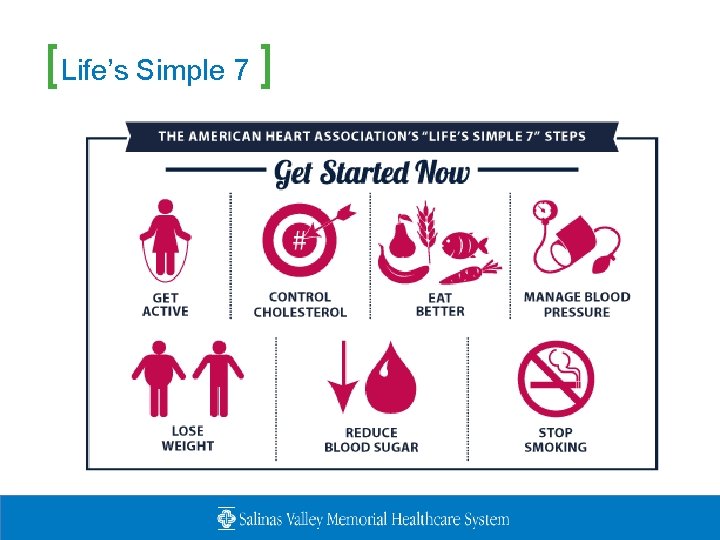
[Life’s Simple 7 ]
QUESTIONS?
- Slides: 41