
Understanding the 12 lead ECG part II By
Understanding the 12 -lead ECG, part II By Guy Goldich, RN, CCRN, MSN Nursing 2006, December Online: http: //www. nursing 2006. com © 2006 Lippincott Williams & Wilkins
Bundle-branch blocks n n Most common electrocardiogram (ECG) abnormality Appears as a wider than normal QRS complex Occurs when one of the two bundle branches can’t conduct the impulse Most common cause: ischemic heart disease 2
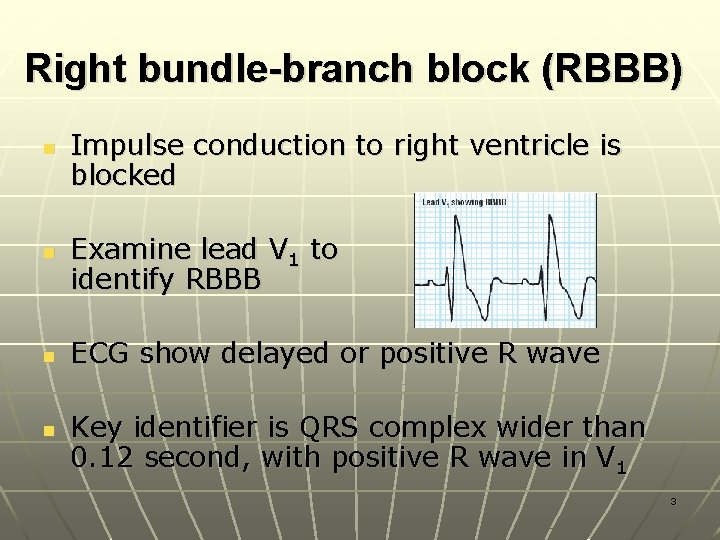
Right bundle-branch block (RBBB) n n Impulse conduction to right ventricle is blocked Examine lead V 1 to identify RBBB ECG show delayed or positive R wave Key identifier is QRS complex wider than 0. 12 second, with positive R wave in V 1 3
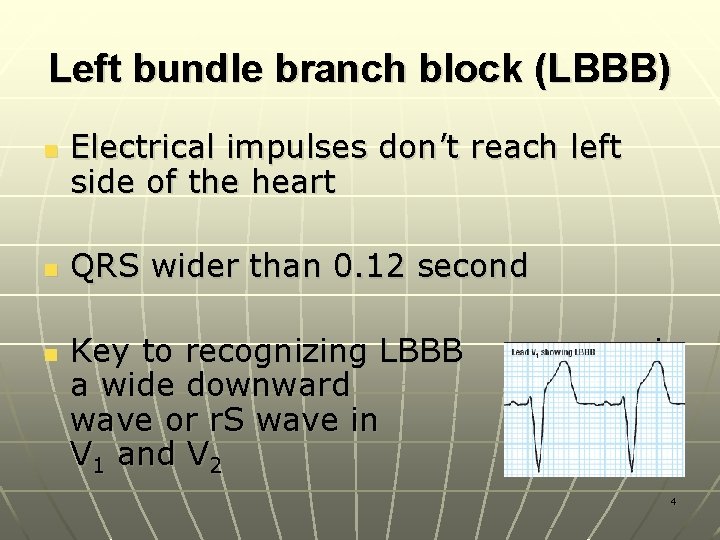
Left bundle branch block (LBBB) n n n Electrical impulses don’t reach left side of the heart QRS wider than 0. 12 second Key to recognizing LBBB a wide downward wave or r. S wave in V 1 and V 2 is S leads 4
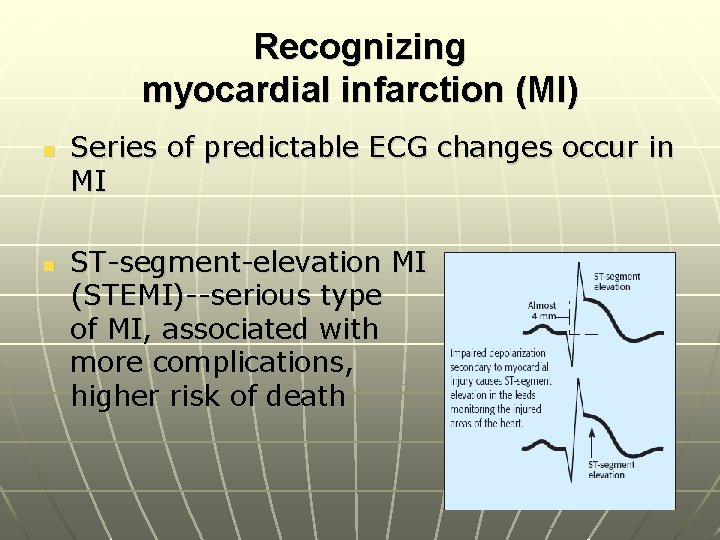
Recognizing myocardial infarction (MI) n n Series of predictable ECG changes occur in MI ST-segment-elevation MI (STEMI)--serious type of MI, associated with more complications, higher risk of death 5

Inferior wall STEMI n n Elevated ST segments in leads II, III, and a. VF, which monitor the heart’s inferior or bottom wall Area of the heart perfused by the right coronary artery 6
Septal MI n n Perfused by the left anterior descending (LAD) coronary artery ST-segment elevation seen in leads V 1 and V 2, the precordial or chest leads located on the anterior chest wall over the septum 7
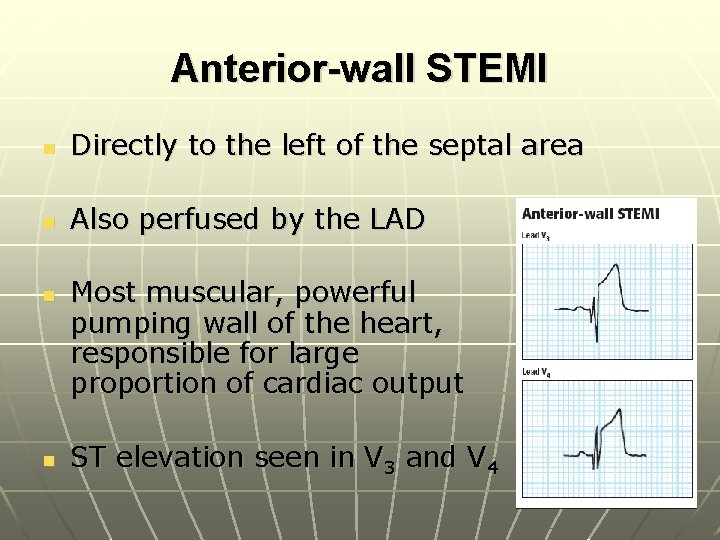
Anterior-wall STEMI n Directly to the left of the septal area n Also perfused by the LAD n n Most muscular, powerful pumping wall of the heart, responsible for large proportion of cardiac output ST elevation seen in V 3 and V 4 8
Lateral-wall STEMI n n Perfused by the circumflex artery Muscular, contributes significantly to the heart’s pumping ability Monitored by precordial (chest) and frontal (limb) leads ST-segment elevation will appear in leads I, a. VL, V 5, V 6 9
Leads and the heart n n n MIs can affect a single heart wall or more than one area ST-segment elevations appear in the leads monitoring all of the involved areas Areas involved are reflected by the MI descriptive name 10
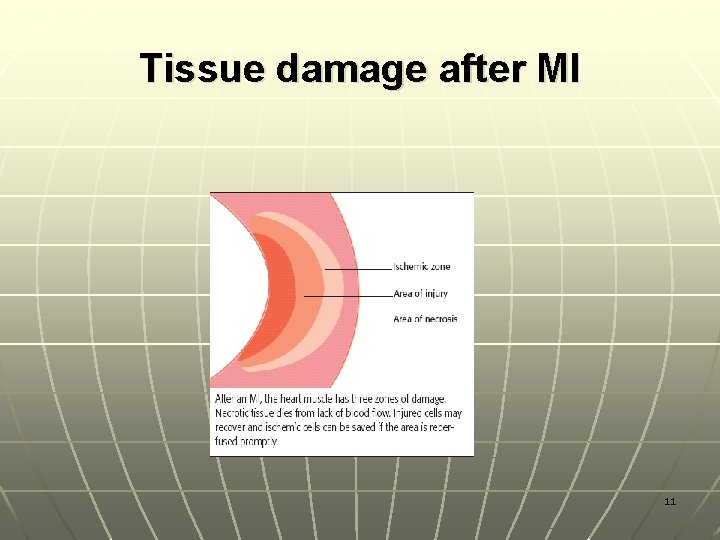
Tissue damage after MI 11
Common dysrhythmias n n n Always treat the patient, not the rhythm Assess your patient Document level of consciousness, vital signs, chest pain, shortness of breath and any other signs and symptoms 12
Sinus bradycardia n n n Sinus rhythm slower than 60 beats per minute Commonly caused by ischemic heart disease causing sinoatrial (SA) node to malfunction Also seen in MI, some medications (such as beta-blockers), and well-conditioned athletes 13
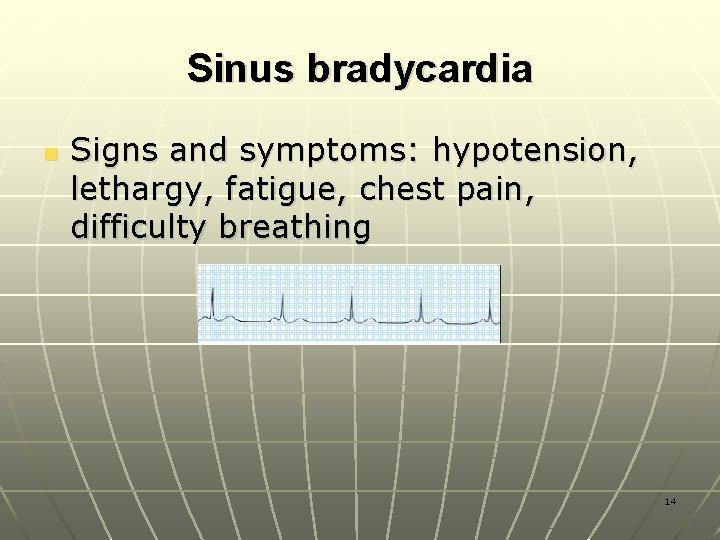
Sinus bradycardia n Signs and symptoms: hypotension, lethargy, fatigue, chest pain, difficulty breathing 14
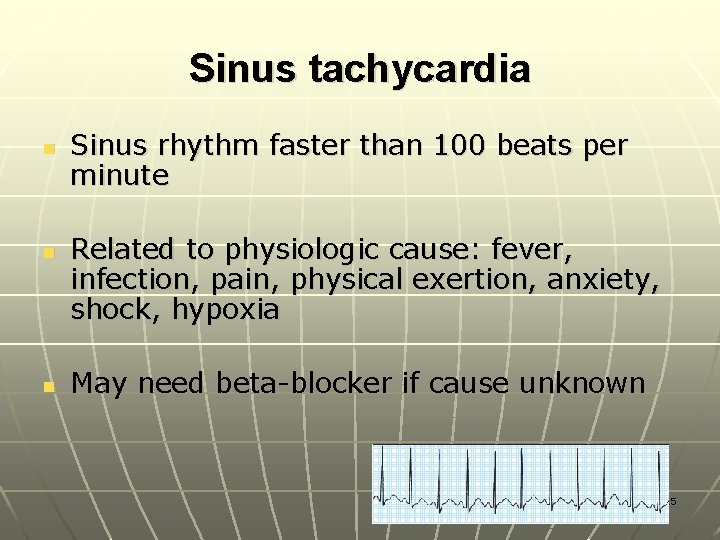
Sinus tachycardia n n n Sinus rhythm faster than 100 beats per minute Related to physiologic cause: fever, infection, pain, physical exertion, anxiety, shock, hypoxia May need beta-blocker if cause unknown 15
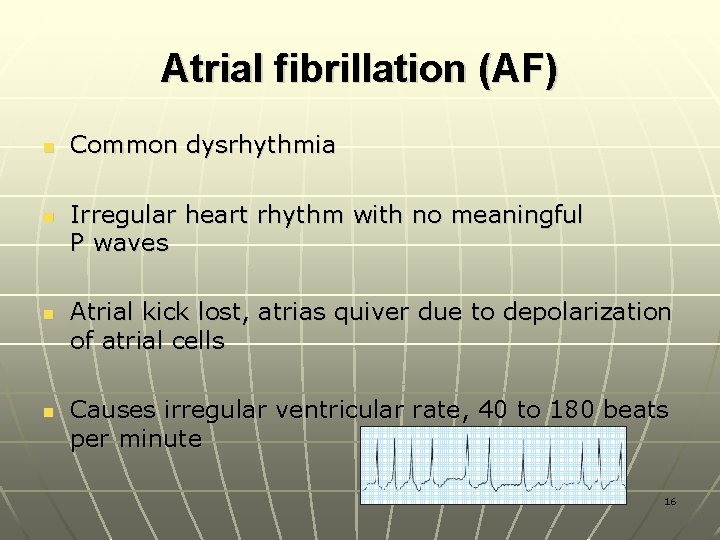
Atrial fibrillation (AF) n n Common dysrhythmia Irregular heart rhythm with no meaningful P waves Atrial kick lost, atrias quiver due to depolarization of atrial cells Causes irregular ventricular rate, 40 to 180 beats per minute 16
Causes of AF • • • Atrial enlargement due to COPD Other lung diseases Thyroid disease Acute MI Ischemic heart disease • Stress • Fatigue • Alcohol • Caffeine • Cigarettes 17
About AF n Two hallmarks of AF: • irregularly irregular rhythm • f waves n n If patient unstable or symptomatic: administer oxygen and obtain I. V. access All patients with AF lasting longer than 48 hours are at increased risk for thrombus 18
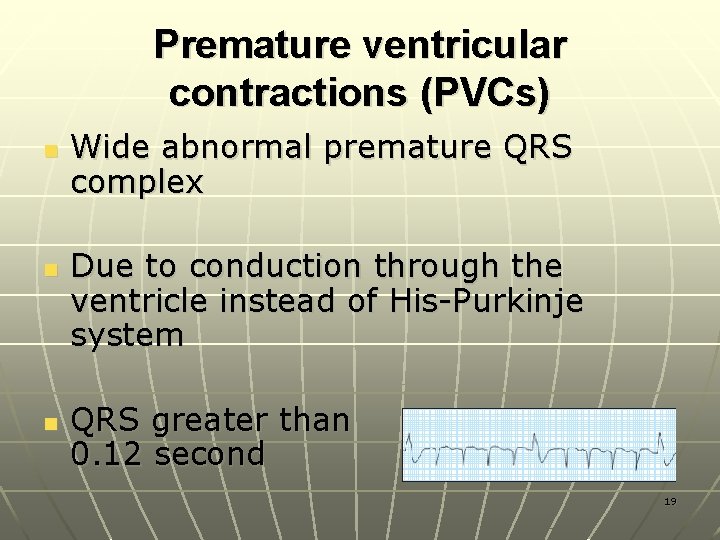
Premature ventricular contractions (PVCs) n n n Wide abnormal premature QRS complex Due to conduction through the ventricle instead of His-Purkinje system QRS greater than 0. 12 second 19
Causes of PVCs n Heart failure n Mitral valve prolapse n Electrolyte imbalances n Thyroid disease n Caffeine n Acute MI n Hypoxia 20
Ventricular tachycardia (VT) n n Rapid rate, 100 to 250 beats per minute Wide, bizarre, QRS complex followed by large T wave Patient may be unconscious, pulseless, apneic--initiate CPR If patient awake, treat as medical emergency 21
- Slides: 21