
UNDERSTANDING SUSTAINABILITY OF RECYCLED MATERIALS OUTI UGAS APRIL
UNDERSTANDING SUSTAINABILITY OF RECYCLED MATERIALS OUTI UGAS APRIL 17 TH, 2019

SO WHAT ARE WE AIMING FOR?
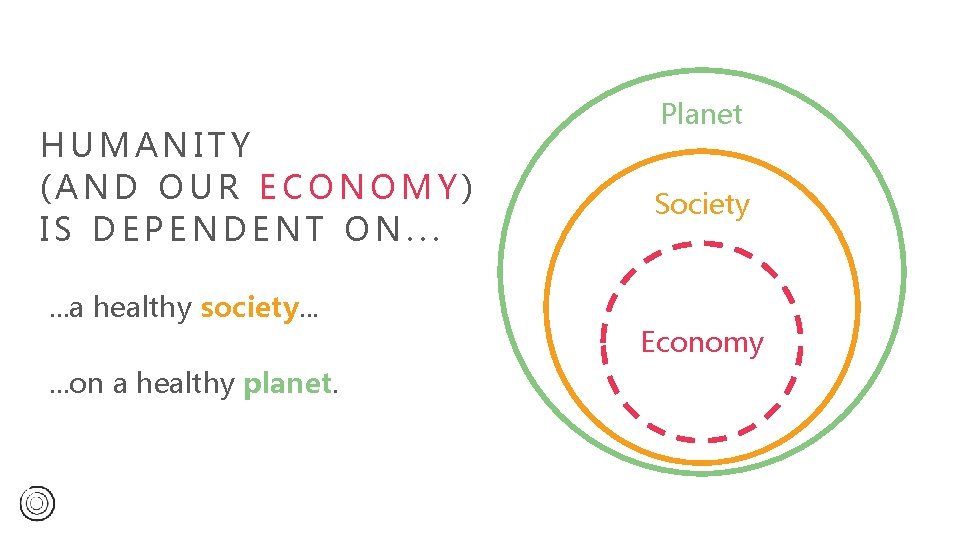
HUMANITY (AND OUR ECONOMY) IS DEPENDENT ON. . . a healthy society. . . on a healthy planet. Planet Society Economy
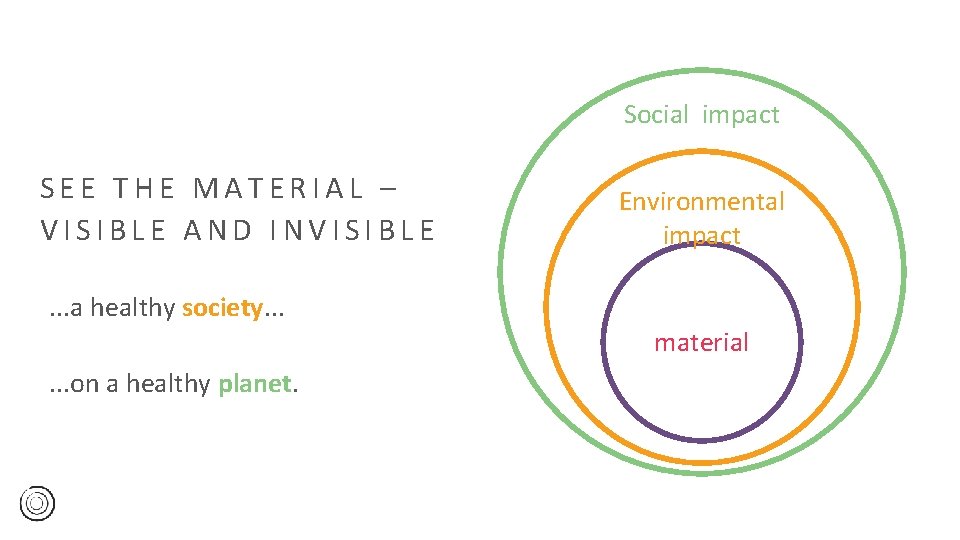
Social impact SEE THE MATERIAL – VISIBLE AND INVISIBLE Environmental impact . . . a healthy society. . . material. . . on a healthy planet.
Unsustainable development = systematic undermining of the systems we depend upon
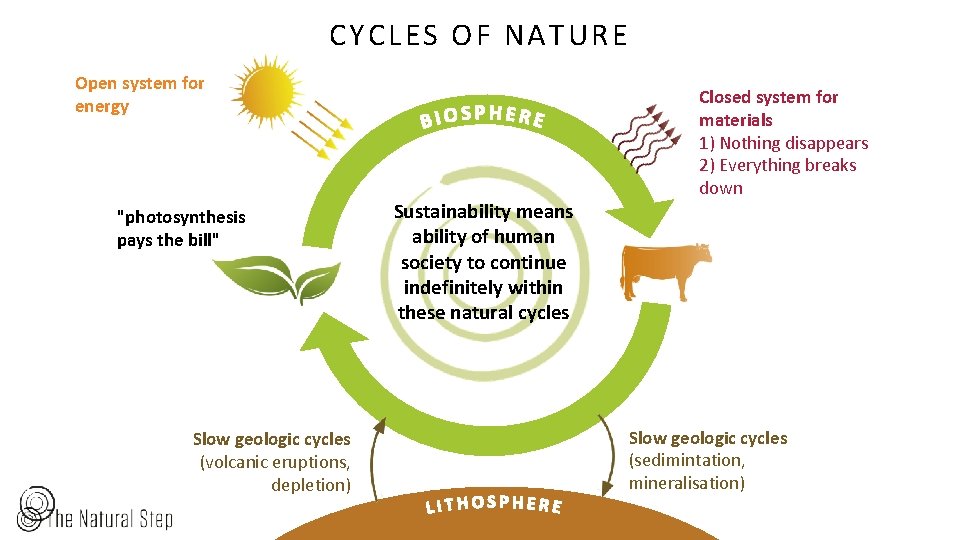
CYCLES OF NATURE Open system for energy "photosynthesis pays the bill" Slow geologic cycles (volcanic eruptions, depletion) Sustainability means ability of human society to continue indefinitely within these natural cycles Closed system for materials 1) Nothing disappears 2) Everything breaks down Slow geologic cycles (sedimintation, mineralisation)
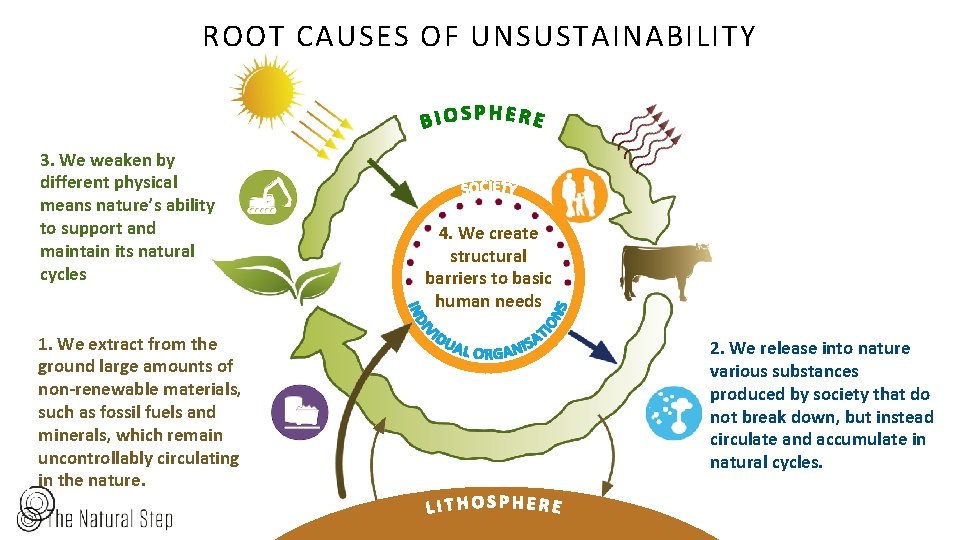
ROOT CAUSES OF UNSUSTAINABILITY 3. We weaken by different physical means nature’s ability to support and maintain its natural cycles 1. We extract from the ground large amounts of non-renewable materials, such as fossil fuels and minerals, which remain uncontrollably circulating in the nature. 4. We create structural barriers to basic human needs 2. We release into nature various substances produced by society that do not break down, but instead circulate and accumulate in natural cycles.
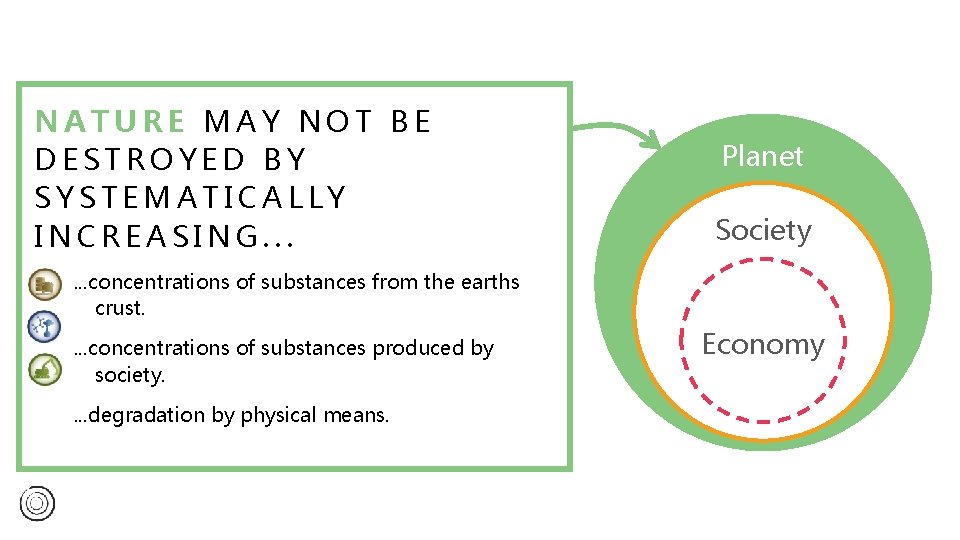
NATURE MAY NOT BE DESTROYED BY SYSTEMATICALLY INCREASING. . . Planet Society . . . concentrations of substances from the earths crust. . concentrations of substances produced by society. . degradation by physical means. Economy
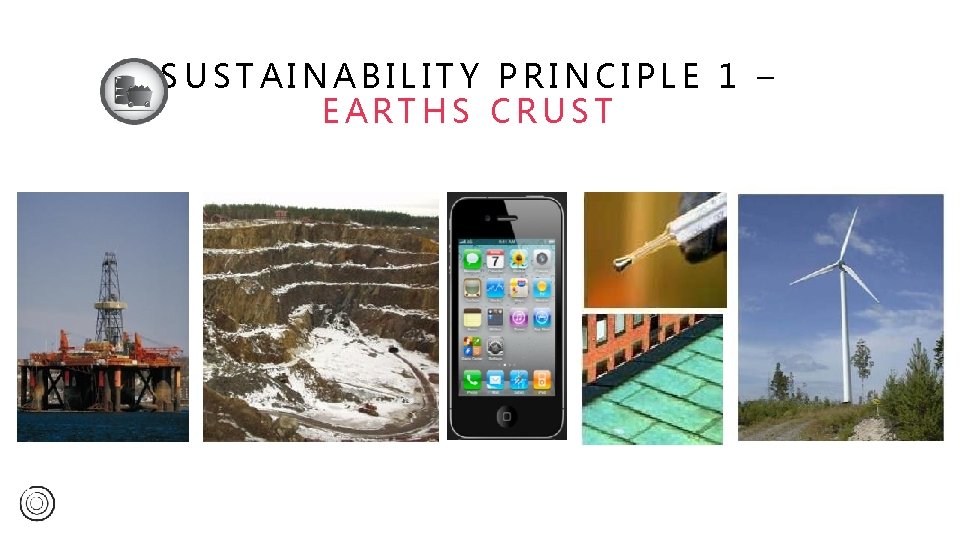
SUSTAINABILITY PRINCIPLE 1 – EARTHS CRUST
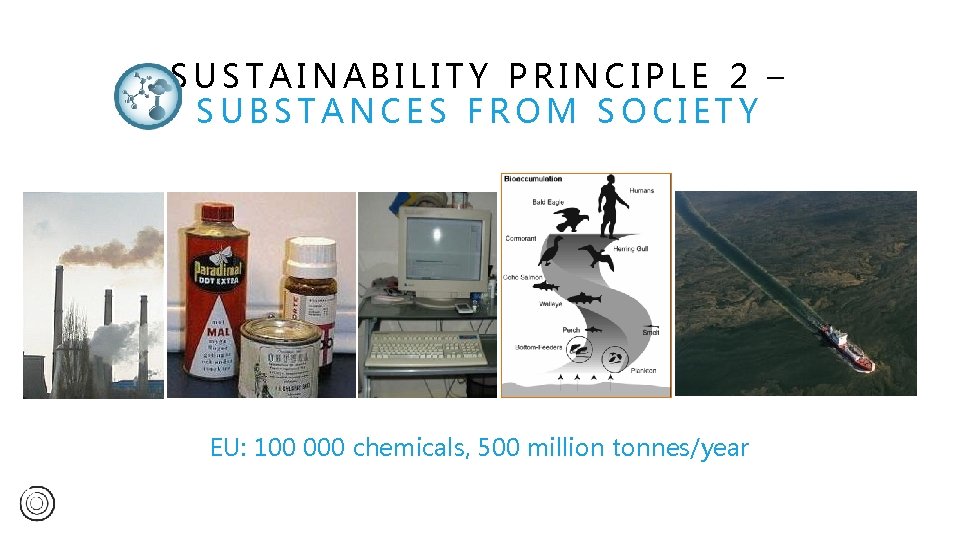
SUSTAINABILITY PRINCIPLE 2 – SUBSTANCES FROM SOCIETY EU: 100 000 chemicals, 500 million tonnes/year
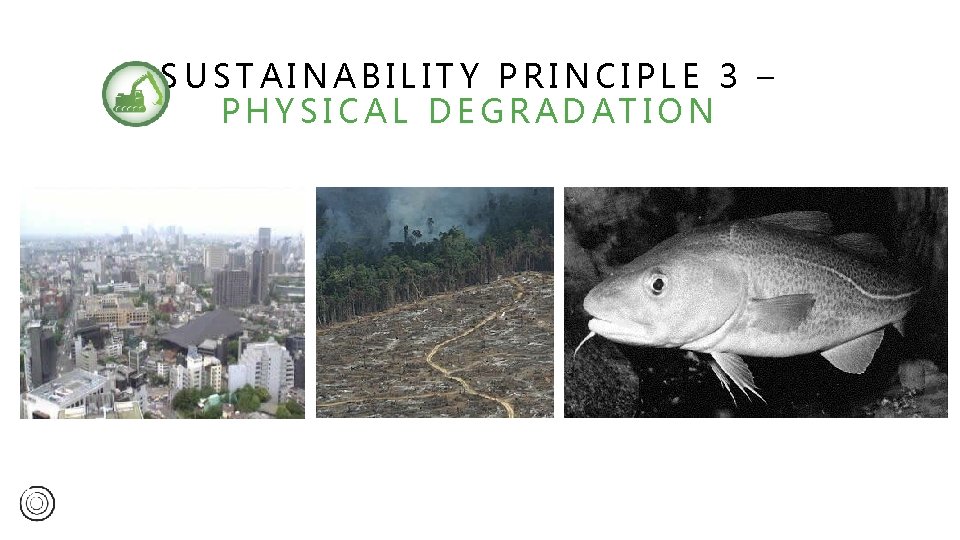
SUSTAINABILITY PRINCIPLE 3 – PHYSICAL DEGRADATION
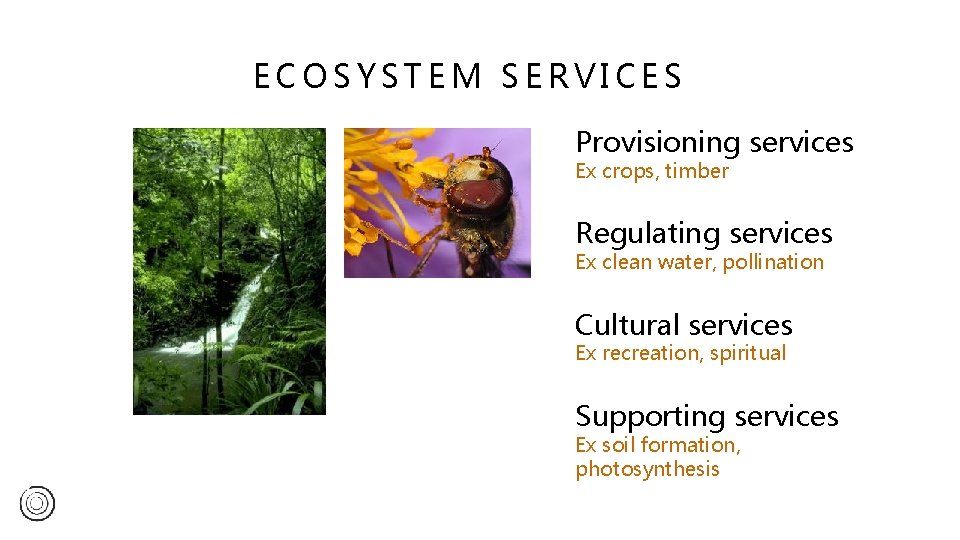
ECOSYSTEM SERVICES Provisioning services Ex crops, timber Regulating services Ex clean water, pollination Cultural services Ex recreation, spiritual Supporting services Ex soil formation, photosynthesis
TRUST IS THE GLUE IN THE SOCIAL SYSTEM
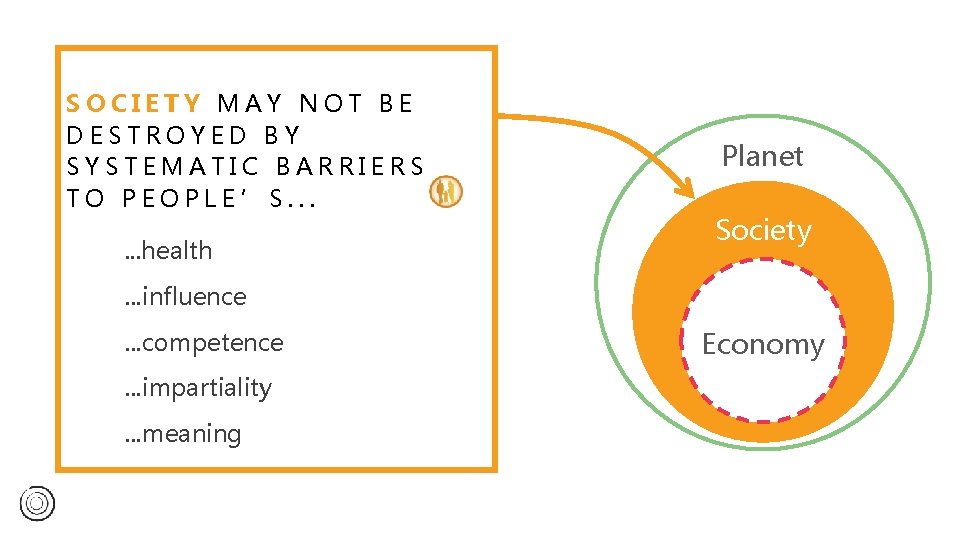
SOCIETY MAY NOT BE DESTROYED BY SYSTEMATIC BARRIERS TO PEOPLE’S. . . health Planet Society . . . influence. . . competence. . . impartiality. . . meaning Economy
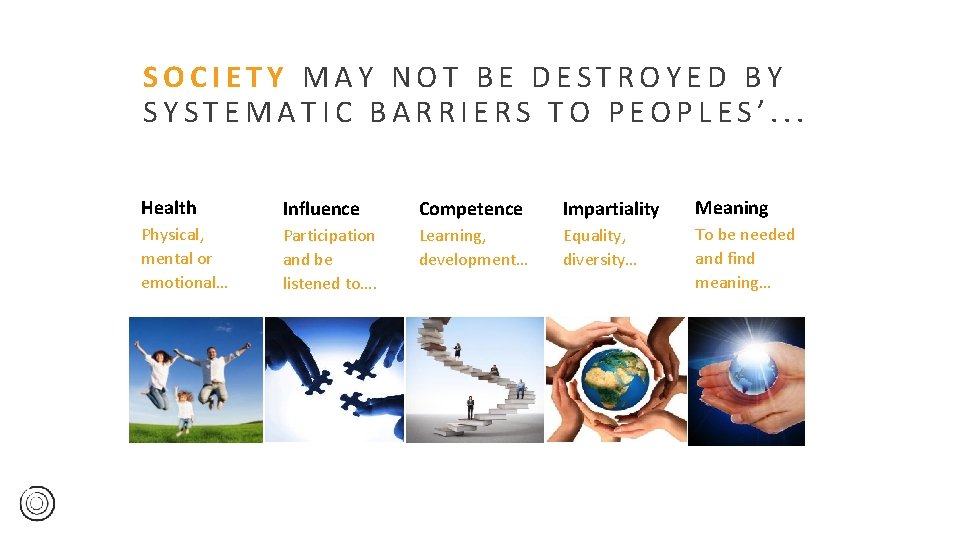
SOCIETY MAY NOT BE DESTROYED BY SYSTEMATIC BARRIERS TO PEOPLES’. . . Health Influence Competence Impartiality Meaning Physical, mental or emotional… Participation and be listened to…. Learning, development… Equality, diversity… To be needed and find meaning…
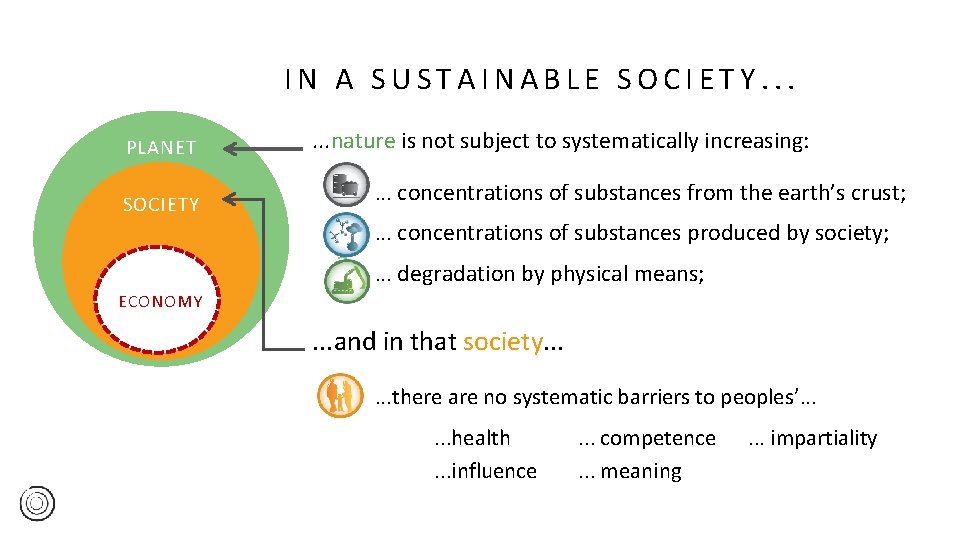
IN A SUSTAINABLE SOCIETY. . . PLANET SOCIETY . . . nature is not subject to systematically increasing: 1. . concentrations of substances from the earth’s crust; 2. . concentrations of substances produced by society; 3. . degradation by physical means; ECONOMY . . . and in that society. . . 4. . there are no systematic barriers to peoples’. . . health. . . influence . . . competence. . . meaning . . . impartiality
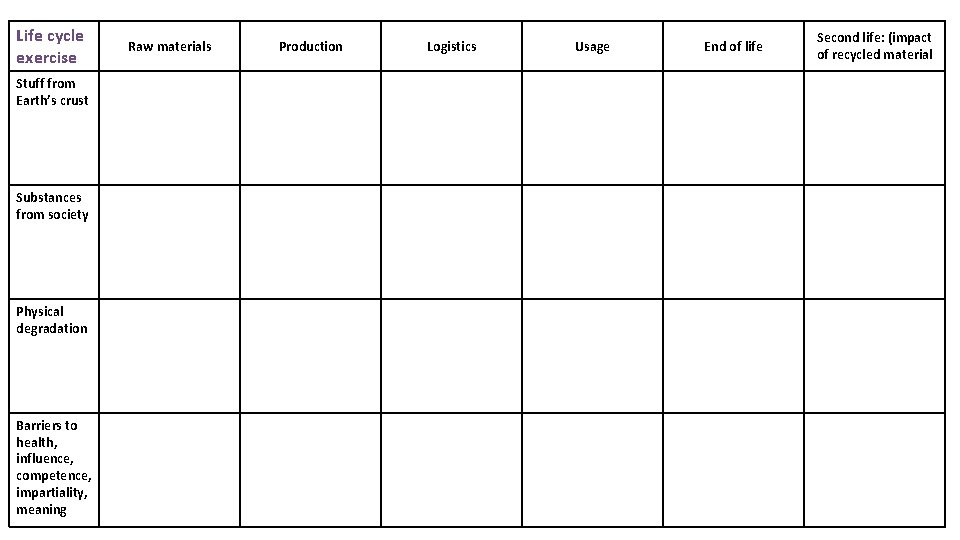
Life cycle exercise Stuff from Earth’s crust Substances from society Physical degradation Barriers to health, influence, competence, impartiality, meaning Raw materials Production Logistics Usage End of life Second life: (impact of recycled material
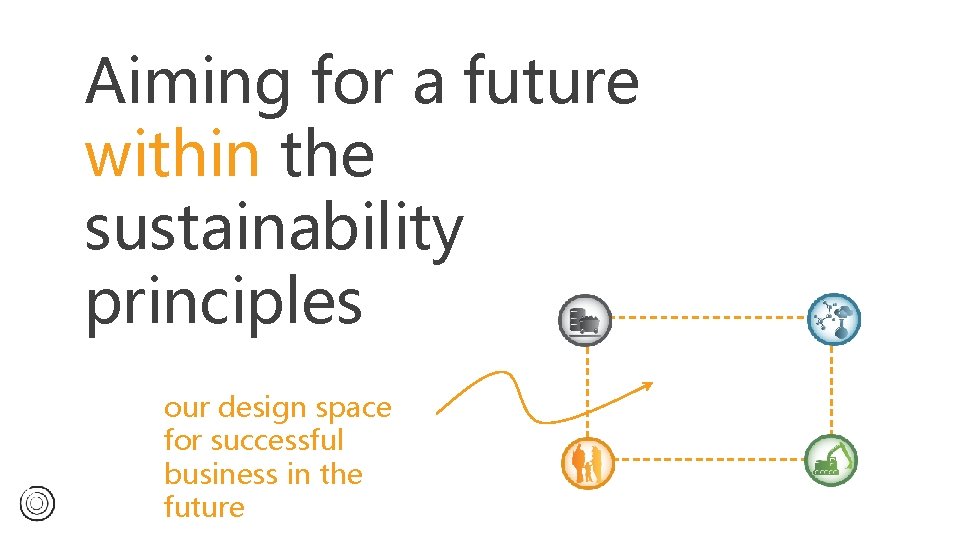
Aiming for a future within the sustainability principles our design space for successful business in the future

BACK FROM THE FUTURE
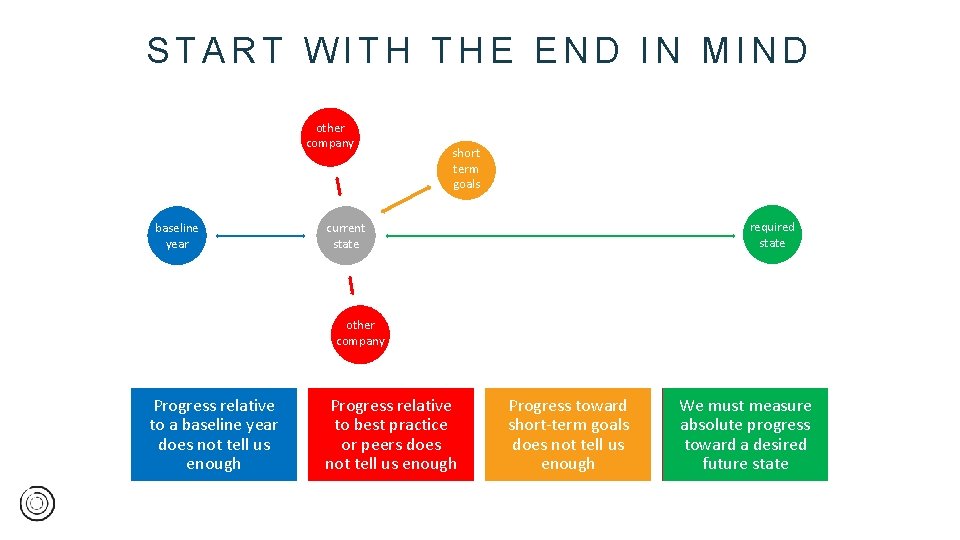
START WITH THE END IN MIND Company today baseline year Past 1 Progress relative to a baseline year does not tell us enough other company Future-Fit Company short term goals required state current state Future other company 2 Progress relative to best practice or peers does not tell us enough 3 Progress toward short-term goals does not tell us enough 4 We must measure absolute progress toward a desired future state
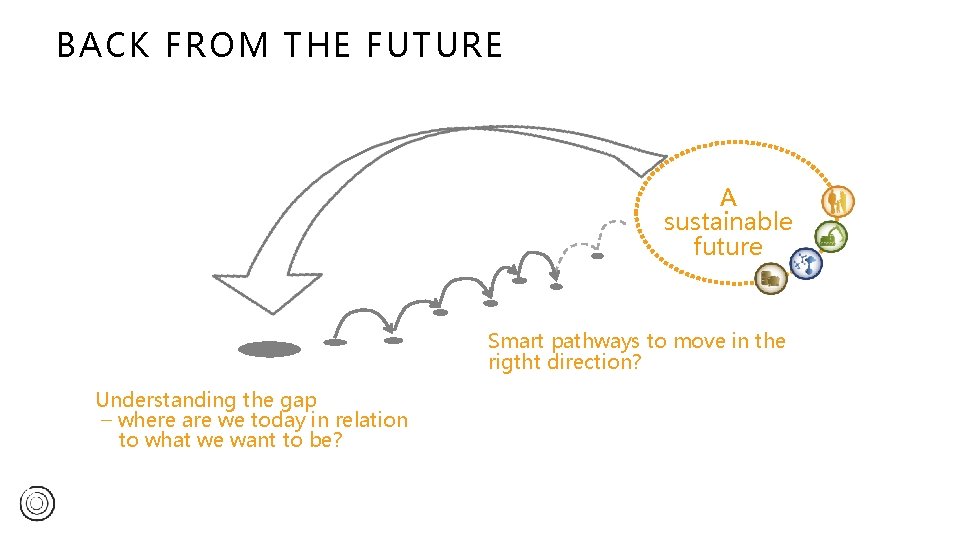
BACK FROM THE FUTURE A sustainable future Smart pathways to move in the rigtht direction? Understanding the gap – where are we today in relation to what we want to be?

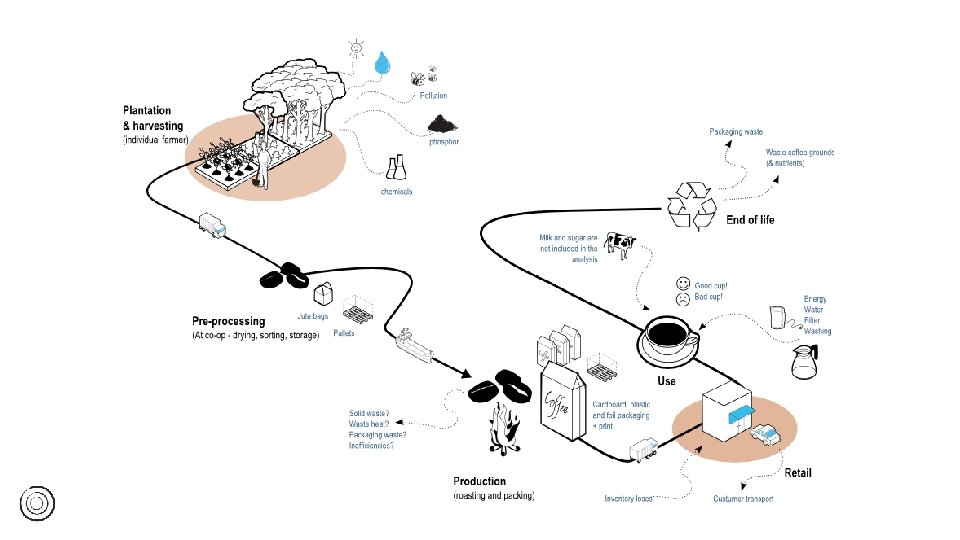
LETS TRY THE PRINCIPLES - COFFEE CUP EXAMPLE
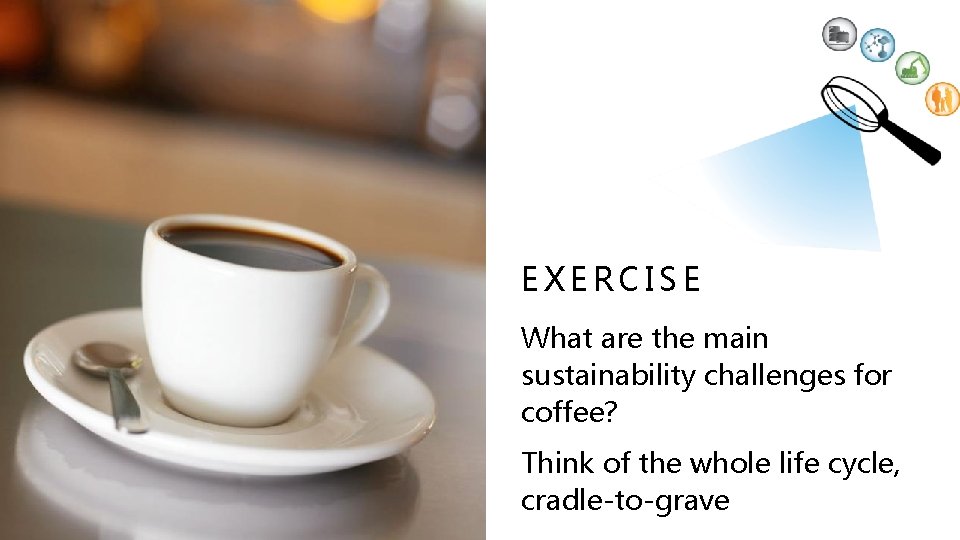
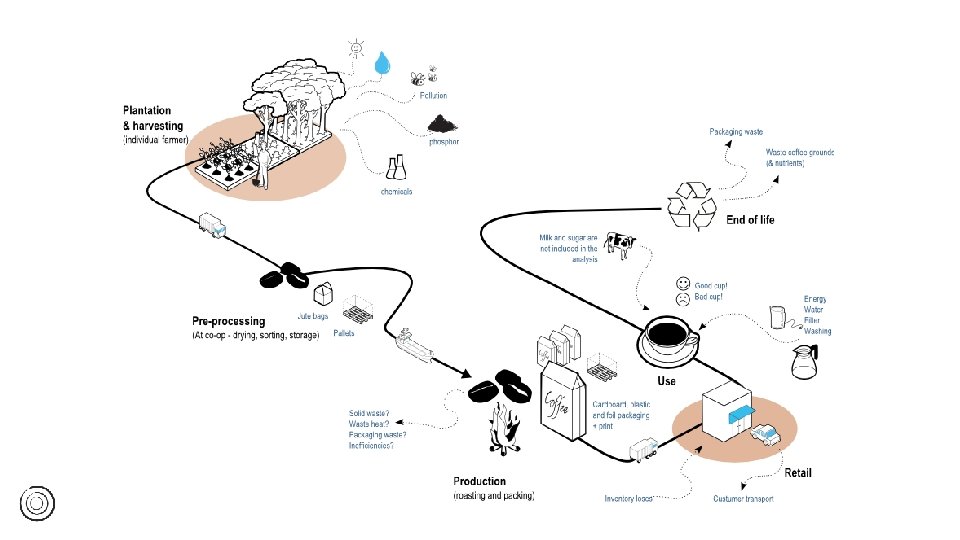
EXERCISE What are the main sustainability challenges for coffee? Think of the whole life cycle, cradle-to-grave
4 principer för hållbarhet 1. Substances from the earth’s crust 2. Substances produced by society 3. Physical degradation of nature (health, influence, competence, impartiality, meaning)
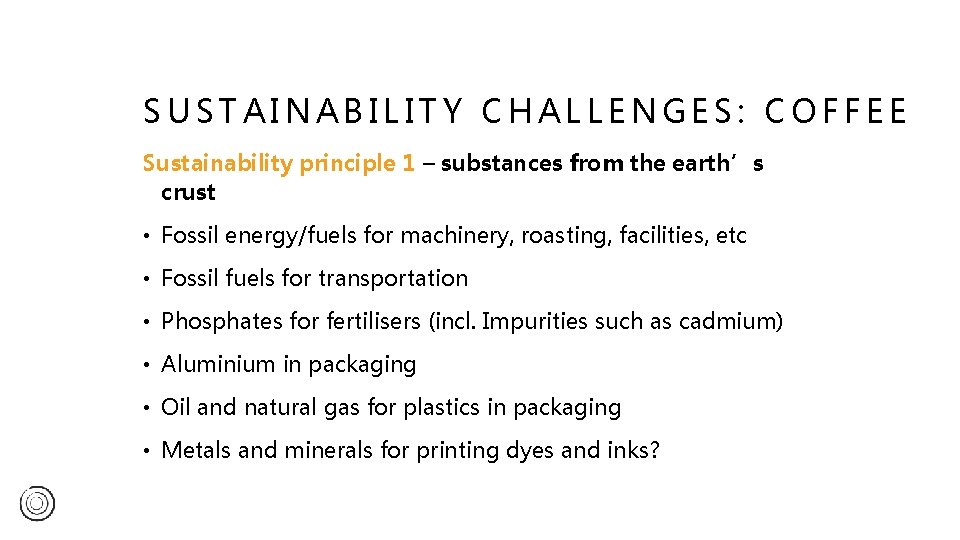
SUSTAINABILITY CHALLENGES: COFFEE Sustainability principle 1 – substances from the earth’s crust • Fossil energy/fuels for machinery, roasting, facilities, etc • Fossil fuels for transportation • Phosphates for fertilisers (incl. Impurities such as cadmium) • Aluminium in packaging • Oil and natural gas for plastics in packaging • Metals and minerals for printing dyes and inks?
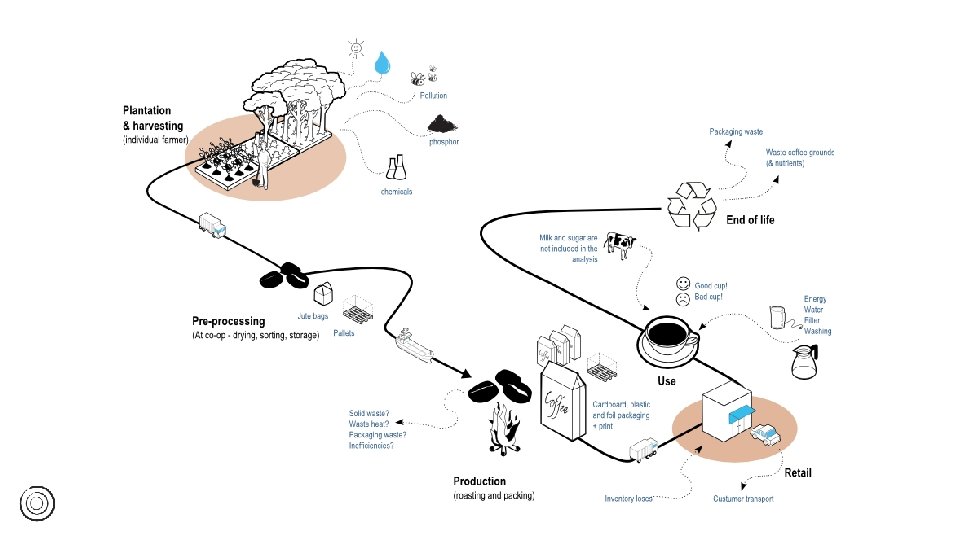
SUSTAINABILITY CHALLENGES: COFFEE Sustainability principle 2 – substances produced by society • Pesticides a lot of chemicals, some very problematic • Nitrogen emissions through fertilisers • Chemicals and solcents in printing? • Additives in packaging?
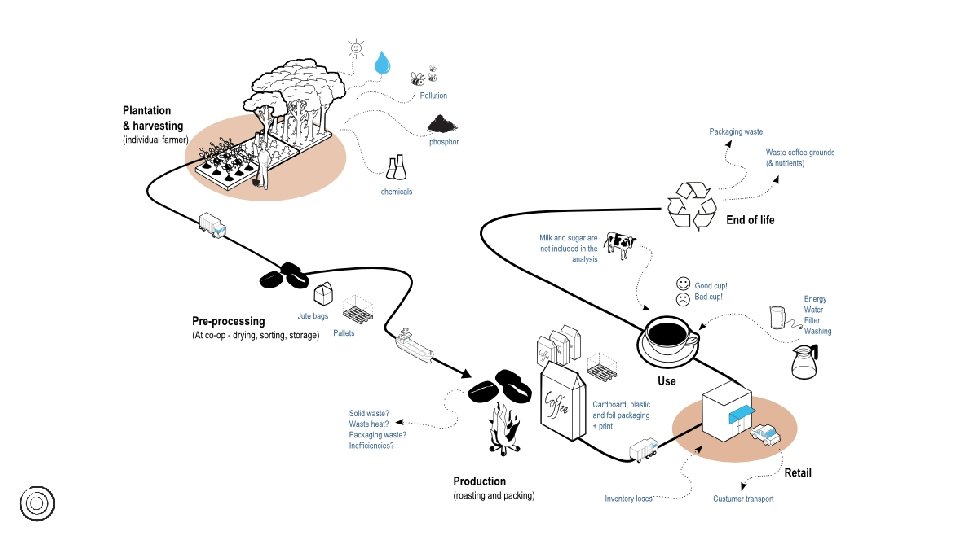
SUSTAINABILITY CHALLENGES: COFFEE Sustainability principle 3 – physical degradation of nature • Land intensive – one tree produces 1 -6 kg per year • Water use – approx. 160 litres per kg of coffee • Land conversion – both directand indirect • Monocultural farming practices • Loss of top soil and erosion • Loss of habitats
SUSTAINABILITY CHALLENGES: COFFEE Sustainability principle 4 – barriers for human needs Health • Working conditions – health and safety, pesticides, heavy machinery. • Land-use competing with food production? Influence • Modern slavery, child labour, right to organise e. g. unions • Lack of transparancy in the value chain. Competence • Insufficient training in safety and in sustainable methods. • Child labour is (normally) a barrier to education
SUSTAINABILITY CHALLENGES: COFFEE Sustainability principle 4 – barriers for human needs Impartiality • Corruption. • Discrimination in the work-place Meaning • Modern slavery • Unfair payment for the crop or the work.
- Slides: 34