
Understanding Stress Its Management Dr Amitabh Saraf DIYA
Understanding Stress & Its Management Dr Amitabh Saraf DIYA
What this talk is about : What is stress? What happens inside us? The ill-effects of stress Managing stress

What would be your reaction?
Common Emotional Reactions Nervousness Anger Despair Fear

Common Physical Reactions Increased heart rate, palpitation Increased blood pressure Inability to breathe deeply Tensed muscles Increased brain activity Heightened senses – wide eyes, ears, increased sense of smell
One becomes ready to Fight back in anger Leave the place and avoid contact
Fight or Flight Syndrome In every adverse situation we face we wish to – – Fight Back – Flight (run away) from there This is Stress: a very prime/basic body reaction in adverse conditions It helps save oneself
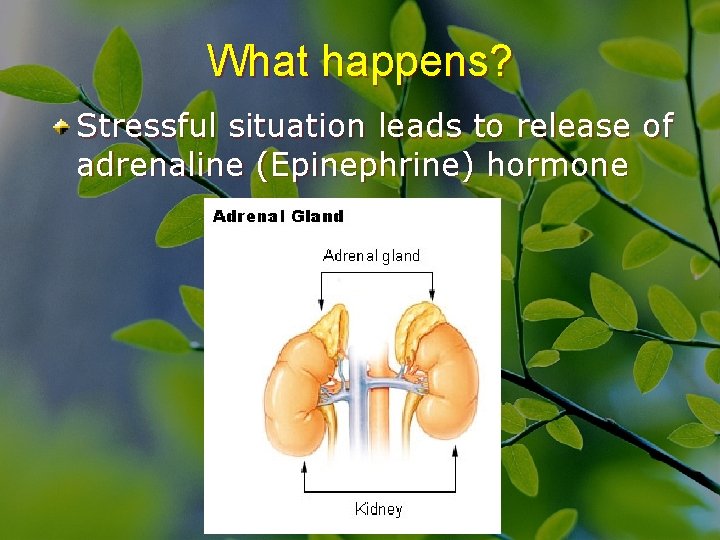
What happens? Stressful situation leads to release of adrenaline (Epinephrine) hormone
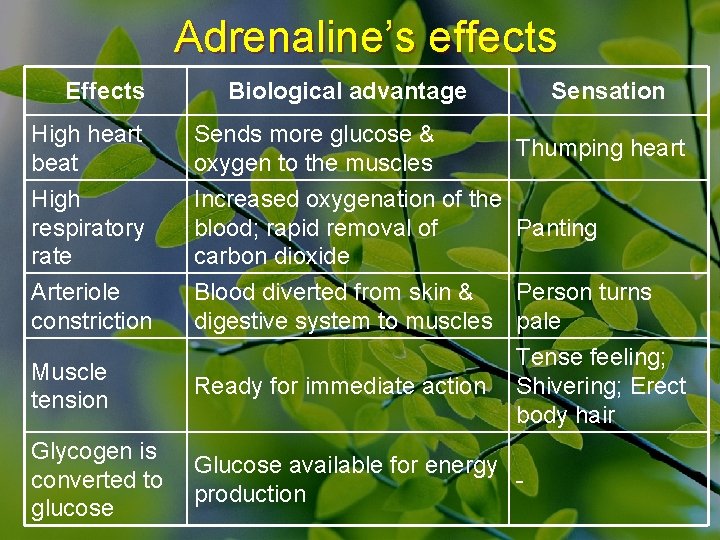
Adrenaline’s effects Effects Biological advantage Sensation High heart beat High respiratory rate Arteriole constriction Sends more glucose & oxygen to the muscles Increased oxygenation of the blood; rapid removal of carbon dioxide Blood diverted from skin & digestive system to muscles Muscle tension Ready for immediate action Glycogen is converted to glucose Glucose available for energy production Thumping heart Panting Person turns pale Tense feeling; Shivering; Erect body hair
Another Stress Hormone: Cortisol Stimulating hormone Provides a quick burst of energy for survival reasons Heightened memory functions A burst of increased immunity Lower sensitivity to pain
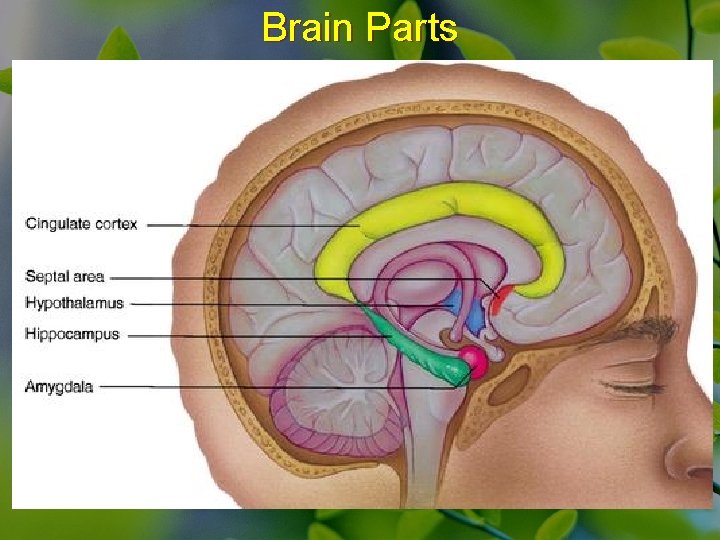
Brain Parts
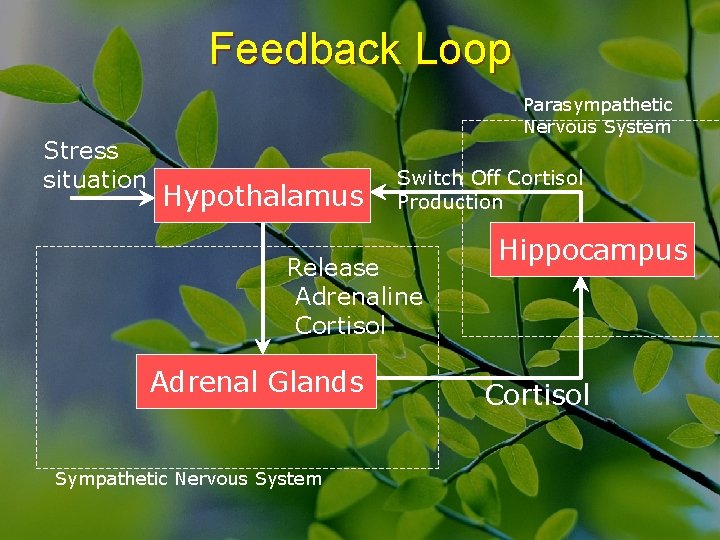
Feedback Loop Stress situation Parasympathetic Nervous System Hypothalamus Switch Off Cortisol Production Release Adrenaline Cortisol Adrenal Glands Sympathetic Nervous System Hippocampus Cortisol

Simple Stress Situation Stress Hormones Action initiated To mitigate stress Time
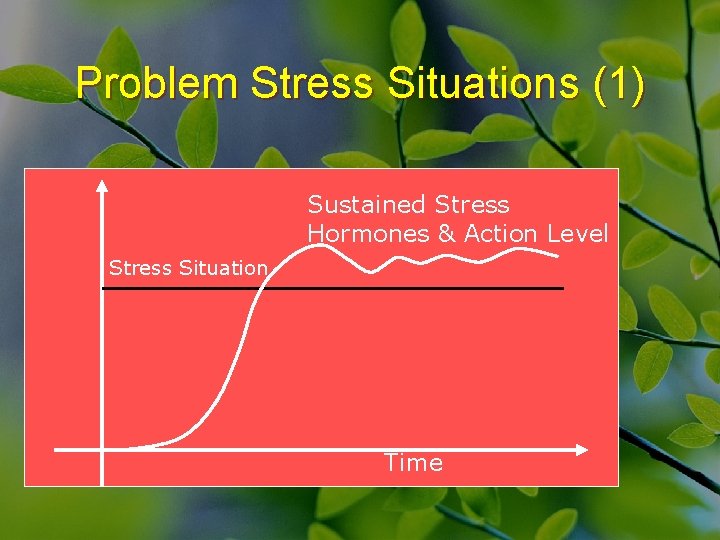
Problem Stress Situations (1) Sustained Stress Hormones & Action Level Stress Situation Time
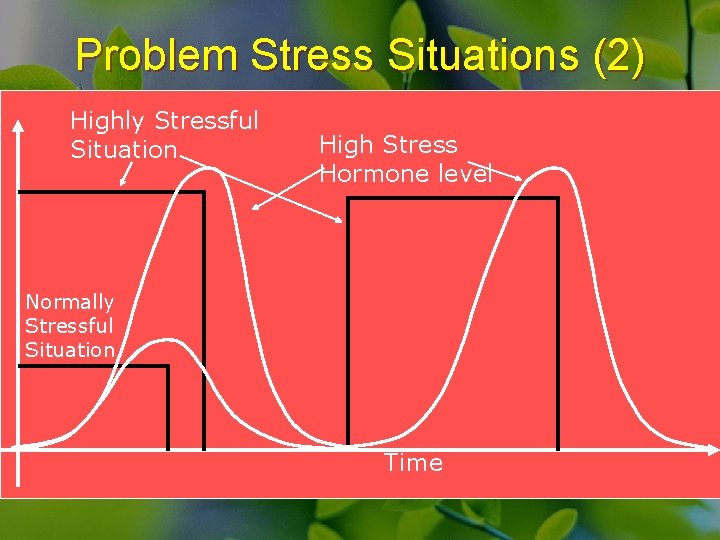
Problem Stress Situations (2) Highly Stressful Situation High Stress Hormone level Normally Stressful Situation Time
Bad Effects of Problem Stress Situations
Ill effects of Cortisol harms brain in three ways: – Reduces supply of glucose to brain – It impairs function of neurotransmitters – It directly kills and damages brain cells by letting in calcium radicals into cells. Loss of attention Loss of memory Reduces general intelligence
Sustained Stress Situation Toxins and free radicals kill cells in every organ : brain, liver, pancreas, adrenals, stomach and GI tract. High Blood Pressure Heart Disease Diabetes Mellitus Hyper Acidity, PU syndrome Ulcerative Colitis Migraine, tension headache, Chronic backache Allergies, Asthma Auto immune disorders Menstrual Disorders Anxiety Neurosis, Obsessions Sinus Tachycardia
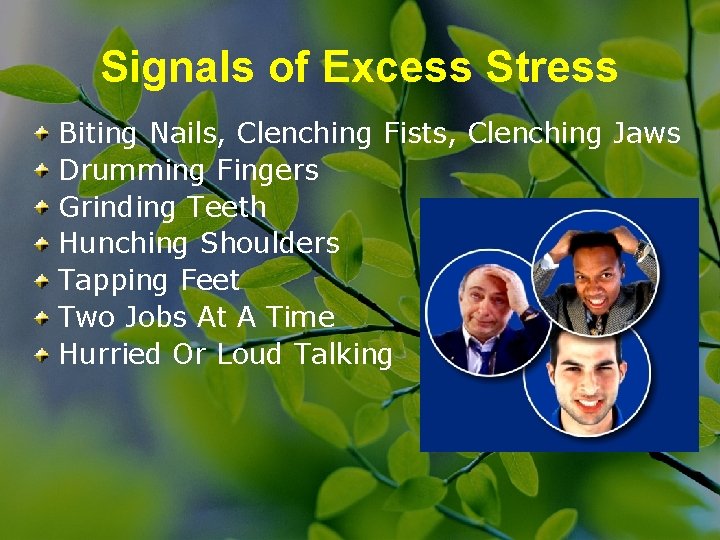
Signals of Excess Stress Biting Nails, Clenching Fists, Clenching Jaws Drumming Fingers Grinding Teeth Hunching Shoulders Tapping Feet Two Jobs At A Time Hurried Or Loud Talking
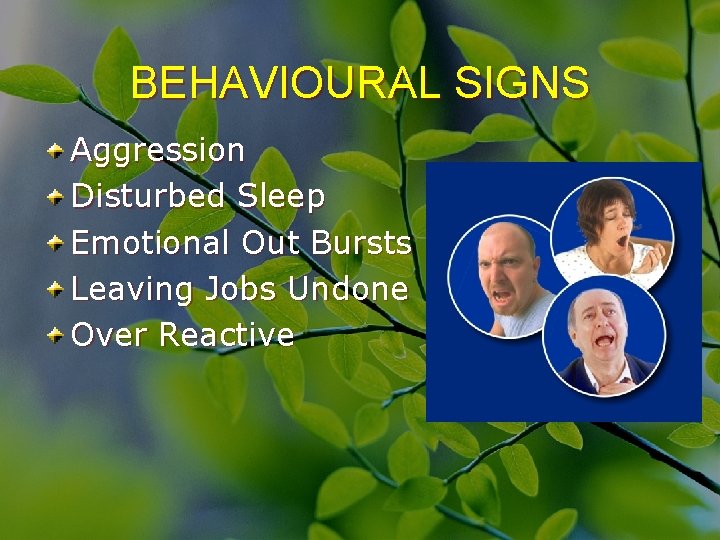
BEHAVIOURAL SIGNS Aggression Disturbed Sleep Emotional Out Bursts Leaving Jobs Undone Over Reactive
Stress is not all bad!!! Every human activity is related to stress Stress – We are born out of stress – Motivates to take new actions, new directions – Helps focuses energy – Brings out inner potential – Improves performance – Improves retention and memory – Stress situations are like exams Success improves self-confidence Increases inner strength Complete Freedom from Stress is : DEATH
What is Stress Management? Understanding causes Learn ways to remove the causes Learn ways to reduce stress even in high stress situations (relaxation)
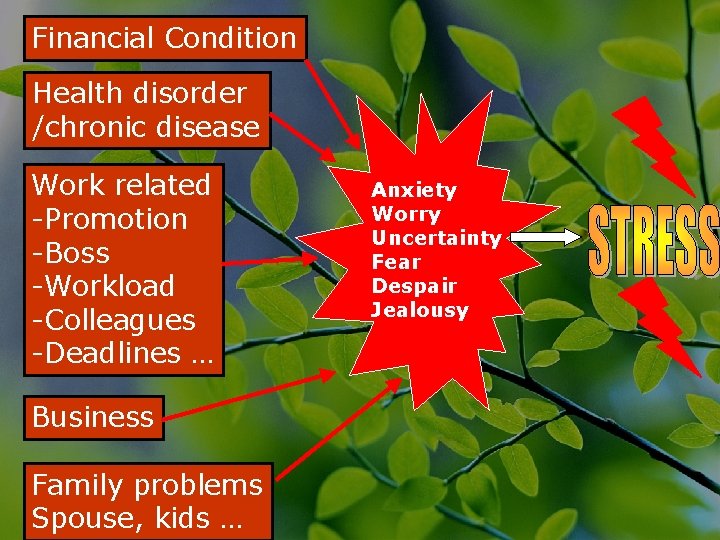
Financial Condition Health disorder /chronic disease Work related -Promotion -Boss -Workload -Colleagues -Deadlines … Business Family problems Spouse, kids … Anxiety Worry Uncertainty Fear Despair Jealousy
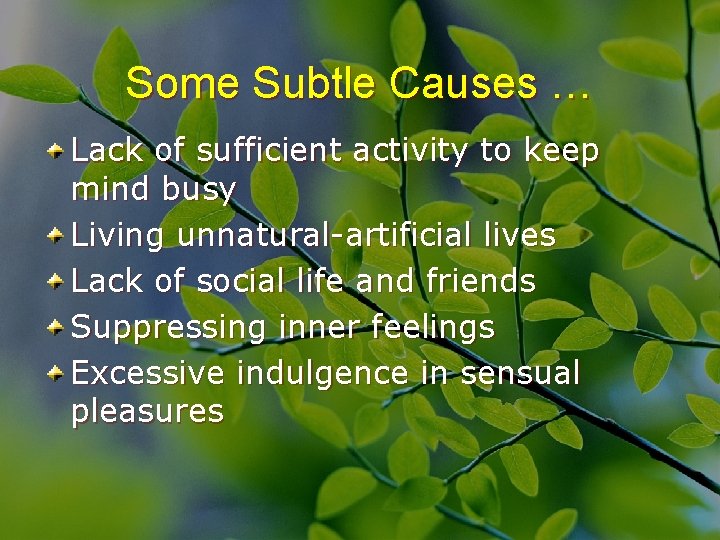
Some Subtle Causes … Lack of sufficient activity to keep mind busy Living unnatural-artificial lives Lack of social life and friends Suppressing inner feelings Excessive indulgence in sensual pleasures
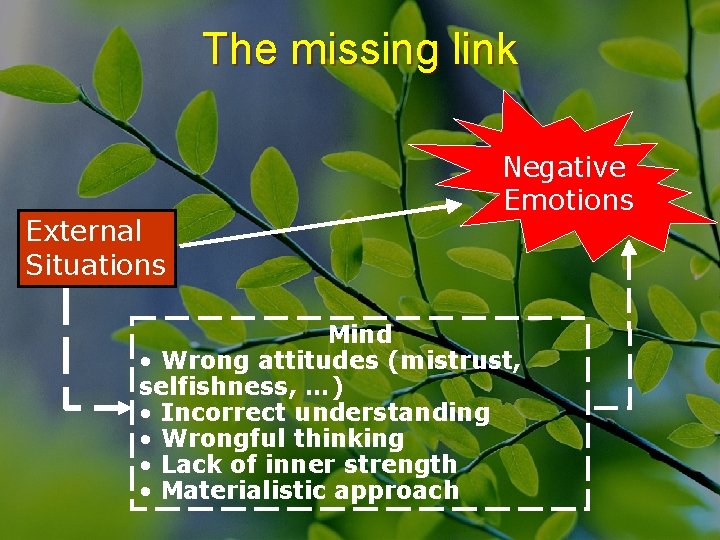
The missing link External Situations Negative Emotions Mind • Wrong attitudes (mistrust, selfishness, …) • Incorrect understanding • Wrongful thinking • Lack of inner strength • Materialistic approach
Stress Management is possible only through Cleansing & Proper Channelization of Mind
Holistic Approaches to Manage Stress SWADHYAY – Read good books by great people/about them – Acquire knowledge, develop understanding – Read and think about our own weaknesses and remove them Meditation
Holistic Approaches to Manage Stress Change in dietary pattern: Vegetarian Diet, lots of sprouted grains, raw fruits, salads Subtle exercises - ASANS (Postures) & PRAGYA YOG. PRANAYAM: Churning of Vital energy. Proper relaxation -“SHAVASAN”, Yog Nidra
Holistic Stress Management Music Therapy - “Mantra Chikitsa”. Pulverized herbal powders “Aoushadhi Chikitsa”. Homa therapy, Yagna. Avoid isolation, become part of society and devote time for social & selfless service.
Reversal of stress through Meditation Develops resistance to stress through: – decreased heart rate, – decreased respiration rate, – decreased production of stress hormones – decreased pulse rate, and – increased EEG (electroencephalogram) alpha
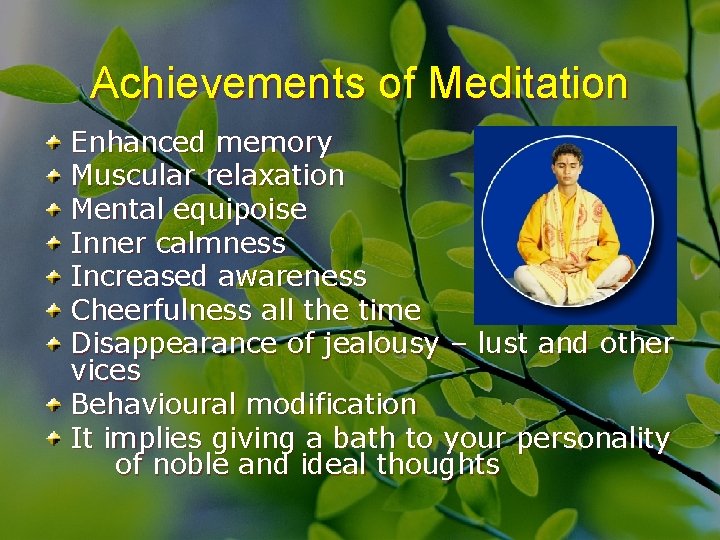
Achievements of Meditation Enhanced memory Muscular relaxation Mental equipoise Inner calmness Increased awareness Cheerfulness all the time Disappearance of jealousy – lust and other vices Behavioural modification It implies giving a bath to your personality of noble and ideal thoughts
How to meditate Sit in a comfortable position. – Sukhasana or a big chair with soft cushion. – Straighten your spine. Breathe deeply through your nose. – Inhale to fill up lungs and then exhale slowly to expel all the air, observing breath all the time Mentally recite AUM/some mantra in synchrony with your breathing
How to meditate Select something to focus upon: – Rising Sun – A candle flame – Your deity – Himalayas or ocean
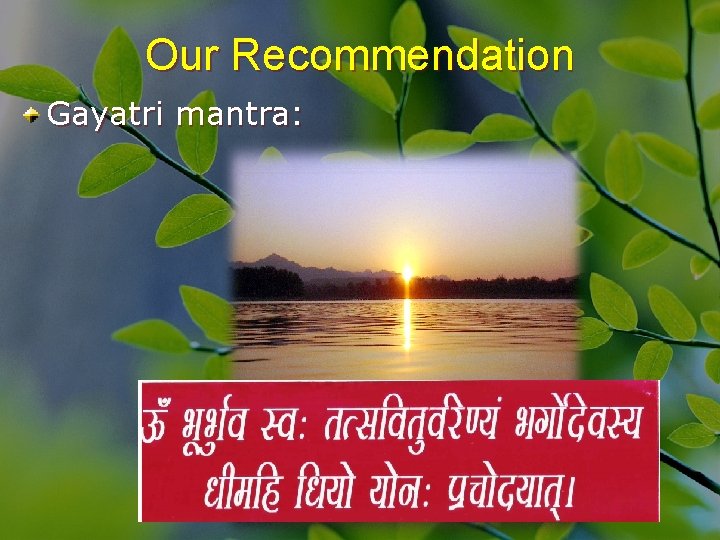
Our Recommendation Gayatri mantra:
Why Gayatri? Each letter of Gayatri Mantra is very scientifically created & generates immense energy. Generates bioelectrical impulses Sensitize the endocrine glands Activate neuro-hormonal secretions Harmonizes the healthy functions of the body Creativity of mind Emotional peace and cheerfulness
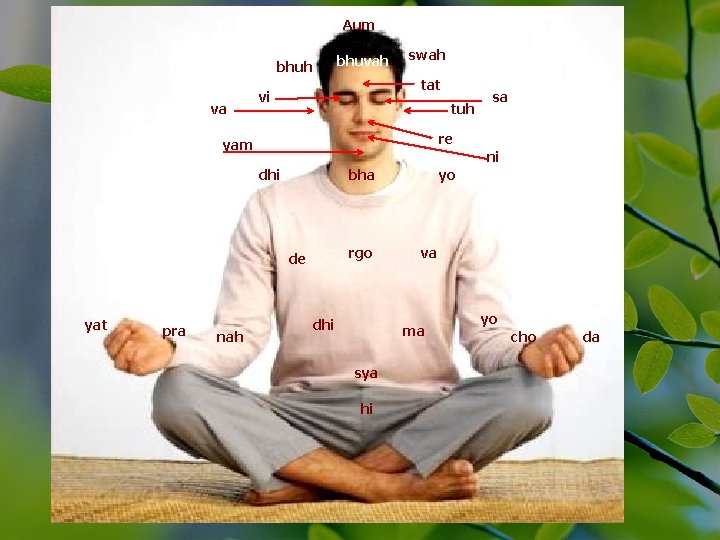
Aum bhuvah bhuh va swah tat vi tuh re yam ni dhi bha rgo de yat pra nah sa dhi yo va ma sya hi yo cho da
Basic Requirements for Meditation Diet to be sattvic: boiled vegetables, raw fruits, sprouted grains Completely avoid sensually exciting reading (violence/pornography) on TV/Computer or Magazines Life style has to be orderly and thoroughly organised. Satsang and swadhyay to be done.
Thank You & We Wish You a Good Life with Well Managed Stress
- Slides: 39