
UNDERSTANDING SHAKESPEARES LANGUAGE Translating Todays Lingo into Shakespeares
- Slides: 55
UNDERSTANDING SHAKESPEARE’S LANGUAGE
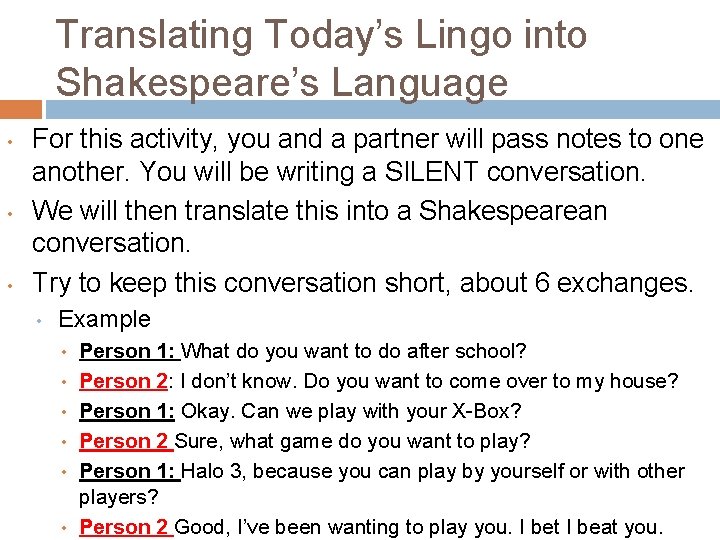
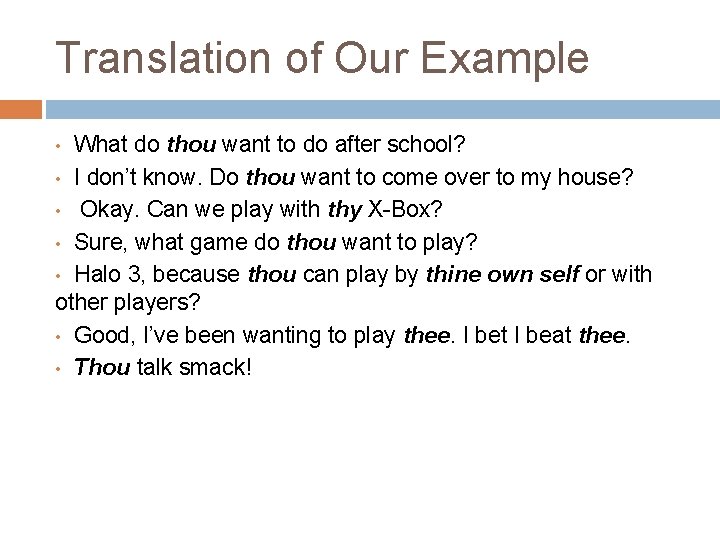
Translating Today’s Lingo into Shakespeare’s Language • • • For this activity, you and a partner will pass notes to one another. You will be writing a SILENT conversation. We will then translate this into a Shakespearean conversation. Try to keep this conversation short, about 6 exchanges. • Example • • • Person 1: What do you want to do after school? Person 2: I don’t know. Do you want to come over to my house? Person 1: Okay. Can we play with your X-Box? Person 2 Sure, what game do you want to play? Person 1: Halo 3, because you can play by yourself or with other players? Person 2 Good, I’ve been wanting to play you. I bet I beat you.
Got your example? …let’s move on to translating!
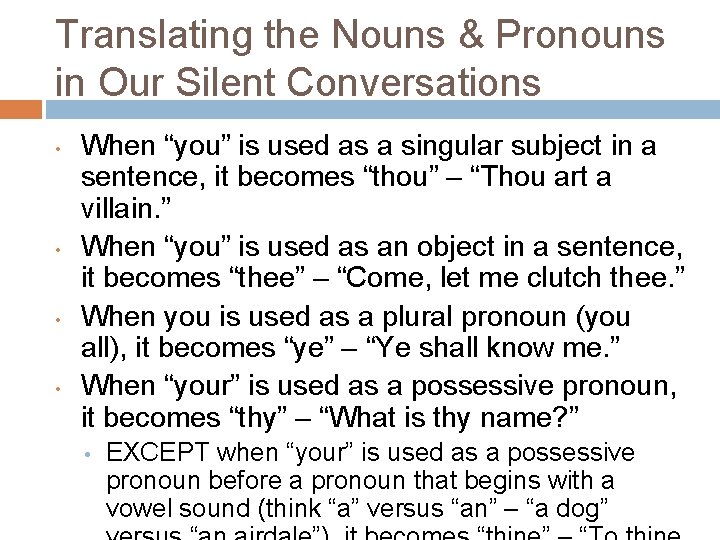
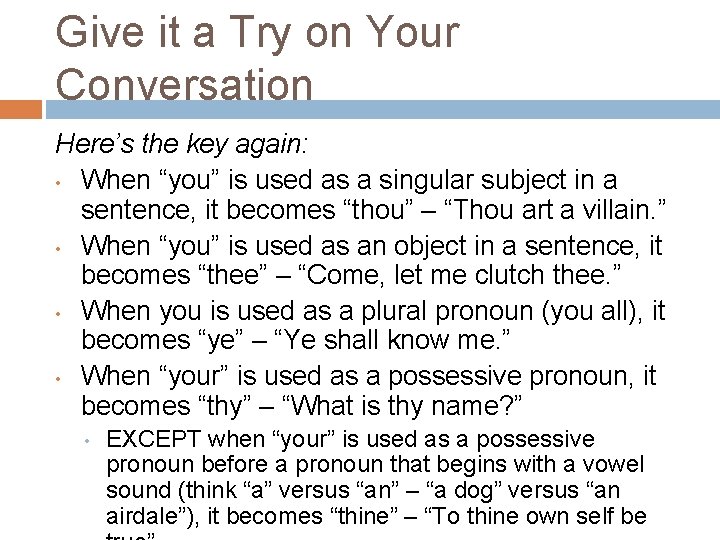
Translating the Nouns & Pronouns in Our Silent Conversations • • When “you” is used as a singular subject in a sentence, it becomes “thou” – “Thou art a villain. ” When “you” is used as an object in a sentence, it becomes “thee” – “Come, let me clutch thee. ” When you is used as a plural pronoun (you all), it becomes “ye” – “Ye shall know me. ” When “your” is used as a possessive pronoun, it becomes “thy” – “What is thy name? ” • EXCEPT when “your” is used as a possessive pronoun before a pronoun that begins with a vowel sound (think “a” versus “an” – “a dog”
Translation of Our Example What do thou want to do after school? • I don’t know. Do thou want to come over to my house? • Okay. Can we play with thy X-Box? • Sure, what game do thou want to play? • Halo 3, because thou can play by thine own self or with other players? • Good, I’ve been wanting to play thee. I bet I beat thee. • Thou talk smack! •
Give it a Try on Your Conversation Here’s the key again: • When “you” is used as a singular subject in a sentence, it becomes “thou” – “Thou art a villain. ” • When “you” is used as an object in a sentence, it becomes “thee” – “Come, let me clutch thee. ” • When you is used as a plural pronoun (you all), it becomes “ye” – “Ye shall know me. ” • When “your” is used as a possessive pronoun, it becomes “thy” – “What is thy name? ” • EXCEPT when “your” is used as a possessive pronoun before a pronoun that begins with a vowel sound (think “a” versus “an” – “a dog” versus “an airdale”), it becomes “thine” – “To thine own self be
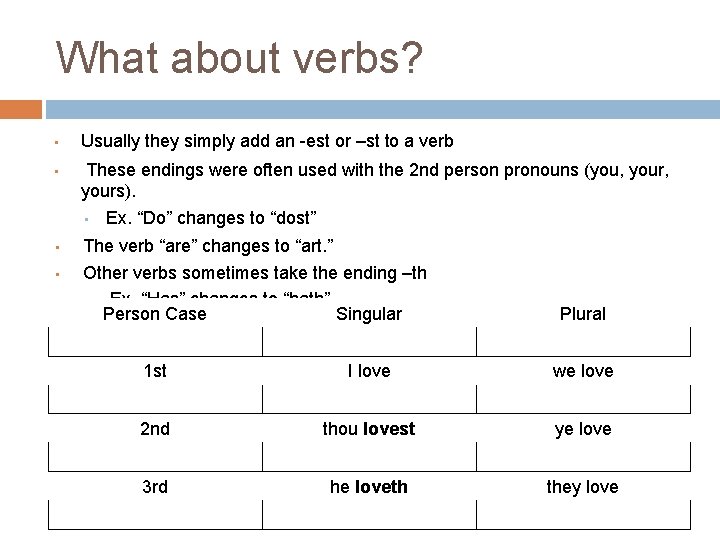
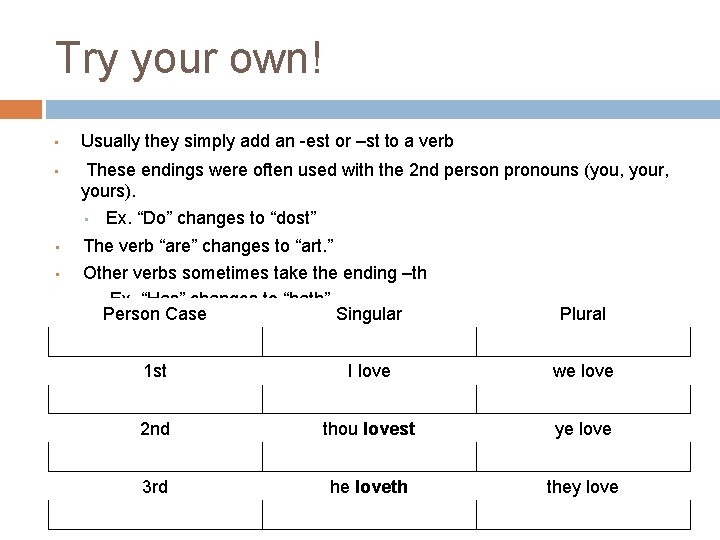
What about verbs? • • Usually they simply add an -est or –st to a verb These endings were often used with the 2 nd person pronouns (you, yours). • • • Ex. “Do” changes to “dost” The verb “are” changes to “art. ” Other verbs sometimes take the ending –th • Ex. “Has” changes to “hath” Person Case Singular Plural 1 st I love we love 2 nd thou lovest ye love 3 rd he loveth they love
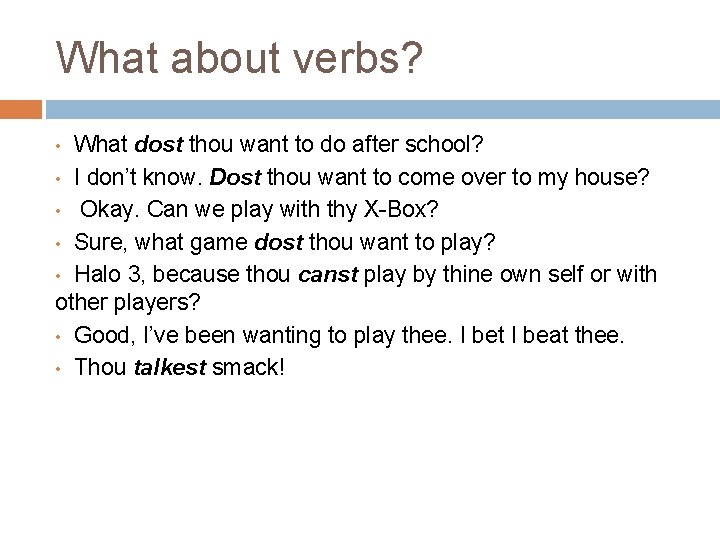
What about verbs? What dost thou want to do after school? • I don’t know. Dost thou want to come over to my house? • Okay. Can we play with thy X-Box? • Sure, what game dost thou want to play? • Halo 3, because thou canst play by thine own self or with other players? • Good, I’ve been wanting to play thee. I bet I beat thee. • Thou talkest smack! •
Try your own! • • Usually they simply add an -est or –st to a verb These endings were often used with the 2 nd person pronouns (you, yours). • • • Ex. “Do” changes to “dost” The verb “are” changes to “art. ” Other verbs sometimes take the ending –th • Ex. “Has” changes to “hath” Person Case Singular Plural 1 st I love we love 2 nd thou lovest ye love 3 rd he loveth they love
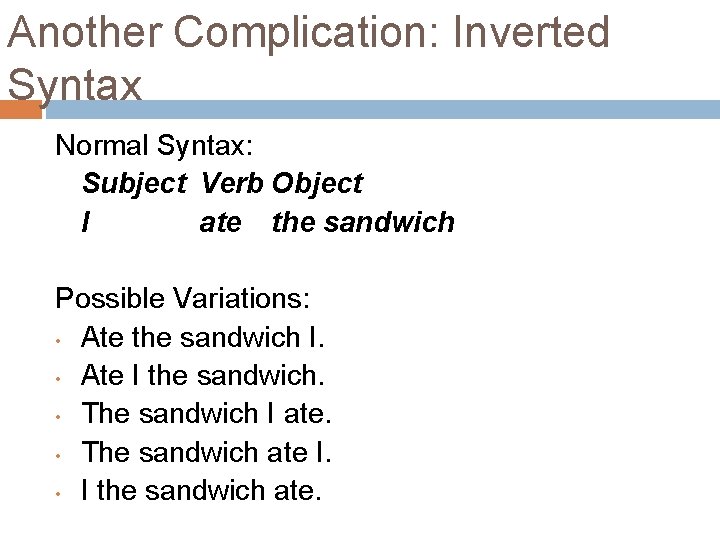
Another Complication: Inverted Syntax Normal Syntax: Subject Verb Object I ate the sandwich Possible Variations: • Ate the sandwich I. • Ate I the sandwich. • The sandwich I ate. • The sandwich ate I. • I the sandwich ate.
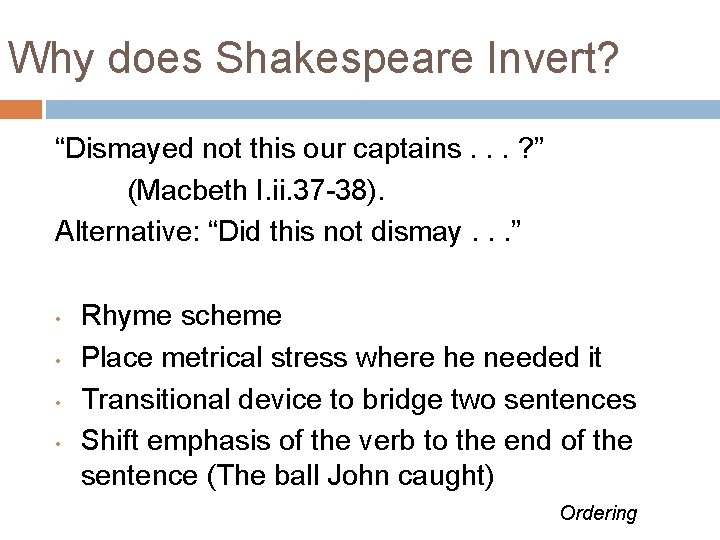
Why does Shakespeare Invert? “Dismayed not this our captains. . . ? ” (Macbeth I. ii. 37 -38). Alternative: “Did this not dismay. . . ” • • Rhyme scheme Place metrical stress where he needed it Transitional device to bridge two sentences Shift emphasis of the verb to the end of the sentence (The ball John caught) Ordering
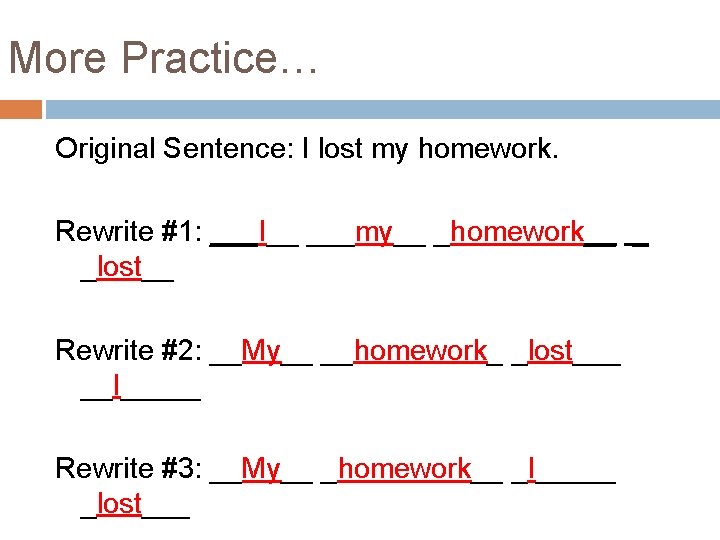
More Practice… Original Sentence: I lost my homework. Rewrite #1: ___I__ ___my__ _homework__ _ _lost__ Rewrite #2: __My__ __homework_ _lost___ __I_____ Rewrite #3: __My__ _homework__ _I_____ _lost___
Practicing Inversion • • Write down your own sentence Invert your sentence in four different variations.
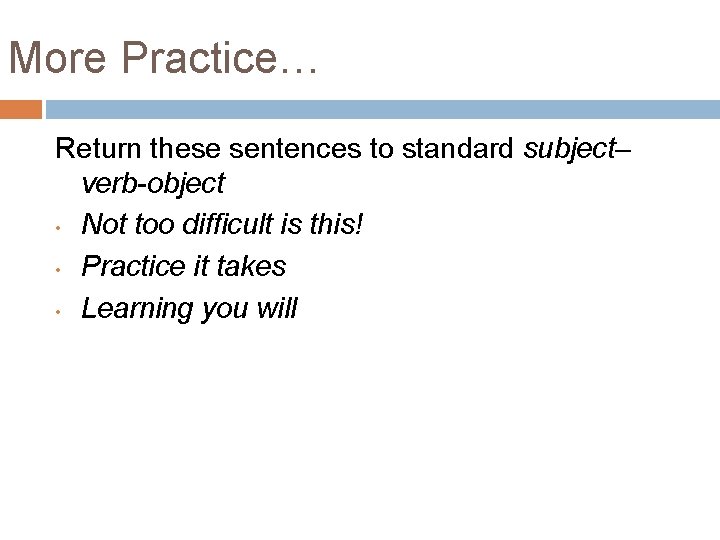
More Practice… Return these sentences to standard subject– verb-object • Not too difficult is this! • Practice it takes • Learning you will
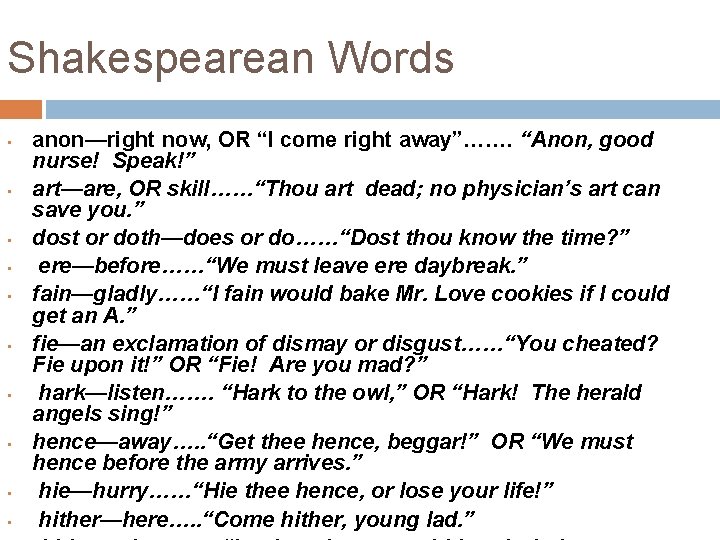
Shakespearean Words • • • anon—right now, OR “I come right away”……. “Anon, good nurse! Speak!” art—are, OR skill……“Thou art dead; no physician’s art can save you. ” dost or doth—does or do……“Dost thou know the time? ” ere—before……“We must leave ere daybreak. ” fain—gladly……“I fain would bake Mr. Love cookies if I could get an A. ” fie—an exclamation of dismay or disgust……“You cheated? Fie upon it!” OR “Fie! Are you mad? ” hark—listen……. “Hark to the owl, ” OR “Hark! The herald angels sing!” hence—away…. . “Get thee hence, beggar!” OR “We must hence before the army arrives. ” hie—hurry……“Hie thee hence, or lose your life!” hither—here…. . “Come hither, young lad. ”
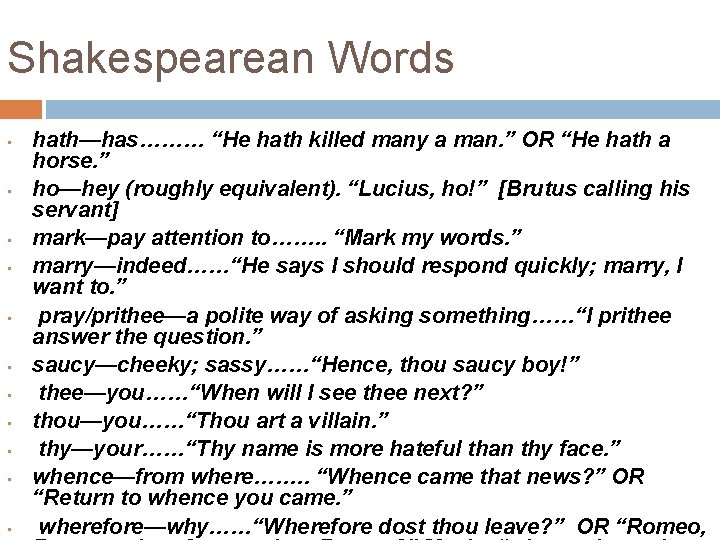
Shakespearean Words • • • hath—has……… “He hath killed many a man. ” OR “He hath a horse. ” ho—hey (roughly equivalent). “Lucius, ho!” [Brutus calling his servant] mark—pay attention to……. . “Mark my words. ” marry—indeed……“He says I should respond quickly; marry, I want to. ” pray/prithee—a polite way of asking something……“I prithee answer the question. ” saucy—cheeky; sassy……“Hence, thou saucy boy!” thee—you……“When will I see thee next? ” thou—you……“Thou art a villain. ” thy—your……“Thy name is more hateful than thy face. ” whence—from where……. . “Whence came that news? ” OR “Return to whence you came. ” wherefore—why……“Wherefore dost thou leave? ” OR “Romeo,
Translating Early Modern English in Modern English "To thine own self be true; and it must follow, as the night the day, thou can'st not then be false to any man. " Hamlet, Act i, Sc. 3 if you are true to yourself as sure as day will follow night you will be true to others.
Translating Early Modern English in Modern English "What is best, that best I wish in thee. " Troilus & C, Act ii, Sc. 2 I wish the best for you
Translating Early Modern English in Modern English "Safe may'st thou wander, safe return again!" Cymbeline, Act iii, Sc. 5 May you travel safely and return again
Translating Early Modern English in Modern English "Give me thy hand, 'tis late; farewell, good night. " Rom & Jul, Act iii, Sc. 3 Give me your hand, it is late. Goodnight.
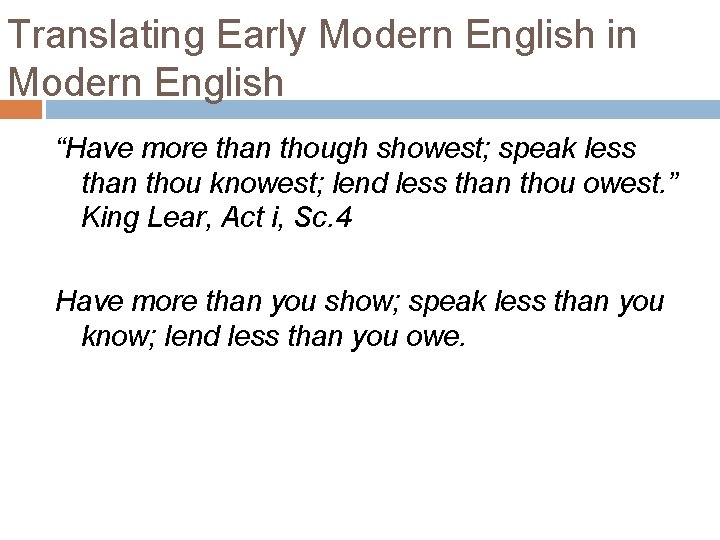
Translating Early Modern English in Modern English “Have more than though showest; speak less than thou knowest; lend less than thou owest. ” King Lear, Act i, Sc. 4 Have more than you show; speak less than you know; lend less than you owe.
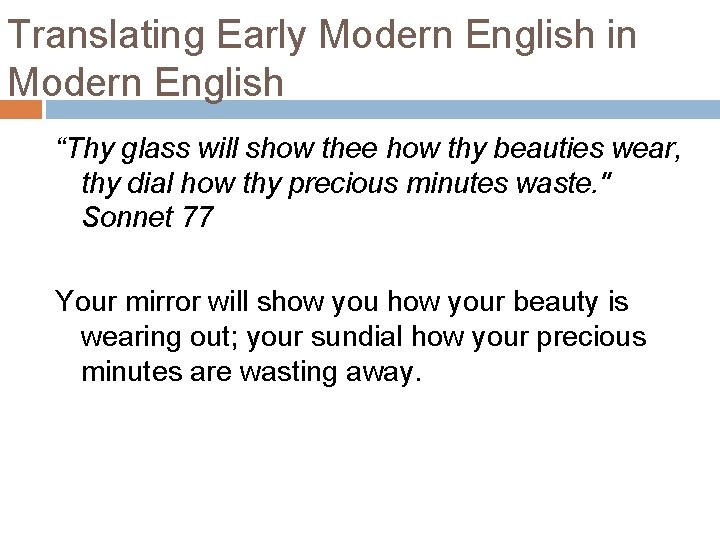
Translating Early Modern English in Modern English “Thy glass will show thee how thy beauties wear, thy dial how thy precious minutes waste. " Sonnet 77 Your mirror will show your beauty is wearing out; your sundial how your precious minutes are wasting away.
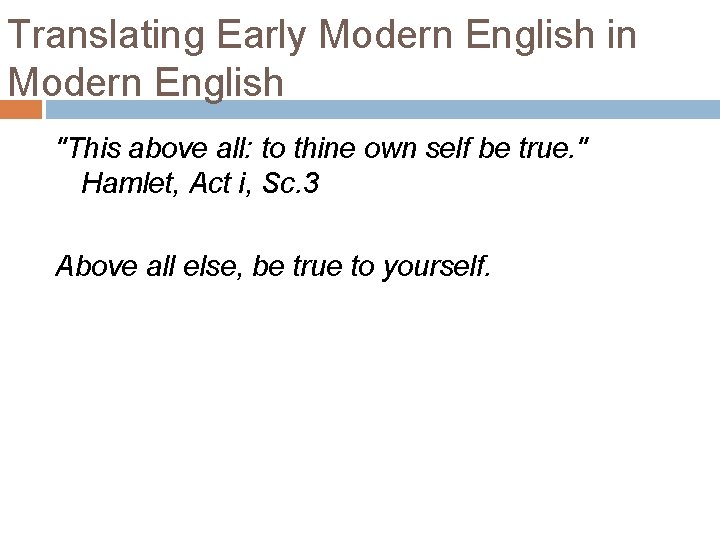
Translating Early Modern English in Modern English "This above all: to thine own self be true. " Hamlet, Act i, Sc. 3 Above all else, be true to yourself.
Will’s Words Quiz http: //www. pbs. org/wgbh/masterpiece/mercha nt/words. html
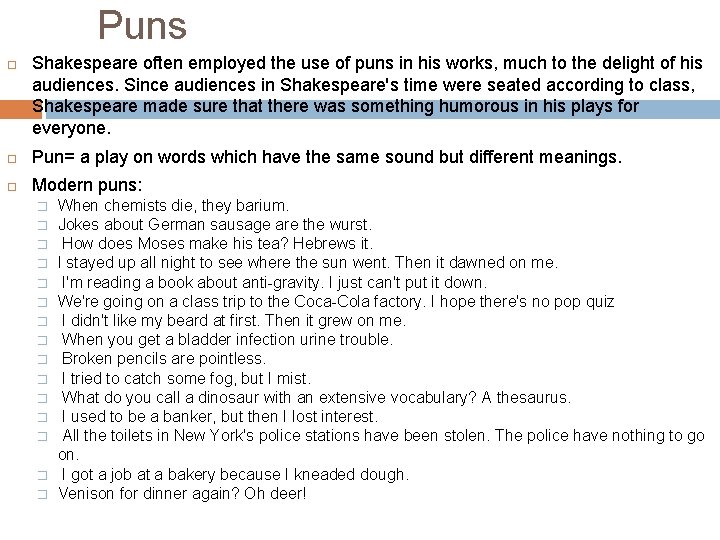
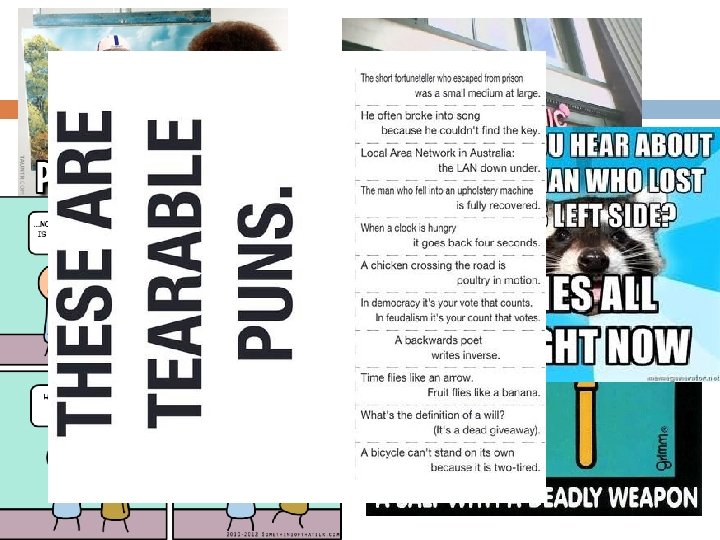
Puns Shakespeare often employed the use of puns in his works, much to the delight of his audiences. Since audiences in Shakespeare's time were seated according to class, Shakespeare made sure that there was something humorous in his plays for everyone. Pun= a play on words which have the same sound but different meanings. Modern puns: � � � � When chemists die, they barium. Jokes about German sausage are the wurst. How does Moses make his tea? Hebrews it. I stayed up all night to see where the sun went. Then it dawned on me. I'm reading a book about anti-gravity. I just can't put it down. We're going on a class trip to the Coca-Cola factory. I hope there's no pop quiz I didn't like my beard at first. Then it grew on me. When you get a bladder infection urine trouble. Broken pencils are pointless. I tried to catch some fog, but I mist. What do you call a dinosaur with an extensive vocabulary? A thesaurus. I used to be a banker, but then I lost interest. All the toilets in New York's police stations have been stolen. The police have nothing to go on. I got a job at a bakery because I kneaded dough. Venison for dinner again? Oh deer!
Punny guy
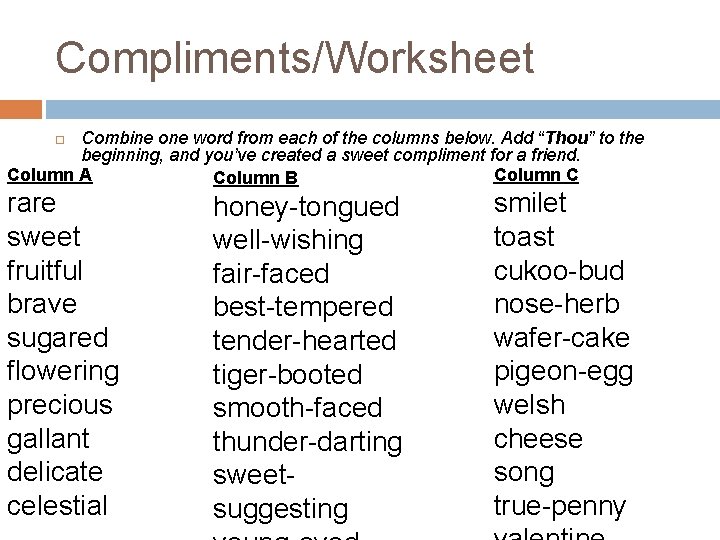
Compliments/Worksheet Combine one word from each of the columns below. Add “Thou” to the beginning, and you’ve created a sweet compliment for a friend. Column C Column A Column B rare sweet fruitful brave sugared flowering precious gallant delicate celestial honey-tongued well-wishing fair-faced best-tempered tender-hearted tiger-booted smooth-faced thunder-darting sweetsuggesting smilet toast cukoo-bud nose-herb wafer-cake pigeon-egg welsh cheese song true-penny
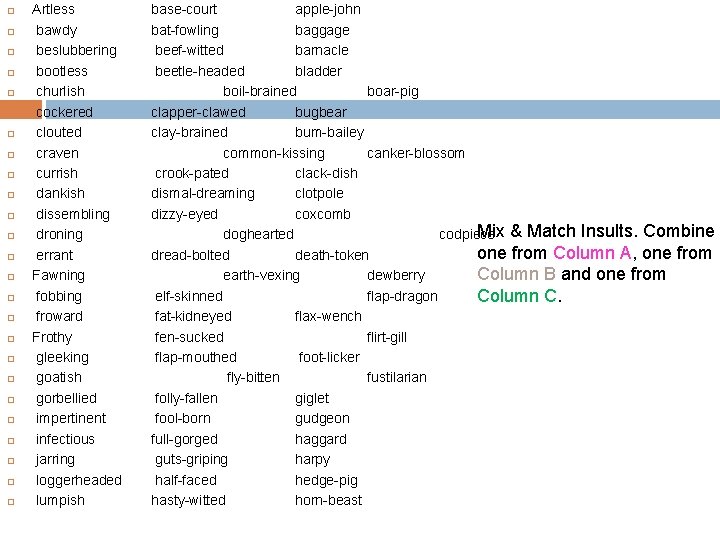
Artless bawdy beslubbering bootless churlish cockered clouted craven currish dankish dissembling droning errant Fawning fobbing froward Frothy gleeking goatish gorbellied impertinent infectious jarring loggerheaded lumpish base-court apple-john bat-fowling baggage beef-witted barnacle beetle-headed bladder boil-brained boar-pig clapper-clawed bugbear clay-brained bum-bailey common-kissing canker-blossom crook-pated clack-dish dismal-dreaming clotpole dizzy-eyed coxcomb Mix & Match Insults. Combine doghearted codpiece one from Column A, one from dread-bolted death-token earth-vexing dewberry Column B and one from elf-skinned flap-dragon Column C. fat-kidneyed flax-wench fen-sucked flirt-gill flap-mouthed foot-licker fly-bitten fustilarian folly-fallen giglet fool-born gudgeon full-gorged haggard guts-griping harpy half-faced hedge-pig hasty-witted horn-beast
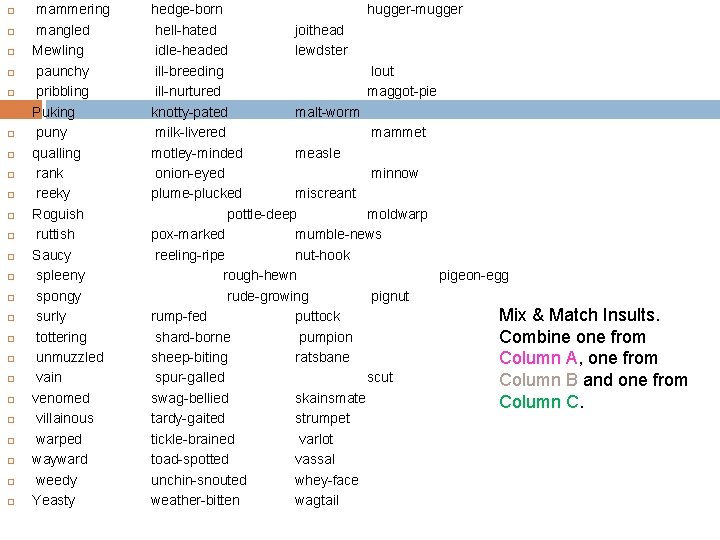
mammering mangled Mewling paunchy pribbling Puking puny qualling rank reeky Roguish ruttish Saucy spleeny spongy surly tottering unmuzzled vain venomed villainous warped wayward weedy Yeasty hedge-born hugger-mugger hell-hated joithead idle-headed lewdster ill-breeding lout ill-nurtured maggot-pie knotty-pated malt-worm milk-livered mammet motley-minded measle onion-eyed minnow plume-plucked miscreant pottle-deep moldwarp pox-marked mumble-news reeling-ripe nut-hook rough-hewn pigeon-egg rude-growing pignut rump-fed puttock Mix & Match Insults. shard-borne pumpion Combine one from sheep-biting ratsbane Column A, one from spur-galled scut Column B and one from swag-bellied skainsmate Column C. tardy-gaited strumpet tickle-brained varlot toad-spotted vassal unchin-snouted whey-face weather-bitten wagtail
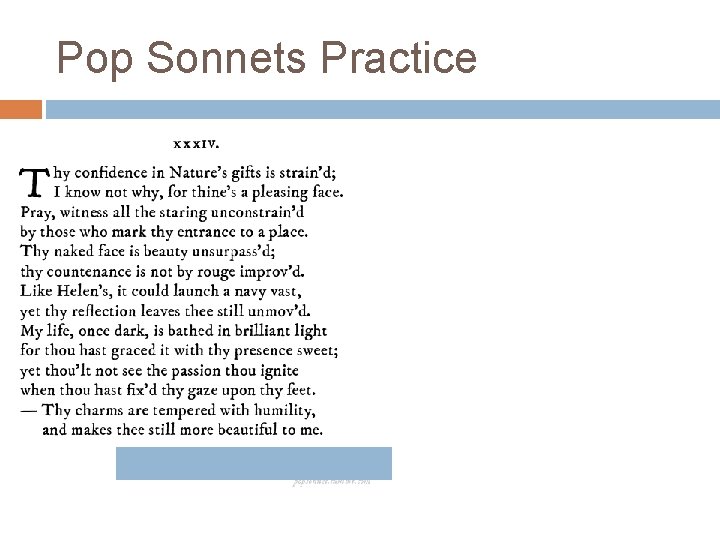
Pop Sonnets Practice
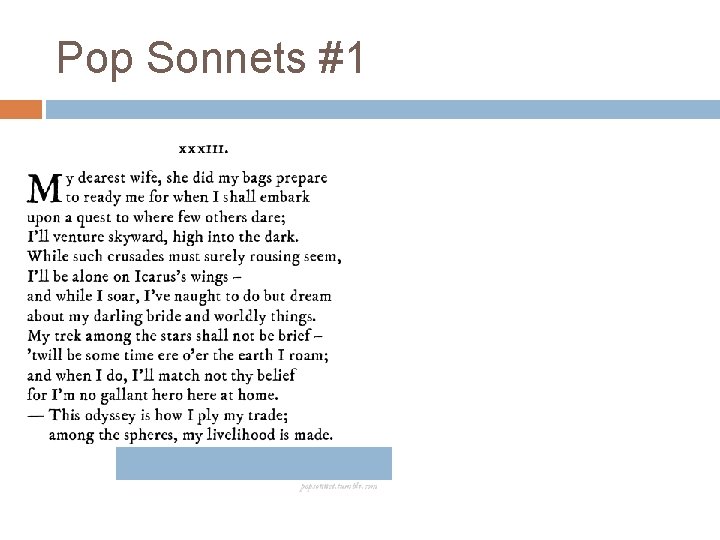
Pop Sonnets #1
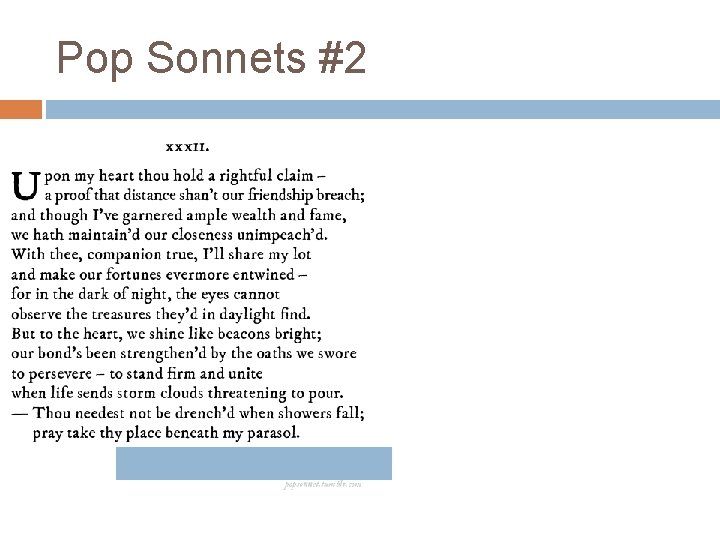
Pop Sonnets #2
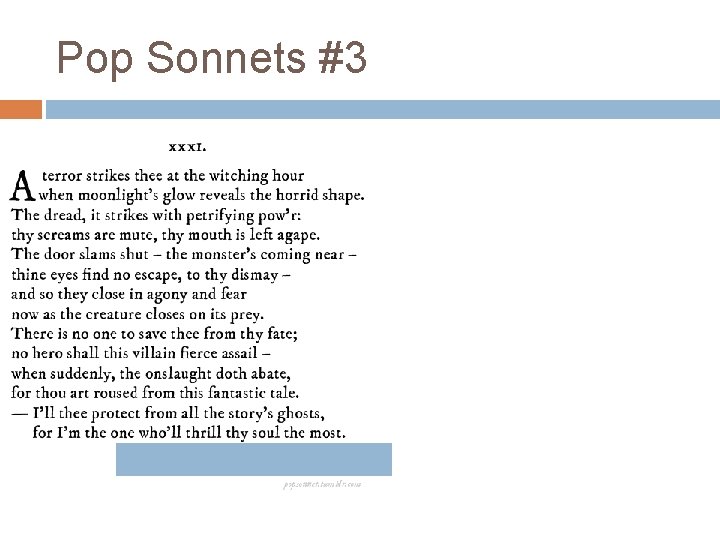
Pop Sonnets #3
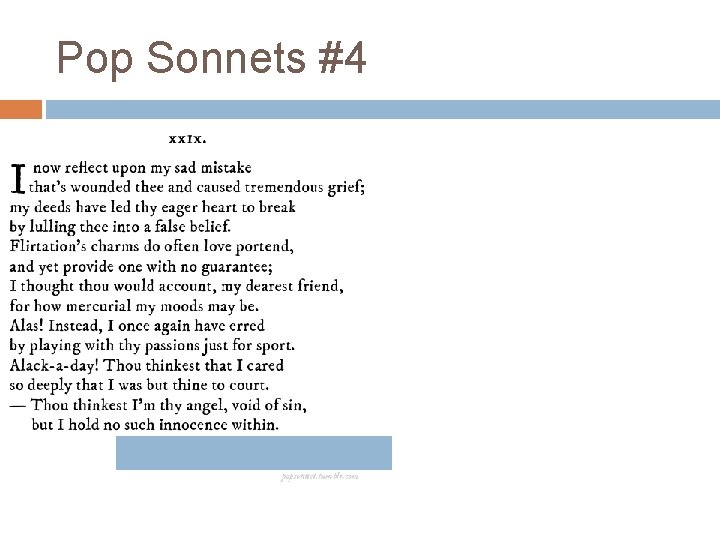
Pop Sonnets #4
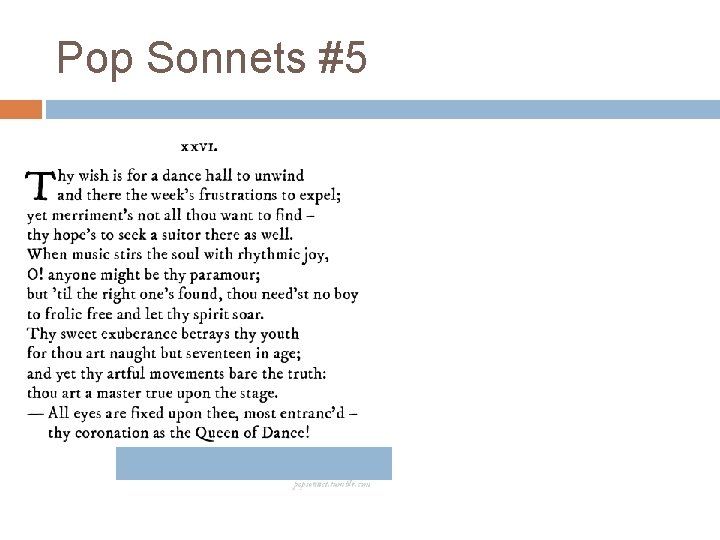
Pop Sonnets #5
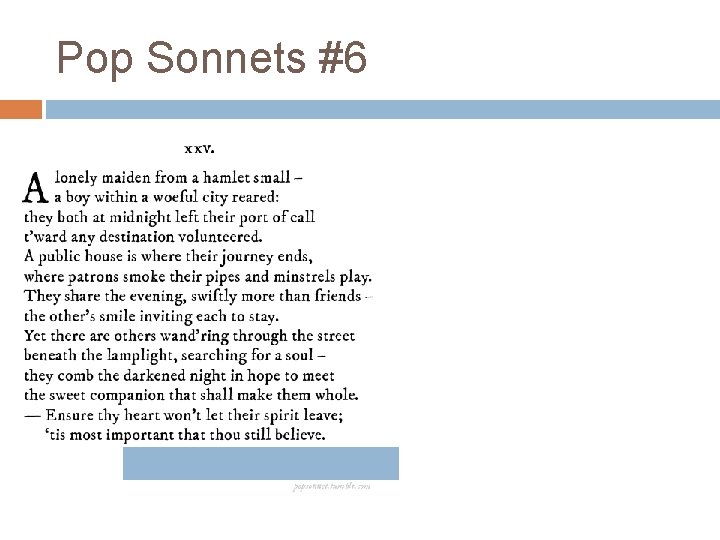
Pop Sonnets #6
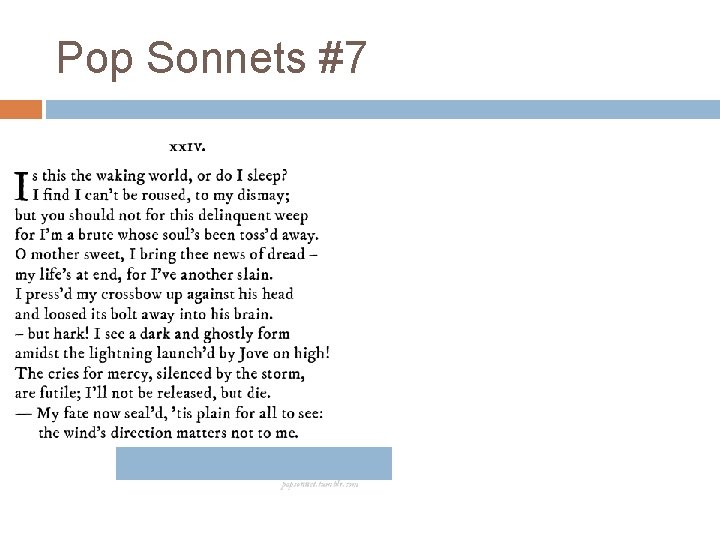
Pop Sonnets #7
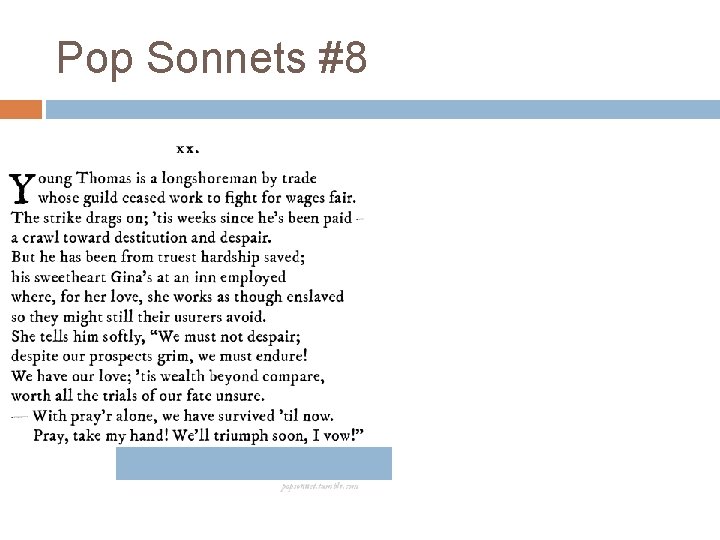
Pop Sonnets #8
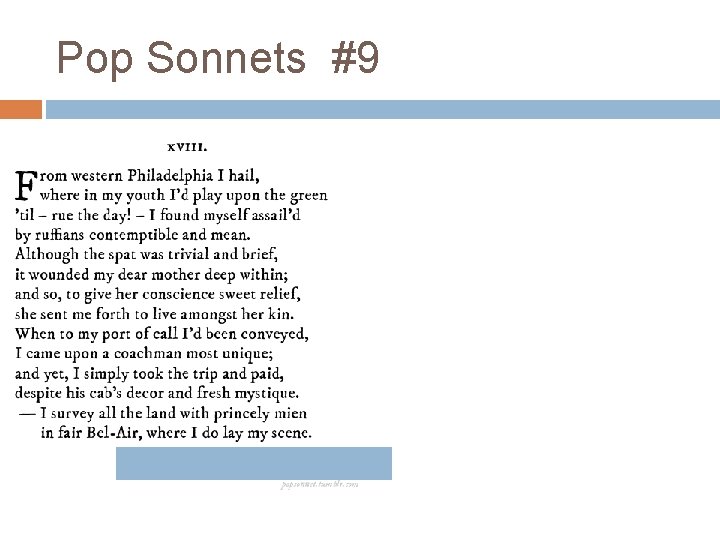
Pop Sonnets #9
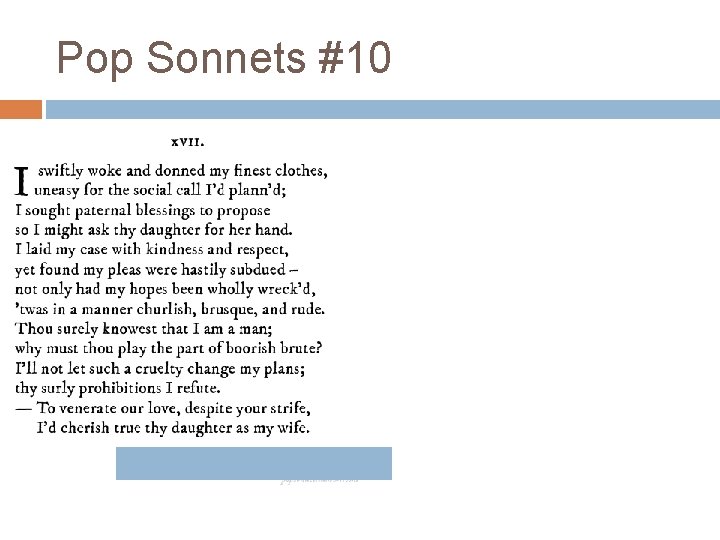
Pop Sonnets #10
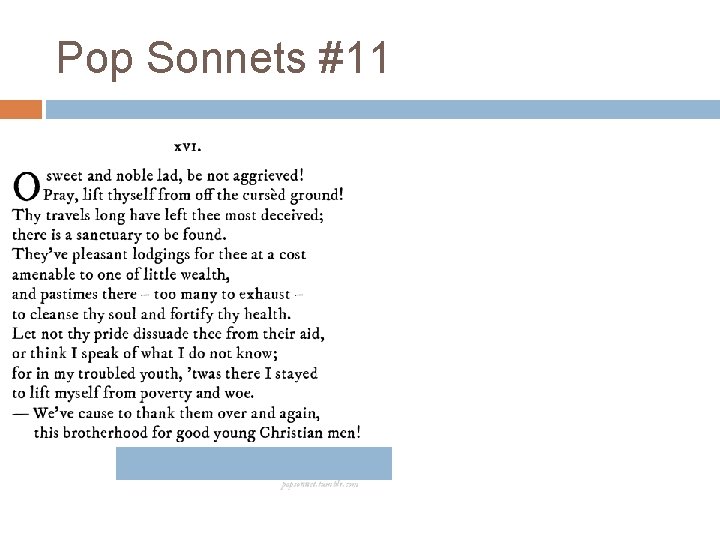
Pop Sonnets #11
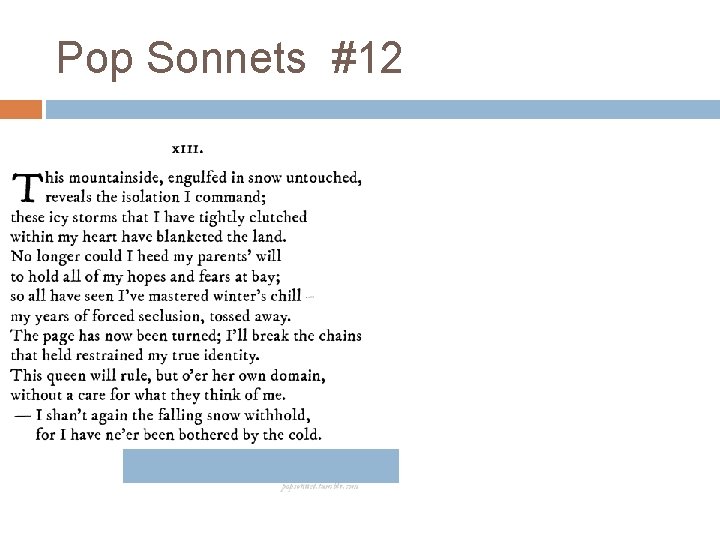
Pop Sonnets #12
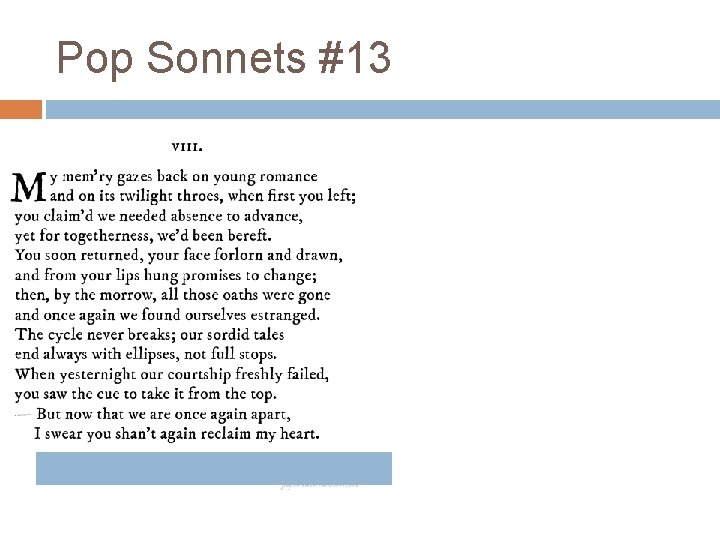
Pop Sonnets #13
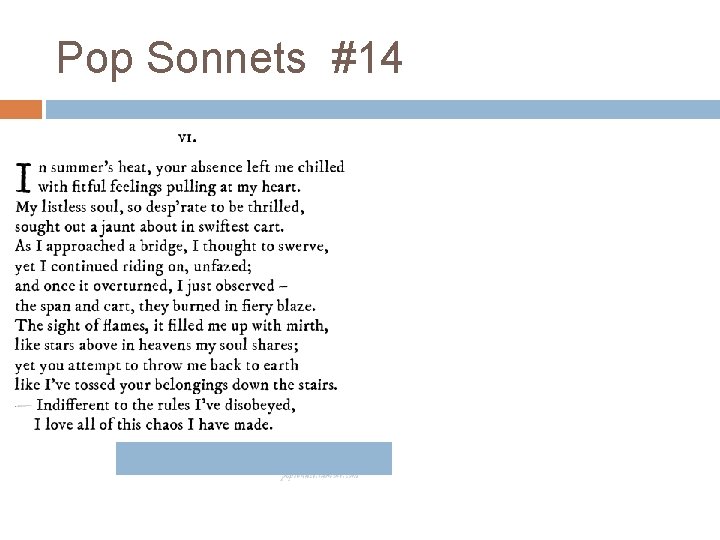
Pop Sonnets #14
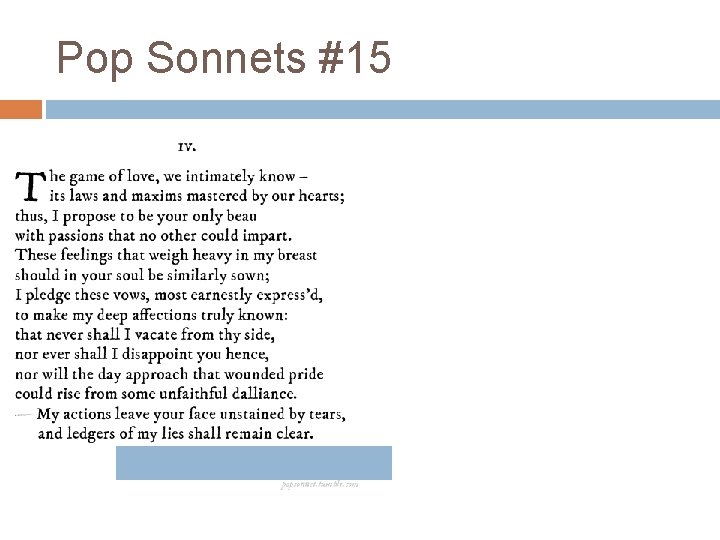
Pop Sonnets #15
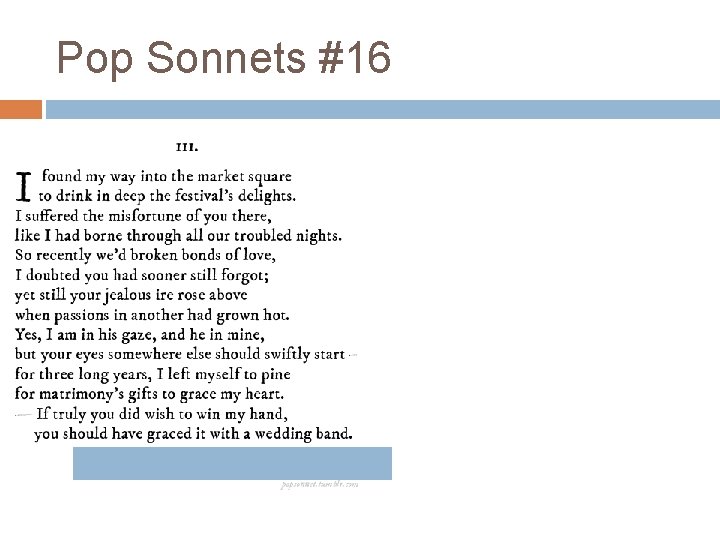
Pop Sonnets #16
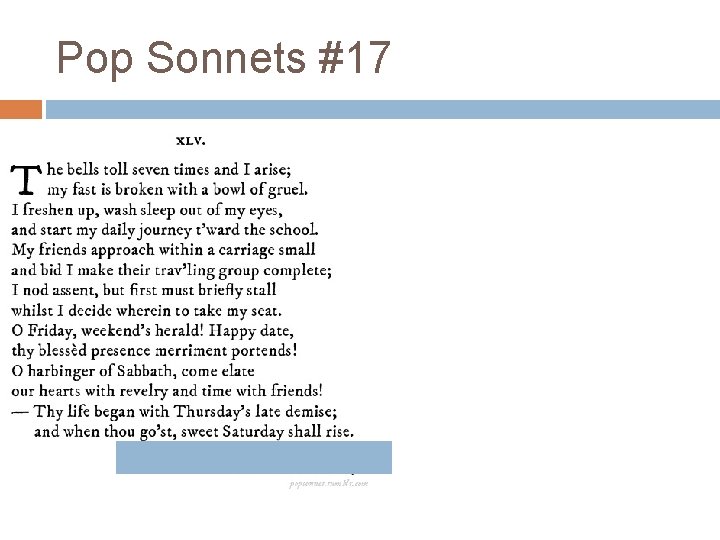
Pop Sonnets #17
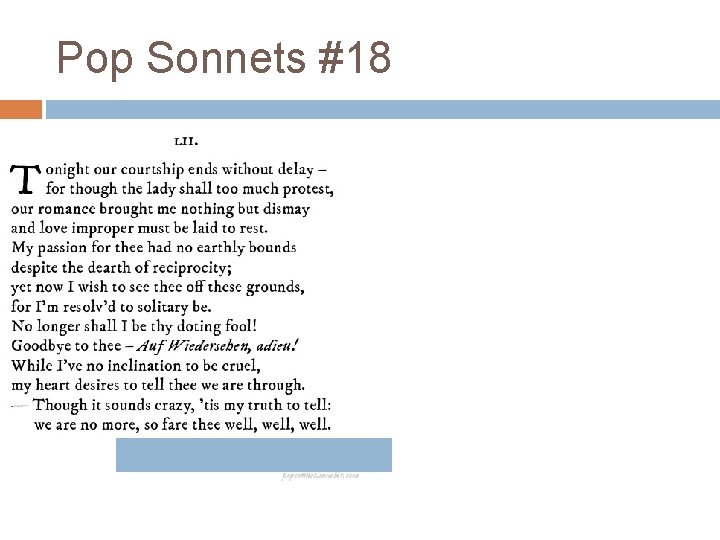
Pop Sonnets #18
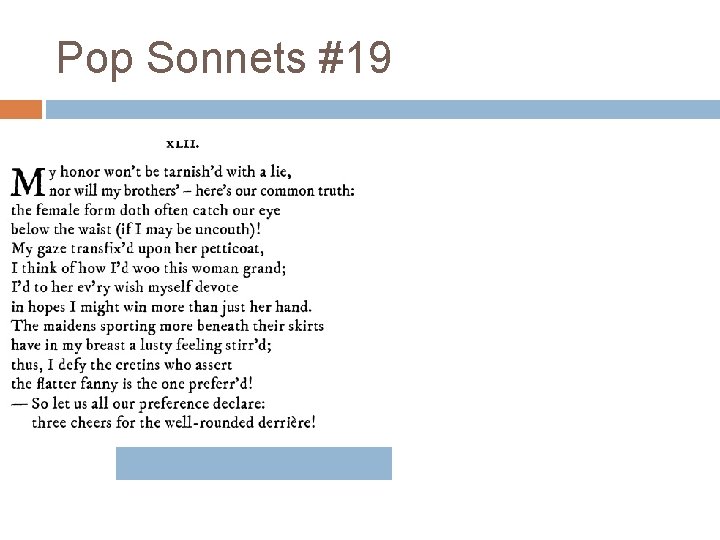
Pop Sonnets #19
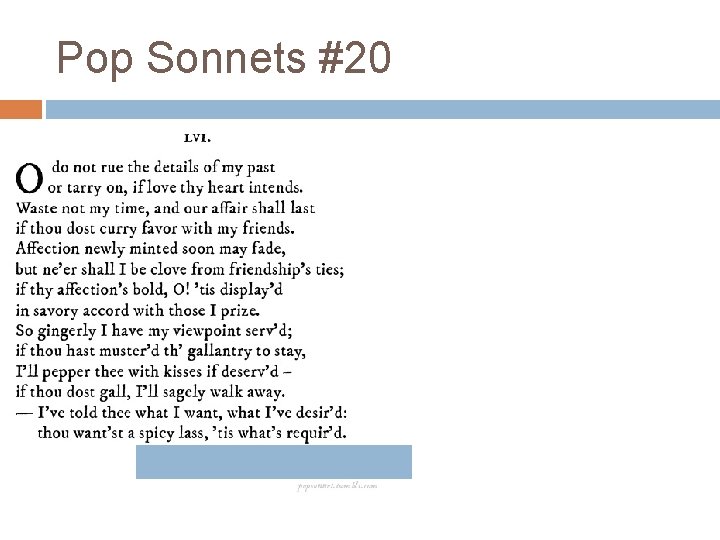
Pop Sonnets #20
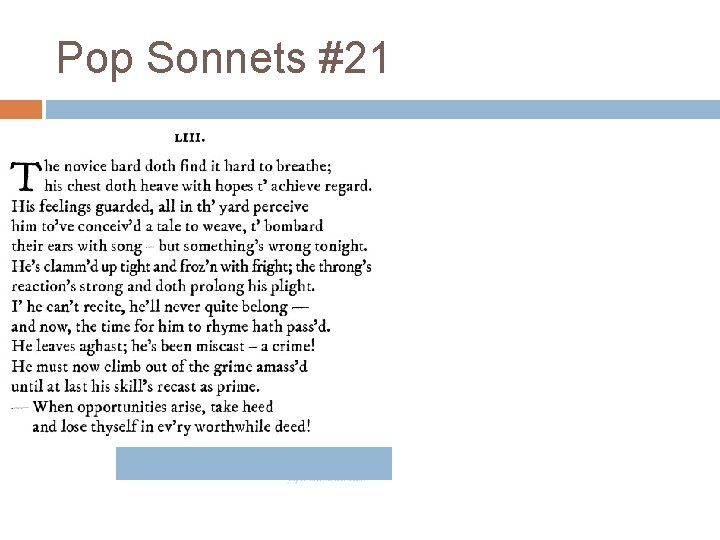
Pop Sonnets #21
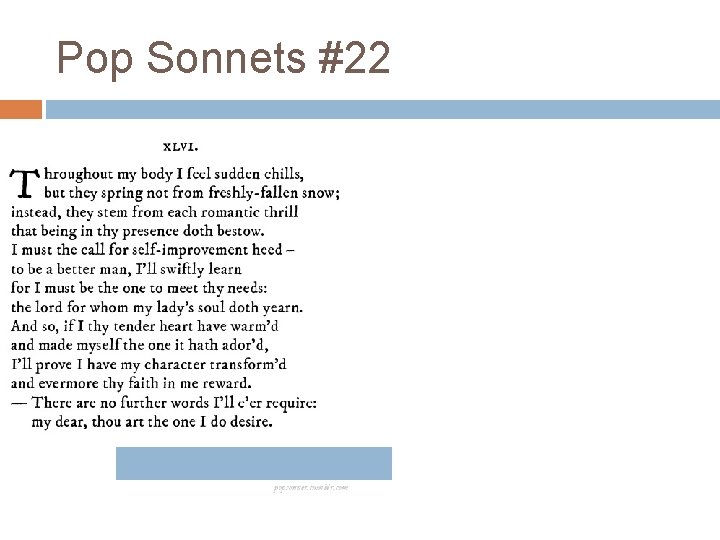
Pop Sonnets #22
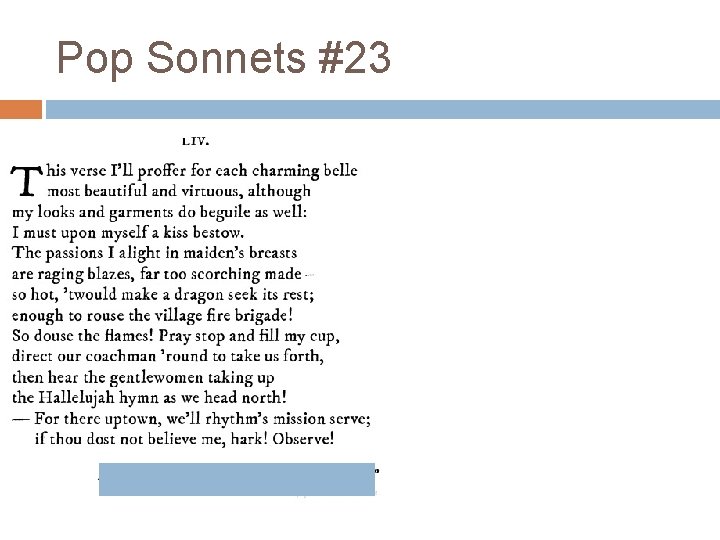
Pop Sonnets #23
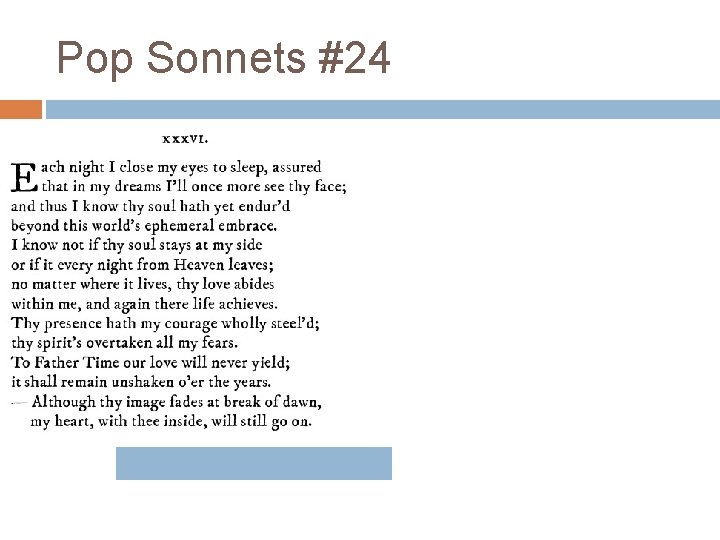
Pop Sonnets #24
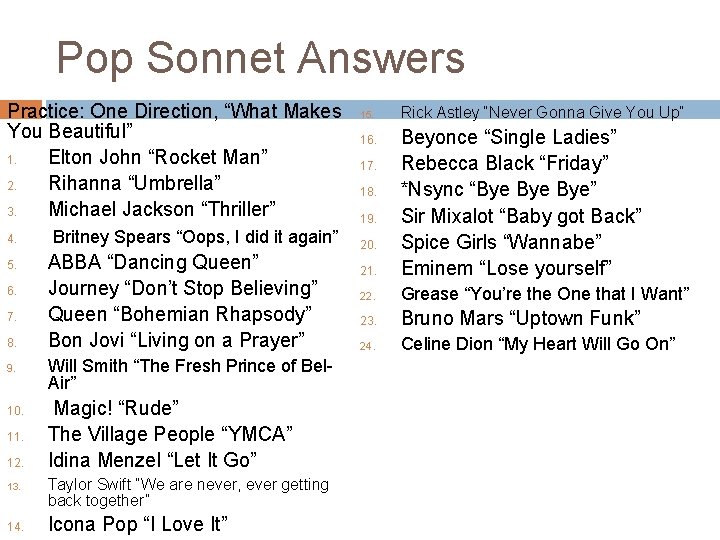
Pop Sonnet Answers Practice: One Direction, “What Makes You Beautiful” 1. Elton John “Rocket Man” 2. Rihanna “Umbrella” 3. Michael Jackson “Thriller” 4. 5. 6. 7. 8. 9. 10. 11. 12. 13. 14. Britney Spears “Oops, I did it again” ABBA “Dancing Queen” Journey “Don’t Stop Believing” Queen “Bohemian Rhapsody” Bon Jovi “Living on a Prayer” Will Smith “The Fresh Prince of Bel. Air” Magic! “Rude” The Village People “YMCA” Idina Menzel “Let It Go” Taylor Swift “We are never, ever getting back together” Icona Pop “I Love It” 15. Rick Astley “Never Gonna Give You Up” 21. Beyonce “Single Ladies” Rebecca Black “Friday” *Nsync “Bye Bye” Sir Mixalot “Baby got Back” Spice Girls “Wannabe” Eminem “Lose yourself” 22. Grease “You’re the One that I Want” 23. Bruno Mars “Uptown Funk” 24. Celine Dion “My Heart Will Go On” 16. 17. 18. 19. 20.