
Understanding sensorymotor integration ORGANIZATION OF SENSORY SYSTEMS General

- Slides: 98
Understanding sensory-motor integration
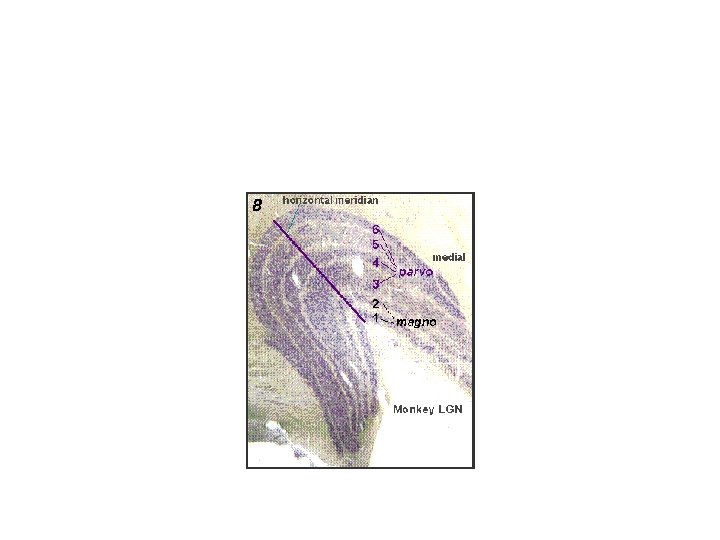
ORGANIZATION OF SENSORY SYSTEMS: General perspectives • • • Sensori-motor integration External senses Localize/Detect and monitor change Less sensitive to unchanging stimuli Tuned…sense modes
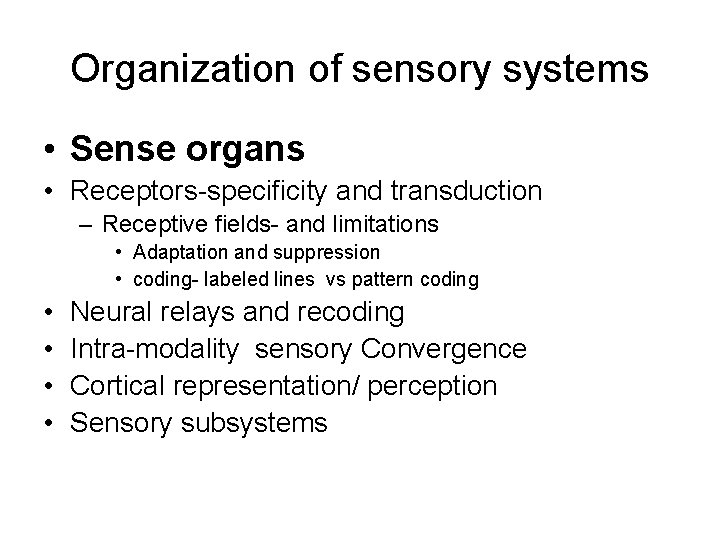
Organization of sensory systems • Sense organs • Receptors-specificity and transduction – Receptive fields- and limitations • coding- labeled lines vs pattern coding • Adaptation and suppression • • Neural relays and recoding Intra-modality sensory Convergence Cortical representation/ perception Sensory subsystems
The Visual System
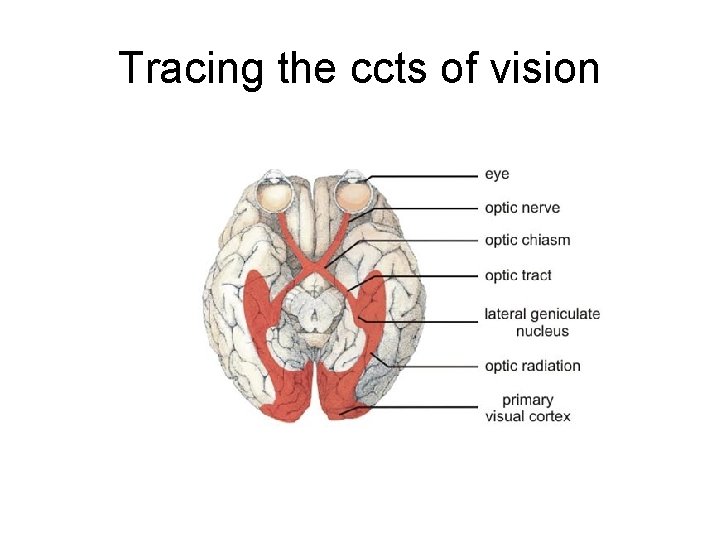
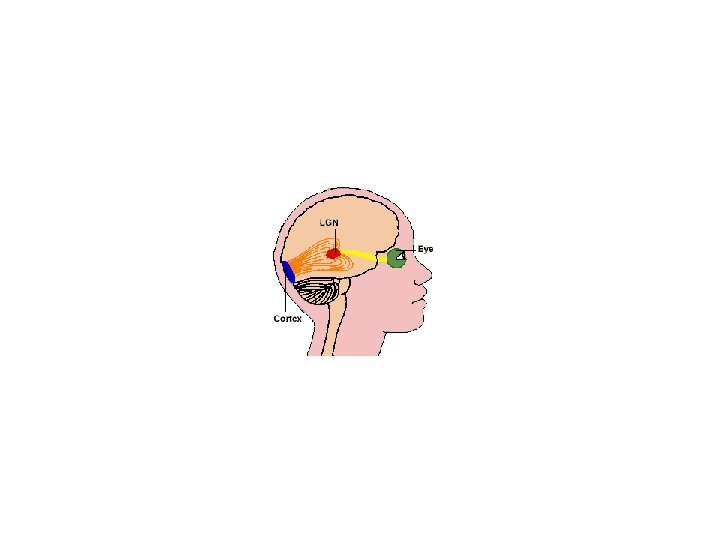
Tracing the ccts of vision
Organization of sensory systems • Sense organs • Receptors-specificity and transduction – Receptive fields- and limitations • Adaptation and suppression • coding- labeled lines vs pattern coding • • Neural relays and recoding Intra-modality sensory Convergence Cortical representation/ perception Sensory subsystems
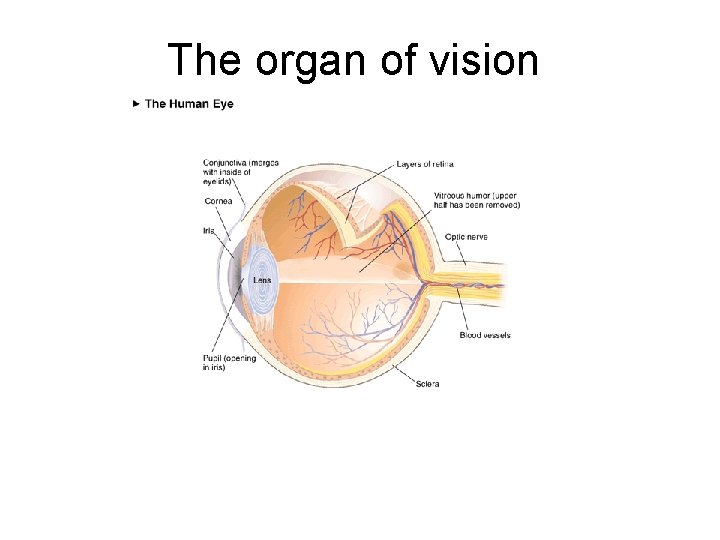
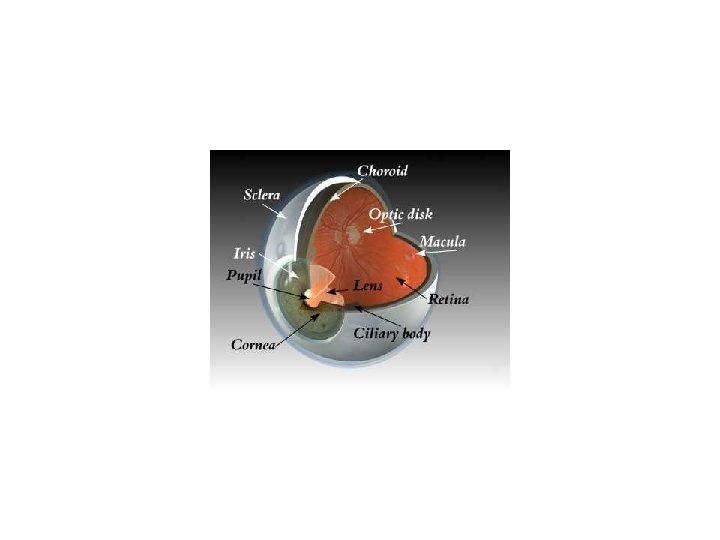
The organ of vision
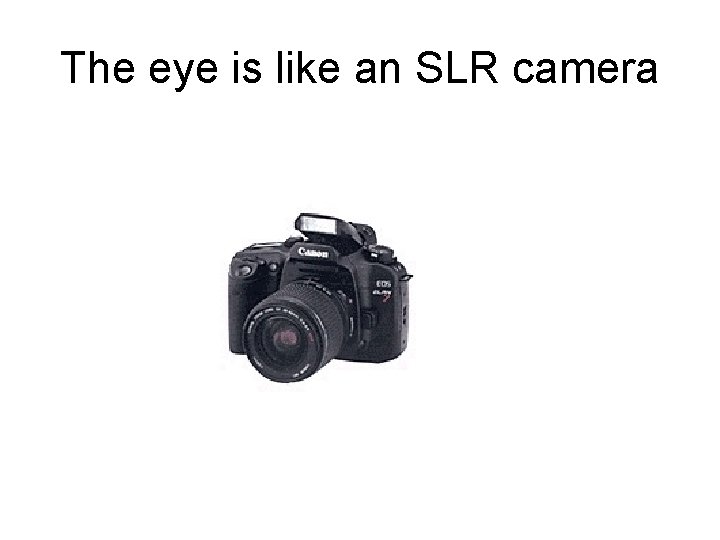
The eye is like an SLR camera
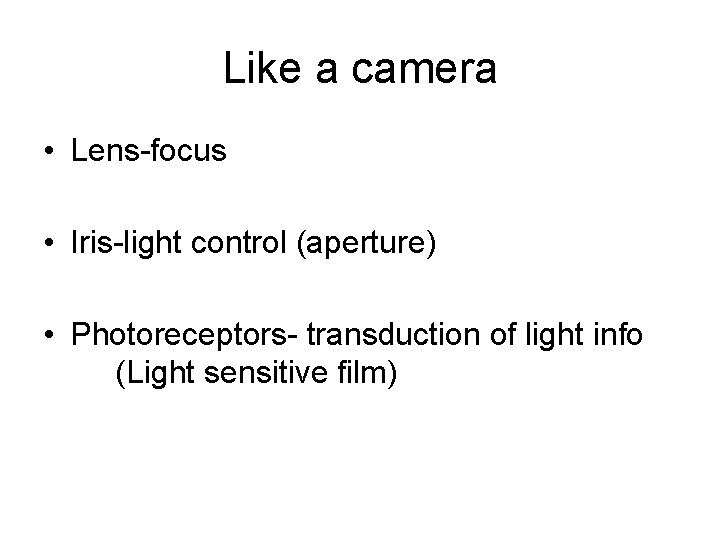
Like a camera • Lens-focus • Iris-light control (aperture) • Photoreceptors- transduction of light info (Light sensitive film)
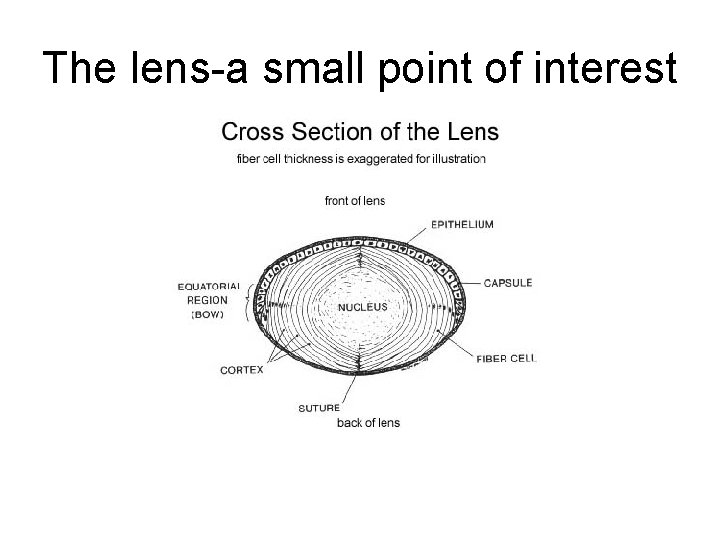
The lens-a small point of interest
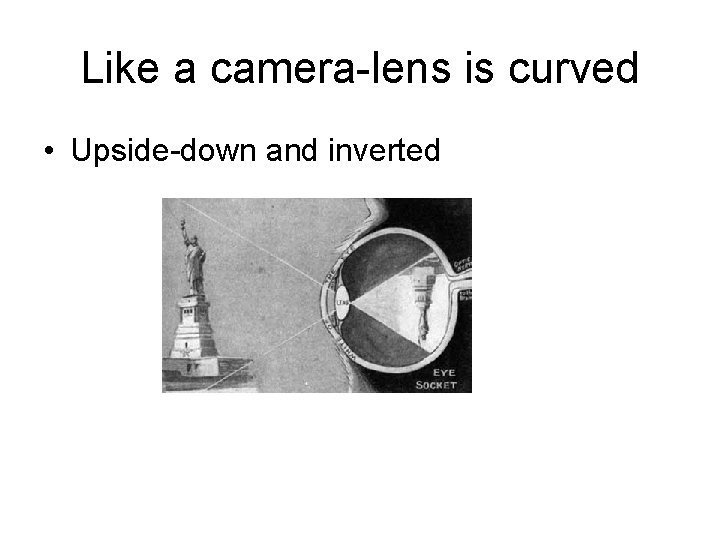
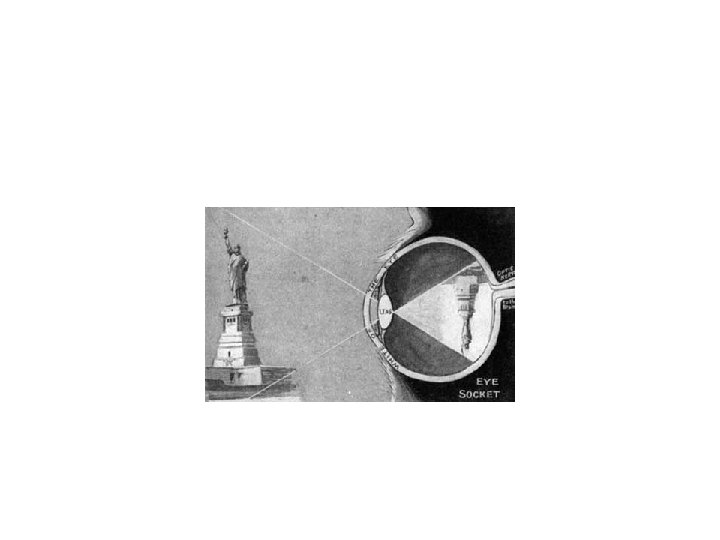
Like a camera-lens is curved • Upside-down and inverted
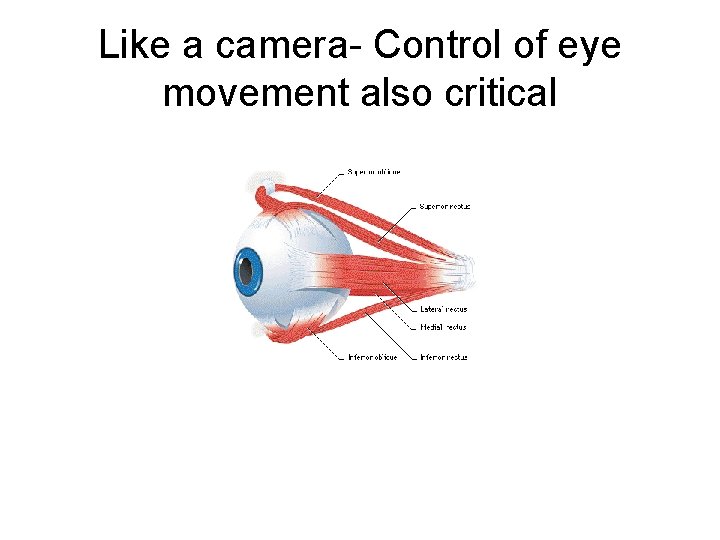
Like a camera- Control of eye movement also critical
Eye movement- 3 major types of movement that can affect vision Pursuit/tracking Saccades vergence
Organization of sensory systems • Sense organs • Receptors-specificity and transduction – Receptive fields- and limitations – Adaptation and suppression – coding- labeled lines vs pattern coding • • Intra-modality sensory Convergence Neural relays and recoding Cortical representation/ perception Sensory subsystems
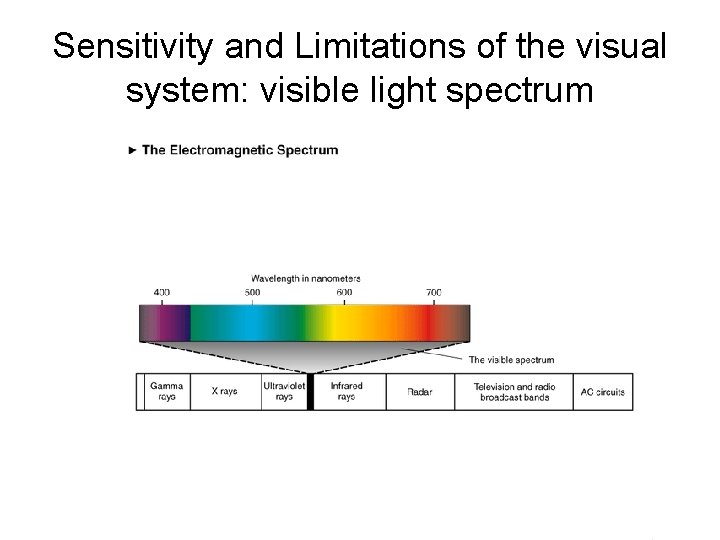
Sensitivity and Limitations of the visual system: visible light spectrum
Organization of sensory systems • Sense organs • Receptors-specificity and transduction – Receptive fields and limitations – Adaptation and suppression – coding- labeled lines vs pattern coding • • Intra-modality sensory Convergence Neural relays and recoding Sensory subsystems Cortical representation/ perception
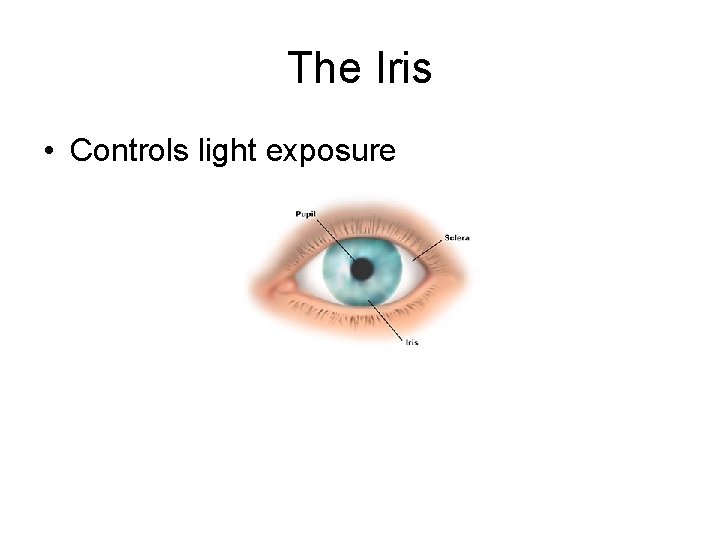
The Iris • Controls light exposure
Organization of sensory systems • Sense organs • Receptors-specificity and transduction – Receptive fields- and limitations – Adaptation and suppression – coding- labeled lines vs pattern coding • • Intra-modality sensory Convergence Neural relays and recoding Sensory subsystems Cortical representation/ perception
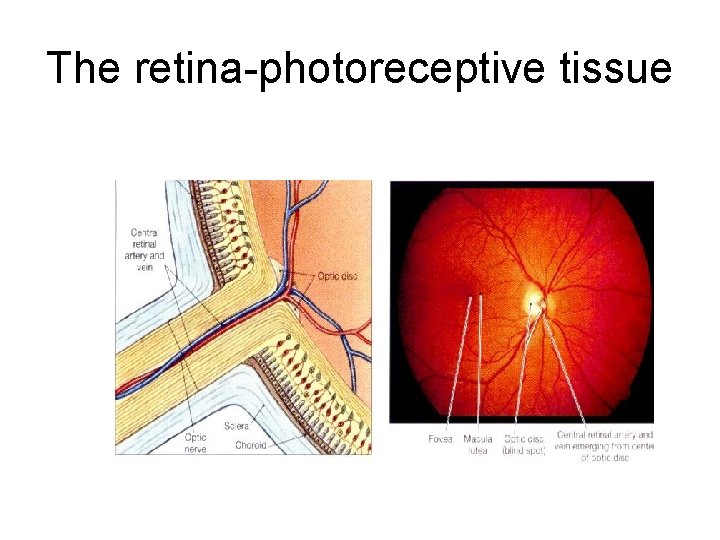
The retina-photoreceptive tissue
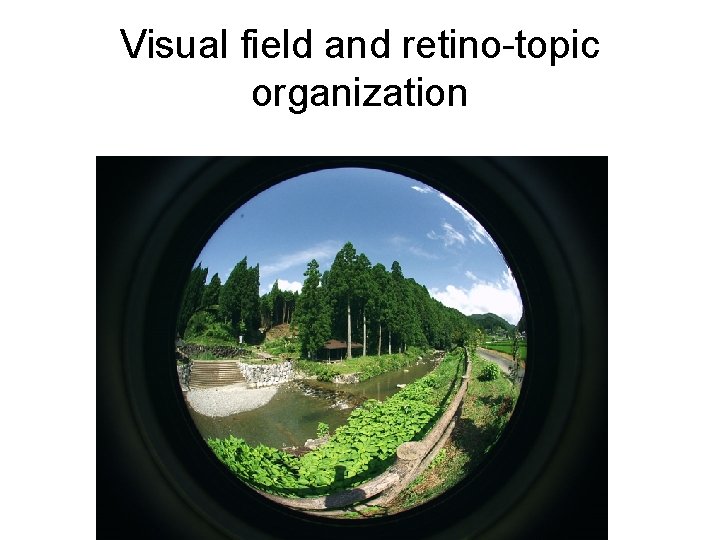
Visual field and retino-topic organization
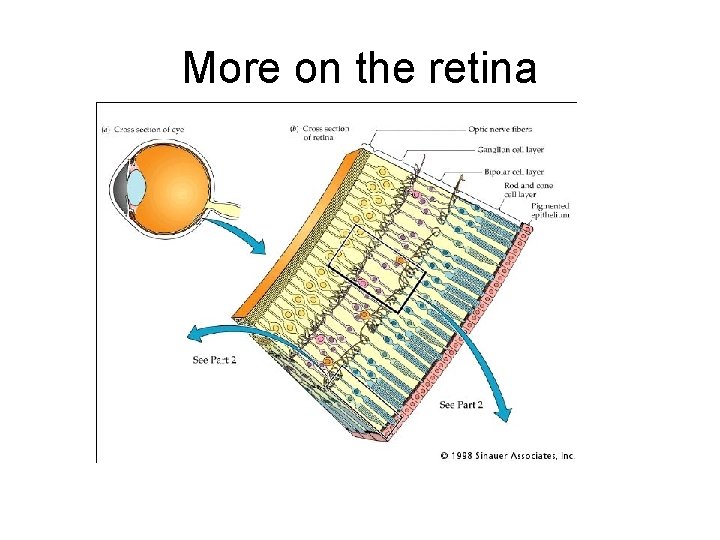
More on the retina
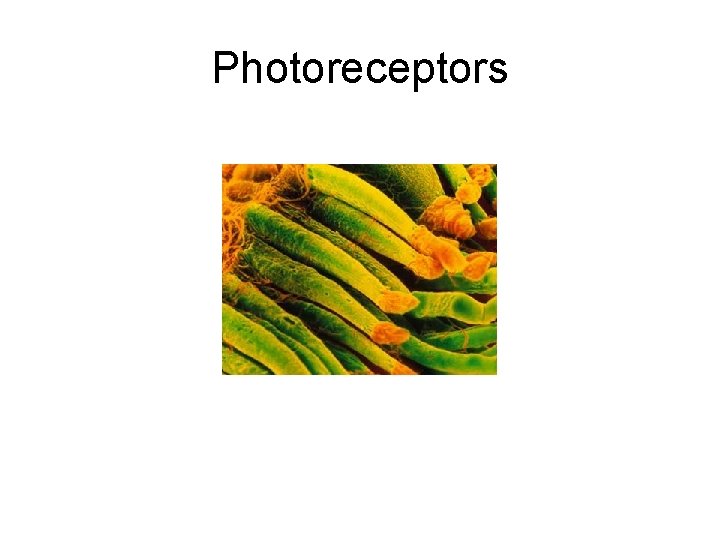
Photoreceptors
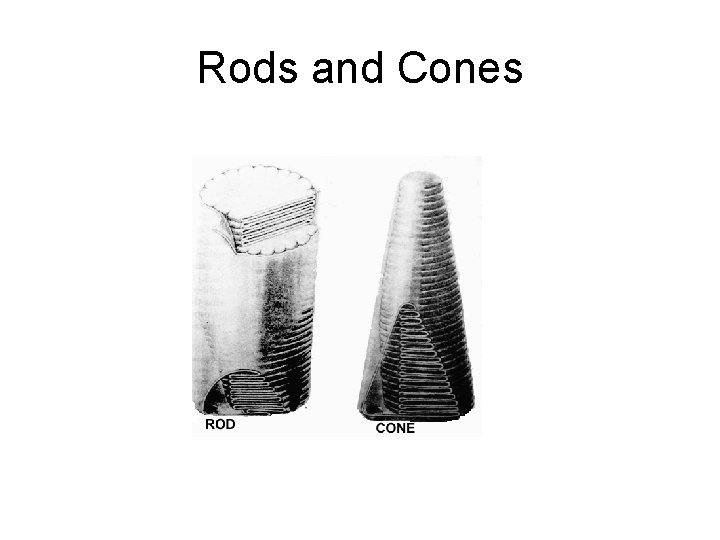
Rods and Cones
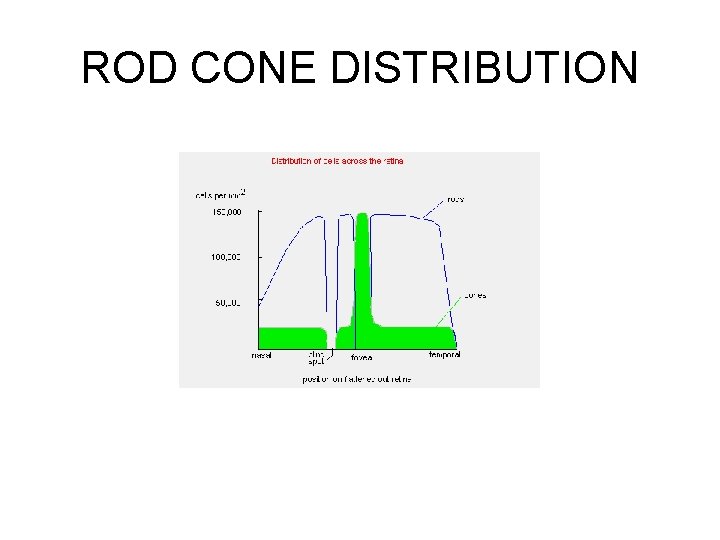
Receptive fields and Coding RODS- dark/low illumination sensitive to movement peripheral vision CONES- High illumination sensitive to color foveal vision
ROD CONE DISTRIBUTION
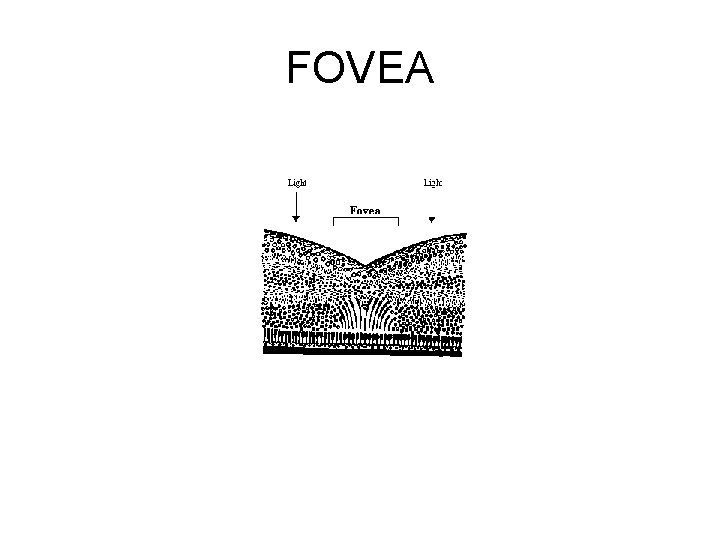
FOVEA
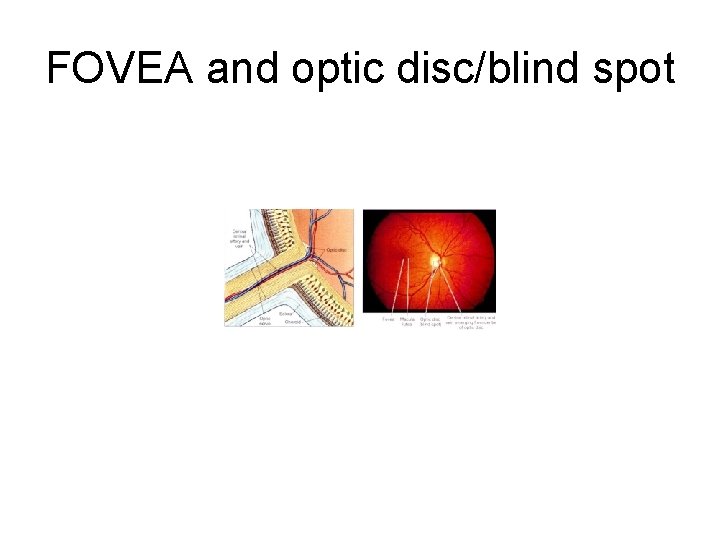
FOVEA and optic disc/blind spot
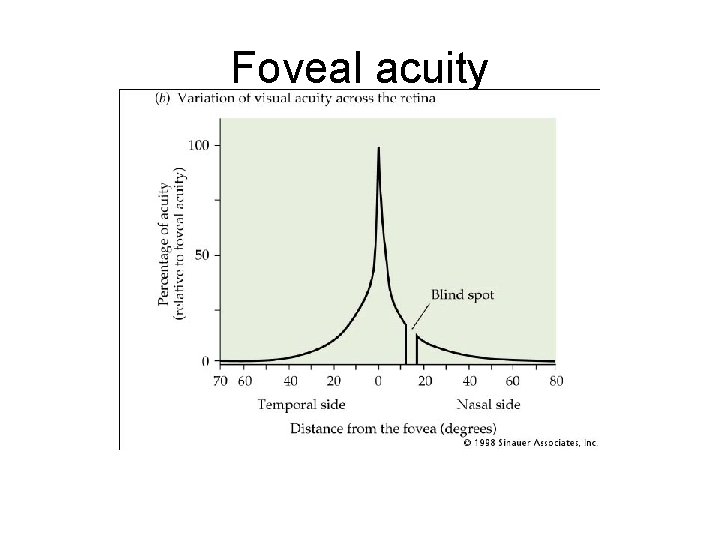
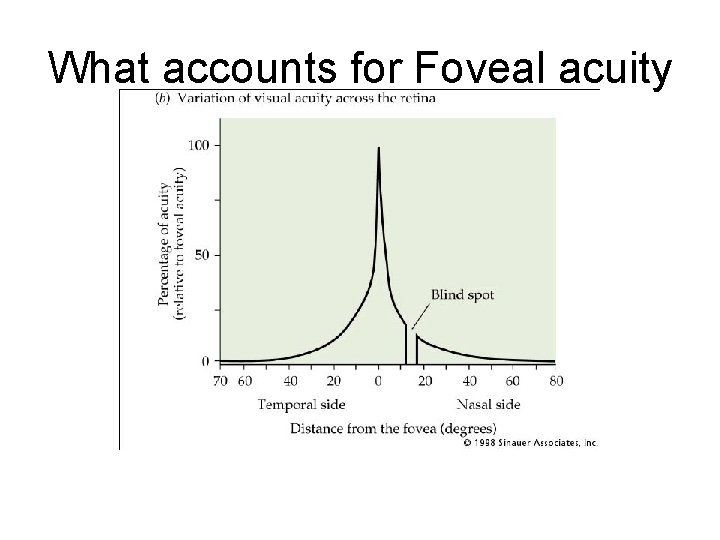
Foveal acuity
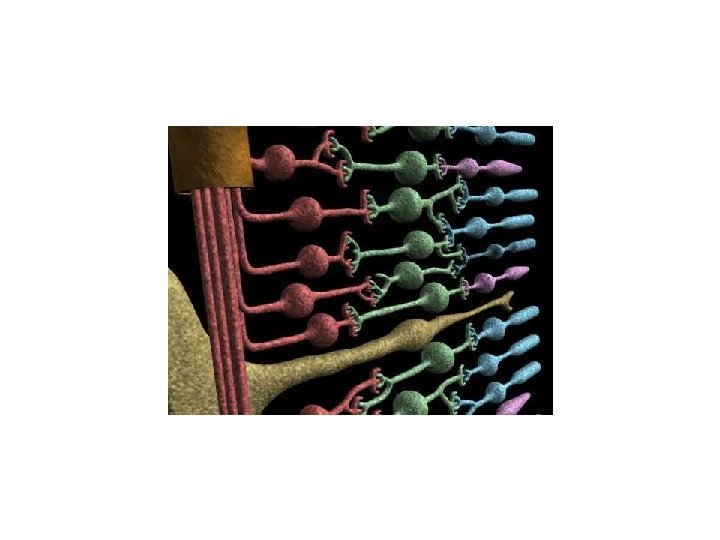
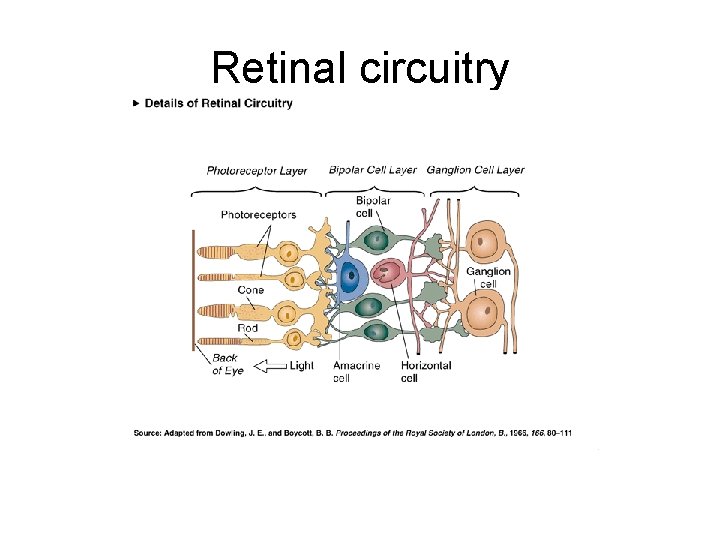
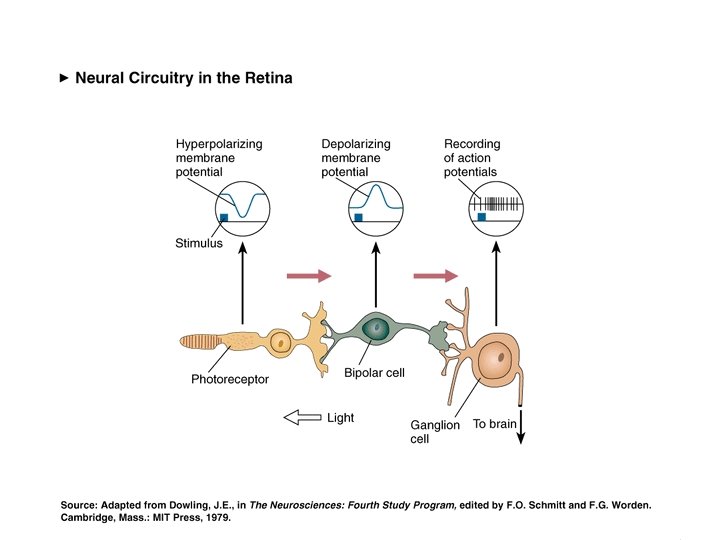
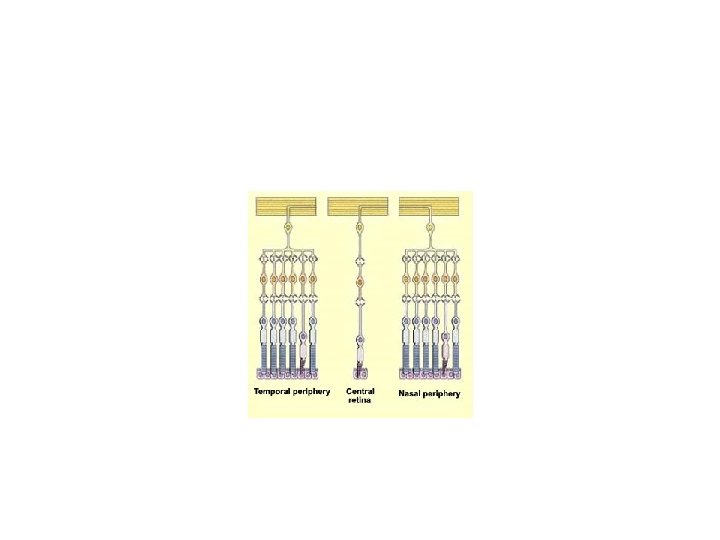
Retinal circuitry
NOTE: • Light passes through ganglion cell layer, and bipolar cell layer before striking photoreceptors ( light transparent). • Activation of photoreceptor activats cct in reverse direction.
What accounts for Foveal acuity
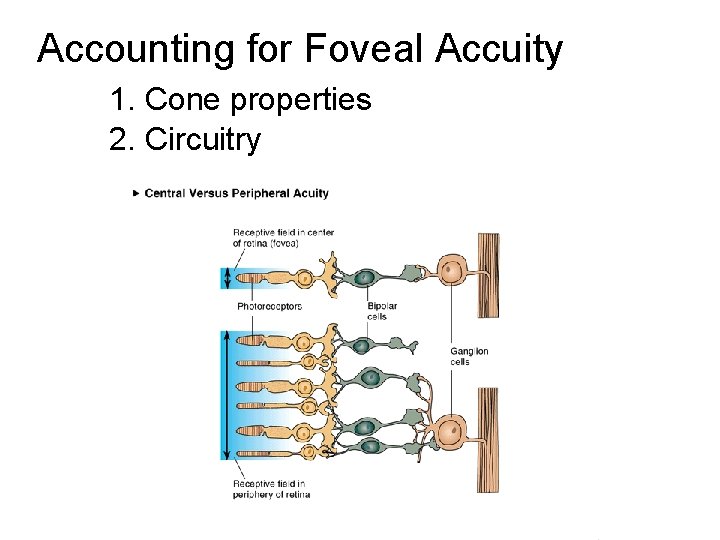
Accounting for Foveal Accuity 1. Cone properties 2. Circuitry
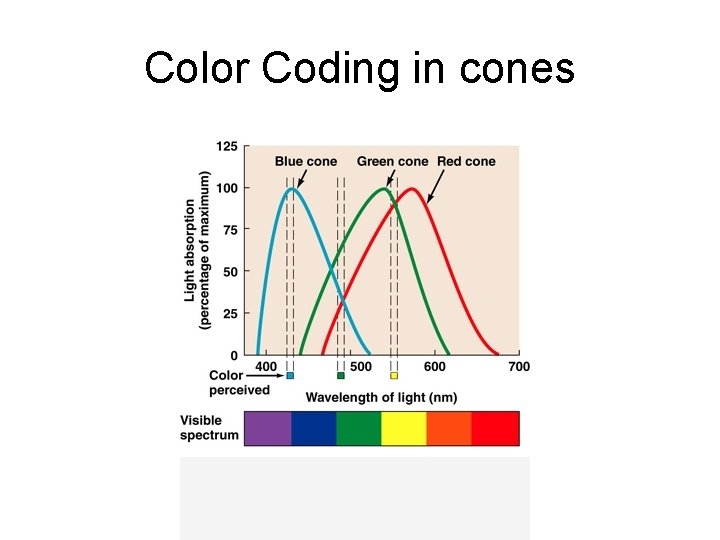
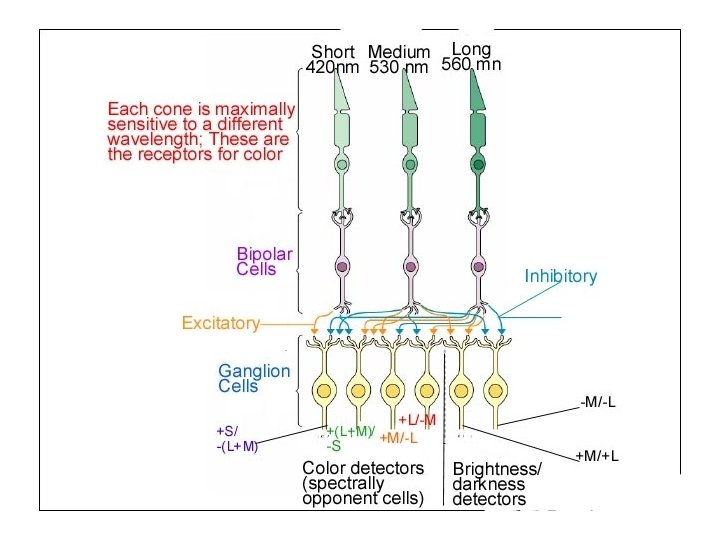
Color Coding in cones
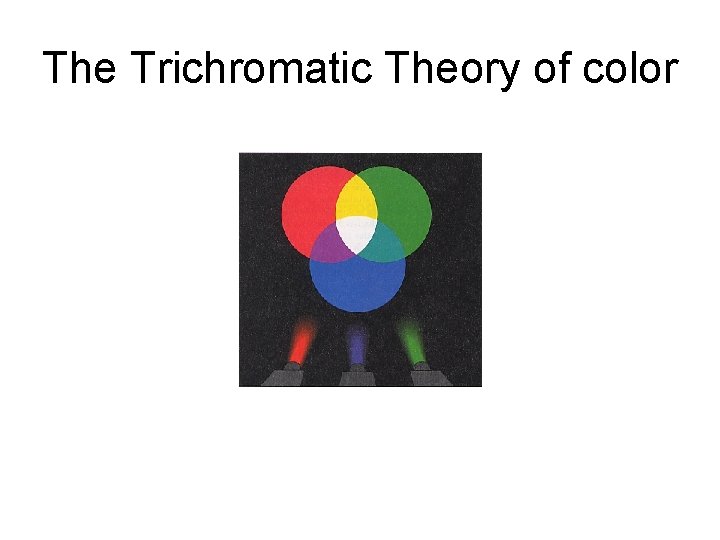
The Trichromatic Theory of color
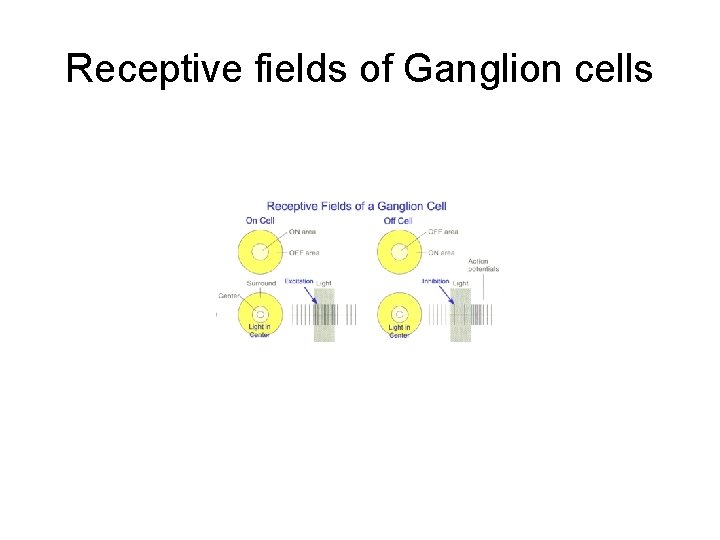
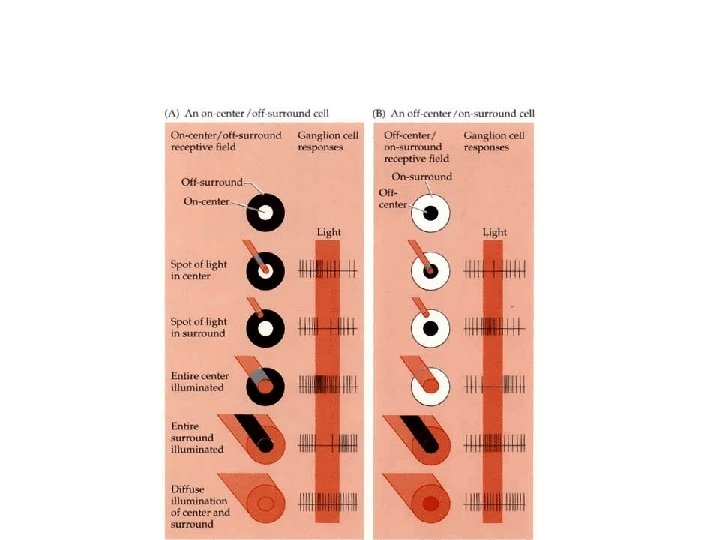
Receptive fields of Ganglion cells
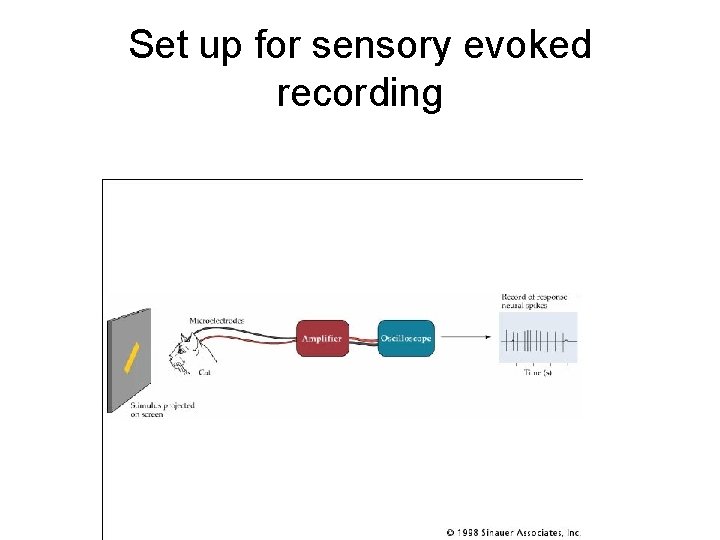
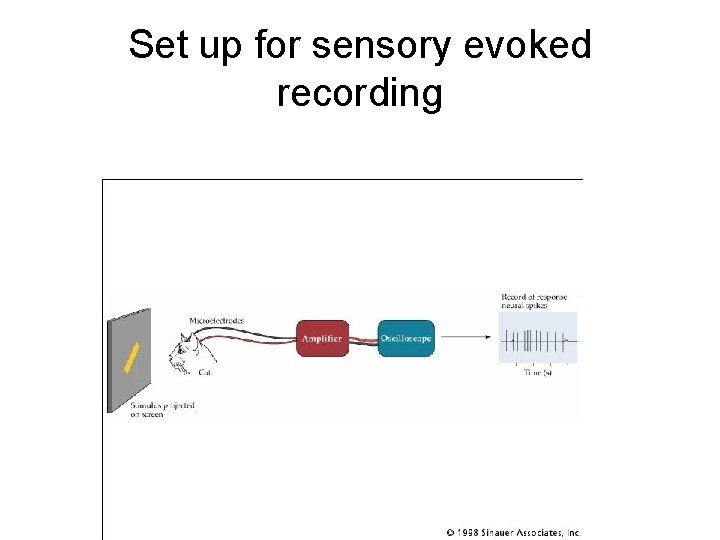
Set up for sensory evoked recording
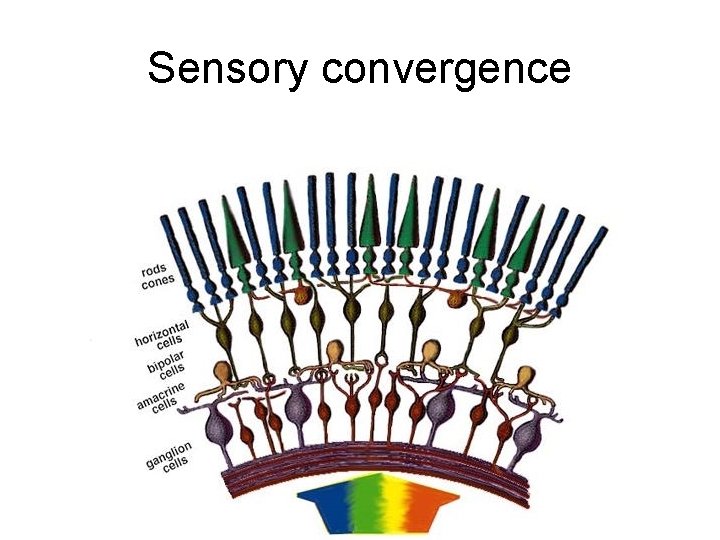
Sensory convergence
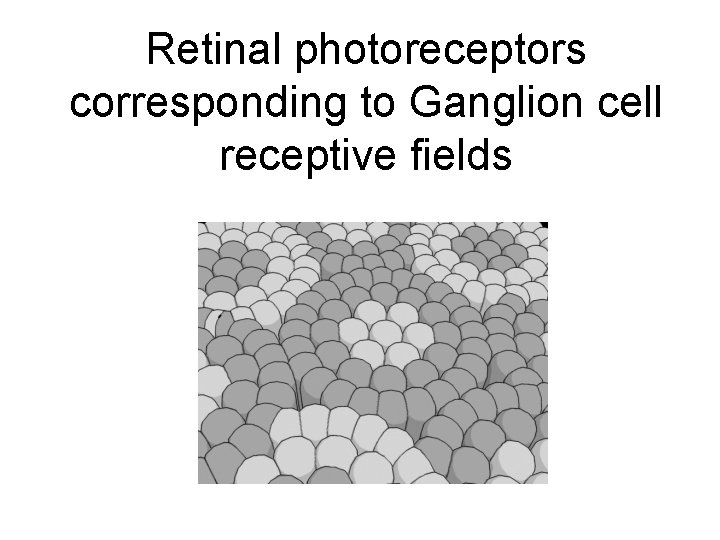
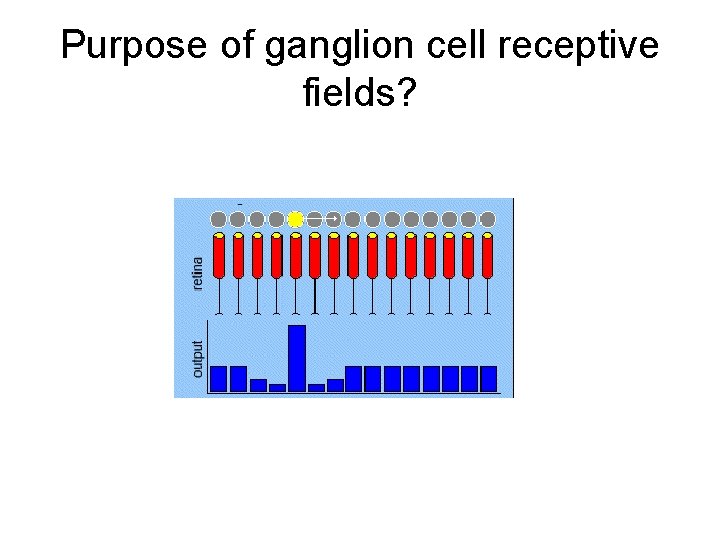
Retinal photoreceptors corresponding to Ganglion cell receptive fields
Purpose of ganglion cell receptive fields?
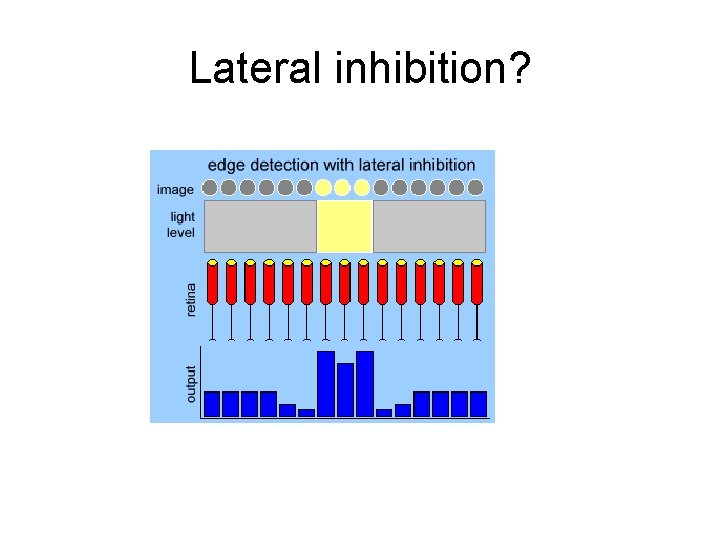
Lateral inhibition?
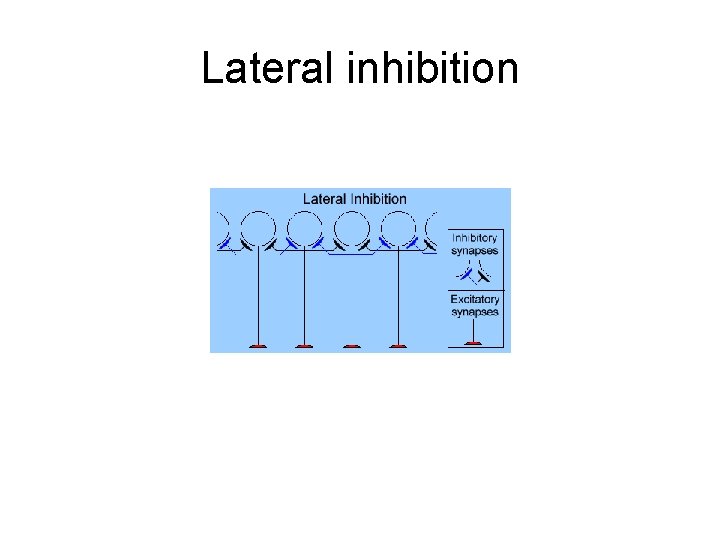
Lateral inhibition
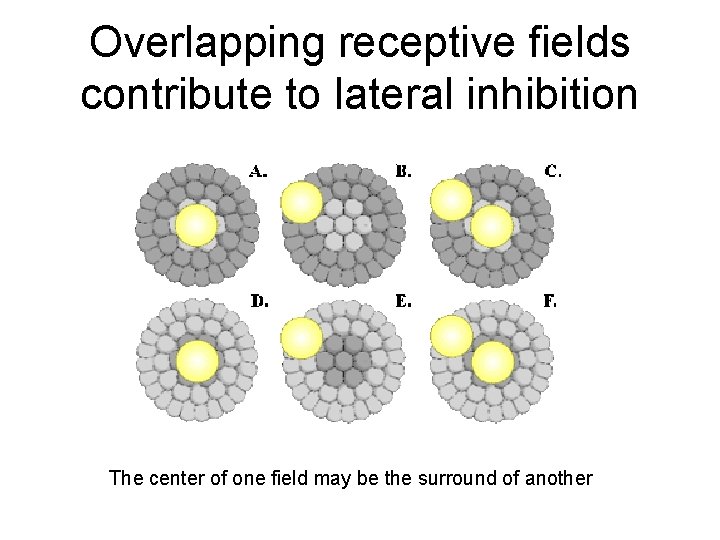
Overlapping receptive fields contribute to lateral inhibition The center of one field may be the surround of another
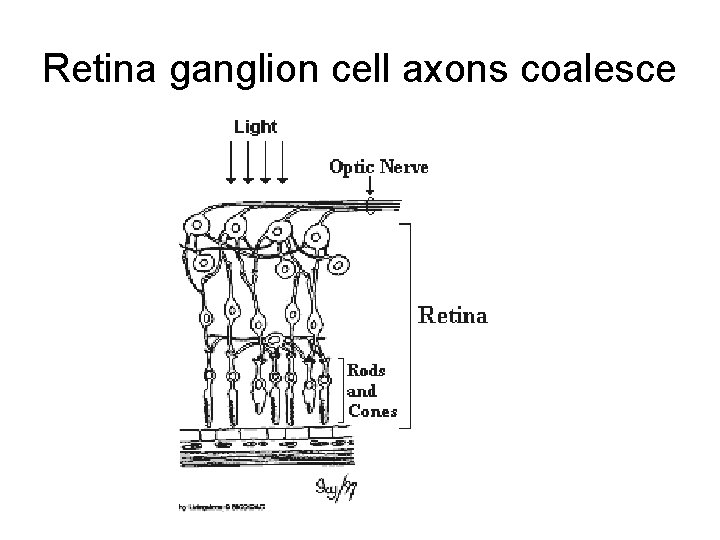
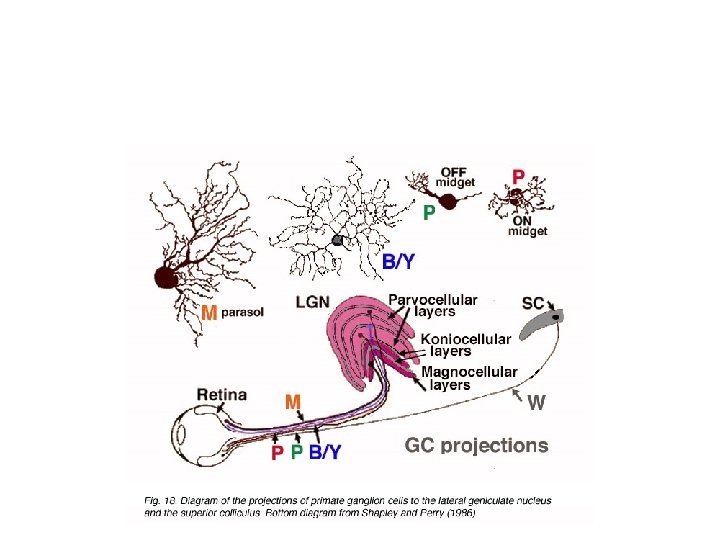
Retina ganglion cell axons coalesce
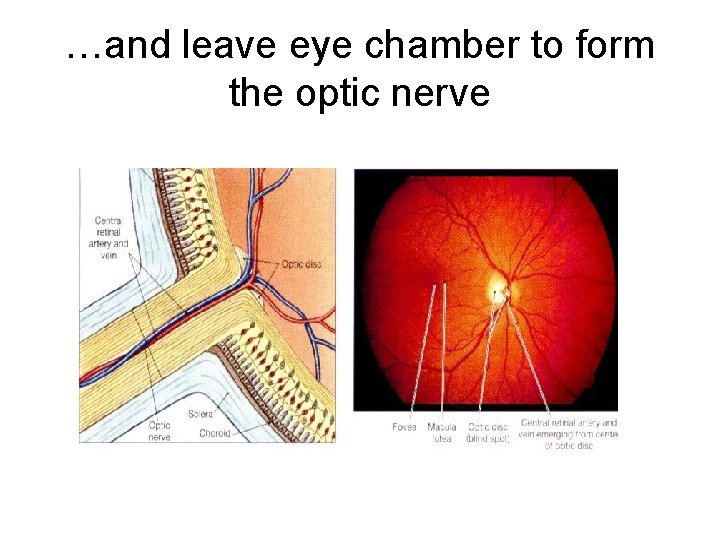
…and leave eye chamber to form the optic nerve
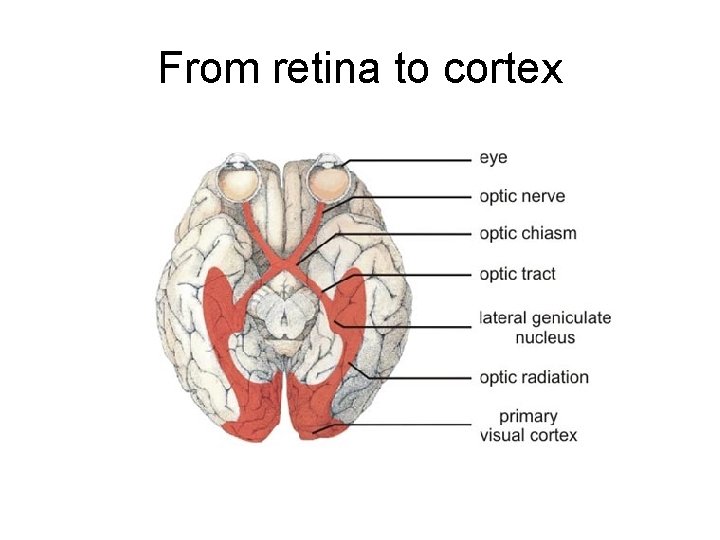
From retina to cortex
Decussation at optic chiasm Decussation-crossing over. . how does this work?
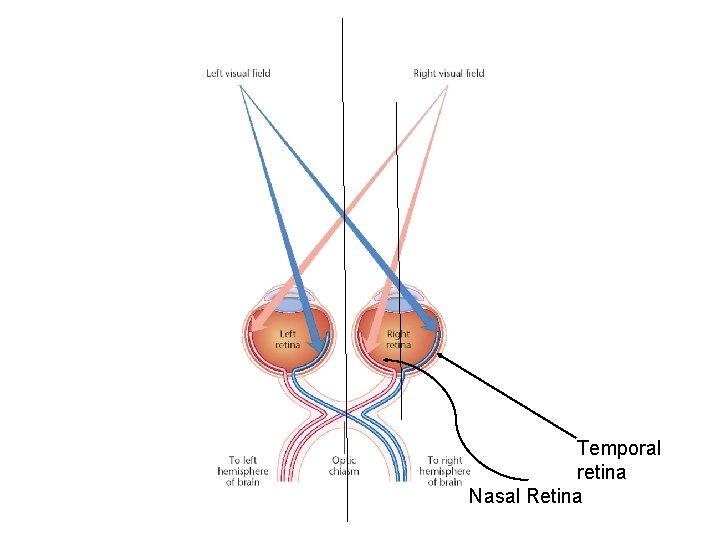
Partial decussation at optic chiasm Decussation-crossing over Not as simple as left and right eye Decussation of visual field info
Temporal retina Nasal Retina
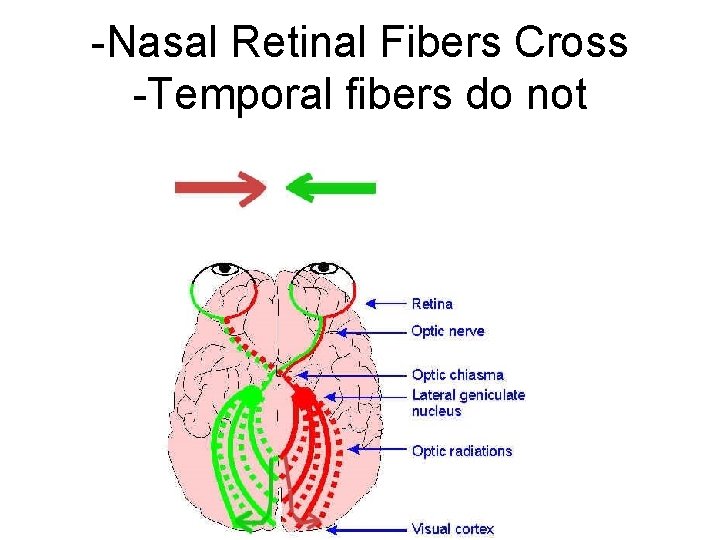
-Nasal Retinal Fibers Cross -Temporal fibers do not
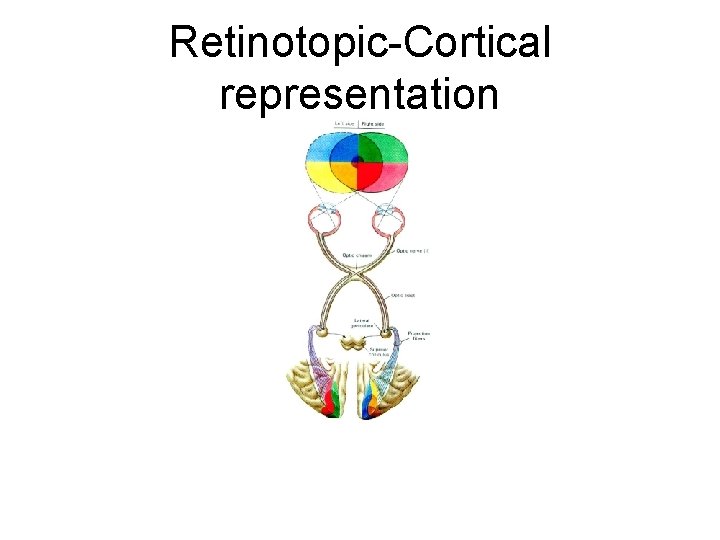
Retinotopic-Cortical representation
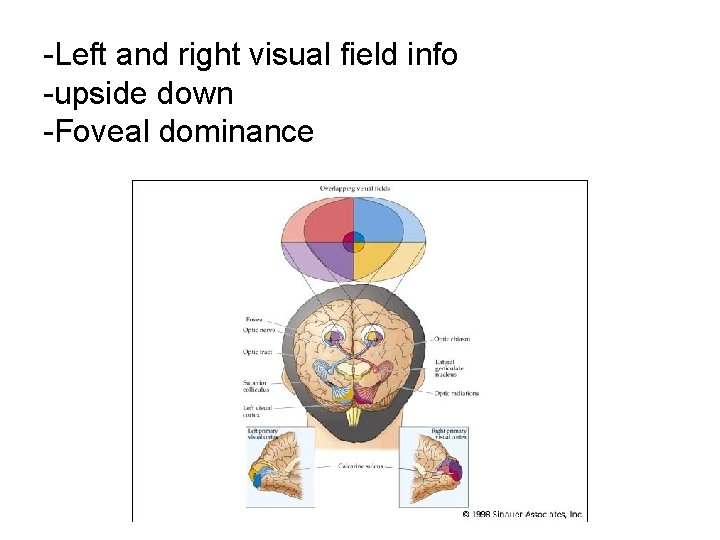
-Left and right visual field info -upside down -Foveal dominance
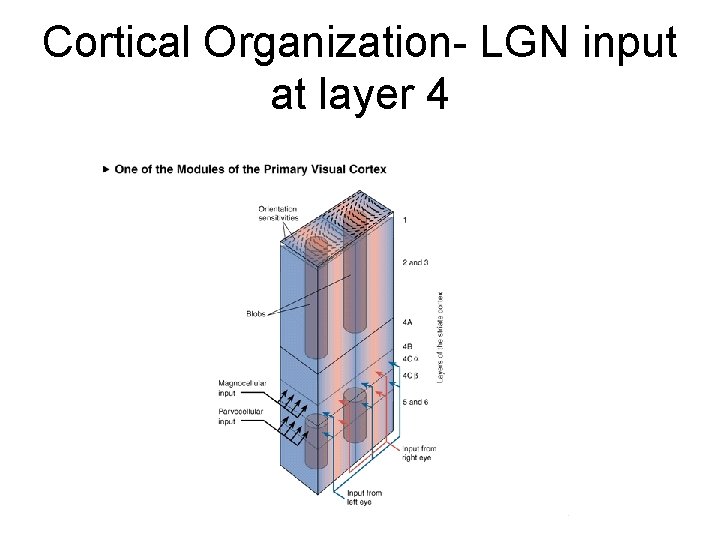
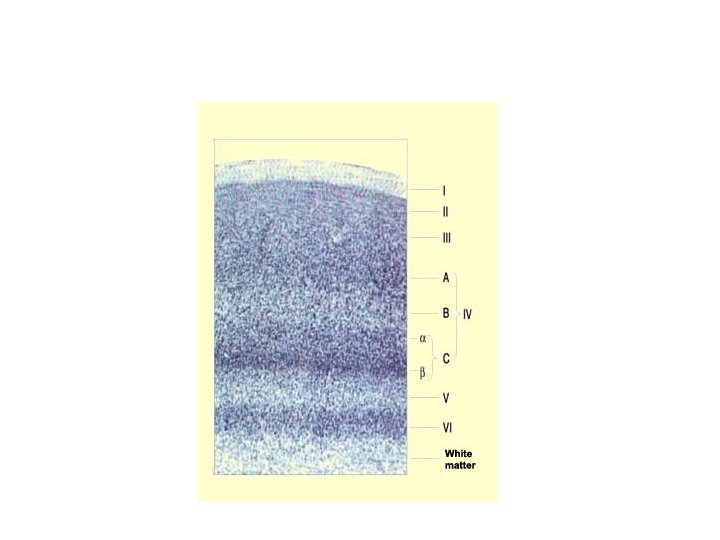
Cortical Organization- LGN input at layer 4
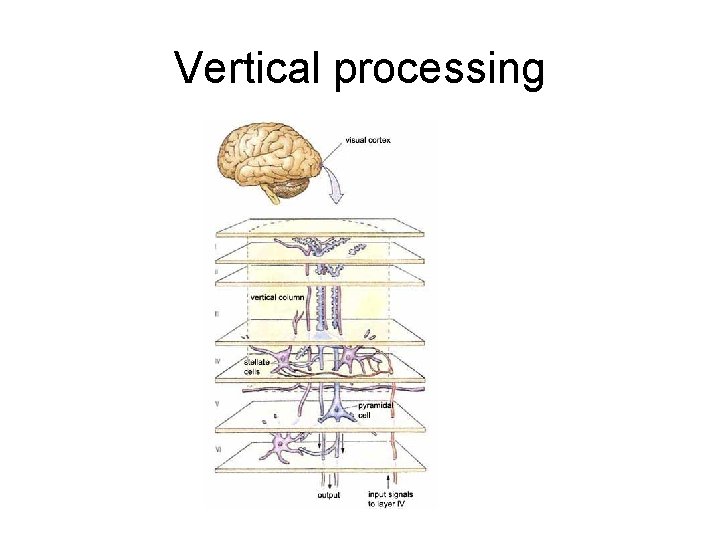
Vertical processing
Set up for sensory evoked recording
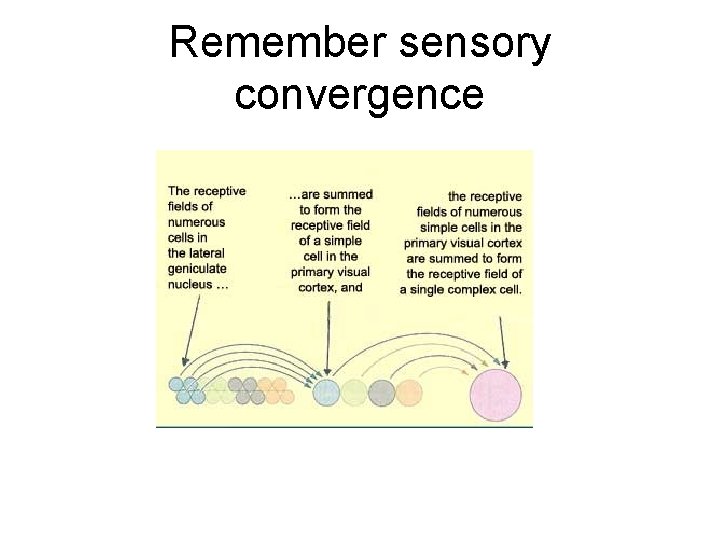
Remember sensory convergence
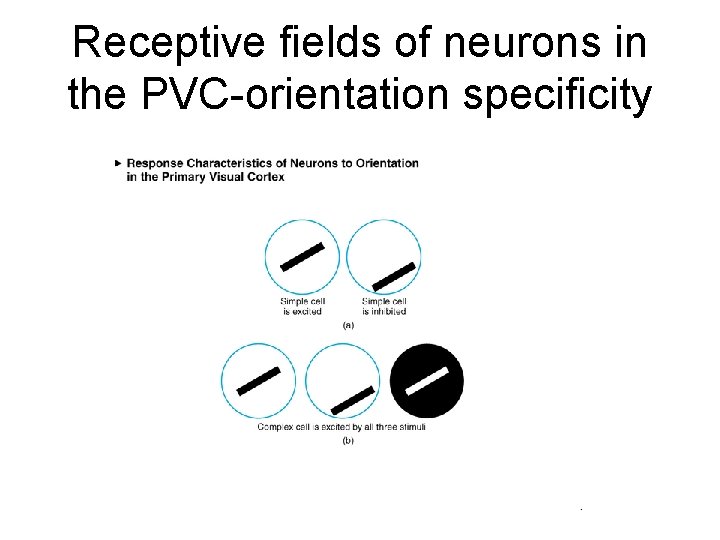
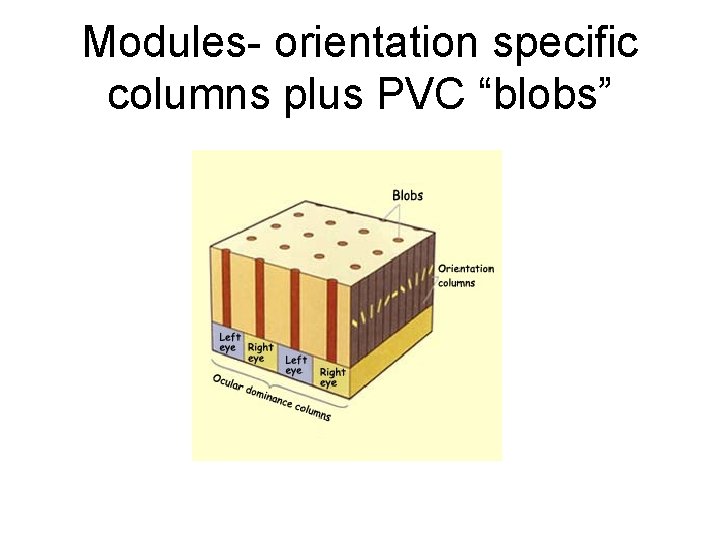
Receptive fields of neurons in the PVC-orientation specificity
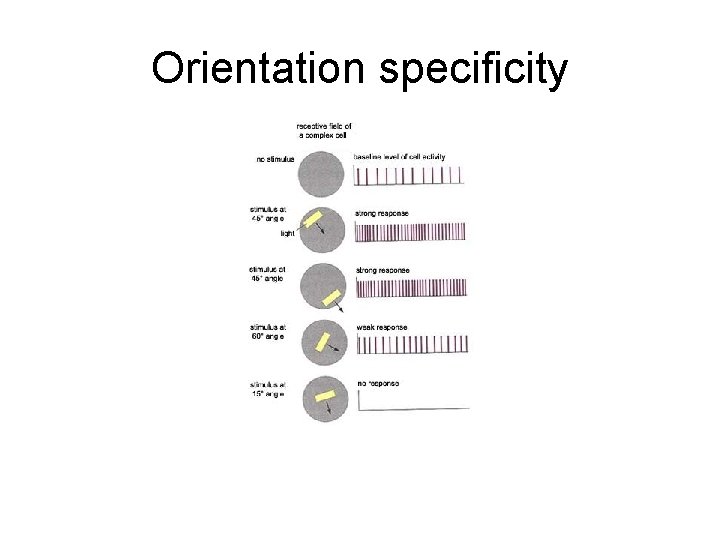
Orientation specificity
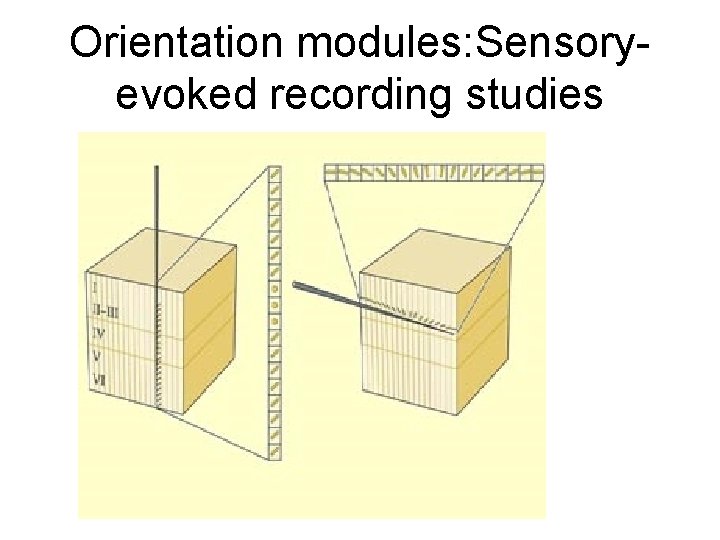
Orientation modules: Sensoryevoked recording studies
Modules- orientation specific columns plus PVC “blobs”
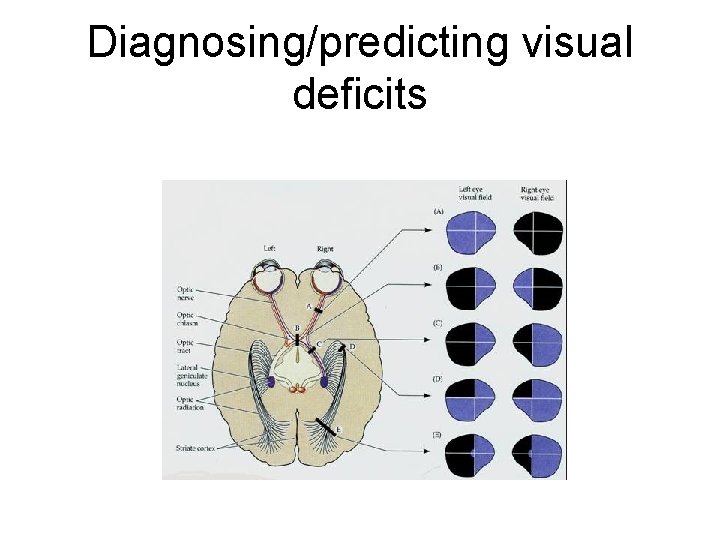
Diagnosing/predicting visual deficits
What happens if the entire PVC is damaged?
Blind sight/ Superior Colliculi • http: //video. google. com/videosearch? hl=e n&rls=GGIC, GGIC: 200701, GGIC: en&ei=KD 1 b. Ssu. NMJKKMec 7 EI&resnum=0&q=blindsight&um=1&ie= UTF-8&sa=N&tab=wv#
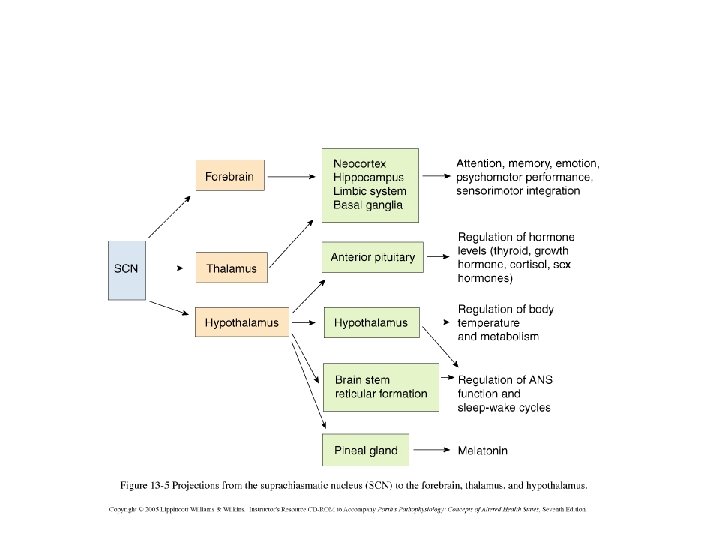
• Other visual subsystems -SCN -Pineal gland
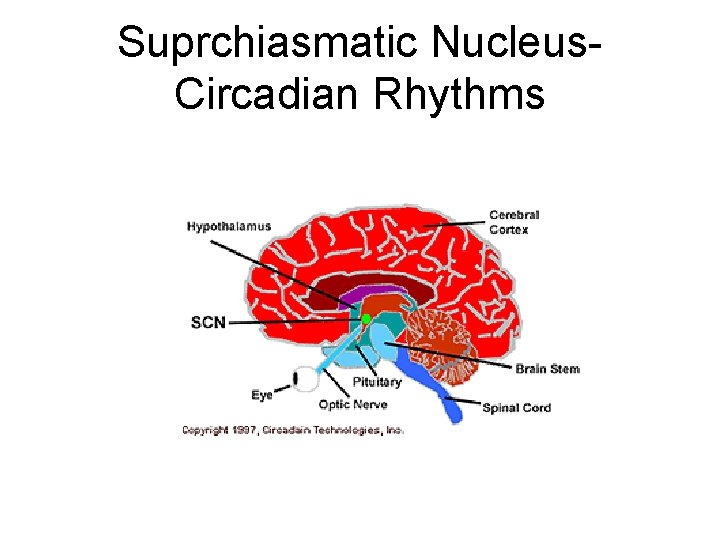
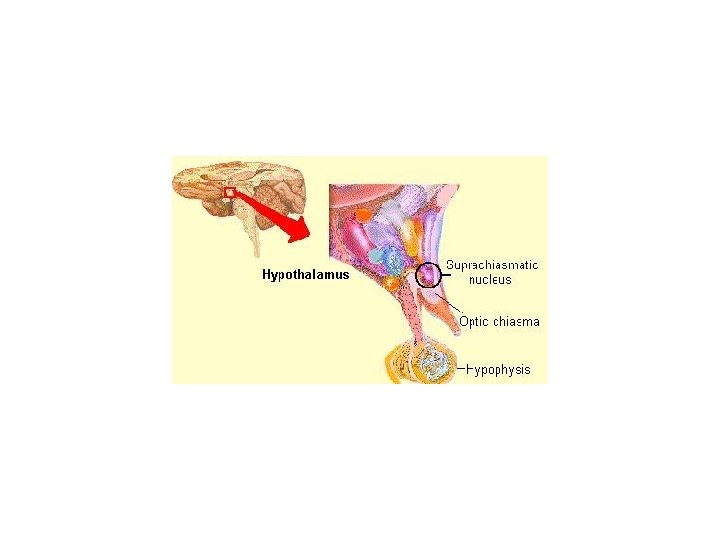
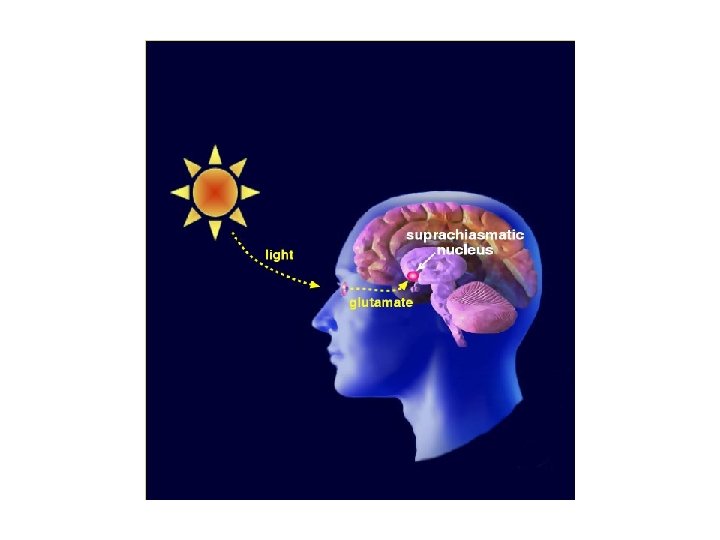
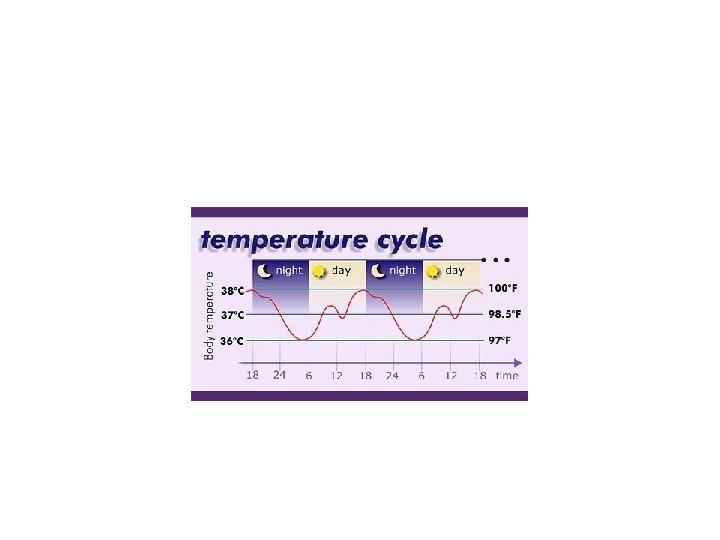
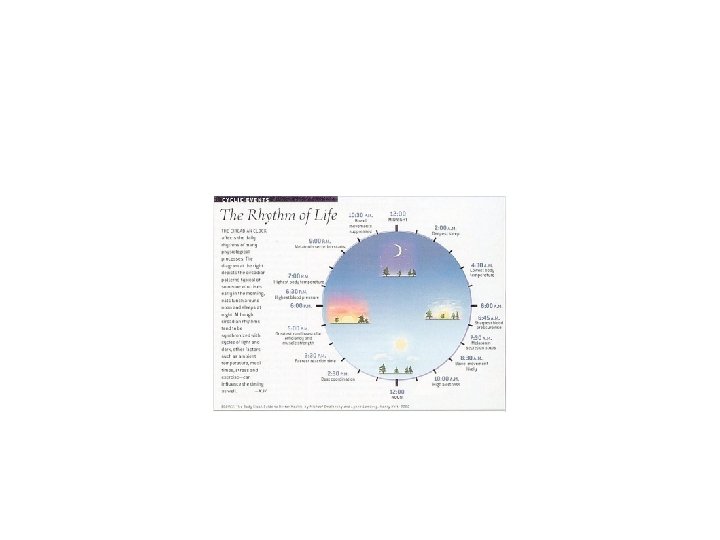
Suprchiasmatic Nucleus. Circadian Rhythms
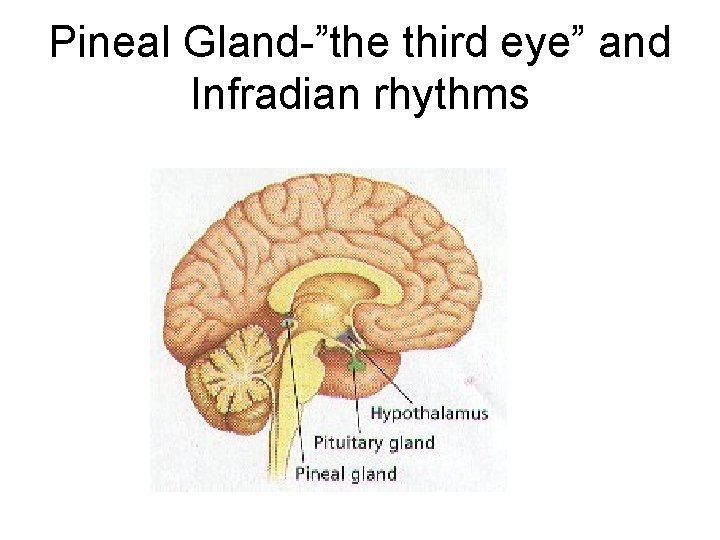
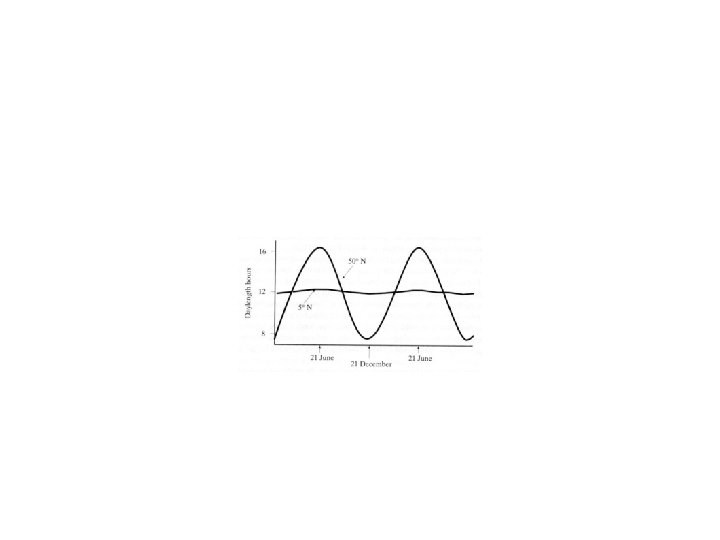
Pineal Gland-”the third eye” and Infradian rhythms
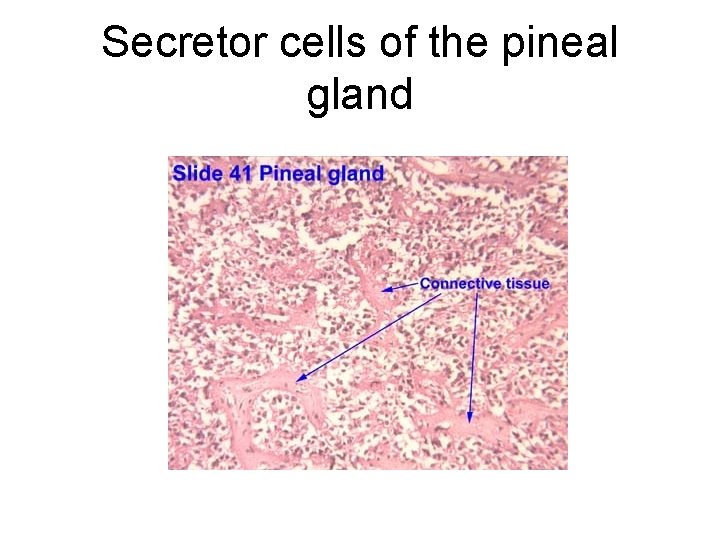
Secretor cells of the pineal gland
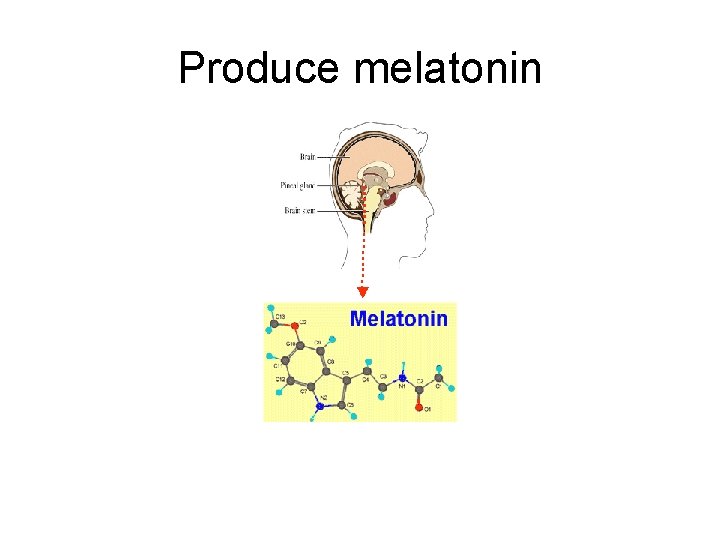
Produce melatonin
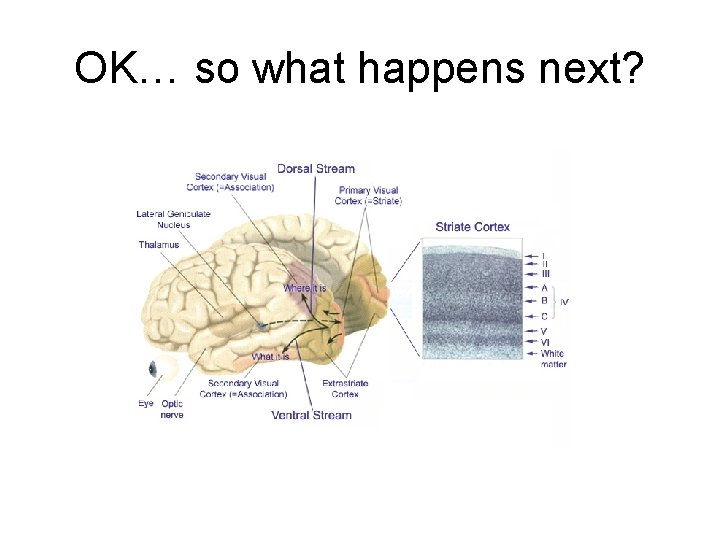
OK… so what happens next?
VENTRAL STREAM • Object Recognition – Visual agnosias – Prosopagnosia – Anosagnosia – http: //video. google. com/videosearch? q=ramachandran+synesthe sia&www_google_domain=www. google. com&hl=en&emb=0&aq =4&oq=ramachandran#q=ramachandran+imposter&hl=en&emb =0
prosopagnosia
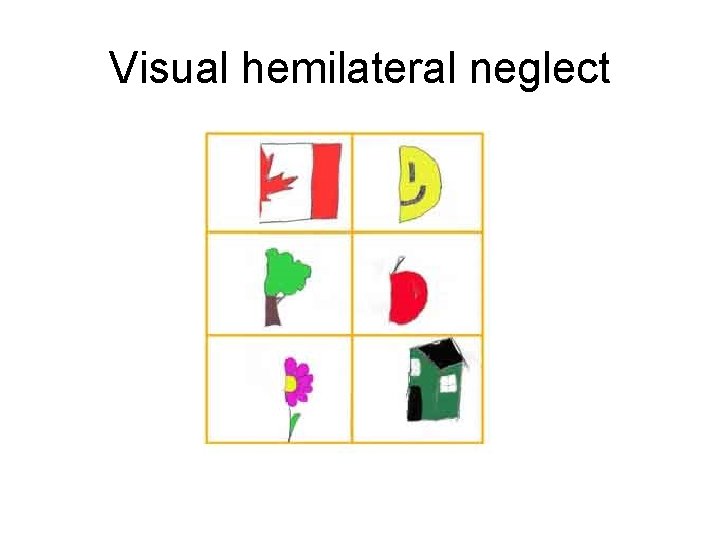
• Dorsal Sream • WHERE/ CONTEXT/SPACE – Balints – Movement agnosia – Visual Sensory neglect
Balint’s syndrome and Simultagnosia • Balint's syndrome is a neuropsychological disorder that results from damage to both parietal lobes 77. Clinically, it includes three main symptoms: simultanagnosia (the inability to see more than one object at a time); optic ataxia (the fixation of gaze with severe problems in voluntarily moving fixation); and optic apraxia (the inability to reach towards the correct location of perceived objects)78 • Spatial-visual agnosia
Visual hemilateral neglect
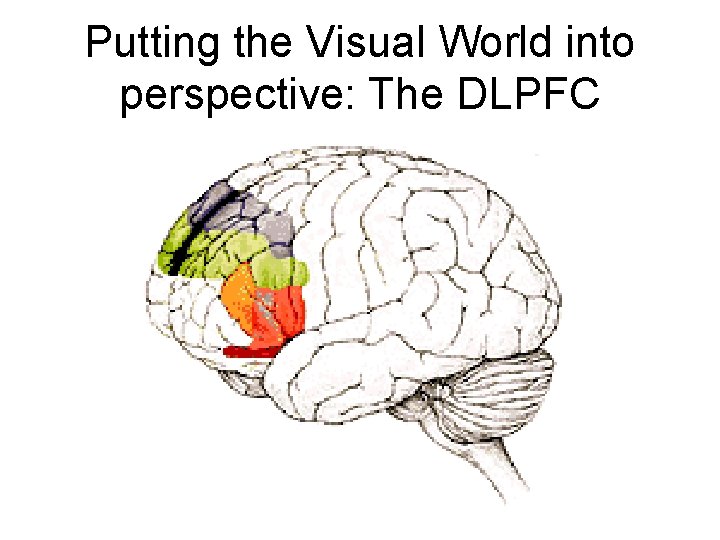
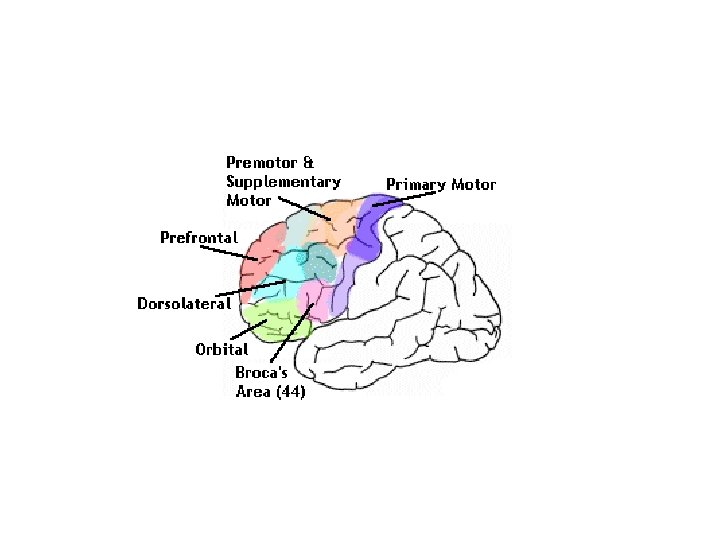
Putting the Visual World into perspective: The DLPFC
Synesthesia and the DLPFC? • http: //science. discovery. com/videos/whensenses-collide-origins. html • Synesthesia • Check it out Dawgs!
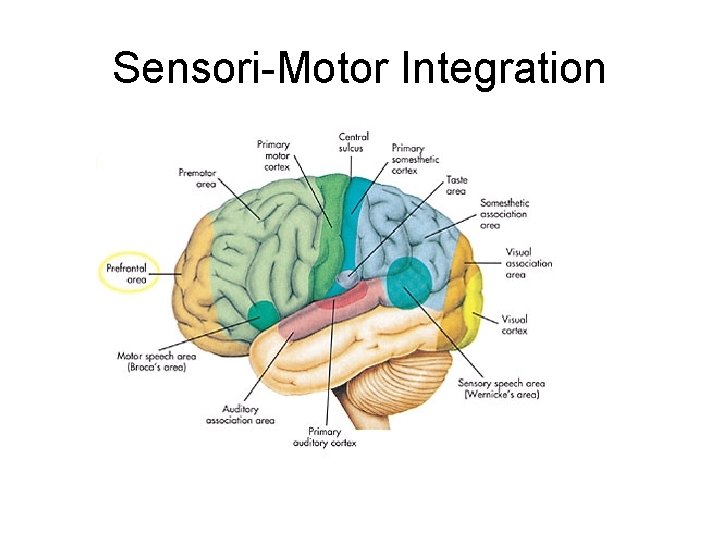
Sensori-Motor Integration