
Understanding Self Frameworks to get to Know you
- Slides: 7
Understanding Self : Frameworks to get to Know you Where Life and Purpose Meet PURPOSE TO PERFORMANCE
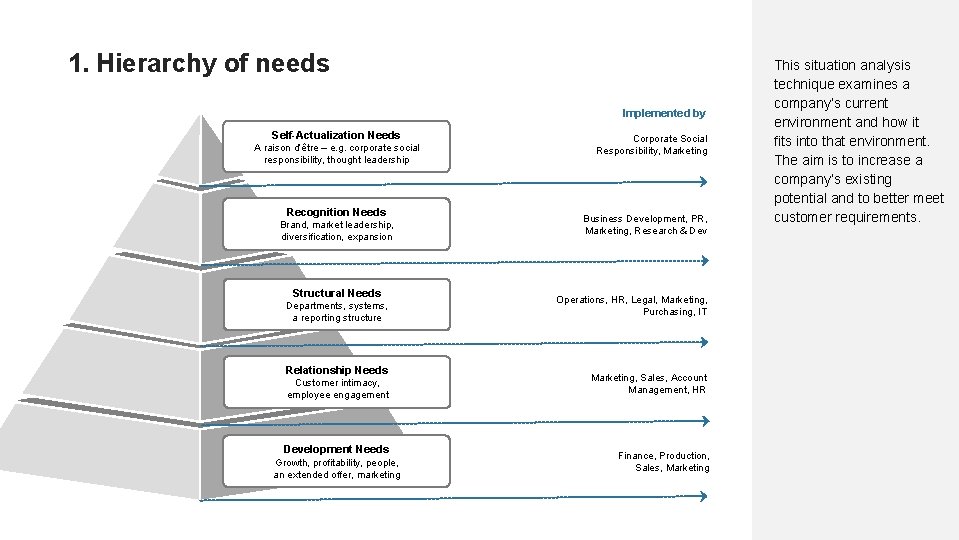
1. Hierarchy of needs Implemented by Self-Actualization Needs A raison d’être – e. g. corporate social responsibility, thought leadership Recognition Needs Brand, market leadership, diversification, expansion Structural Needs Departments, systems, a reporting structure Relationship Needs Customer intimacy, employee engagement Development Needs Growth, profitability, people, an extended offer, marketing Corporate Social Responsibility, Marketing Business Development, PR, Marketing, Research & Dev Operations, HR, Legal, Marketing, Purchasing, IT Marketing, Sales, Account Management, HR Finance, Production, Sales, Marketing This situation analysis technique examines a company’s current environment and how it fits into that environment. The aim is to increase a company’s existing potential and to better meet customer requirements.
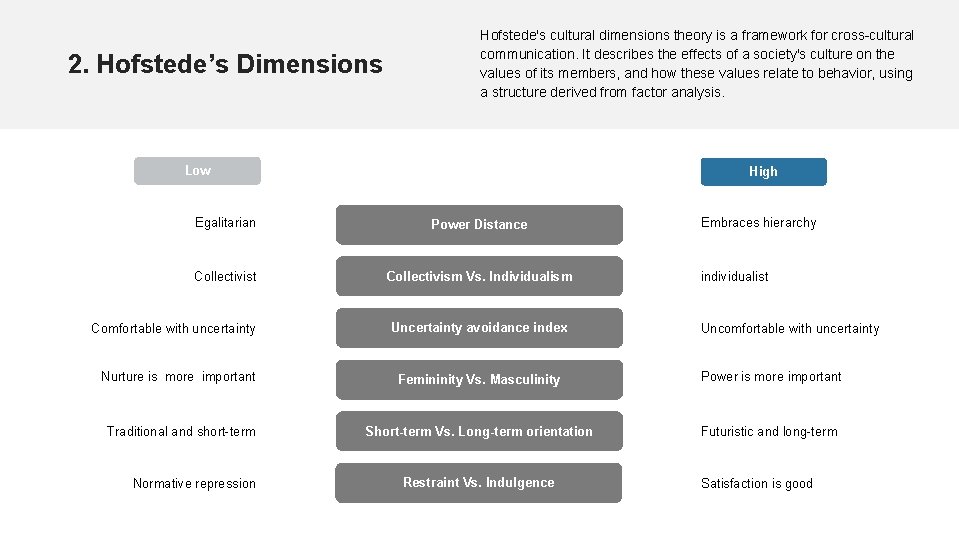
2. Hofstede’s Dimensions Hofstede's cultural dimensions theory is a framework for cross-cultural communication. It describes the effects of a society's culture on the values of its members, and how these values relate to behavior, using a structure derived from factor analysis. Low High Egalitarian Power Distance Collectivist Collectivism Vs. Individualism Comfortable with uncertainty Uncertainty avoidance index Embraces hierarchy individualist Uncomfortable with uncertainty Nurture is more important Femininity Vs. Masculinity Power is more important Traditional and short-term Short-term Vs. Long-term orientation Futuristic and long-term Normative repression Restraint Vs. Indulgence Satisfaction is good
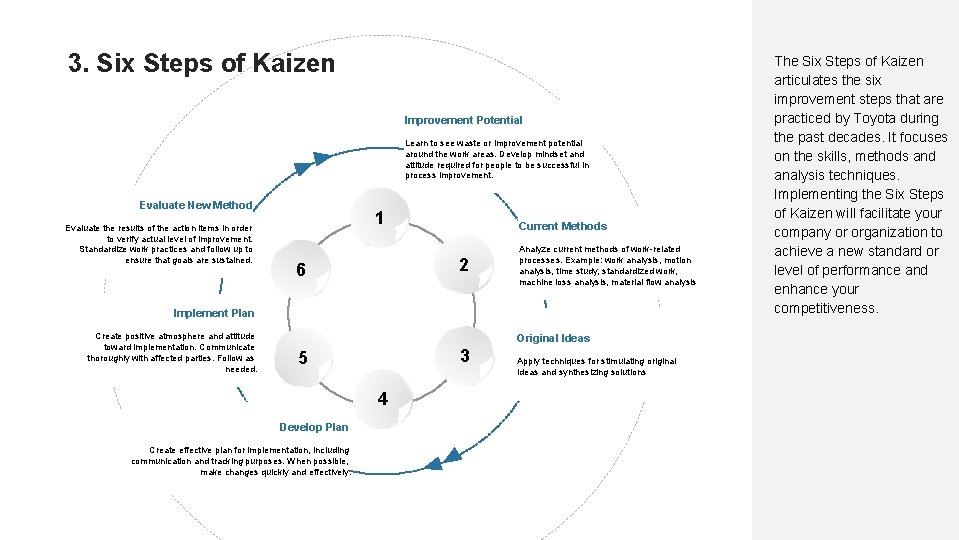
3. Six Steps of Kaizen Improvement Potential Learn to see waste or improvement potential around the work areas. Develop mindset and attitude required for people to be successful in process improvement. Evaluate New Method Evaluate the results of the action items in order to verify actual level of improvement. Standardize work practices and follow up to ensure that goals are sustained. 1 Current Methods 2 6 Analyze current methods of work-related processes. Example: work analysis, motion analysis, time study, standardized work, machine loss analysis, material flow analysis Implement Plan Create positive atmosphere and attitude toward implementation. Communicate thoroughly with affected parties. Follow as needed. Original Ideas 3 5 4 Develop Plan Create effective plan for implementation, including communication and tracking purposes. When possible, make changes quickly and effectively. Apply techniques for stimulating original ideas and synthesizing solutions The Six Steps of Kaizen articulates the six improvement steps that are practiced by Toyota during the past decades. It focuses on the skills, methods and analysis techniques. Implementing the Six Steps of Kaizen will facilitate your company or organization to achieve a new standard or level of performance and enhance your competitiveness.
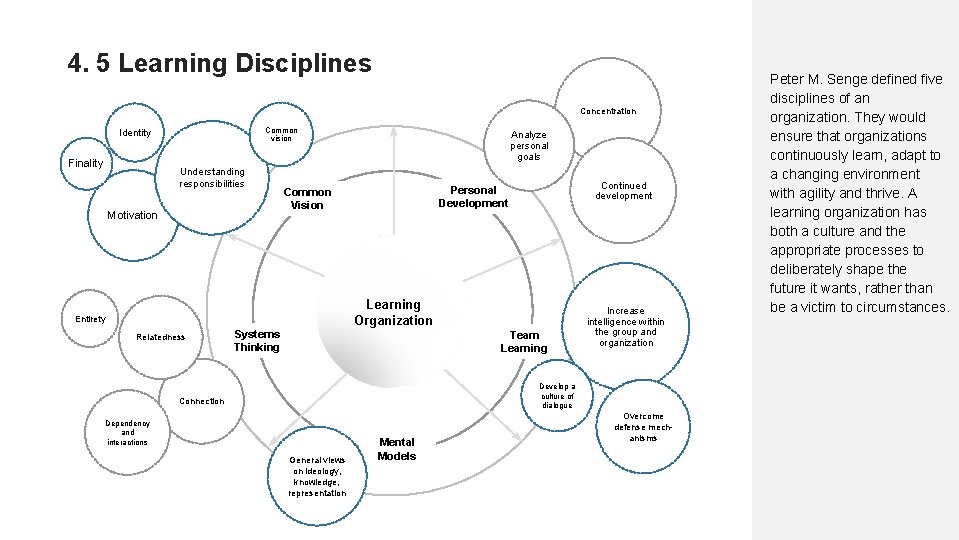
4. 5 Learning Disciplines Concentration Common vision Identity Finality Understanding responsibilities Motivation Analyze personal goals Continued development Personal Development Common Vision Learning Organization Entirety Relatedness Systems Thinking Team Learning Increase intelligence within the group and organization Develop a culture of dialogue Connection Dependency and interactions General views on ideology, knowledge, representation Mental Models Overcome defense mechanisms Peter M. Senge defined five disciplines of an organization. They would ensure that organizations continuously learn, adapt to a changing environment with agility and thrive. A learning organization has both a culture and the appropriate processes to deliberately shape the future it wants, rather than be a victim to circumstances.
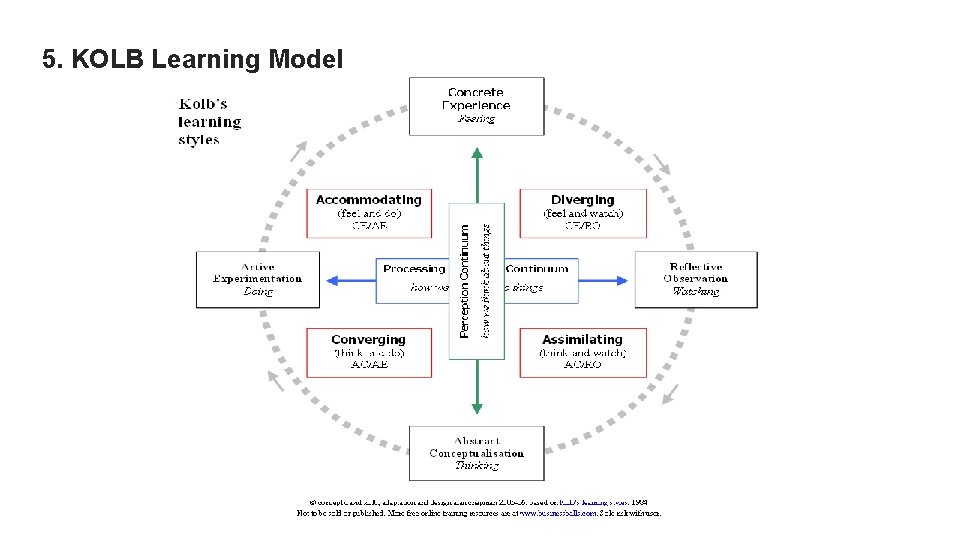
5. KOLB Learning Model
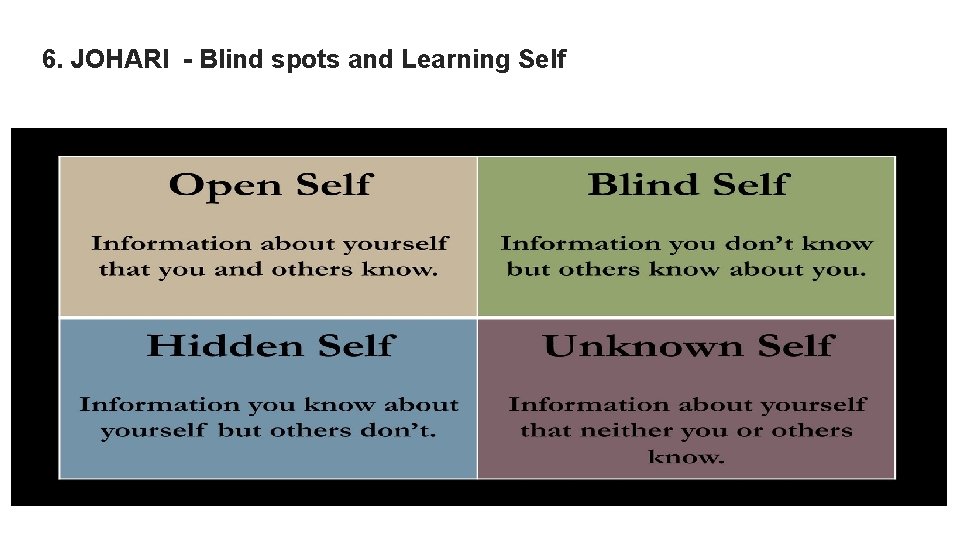
6. JOHARI - Blind spots and Learning Self