
Understanding Register Retiming The key to Intels Hyper
- Slides: 29
Understanding Register Retiming: The key to Intel’s Hyper. Flex Architecture Presenter: Madison N. Emas November 22, 2019
Intel’s 2019 FPGA Announcements: New Devices 2 Reconfigurable Computing November 22, 2019
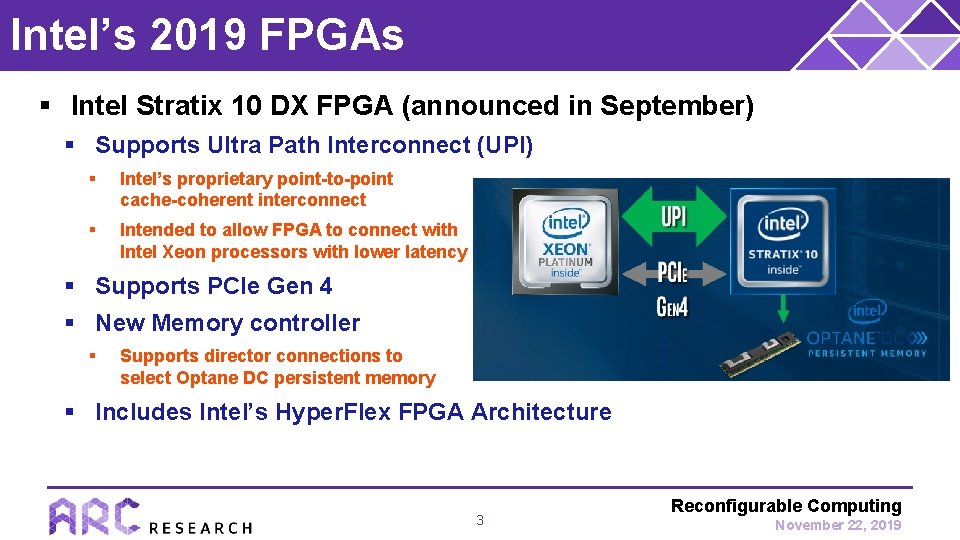
Intel’s 2019 FPGAs § Intel Stratix 10 DX FPGA (announced in September) § Supports Ultra Path Interconnect (UPI) § Intel’s proprietary point-to-point cache-coherent interconnect § Intended to allow FPGA to connect with Intel Xeon processors with lower latency § Supports PCIe Gen 4 § New Memory controller § Supports director connections to select Optane DC persistent memory § Includes Intel’s Hyper. Flex FPGA Architecture 3 Reconfigurable Computing November 22, 2019
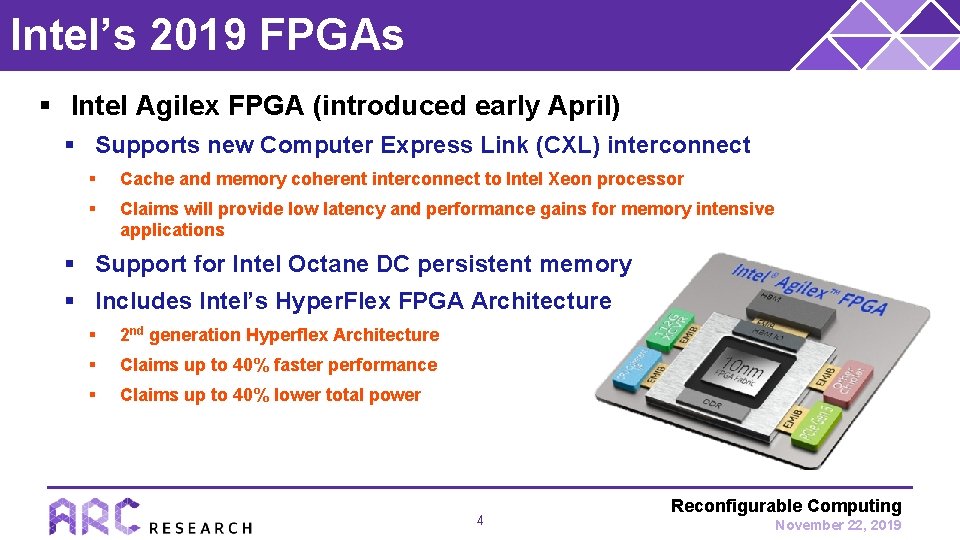
Intel’s 2019 FPGAs § Intel Agilex FPGA (introduced early April) § Supports new Computer Express Link (CXL) interconnect § Cache and memory coherent interconnect to Intel Xeon processor § Claims will provide low latency and performance gains for memory intensive applications § Support for Intel Octane DC persistent memory § Includes Intel’s Hyper. Flex FPGA Architecture § 2 nd generation Hyperflex Architecture § Claims up to 40% faster performance § Claims up to 40% lower total power 4 Reconfigurable Computing November 22, 2019
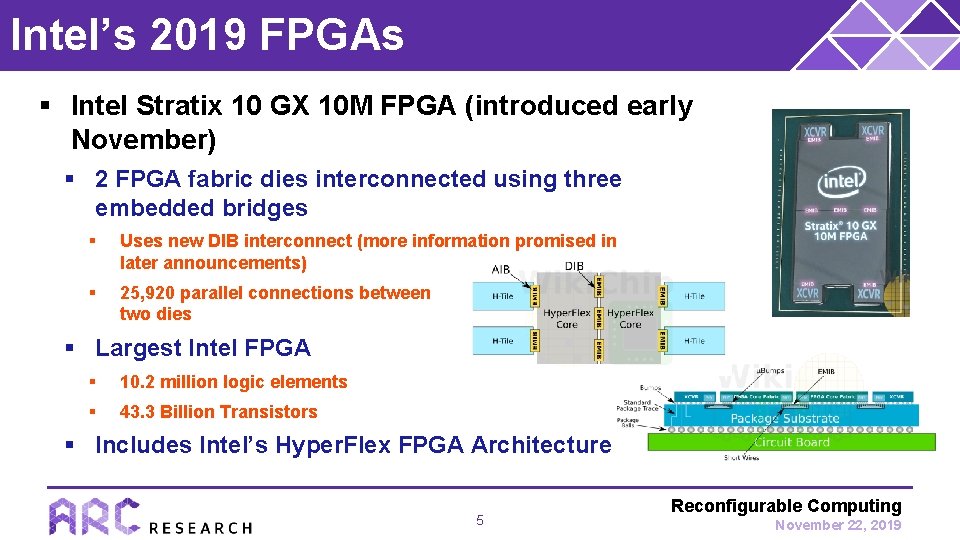
Intel’s 2019 FPGAs § Intel Stratix 10 GX 10 M FPGA (introduced early November) § 2 FPGA fabric dies interconnected using three embedded bridges § Uses new DIB interconnect (more information promised in later announcements) § 25, 920 parallel connections between two dies § Largest Intel FPGA § 10. 2 million logic elements § 43. 3 Billion Transistors § Includes Intel’s Hyper. Flex FPGA Architecture 5 Reconfigurable Computing November 22, 2019
Retiming in Traditional FPGAs 6 Reconfigurable Computing November 22, 2019
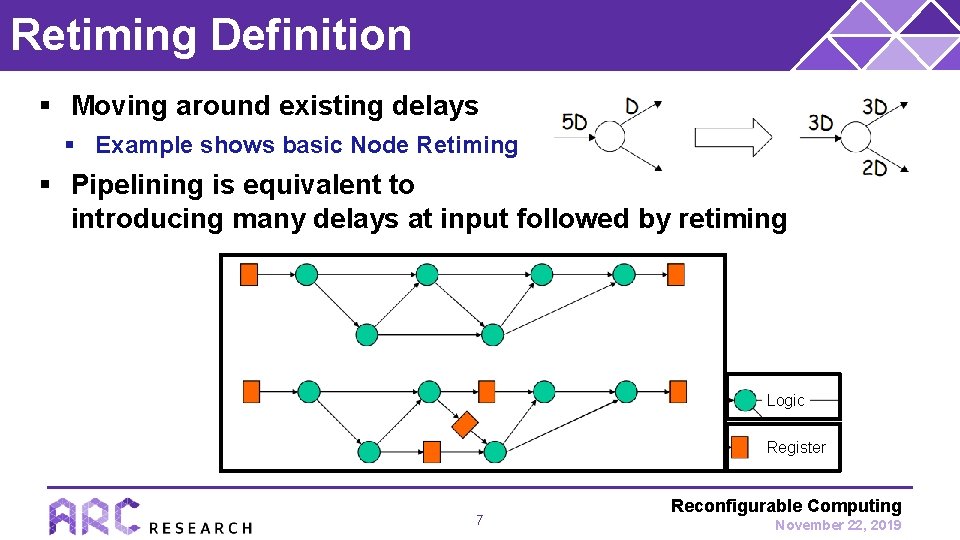
Retiming Definition § Moving around existing delays § Example shows basic Node Retiming § Pipelining is equivalent to introducing many delays at input followed by retiming Logic Register 7 Reconfigurable Computing November 22, 2019
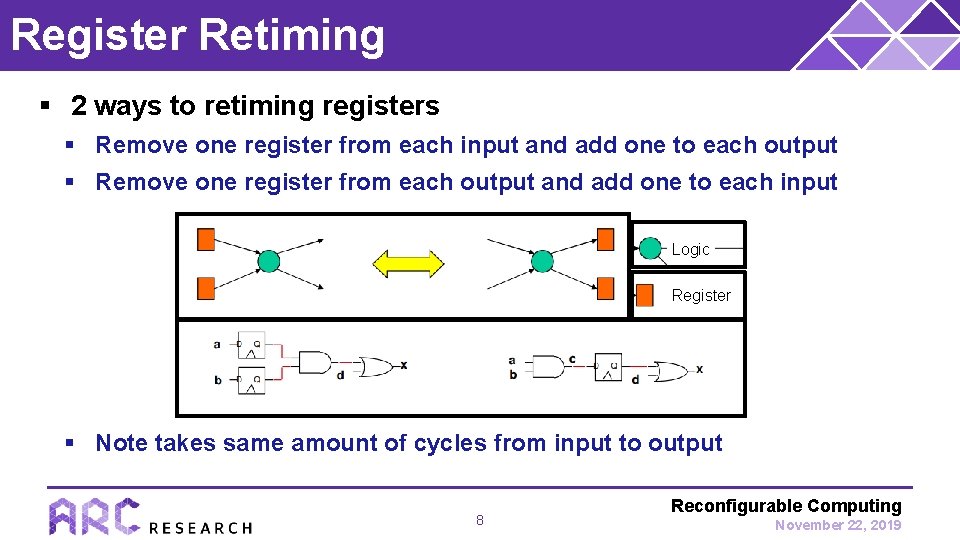
Register Retiming § 2 ways to retiming registers § Remove one register from each input and add one to each output § Remove one register from each output and add one to each input Logic Register § Note takes same amount of cycles from input to output 8 Reconfigurable Computing November 22, 2019
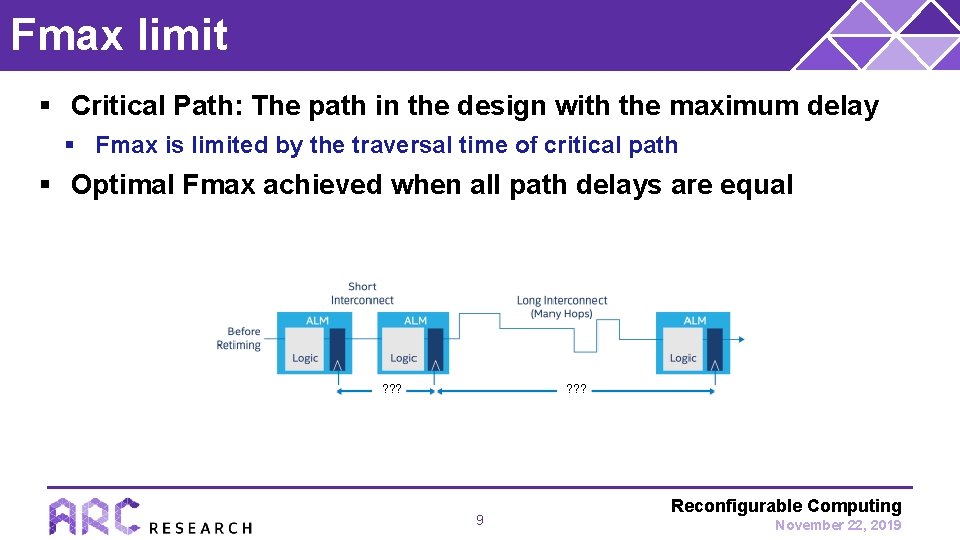
Fmax limit § Critical Path: The path in the design with the maximum delay § Fmax is limited by the traversal time of critical path § Optimal Fmax achieved when all path delays are equal ? ? ? 9 Reconfigurable Computing November 22, 2019
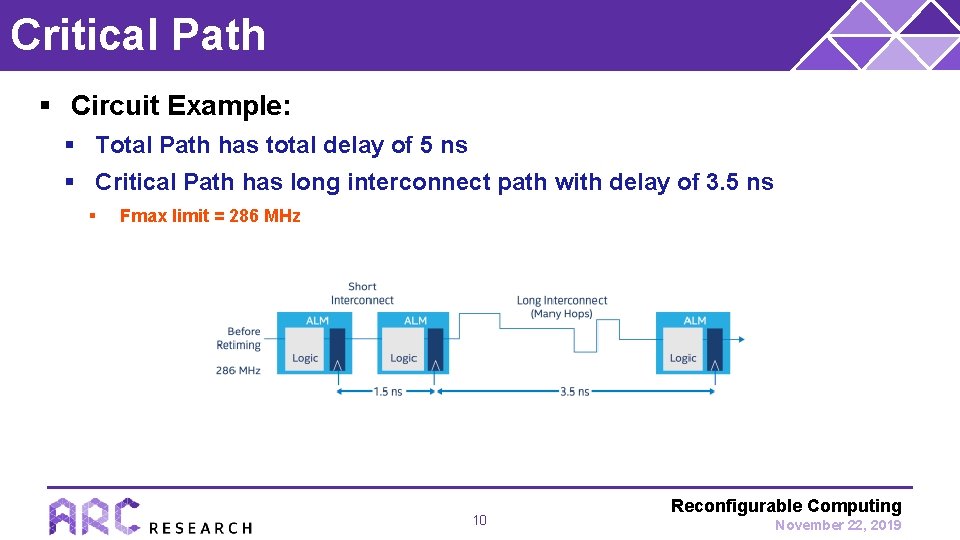
Critical Path § Circuit Example: § Total Path has total delay of 5 ns § Critical Path has long interconnect path with delay of 3. 5 ns § Fmax limit = 286 MHz 10 Reconfigurable Computing November 22, 2019
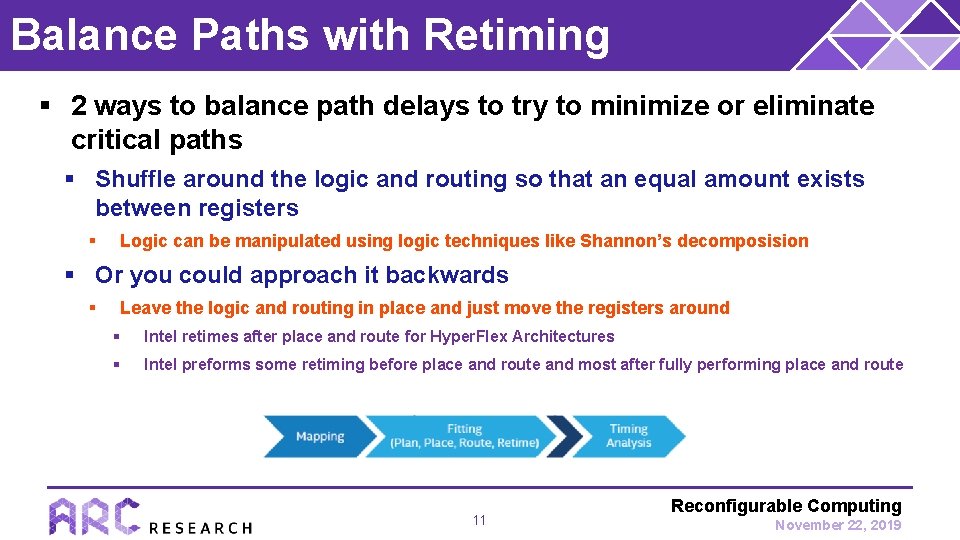
Balance Paths with Retiming § 2 ways to balance path delays to try to minimize or eliminate critical paths § Shuffle around the logic and routing so that an equal amount exists between registers § Logic can be manipulated using logic techniques like Shannon’s decomposision § Or you could approach it backwards § Leave the logic and routing in place and just move the registers around § Intel retimes after place and route for Hyper. Flex Architectures § Intel preforms some retiming before place and route and most after fully performing place and route 11 Reconfigurable Computing November 22, 2019
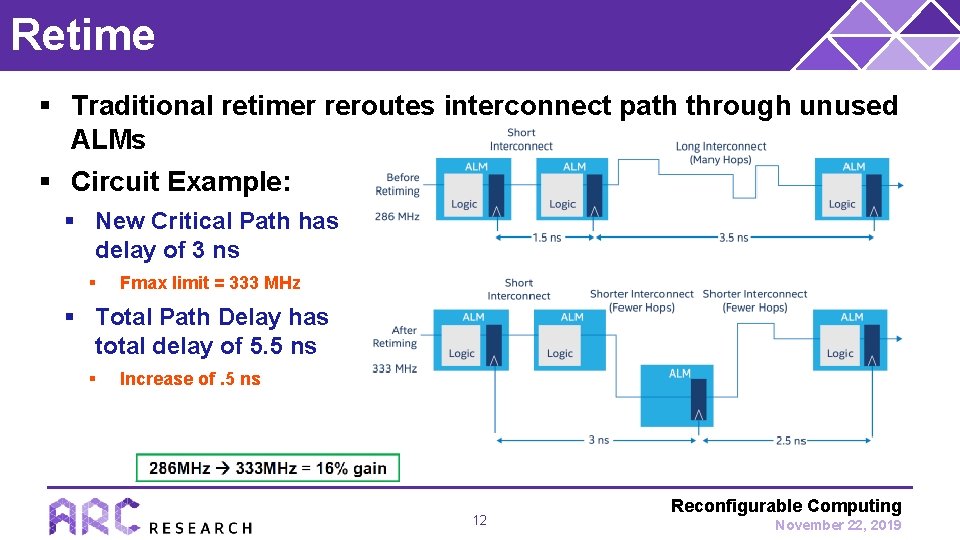
Retime § Traditional retimer reroutes interconnect path through unused ALMs § Circuit Example: § New Critical Path has delay of 3 ns § Fmax limit = 333 MHz § Total Path Delay has total delay of 5. 5 ns § Increase of. 5 ns 12 Reconfigurable Computing November 22, 2019
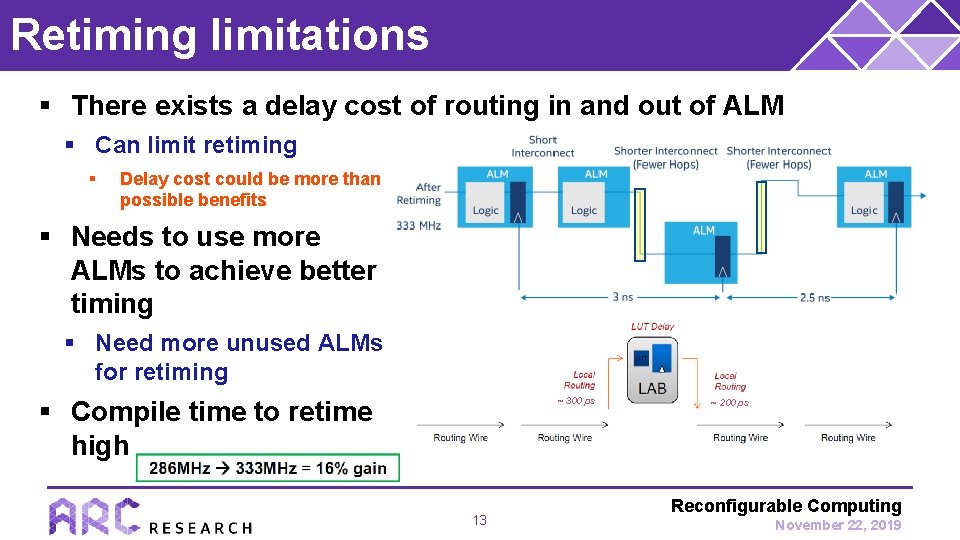
Retiming limitations § There exists a delay cost of routing in and out of ALM § Can limit retiming § Delay cost could be more than possible benefits § Needs to use more ALMs to achieve better timing § Need more unused ALMs for retiming ~ 300 ps § Compile time to retime high 13 ~ 200 ps Reconfigurable Computing November 22, 2019
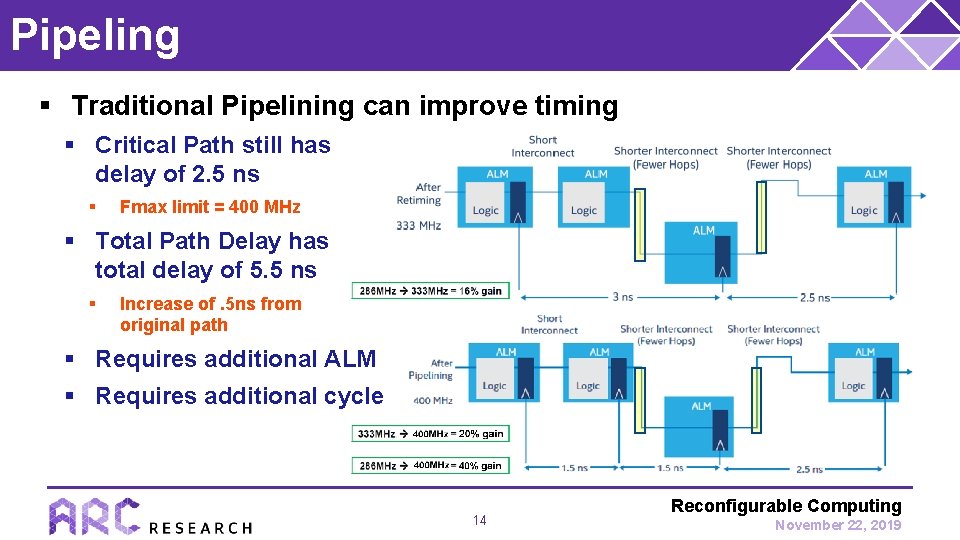
Pipeling § Traditional Pipelining can improve timing § Critical Path still has delay of 2. 5 ns § Fmax limit = 400 MHz § Total Path Delay has total delay of 5. 5 ns § Increase of. 5 ns from original path § Requires additional ALM § Requires additional cycle 14 Reconfigurable Computing November 22, 2019
Retiming in FPGA’s with Hyper. Flex Architecture 15 Reconfigurable Computing November 22, 2019
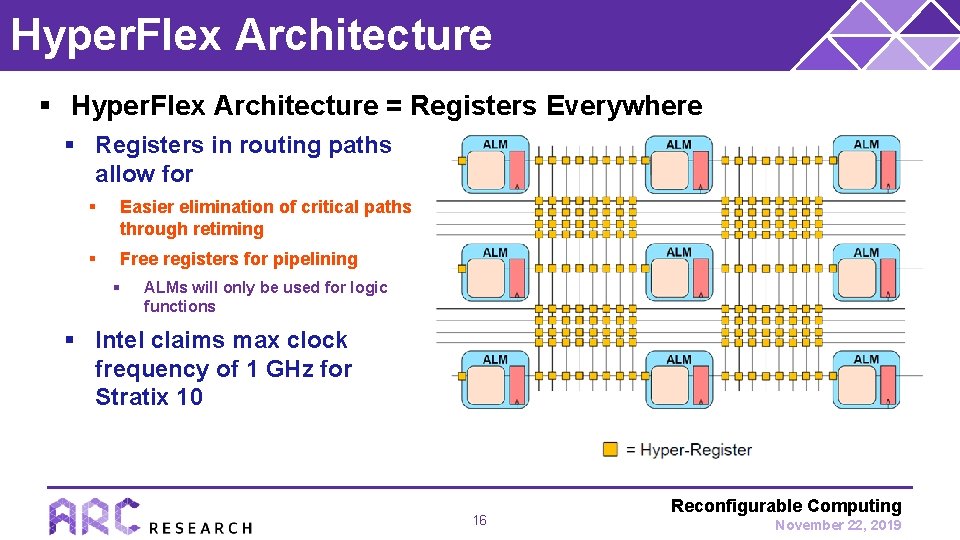
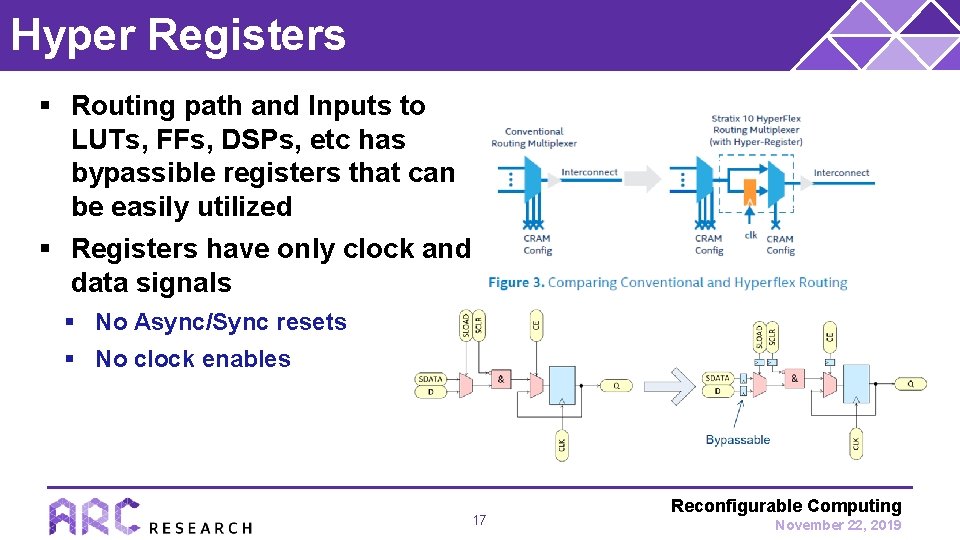
Hyper. Flex Architecture § Hyper. Flex Architecture = Registers Everywhere § Registers in routing paths allow for § Easier elimination of critical paths through retiming § Free registers for pipelining § ALMs will only be used for logic functions § Intel claims max clock frequency of 1 GHz for Stratix 10 16 Reconfigurable Computing November 22, 2019
Hyper Registers § Routing path and Inputs to LUTs, FFs, DSPs, etc has bypassible registers that can be easily utilized § Registers have only clock and data signals § No Async/Sync resets § No clock enables 17 Reconfigurable Computing November 22, 2019
3 Hyper Techniques to approve retiming 18 Reconfigurable Computing November 22, 2019
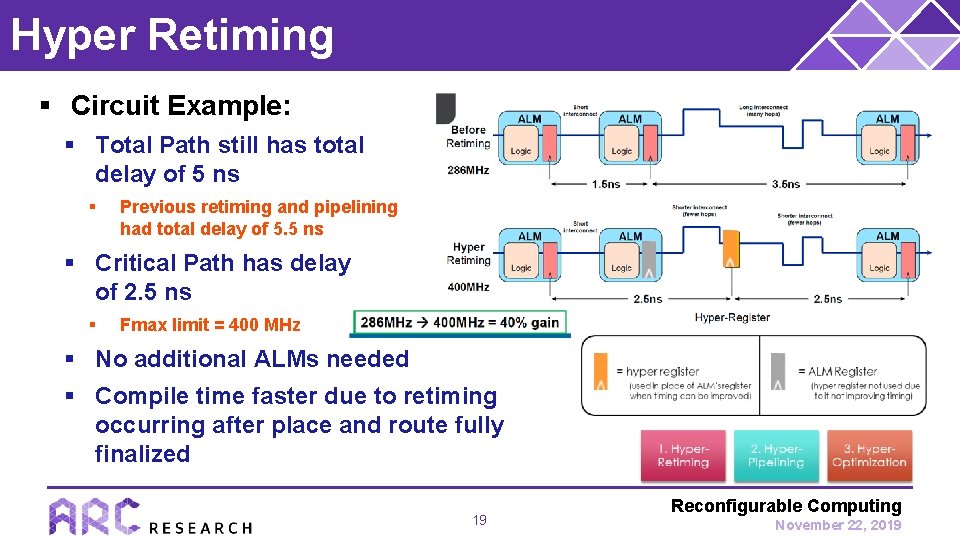
Hyper Retiming § Circuit Example: § Total Path still has total delay of 5 ns § Previous retiming and pipelining had total delay of 5. 5 ns § Critical Path has delay of 2. 5 ns § Fmax limit = 400 MHz § No additional ALMs needed § Compile time faster due to retiming occurring after place and route fully finalized 19 Reconfigurable Computing November 22, 2019
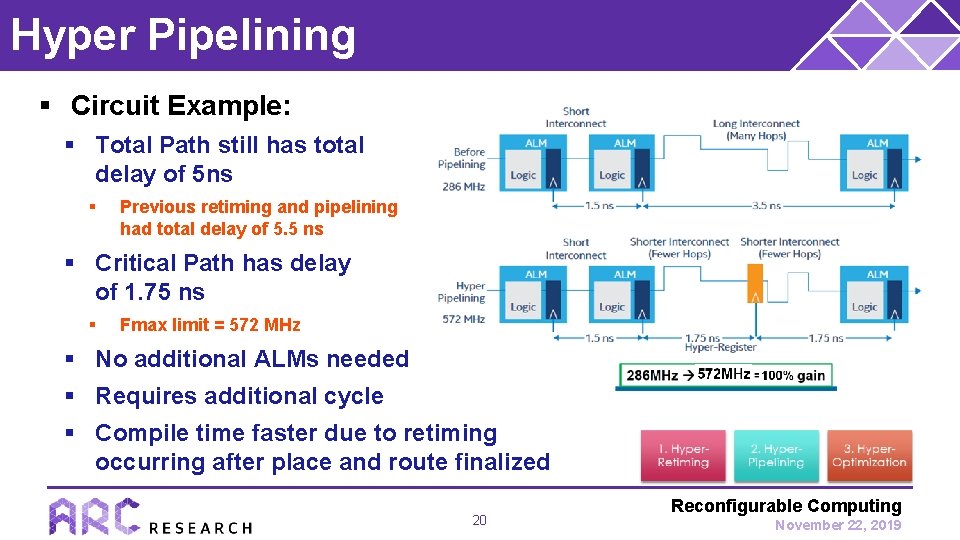
Hyper Pipelining § Circuit Example: § Total Path still has total delay of 5 ns § Previous retiming and pipelining had total delay of 5. 5 ns § Critical Path has delay of 1. 75 ns § Fmax limit = 572 MHz § No additional ALMs needed § Requires additional cycle § Compile time faster due to retiming occurring after place and route finalized 20 Reconfigurable Computing November 22, 2019
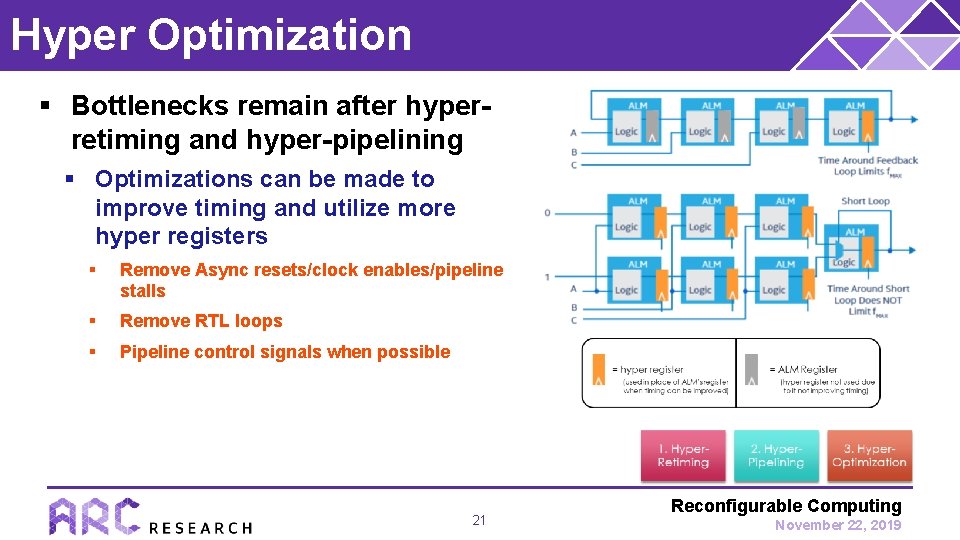
Hyper Optimization § Bottlenecks remain after hyperretiming and hyper-pipelining § Optimizations can be made to improve timing and utilize more hyper registers § Remove Async resets/clock enables/pipeline stalls § Remove RTL loops § Pipeline control signals when possible 21 Reconfigurable Computing November 22, 2019
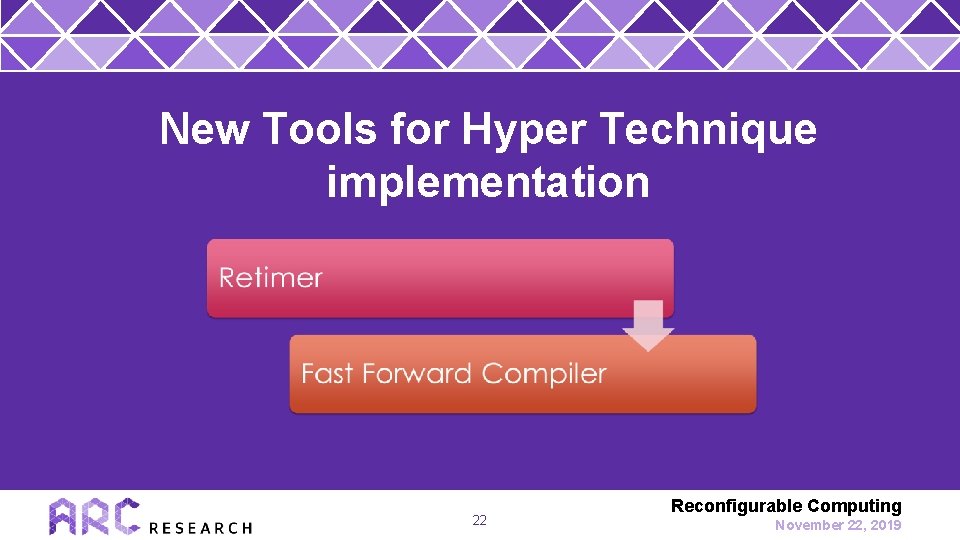
New Tools for Hyper Technique implementation 22 Reconfigurable Computing November 22, 2019
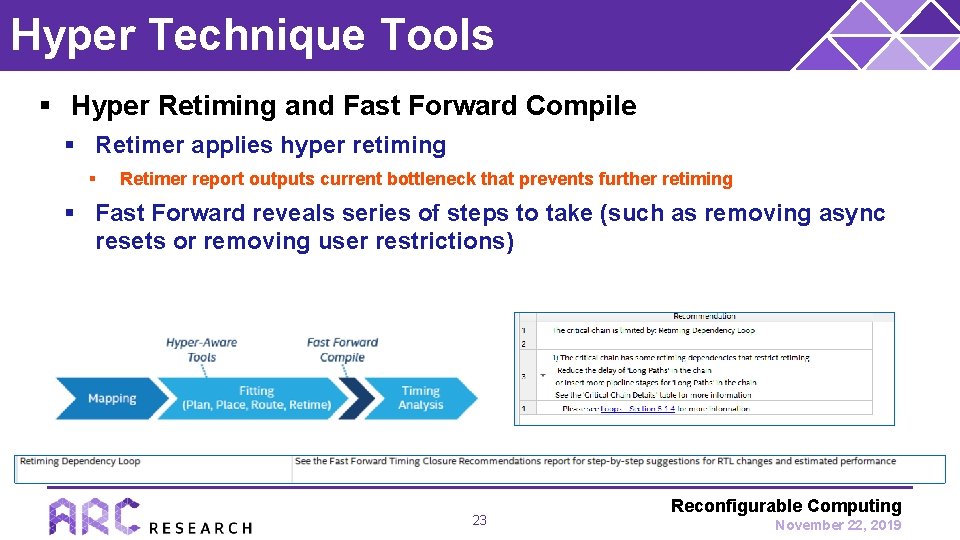
Hyper Technique Tools § Hyper Retiming and Fast Forward Compile § Retimer applies hyper retiming § Retimer report outputs current bottleneck that prevents further retiming § Fast Forward reveals series of steps to take (such as removing async resets or removing user restrictions) 23 Reconfigurable Computing November 22, 2019
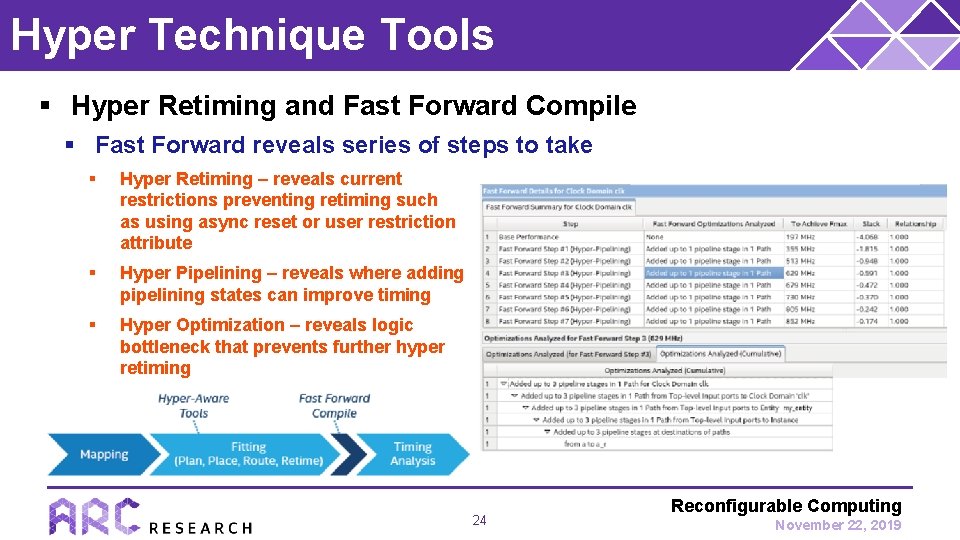
Hyper Technique Tools § Hyper Retiming and Fast Forward Compile § Fast Forward reveals series of steps to take § Hyper Retiming – reveals current restrictions preventing retiming such as using async reset or user restriction attribute § Hyper Pipelining – reveals where adding pipelining states can improve timing § Hyper Optimization – reveals logic bottleneck that prevents further hyper retiming 24 Reconfigurable Computing November 22, 2019
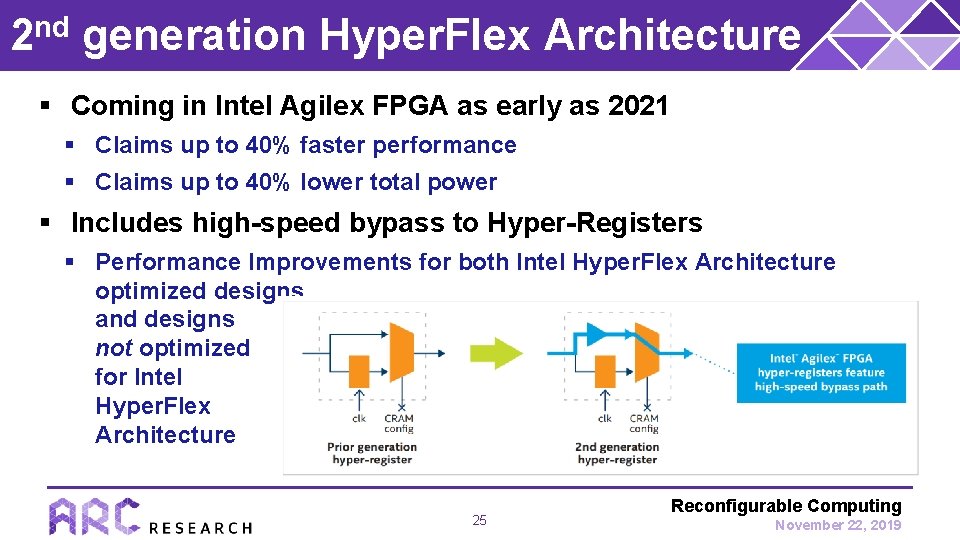
2 nd generation Hyper. Flex Architecture § Coming in Intel Agilex FPGA as early as 2021 § Claims up to 40% faster performance § Claims up to 40% lower total power § Includes high-speed bypass to Hyper-Registers § Performance Improvements for both Intel Hyper. Flex Architecture optimized designs and designs not optimized for Intel Hyper. Flex Architecture 25 Reconfigurable Computing November 22, 2019
Tips for Hyper. Architecture Designs § Limit Async Resets and Clock Enables in design § Prevents mapping onto Hyper-Registers § Run multiple seeds to identify top critical chains § Different random seeds can result in different critical chains § Retimer does NOT optimize the second-place critical chain § No point in retiming if no more Fmax gain § Likely that multiple paths that are almost as critical as ultimiate critical path § Focus retiming on paths identified by retimer/fast forward compiler instead of looking at Time. Quests top failing paths 26 Reconfigurable Computing November 22, 2019
Sources White Papers Using Intel Quartus Prime Software to Maximize Performance in the Intel Hyper. Flex FPGA Architecture Understanding How the New Intel Hyper. Flex FPGA Architecture Enables Next Generation High. Performance Systems Intel Agilex FPGAs Deliver a Game-Changing Combination of Flexibility and Agility for the Data. Centric World News articles Intel Introduces World’s Largest FPGA With 43. 3 Billion Transistors Intel Launches Stratix 10 GX 10 M; 10 M LEs, Two Massive Interconnected Dies Intel Stratix 10 DX Adds PCIe Gen 4. 0, Cache Coherency: UPI As Stopgap Intel Stratix 10 DX Introduces PCIe 4. 0, Cache-Coherency via UPI 27 Reconfigurable Computing November 22, 2019
Sources Intel Documentation Intel Stratix 10 High Performance Design Handbook Intel Quartus Prime Pro Edition User Guide – Design Compilation Intel Quartus Prime Pro Edition User Guide – Design Recommendations Intel Quartus Prime Pro Edition User Guide – Design Optimizations Books Synthesis and Optimization of Digital Circuits Additional Sources for Images Power. Point presentation from TAU 2016 Chapter 4: Retiming 28 Reconfigurable Computing November 22, 2019
Understanding Register Retiming: The key to Intel’s Hyper. Flex Architecture Presenter: Madison N. Emas November 22, 2019