
Understanding Psychology Medical Psychology Understanding Psychology The Cognition
- Slides: 57
第三章 心理学基础知识 Understanding Psychology Medical Psychology
Understanding Psychology • 心理的神经生理机制 • 认知过程 (The Cognition Process) • 动机与情绪 (Motivation & Emotion) • 人格 (Personality)
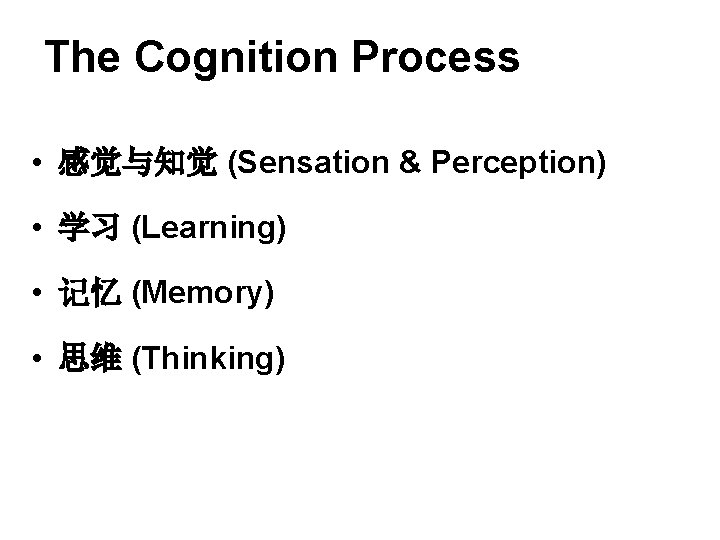
The Cognition Process • 感觉与知觉 (Sensation & Perception) • 学习 (Learning) • 记忆 (Memory) • 思维 (Thinking)
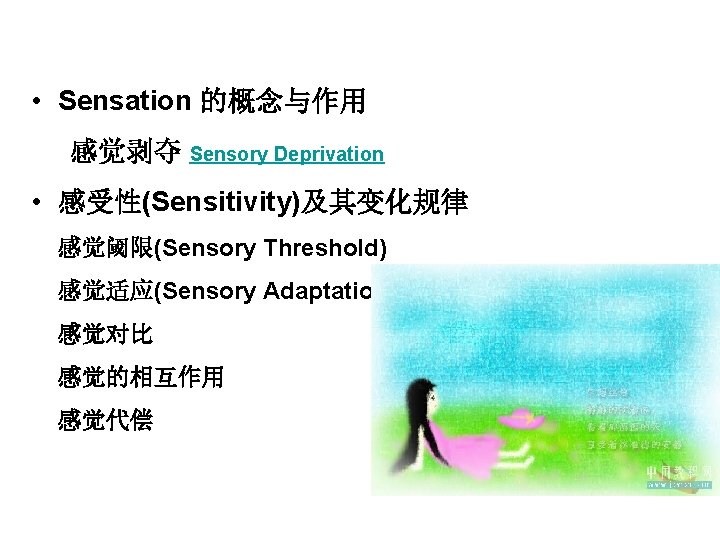
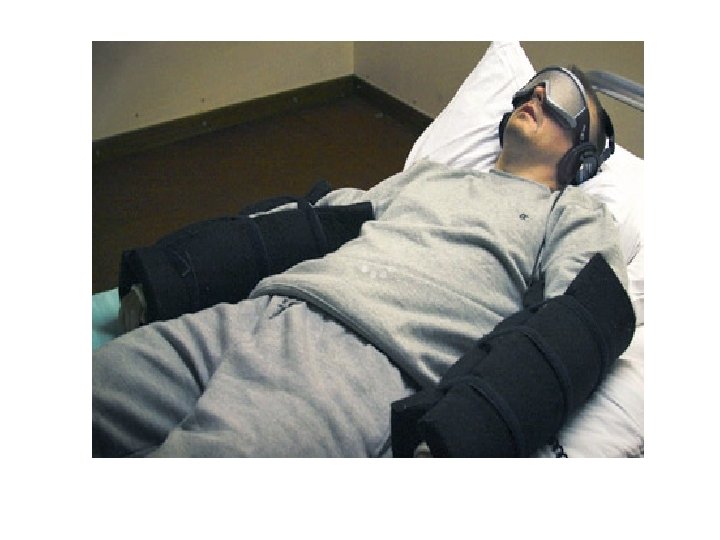
• Sensation 的概念与作用 感觉剥夺 Sensory Deprivation • 感受性(Sensitivity)及其变化规律 感觉阈限(Sensory Threshold) 感觉适应(Sensory Adaptation) 感觉对比 感觉的相互作用 感觉代偿
Key Words • Sensation The process in which the sense organs’ receptor cells are stimulated and reply initial information to higher brain centers for further processing
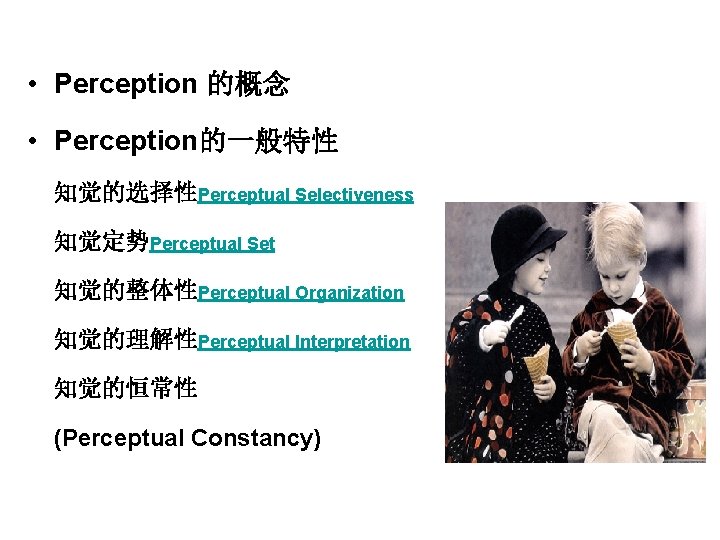
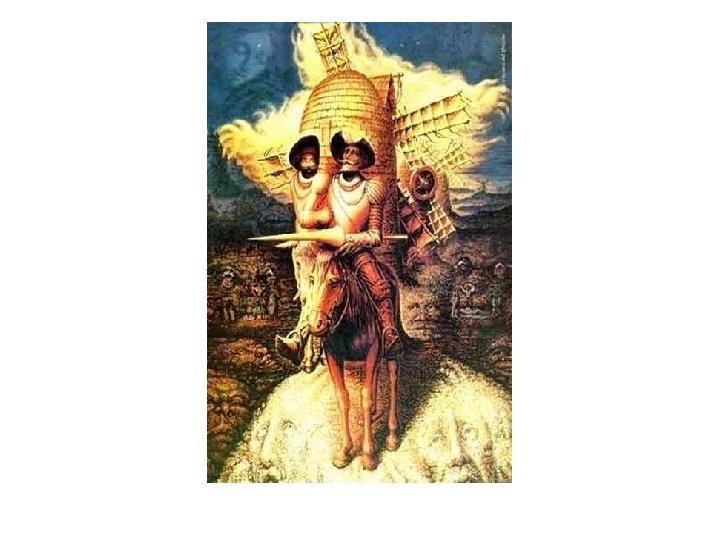
• Perception 的概念 • Perception的一般特性 知觉的选择性Perceptual Selectiveness 知觉定势Perceptual Set 知觉的整体性Perceptual Organization 知觉的理解性Perceptual Interpretation 知觉的恒常性 (Perceptual Constancy)
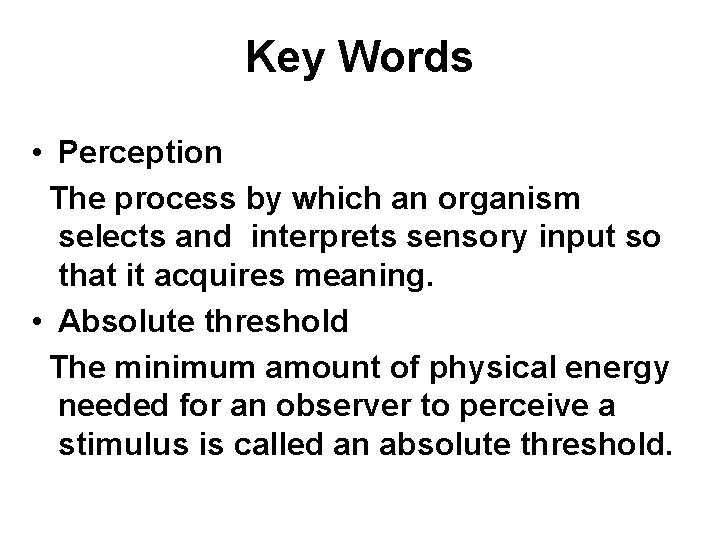
Key Words • Perception The process by which an organism selects and interprets sensory input so that it acquires meaning. • Absolute threshold The minimum amount of physical energy needed for an observer to perceive a stimulus is called an absolute threshold.
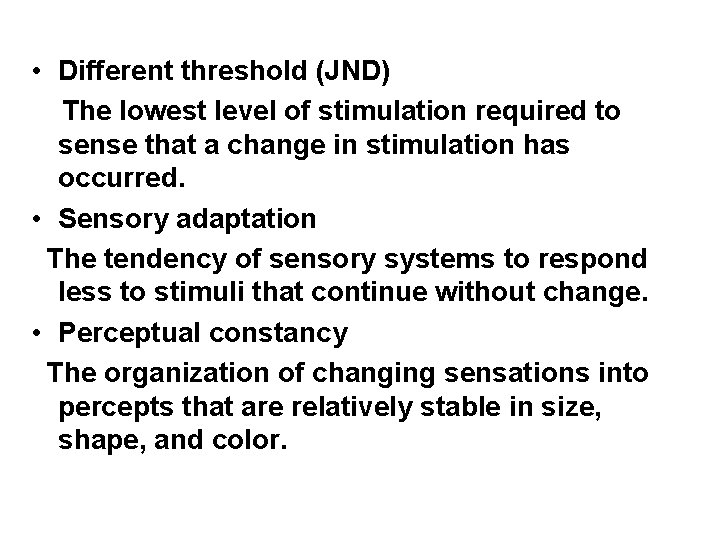
• Different threshold (JND) The lowest level of stimulation required to sense that a change in stimulation has occurred. • Sensory adaptation The tendency of sensory systems to respond less to stimuli that continue without change. • Perceptual constancy The organization of changing sensations into percepts that are relatively stable in size, shape, and color.
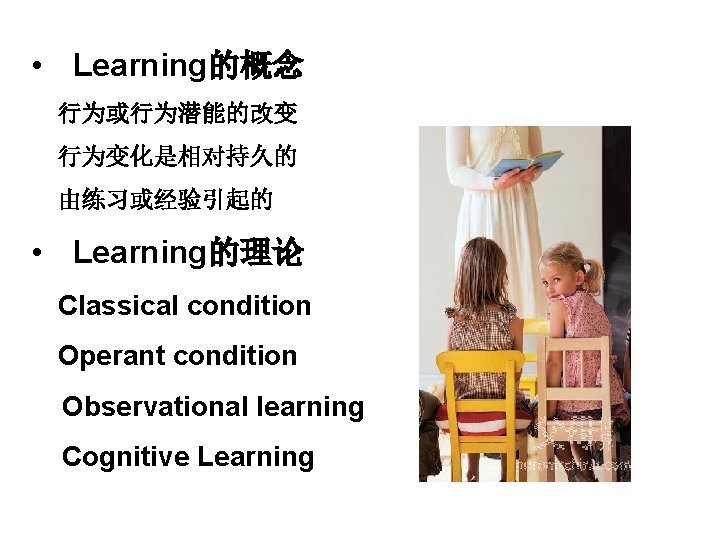
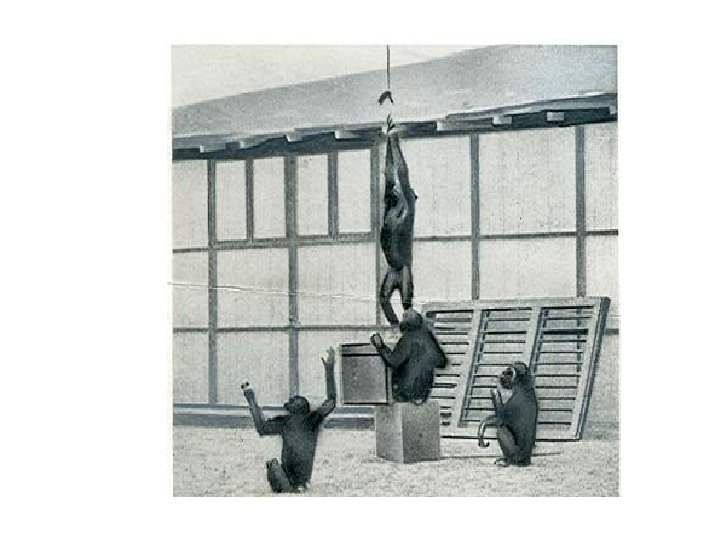
• Learning的概念 行为或行为潜能的改变 行为变化是相对持久的 由练习或经验引起的 • Learning的理论 Classical condition Operant condition Observational learning Cognitive Learning
Key Words • Learning Relative permanent change in an organism that occurs as a result of experiences in the environment • Classical conditionding Conditioning process in which an originally neutral stimulus, by repeated pairing with a stimulus that normally elicits a response, comes to elicit a similar or even identical response; also know as Pavlovian conditioning
• Operant conditioning Conditioning in which an increase or decrease in the probability that a behavior will recur is affected by the delivery of reinforcement of punishment as a consequence of the behavior; also known as instrumental conditioning. • Observational learning Organisms learn new responses by observing the behavior of a model and then imitating it.
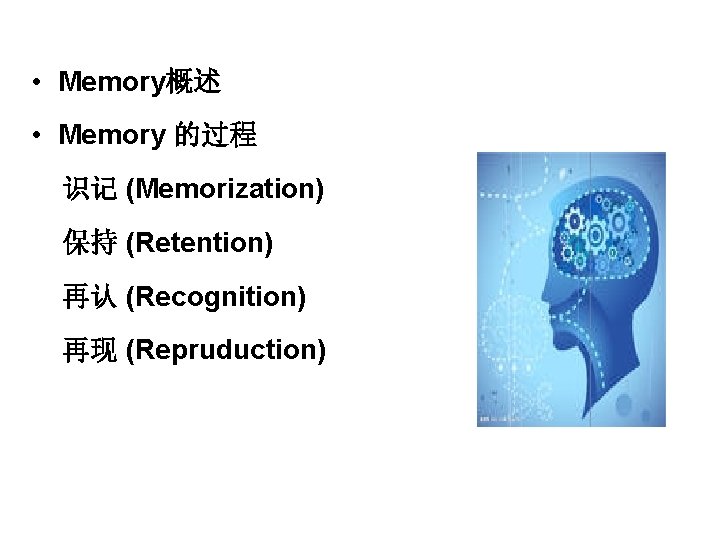
• Memory概述 • Memory 的过程 识记 (Memorization) 保持 (Retention) 再认 (Recognition) 再现 (Repruduction)
Key Words • Memory The ability to recall past events, images, ideas, or skills; the storage system that allows for retention and retrieval of previously learned information.
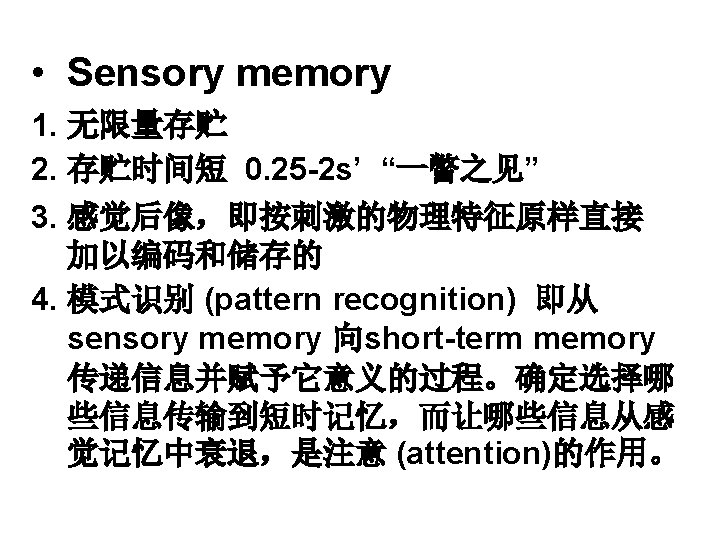
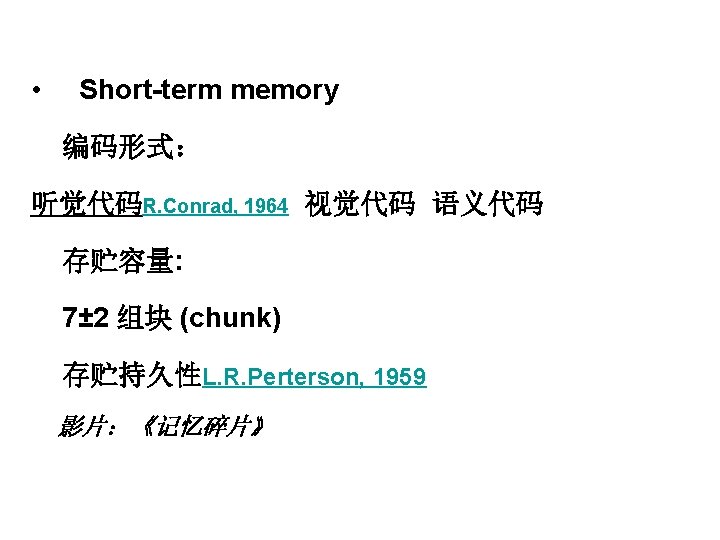
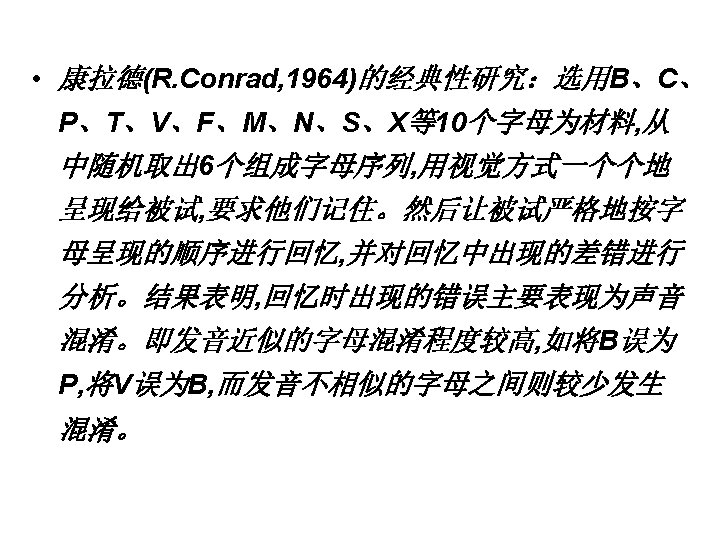
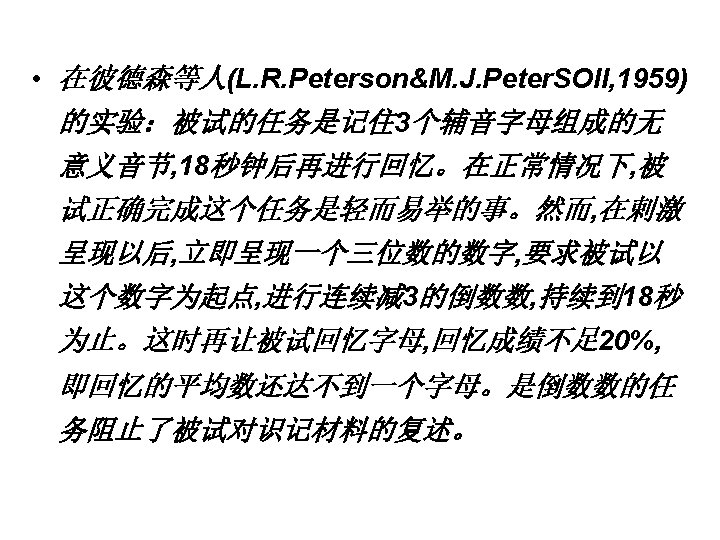
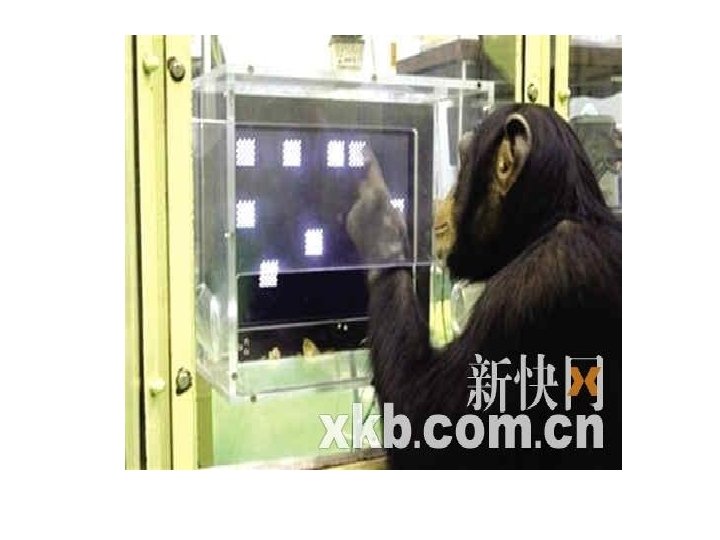
• 感觉记忆 (Sensory memory) • 短时记忆 (STM, Short-term memory) • 长时记忆 (LTM, Long-term memory)
Key Words • Thinking The higher mental process which is the manipulation of mental respresentations of information • Problem solving The process of transforming one situation into another that meets a goal
Motivation & Emotion • Motivation • Emotion
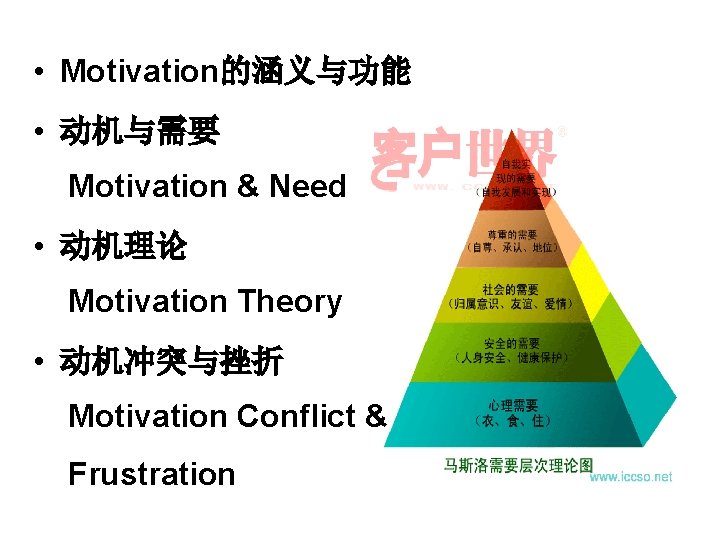
• Motivation的涵义与功能 • 动机与需要 Motivation & Need • 动机理论 Motivation Theory • 动机冲突与挫折 Motivation Conflict & Frustration
Key Words • Motivation Any internal condition, although usually an internal one, that initiates, activates, or maintailns an organism’s goaldirected behavior.
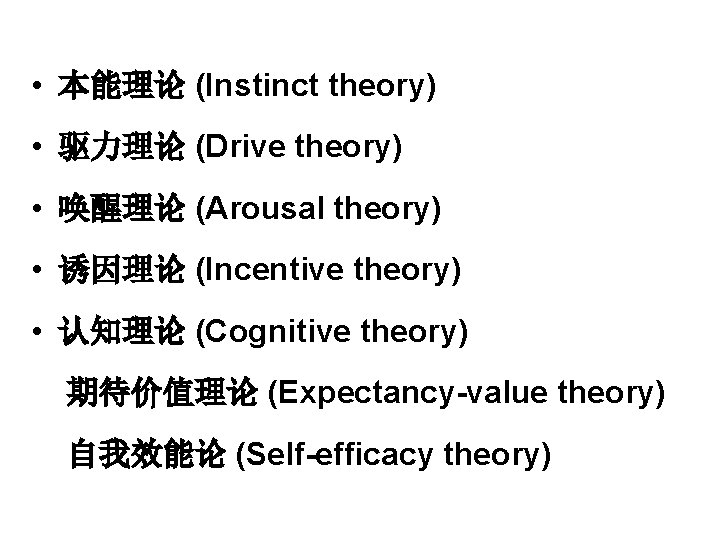
• 本能理论 (Instinct theory) • 驱力理论 (Drive theory) • 唤醒理论 (Arousal theory) • 诱因理论 (Incentive theory) • 认知理论 (Cognitive theory) 期待价值理论 (Expectancy-value theory) 自我效能论 (Self-efficacy theory)
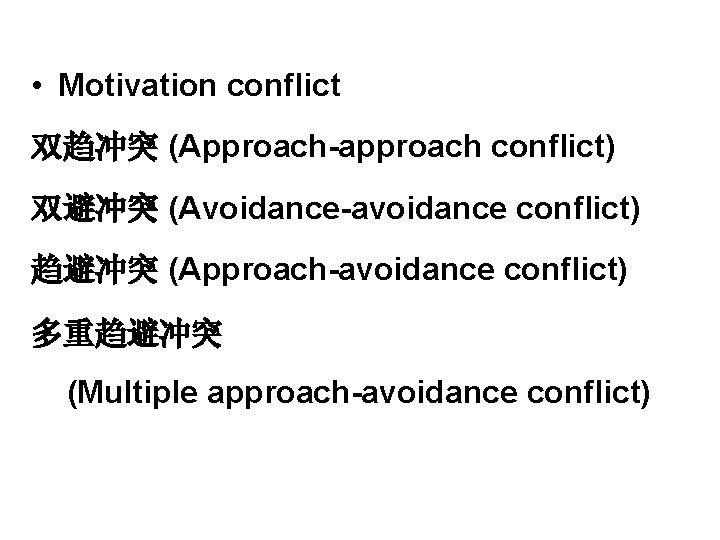
• Motivation conflict 双趋冲突 (Approach-approach conflict) 双避冲突 (Avoidance-avoidance conflict) 趋避冲突 (Approach-avoidance conflict) 多重趋避冲突 (Multiple approach-avoidance conflict)
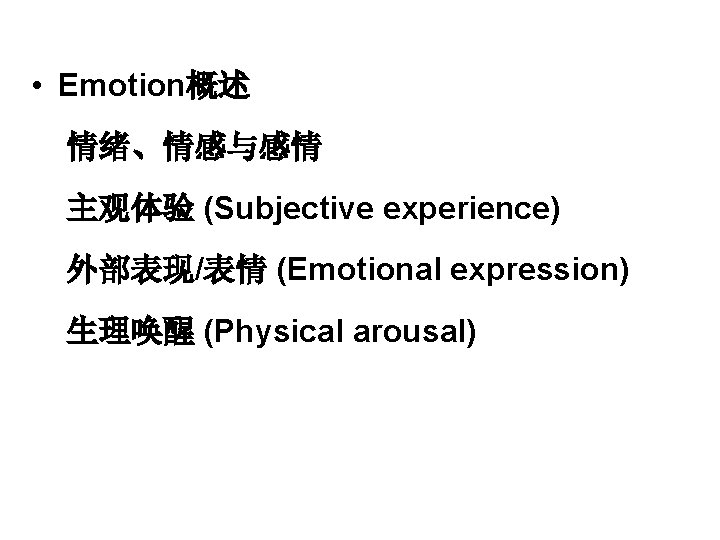
• Emotion概述 情绪、情感与感情 主观体验 (Subjective experience) 外部表现/表情 (Emotional expression) 生理唤醒 (Physical arousal)
Key Words • Emotion An evaluative response (a positive or negative feeling state) that typically includes subjective experience, physiological arousal, and emotional expression
• Emotion 的分类 基本情绪 (Basic emotion) 快乐(Happiness) 悲哀(Sadness) 愤怒(Anger) 恐惧(Fear) 情绪状态的分类 心境(Mood) 激情(Affective impluse) 应激(Stress)
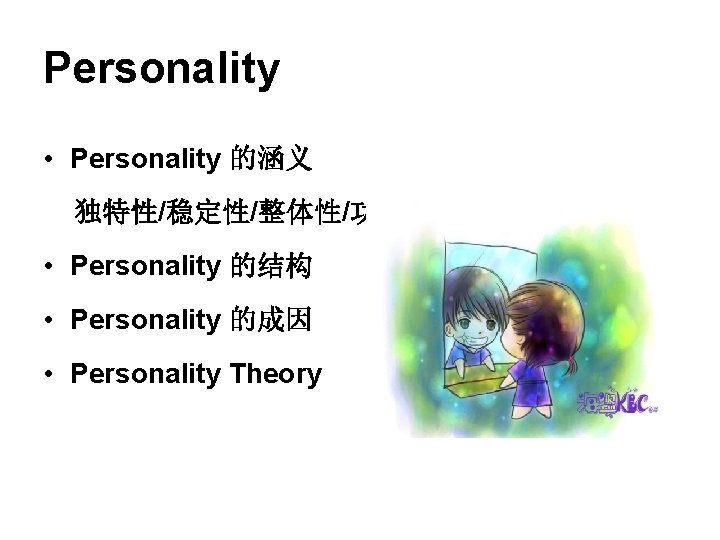
Personality • Personality 的涵义 独特性/稳定性/整体性/功能性 • Personality 的结构 • Personality 的成因 • Personality Theory
Key Words • Personality The enduring patterns of thoughts, feeling, and behavior that are expressed in different circumstances.
• Personality Theory 类型理论 (Theory of personality type) 特质理论 (Theory of personality trait) 层次理论