
Understanding Principles of Operation of Internal Combustion Engines
Understanding Principles of Operation of Internal Combustion Engines A Review
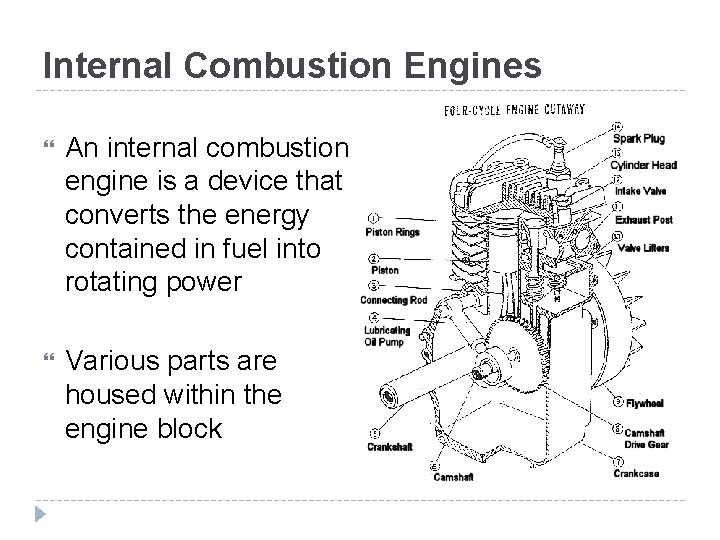
Internal Combustion Engines An internal combustion engine is a device that converts the energy contained in fuel into rotating power Various parts are housed within the engine block
4 Parts of the Engine Block Cylinder – the part of the engine block where the combustion takes place Piston – a plunger with rings that fit against the inside cylinder walls and prevent air from leaking past 1. 2. 1. 3. 4. Fastened by the wrist pin Connecting rod – connects the piston to the crankshaft Crankshaft – shaft with offsets to which the connecting rods are attached

Bore and Stroke of a Cylinder
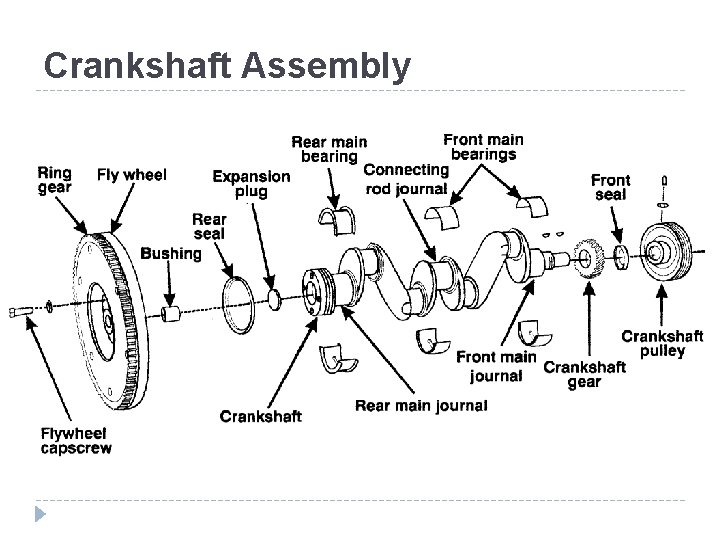
Crankshaft Assembly

Internal Combustion Engine - Events The internal combustion engine operates based upon the principle of a cycle A cycle is a series of events that are repeated over and over again Four strokes make up a cycle: Intake Compression Power Exhaust

Internal Combustion Engine - Events Intake Compression Compress the fuel-air mixture to allow combustion Intake and exhaust valves are closed. Power Get the fuel and air required for combustion Exhaust valve remains closed and intake valve is open Ignite fuel-air mixture & convert chemical energy to mechanical power Fuel-air mixture ignited by spark plug. Exhaust Remove the spent products resulting from combustion Exhaust valves opens and spent gasses are forced from the cylinder.
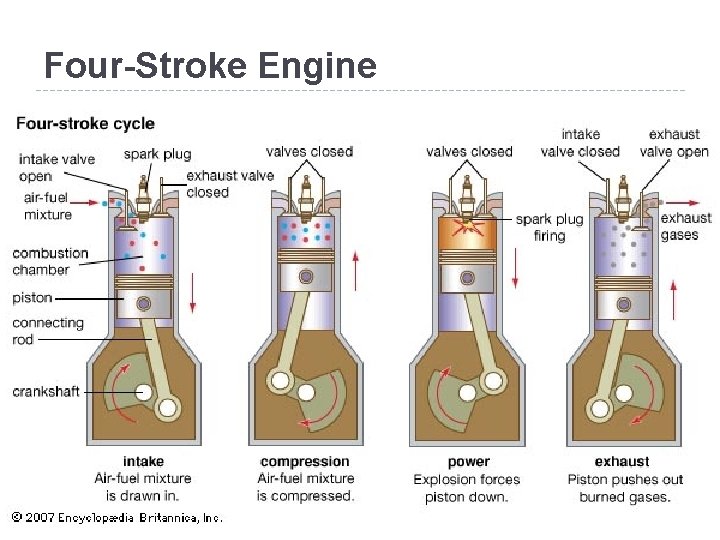
Four-Stroke Engine
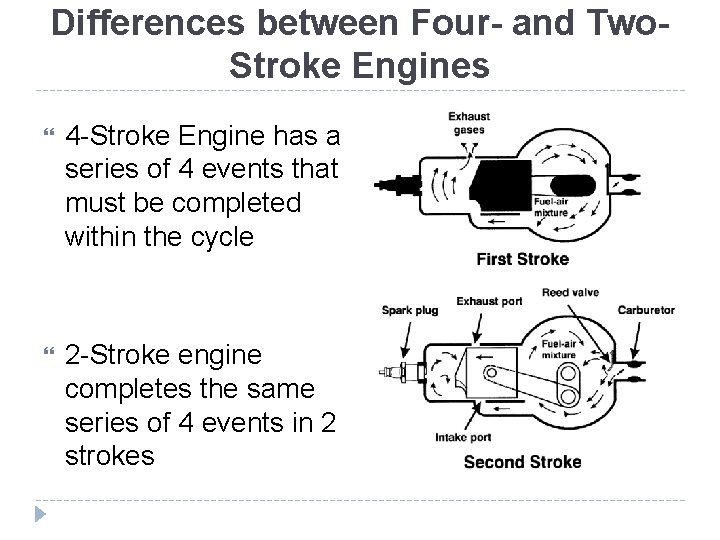
Differences between Four- and Two. Stroke Engines 4 -Stroke Engine has a series of 4 events that must be completed within the cycle 2 -Stroke engine completes the same series of 4 events in 2 strokes
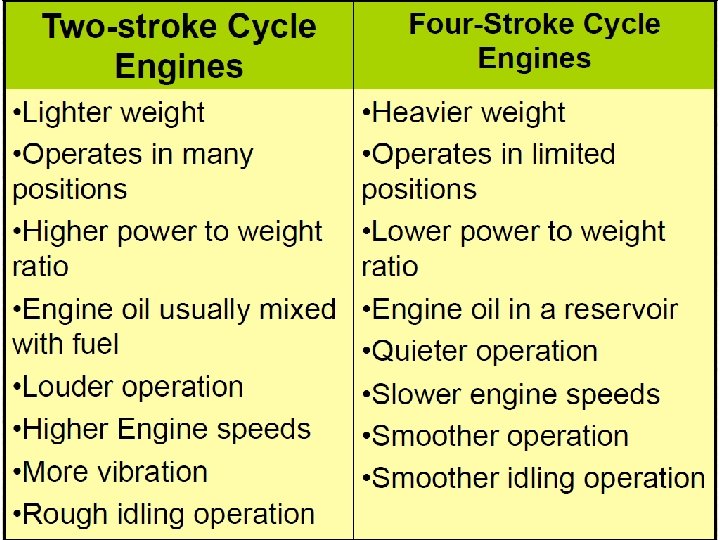

Review/Summary 1. 2. 3. What is an internal combustion engine? What are its principal parts? Describe the four events of the internal combustion engine. Explain the difference between fourstroke and two-stroke internal combustion engines.
- Slides: 11