
Understanding Poverty as it relates to keeping students



- Slides: 36
Understanding Poverty: as it relates to keeping students connected to their school As presented for: Teaching and Working in a Diverse World: The Impact of Poverty October 22, 2009 University of Maine Farmington Debrajean Scheibel, Educational Consultant, Maine Department of Education
Using the studies and related works of Dr. Ruby Payne’s Understanding the Framework of Poverty and Building Bridges Out of Poverty
Classcism • MPM
Workshop Objective • Develop a personal and professional awareness of poverty through Dr. Ruby Payne’s “Framework for Understanding Poverty” • Add R Rules: A guide for teens to identify and build resources that promote leadership and school completion
Poverty: Key Points Poverty is relative: similar circumstances; poverty or wealth exists in relationship to known quantities or expectations Poverty occurs in all races and countries: the % of the population that is poor is subject to definition and circumstance
Poverty is the extent to which an individual does without internal and external resources • Financial: External - no $ for goods and services • Mental: Internal and external – mental abilities and acquired skills (the R Rules) to deal with daily life • Emotional: Internal – unable to choose or control emotional responses that engage in self-destructive behaviors
Poverty is the extent to which an individual does without internal and external resources • Spiritual: Internal – believing in a divine purpose and guidance • Physical: Internal and External – physical health and guidance • Support Systems: External – Friends, family and backup resources for times of need
Poverty is the extent to which an individual does without internal and external resources • Relationships/Role Models: External – Frequent access to appropriate adults who nurture the child and do not engage in selfdestructive behavior • Knowledge of Hidden Rules: Internal – Knows the unspoken cues and habits of a group
Key Point Poverty is relative.
Poverty: Key Points Generational poverty (poverty for two generations or longer) Situational poverty (shorter and is caused by circumstance, i. e. , death, illness, divorce, etc. )
Key Point Generational poverty and situational poverty are different.
Poverty: Key Points • Hidden rules: the unspoken cues and habits of a group Even though income of the individual may rise significantly, many of the patterns of thought, social interaction, cognitive strategies, etc. , remain • Schools and businesses operate from middleclass norms and use the hidden rules of middleclass which are not taught in schools or businesses
Poverty: Key Points We must understand the hidden rules of our students and teach them the rules that will make them successful at school and at work
Hidden Rules Among “classes” how the “ the world” is defined is the biggest difference Possessions Clothing Time Food People Money
POSSESSIONS POVERTY People MIDDLE CLASS Things WEALTH One-of-a-kind objects, legacies, pedigrees
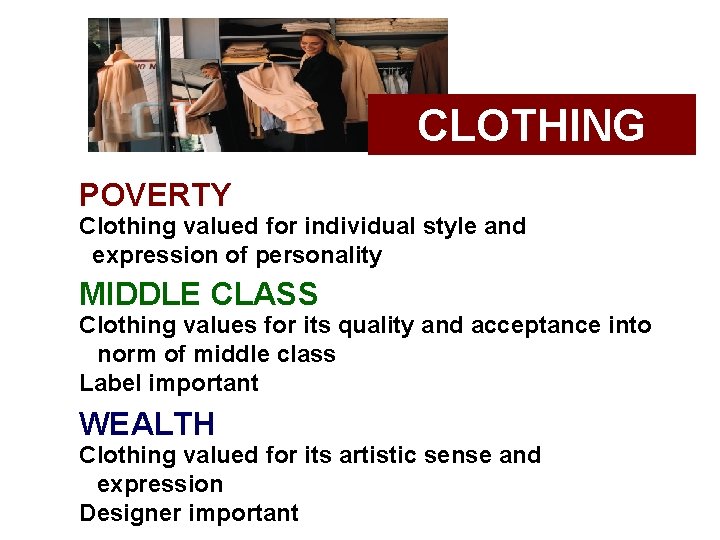
CLOTHING POVERTY Clothing valued for individual style and expression of personality MIDDLE CLASS Clothing values for its quality and acceptance into norm of middle class Label important WEALTH Clothing valued for its artistic sense and expression Designer important
TIME POVERTY Present most important Decisions made for the moment based on feelings or survival MIDDLE CLASS Future most important Decisions made against future ramifications WEALTH Traditions and history most important Decisions made partially on basis of tradition/decorum
FOOD POVERTY Key question: Did you have enough? Quantity important MIDDLE CLASS Key question: Did you like it? Quality important WEALTH Key question: Was it presented well? Presentation important
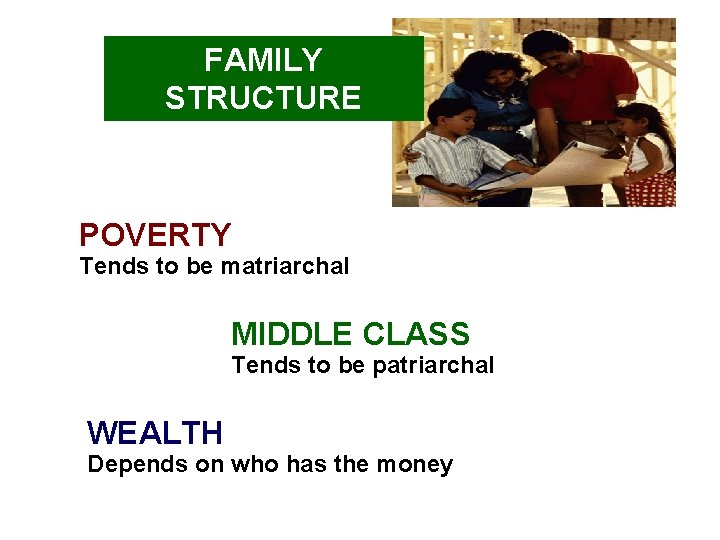
FAMILY STRUCTURE POVERTY Tends to be matriarchal MIDDLE CLASS Tends to be patriarchal WEALTH Depends on who has the money
Language Register Understand how language register, story structure, and language experience influence cognitive development.
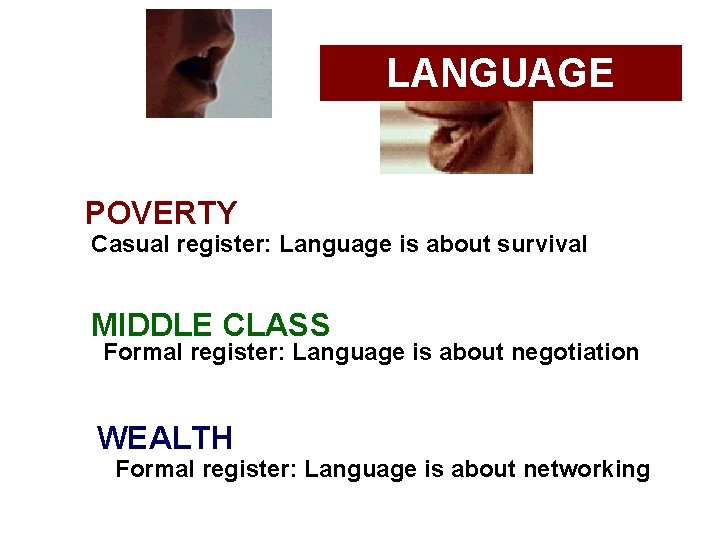
LANGUAGE POVERTY Casual register: Language is about survival MIDDLE CLASS Formal register: Language is about negotiation WEALTH Formal register: Language is about networking
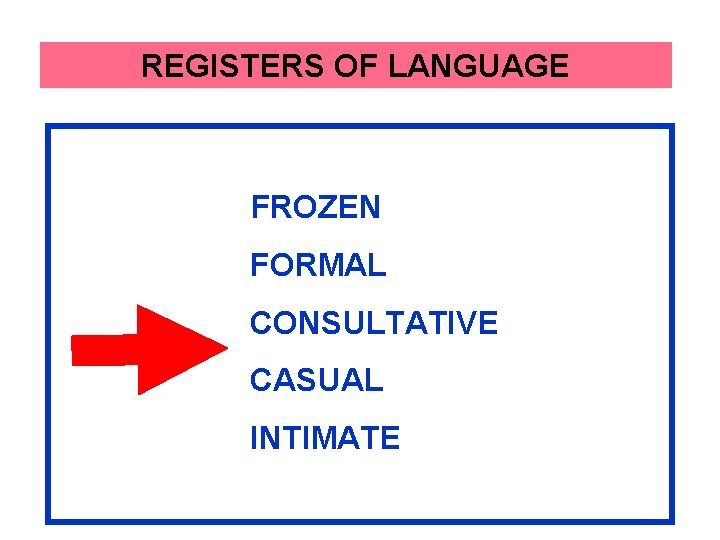
REGISTERS OF LANGUAGE FROZEN FORMAL CONSULTATIVE CASUAL INTIMATE
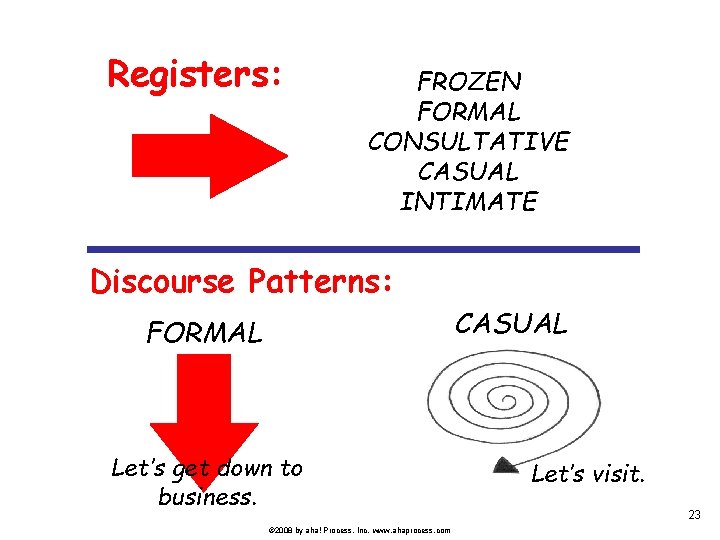
Registers: FROZEN FORMAL CONSULTATIVE CASUAL INTIMATE Discourse Patterns: CASUAL FORMAL Let’s get down to business. © 2008 by aha! Process, Inc. www. ahaprocess. com Let’s visit. 23
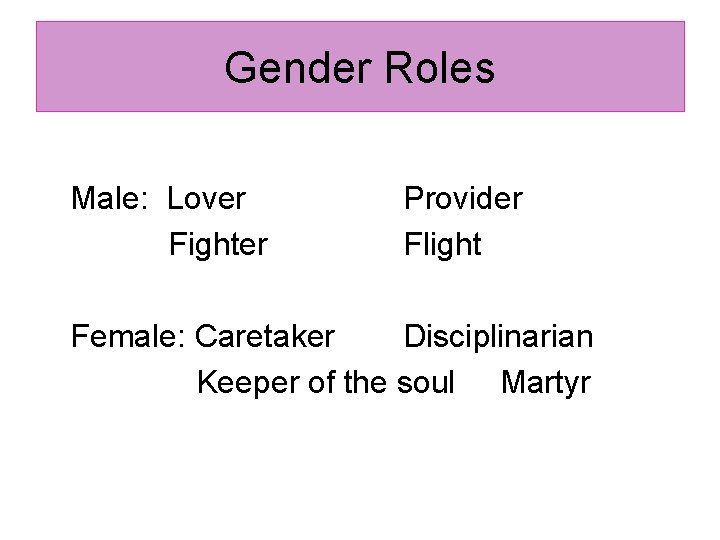
Gender Roles Male: Lover Fighter Provider Flight Female: Caretaker Disciplinarian Keeper of the soul Martyr
“… Human relationship is a sledgehammer that obliterates every societal difference. ” –Robert Sapolsky
Life is like a card game … Everyone gets a set of cards … While you can’t control the cards you get … You can decide how to play them … Patterns, Realities, Rules, Resources, and Relationships © 2008 by aha! Process, Inc. www. ahaprocess. com 26
Generate a list of strategies that you believe connected you to your school and learning Resource Considerations: • Financial • Relationships • Emotional • • Mental Spiritual Physical Language
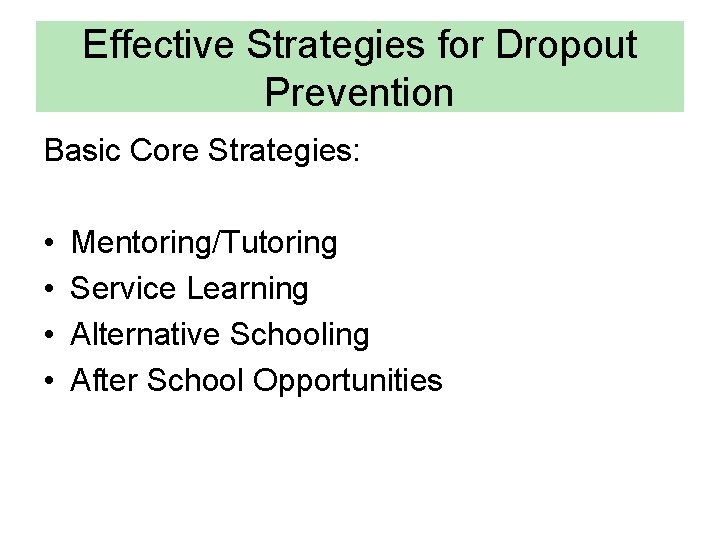
Effective Strategies for Dropout Prevention Basic Core Strategies: • • Mentoring/Tutoring Service Learning Alternative Schooling After School Opportunities
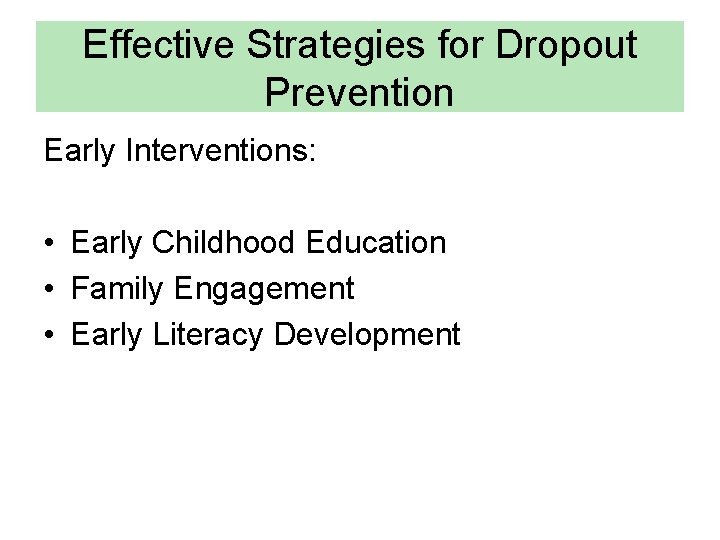
Effective Strategies for Dropout Prevention Early Interventions: • Early Childhood Education • Family Engagement • Early Literacy Development
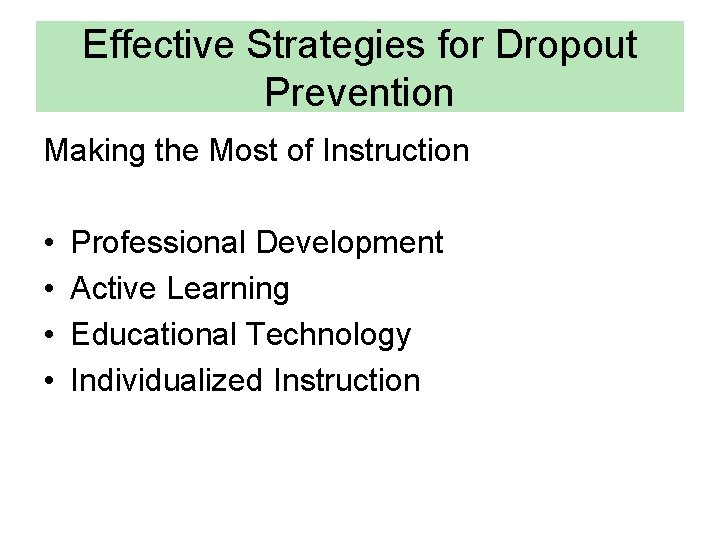
Effective Strategies for Dropout Prevention Making the Most of Instruction • • Professional Development Active Learning Educational Technology Individualized Instruction
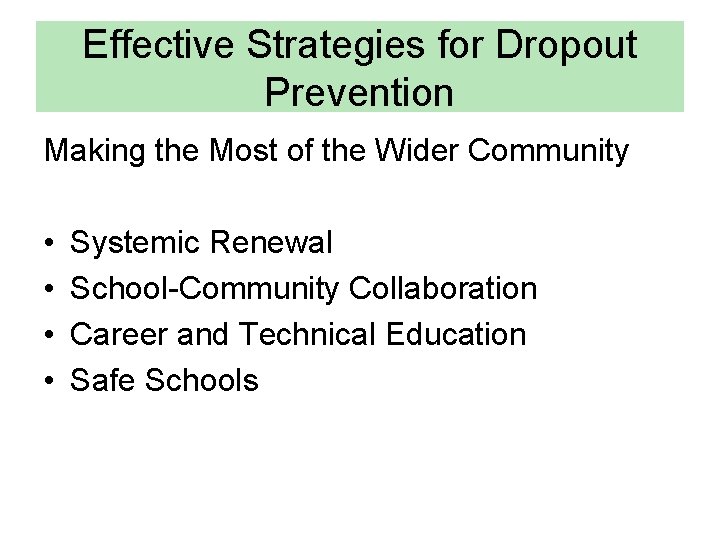
Effective Strategies for Dropout Prevention Making the Most of the Wider Community • • Systemic Renewal School-Community Collaboration Career and Technical Education Safe Schools
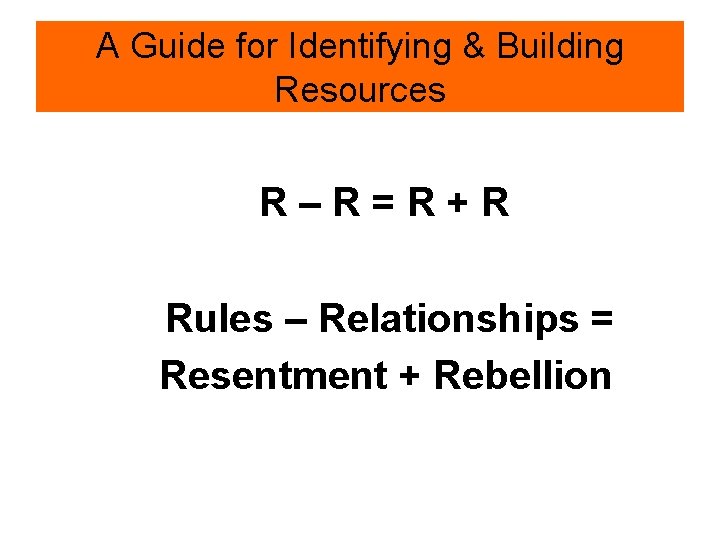
A Guide for Identifying & Building Resources R–R=R+R Rules – Relationships = Resentment + Rebellion
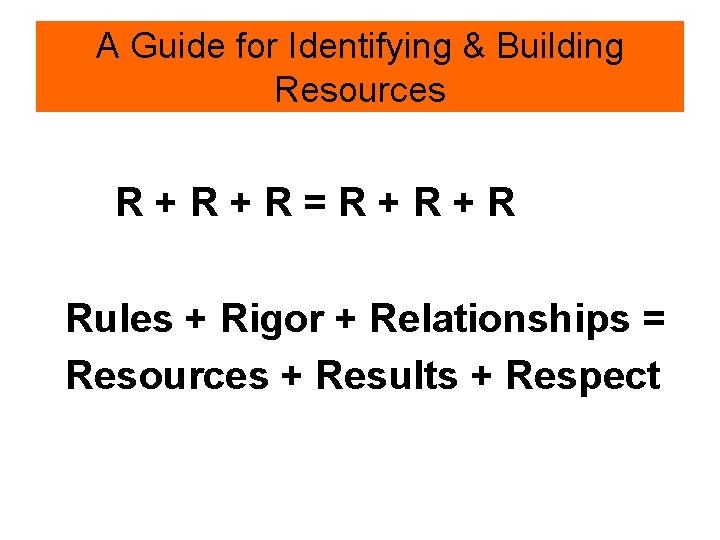
A Guide for Identifying & Building Resources R+R+R=R+R+R Rules + Rigor + Relationships = Resources + Results + Respect
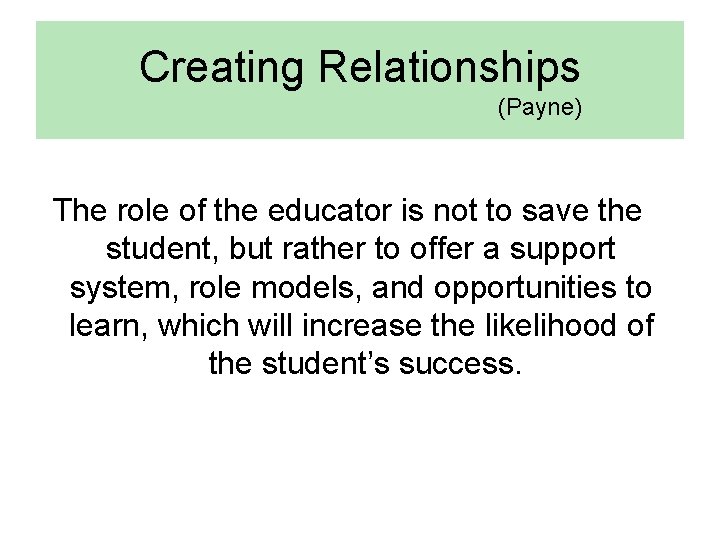
Creating Relationships (Payne) The role of the educator is not to save the student, but rather to offer a support system, role models, and opportunities to learn, which will increase the likelihood of the student’s success.
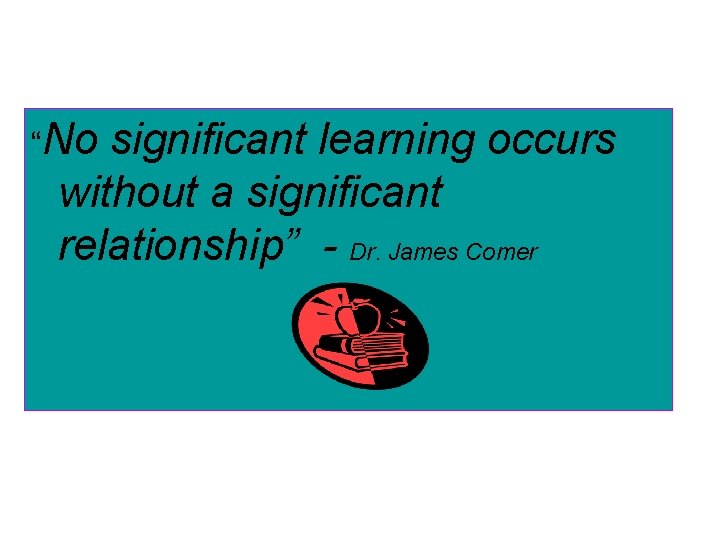
“No significant learning occurs without a significant relationship” - Dr. James Comer
Contact Information Debrajean Scheibel Educational Consulatant, MDOE debrajean. scheibel@maine. gov EL-DEB, INC. debrajean. scheibel@gmail. com