
Understanding Populations How Species Interact with Each Other
- Slides: 11
Understanding Populations How Species Interact with Each Other
An Organism’s Niche �Niche is the unique role of a species within an ecosystem ◦ Includes the species physical home, environmental factors necessary for survival, all of the interactions with other organisms. �Niche is different from habitat in that ◦ Habitat is a location ◦ Niche is the pattern of use of the habitat
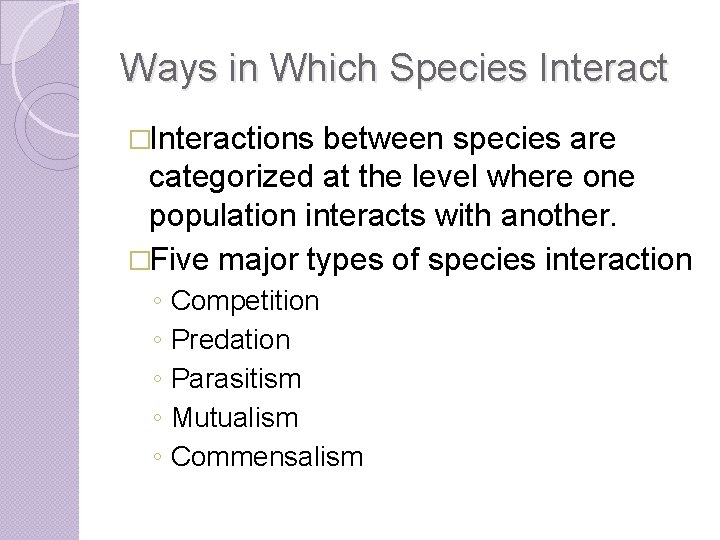
Ways in Which Species Interact �Interactions between species are categorized at the level where one population interacts with another. �Five major types of species interaction ◦ ◦ ◦ Competition Predation Parasitism Mutualism Commensalism
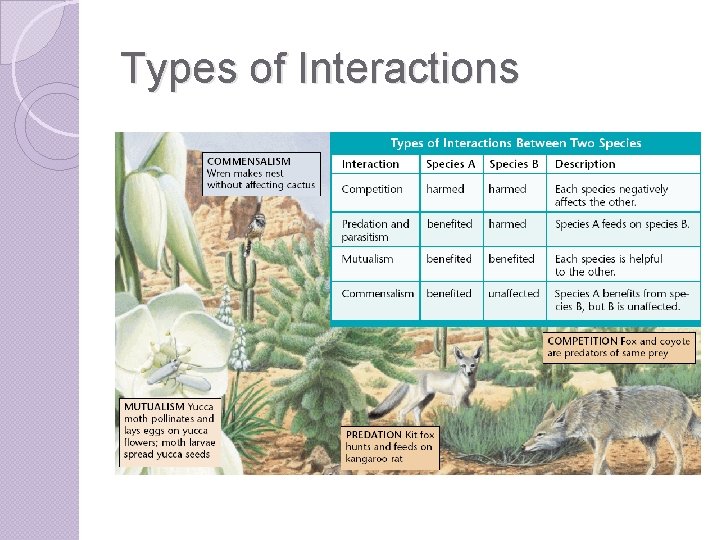
Types of Interactions
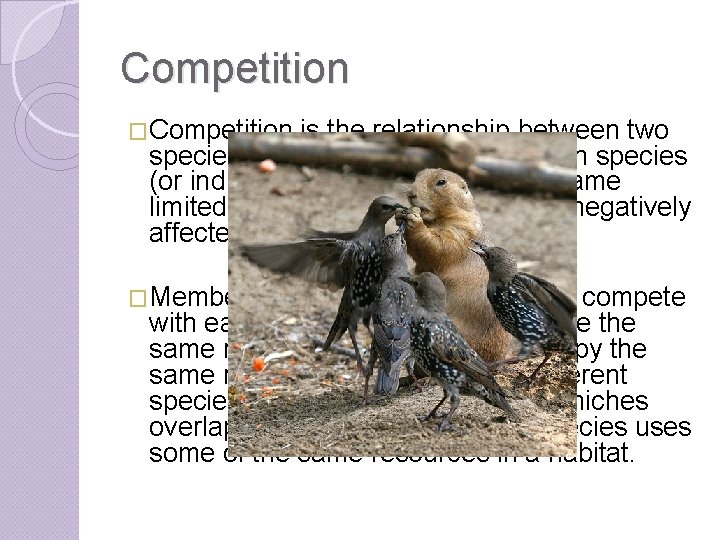
Competition �Competition is the relationship between two species (or individuals) in which both species (or individuals) attempt to use the same limited resource such that both are negatively affected by the relationship. �Members of the same species must compete with each other because they require the same resources because they occupy the same niche. When members of different species compete, we say that their niches overlap, which means that each species uses some of the same resources in a habitat.
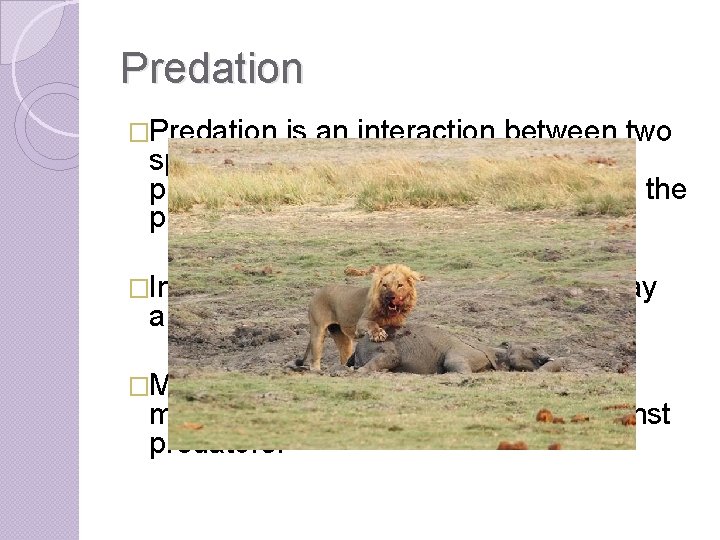
Predation �Predation is an interaction between two species in which one species, the predator, feeds on the other species, the prey. �In complex food webs, a predator may also be the prey of another species. �Most organisms have evolved some mechanisms to avoid or defend against predators.
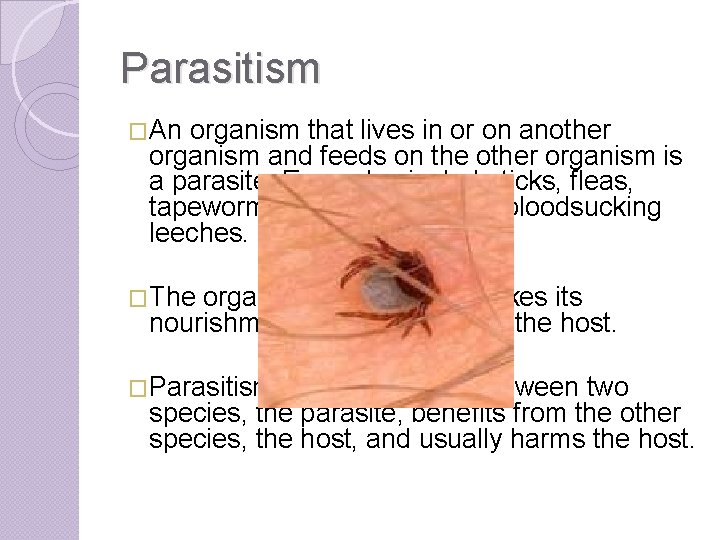
Parasitism �An organism that lives in or on another organism and feeds on the other organism is a parasite. Examples include ticks, fleas, tapeworms, heartworms, and bloodsucking leeches. �The organisms the parasite takes its nourishment from is known as the host. �Parasitism is a relationship between two species, the parasite, benefits from the other species, the host, and usually harms the host.
Parasite vs. Predator �The differences between a parasite and a predator are that a parasite spends some of its life in or on the host, and that the parasites do not usually kill their hosts. �In fact, the parasite has an evolutionary advantage if it allows its host to live longer. �However, the host is often weakened or exposed to disease by the parasite.
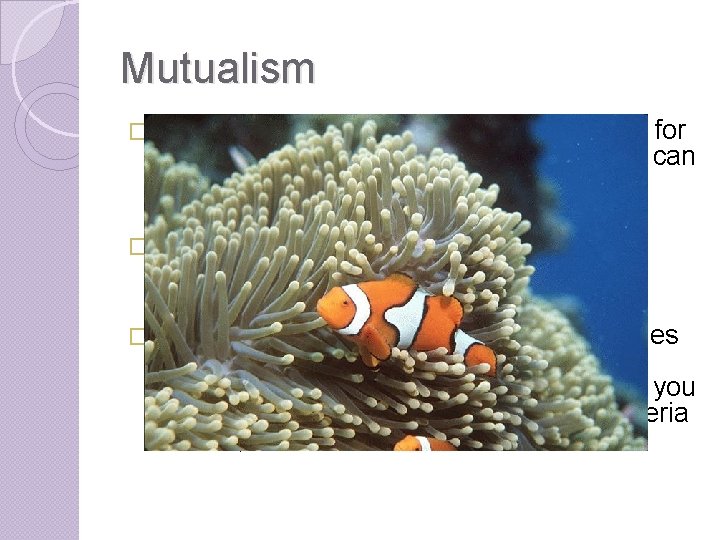
Mutualism �Many species depend on another species for survival. In some cases, neither organism can survive alone. �Mutualism is a relationship between two species in which both species benefit. �Certain species of bacteria in your intestines form a mutualistic relationship with you. These bacteria help break down food that you cannot digest. In return, you give the bacteria a warm, food-rich habitat.
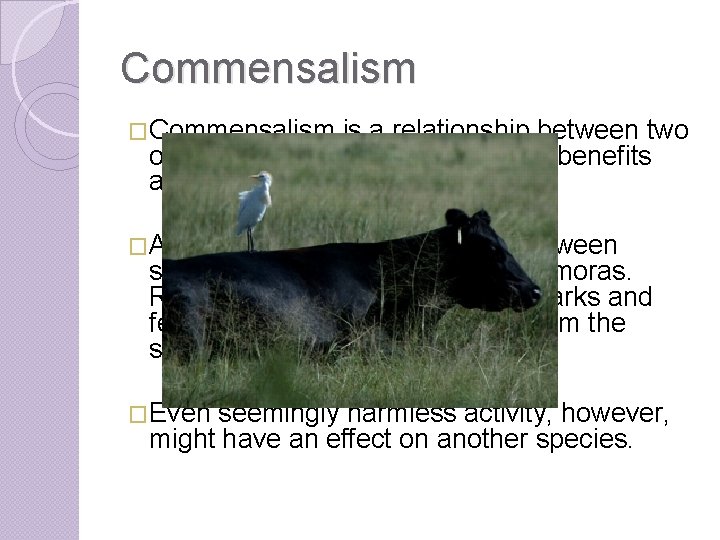
Commensalism �Commensalism is a relationship between two organisms in which one organism benefits and the other in unaffected. �An example is the relationship between sharks and a type of fish called remoras. Remoras attach themselves to sharks and feed on scraps of food left over from the shark’s meals. �Even seemingly harmless activity, however, might have an effect on another species.
Symbiosis and Coevolution �Symbiosis is a relationship in which two different organisms live in close association with each other. �Symbiosis is most often used to describe a relationship in which at least one species benefits. �Overtime, species in close relationships may coevolve. These species may evolve adaptations that reduce the harm or improve the benefit of the relationship.