
Understanding Population Trends and Processes Links between internal
Understanding Population Trends and Processes: Links between internal migration, commuting and within household relationships Oliver Duke-Williams School of Geography, University of Leeds o. w. duke-williams@leeds. ac. uk www. geog. leeds. ac. uk/people/o. duke-williams/ ESRC Grant No: RES 163 -25 -0007
Migration and commuting Ø Migration and commuting are important agents of change Ø Migration behaviour varies with l l l The number of persons who move together The presence (or not) of existing residents in the destination household Relationships between migrants and existing residents
Migration and commuting Ø Migration affects patterns of commuting l l Change in location of employment Change in journey to work Ø Trade-offs between migration and commuting l l Long distance weekly commuting Dual career households
Aims Ø Investigate trends and processes related to characteristics of individuals and groups of migrants Ø Investigate interactions between migration and commuting behaviour Ø Investigate how relationships between and within groups of migrants and residents explain mobility patterns
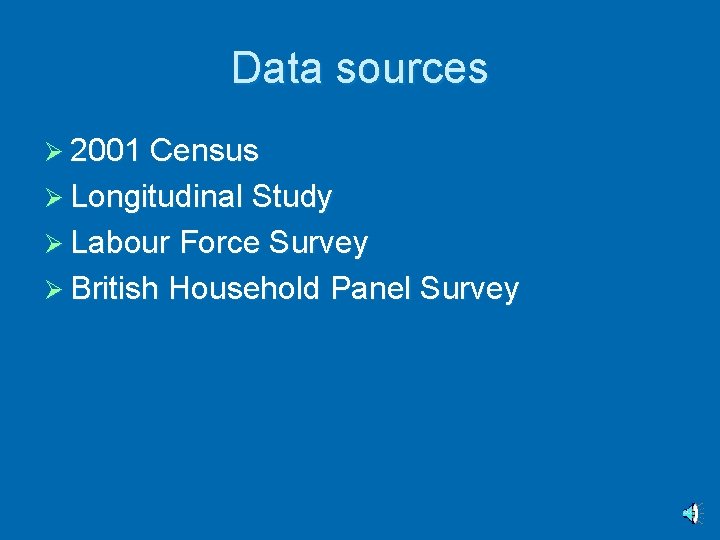
Data sources Ø 2001 Census Ø Longitudinal Study Ø Labour Force Survey Ø British Household Panel Survey
Objectives Ø Classifying moving group types
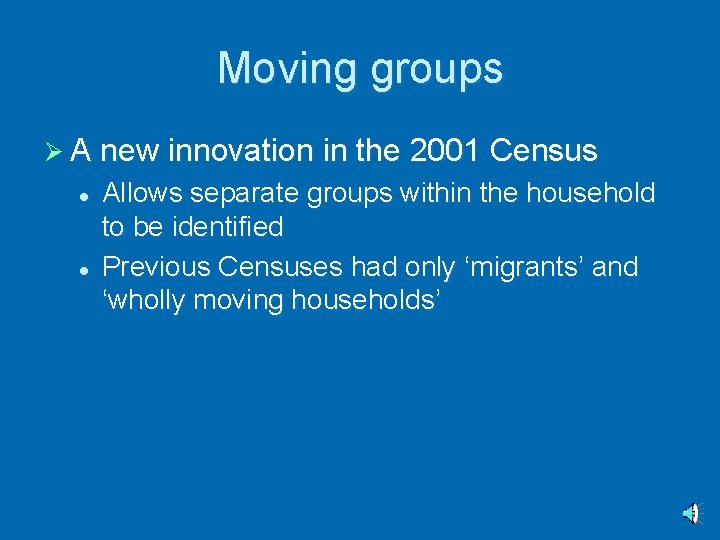
Moving groups Ø A new innovation in the 2001 Census l l Allows separate groups within the household to be identified Previous Censuses had only ‘migrants’ and ‘wholly moving households’
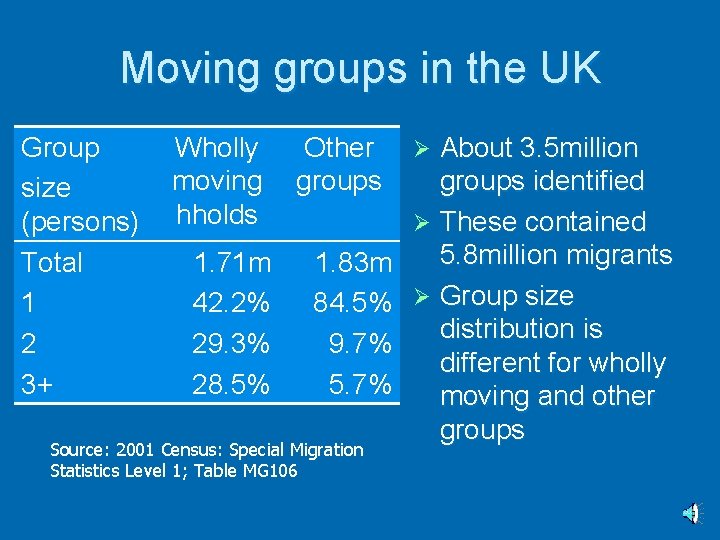
Moving groups in the UK Group size (persons) Total 1 2 3+ Wholly moving hholds 1. 71 m 42. 2% 29. 3% 28. 5% Other groups 1. 83 m 84. 5% 9. 7% 5. 7% Source: 2001 Census: Special Migration Statistics Level 1; Table MG 106 About 3. 5 million groups identified Ø These contained 5. 8 million migrants Ø Group size distribution is different for wholly moving and other groups Ø
Classifying group types Size of moving group Size of household Single person Two+ persons
Classifying group types Size of moving group Size of household Single person Two+ persons n/a Two+ persons
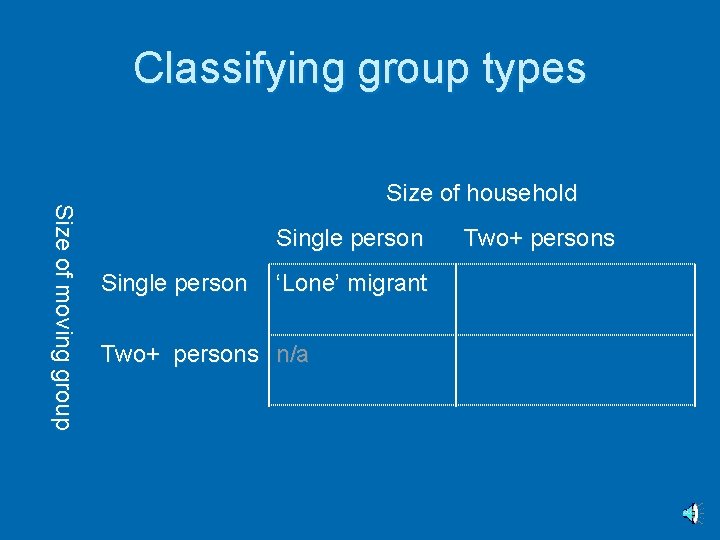
Classifying group types Size of moving group Size of household Single person ‘Lone’ migrant Two+ persons n/a Two+ persons
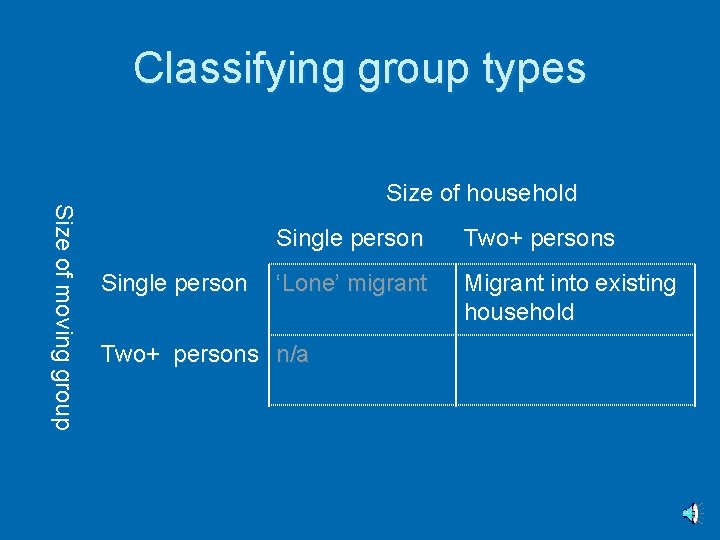
Classifying group types Size of moving group Size of household Single person Two+ persons ‘Lone’ migrant Migrant into existing household Two+ persons n/a
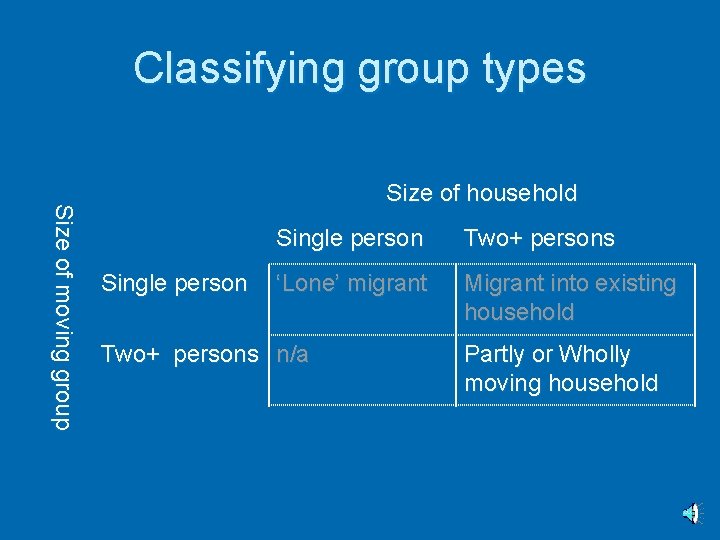
Classifying group types Size of moving group Size of household Single person Two+ persons ‘Lone’ migrant Migrant into existing household Two+ persons n/a Partly or Wholly moving household
Objectives Ø Classifying moving group types Ø Describe spatial patterns of internal migration in UK by various groups
Spatial patterns of migration Ø How do preferred destinations vary for groups of different sizes? Ø Is there a difference in the distances travelled?
Objectives Ø Classifying moving group types Ø Describe spatial patterns of internal migration in UK by various groups Ø Describe spatial patterns of commuting behaviour by household composition
Spatial commuting patterns Ø Using the Census, explore patterns at an aggregate scale l l By family status By living arrangements Ø Using the Labour Force Survey, explore patterns for individuals at national scale
Objectives Ø Classifying moving group types Ø Describe spatial patterns of internal migration in UK by various groups Ø Describe spatial patterns of commuting behaviour by household composition Ø Relate spatial behaviour to relationships within household
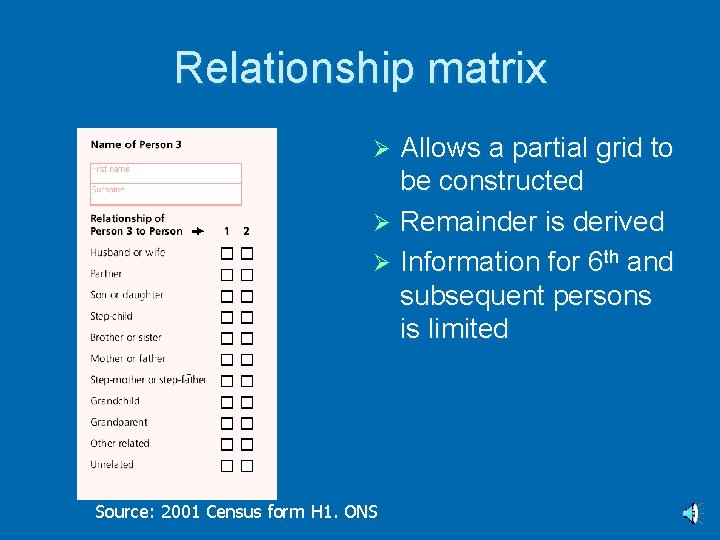
Relationship matrix Allows a partial grid to be constructed Ø Remainder is derived Ø Information for 6 th and subsequent persons is limited Ø Source: 2001 Census form H 1. ONS
Relationship matrix Ø Allows wider range of family types to be identified l l Extended families Multi-generational families Ø Allows easier identification of hidden families
Relating spatial behaviour and household relationships Ø Use records from Longitudinal Study Ø Explore patterns for a sample of individual households l l How well do aggregate patterns reflect range of individual patterns? Analysis likely to be at national level Ø Explore long-term stability of moving groups
Objectives Ø Classifying moving group types Ø Describe spatial patterns of internal migration in UK by various groups Ø Describe spatial patterns of commuting behaviour by household composition Ø Relate spatial behaviour to relationships within household Ø Link migration patterns to commuting behaviour
Linking migration and commuting patterns Ø Use BHPS to study motivations for migration and impact on households l l Changes in material circumstance Changes in household composition Ø Use LFS to study l l Changes in commuting behaviour Find comparator households to those in LS
Links between internal migration, commuting and within household relationships Oliver Duke-Williams o. w. duke-williams@leeds. ac. uk www. geog. leeds. ac. uk/people/o. duke-williams/

- Slides: 25