
Understanding Population Pyramids What Can We Learn 1



- Slides: 14
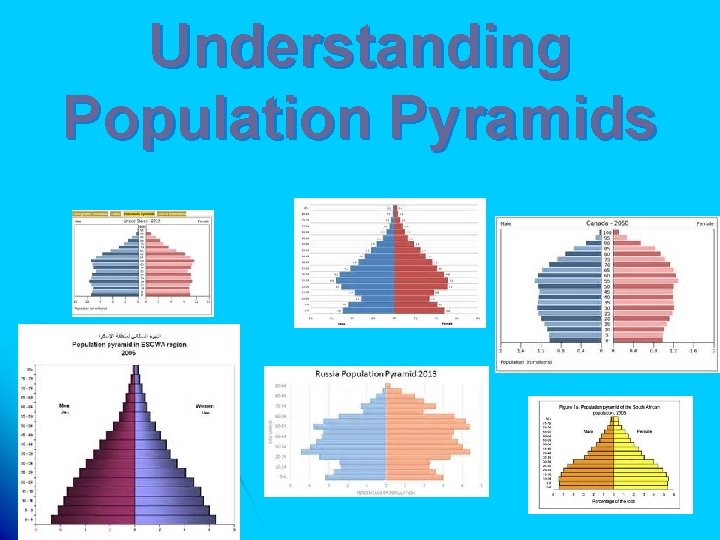
Understanding Population Pyramids
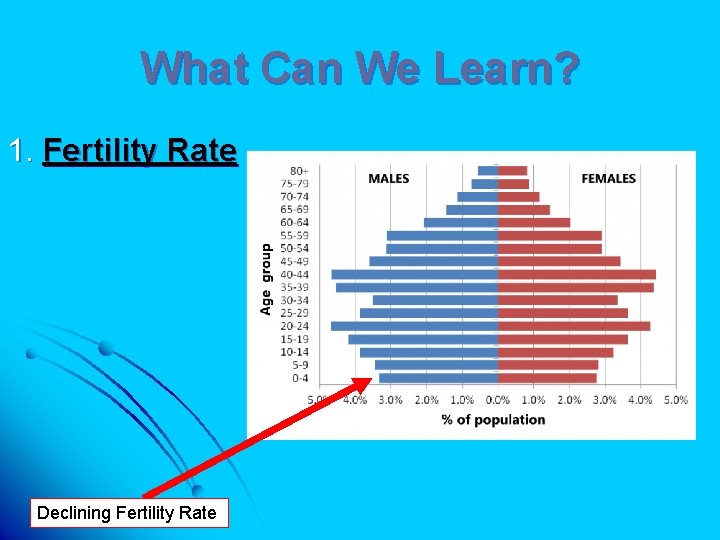
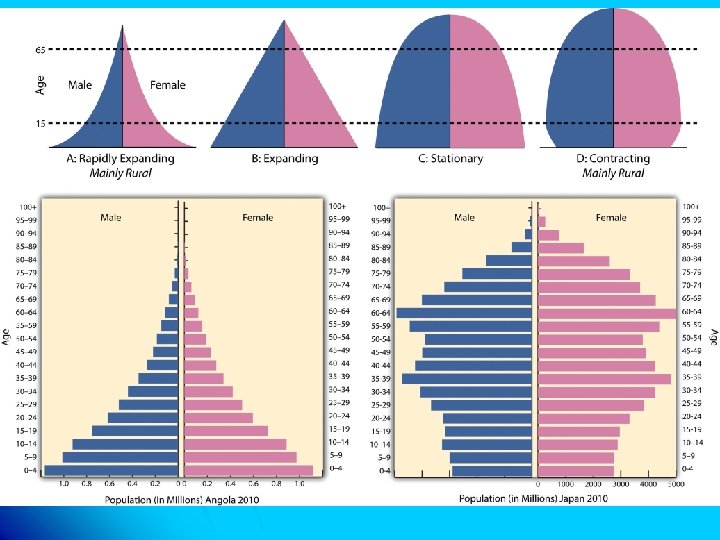
What Can We Learn? 1. Fertility Rate Declining Fertility Rate
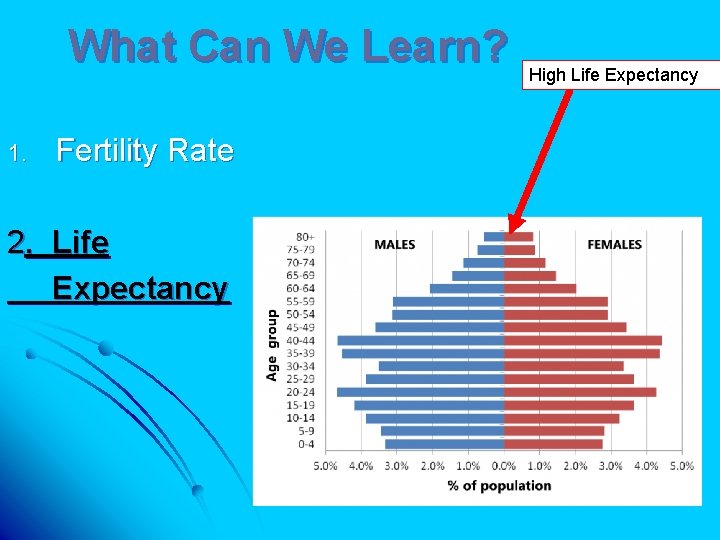
What Can We Learn? 1. Fertility Rate 2. Life Expectancy High Life Expectancy
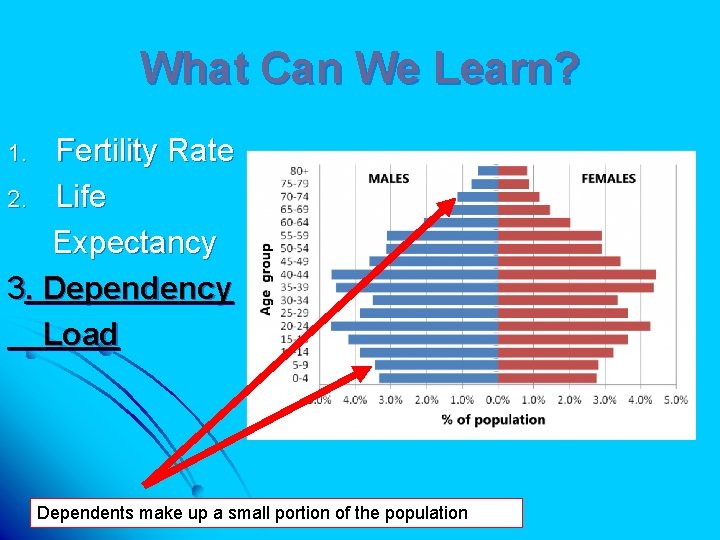
What Can We Learn? Fertility Rate 2. Life Expectancy 3. Dependency Load 1. Dependents make up a small portion of the population
Page 64 – what can you learn about the two populations from these population pyramids?
Demographic Transition Stages http: //www. nationmaster. com/graph/peo_tot _fer_rat-people-total-fertility-rate Replacement Rate: 2. 1 children Demographic Transition: the phenomenon of a country’s high birth and deaths rates changing over time to low birth and death rates.
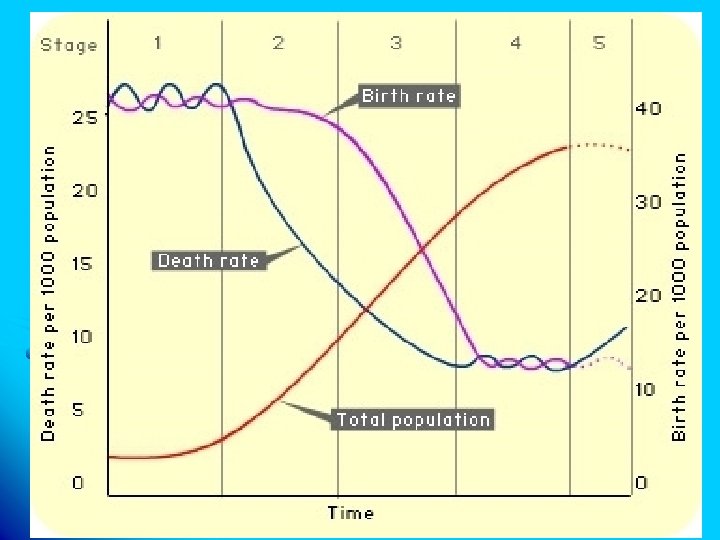
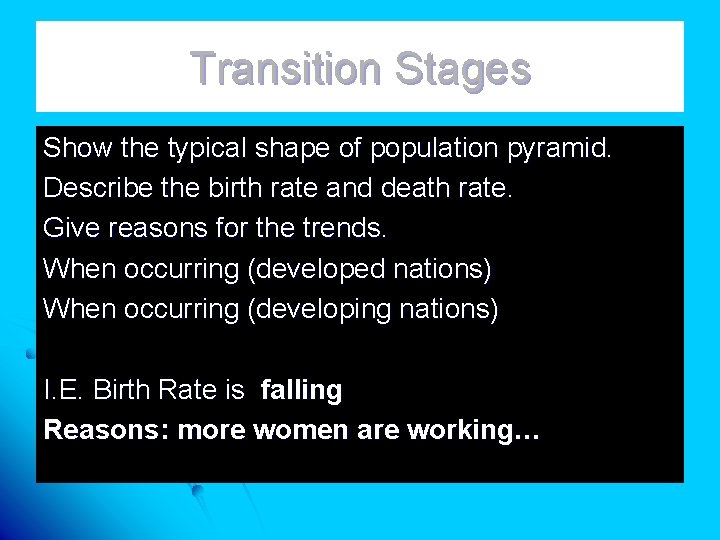
Transition Stages Stage 1 —High birth and death rates lead to slow population growth. Stage 2 —The death rate falls but the birth rate remains high, leading to faster population growth. Stage 3 —The birth rate starts to fall, so population growth starts to slow. Stage 4 —The birth rate reaches the same low level as the death rate, so population growth slows to zero.
Transition Stages Show the typical shape of population pyramid. Describe the birth rate and death rate. Give reasons for the trends. When occurring (developed nations) When occurring (developing nations) I. E. Birth Rate is falling Reasons: more women are working…
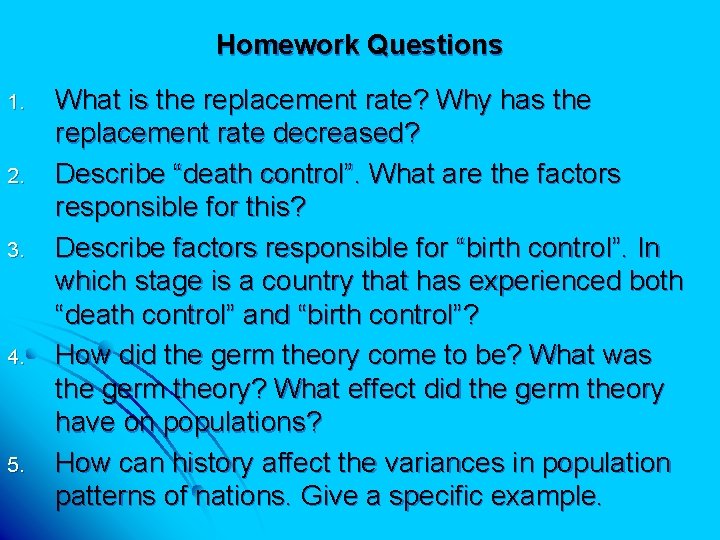
Homework Questions 1. 2. 3. 4. 5. What is the replacement rate? Why has the replacement rate decreased? Describe “death control”. What are the factors responsible for this? Describe factors responsible for “birth control”. In which stage is a country that has experienced both “death control” and “birth control”? How did the germ theory come to be? What was the germ theory? What effect did the germ theory have on populations? How can history affect the variances in population patterns of nations. Give a specific example.