
Understanding Phonics Shepton Mallet Infants School and Nursery




- Slides: 16
Understanding Phonics Shepton Mallet Infants’ School and Nursery 8 th March 2017 6. 00 pm- 7. 30 pm
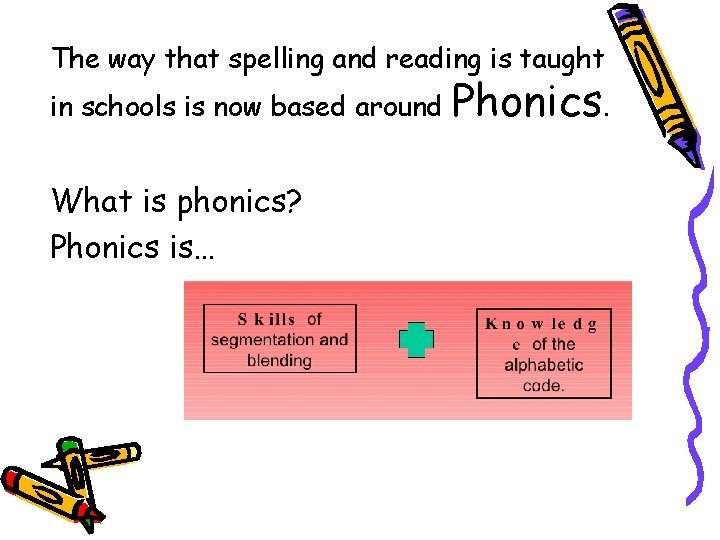
The way that spelling and reading is taught in schools is now based around What is phonics? Phonics is… Phonics.
Phonics consists of: • Identifying sounds in spoken words. • Recognising the common spellings of each sound. • Blending the sounds into words for reading. • Segmenting the words into sounds for spelling.
Key Concepts Sounds (phonemes) are represented by letters (graphemes) English is an alphabetic language – unlike Chinese, for example, where whole words are represented by characters. A phoneme can be represented by one letter (grapheme) or by a group of 2 or more letters. s, a, t, p sh, igh, oa The same sound (phoneme) can be represented (spelt) more than one way. cat kennel Choir The same grapheme (spelling) may represent more than one phoneme mean – deaf crown – flown field – tried
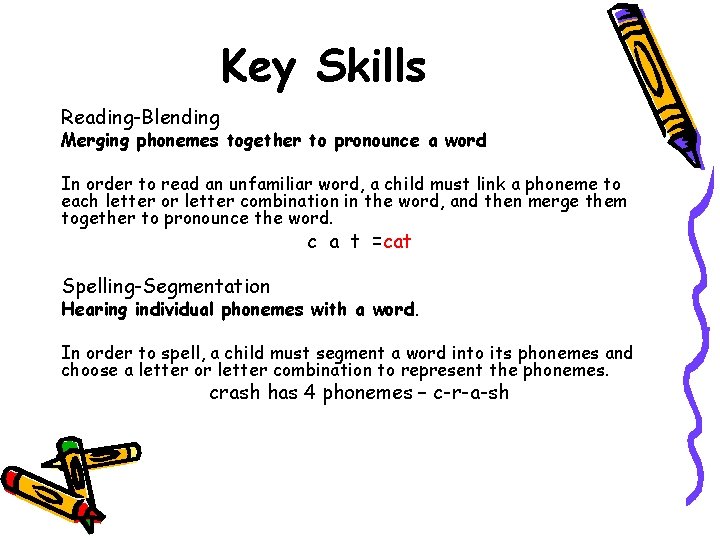
Key Skills Reading-Blending Merging phonemes together to pronounce a word In order to read an unfamiliar word, a child must link a phoneme to each letter or letter combination in the word, and then merge them together to pronounce the word. c a t =cat Spelling-Segmentation Hearing individual phonemes with a word. In order to spell, a child must segment a word into its phonemes and choose a letter or letter combination to represent the phonemes. crash has 4 phonemes – c-r-a-sh
Phonemes The units of sound in a word. There are 44 phonemes in English.
The 44 Phonemes /b/ /d/ /f/ /g/ /h/ /j/ /c/k /l/ /m/ /ng/ /p/ /r/ /s/ /t/ /v/ /w/ /y/ /z/ /th/ /ch/ /sh/ /zh/ /a/ /e/ /i/ /o/ /u/ /ae/ /ee/ /ie/ /oe/ /ue/ /oo/ /ar/ /ur/ /au/ /er/ /ow/ /oi/ /air/ /ear/ /ure/
Grapheme Letters representing a phoneme c ai igh Children need to practise recognising the grapheme and saying the phoneme that it represents.
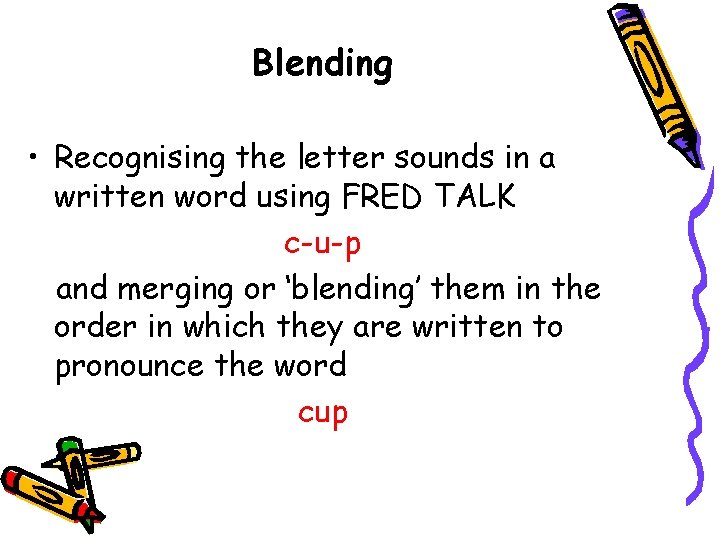
Blending • Recognising the letter sounds in a written word using FRED TALK c-u-p and merging or ‘blending’ them in the order in which they are written to pronounce the word cup
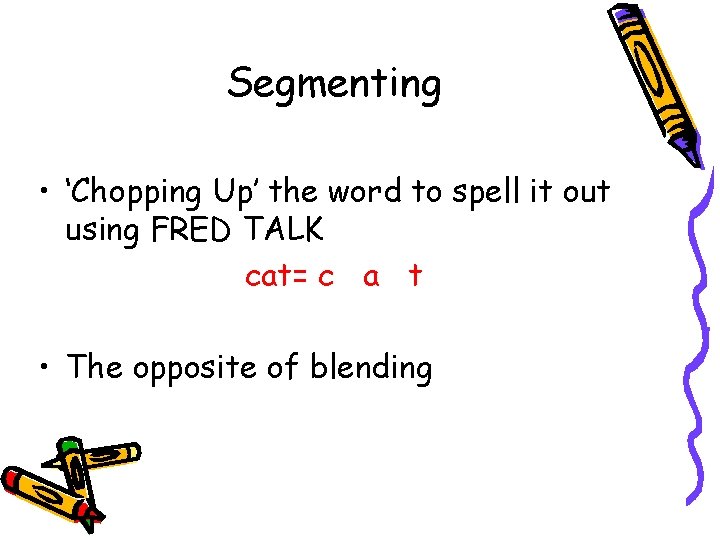
Segmenting • ‘Chopping Up’ the word to spell it out using FRED TALK cat= c a t • The opposite of blending
Once children are good with single phonemes… • DIGRAPHS – 2 letters that make 1 sound sh ch oa ai • TRIGRAPHS – 3 letters that make 1 sound igh air
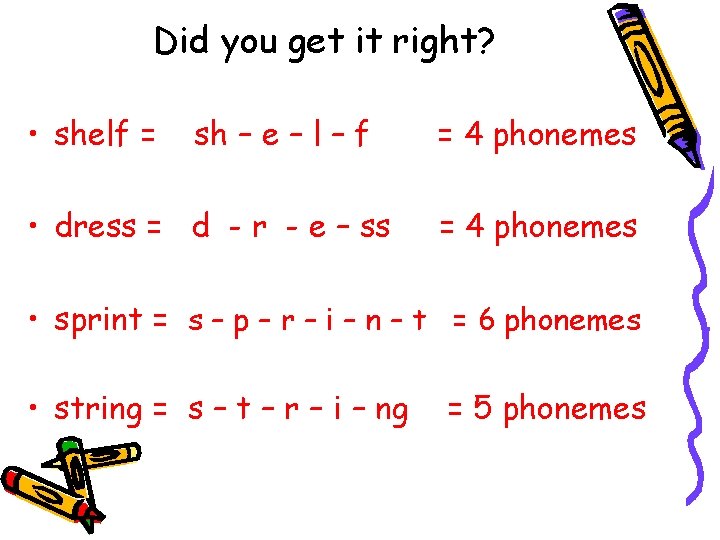
Segmenting Activity • FRED TALK each word to say how many phonemes each has. • shelf • dress • sprint • string
Did you get it right? • shelf = sh – e – l – f • dress = d - r - e – ss = 4 phonemes • sprint = s – p – r – i – n – t = 6 phonemes • string = s – t – r – i – ng = 5 phonemes
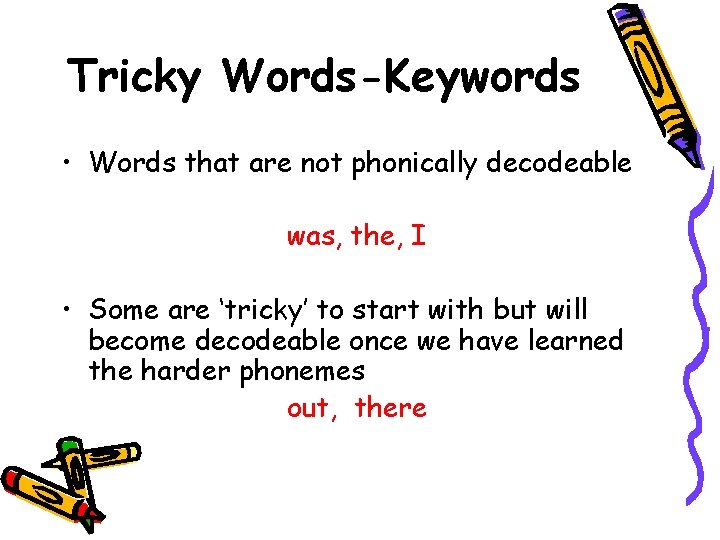
Tricky Words-Keywords • Words that are not phonically decodeable was, the, I • Some are ‘tricky’ to start with but will become decodeable once we have learned the harder phonemes out, there
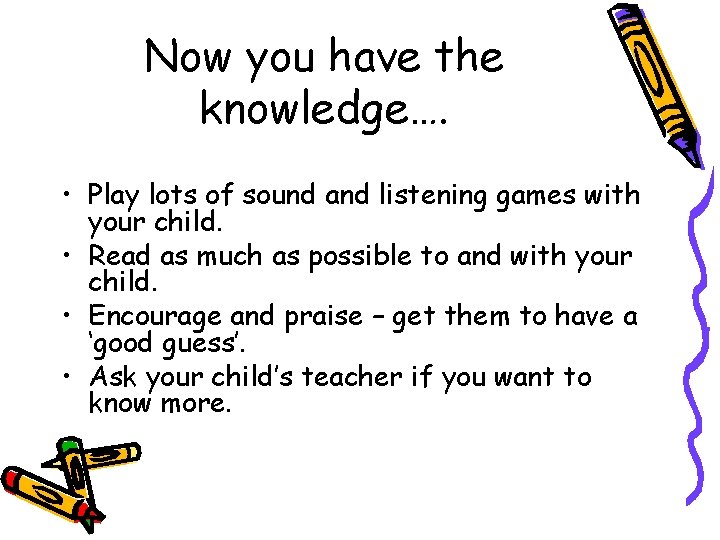
Now you have the knowledge…. • Play lots of sound and listening games with your child. • Read as much as possible to and with your child. • Encourage and praise – get them to have a ‘good guess’. • Ask your child’s teacher if you want to know more.
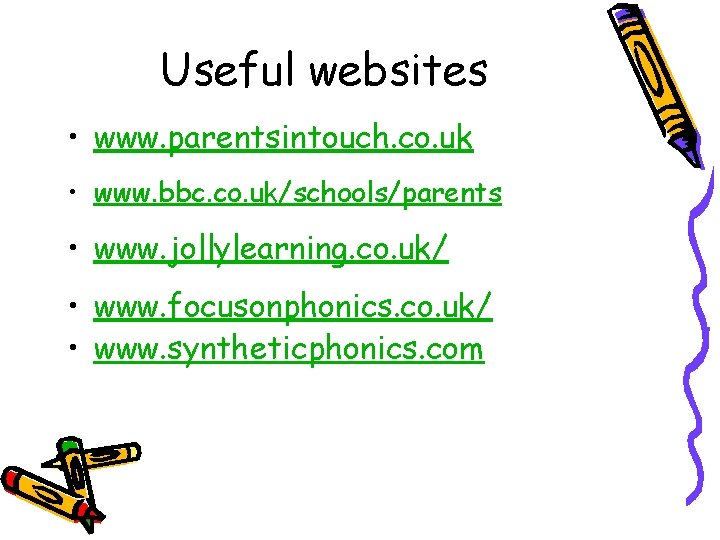
Useful websites • www. parentsintouch. co. uk • www. bbc. co. uk/schools/parents • www. jollylearning. co. uk/ • www. focusonphonics. co. uk/ • www. syntheticphonics. com