
Understanding Personification Simile and Metaphor Essential Questions What





- Slides: 46
Understanding Personification, Simile, and Metaphor
Essential Questions • What is figurative language? • How can I interpret figurative language?
What is figurative language? Here are some examples. What do you think figurative language means? • The wind whispered softly through the trees. • The cafeteria pizza was a soggy, droopy piece of cardboard. • The teacher glared like a furious dragon.
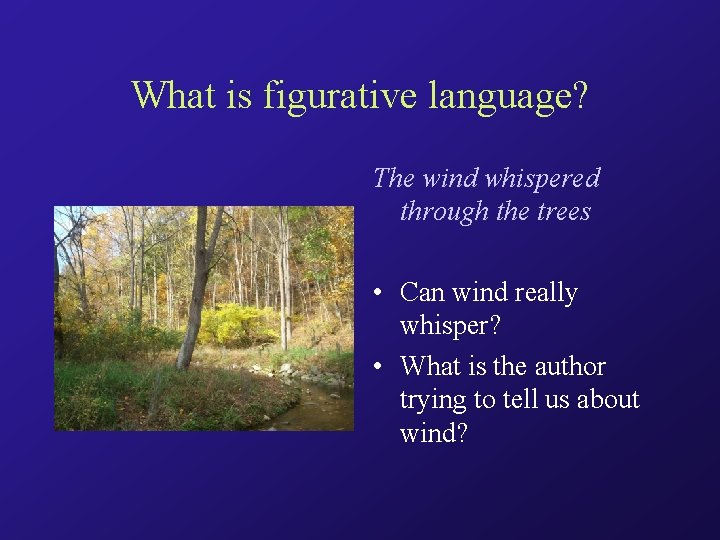
What is figurative language? The wind whispered through the trees • Can wind really whisper? • What is the author trying to tell us about wind?
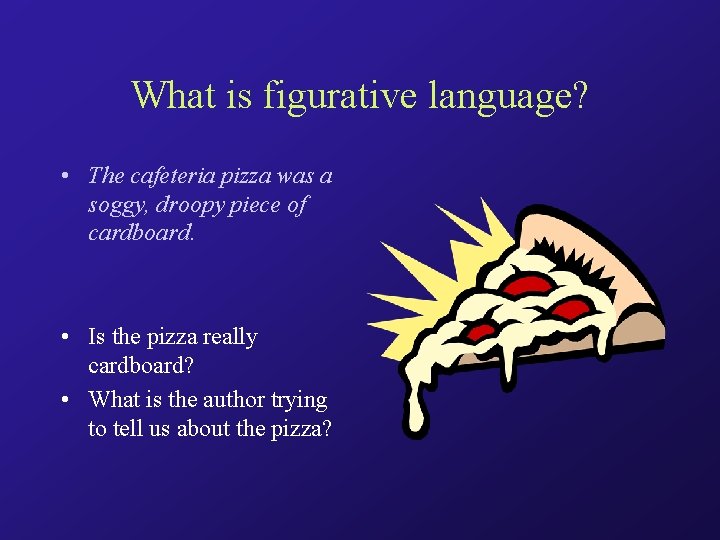
What is figurative language? • The cafeteria pizza was a soggy, droopy piece of cardboard. • Is the pizza really cardboard? • What is the author trying to tell us about the pizza?
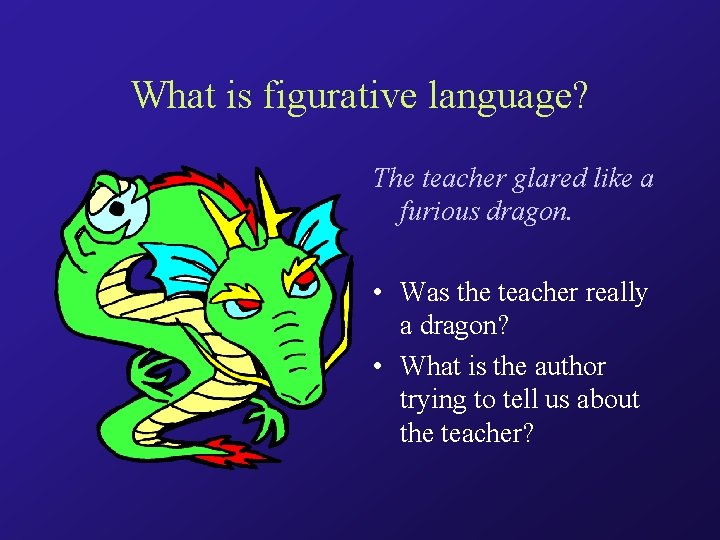
What is figurative language? The teacher glared like a furious dragon. • Was the teacher really a dragon? • What is the author trying to tell us about the teacher?
What is figurative language? • Figurative language expresses an idea that goes beyond the actual meaning of the words • Wind can’t whisper…but the expression gives you an idea of how the wind sounds
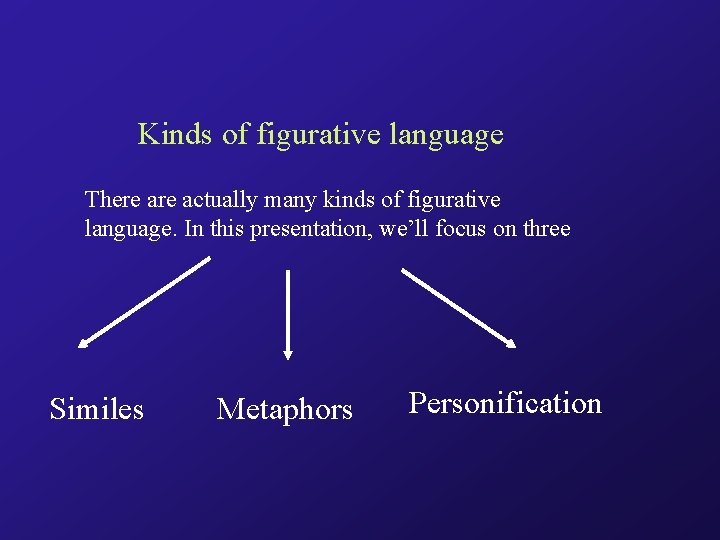
Kinds of figurative language There actually many kinds of figurative language. In this presentation, we’ll focus on three Similes Metaphors Personification
How can I interpret figurative language? • To interpret figurative language means to understand what the author is trying to say • To interpret figurative language, it’s important to understand how different kinds of figurative language work
Personification • Personification means to give human thoughts and qualities to nonhuman objects
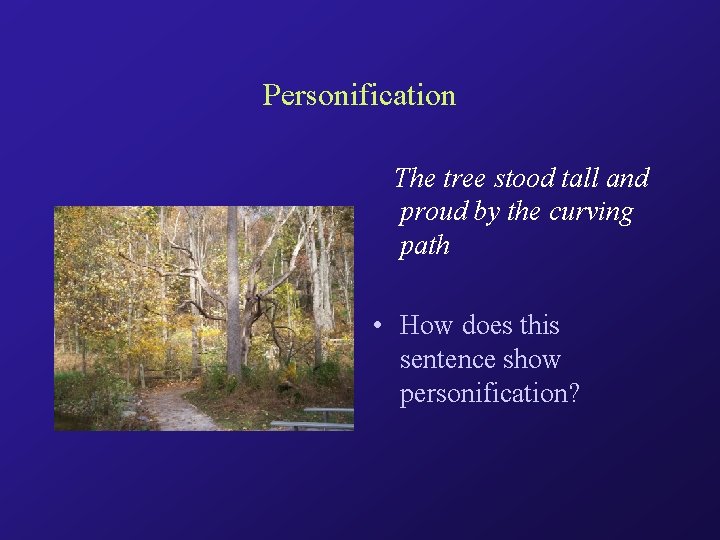
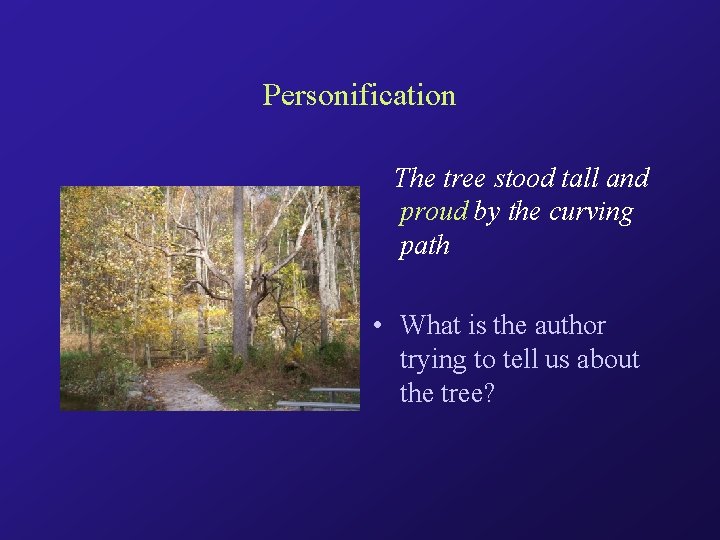
Personification The tree stood tall and proud by the curving path • How does this sentence show personification?
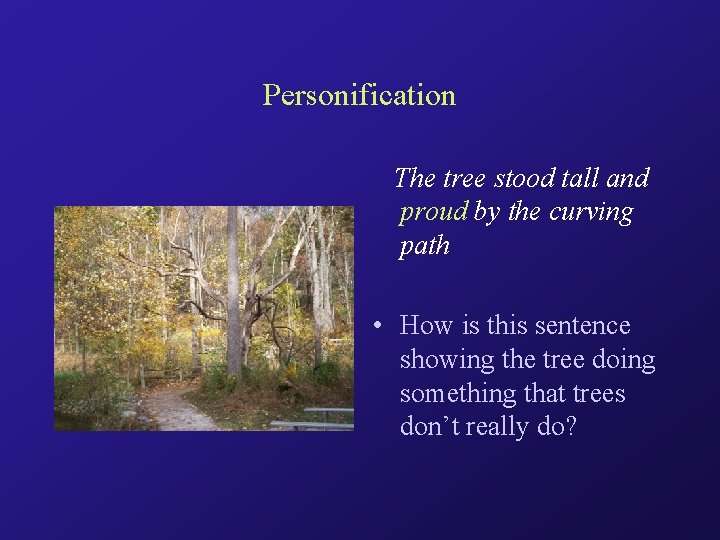
Personification The tree stood tall and proud by the curving path • How is this sentence showing the tree doing something that trees don’t really do?
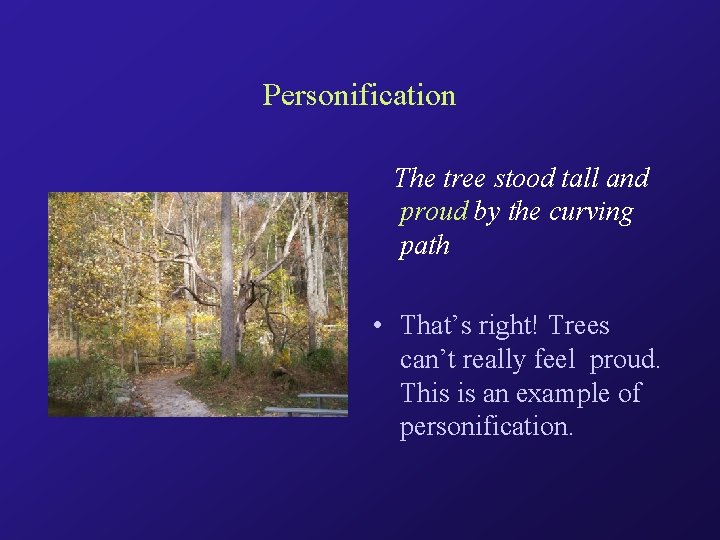
Personification The tree stood tall and proud by the curving path • That’s right! Trees can’t really feel proud. This is an example of personification.
Personification The tree stood tall and proud by the curving path • What is the author trying to tell us about the tree?
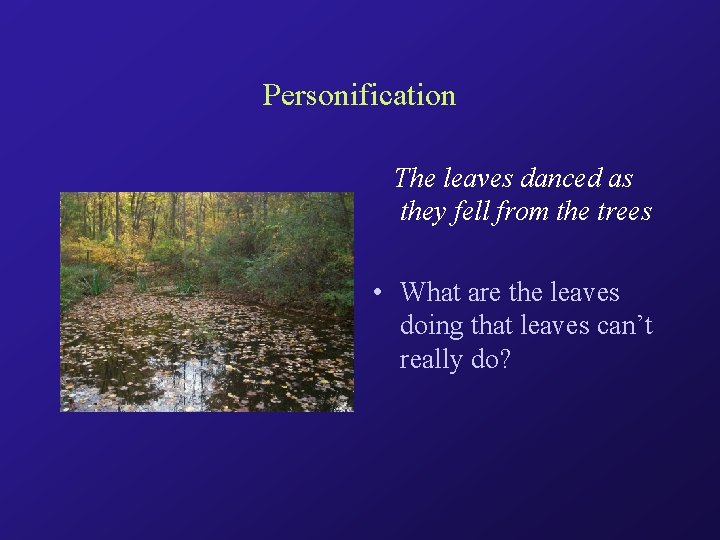
Personification The leaves danced as they fell from the trees • What are the leaves doing that leaves can’t really do?
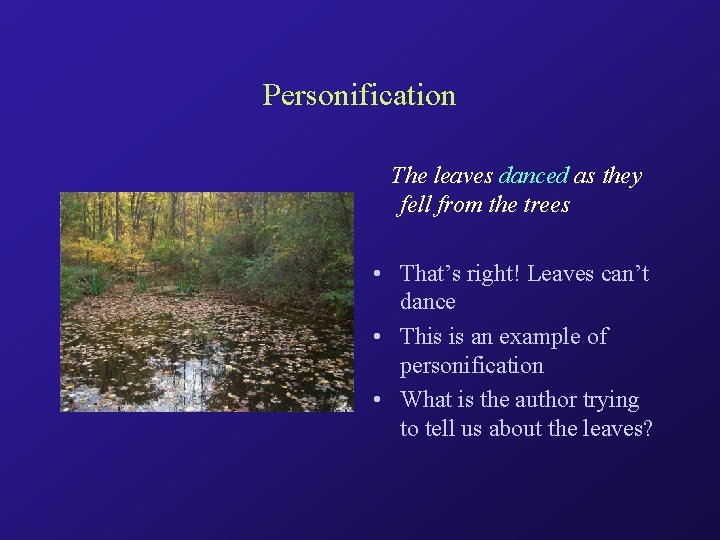
Personification The leaves danced as they fell from the trees • That’s right! Leaves can’t dance • This is an example of personification • What is the author trying to tell us about the leaves?
Let’s Review! • What is personification?
Simile • A simile is a comparison between two unlike objects using “like” or “as”
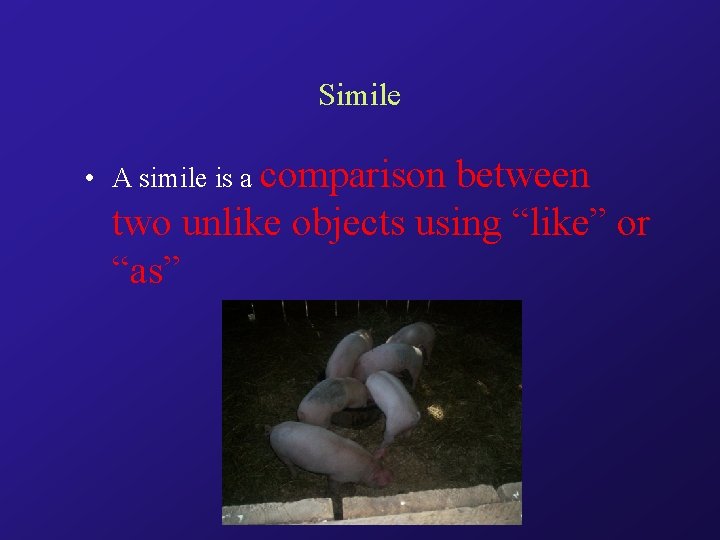
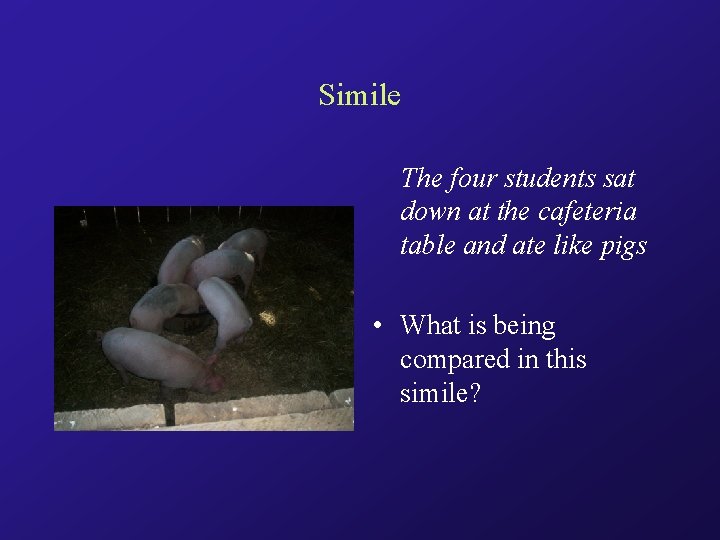
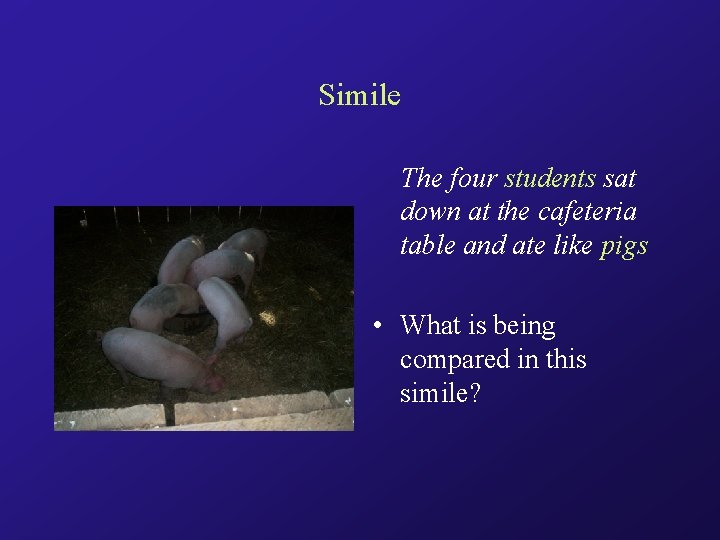
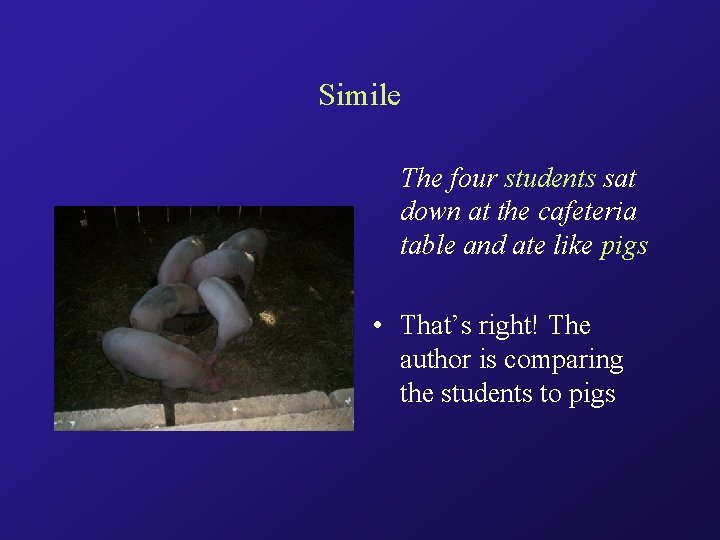
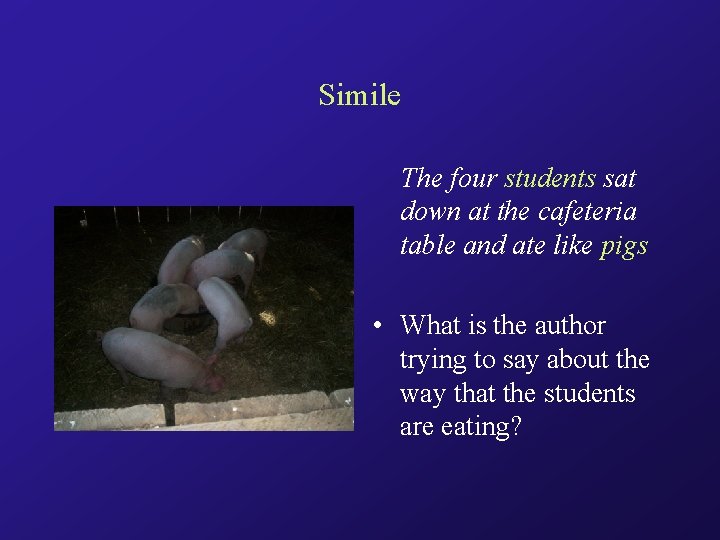
Simile The four students sat down at the cafeteria table and ate like pigs • What is being compared in this simile?
Simile The four students sat down at the cafeteria table and ate like pigs • What is being compared in this simile?
Simile The four students sat down at the cafeteria table and ate like pigs • That’s right! The author is comparing the students to pigs
Simile The four students sat down at the cafeteria table and ate like pigs • What is the author trying to say about the way that the students are eating?
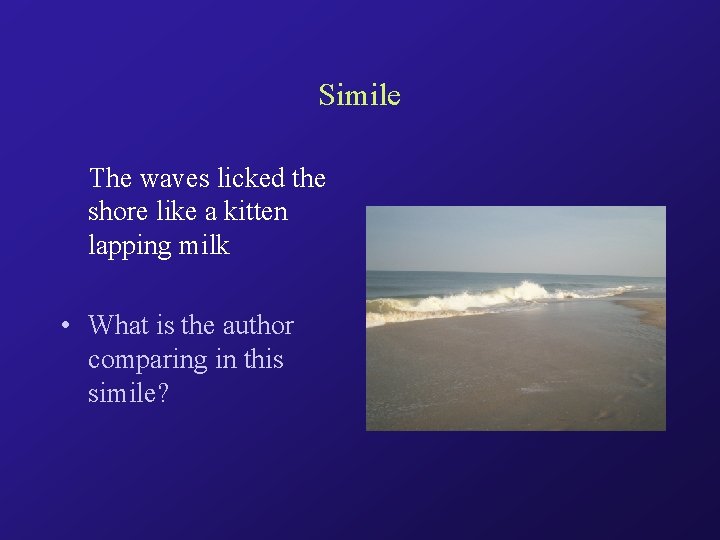
Simile The waves licked the shore like a kitten lapping milk • What is the author comparing in this simile?
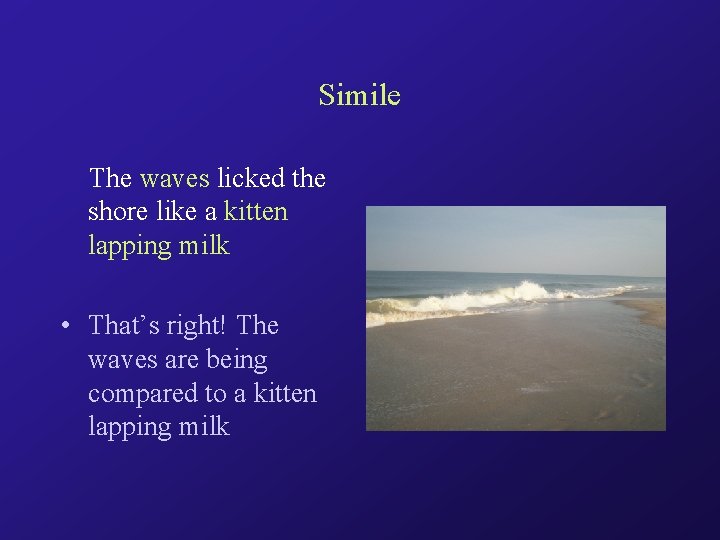
Simile The waves licked the shore like a kitten lapping milk • That’s right! The waves are being compared to a kitten lapping milk
Simile The waves licked the shore like a kitten lapping milk • What is the author trying to say about the waves—that they are rough and fierce, or small and gentle?
Let’s Review! • What is it called when an author gives human thoughts and feelings to non-human objects? • Personification • What is a comparison using “like” or “as”? • Simile
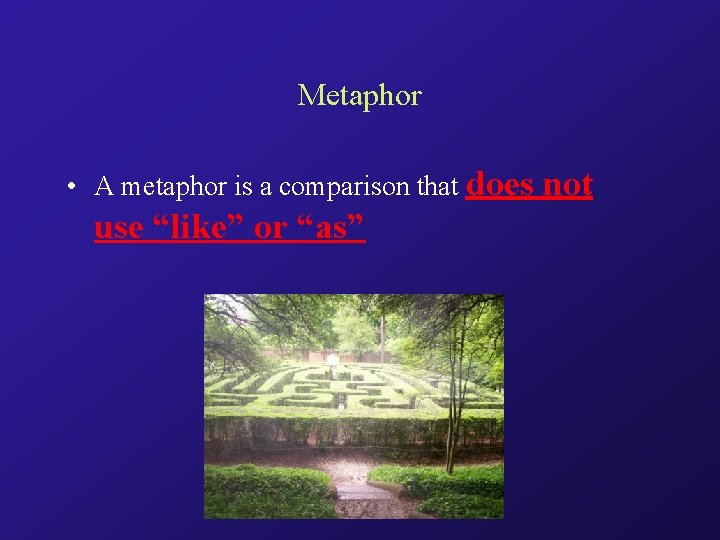
Metaphor • A metaphor is a comparison that does use “like” or “as” not
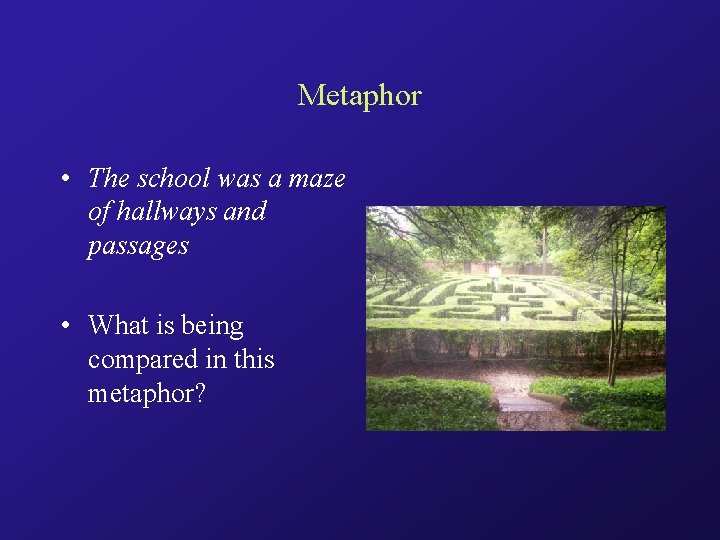
Metaphor • The school was a maze of hallways and passages • What is being compared in this metaphor?
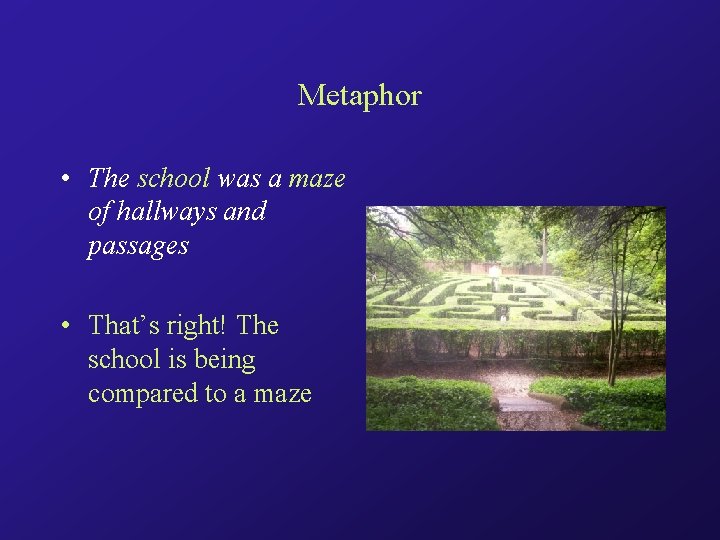
Metaphor • The school was a maze of hallways and passages • That’s right! The school is being compared to a maze
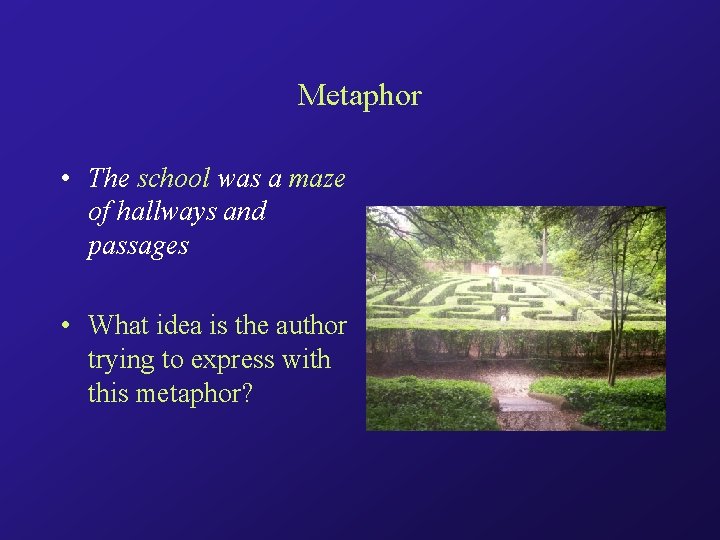
Metaphor • The school was a maze of hallways and passages • What idea is the author trying to express with this metaphor?
How can I interpret figurative language? The math test was a walk in the park • What is being compared in this metaphor?
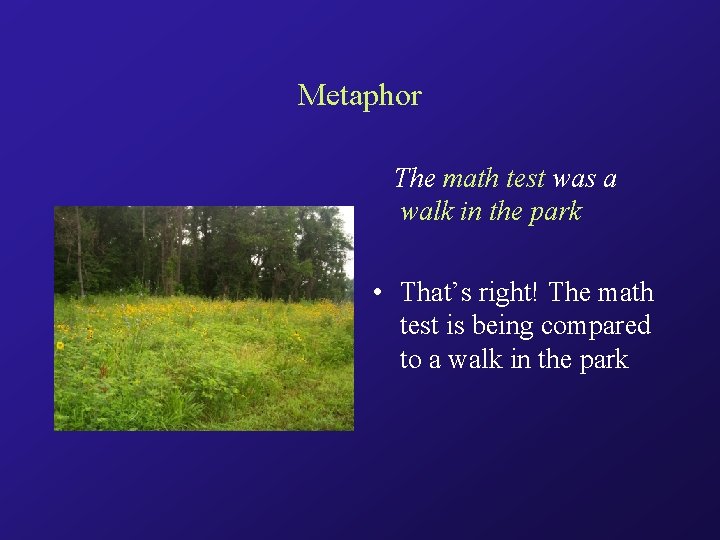
Metaphor The math test was a walk in the park • That’s right! The math test is being compared to a walk in the park
Metaphor The math test was a walk in the park • What is the author trying to tell us about the math test?
Let’s Review • Which kind of figurative language makes a comparison using “like” or “as”? • Simile • Which kind of figurative language gives human thoughts and qualities to non-human objects? • Personification
Let’s Review • Which kind of figurative language makes a comparison without using “like” or “as”? • Metaphor
Practice • Read the examples on the next few slides • Which kind of figurative language do they show? • How can you interpret the figurative language?
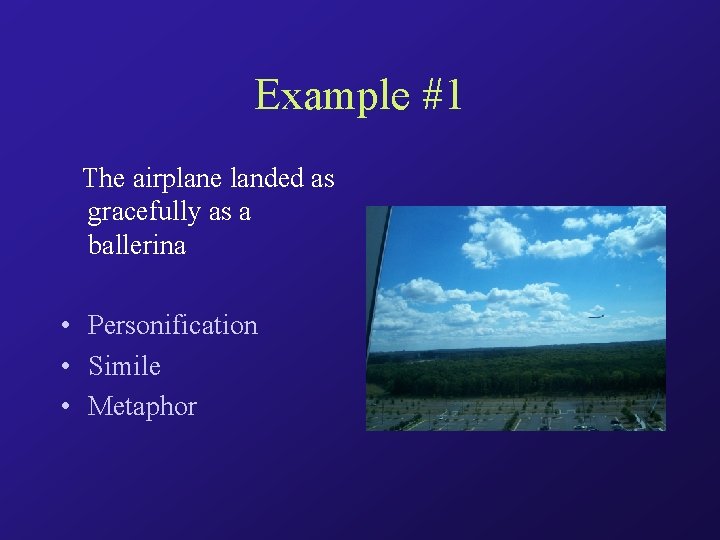
Example #1 The airplane landed as gracefully as a ballerina • Personification • Simile • Metaphor
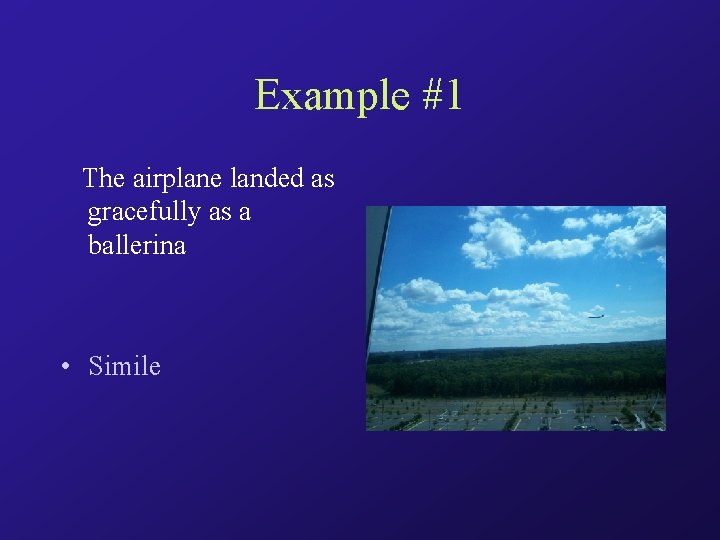
Example #1 The airplane landed as gracefully as a ballerina • Simile
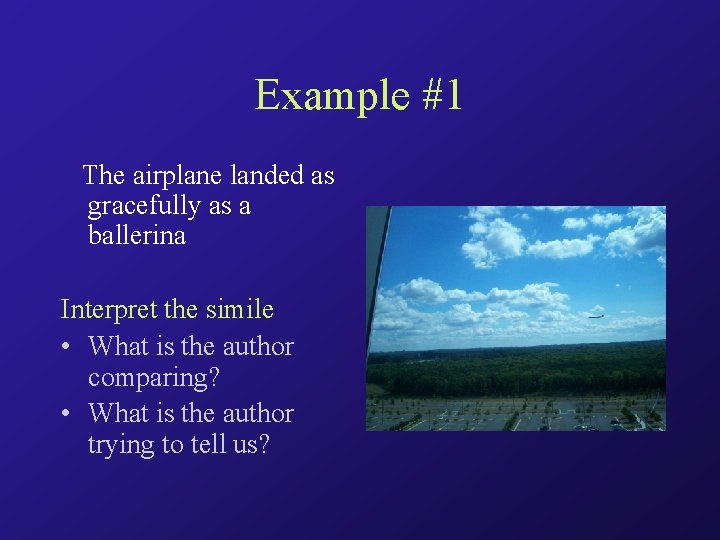
Example #1 The airplane landed as gracefully as a ballerina Interpret the simile • What is the author comparing? • What is the author trying to tell us?
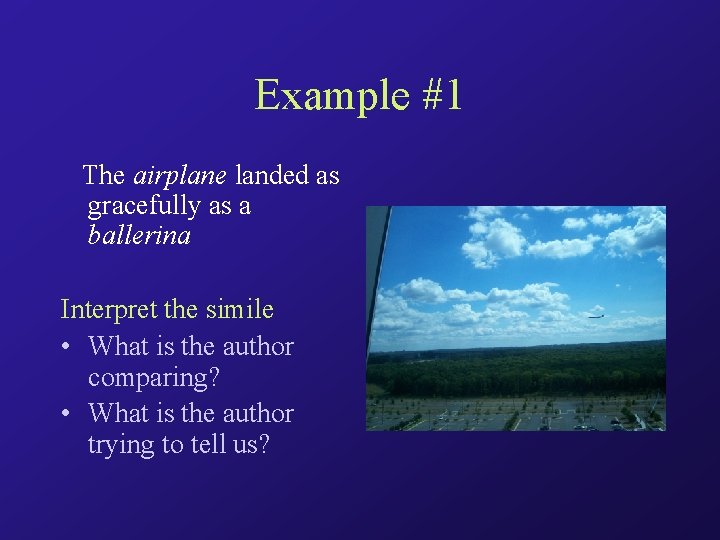
Example #1 The airplane landed as gracefully as a ballerina Interpret the simile • What is the author comparing? • What is the author trying to tell us?
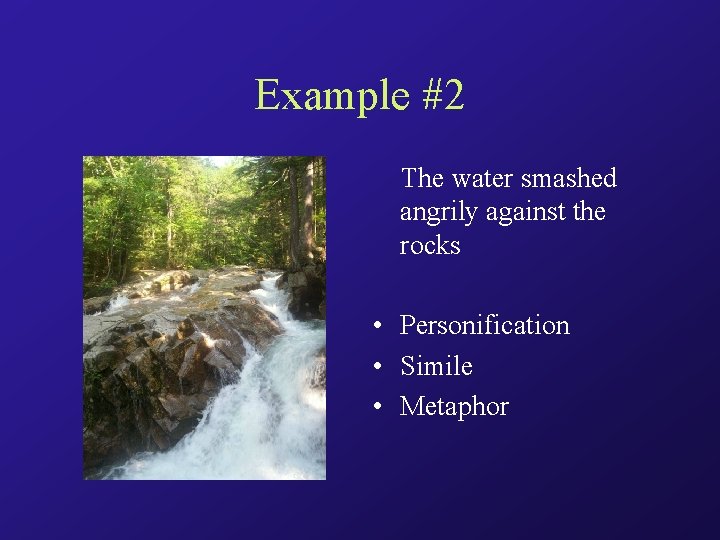
Example #2 The water smashed angrily against the rocks • Personification • Simile • Metaphor
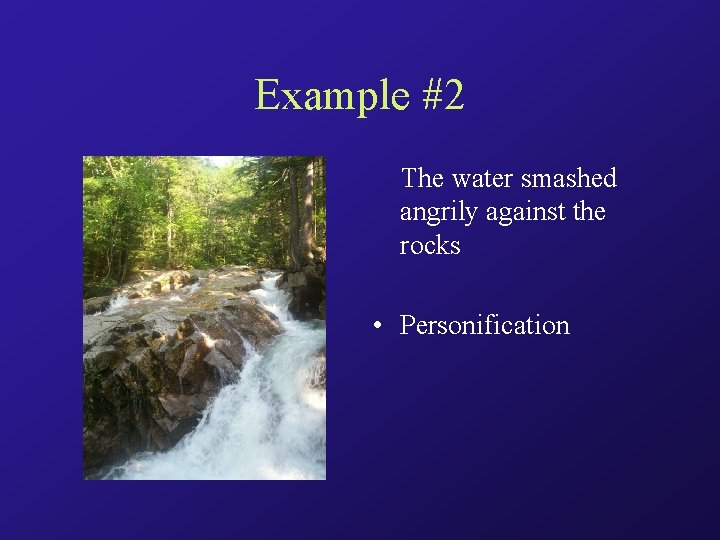
Example #2 The water smashed angrily against the rocks • Personification
Example #2 The water smashed angrily against the rocks Interpret the personification! • What is the water doing that water doesn’t really do? • What is the author trying to tell us about the water?
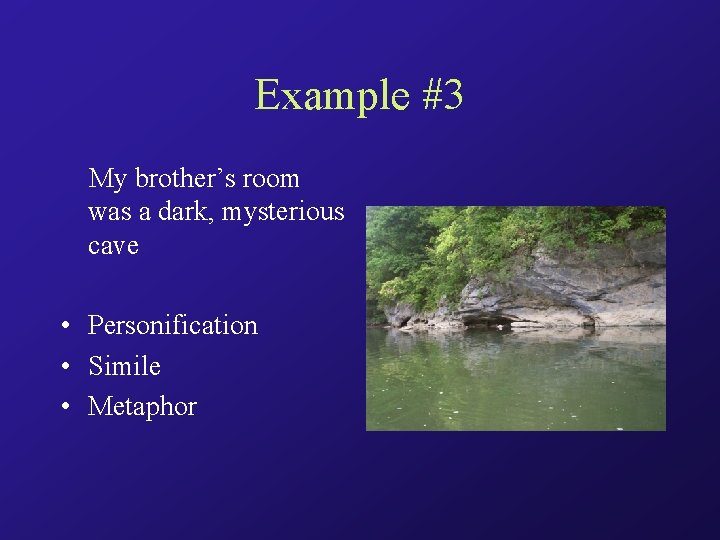
Example #3 My brother’s room was a dark, mysterious cave • Personification • Simile • Metaphor
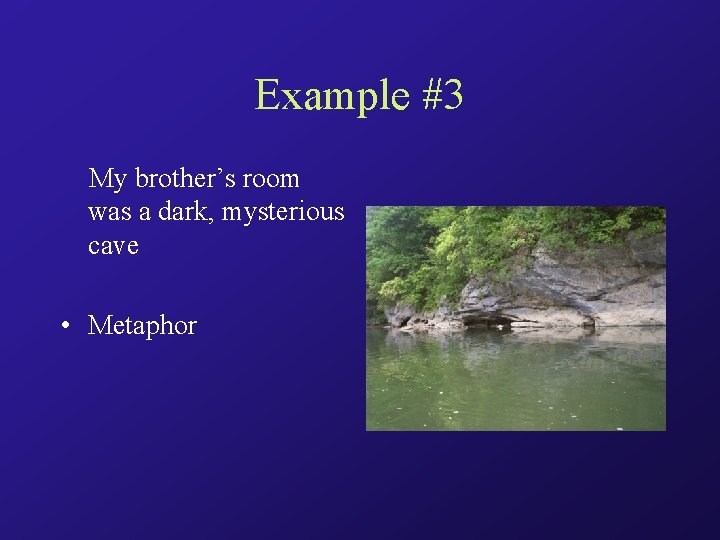
Example #3 My brother’s room was a dark, mysterious cave • Metaphor
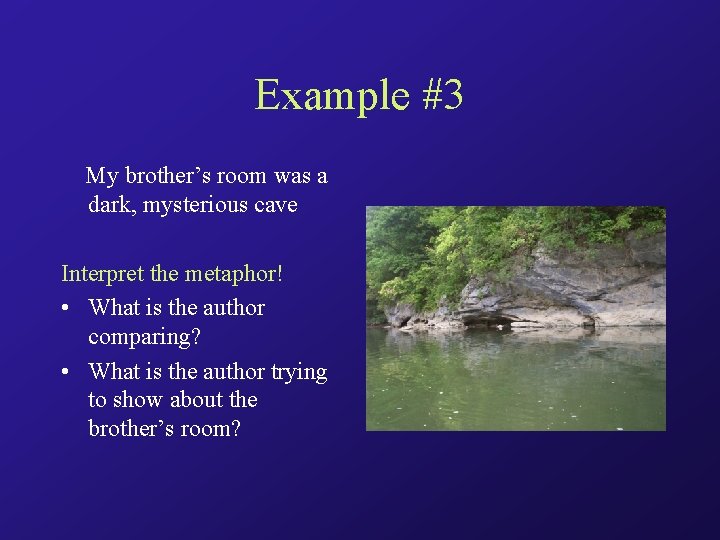
Example #3 My brother’s room was a dark, mysterious cave Interpret the metaphor! • What is the author comparing? • What is the author trying to show about the brother’s room?