
Understanding outcomes in pharmacy regulation Presented by Andy
Understanding outcomes in pharmacy regulation Presented by Andy Jaeger General Pharmaceutical Council
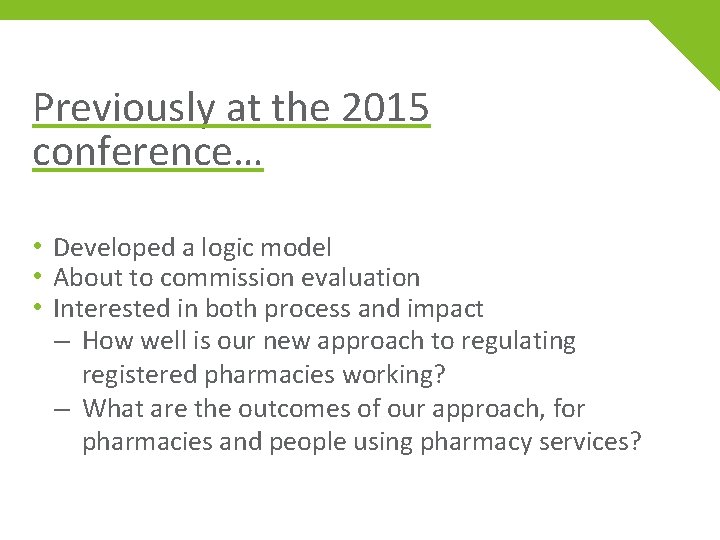
Previously at the 2015 conference… • Developed a logic model • About to commission evaluation • Interested in both process and impact – How well is our new approach to regulating registered pharmacies working? – What are the outcomes of our approach, for pharmacies and people using pharmacy services?

Key insights
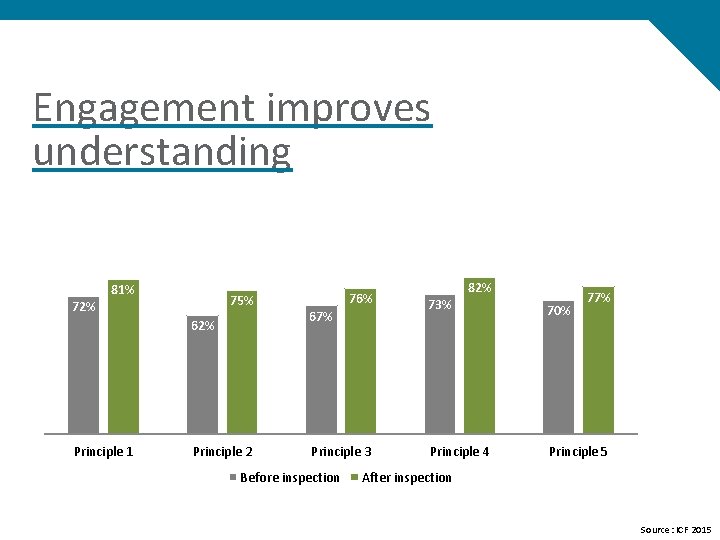
Engagement improves understanding 81% 75% 72% 62% Principle 1 Principle 2 76% 67% Principle 3 Before inspection 82% 77% 73% 70% Principle 4 Principle 5 After inspection Source: ICF 2015
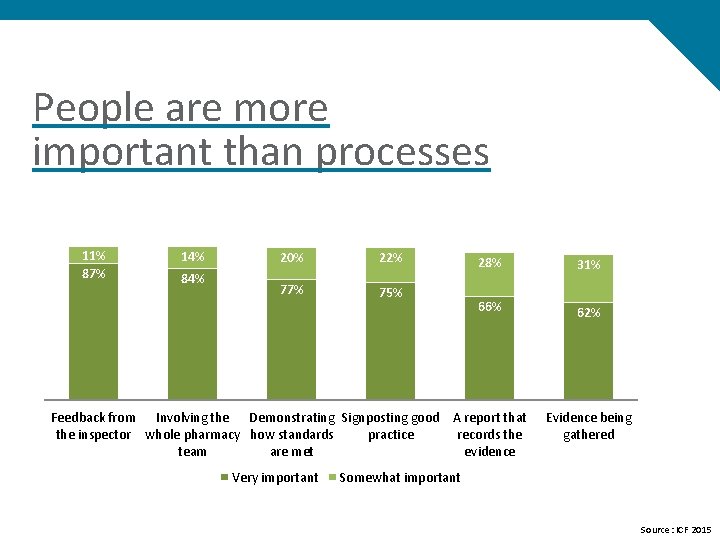
People are more important than processes 11% 87% 14% 84% 20% 22% 77% 75% 28% 31% 66% 62% Feedback from Involving the Demonstrating Signposting good A report that the inspector whole pharmacy how standards practice records the team are met evidence Very important Evidence being gathered Somewhat important Source: ICF 2015
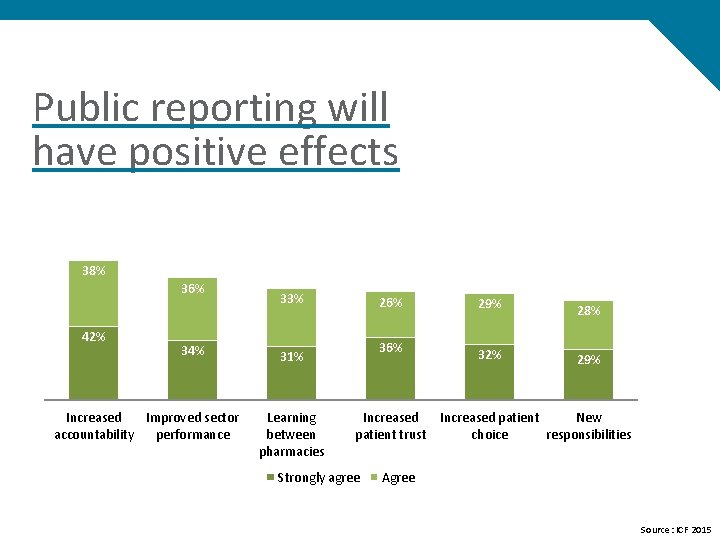
Public reporting will have positive effects 38% 36% 42% 34% Increased Improved sector accountability performance 33% 31% Learning between pharmacies 26% 29% 28% 36% 32% 29% Increased patient New patient trust choice responsibilities Strongly agree Agree Source: ICF 2015
Understanding outcomes
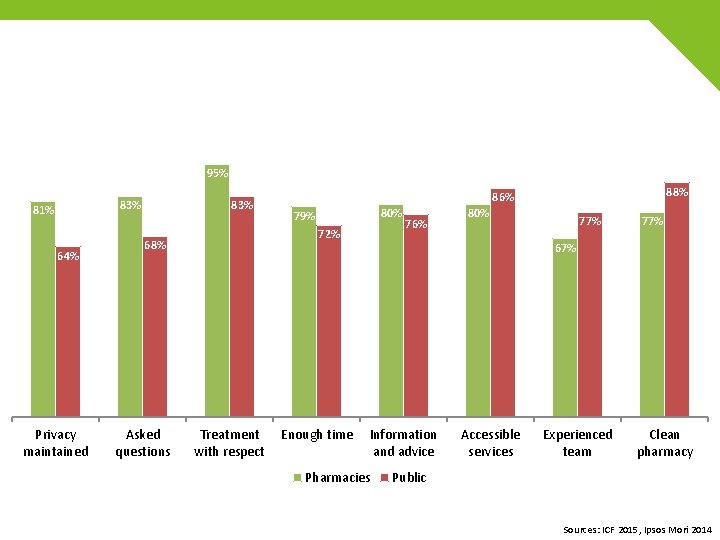
95% 83% 81% 64% Privacy maintained 83% Asked questions 80% 79% 72% 68% Treatment with respect 88% 86% Enough time 76% 80% 77% 67% Information and advice Pharmacies Accessible services Experienced team Clean pharmacy Public Sources: ICF 2015, Ipsos Mori 2014
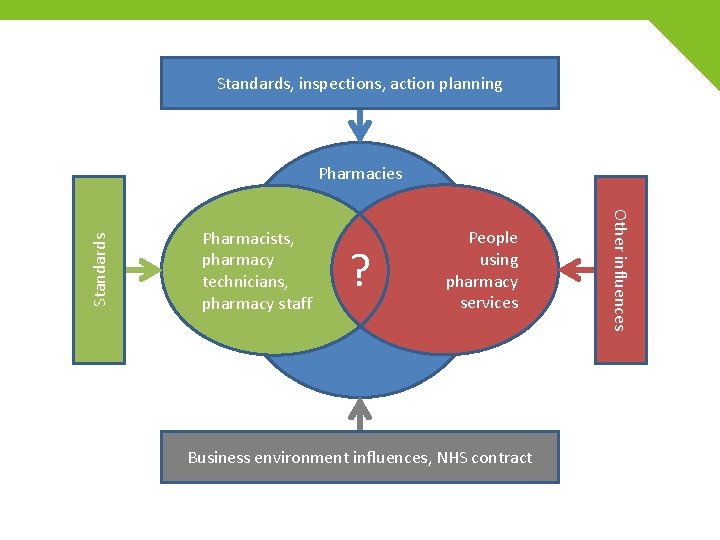
Standards, inspections, action planning Pharmacists, pharmacy technicians, pharmacy staff ? People using pharmacy services Business environment influences, NHS contract Other influences Standards Pharmacies
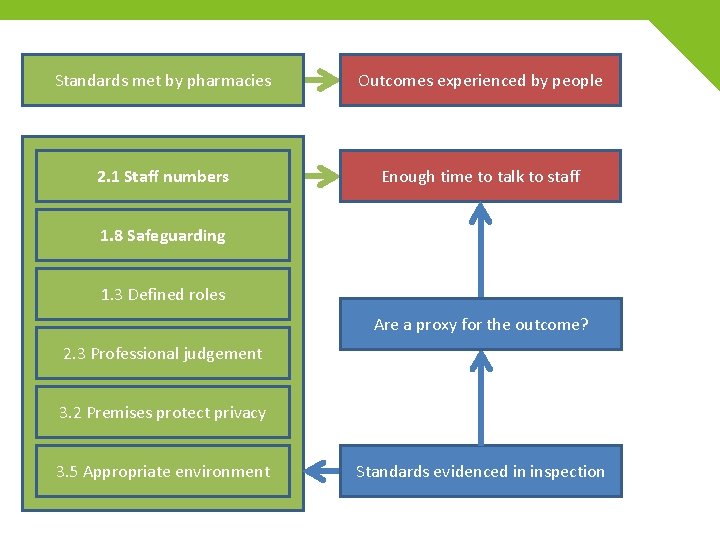
Standards met by pharmacies Outcomes experienced by people 2. 1 Staff numbers Enough time to talk to staff 1. 8 Safeguarding 1. 3 Defined roles Are a proxy for the outcome? 2. 3 Professional judgement 3. 2 Premises protect privacy 3. 5 Appropriate environment Standards evidenced in inspection
‘ All models are wrong but some are useful - George E P Box
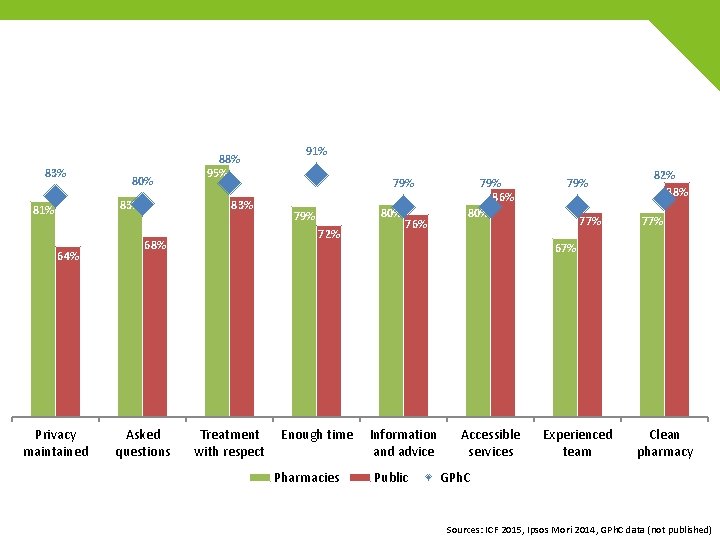
83% 80% 83% 81% 64% Privacy maintained 88% 95% 83% 79% 80% 79% 72% 68% Asked questions 91% Treatment with respect Enough time Pharmacies 76% 79% 86% 80% 79% 77% 82% 88% 77% 67% Information and advice Public Accessible services Experienced team Clean pharmacy GPh. C Sources: ICF 2015, Ipsos Mori 2014, GPh. C data (not published)
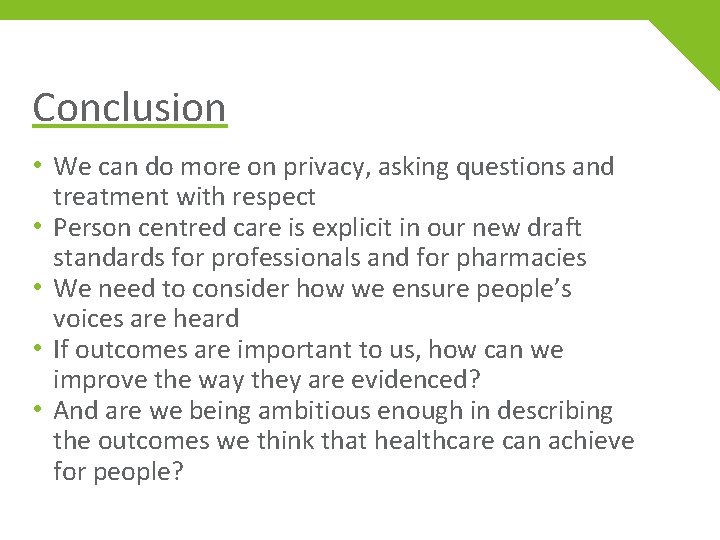
Conclusion • We can do more on privacy, asking questions and • • treatment with respect Person centred care is explicit in our new draft standards for professionals and for pharmacies We need to consider how we ensure people’s voices are heard If outcomes are important to us, how can we improve the way they are evidenced? And are we being ambitious enough in describing the outcomes we think that healthcare can achieve for people?
email andy. jaeger@pharmacyregulation. org web pharmacyregulation. org twitter @The. GPh. C facebook. com/The GPh. C linkedin. com/company/general-pharmaceutical-council References ICF Consulting Services, 2015. Evaluating the GPh. C's approach to regulating community pharmacies: Final Report to the General Pharmaceutical Council. Ipsos Mori, 2014. Public perceptions of pharmacies.
- Slides: 14