
Understanding our history Pete Ritchie Who do you


- Slides: 14
Understanding our history Pete Ritchie
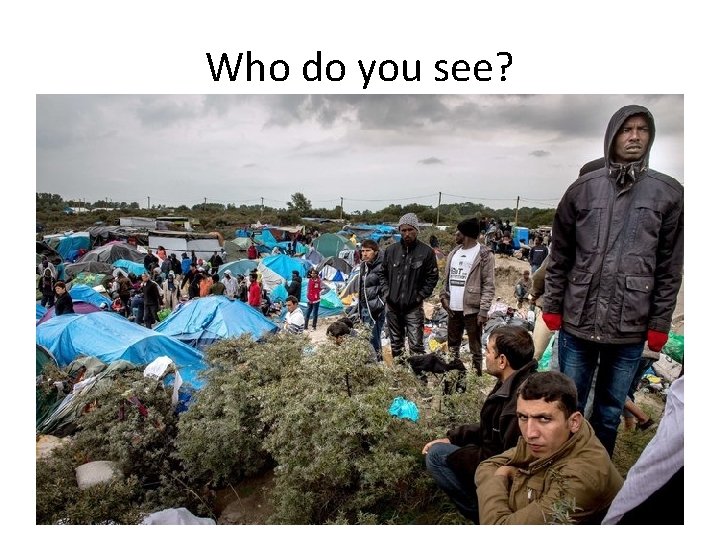
Who do you see?
If we see people as. . • Refugees • Migrants looking for work • Terrorists Then how should we treat them?
Who has the power to say Who is ‘us’ and Who is ‘them’ Who is equal and Who is not Who is in and Who is out
The power to define The history of the disabled people’s movement (and the womens movement and the LGBTI movement and the civil rights movement) is the history of a struggle to claim that ‘power to define’
Rights, not charity • • The right to life, the right to vote, the right to education, The right to accessible housing, transport, public spaces, employment The right to decent living conditions, to freedom from violence, to flexible services, and not to be insulted Follow on from this
The big picture
Early modern Europe 1500 Reformation Population growth Growth of the state and cities Industrial scale wars, famines, fires Shift from private charity/monastic responses to disability and infirmity to state responses to poverty Poor law 1572 (1574 in Scotland): punish the idle, provide for the deserving poor
19 th century • First dedicated school – Hope Park Square • A wave of reform: horrific conditions exposed in private ‘trade in lunacy’ institutions: a statewide system of non-profit institutions proposed • Optimism …. The penny rate for Royal Scottish National Hospital • Institution building in periurban areas: focus on work, education and self-sufficiency • National league of the blind trade union 1890 s
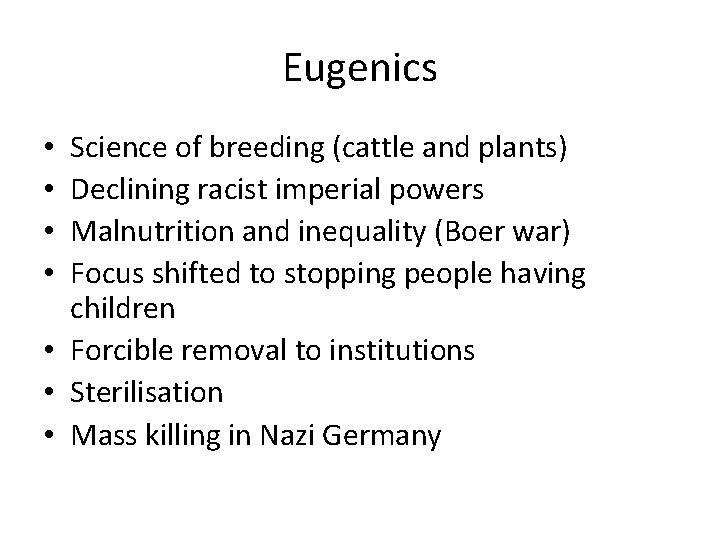
Eugenics Science of breeding (cattle and plants) Declining racist imperial powers Malnutrition and inequality (Boer war) Focus shifted to stopping people having children • Forcible removal to institutions • Sterilisation • Mass killing in Nazi Germany • •
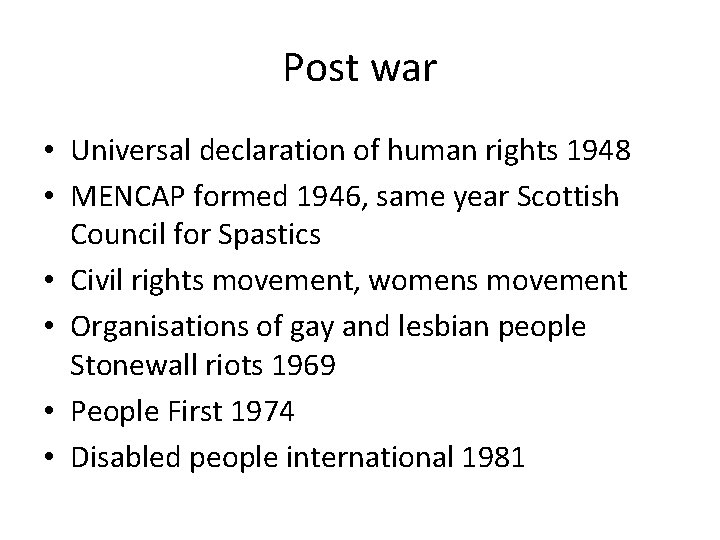
Post war • Universal declaration of human rights 1948 • MENCAP formed 1946, same year Scottish Council for Spastics • Civil rights movement, womens movement • Organisations of gay and lesbian people Stonewall riots 1969 • People First 1974 • Disabled people international 1981
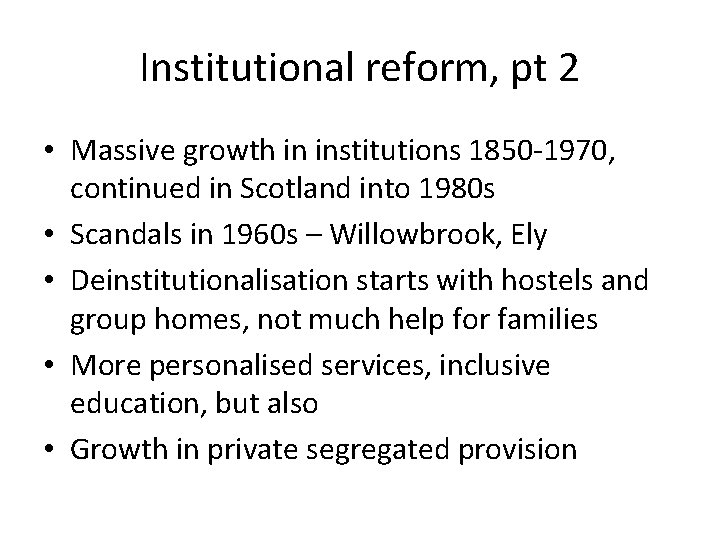
Institutional reform, pt 2 • Massive growth in institutions 1850 -1970, continued in Scotland into 1980 s • Scandals in 1960 s – Willowbrook, Ely • Deinstitutionalisation starts with hostels and group homes, not much help for families • More personalised services, inclusive education, but also • Growth in private segregated provision
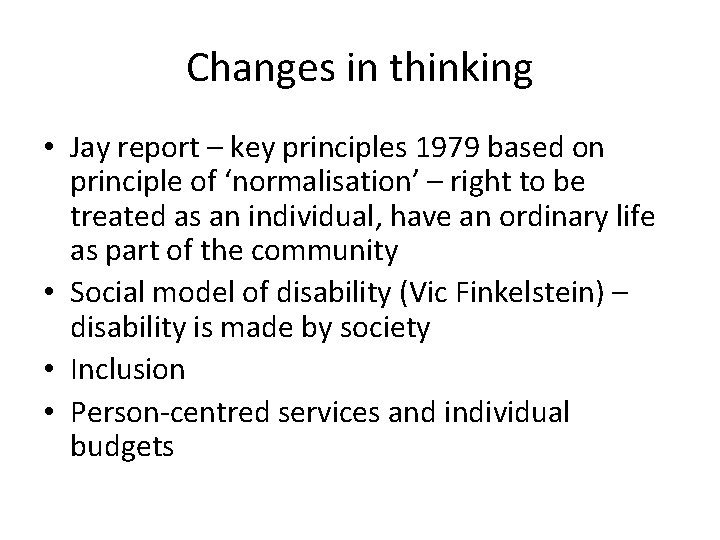
Changes in thinking • Jay report – key principles 1979 based on principle of ‘normalisation’ – right to be treated as an individual, have an ordinary life as part of the community • Social model of disability (Vic Finkelstein) – disability is made by society • Inclusion • Person-centred services and individual budgets