
Understanding Organic Compounds Research Biology Objective What are
Understanding Organic Compounds Research Biology
Objective • What are the functions of each group of organic compounds?
Interest Grabber Section 2 -3 Life’s backbone • Most of the compounds that make up living things contain carbon. In fact, carbon makes up the basic structure, or “backbone, ” of these compounds. Each atom of carbon has four electrons in its outer energy level, which makes it possible for each carbon atom to form four bonds with other atoms. • As a result, carbon atoms can form long chains. A huge number of different carbon compounds exist. Each compound has a different structure. For example, carbon chains can be straight or branching. Also, other kinds of atoms can be attached to the carbon chain.
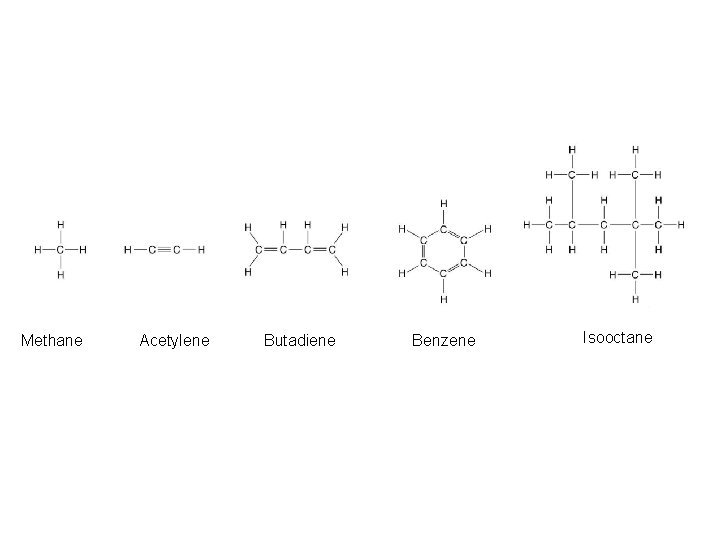
Methane Acetylene Butadiene Benzene Isooctane
Macromolecules “giant molecules” • Formed by a process called polymerization
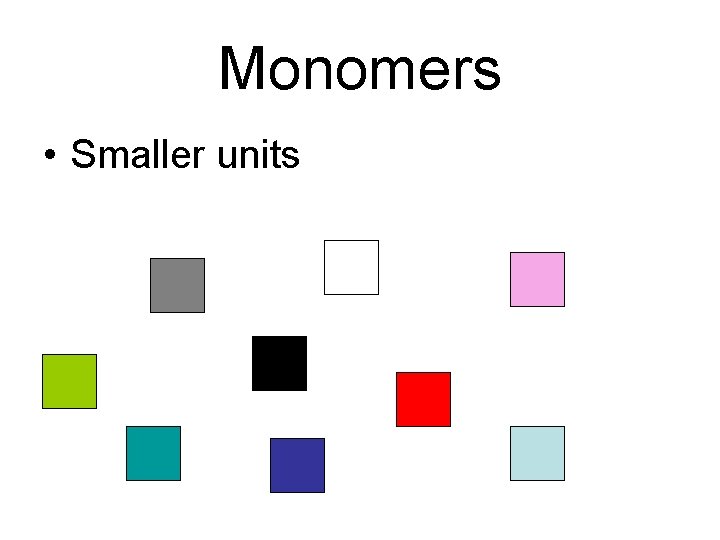
Monomers • Smaller units
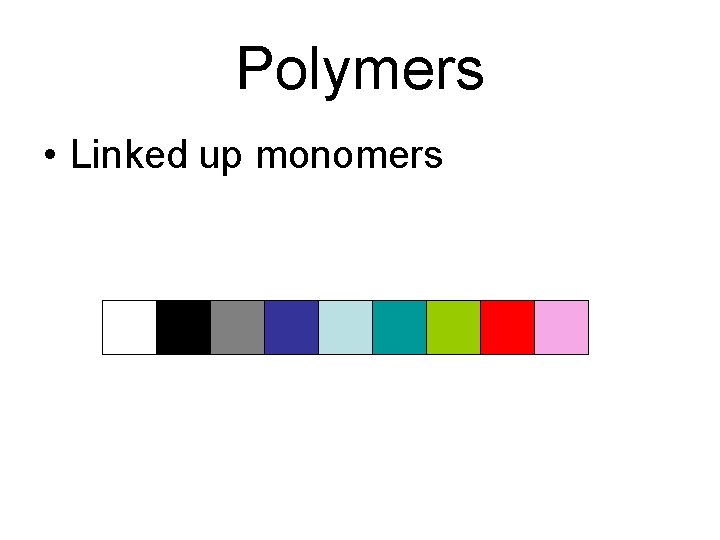
Polymers • Linked up monomers
Carbohydrates • Compounds made up of carbon, hydrogen, and oxygen atoms usually in a ratio of 1: 2: 1 • Main source of energy • The monomers of starch are sugars
• Single sugar molecules are called monosaccharides • The large macromolecules formed from monosaccharides are known as polysaccharides

Starch Glucose
Lipids • Made mostly from carbon and hydrogen atoms • Used to store energy
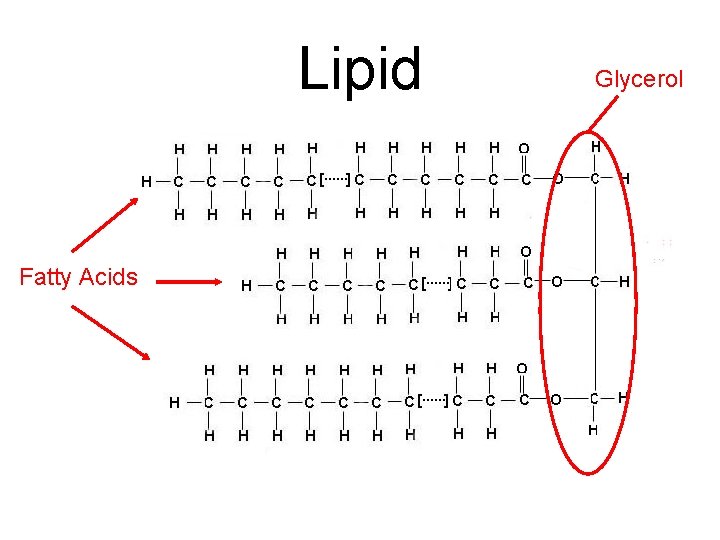
Lipid Fatty Acids Glycerol
Proteins • Macromolecules that contain nitrogen as well as carbon, hydrogen, and oxygen • Proteins are polymers of molecules called amino acids
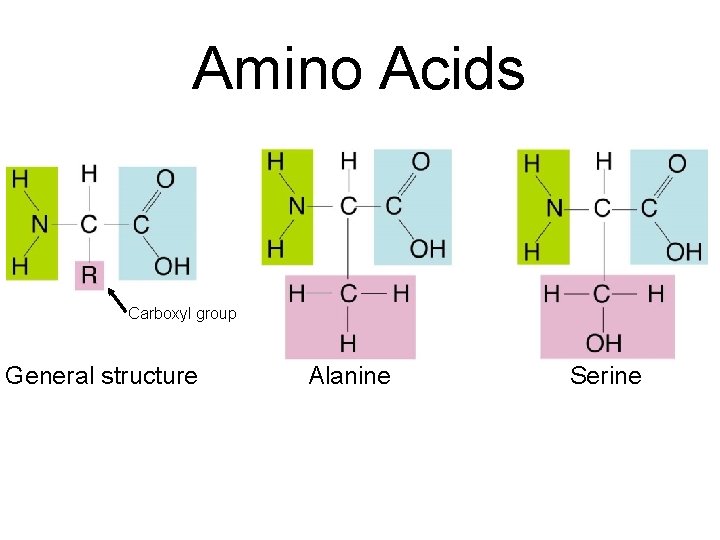
Amino Acids Carboxyl group General structure Alanine Serine
• More than 20 different amino acids, can join to any other amino acid • The instructions for arranging amino acids into many different proteins are stored in DNA • Each protein has a specific role • The shape of proteins can be very important

Proteins Amino Acids
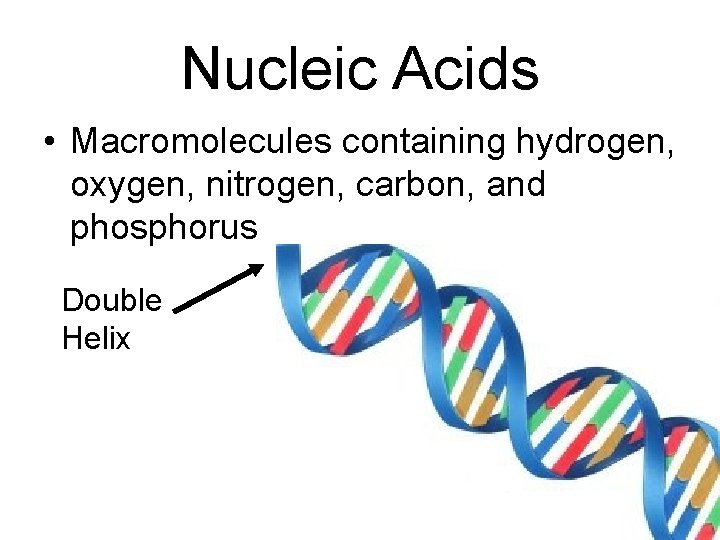
Nucleic Acids • Macromolecules containing hydrogen, oxygen, nitrogen, carbon, and phosphorus Double Helix
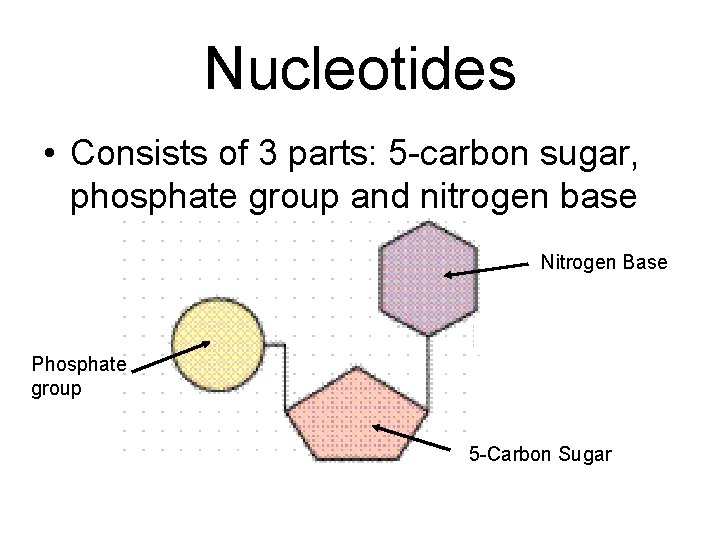
Nucleotides • Consists of 3 parts: 5 -carbon sugar, phosphate group and nitrogen base Nitrogen Base Phosphate group 5 -Carbon Sugar
2 kinds of nucleic acids • RNA (ribonucleic acids) – contains sugar ribose • DNA (deoxyribonucleic acid) – contains sugar deoxyribose
Organic Compound Review Questions
1. Name four groups of organic compounds found in living things carbohydrate, lipid, protein, nucleic acids 2. Describe at least one function of each group of organic compounds carbohydrates – energy lipids – store energy proteins – form tissue nucleic acids – transmit hereditary information
3. Compare the structures and functions of lipids and starches Lipids are made from carbon and hydrogen. Starches are made of carbon, hydrogen and oxygen. They both can be used to store energy
Understanding Enzymes Notes
Objectives • What happens to chemical bonds during chemical reactions? • How do energy changes affect whether a chemical reaction will occur? • Why are enzymes important to living things?
The Big Idea • Living things are made up of chemical compounds • Everything that happens to an organism is based on chemical reactions
Chemical Reactions • A process that changes or transforms one set of chemicals into another
Reactants • Elements or compounds that enter into a reaction
Products • Elements or compounds produced by a chemical reaction
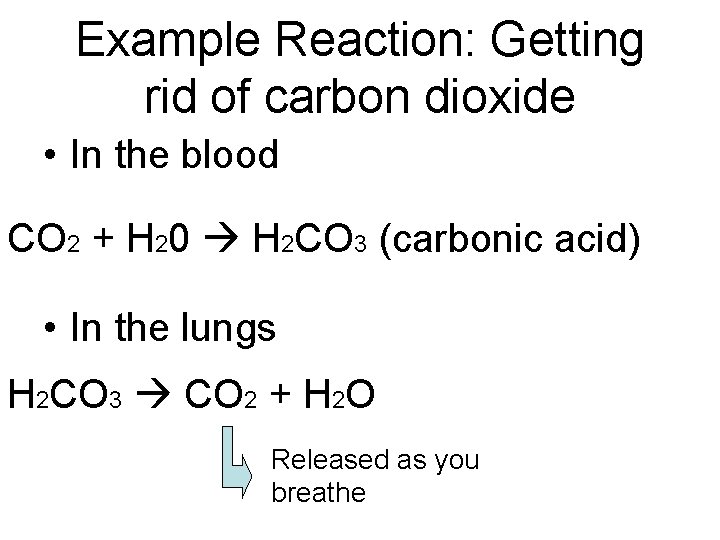
Example Reaction: Getting rid of carbon dioxide • In the blood CO 2 + H 20 H 2 CO 3 (carbonic acid) • In the lungs H 2 CO 3 CO 2 + H 2 O Released as you breathe
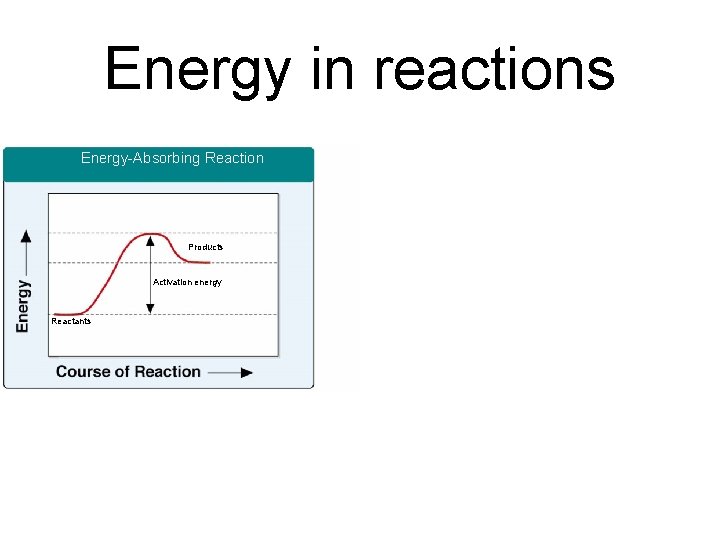
Energy in reactions Energy-Absorbing Reaction Energy-Releasing Reaction Activation energy Products Activation energy Reactants Products
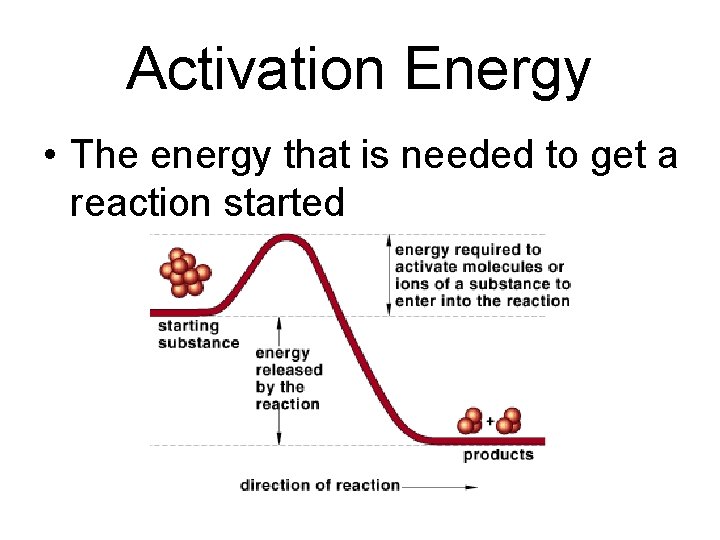
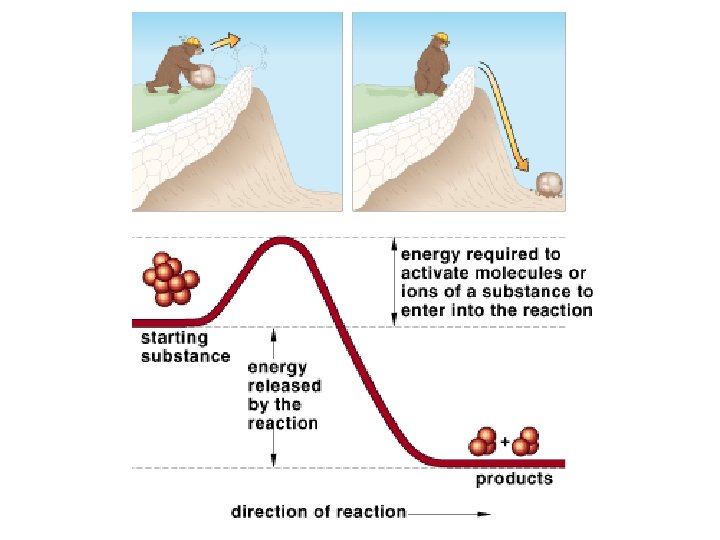
Activation Energy • The energy that is needed to get a reaction started
Enzymes • Some chemical reactions are too slow or have activation energies that are too high to make them practical for living tissue • These chemical reactions are made possible by catalysts
Catalyst • Substance that speeds up the rate of chemical reactions • Work by lowering a reactions activation energy
Enzyme • • • Biological catalysts Speed up reactions in cells Very specific Named for the reaction is catylzes Enzyme names always end in ase
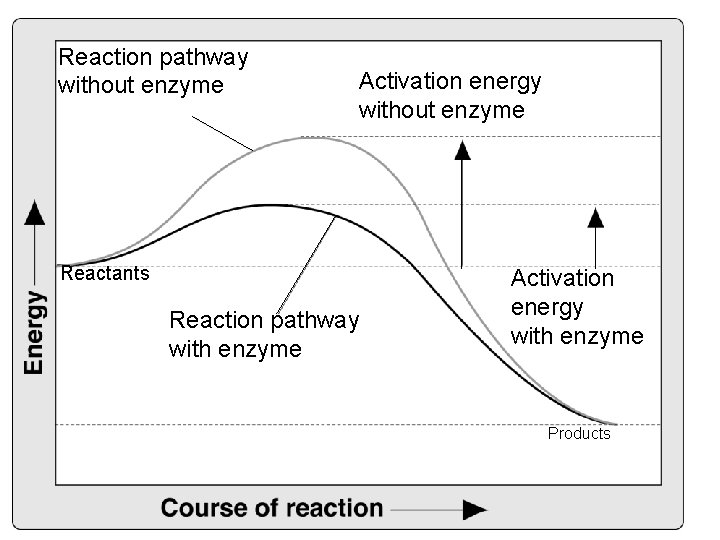
Reaction pathway without enzyme Activation energy without enzyme Reactants Reaction pathway with enzyme Activation energy with enzyme Products
Substrates • The reactants of enzyme catalyzed reactions • The active site of the enzyme and the substrate have complementary shapes • Fit like a lock and key
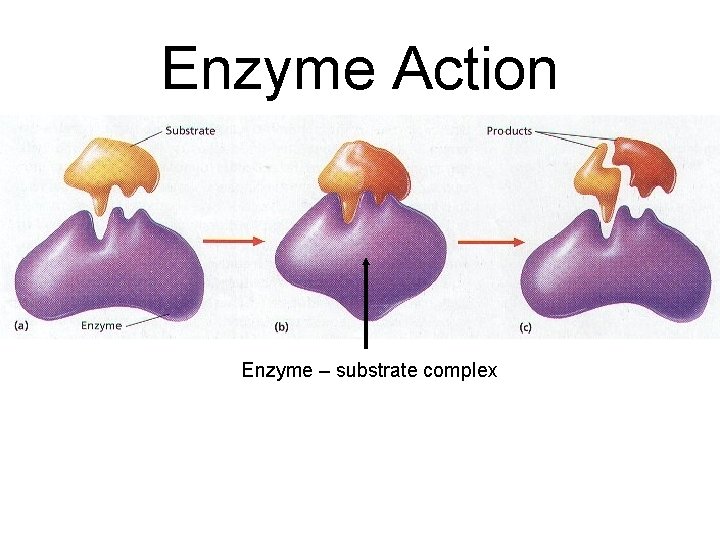
Enzyme Action Enzyme – substrate complex
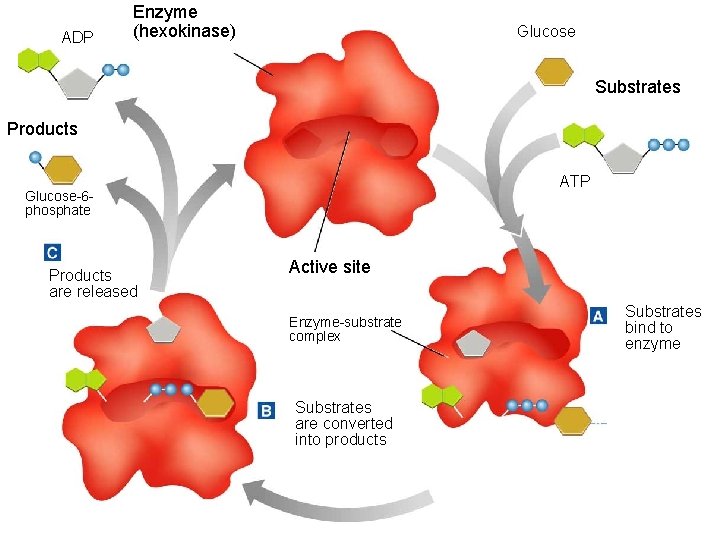
ADP Enzyme (hexokinase) Glucose Substrates Products ATP Glucose-6 phosphate Products are released Active site Enzyme-substrate complex Substrates are converted into products Substrates bind to enzyme
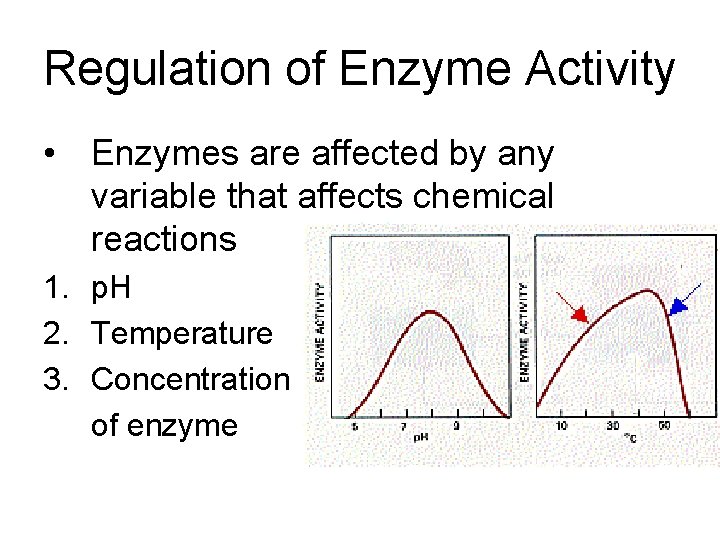
Regulation of Enzyme Activity • Enzymes are affected by any variable that affects chemical reactions 1. p. H 2. Temperature 3. Concentration of enzyme
Understanding Enzymes Review Questions
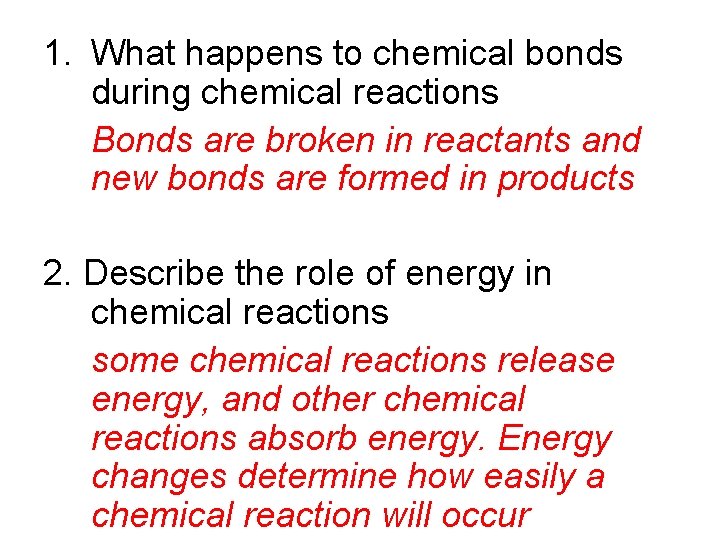
1. What happens to chemical bonds during chemical reactions Bonds are broken in reactants and new bonds are formed in products 2. Describe the role of energy in chemical reactions some chemical reactions release energy, and other chemical reactions absorb energy. Energy changes determine how easily a chemical reaction will occur
3. What are enzymes, and how are they important to living things? Enzymes are biological catylasts. Cells use enzymes to speed up virtually every important chemical reaction that takes place in cells
4. Describe how enzymes work, including the role of the enzyme substrate complex Substrates, the reactants of an enzyme-catylzed reaction, attach to the enzyme at an active site and form an enzyme – substrate complex. Once the complex is formed, the enzyme helps convert substrate into product
5. A change in p. H can change the protein. How might a change in p. H affect the function of an enzyme such as hexokinase (hint: think about the analogy of the lock and key) A change in p. H could change the shape of hexokinase. This change would diminish the ability of glucose and ATP to bind to the active site of the enzyme.
- Slides: 45