
Understanding Marketing Management MKT 600 Anna Zarkada BSc
Understanding Marketing Management (MKT 600) Anna Zarkada BSc (AUEB), MSc (UMIST), Ph. D (QUT) Assistant Professor Department of Business Administration Athens University of Economics and Business email: azarkada@aueb. gr
Learning Objectives - I Knowledge and Understanding concepts, paradigms and processes of marketing strategic marketing theories, models and concepts organisation-wide nature of marketing strategic marketing planning process and techniques in the context of globalisation information technology. trends
Learning Objectives - II Cognitive and Intellectual skills Think critically Gather, analyse and utilize research and marketing information Practical/Professional Skills Research, interpret and evaluate current marketing theories and apply in an organisational setting Be aware of the importance of marketing in creating customer and shareholder value Be aware of how exogenous factors influence marketing strategy Key Transferable Skills Operate effectively when critically evaluating knowledge and applying it to marketing issues Demonstrate the ability to influence key decision-makers Apply marketing theory in an organisational setting
Methods for achieving objectives individual responsibilities study of theory examination of business practice participation in learning tasks group processes exchange of opinions sharing of experiences necessary attitudes creativity curiosity willingness to communicate
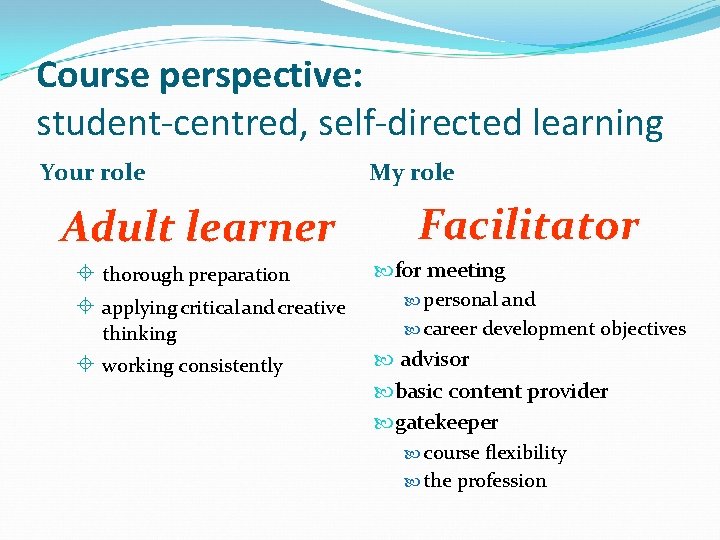
Course perspective: student-centred, self-directed learning Your role Adult learner My role Facilitator for meeting ± thorough preparation personal and ± applying critical and creative thinking ± working consistently career development objectives advisor basic content provider gatekeeper course flexibility the profession
Defining Marketing st for the 21 Century
Key Questions Why is marketing important? What is the scope of marketing? What are some fundamental marketing concepts? How is marketing management changing?
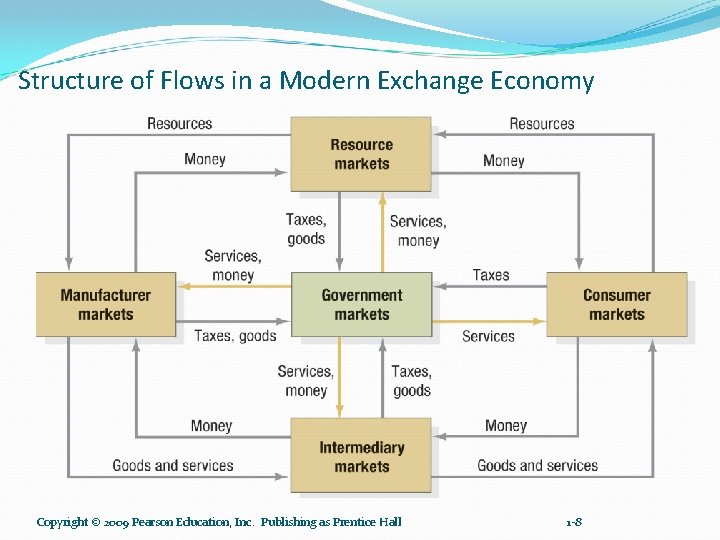
Structure of Flows in a Modern Exchange Economy Copyright © 2009 Pearson Education, Inc. Publishing as Prentice Hall 1 -8
Exchange is the focus Exchanges are carried out by business firms, and also by non business organisations and even individuals. Four conditions must exist for an exchange to be able to occur: Two or more people or organisations must be involved The parties must be involved voluntarily Each party must have something of value to exchange, and the parties must believe they will each benefit from the exchange The parties must communicate with each other
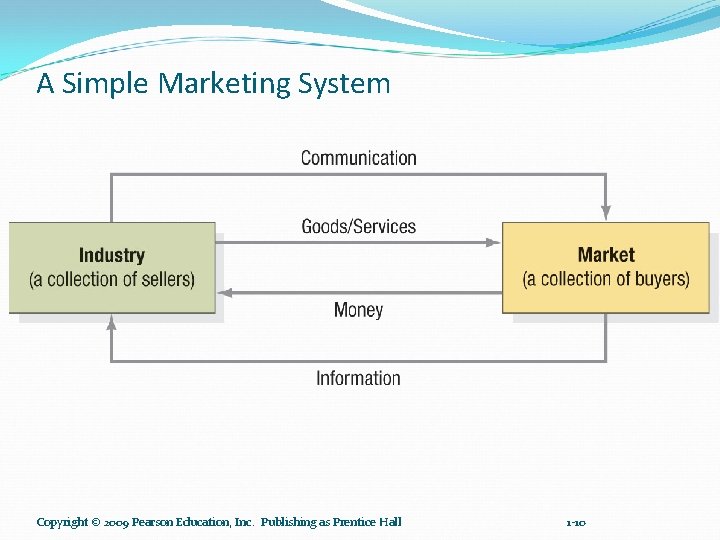
A Simple Marketing System Copyright © 2009 Pearson Education, Inc. Publishing as Prentice Hall 1 -10
What is Marketing? Marketing is an • organizational function and • a set of processes for • creating, • communicating, and • delivering value to customers and • for managing customer relationships • in ways that benefit • the organization and • its stakeholders. Copyright © 2009 Pearson Education, Inc. Publishing as Prentice Hall 1 -11
What is Marketing Management? Marketing management is the art and science • of choosing target markets and • getting, • keeping, and • growing • customers through • creating, • delivering, and • communicating superior customer value. Copyright © 2009 Pearson Education, Inc. Publishing as Prentice Hall 1 -12
Key constructs
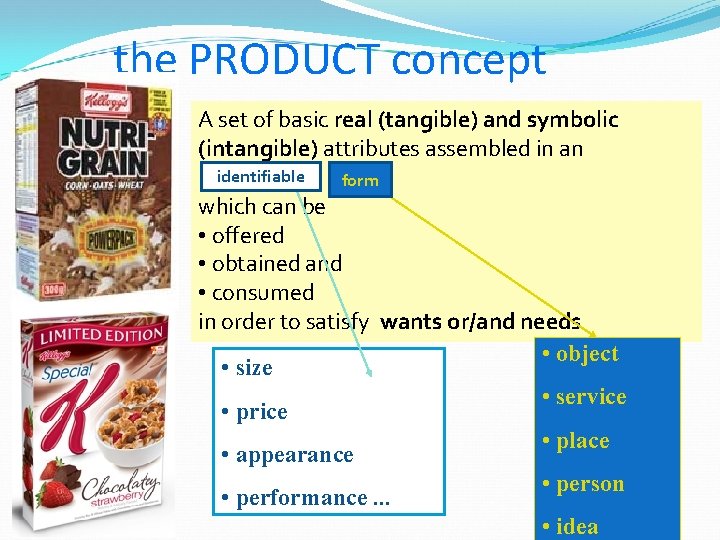
the PRODUCT concept A set of basic real (tangible) and symbolic (intangible) attributes assembled in an identifiable 14 form which can be • offered • obtained and • consumed in order to satisfy wants or/and needs • object • size • service • price • place • appearance • person • performance. . . • idea
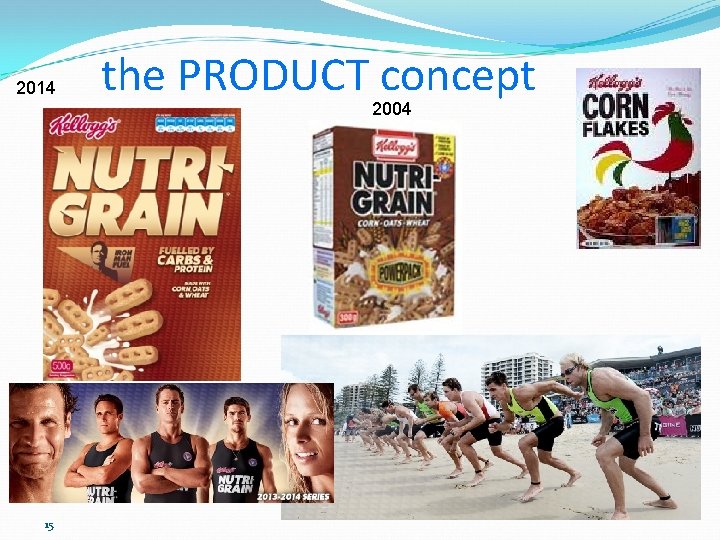
2014 the PRODUCT concept 2004 15
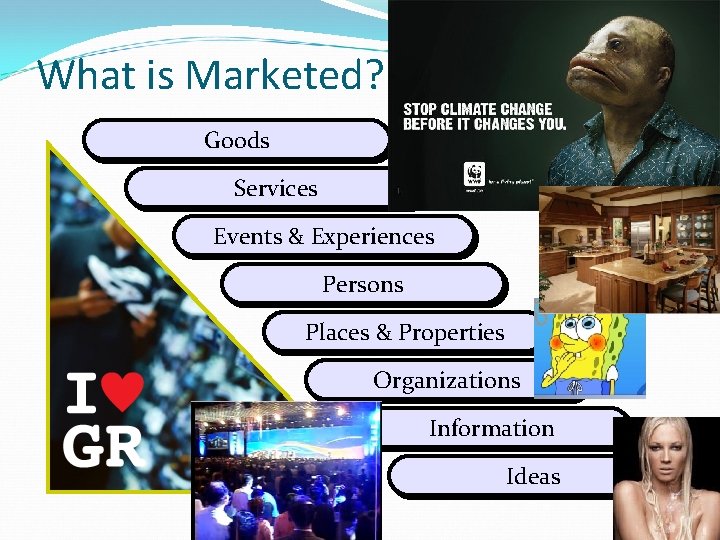
What is Marketed? Goods Services Events & Experiences Persons Places & Properties Organizations Information Ideas
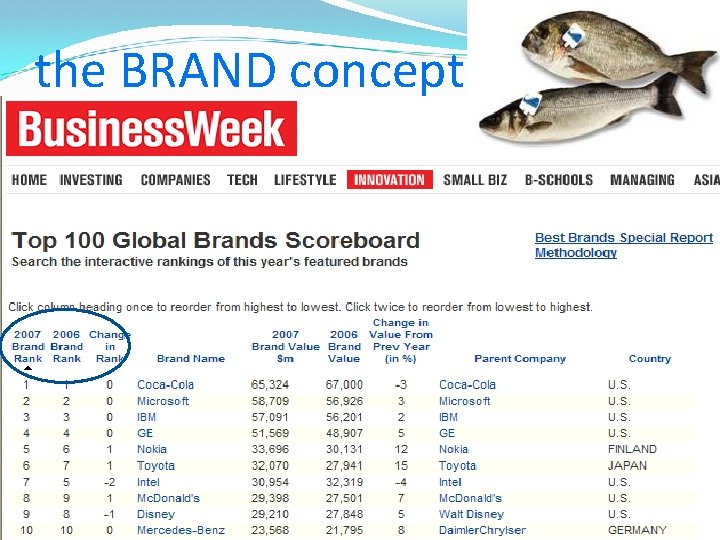
the BRAND concept
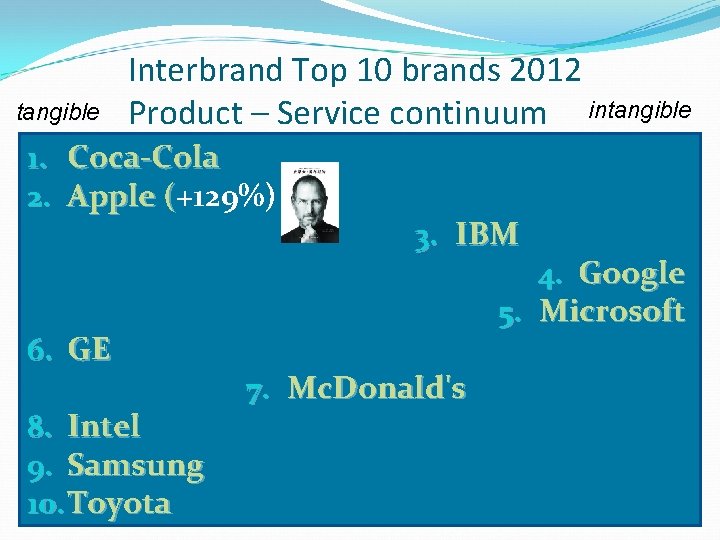
tangible Interbrand Top 10 brands 2012 Product – Service continuum intangible 1. Coca-Cola 2. Apple (+129%) Apple ( 6. GE GE 8. Intel 9. Samsung 10. Toyota 3. IBM 4. Google 5. Microsoft 7. Mc. Donald's
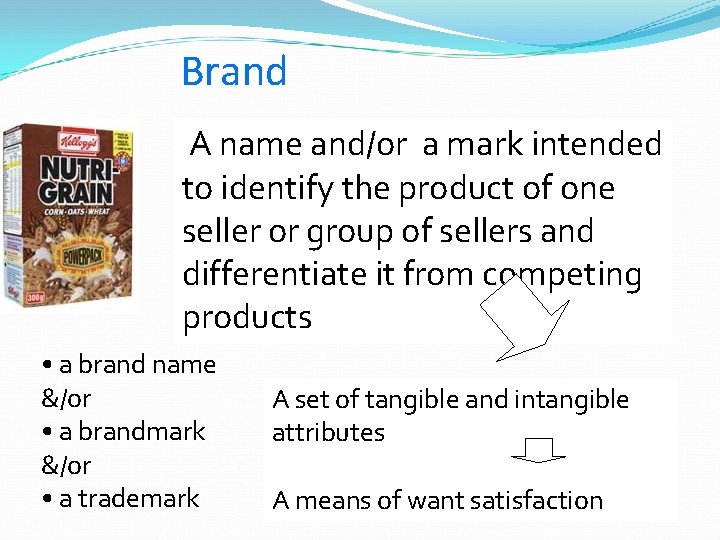
Brand A name and/or a mark intended to identify the product of one seller or group of sellers and differentiate it from competing products • a brand name &/or • a brandmark &/or • a trademark A set of tangible and intangible attributes A means of want satisfaction
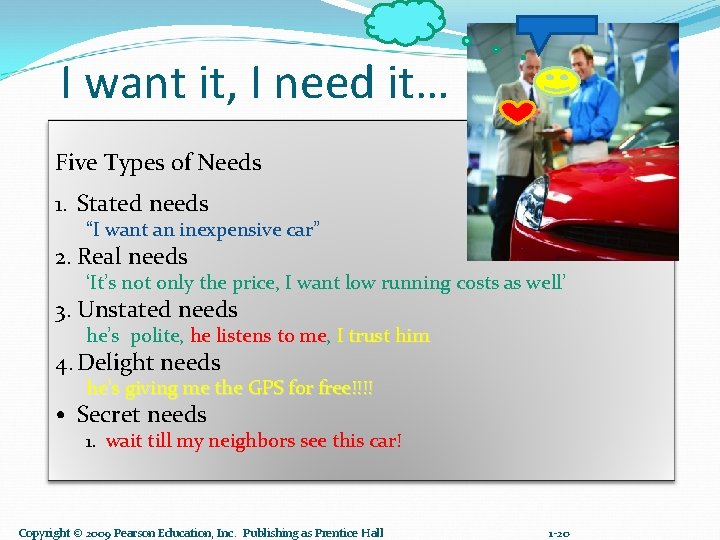
I want it, I need it… Five Types of Needs 1. Stated needs “I want an inexpensive car” 2. Real needs ‘It’s not only the price, I want low running costs as well’ 3. Unstated needs he’s polite, he listens to me, I trust him 4. Delight needs he’s giving me the GPS for free!!!! • Secret needs 1. wait till my neighbors see this car! Copyright © 2009 Pearson Education, Inc. Publishing as Prentice Hall 1 -20
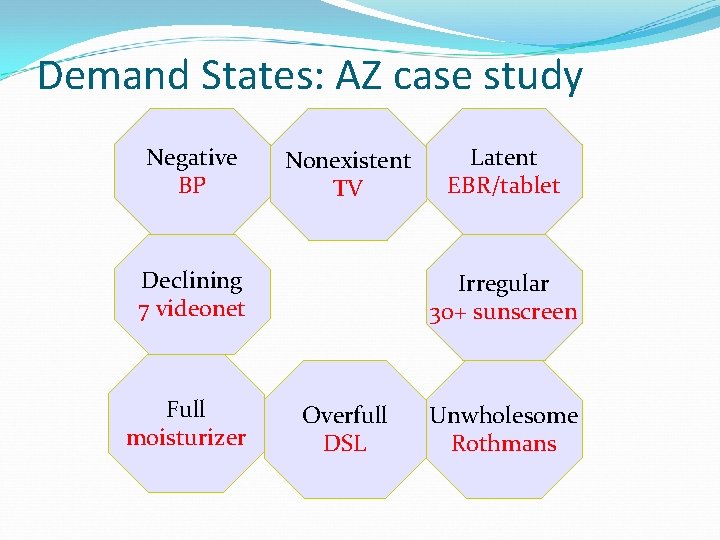
Demand States: AZ case study Negative BP Nonexistent TV Declining 7 videonet Full moisturizer Latent EBR/tablet Irregular 30+ sunscreen Overfull DSL Unwholesome Rothmans
The marketing discipline over time
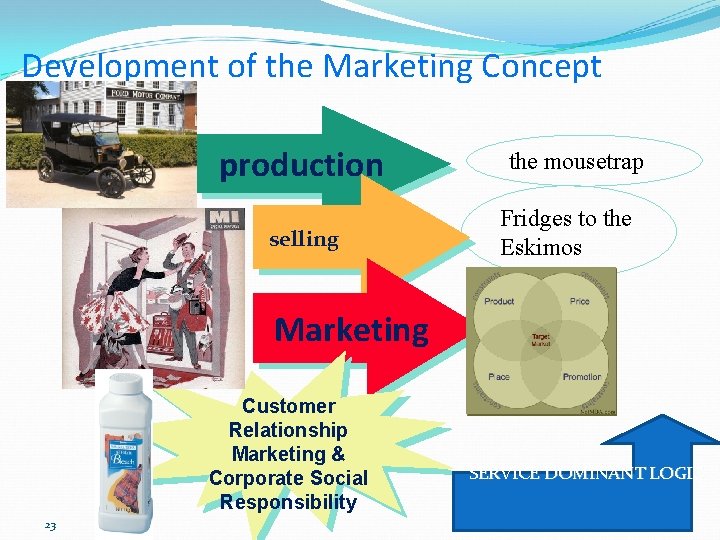
Development of the Marketing Concept production selling the mousetrap Fridges to the Eskimos Marketing Customer Relationship Marketing & Corporate Social Responsibility 23 SERVICE DOMINANT LOGIC
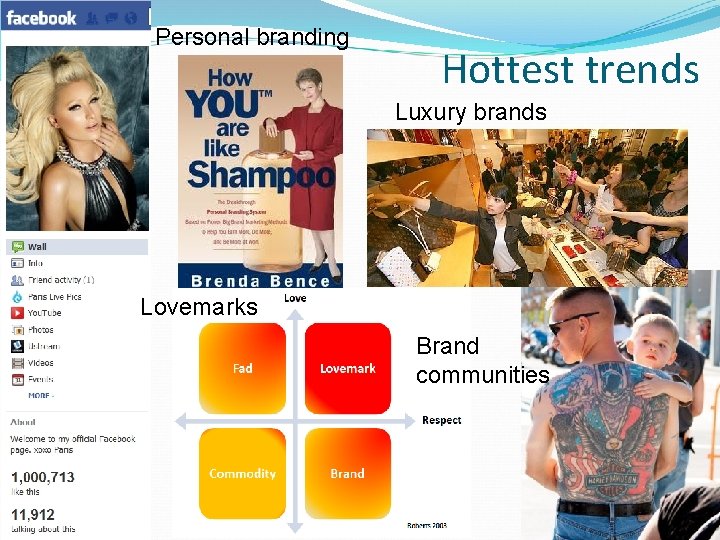
Personal branding Hottest trends Luxury brands Lovemarks Brand communities
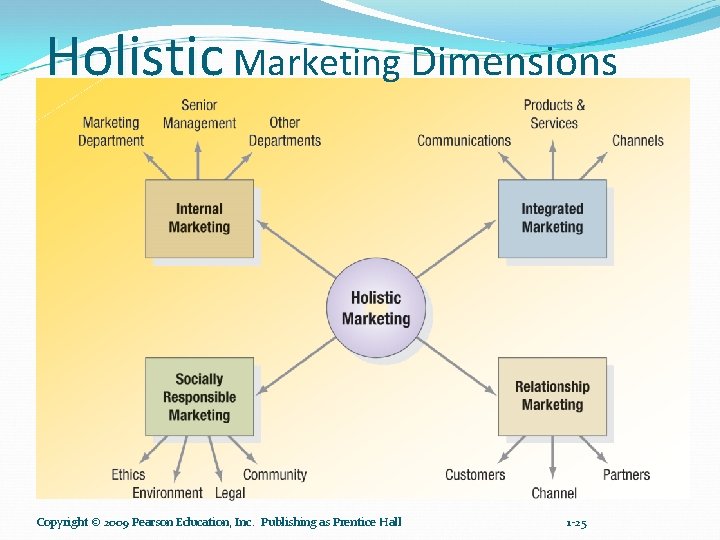
Holistic Marketing Dimensions Copyright © 2009 Pearson Education, Inc. Publishing as Prentice Hall 1 -25
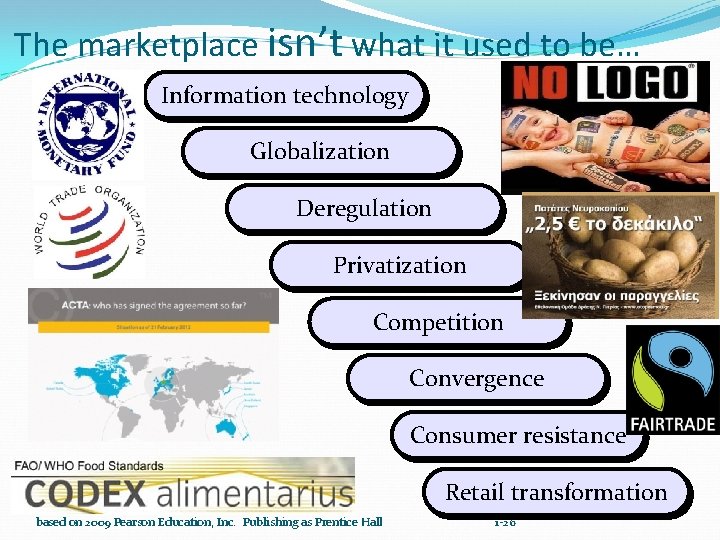
The marketplace isn’t what it used to be… Information technology Globalization Deregulation Privatization Competition Convergence Consumer resistance Retail transformation based on 2009 Pearson Education, Inc. Publishing as Prentice Hall 1 -26
21 st Century 4Ρs Personalization = Amazon. com Participation = Nike ID / prosumerism. MLM Peer-to-Peer Predictive modeling = CRM /big data / data visualization / qualitative data visualization
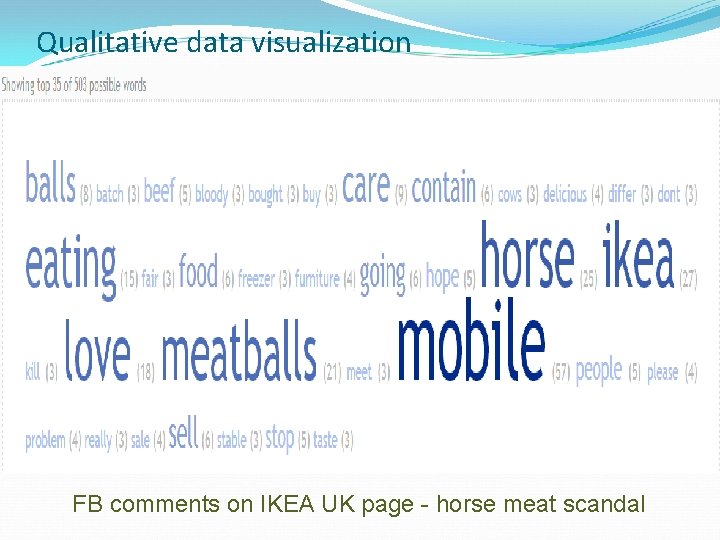
Qualitative data visualization FB comments on IKEA UK page - horse meat scandal
Developing Marketing Strategies and Plans
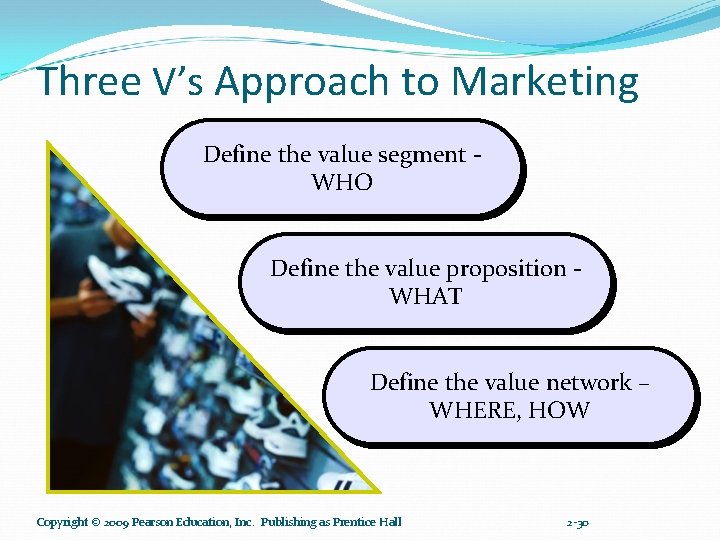
Three V’s Approach to Marketing Define the value segment - WHO Define the value proposition - WHAT Define the value network – WHERE, HOW Copyright © 2009 Pearson Education, Inc. Publishing as Prentice Hall 2 -30
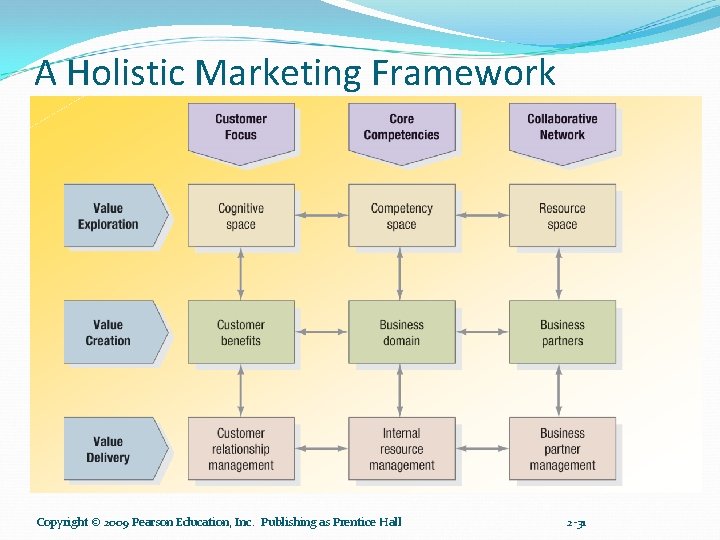
A Holistic Marketing Framework Copyright © 2009 Pearson Education, Inc. Publishing as Prentice Hall 2 -31
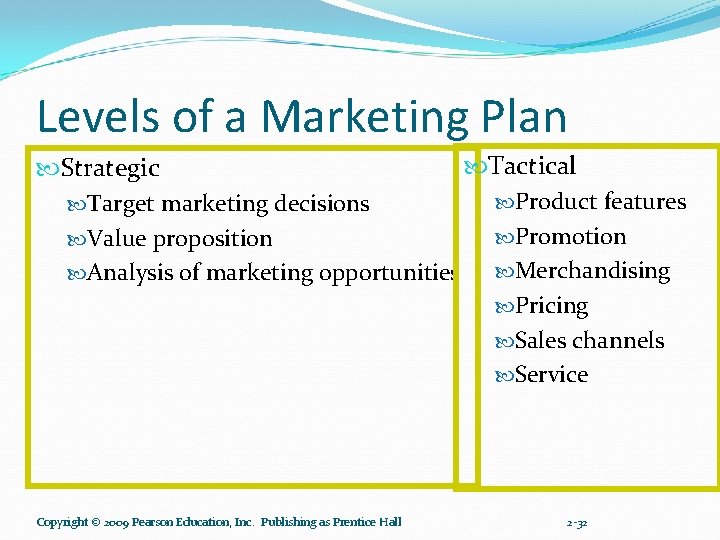
Levels of a Marketing Plan Tactical Strategic Product features Target marketing decisions Promotion Value proposition Merchandising Analysis of marketing opportunities Pricing Sales channels Service Copyright © 2009 Pearson Education, Inc. Publishing as Prentice Hall 2 -32
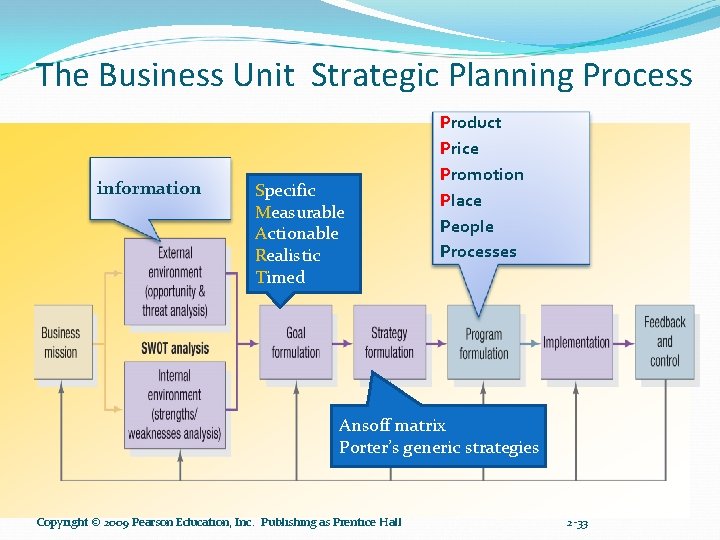
The Business Unit Strategic Planning Process information Specific Measurable Actionable Realistic Timed Product Price Promotion Place People Processes Ansoff matrix Porter’s generic strategies Copyright © 2009 Pearson Education, Inc. Publishing as Prentice Hall 2 -33
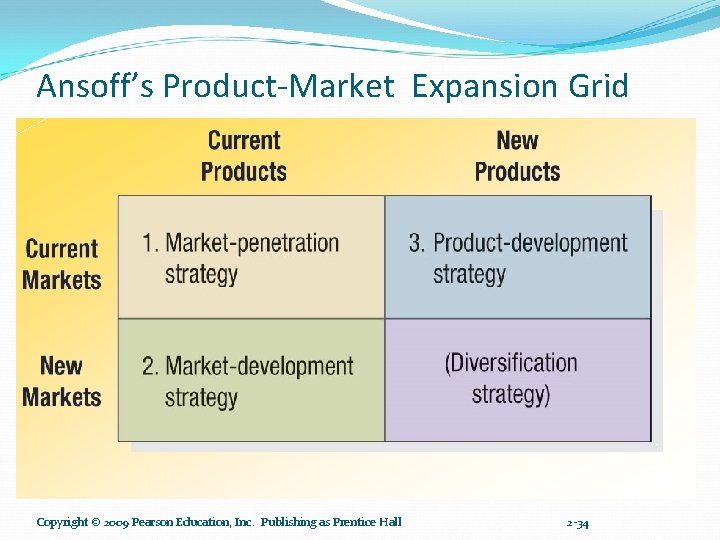
Ansoff’s Product-Market Expansion Grid Copyright © 2009 Pearson Education, Inc. Publishing as Prentice Hall 2 -34
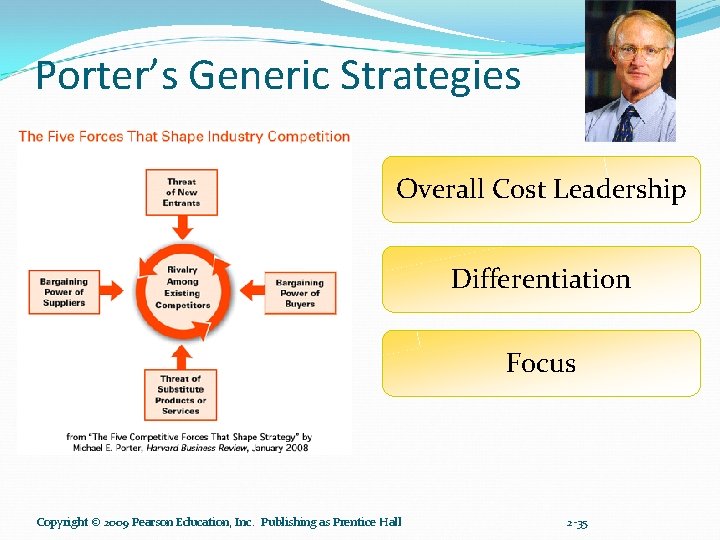
Porter’s Generic Strategies Overall Cost Leadership Differentiation Focus Copyright © 2009 Pearson Education, Inc. Publishing as Prentice Hall 2 -35
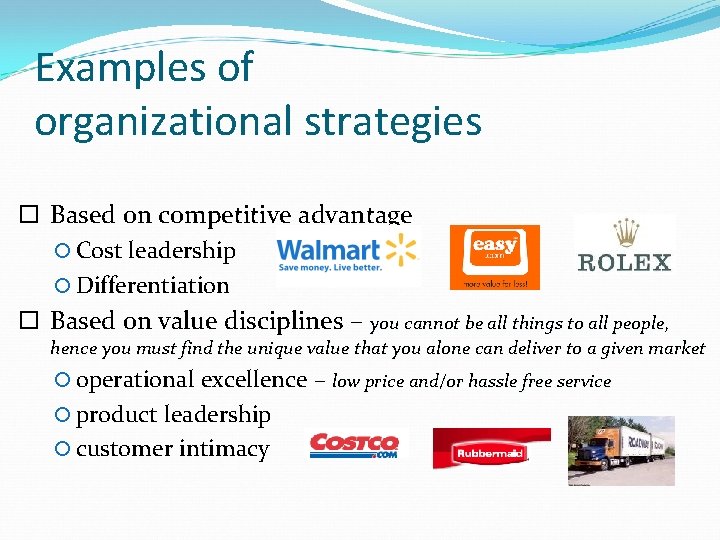
Examples of organizational strategies Based on competitive advantage Cost leadership Differentiation Based on value disciplines – you cannot be all things to all people, hence you must find the unique value that you alone can deliver to a given market operational excellence – low price and/or hassle free service product leadership customer intimacy
Exercises to be discussed in class next time we meet
internet exercise visit the corporate web-sites look for the mission statement look for claims of strengths (investors section) and distinctive competencies (customer sections) link them to product lines IBM business units CISCO MICROSOFT
- Slides: 38