
Understanding Kaileigh Sweeney SN University of Rhode Island
- Slides: 30
Understanding Kaileigh Sweeney, SN University of Rhode Island Mentor: Carolyn Hames
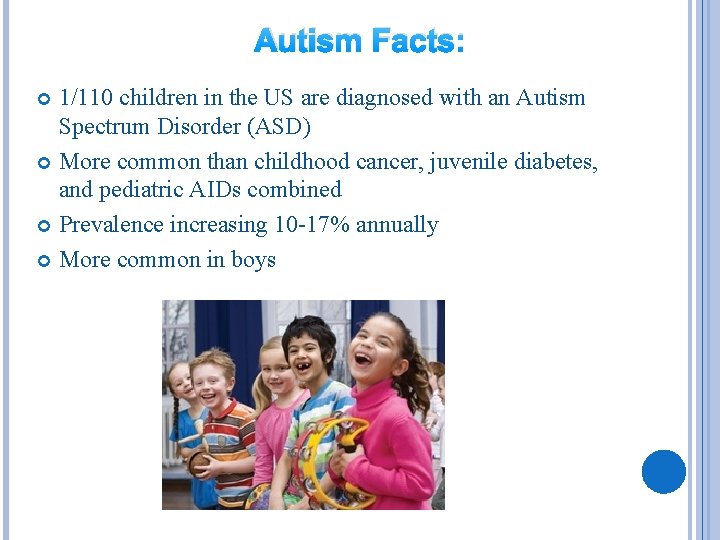
Autism Facts: 1/110 children in the US are diagnosed with an Autism Spectrum Disorder (ASD) More common than childhood cancer, juvenile diabetes, and pediatric AIDs combined Prevalence increasing 10 -17% annually More common in boys
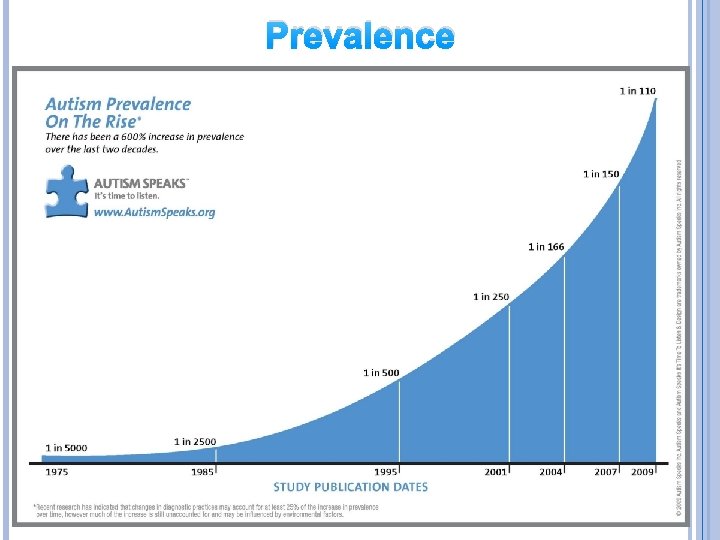
Prevalence
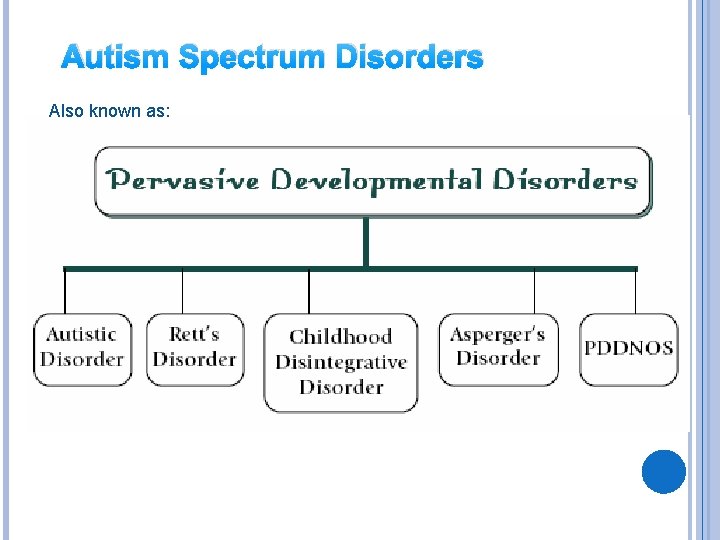
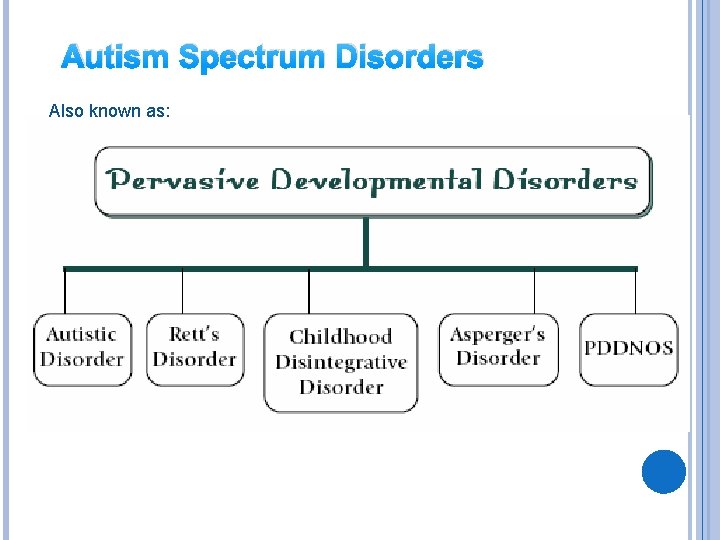
What is autism? A general term used to describe a group of developmental disorders called Pervasive Developmental Disorders (PDD). Wide spectrum of disorders Mild to severe impairments Low functioning to high functioning Controversial terminology
Autism Spectrum Disorders Also known as:
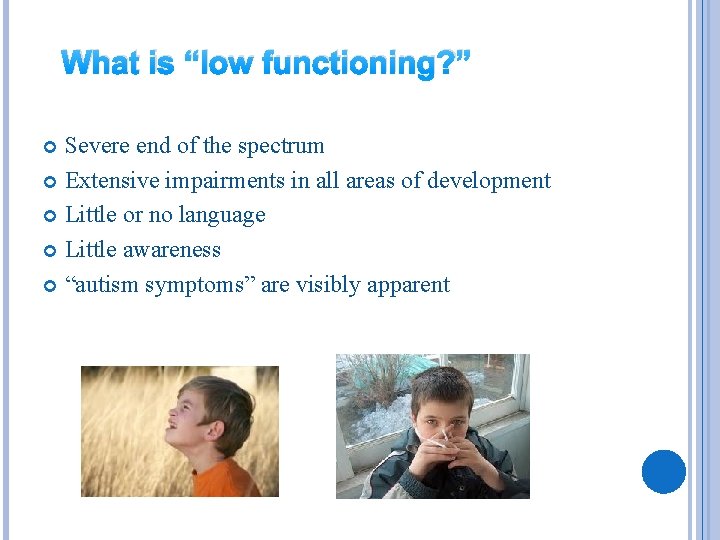
What is “low functioning? ” Severe end of the spectrum Extensive impairments in all areas of development Little or no language Little awareness “autism symptoms” are visibly apparent
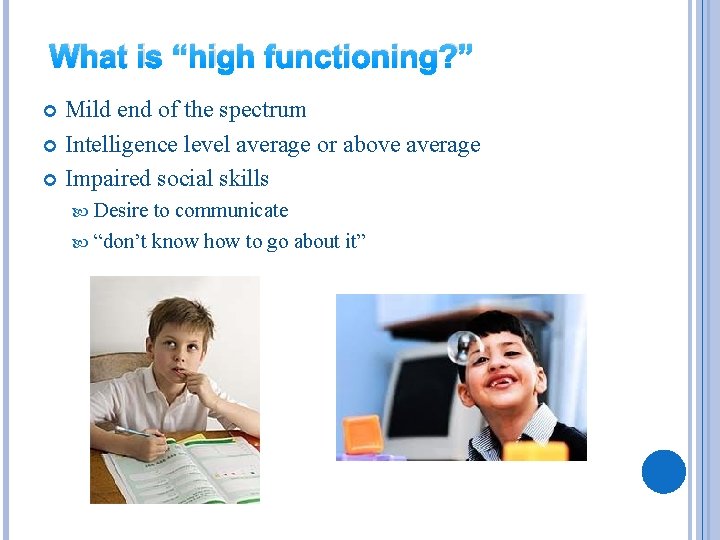
What is “high functioning? ” Mild end of the spectrum Intelligence level average or above average Impaired social skills Desire to communicate “don’t know how to go about it”
Causes: • Idiopathic: Multiple theories: 1) Genetics 2) Heredity 3) Inflammation of CNS 4) Exposure – • • • Environmental: maternal rubella or cytomegalovirus Chemical: thalidomide or valproate during pregnancy NOT CAUSED BY BAD PARENTING!
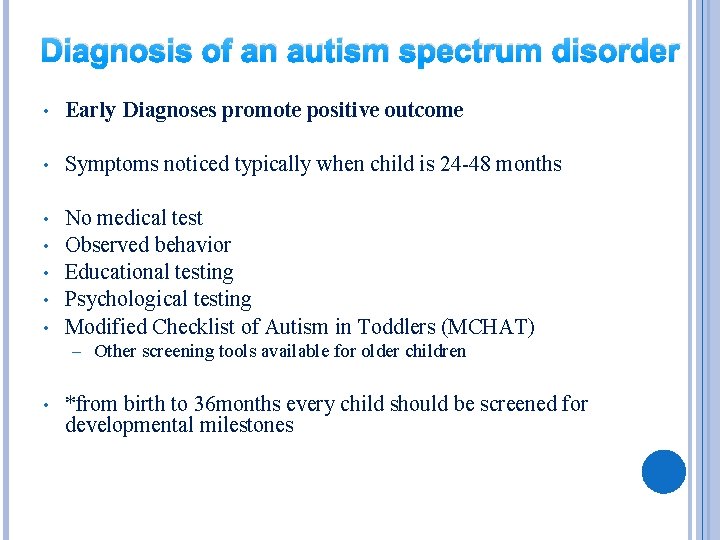
Diagnosis of an autism spectrum disorder • Early Diagnoses promote positive outcome • Symptoms noticed typically when child is 24 -48 months • No medical test Observed behavior Educational testing Psychological testing Modified Checklist of Autism in Toddlers (MCHAT) • • – • Other screening tools available for older children *from birth to 36 months every child should be screened for developmental milestones
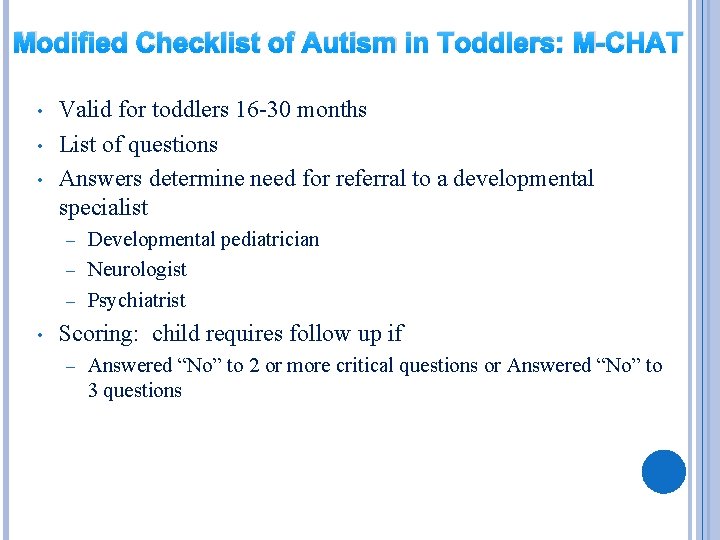
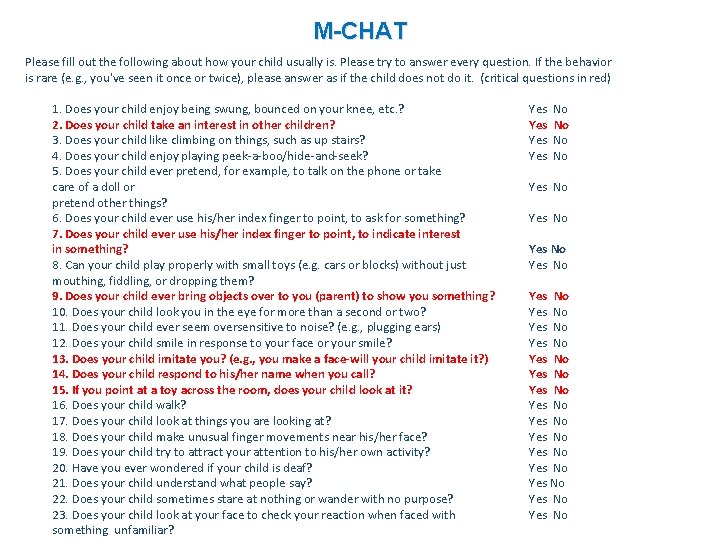
Modified Checklist of Autism in Toddlers: M-CHAT • • • Valid for toddlers 16 -30 months List of questions Answers determine need for referral to a developmental specialist Developmental pediatrician – Neurologist – Psychiatrist – • Scoring: child requires follow up if – Answered “No” to 2 or more critical questions or Answered “No” to 3 questions
M-CHAT Please fill out the following about how your child usually is. Please try to answer every question. If the behavior is rare (e. g. , you've seen it once or twice), please answer as if the child does not do it. (critical questions in red) 1. Does your child enjoy being swung, bounced on your knee, etc. ? 2. Does your child take an interest in other children? 3. Does your child like climbing on things, such as up stairs? 4. Does your child enjoy playing peek-a-boo/hide-and-seek? 5. Does your child ever pretend, for example, to talk on the phone or take care of a doll or pretend other things? 6. Does your child ever use his/her index finger to point, to ask for something? 7. Does your child ever use his/her index finger to point, to indicate interest in something? 8. Can your child play properly with small toys (e. g. cars or blocks) without just mouthing, fiddling, or dropping them? 9. Does your child ever bring objects over to you (parent) to show you something? 10. Does your child look you in the eye for more than a second or two? 11. Does your child ever seem oversensitive to noise? (e. g. , plugging ears) 12. Does your child smile in response to your face or your smile? 13. Does your child imitate you? (e. g. , you make a face-will your child imitate it? ) 14. Does your child respond to his/her name when you call? 15. If you point at a toy across the room, does your child look at it? 16. Does your child walk? 17. Does your child look at things you are looking at? 18. Does your child make unusual finger movements near his/her face? 19. Does your child try to attract your attention to his/her own activity? 20. Have you ever wondered if your child is deaf? 21. Does your child understand what people say? 22. Does your child sometimes stare at nothing or wander with no purpose? 23. Does your child look at your face to check your reaction when faced with something unfamiliar? Yes Yes No No Yes No Yes No Yes No Yes No Yes No
Autism Spectrum Disorders Also known as:
Asperger’s Syndrome: Autism Spectrum Disorder (ASD) Often called “high functioning autism” Most diagnoses made between 3 -9 years Capable of functioning in everyday life Individuals Diagnosed have: Normal to advanced intelligence level Normal to advanced verbalization skills Severely Impaired Social Skills
Signs/Symptoms of Asperger’s Syndrome: • • • Scripted, robotic, or repetitive speech Inappropriate social interactions Conversations revolving around self Lack of “common sense” Problems with reading, math, or writing skills Obsessions with complex topics Average to below level non-verbal communicative skills Verbal cognitive skills are usually above average Awkward movements Odd behaviors/mannerisms
Treatment of Asperger’s Syndrome: Requires input from “healthcare team” Doctors, teachers, psychologist, therapist, parents Social skills training Alternative therapies Medications - Antidepressants (social isolation)
Rett Syndrome: Pervasive Developmental Disorder Similar to autism Affects girls almost exclusively Early growth and development Followed by slowed growth and development Prevalence: 1/10, 000 children in the United States
Signs/Symptoms of Rett Syndrome: Severity Ranges from Mild to Severe Toe walking Lack of eye contact Hypotonia (weakened muscle tone) Difficulty interacting with others Hand flapping Begins with normal development Apraxia (loss of purposeful movements)
Treatment of Rett Syndrome NO CURE Physical therapy Motor skills Occupational therapy Life skills Speech therapy Splints Sensory therapy Medical interventions Antiepileptic
Childhood Disintegrative Disorder (CDD) Normal development until 3 to 4 years old Then children lose Language skills Motor skills Social skills
Signs/Symptoms of Childhood Disintegrative Disorder (CDD) Delay or lack of spoken language Impairment in non-verbal behaviors Inability to maintain conversation Lack of play Loss of motor, social, & communication skills Loss of bowel/bladder control
Treatment of Childhood Disintegrative Disorder Medication Behavior therapy Social skills Speech therapy Physical therapy
Assessment: Obtain history Family history When did symptoms begin? Motor skills Language skills Personality Behavior Social skills/interactions
Assessment: Decrease stimulation Private room Avoid extraneous auditory and visual distractions Encourage comforting possessions (toys, blanket, etc) which may decrease anxiety Minimize touching child Minimize eye contact
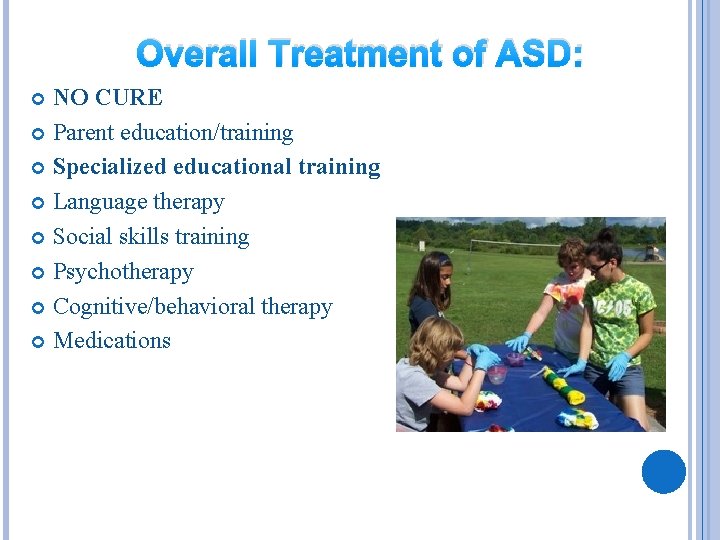
Overall Treatment of ASD: NO CURE Parent education/training Specialized educational training Language therapy Social skills training Psychotherapy Cognitive/behavioral therapy Medications
Prognosis Varies from case to case based on severity and type of autism. Some children improve with therapy and medication management Learning about autism helps improve quality of living for child diagnosed with autism and family members
Role of the Nurse: Each child requires individualized assessment & treatment Not all children with ASD are the same EDUCATION Teach family members signs and symptoms Help parents understand it is NOT a result of “bad parenting Family Support Behavioral Modification Programs Medications
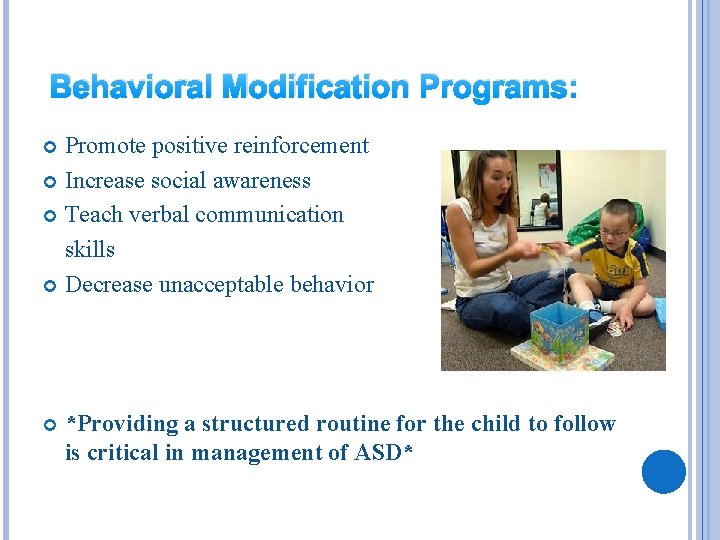
Behavioral Modification Programs: Promote positive reinforcement Increase social awareness Teach verbal communication skills Decrease unacceptable behavior *Providing a structured routine for the child to follow is critical in management of ASD*
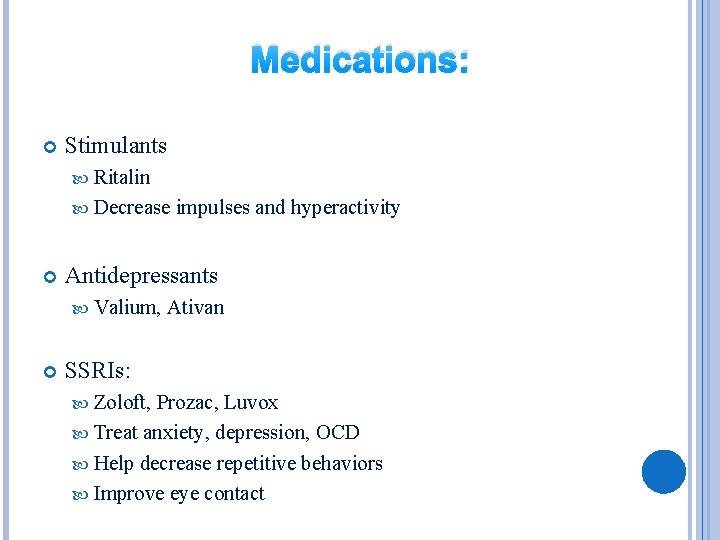
Medical Management Treat symptoms Hyperactivity Depression Anger Aggression Self-injurious behavior Children with autism may not have a typical response to medication Monitoring Crucial lowest dose possible to be affective
Medications: Stimulants Ritalin Decrease Antidepressants Valium, impulses and hyperactivity Ativan SSRIs: Zoloft, Prozac, Luvox Treat anxiety, depression, OCD Help decrease repetitive behaviors Improve eye contact
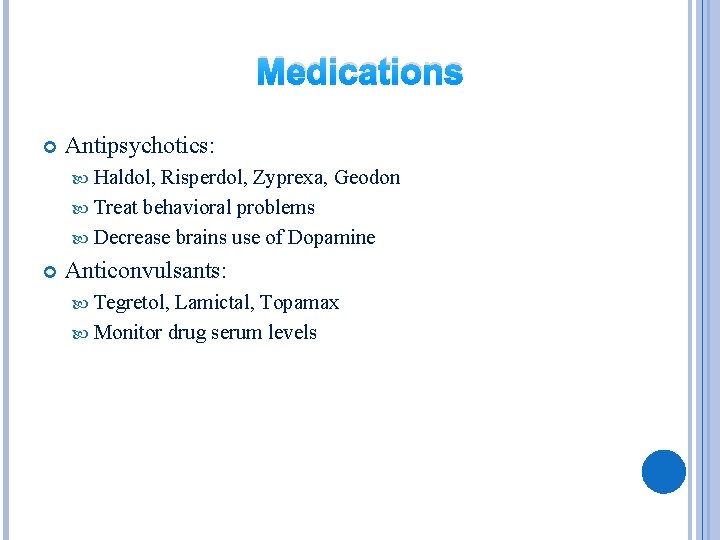
Medications Antipsychotics: Haldol, Risperdol, Zyprexa, Geodon Treat behavioral problems Decrease brains use of Dopamine Anticonvulsants: Tegretol, Lamictal, Topamax Monitor drug serum levels