
Understanding Invisible Disabilities GNYC BSA Training Extravaganza Leah
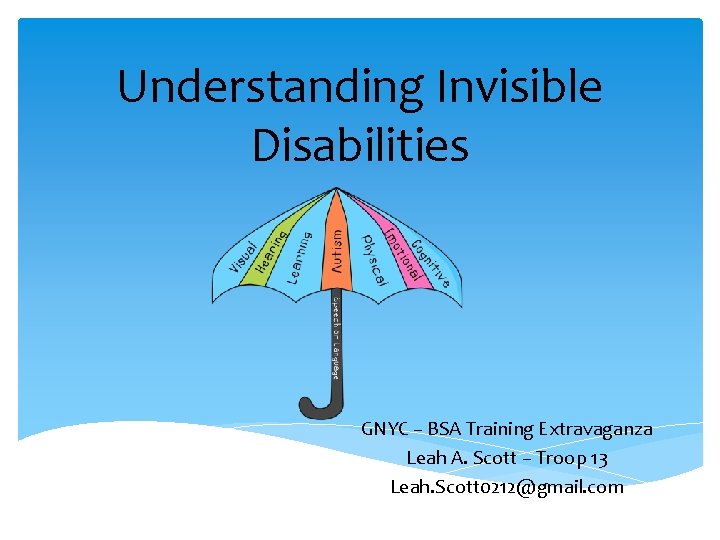
Understanding Invisible Disabilities GNYC – BSA Training Extravaganza Leah A. Scott – Troop 13 Leah. Scott 0212@gmail. com
4 Key things I want you to know People with disabilities are people too. Difference’s make everyone unique Some disabilities you can see and some you can not see. A Disability does not define who you are.
DEFINITION Invisible Disabilities are emotional, behavioral, developmental or neurological disorders with no outwardly apparent symptoms
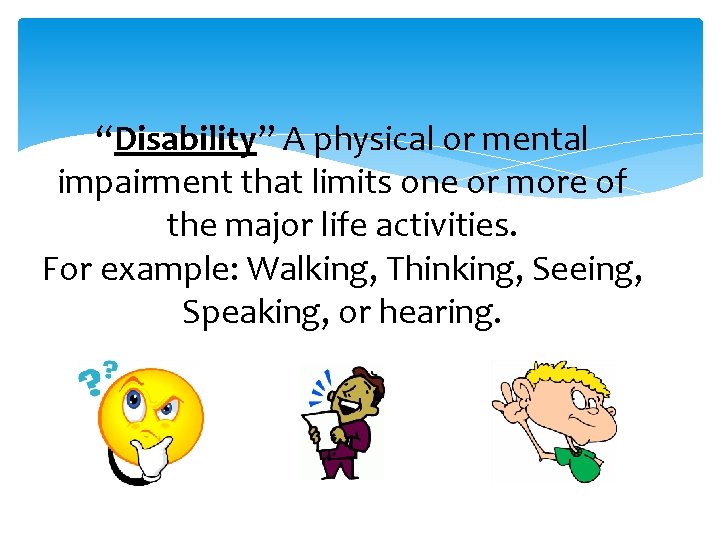
“Disability” A physical or mental impairment that limits one or more of the major life activities. For example: Walking, Thinking, Seeing, Speaking, or hearing.
Some disability start from birth or by accident. Not all disabilities can be seen with the eye.
Visible Vs. Invisible Disabilities VISIBLE People who are paralyzed and need some type of supports to move around Severe Developmental disability (Down syndrome) A physical difference Missing arms or legs INVISIBLE People with hearing loss Speech impediments may or may not be noticed right away People with ADHD can be confused as unruly and purposely disruptive. A learning disability may be misinterpreted as lack of intelligences or carelessness
Some people may feel uneasy being around a person with disabilities. How does it make you feel? (Discussion)
People with disabilities are simply people and need to be treated as such.
General Tips Teach our young leadership to work along side other scouts. Extra patience and understanding will need to constant. Do not point out the scouts disability unless it is relevant to a conversation. Reminder your Scout leadership to avoid asking personal questions about someone's disability. Let them bring it up first When it is brought up, reminder them to be understanding and show respect
What is most important to remember is that we all are different and need to be recognized for that which we are capable of doing. Not for what we may require aid to accomplish
Focus on the person, not on his or her disabilities
What to do: People with Mental Disabilities Repeat what you say or try a different way of saying it Must be patient Keep instructions simple
What to do: People who have a Speech Impediment Do not finish their sentence for them. Allow them time to say everything they want to say Must be patient Do not make fun of them or copy their speech Never act like you know what a person is saying. Ask the person to repeat or rephrase or offer them a pen and paper
What to do: People who have a Learning disability Write down things on paper to help them remember it Must be patient Text to speech software if needed If a person still does not understand what you are saying, try to say it in a different way
- Slides: 15