
Understanding Intimate Partner Violence Barbie Brashear Amy Smith
Understanding Intimate Partner Violence Barbie Brashear Amy Smith Harris County Domestic Violence Coordinating Council

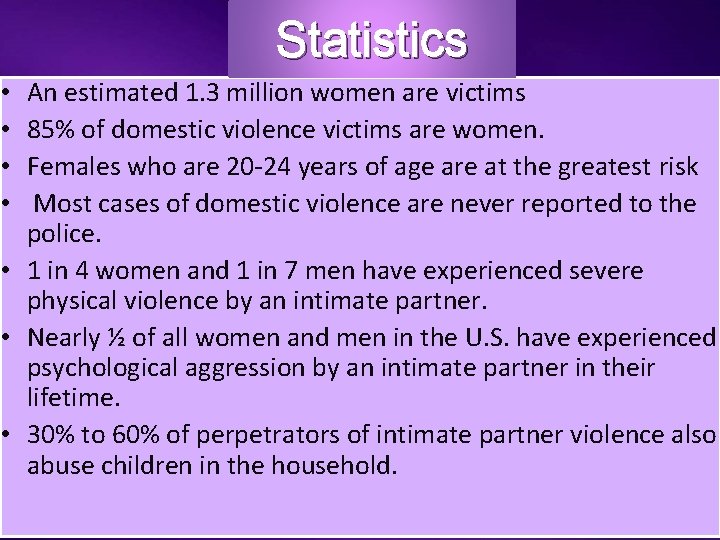
Statistics An estimated 1. 3 million women are victims 85% of domestic violence victims are women. Females who are 20 -24 years of age are at the greatest risk Most cases of domestic violence are never reported to the police. • 1 in 4 women and 1 in 7 men have experienced severe physical violence by an intimate partner. • Nearly ½ of all women and men in the U. S. have experienced psychological aggression by an intimate partner in their lifetime. • 30% to 60% of perpetrators of intimate partner violence also abuse children in the household. • •
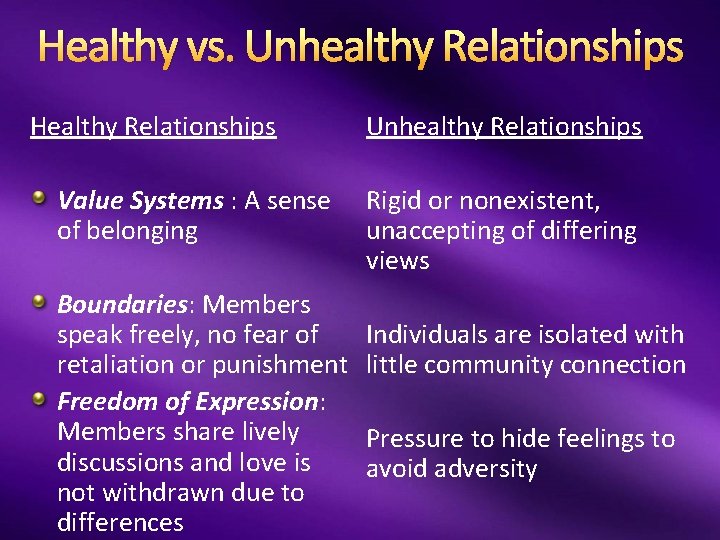
Healthy vs. Unhealthy Relationships Healthy Relationships Value Systems : A sense of belonging Boundaries: Members speak freely, no fear of retaliation or punishment Freedom of Expression: Members share lively discussions and love is not withdrawn due to differences Unhealthy Relationships Rigid or nonexistent, unaccepting of differing views Individuals are isolated with little community connection Pressure to hide feelings to avoid adversity
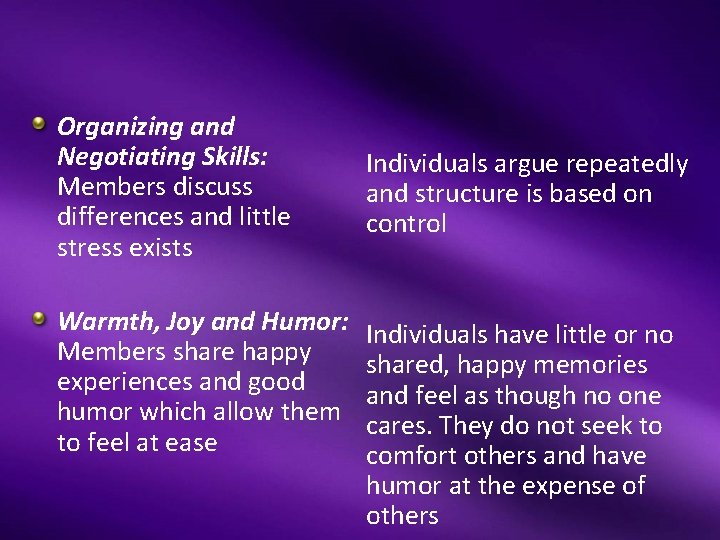
Organizing and Negotiating Skills: Members discuss differences and little stress exists Warmth, Joy and Humor: Members share happy experiences and good humor which allow them to feel at ease Individuals argue repeatedly and structure is based on control Individuals have little or no shared, happy memories and feel as though no one cares. They do not seek to comfort others and have humor at the expense of others
Definition of IPVIntimate Partner Violence
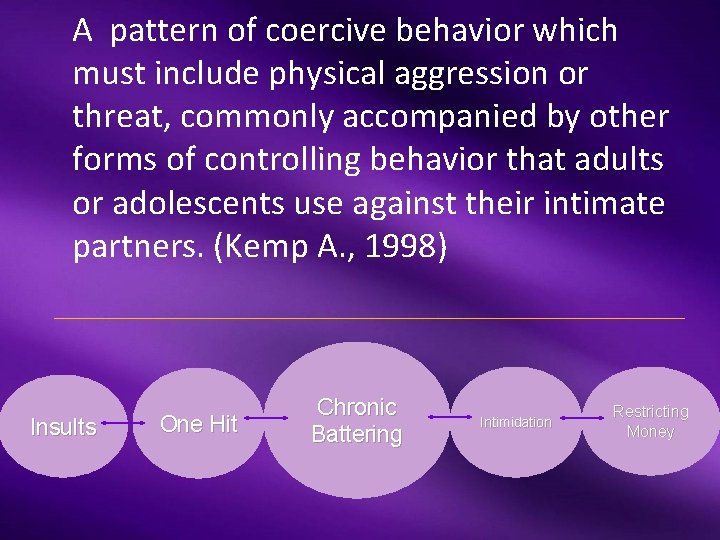
A pattern of coercive behavior which must include physical aggression or threat, commonly accompanied by other forms of controlling behavior that adults or adolescents use against their intimate partners. (Kemp A. , 1998) Insults One Hit Chronic Battering Intimidation Restricting Money
Power and Control
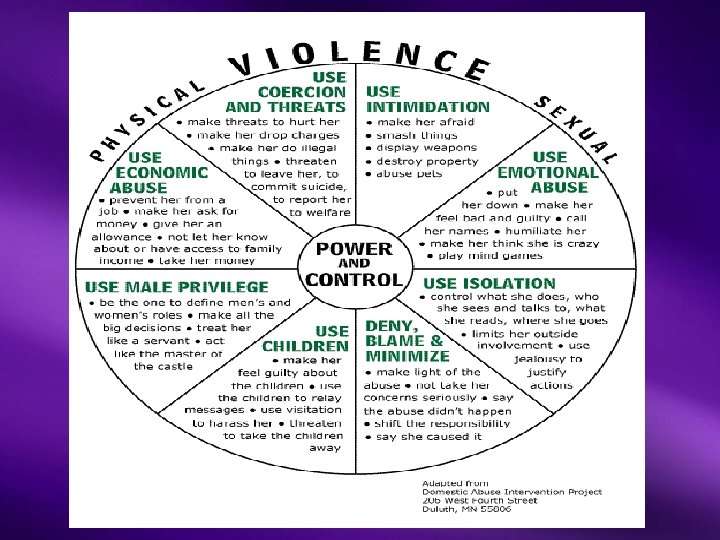
Styles of Violence Tyrannical Offender • Aggression, intimidation, verbal abuse, physical assault to control and dominate • Intention to frighten, intimidate and punish • Feels justified or understandable due to frustration and anger • Tendency to minimize his violence by admitting to having committed verbal abuse, denial and shift of blame • Describes partner as being submissive and careful around him
Exploder Offender • Experiences violence as being out of control, sudden, explosive • Typically in response to partner criticism or challenge • Uses violence to silent partner • Acknowledge use of violence but blames partner for provoking him
Common Traits in an Abusive Relationship Quick Involvement Relationship Enmeshment- “You are all I need and if you love me, I am all you need” Isolation Excessive Rule Making Rigid Gender Roles Jealousy Animal Cruelty No accountability for feelings and behaviors
History of battering and sexual violence Using force during an argument Breaking or striking objects Cruelty to children Negative attitude toward women Drugs and alcohol abuse (never an excuse)
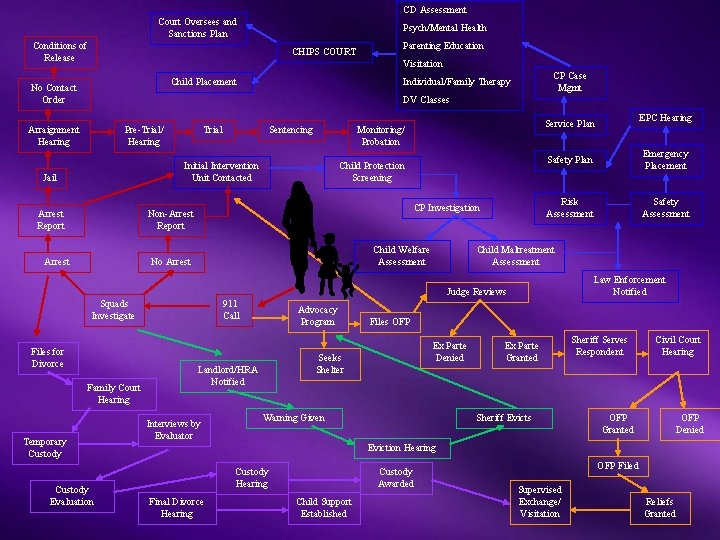
CD Assessment Court Oversees and Sanctions Plan Psych/Mental Health Conditions of Release CHIPS COURT Parenting Education Visitation CP Case Mgmt Individual/Family Therapy Child Placement No Contact Order DV Classes Arraignment Hearing Pre-Trial/ Hearing Trial Sentencing Initial Intervention Unit Contacted Jail Arrest Report Child Protection Screening CP Investigation Non-Arrest Report Arrest Child Welfare Assessment No Arrest Safety Plan Emergency Placement Risk Assessment Safety Assessment Child Maltreatment Assessment Law Enforcement Notified Judge Reviews Squads Investigate Files for Divorce Family Court Hearing Temporary Custody Evaluation 911 Call Advocacy Program Interviews by Evaluator Files OFP Ex Parte Denied Seeks Shelter Landlord/HRA Notified EPC Hearing Service Plan Monitoring/ Probation Warning Given Ex Parte Granted Sheriff Evicts Sheriff Serves Respondent OFP Granted Civil Court Hearing OFP Denied Eviction Hearing Custody Hearing Final Divorce Hearing Custody Awarded Child Support Established OFP Filed Supervised Exchange/ Visitation Reliefs Granted
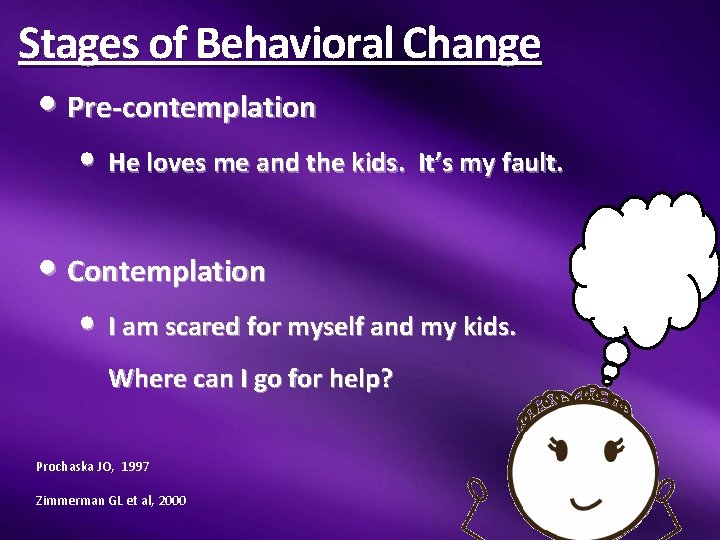
Stages of Behavioral Change • Pre-contemplation • He loves me and the kids. It’s my fault. • Contemplation • I am scared for myself and my kids. Where can I go for help? Prochaska JO, 1997 Zimmerman GL et al, 2000
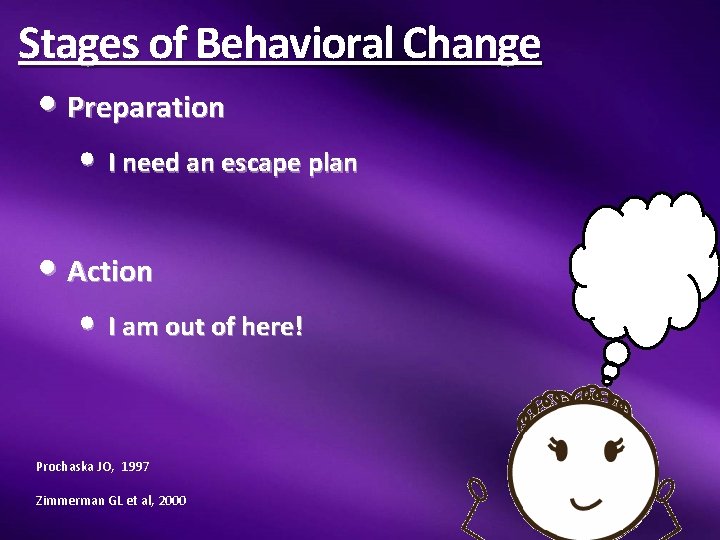
Stages of Behavioral Change • Preparation • I need an escape plan • Action • I am out of here! Prochaska JO, 1997 Zimmerman GL et al, 2000
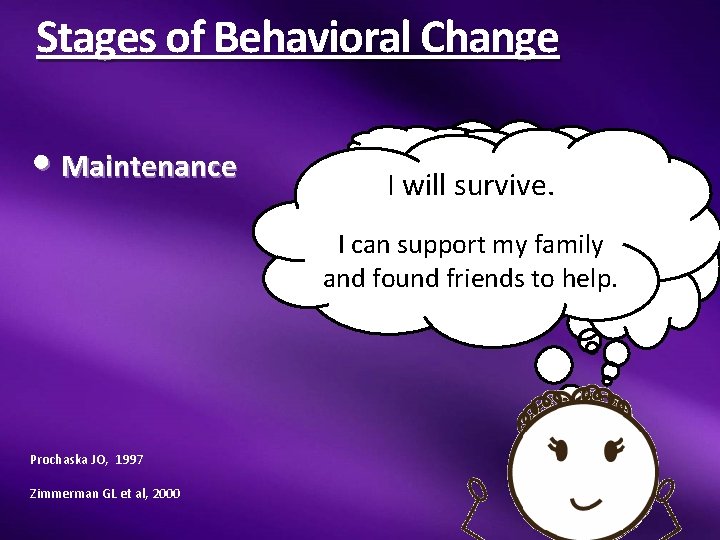
Stages of Behavioral Change • Maintenance I will survive. I can support my family and found friends to help. Prochaska JO, 1997 Zimmerman GL et al, 2000
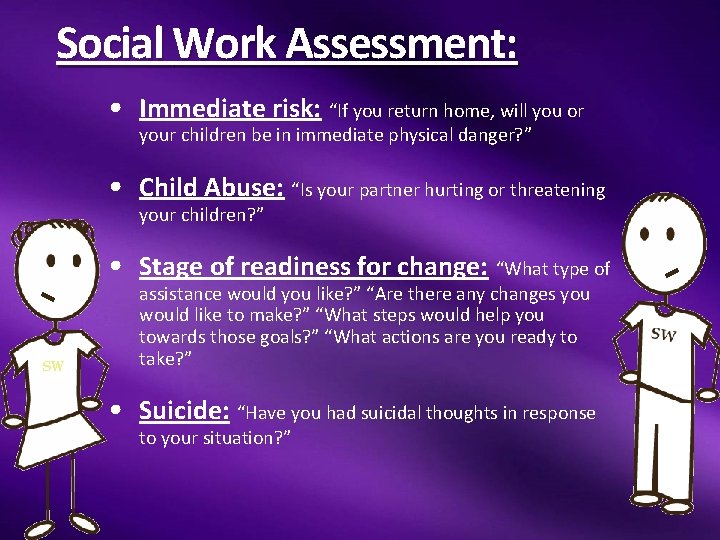
Social Work Assessment: • Immediate risk: “If you return home, will you or your children be in immediate physical danger? ” • Child Abuse: “Is your partner hurting or threatening your children? ” • Stage of readiness for change: “What type of SW assistance would you like? ” “Are there any changes you would like to make? ” “What steps would help you towards those goals? ” “What actions are you ready to take? ” • Suicide: “Have you had suicidal thoughts in response to your situation? ”
BARRIERS TO LEAVING: FEAR $$$$ Religion
BARRIERS TO LEAVING: Blame Shame Children
The impact of IPV on Children
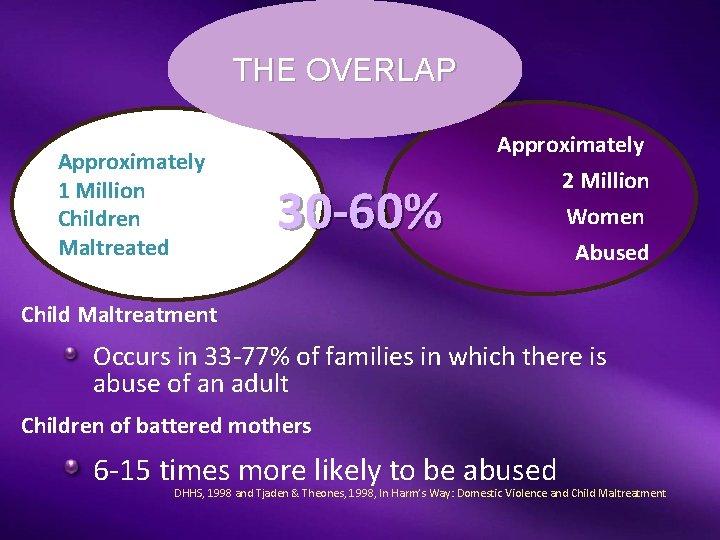
THE OVERLAP Approximately 1 Million Children Maltreated 30 -60% Approximately 2 Million Women Abused Child Maltreatment Occurs in 33 -77% of families in which there is abuse of an adult Children of battered mothers 6 -15 times more likely to be abused DHHS, 1998 and Tjaden & Theones, 1998, In Harm’s Way: Domestic Violence and Child Maltreatment
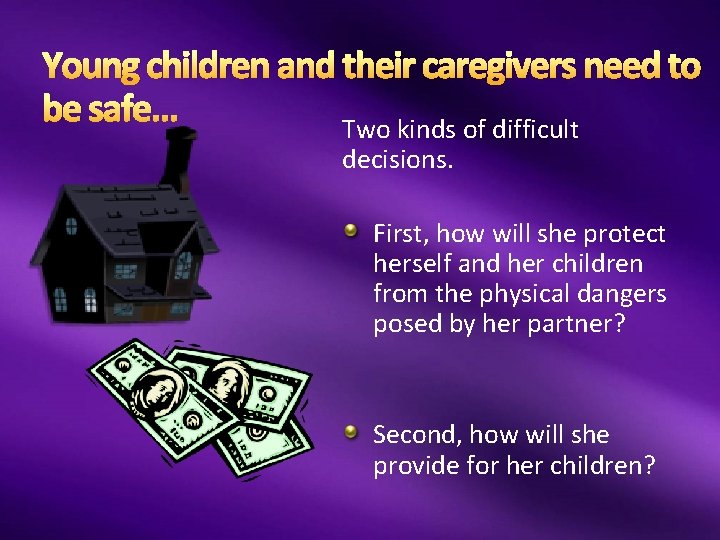
Young children and their caregivers need to be safe… Two kinds of difficult decisions. First, how will she protect herself and her children from the physical dangers posed by her partner? Second, how will she provide for her children?
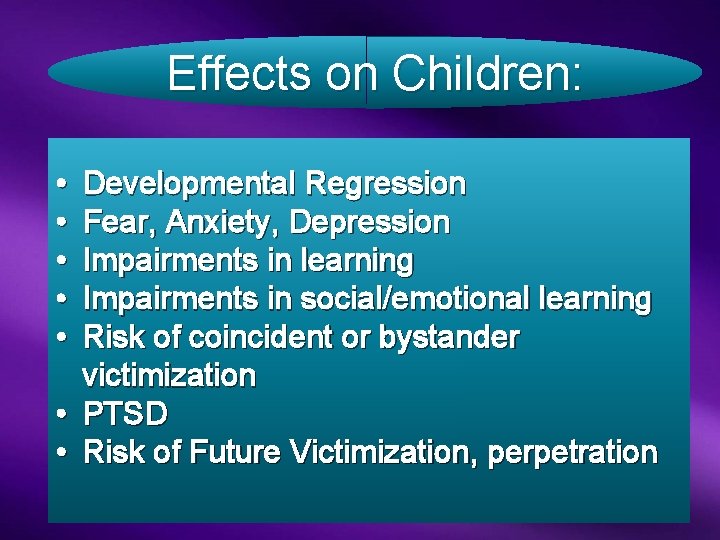
Effects on Children: • • • Developmental Regression Fear, Anxiety, Depression Impairments in learning Impairments in social/emotional learning Risk of coincident or bystander victimization • PTSD • Risk of Future Victimization, perpetration
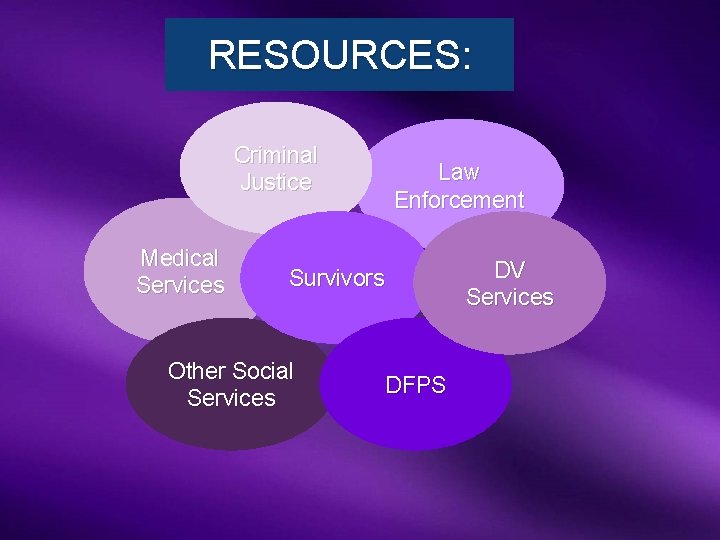
RESOURCES: Criminal Justice Medical Services Law Enforcement Survivors Other Social Services DFPS DV Services
What can I do? • Listen to the victim and believe her. • Tell her she is not alone and that help is available. • Let her know that without intervention, abuse often escalates in frequency and severity over time. • Seek expert assistance. Suggesting that she merely return home places her and her children in real danger.
What can I do? • Hold the abuser accountable. Don't minimize his abusive behavior. Support him in seeking specialized batterers counseling to help change his behavior. • Continue to hold him accountable and to support and protect the victim even after he has begun a counseling program.

Barbie Brashear Amy Smith HCDVCC 281. 400. 3680 www. hcdvcc. org
- Slides: 29