
Understanding Inheritance Genetics Continued What controls traits Mendel
- Slides: 29
Understanding Inheritance Genetics Continued
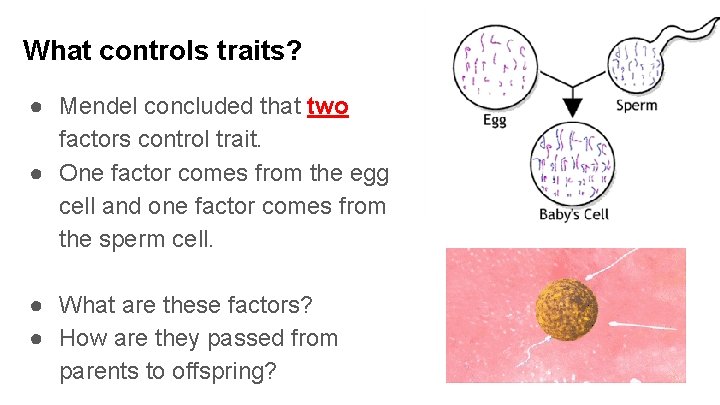
What controls traits? ● Mendel concluded that two factors control trait. ● One factor comes from the egg cell and one factor comes from the sperm cell. ● What are these factors? ● How are they passed from parents to offspring?
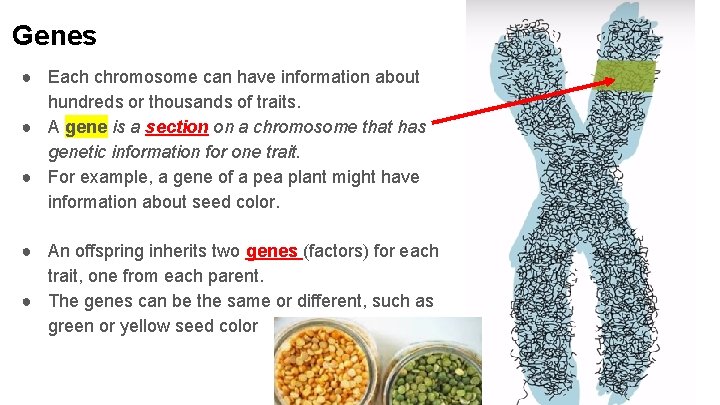
Genes ● Each chromosome can have information about hundreds or thousands of traits. ● A gene is a section on a chromosome that has genetic information for one trait. ● For example, a gene of a pea plant might have information about seed color. ● An offspring inherits two genes (factors) for each trait, one from each parent. ● The genes can be the same or different, such as green or yellow seed color
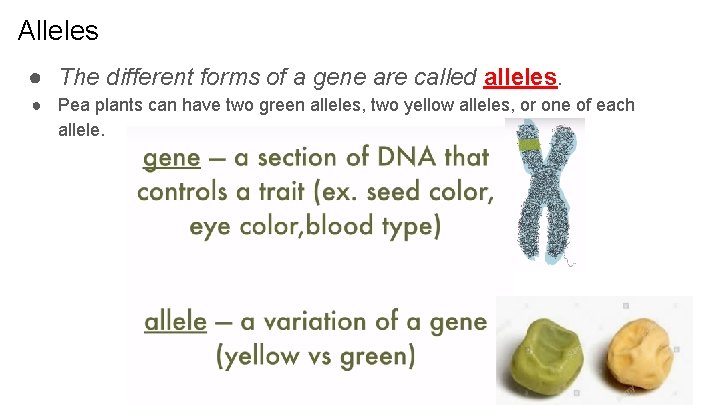
Alleles ● The different forms of a gene are called alleles. ● Pea plants can have two green alleles, two yellow alleles, or one of each allele.
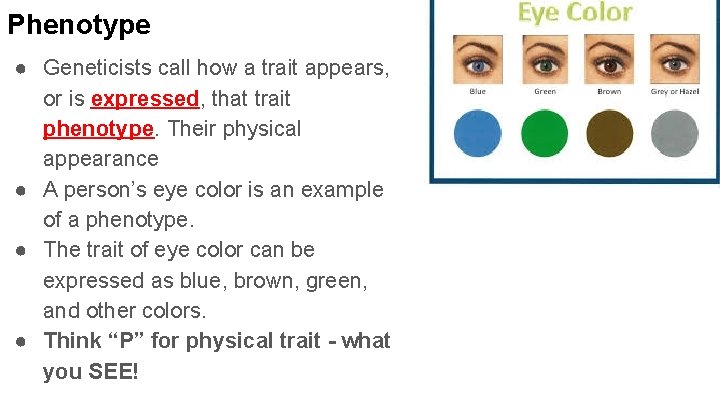
Phenotype ● Geneticists call how a trait appears, or is expressed, that trait phenotype. Their physical appearance ● A person’s eye color is an example of a phenotype. ● The trait of eye color can be expressed as blue, brown, green, and other colors. ● Think “P” for physical trait - what you SEE!
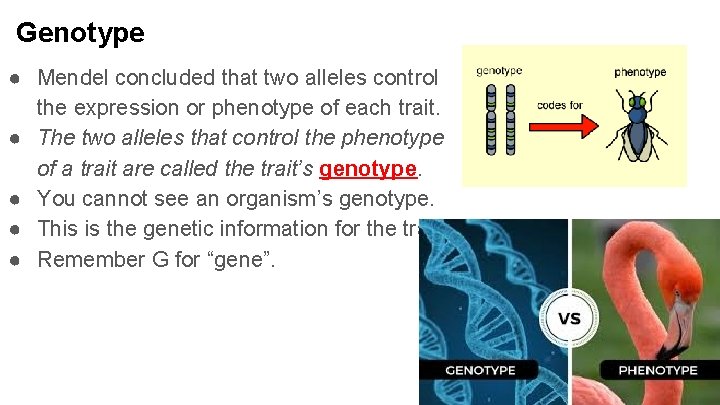
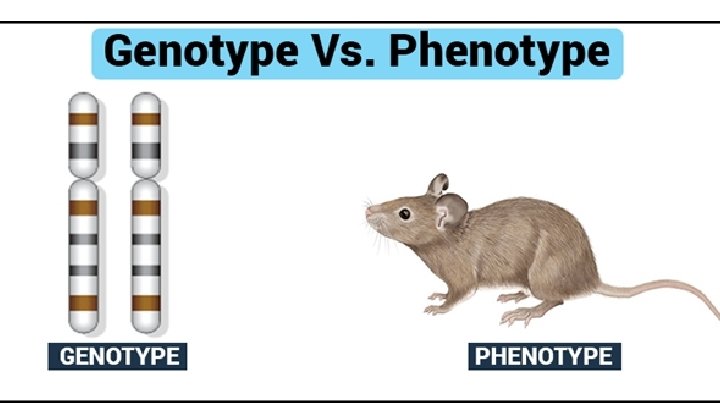
Genotype ● Mendel concluded that two alleles control the expression or phenotype of each trait. ● The two alleles that control the phenotype of a trait are called the trait’s genotype. ● You cannot see an organism’s genotype. ● This is the genetic information for the trait. ● Remember G for “gene”.
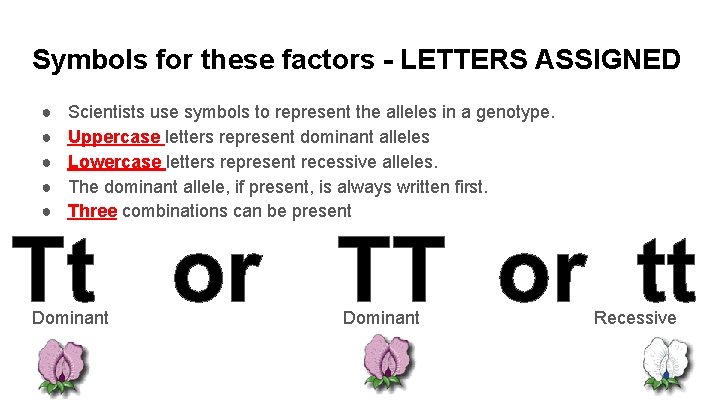
Symbols for these factors - LETTERS ASSIGNED ● ● ● Scientists use symbols to represent the alleles in a genotype. Uppercase letters represent dominant alleles Lowercase letters represent recessive alleles. The dominant allele, if present, is always written first. Three combinations can be present Dominant Recessive
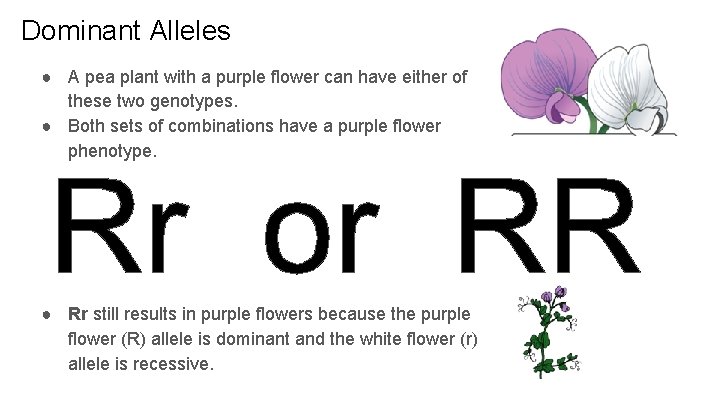
Dominant Alleles ● A pea plant with a purple flower can have either of these two genotypes. ● Both sets of combinations have a purple flower phenotype. ● Rr still results in purple flowers because the purple flower (R) allele is dominant and the white flower (r) allele is recessive.
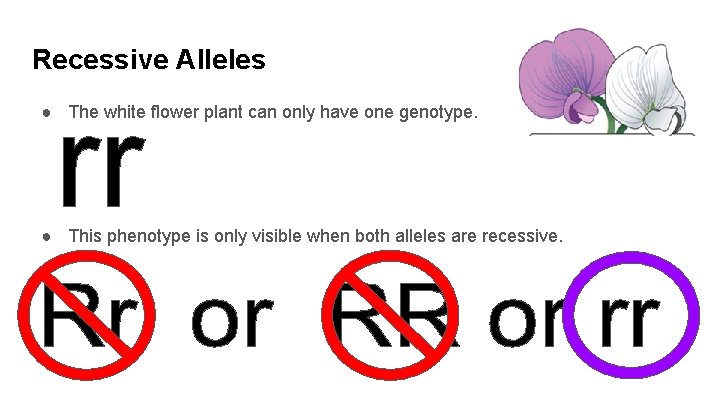
Recessive Alleles ● The white flower plant can only have one genotype. ● This phenotype is only visible when both alleles are recessive.
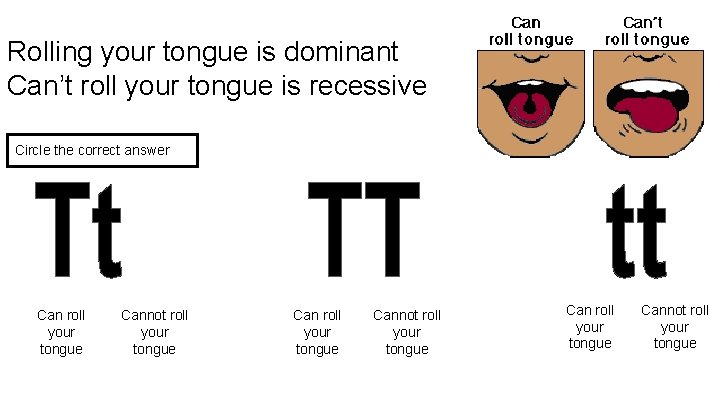
Rolling your tongue is dominant Can’t roll your tongue is recessive Circle the correct answer Can roll your tongue Cannot roll your tongue
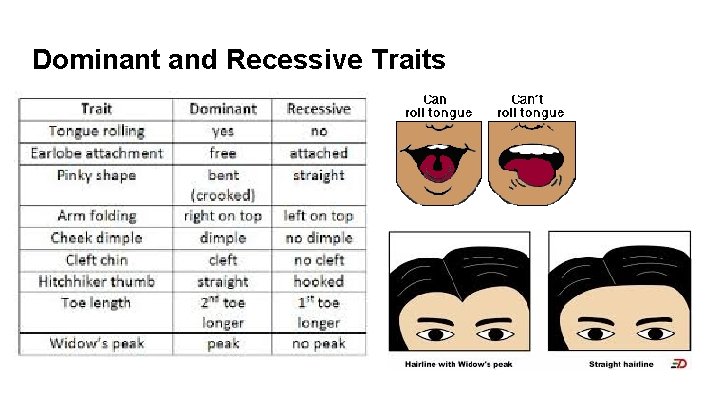
Dominant and Recessive Traits
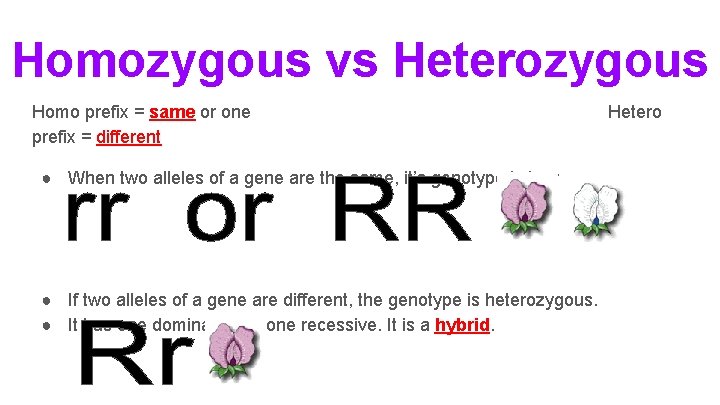
Homozygous vs Heterozygous Homo prefix = same or one prefix = different Hetero ● When two alleles of a gene are the same, it’s genotype is homozygous ● If two alleles of a gene are different, the genotype is heterozygous. ● It has one dominant and one recessive. It is a hybrid.
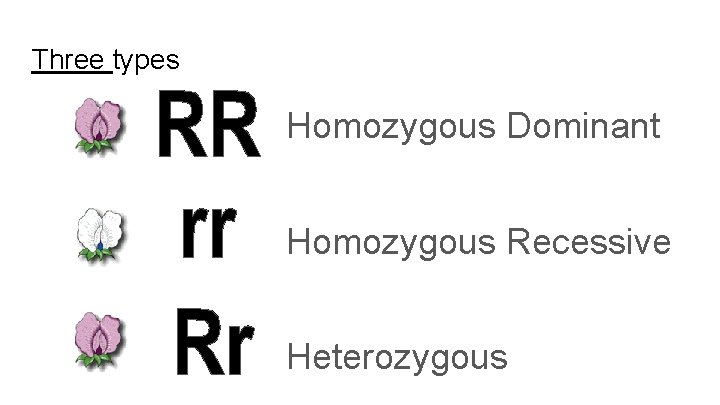
Three types Homozygous Dominant Homozygous Recessive Heterozygous
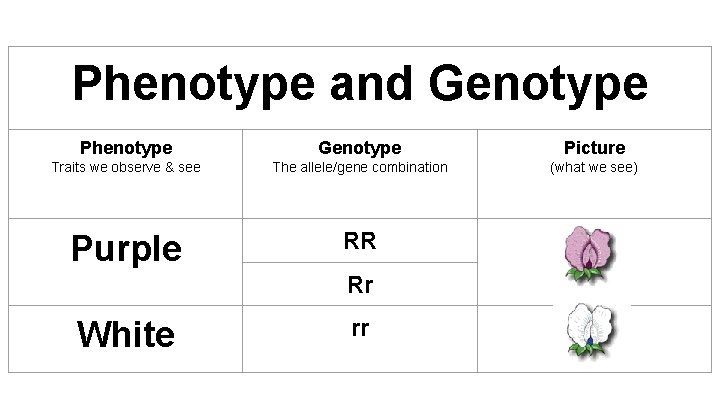
Phenotype and Genotype Phenotype Genotype Picture Traits we observe & see The allele/gene combination (what we see) Purple RR Rr White rr
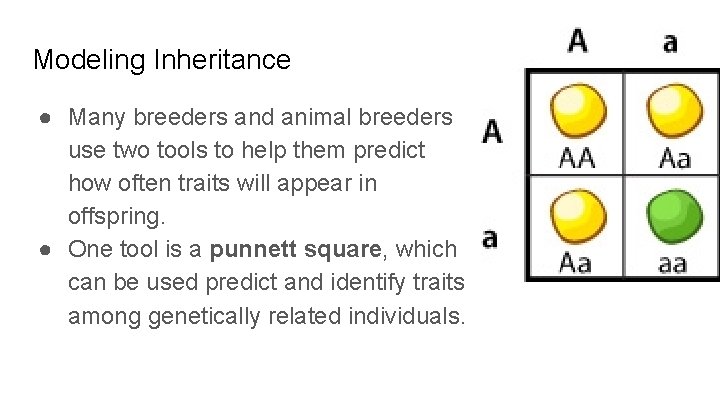
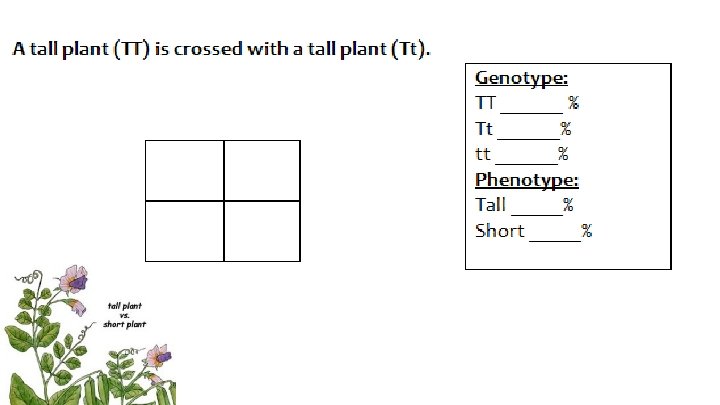
Modeling Inheritance ● Many breeders and animal breeders use two tools to help them predict how often traits will appear in offspring. ● One tool is a punnett square, which can be used predict and identify traits among genetically related individuals.
Punnett Squares ● If the genotypes of the parents are known, then the different genotypes and phenotypes of the offspring can be predicted. ● A punnett square is a model use to predict possible genotypes and phenotypes of offspring.
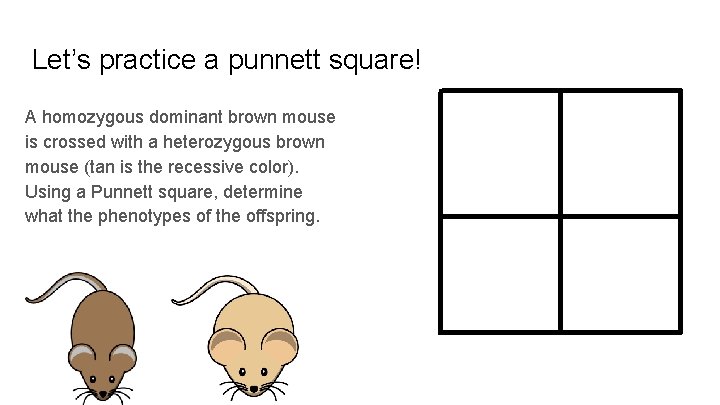
Let’s practice a punnett square! A homozygous dominant brown mouse is crossed with a heterozygous brown mouse (tan is the recessive color). Using a Punnett square, determine what the phenotypes of the offspring.
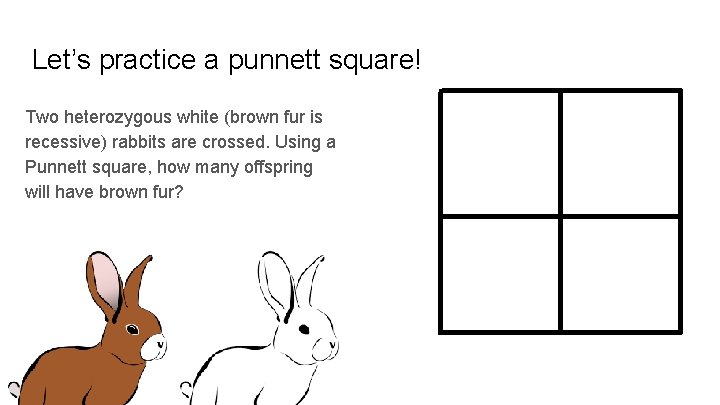
Let’s practice a punnett square! Two heterozygous white (brown fur is recessive) rabbits are crossed. Using a Punnett square, how many offspring will have brown fur?
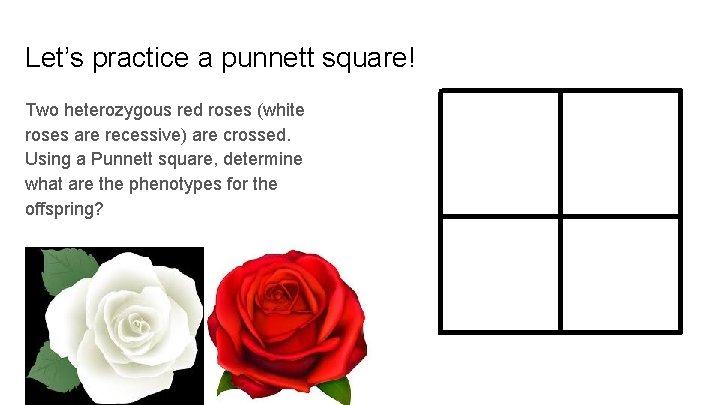
Let’s practice a punnett square! Two heterozygous red roses (white roses are recessive) are crossed. Using a Punnett square, determine what are the phenotypes for the offspring?
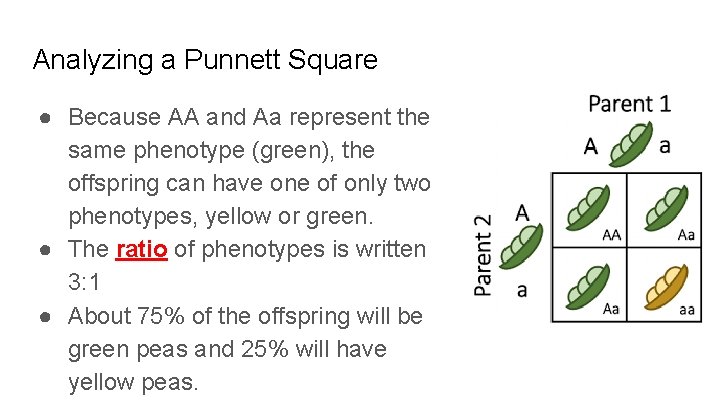
Analyzing a Punnett Square ● Because AA and Aa represent the same phenotype (green), the offspring can have one of only two phenotypes, yellow or green. ● The ratio of phenotypes is written 3: 1 ● About 75% of the offspring will be green peas and 25% will have yellow peas.
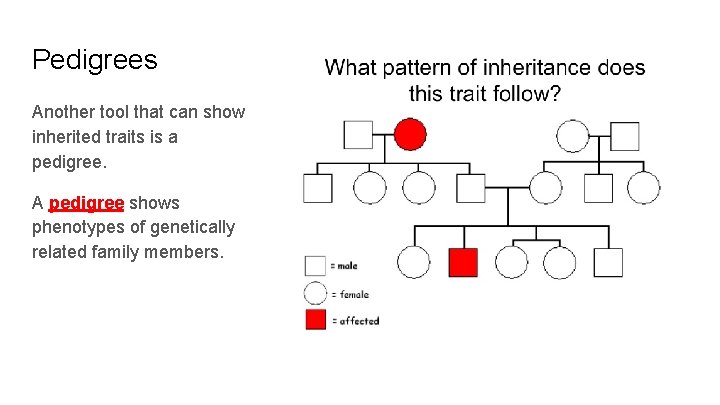
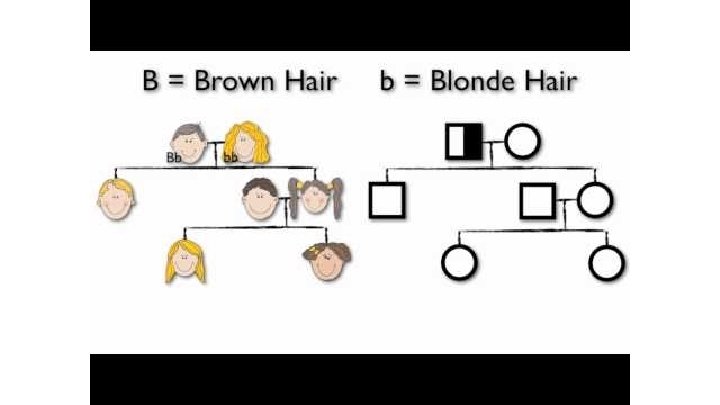
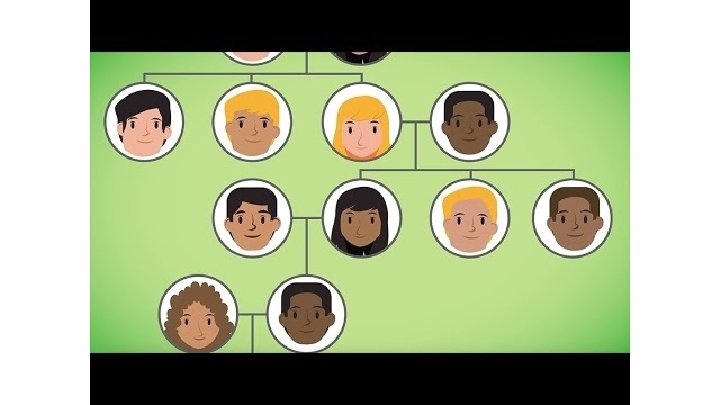
Pedigrees Another tool that can show inherited traits is a pedigree. A pedigree shows phenotypes of genetically related family members.
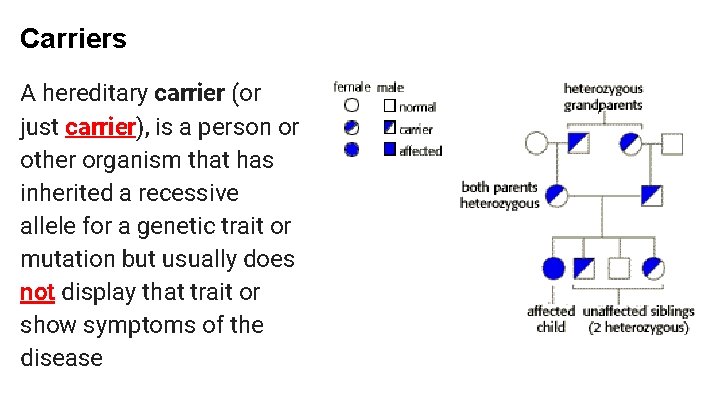
Carriers A hereditary carrier (or just carrier), is a person or other organism that has inherited a recessive allele for a genetic trait or mutation but usually does not display that trait or show symptoms of the disease