
Understanding Human Differences Multicultural Education for a Diverse
- Slides: 38
Understanding Human Differences Multicultural Education for a Diverse America 3 rd Edition By Kent L. Koppelman Section 2 Chapter 5 Race and Oppression: The Experiences of People of Color in America Understanding Human Differences 3 rd Edition - Koppelman Chapter 5 - © 2011 Pearson Education, Inc
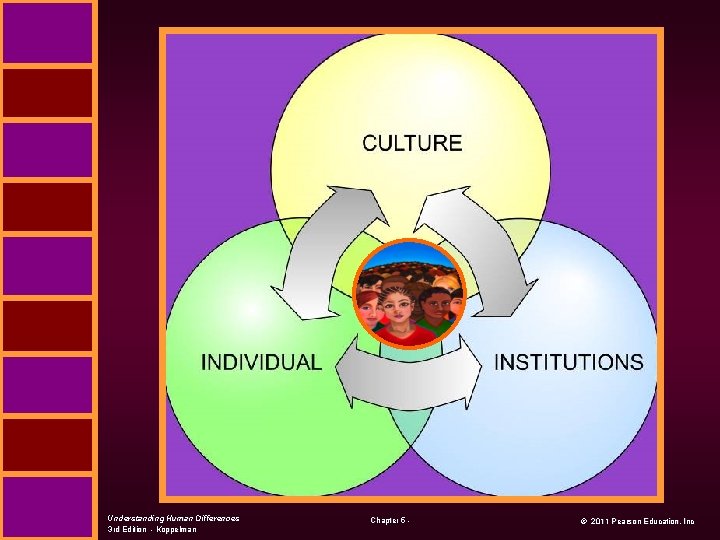
Understanding Human Differences 3 rd Edition - Koppelman Chapter 5 - © 2011 Pearson Education, Inc
Native Americans What could the European settlers have learned from Native Americans Understanding Human Differences 3 rd Edition - Koppelman Chapter 5 - © 2011 Pearson Education, Inc
Medicinal properties of plants: • 75% of all prescription drugs today extracted from plants are derived from native healing practices Hygiene: • Native Americans bathed regularly; Europeans thought this caused illness Governance/Gender Equity: • Women played a role in Native American governance practices Understanding Human Differences 3 rd Edition - Koppelman Chapter 5 - 3 © 2011 Pearson Education, Inc
Ecology: • Native Americans believe human beings should live in harmony with nature Child Rearing: • Native American children were given freedom to play and learn and were punished by scolding not beatings Understanding Human Differences 3 rd Edition - Koppelman Chapter 5 - 4 © 2011 Pearson Education, Inc
What was the main source of conflict between Europeans and Native Americans Ownership of the LAND and its RESOURCES Understanding Human Differences 3 rd Edition - Koppelman Chapter 5 - © 2011 Pearson Education, Inc
Why are Indian TREATIES still important today Treaties establish Indian legal rights as SOVEREIGN NATIONS Understanding Human Differences 3 rd Edition - Koppelman Chapter 5 - © 2011 Pearson Education, Inc
Why were Native American TREATIES consistently violated Treaties defined Indian lands, but treaties were violated when RESOURCES were discovered GOLD in the Black Hills OIL in Oklahoma Understanding Human Differences 3 rd Edition - Koppelman Chapter 5 - © 2011 Pearson Education, Inc
What are other contemporary issues affecting indigenous people Understanding Human Differences 3 rd Edition - Koppelman Chapter 5 - © 2011 Pearson Education, Inc
Stereotypical Images • Indian mascots for sports teams • Portrayal in the Media Economic and Social Problems • Unemployment • Alcoholism • Domestic Abuse Hostility toward Tribes • Tribes operating casinos • Hunting rights disputes Ongoing Exploitation by industry and the Federal Government Understanding Human Differences 3 rd Edition - Koppelman Chapter 5 - 9 © 2011 Pearson Education, Inc
African Americans How did Africans come to America • Indentured servants • Purchased from West African countries • 5 to 6 million died during the “middle passage” Understanding Human Differences 3 rd Edition - Koppelman Chapter 5 - © 2011 Pearson Education, Inc
Slavery Issues • Slave owners with large numbers of slaves made enormous profits (spent $12 -$13 annually on a slave who could produce $260 in profit) • Laws passed to force Black indentured servants into slavery • Free and enslaved Africans protested against slavery Understanding Human Differences 3 rd Edition - Koppelman Chapter 5 - 11 © 2011 Pearson Education, Inc
Why did Blacks fight on the American side during the Revolutionary War Washington did not want to recruit Blacks; but when the British began doing so, Washington was forced to recruit them as well Understanding Human Differences 3 rd Edition - Koppelman Chapter 5 - © 2011 Pearson Education, Inc
How was slavery addressed in the new nation • The Constitution allowed slaves to be imported for 20 years • Anti-slavery organizations lobbied to end the slave trade permanently • People organized to help slaves escape (Underground Railroad) Understanding Human Differences 3 rd Edition - Koppelman Chapter 5 - 13 © 2011 Pearson Education, Inc
What role did Blacks play during the Civil War • Slaves disrupted the Southern economy • Over 200, 000 Blacks fought for the Union • After the war Blacks were elected to office • White organizations like the Ku Klux Klan used violence to regain power for whites Understanding Human Differences 3 rd Edition - Koppelman Chapter 5 - 14 © 2011 Pearson Education, Inc
How did Black citizens in the South respond to this transformation • Blacks emphasized education: – Booker T. Washington at Tuskegee trained Blacks primarily for menial jobs – W. E. B. Du Bois advocated for stronger academics • Southern Blacks migrated to northern cities Understanding Human Differences 3 rd Edition - Koppelman Chapter 5 - 15 © 2011 Pearson Education, Inc
Was there a decrease in discrimination against Blacks after World War I 1920 s: • Black soldiers were denied awards for military achievements • Ku Klux Klan was revived 1930 s: • Black agricultural and domestic workers denied social security and minimum wage • President Roosevelt’s Executive order forbid discrimination in defense industries • Blacks were given leadership positions (the “Black Cabinet”) Understanding Human Differences 3 rd Edition - Koppelman Chapter 5 - 16 © 2011 Pearson Education, Inc
What gains did Black Americans make during the 1940 s and 1950 s • More Blacks had union membership • Blacks gained new access to military units and leadership roles • President Truman’s executive order forbade racial segregation in the military • Blacks initiated activities opposing racial segregation – Brown v. Board of Education decision declared segregation as unconstitutional Understanding Human Differences 3 rd Edition - Koppelman Chapter 5 - 17 © 2011 Pearson Education, Inc
What got Americans’ attention concerning racial injustice • Murder of Emmett Till • Non-violent tactics of Martin Luther King, Jr. • Challenging oratory of Malcolm X Understanding Human Differences 3 rd Edition - Koppelman Chapter 5 - 18 © 2011 Pearson Education, Inc
What goals did the Civil Rights Movement achieve for African Americans • Civil Rights Act of 1964 forbade racial discrimination • Voting Rights Act of 1965 protected Black voting rights Understanding Human Differences 3 rd Edition - Koppelman Chapter 5 - 19 © 2011 Pearson Education, Inc
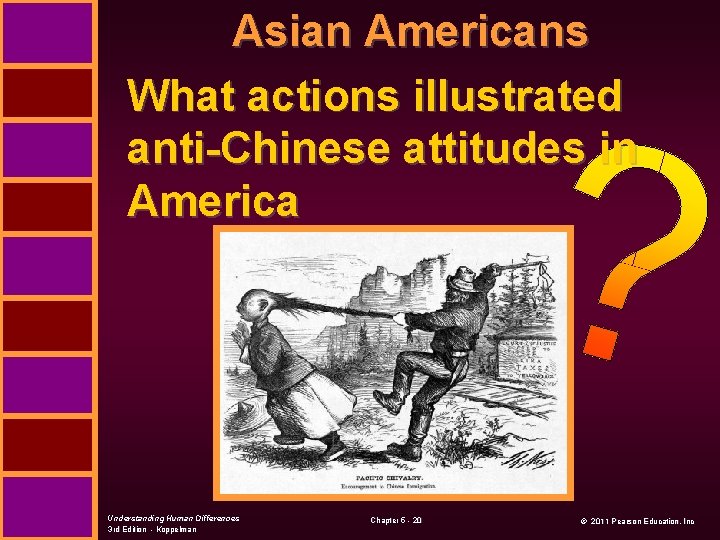
Asian Americans What actions illustrated anti-Chinese attitudes in America Understanding Human Differences 3 rd Edition - Koppelman Chapter 5 - 20 © 2011 Pearson Education, Inc
Asian Americans What actions illustrated anti-Chinese attitudes • California passed a law mandating a mining tax on foreigners • Employers exploited Chinese by paying low wages • Individual Chinese were physically attacked • Chinese Exclusion Act (1882, 1892, and 1902) outlawed Chinese immigration permanently Understanding Human Differences 3 rd Edition - Koppelman Chapter 5 - 21 © 2011 Pearson Education, Inc
How did Americans react to Japanese immigration • Japanese were exploited primarily in agricultural work • Japanese were seen as people who would not assimilate • Newspapers referred to Japanese as the “Yellow Peril” Understanding Human Differences 3 rd Edition - Koppelman Chapter 5 - 22 © 2011 Pearson Education, Inc
What was the Gentleman’s Agreement of 1908 Japan agreed to end Japanese immigration to the U. S. except for family and “Picture Brides” – allowed for matchmaking between Japanese men in the U. S. and families in Japan Understanding Human Differences 3 rd Edition - Koppelman Chapter 5 - 23 © 2011 Pearson Education, Inc
What advantage did the Nisei have Nisei were second generation Japanese born in the U. S. – American citizens by birth – Land could be purchased or leased in their names Understanding Human Differences 3 rd Edition - Koppelman Chapter 5 - 24 © 2011 Pearson Education, Inc
What actions were taken against the Japanese during World War II • Japanese families were relocated to camps around the U. S. • They lost their businesses and homes and many possessions Understanding Human Differences 3 rd Edition - Koppelman Chapter 5 - 25 © 2011 Pearson Education, Inc
What other Asian immigrants faced anti-Asian attitudes • World War II Filipino veterans were not immediately given American citizenship as promised • Even marriage to U. S. soldiers did not protect Korean women from anti. Asian attitudes • Discrimination occurred against Southeast Asian immigrants: Vietnamese, Laotian, Hmong, and Cambodians Understanding Human Differences 3 rd Edition - Koppelman Chapter 5 - 26 © 2011 Pearson Education, Inc
What is the “Model Minority” myth White Americans used the success of many Asian-Americans to argue that race did not prevent someone willing to work hard from achieving success in America Understanding Human Differences 3 rd Edition - Koppelman Chapter 5 - 27 © 2011 Pearson Education, Inc
How does the “Model Minority” myth distort reality The MYTH ignored : • Pattern of Asians living in areas where cost of living is high • Tendency for Asian households to have multiple wage earners • Discrimination faced by low-income Asian families Understanding Human Differences 3 rd Edition - Koppelman Chapter 5 - 28 © 2011 Pearson Education, Inc
Hispanic Americans (Latino/as) What was the first Spanishspeaking group to come to the U. S. Two Spanish settlements preceded the earliest English settlements: Saint Augustine, Florida Santa Fe, New Mexico Understanding Human Differences 3 rd Edition - Koppelman Chapter 5 - 29 © 2011 Pearson Education, Inc
What was the experience of Mexicans immigrating to the United States • Recruited as workers following the Chinese Exclusion Act • Exploited and discriminated against like the Chinese • Nativists lobbied to restrict Mexican immigration and deport Mexican immigrants • The League of United Latin American Citizens encouraged Latinos to become citizens Understanding Human Differences 3 rd Edition - Koppelman Chapter 5 - 30 © 2011 Pearson Education, Inc
What influenced relations between Mexicans and Americans in World War II Bracero Program U. S. government imported workers from Mexico Zoot Suit Riots in Los Angeles American servicemen assaulted Mexican youth wearing Zoot Suits Understanding Human Differences 3 rd Edition - Koppelman Chapter 5 - 31 © 2011 Pearson Education, Inc
Was it better for Latinos after the war Latino veterans benefited from the G. I. Bill – Received money for college – Received loans to purchase homes Latinos sponsored court cases against segregated schools – The Mexican American Legal Defense Fund was established Understanding Human Differences 3 rd Edition - Koppelman Chapter 5 - 32 © 2011 Pearson Education, Inc
How did Puerto Ricans become citizens of the United States • Puerto Rico became American territory after the Spanish American War • The 1917 Jones Act gave Puerto Ricans the option to become American citizens Understanding Human Differences 3 rd Edition - Koppelman Chapter 5 - 33 © 2011 Pearson Education, Inc
What results were achieved by Operation Bootstrap • American corporations purchased much land increased industry • Industrial profits increased but wages for agricultural workers remained low • Food supply decreased requiring importation of food • Health care improved and population increased but not enough jobs Understanding Human Differences 3 rd Edition - Koppelman Chapter 5 - 34 © 2011 Pearson Education, Inc
How do the experiences of Puerto Ricans in the U. S. compare to other Latino groups Puerto Ricans are more likely to: • Live in poverty and receive welfare • Live in single parent families • Attend segregated schools Understanding Human Differences 3 rd Edition - Koppelman Chapter 5 - 35 © 2011 Pearson Education, Inc
Why has the experience of Cubans in the U. S. been so different from Puerto Ricans • Cuba had a history of financial success and maintained its sovereignty • Cuban immigrants were assisted by federally funded Cuban Refugee Programs • Cuban immigrants have tended to be highly educated people with resources Understanding Human Differences 3 rd Edition - Koppelman Chapter 5 - 36 © 2011 Pearson Education, Inc
Why have other Latino groups immigrated to the United States • Dominican Republic – to escape financial problems • Central America (Salvador, Honduras, Guatemala, Nicaragua) – as political refugees • South America – often highly educated professionals looking for financial advantages Understanding Human Differences 3 rd Edition - Koppelman Chapter 5 - 37 © 2011 Pearson Education, Inc